

What do you think?

The Coloured Fairy Books
The Red Fairy Book
Dancing princesses, golden eggs, and evil knights are found in this second volume of Andrew Lang's fairy tales gathered in the late 19th century
Once upon a time, in the middle of winter when the snow-flakes were falling like feathers on the earth, a Queen sat at a window framed in black ebony and sewed. And as she sewed and gazed out to the white landscape, she pricked her finger with the needle, and three drops of blood fell on the snow outside...
Andrew Lang began gathering fairy tales with the aim of conserving "the old stories that have pleased so many generations." This bold and eclectic anthology contains wonderful renditions of old favorites such as Jack and the Beanstalk and Rapunzel, as well as some little-known stories like The Death of Koschei the Deathless and The Nettle Spinner. Be transported to a land full of marvels and a world of enchanted forests and isolated castles; of giants, fairies, and trolls; of treasure, music, and promise. Andrew Lang's fairy books helped to lay the foundation for our continuing fascination with fairy tales as entertainment and cultural objects. The book is republished here with a stunning red jacket, accompanied throughout by the original illustrations.
Once upon a time, in the middle of winter when the snow-flakes were falling like feathers on the earth, a Queen sat at a window framed in black ebony and sewed. And as she sewed and gazed out to the white landscape, she pricked her finger with the needle, and three drops of blood fell on the snow outside...
Andrew Lang began gathering fairy tales with the aim of conserving "the old stories that have pleased so many generations." This bold and eclectic anthology contains wonderful renditions of old favorites such as Jack and the Beanstalk and Rapunzel, as well as some little-known stories like The Death of Koschei the Deathless and The Nettle Spinner. Be transported to a land full of marvels and a world of enchanted forests and isolated castles; of giants, fairies, and trolls; of treasure, music, and promise. Andrew Lang's fairy books helped to lay the foundation for our continuing fascination with fairy tales as entertainment and cultural objects. The book is republished here with a stunning red jacket, accompanied throughout by the original illustrations.
191 pages, Kindle Edition
First published January 1, 1890
About the author
Andrew Lang
3,008 books585 followersTales of the Scottish writer and anthropologist Andrew Lang include
The Blue Fairy Book
(1889).
Andrew Gabriel Lang, a prolific Scotsman of letters, contributed poetry, novels, literary criticism, and collected now best folklore.
The Young Scholar and Journalist
Andrew Gabriel Lang, the son of the town clerk and the eldest of eight children, lived in Selkirk in the Scottish borderlands. The wild and beautiful landscape of childhood greatly affected the youth and inspired a lifelong love of the outdoors and a fascination with local folklore and history. Charles Edward Stuart and Robert I the Bruce surrounded him in the borders, a rich area in history. He later achieved his literary Short History of Scotland .
A gifted student and avid reader, Lang went to the prestigious Saint Andrews University, which now holds a lecture series in his honor every few years, and then to Balliol College, Oxford. He later published Oxford: Brief Historical and Descriptive Notes about the city in 1880.
Moving to London at the age of 31 years in 1875 as an already published poet, he started working as a journalist. His dry sense of humor, style, and huge array of interests made him a popular editor and columnist quickly for The Daily Post, Time magazine and Fortnightly Review. Whilst working in London, he met and married Leonora Blanche Alleyne Lang, his wife.
Interest in myths and folklore continued as he and Leonora traveled through France and Italy to hear local legends, from which came the most famous The Rainbow Fairy Books . In the late 19th century, interest in the native stories declined and very few persons recounting them for young readers. In fact, some educationalists attacked harmful magical stories in general to children. To challenge this notion, Lang first began collecting stories for the first of his colored volumes.
Lang gathered already recorded stories, while other folklorists collected stories directly from source. He used his time to collect a much greater breadth over the world from Jacob Grimm, his brother, Madame d'Aulnoy, and other less well sources.
Lang also worked as the editor, often credited as its sole creator for his work despite the essential support of his wife, who transcribed and organised the translation of the text, to the success.
He published to wide acclaim. The beautiful illustrations and magic captivated the minds of children and adults alike. The success first allowed Lang and Leonora to carry on their research and in 1890 to publish a much larger print run of The Red Fairy Book , which drew on even more sources. Between 1889 and 1910, they published twelve collections, which, each with a different colored binding, collected, edited and translated a total of 437 stories. Lang, credited with reviving interest in folklore, more importantly revolutionized the Victorian view and inspired generations of parents to begin reading them to children once more.
Last Works
Lang produced and at the same time continued a wide assortment of novels, literary criticism, articles, and poetry. As Anita Silvey, literary critic, however, noted, "The irony of Lang's life and work is that although he wrote for a profession... he is best recognized for the works he did not write," the folk stories that he collected.
He finished not the last Highways and Byways of the Border but died.
Andrew Gabriel Lang, a prolific Scotsman of letters, contributed poetry, novels, literary criticism, and collected now best folklore.
The Young Scholar and Journalist
Andrew Gabriel Lang, the son of the town clerk and the eldest of eight children, lived in Selkirk in the Scottish borderlands. The wild and beautiful landscape of childhood greatly affected the youth and inspired a lifelong love of the outdoors and a fascination with local folklore and history. Charles Edward Stuart and Robert I the Bruce surrounded him in the borders, a rich area in history. He later achieved his literary Short History of Scotland .
A gifted student and avid reader, Lang went to the prestigious Saint Andrews University, which now holds a lecture series in his honor every few years, and then to Balliol College, Oxford. He later published Oxford: Brief Historical and Descriptive Notes about the city in 1880.
Moving to London at the age of 31 years in 1875 as an already published poet, he started working as a journalist. His dry sense of humor, style, and huge array of interests made him a popular editor and columnist quickly for The Daily Post, Time magazine and Fortnightly Review. Whilst working in London, he met and married Leonora Blanche Alleyne Lang, his wife.
Interest in myths and folklore continued as he and Leonora traveled through France and Italy to hear local legends, from which came the most famous The Rainbow Fairy Books . In the late 19th century, interest in the native stories declined and very few persons recounting them for young readers. In fact, some educationalists attacked harmful magical stories in general to children. To challenge this notion, Lang first began collecting stories for the first of his colored volumes.
Lang gathered already recorded stories, while other folklorists collected stories directly from source. He used his time to collect a much greater breadth over the world from Jacob Grimm, his brother, Madame d'Aulnoy, and other less well sources.
Lang also worked as the editor, often credited as its sole creator for his work despite the essential support of his wife, who transcribed and organised the translation of the text, to the success.
He published to wide acclaim. The beautiful illustrations and magic captivated the minds of children and adults alike. The success first allowed Lang and Leonora to carry on their research and in 1890 to publish a much larger print run of The Red Fairy Book , which drew on even more sources. Between 1889 and 1910, they published twelve collections, which, each with a different colored binding, collected, edited and translated a total of 437 stories. Lang, credited with reviving interest in folklore, more importantly revolutionized the Victorian view and inspired generations of parents to begin reading them to children once more.
Last Works
Lang produced and at the same time continued a wide assortment of novels, literary criticism, articles, and poetry. As Anita Silvey, literary critic, however, noted, "The irony of Lang's life and work is that although he wrote for a profession... he is best recognized for the works he did not write," the folk stories that he collected.
He finished not the last Highways and Byways of the Border but died.
Ratings & Reviews
Friends & Following
Create a free account to discover what your friends think of this book!
Community Reviews
Displaying 1 - 30 of 189 reviews

February 13, 2013
I read several of Lang's Fairy Books when I was little, and I can remember seeing a whole set of the various colored books on a bookstore shelf, and wishing that I could have them all. Buying them all was expensive, and I never remembered to try the library and look them up. However now all of them are free ebooks. Handy thing, that. [Free Gutenberg ebook link for this one.]
One thing I've always loved about fairy tales is that, when an odd being comes to you repeatedly in a dream, it's perfectly ok to listen to them and do whatever they say. It's not at all a sign that you're perhaps going insane, or taking too much [insert whatever might cause people to hallucinate here]. Also people don't often get burned at the stake for witchcraft in fairy tales, which you'd think would happen quite a bit, given the history of people's reaction to magical type happenings.
Random ponderings about the stories (and there are spoilers so beware):
The Twelve Dancing Princesses (one of my favorites)
- That the hero is a "cow-boy" and not a cow herder makes it hard for me not to giggle. Having always had Texans in the family my brain translates cowboy with a certain mental image. Except that everyone calls him Star Gazer, which my brain feels is very 1960s Psychedelia-ish.
- Hero is a cow-boy, yet also feels dismissive of the village girls:
- How is it that the daughters are Princesses, but their father is a Duke? Must be a localthing.
- Hero, invisible, hides himself under a bed and thus can see nothing of the princesses changing into their ball gowns. ...Uh huh, like I believe that of a boy who's just been granted the power to become invisible. Suspicious:
- Something tells me we don't get to hear how these boys ended up at the magic castle:
- Sending people to the tower: "For this was the way that in old times beautiful princesses got rid of people who knew too much." - from which we learn that princess aren't nice. (Yet another example.)
- Wait, when/how did the cow-boy learn how to dance? It's never mentioned and then suddenly once he's dressed up is able to dance gracefully.
- So this is a scene worth more than one sentence:
- Enchanted castle crumbles to the ground, presumably with the "negro boy" pages inside?!?!?! (Definitely do not remember this from the version I read as a kid.)
- Hero's wife, the princess, has him tell her how he discovered the secret, and once he does she has him chop down the laurel trees that helped him. Again, princesses aren't nice.
The Princess Mayblossom
- Multiple nurse deaths
- Lock a girl in a tower and do not be surprised when she falls in love with an ambassador. This is also what happens if ambassadors dress too well.
Soria Moria Castle
- Sitting at home in the fireplace ashes ("grubbing" in them) is actually a way to job hunt, because then sea captains will appear offering jobs.
- This is a first - not only does our hero kill the evil giant troll(s), he stays afterwards to clean up the dead body before moving on to the next killing. Which is really considerate. Seriously, I can't remember another story where the hero stops to clean up.
The Death Of Koshchei The Deathless
- In some stories guardians of girls are insanely picky over whom they are allowed to marry. Meanwhile in this story, the brother allows his sisters to marry birds. Who turn into men. Interesting.
The Black Thief and Knight of the Glen
- I've heard the word henwife but for some reason imagine the scene she's in as the queen having a discussion with a giant chicken.
- A fixed card game!
- Scheherazade strategy!
The Master Thief
- The exclamation "Hutetu" is used here, as in some of the other tales. All I can find out about it is that it's old Norse.
- Odd moments in costuming:
- Dead body theft!
Brother And Sister
- Cruel stepmother is a witch in disguise.
- Beware of talking water.
- Where did this girl get a "golden garter" - no mention that they're royals...
- Don't let someone lock you into a bathroom. Problem is they'll pick a moment when you're weak, like when you've just given birth.
- Witch burned at the stake, so it does happen sometimes.
Princess Rosette
- Two princes go off in search of the King of the Peacocks and leave their sister, who has been raised in a tower away from the world, to rule the kingdom. (And none of the ministers said "wait, um, stop for a minute and let's think about this" - ????)
- I have now learned that the Kingdom of the Cockchafer is really all about the may beetle. Or may bug, mitchamador, billy witch, or spang beetle. Fairy tales: teaching you about entomology when you least expect it.
- Phoenix feathers are a great thing to stuff mattress with as they will always float upon water. And you never know when that might be helpful.
- I still feel this would have been a better story if we'd just been told where the princess found her green dog.
The Enchanted Pig (oddly not listed in the contents)
- If anyone is ever told "don't go/look into room X" - you know someone will go/look into it. Also there's rarely ever a reason NOT to tell them why they shouldn't check that room out, especially if there's something/someone dangerous inside.
- All the pigs of the world converge on this King's town, and thus he must allow the Pig-Princess marriage. You'd think we'd get more than a sentence about that massive amount of pigs, as it sounds like kind of a Big Deal.
- Have you noticed that people are always certain that a creature is really an enchanted human, as opposed to an enchanted something else? For instance, what if the pig was actually an enchanted giant beetle? This is why no one should be in a rush to disenchant things.
- No matter how bored you are it might not be a good idea to hail a passing witch and have her stop for a chat.
- Search-quest for the beloved. Except the princess has a baby on the way, which thankfully didn't take on dad's enchanted form.
- Great line: "And they ruled as only kings rule who have suffered many things."
The Norka
- The third king's son is a simpleton, yet he's the only one who manages to face and try to fight the Norka. This happens a lot with people who are thought to be stupid by all the other characters, who turn out to be bad at judging such things. (Time to go look up the "fool motif," huh. Or is it the clever fool?)
- Note: location of "the other world" is under a large white stone.
- Oddly the Norka, though some kind of beast, has beautiful sisters. Who help the king's son kill their brother. Which makes no kind of sense.
- Randomly at the very end this becomes a story about tailoring.
The Wonderful Birch
- Even if you obey a witch's orders she can still turn you into a sheep.
- Daughters recognize their mothers, no matter how they've been enchanted. (Which is less of a relief than you'd think if your stepmother makes sheep soup.)
- A heroine should really be more surprised when her dead mother comes back as a tree.
- Story tells me to be sorry for the witch's daughter: "It was not her fault that her mother was a witch." (Thank you for the guilt, storyteller. You could stop beating up on the daughter in the first place. )
- King's son smears lots of things with tar, but it's not clear exactly what he's trying to catch. (Dude, just ask the girl to marry you.)
Jack And The Beanstalk
- Problem with Jack isn't that he's silly - it's that he refuses to work and thus family hasn't enough food. Not funny.
- Giant and castle's backstory: he bribes a castle servant to get inside, then kills knight/owner of castle, also all the knight's children - wife and one child (Jack and mom) escape
- Giants go on daily walks.
- Giantess to her husband: "Now, my dear, with your leave I am going up to my room to finish the story I'm reading." - doesn't seem very monstrous, does she? But the story does insist on her being stupid.
- Jack refuses the fairy's order to kill the Giantess as she was kind to him, which definitely seems the right answer. So it's handy that she dies in an accident.
The Little Good Mouse
- Never be rude to a dancing mouse. (Or kill one - which should go without saying.)
- Fairies just want to be loved - but not in a "I love you because you will give me wishes" kind of way - and thus they're very distrustful of people's motivations.
- Definitely a bit much for kids: evil king drags good queen off using her hair, threatens her with hanging multiple times and then tries to do it.
- Evil king falls, breaks teeth, then tries "to mend them" - would love to know more about what this entailed...
Graciosa And Percinet
- Red is apparently an unattractive hair color, and so the villainess (Duchess Grumbly) dyes her hair black.
- Every time the story had Prince Percinet my brain would fill in Percocet because I have read too many drug-info articles, and way too many comedians have rif'd on Percocet. However this did make the story even funnier.
- Invisible princes that suddenly appear would make me suspicious. "How long have you been hanging around watching me?! Nope, you're going to have to convince me that you just got here."
The Three Princesses Of Whiteland
- Three princesses on the beach, buried up to their necks. Doomed to stay that way until the hero fights off three trolls. Really odd things trolls do to people in these stories. Or at last I assume the trolls buried the princesses.
- The heroes in most stories seem to be very bad at listening to their wives' advice. Even when the wife is a beautiful, magical princess.
The Voice Of Death
- Land without death, where people hear a voice and see someone who calls them away and they never come back
- Except in the story people only hear a voice and see no one. I think there's something odd going on in the translation.
- They all apparently fall off a cliff and into a pit. And after everyone goes to see the pit from then on everyone there dies normally.
- Not really sure what's going on here.
The Six Sillies (have always hated this one)
- Who is the silliest of these examples of silly people? Answer, all of them. Hero should keep moving, perhaps to another continent.
- Girl that hero was thinking of marrying is 37. Which is ancient in fairy tale years, so perhaps this marks him as silly?
Kari Woodengown
- Warning, stepmother with ugly daughter marries King with pretty daughter. Guess who gets to herd the cows? And meets a talking blue bull? If this were a Greek myth the story would immediately go in another direction.
- Magic bulls can hide things in their ears.
- Girl does run away with the bull, but they're just good friends.
- Multiple bull vs. troll fights
- No one ever tries to negotiate with trolls.
- This is one of multiple stories where trolls keep healing ointment on their person. Which heroes can then use. Which is why you should always loot dead trolls.
- Once at their destination the bull tells her where to get a job (and where to live: a pig-sty) and then says she has to cut off his head with "your little knife" - pause a moment and consider that this is a large bull. Story does not mention massive amounts of blood or that princess is grossed out.
- In this story the girl gets a pretty dress so she can go to church, and that's where the Prince sees her. He's the same guy that's rude to her when she wears her wooden dress, which you'd think would make him a bad choice.
Drakestail
- Our hero is apparently a duck.
- It's not a good thing to lend money to a King, who has no reason to pay it back. (Which makes me wonder if this is actually about the French kings, who had a habit of over-spending.)
- Drakestail is apparently magic because his friend the fox can ride inside his gizzard. Along with his luggage. (This storyteller is into some form of hallucinogens.)
- His lady-friend is a talking ladder - and you know, I can't share any more of this, it's getting too weird...
The Ratcatcher (of Hamel)
- The ratcatcher plays the bagpipes and can sing in French. And can talk to rats.
- After cheating the ratcatcher everyone happily goes to church without feeling the least bit hypocritical. Except for some reason they left all their children at home.
The True History of Little Golden Hood
- Apparently the Red Riding Hood story wasn't the accurate version.
- It's still not a good idea to stop and chat with wolves you don't know.
The Golden Branch
- This story has tremendously fun descriptions of magic pictures and books. But.
- Description of ugly prince, Curlicue:
- Description of ugly princess:
- Neither of these 'beautiful souls in ugly exterior' really sympathizes with the other or wants to meet/marry the other, based on only looking at paintings of each other. (!!!!!)
- The whole trope of "you'll only be happy if your outside matches your beautiful soul" is painful. In reality people will make judgements on personality/likability based on your exterior, even now.
The Three Dwarfs
- People decide to remarry using really odd methods (will boot with hole fill with water?!)
Dapplegrim
- Name of story is the horse, who I think is the real hero.
- However, Dapplegrim has human hero kill a lot of colts for him. So there's that issue.
- Kings continually rewrite rules.
The Enchanted Canary
- One of the weirder stories.
- Heavy racism: "'My faith!' cried Tubby; 'do you want to marry a negress, and give me grandchildren as ugly as monkeys and as stupid as owls?' "
- Black skin is bad, but golden skin and black eyes are ok. For this one prince, anyway.
The Twelve Brothers
- Never understood this one, because 12 sons are supposedly to be put to death in favor of a girl. (Usually girls have less value than boys, who inherit things. And they don't mention needing to marry her to someone.)
- Father ready to kill all the boys: "Then he ordered twelve coffins to be made, and filled them with shavings, and placed a little pillow in each."
- Raven transformation (sometimes it's swans or geese).
Rapunzel
- Always makes me look up rampion.
The Nettle Spinner
- One of the more odd stories.
- Making a Point About Evil Rulers and their power. Also the kindness of the peasant girl/spinner. (Still seems like the Count is the only one to benefit.)
Farmer Weatherbeard
- We never really learn exactly what Weatherbeard is, besides bad news.
- Also some dad's are not good at helping their sons find jobs.
- If you give an old woman some snuff on the back of her hand, she'll dance.
Mother Holle
- The best part (for me) is that to reach Mother Holle's land you have to fall into a well. Though I'm not big on the idea of talking bread (which I'd worry about eating).
Minnikin
- Weirdest part is that this is a kid who as a baby goes off to have adventures, and while still a child marries a princess. Oh and fights giant trolls and such. But seriously, a bit young to be married.
Bushy Bride
- It's the good/bad girl rewards thing again, except with this weirdness: "One day they sent her to the brook to fetch some water home, and an ugly and horrible head rose up out of the water, and said, 'Wash me, girl!' " And two more heads, the last of which wants a kiss.
- The bush is on the bad girl: "a fir bush in the middle of her forehead"
Snowdrop
- Snow White story
- Princes who want to keep dead girls are kinda weird, no matter how you tell it.
- Final Grimm (heh) touch: "red-hot iron shoes had been prepared for the wicked old Queen, and she was made to get into them and dance."
The Golden Goose
- We never hear what happens to all the people stuck to the goose.
- Again, parents are bad at naming - Dullhead is apparently the name he's stuck with, it's not about his intellect.
The Seven Foals
- Kings offer marriage to their daughters for weird tasks (here it's horse watching)
- Priest doesn't seem to notice when princes that he's blessed/fed turn into horses just outside the church.
- It's always freaky when enchanted animals ask people to cut their heads off.
The Marvelous Musician
- Musician has bias against having wolf, fox, hare as friends or pupils.
- Warning, cruelty.
The Story of Sigurd
- First paragraph warning: sad ending (ooo spoiler!)
- King wills broken sword to unborn son (vengence thing!)
One thing I've always loved about fairy tales is that, when an odd being comes to you repeatedly in a dream, it's perfectly ok to listen to them and do whatever they say. It's not at all a sign that you're perhaps going insane, or taking too much [insert whatever might cause people to hallucinate here]. Also people don't often get burned at the stake for witchcraft in fairy tales, which you'd think would happen quite a bit, given the history of people's reaction to magical type happenings.
Random ponderings about the stories (and there are spoilers so beware):
The Twelve Dancing Princesses (one of my favorites)
- That the hero is a "cow-boy" and not a cow herder makes it hard for me not to giggle. Having always had Texans in the family my brain translates cowboy with a certain mental image. Except that everyone calls him Star Gazer, which my brain feels is very 1960s Psychedelia-ish.
- Hero is a cow-boy, yet also feels dismissive of the village girls:
"The fact was he thought them very ugly, with their sun-burnt necks, their great red hands, their coarse petticoats and their wooden shoes. He had heard that somewhere in the world there were girls whose necks were white and whose hands were small, who were always dressed in the finest silks and laces, and were called princesses, and while his companions round the fire saw nothing in the flames but common everyday fancies, he dreamed that he had the happiness to marry a princess."So while he's been out communing with the herd all day - and probably getting a sun-burnt neck - he's somehow learned to become a snob and take up weird concepts of beauty that should be foreign to him. Odd kid.
- How is it that the daughters are Princesses, but their father is a Duke? Must be a localthing.
- Hero, invisible, hides himself under a bed and thus can see nothing of the princesses changing into their ball gowns. ...Uh huh, like I believe that of a boy who's just been granted the power to become invisible. Suspicious:
"Michael could see nothing from his hiding-place, but he could hear everything, and he listened to the princesses laughing and jumping with pleasure."Sorry, I don't believe he could hear them jumping. Moving around maybe, but jumping is awfully specific.
- Something tells me we don't get to hear how these boys ended up at the magic castle:
"When the cock crowed the third time the fiddles stopped, and a delicious supper was served by negro boys..."
- Sending people to the tower: "For this was the way that in old times beautiful princesses got rid of people who knew too much." - from which we learn that princess aren't nice. (Yet another example.)
- Wait, when/how did the cow-boy learn how to dance? It's never mentioned and then suddenly once he's dressed up is able to dance gracefully.
- So this is a scene worth more than one sentence:
" The rest of the princes fell likewise at the knees of the princesses, each of whom chose a husband and raised him to her side.That's 50 guys falling at the feet of 11 women, because hero gets the 12th. That took a lot of sorting out, I'll bet. Hmmm. 50/11 = 4.55, so some of the sisters didn't get an even amount of suitors. (Fairy tales and math problems - why didn't my teachers try that?!)
- Enchanted castle crumbles to the ground, presumably with the "negro boy" pages inside?!?!?! (Definitely do not remember this from the version I read as a kid.)
- Hero's wife, the princess, has him tell her how he discovered the secret, and once he does she has him chop down the laurel trees that helped him. Again, princesses aren't nice.
The Princess Mayblossom
- Multiple nurse deaths
- Lock a girl in a tower and do not be surprised when she falls in love with an ambassador. This is also what happens if ambassadors dress too well.
Soria Moria Castle
- Sitting at home in the fireplace ashes ("grubbing" in them) is actually a way to job hunt, because then sea captains will appear offering jobs.
- This is a first - not only does our hero kill the evil giant troll(s), he stays afterwards to clean up the dead body before moving on to the next killing. Which is really considerate. Seriously, I can't remember another story where the hero stops to clean up.
The Death Of Koshchei The Deathless
- In some stories guardians of girls are insanely picky over whom they are allowed to marry. Meanwhile in this story, the brother allows his sisters to marry birds. Who turn into men. Interesting.
The Black Thief and Knight of the Glen
- I've heard the word henwife but for some reason imagine the scene she's in as the queen having a discussion with a giant chicken.
- A fixed card game!
- Scheherazade strategy!
The Master Thief
- The exclamation "Hutetu" is used here, as in some of the other tales. All I can find out about it is that it's old Norse.
- Odd moments in costuming:
"So he dressed himself up like a bird, and threw a great white sheet over himself; broke off a goose's wings, and set them on his back; and in this attire climbed into a great maple tree which stood in the Priest's garden.And then he tells the priest that he's an angel. Because the Master Thief is that good at practical jokes.
- Dead body theft!
Brother And Sister
- Cruel stepmother is a witch in disguise.
- Beware of talking water.
- Where did this girl get a "golden garter" - no mention that they're royals...
- Don't let someone lock you into a bathroom. Problem is they'll pick a moment when you're weak, like when you've just given birth.
- Witch burned at the stake, so it does happen sometimes.
Princess Rosette
- Two princes go off in search of the King of the Peacocks and leave their sister, who has been raised in a tower away from the world, to rule the kingdom. (And none of the ministers said "wait, um, stop for a minute and let's think about this" - ????)
- I have now learned that the Kingdom of the Cockchafer is really all about the may beetle. Or may bug, mitchamador, billy witch, or spang beetle. Fairy tales: teaching you about entomology when you least expect it.
- Phoenix feathers are a great thing to stuff mattress with as they will always float upon water. And you never know when that might be helpful.
- I still feel this would have been a better story if we'd just been told where the princess found her green dog.
The Enchanted Pig (oddly not listed in the contents)
- If anyone is ever told "don't go/look into room X" - you know someone will go/look into it. Also there's rarely ever a reason NOT to tell them why they shouldn't check that room out, especially if there's something/someone dangerous inside.
- All the pigs of the world converge on this King's town, and thus he must allow the Pig-Princess marriage. You'd think we'd get more than a sentence about that massive amount of pigs, as it sounds like kind of a Big Deal.
- Have you noticed that people are always certain that a creature is really an enchanted human, as opposed to an enchanted something else? For instance, what if the pig was actually an enchanted giant beetle? This is why no one should be in a rush to disenchant things.
- No matter how bored you are it might not be a good idea to hail a passing witch and have her stop for a chat.
- Search-quest for the beloved. Except the princess has a baby on the way, which thankfully didn't take on dad's enchanted form.
- Great line: "And they ruled as only kings rule who have suffered many things."
The Norka
- The third king's son is a simpleton, yet he's the only one who manages to face and try to fight the Norka. This happens a lot with people who are thought to be stupid by all the other characters, who turn out to be bad at judging such things. (Time to go look up the "fool motif," huh. Or is it the clever fool?)
- Note: location of "the other world" is under a large white stone.
- Oddly the Norka, though some kind of beast, has beautiful sisters. Who help the king's son kill their brother. Which makes no kind of sense.
- Randomly at the very end this becomes a story about tailoring.
The Wonderful Birch
- Even if you obey a witch's orders she can still turn you into a sheep.
- Daughters recognize their mothers, no matter how they've been enchanted. (Which is less of a relief than you'd think if your stepmother makes sheep soup.)
- A heroine should really be more surprised when her dead mother comes back as a tree.
- Story tells me to be sorry for the witch's daughter: "It was not her fault that her mother was a witch." (Thank you for the guilt, storyteller. You could stop beating up on the daughter in the first place. )
- King's son smears lots of things with tar, but it's not clear exactly what he's trying to catch. (Dude, just ask the girl to marry you.)
Jack And The Beanstalk
- Problem with Jack isn't that he's silly - it's that he refuses to work and thus family hasn't enough food. Not funny.
- Giant and castle's backstory: he bribes a castle servant to get inside, then kills knight/owner of castle, also all the knight's children - wife and one child (Jack and mom) escape
- Giants go on daily walks.
- Giantess to her husband: "Now, my dear, with your leave I am going up to my room to finish the story I'm reading." - doesn't seem very monstrous, does she? But the story does insist on her being stupid.
- Jack refuses the fairy's order to kill the Giantess as she was kind to him, which definitely seems the right answer. So it's handy that she dies in an accident.
The Little Good Mouse
- Never be rude to a dancing mouse. (Or kill one - which should go without saying.)
- Fairies just want to be loved - but not in a "I love you because you will give me wishes" kind of way - and thus they're very distrustful of people's motivations.
- Definitely a bit much for kids: evil king drags good queen off using her hair, threatens her with hanging multiple times and then tries to do it.
- Evil king falls, breaks teeth, then tries "to mend them" - would love to know more about what this entailed...
Graciosa And Percinet
- Red is apparently an unattractive hair color, and so the villainess (Duchess Grumbly) dyes her hair black.
- Every time the story had Prince Percinet my brain would fill in Percocet because I have read too many drug-info articles, and way too many comedians have rif'd on Percocet. However this did make the story even funnier.
- Invisible princes that suddenly appear would make me suspicious. "How long have you been hanging around watching me?! Nope, you're going to have to convince me that you just got here."
The Three Princesses Of Whiteland
- Three princesses on the beach, buried up to their necks. Doomed to stay that way until the hero fights off three trolls. Really odd things trolls do to people in these stories. Or at last I assume the trolls buried the princesses.
- The heroes in most stories seem to be very bad at listening to their wives' advice. Even when the wife is a beautiful, magical princess.
The Voice Of Death
- Land without death, where people hear a voice and see someone who calls them away and they never come back
- Except in the story people only hear a voice and see no one. I think there's something odd going on in the translation.
- They all apparently fall off a cliff and into a pit. And after everyone goes to see the pit from then on everyone there dies normally.
- Not really sure what's going on here.
The Six Sillies (have always hated this one)
- Who is the silliest of these examples of silly people? Answer, all of them. Hero should keep moving, perhaps to another continent.
- Girl that hero was thinking of marrying is 37. Which is ancient in fairy tale years, so perhaps this marks him as silly?
Kari Woodengown
- Warning, stepmother with ugly daughter marries King with pretty daughter. Guess who gets to herd the cows? And meets a talking blue bull? If this were a Greek myth the story would immediately go in another direction.
- Magic bulls can hide things in their ears.
- Girl does run away with the bull, but they're just good friends.
- Multiple bull vs. troll fights
- No one ever tries to negotiate with trolls.
- This is one of multiple stories where trolls keep healing ointment on their person. Which heroes can then use. Which is why you should always loot dead trolls.
- Once at their destination the bull tells her where to get a job (and where to live: a pig-sty) and then says she has to cut off his head with "your little knife" - pause a moment and consider that this is a large bull. Story does not mention massive amounts of blood or that princess is grossed out.
- In this story the girl gets a pretty dress so she can go to church, and that's where the Prince sees her. He's the same guy that's rude to her when she wears her wooden dress, which you'd think would make him a bad choice.
Drakestail
- Our hero is apparently a duck.
- It's not a good thing to lend money to a King, who has no reason to pay it back. (Which makes me wonder if this is actually about the French kings, who had a habit of over-spending.)
- Drakestail is apparently magic because his friend the fox can ride inside his gizzard. Along with his luggage. (This storyteller is into some form of hallucinogens.)
- His lady-friend is a talking ladder - and you know, I can't share any more of this, it's getting too weird...
The Ratcatcher (of Hamel)
- The ratcatcher plays the bagpipes and can sing in French. And can talk to rats.
- After cheating the ratcatcher everyone happily goes to church without feeling the least bit hypocritical. Except for some reason they left all their children at home.
The True History of Little Golden Hood
- Apparently the Red Riding Hood story wasn't the accurate version.
- It's still not a good idea to stop and chat with wolves you don't know.
The Golden Branch
- This story has tremendously fun descriptions of magic pictures and books. But.
- Description of ugly prince, Curlicue:
"No prince equaled him in cleverness and kindness of heart, but unfortunately he was most terribly ugly. He had crooked legs and squinting eyes, a large mouth all on one side, and a hunchback. Never was there a beautiful soul in such a frightful little body, but in spite of his appearance everybody loved him."
- Description of ugly princess:
"...as for the Princess she would do very well for Prince Curlicue, for she was as ugly as himself. Indeed, though she was the most amiable creature in the world, there was no concealing the fact that she was frightful, and so lame that she always went about with a crutch, and people called her Princess Cabbage-Stalk."
and "...when he saw her, with a skin like a tortoise's, her thick eyebrows meeting above her large nose, and her mouth from ear to ear, he could not help crying out..."
- Neither of these 'beautiful souls in ugly exterior' really sympathizes with the other or wants to meet/marry the other, based on only looking at paintings of each other. (!!!!!)
- The whole trope of "you'll only be happy if your outside matches your beautiful soul" is painful. In reality people will make judgements on personality/likability based on your exterior, even now.
The Three Dwarfs
- People decide to remarry using really odd methods (will boot with hole fill with water?!)
Dapplegrim
- Name of story is the horse, who I think is the real hero.
- However, Dapplegrim has human hero kill a lot of colts for him. So there's that issue.
- Kings continually rewrite rules.
The Enchanted Canary
- One of the weirder stories.
- Heavy racism: "'My faith!' cried Tubby; 'do you want to marry a negress, and give me grandchildren as ugly as monkeys and as stupid as owls?' "
- Black skin is bad, but golden skin and black eyes are ok. For this one prince, anyway.
The Twelve Brothers
- Never understood this one, because 12 sons are supposedly to be put to death in favor of a girl. (Usually girls have less value than boys, who inherit things. And they don't mention needing to marry her to someone.)
- Father ready to kill all the boys: "Then he ordered twelve coffins to be made, and filled them with shavings, and placed a little pillow in each."
- Raven transformation (sometimes it's swans or geese).
Rapunzel
- Always makes me look up rampion.
The Nettle Spinner
- One of the more odd stories.
- Making a Point About Evil Rulers and their power. Also the kindness of the peasant girl/spinner. (Still seems like the Count is the only one to benefit.)
Farmer Weatherbeard
- We never really learn exactly what Weatherbeard is, besides bad news.
- Also some dad's are not good at helping their sons find jobs.
- If you give an old woman some snuff on the back of her hand, she'll dance.
Mother Holle
- The best part (for me) is that to reach Mother Holle's land you have to fall into a well. Though I'm not big on the idea of talking bread (which I'd worry about eating).
Minnikin
- Weirdest part is that this is a kid who as a baby goes off to have adventures, and while still a child marries a princess. Oh and fights giant trolls and such. But seriously, a bit young to be married.
Bushy Bride
- It's the good/bad girl rewards thing again, except with this weirdness: "One day they sent her to the brook to fetch some water home, and an ugly and horrible head rose up out of the water, and said, 'Wash me, girl!' " And two more heads, the last of which wants a kiss.
- The bush is on the bad girl: "a fir bush in the middle of her forehead"
Snowdrop
- Snow White story
- Princes who want to keep dead girls are kinda weird, no matter how you tell it.
- Final Grimm (heh) touch: "red-hot iron shoes had been prepared for the wicked old Queen, and she was made to get into them and dance."
The Golden Goose
- We never hear what happens to all the people stuck to the goose.
- Again, parents are bad at naming - Dullhead is apparently the name he's stuck with, it's not about his intellect.
The Seven Foals
- Kings offer marriage to their daughters for weird tasks (here it's horse watching)
- Priest doesn't seem to notice when princes that he's blessed/fed turn into horses just outside the church.
- It's always freaky when enchanted animals ask people to cut their heads off.
The Marvelous Musician
- Musician has bias against having wolf, fox, hare as friends or pupils.
- Warning, cruelty.
The Story of Sigurd
- First paragraph warning: sad ending (ooo spoiler!)
- King wills broken sword to unborn son (vengence thing!)
February 5, 2018
Another one from the colored fairy books gone, ten left.
The stories are so enjoyable, especially as an audiobook.
The stories are so enjoyable, especially as an audiobook.

May 18, 2011
Red Fairy Book Mixtape:
1. Summer Nights - Marianne Faithful
2. The Trouble I've Been Looking For - Magnetic Fields
3. Satin in a Coffin - Modest Mouse
4. Swinging London - Magnetic Fields
5. Don't Deconstruct - Rilo Kiley
6. Piano Fire - Sparklehorse
7. The Sun Goes Down and the World Goes Dancing - Magnetic Fields
8. Empassant - The Black Lips
9. Suit Yourself - Shout Out Louds
10. Bones of a Man - Chad Van Gaalen
11. Don't Take My Sunshine Away - Sparklehorse
12. Fill Your Heart - David Bowie
13. The Wait - Pretenders
14. The Ballad of a Lady Man - Sleater-Kinney
15. Let the Cool Goddess Rust Away - Clap Your Hands Say Yeah
16. Cards & Quarters - Local Natives
17. Apple Bed - Sparklehorse
18. Shape Shifter - Local Natives
19. Runaway - The National
20. Stop the Show - Built to Spill
1. Summer Nights - Marianne Faithful
2. The Trouble I've Been Looking For - Magnetic Fields
3. Satin in a Coffin - Modest Mouse
4. Swinging London - Magnetic Fields
5. Don't Deconstruct - Rilo Kiley
6. Piano Fire - Sparklehorse
7. The Sun Goes Down and the World Goes Dancing - Magnetic Fields
8. Empassant - The Black Lips
9. Suit Yourself - Shout Out Louds
10. Bones of a Man - Chad Van Gaalen
11. Don't Take My Sunshine Away - Sparklehorse
12. Fill Your Heart - David Bowie
13. The Wait - Pretenders
14. The Ballad of a Lady Man - Sleater-Kinney
15. Let the Cool Goddess Rust Away - Clap Your Hands Say Yeah
16. Cards & Quarters - Local Natives
17. Apple Bed - Sparklehorse
18. Shape Shifter - Local Natives
19. Runaway - The National
20. Stop the Show - Built to Spill
July 5, 2018
07/2018
Some very original (not the fairy tales you've heard before) tales, and some I had to skip through. I love Lang's clear Edwardian writing style. I still have some of the Dover reprints of these with the color covers (matching the color of the titles). Over the years I believe I had read blue, green and purple. Now I bought his entire series for kindle... for $1.
Some very original (not the fairy tales you've heard before) tales, and some I had to skip through. I love Lang's clear Edwardian writing style. I still have some of the Dover reprints of these with the color covers (matching the color of the titles). Over the years I believe I had read blue, green and purple. Now I bought his entire series for kindle... for $1.

May 2, 2017
There's no telling what you'll read in these very imaginative and quite violent tales; pig-men, polygamy, fratricide, and racism are woven throughout with no action, response, or plot point too ridiculous or extreme. The moral of these stories are that all stepmothers are evil, dark or ugly is bad, and white and beautiful is good. And should these things become confused, no worries fairies will set them straight. Oh and check twice to see if the woman in your bed is really your wife.
“So the lazy girl came home all covered with pitch, and when the old hen on the top of the wall saw her, it called out: ‘Click, clock, clack, Our dirty slut’s come back.’ But the pitch remained sticking to her, and never as long as she lived could it be got off.” - Grimm.
“So the lazy girl came home all covered with pitch, and when the old hen on the top of the wall saw her, it called out: ‘Click, clock, clack, Our dirty slut’s come back.’ But the pitch remained sticking to her, and never as long as she lived could it be got off.” - Grimm.

November 4, 2013
5/2023 reread:
The Red Fairy Book will never be one of my top favorite fairy books, but most of the tales are enjoyable, although many feature repetitive motifs, and a good amount are treasures.
I normally am not a big fan of Jack and the Beanstalk, but this version I love. Jack is not simply stealing from the giant but taking back what is rightfully his. At first I was bothered that the fairy would not have helped Jack and his mother if Jack had not climbed the beanstalk. Shouldn't she help them because they were preyed upon by the giant? But then I realized that this adds more depth to the story. Yes, horrible, unfair things happen to us, but sometimes we have to do the work to improve our circumstances, and in the process our characters can grow stronger (which is easy to say from the perspective of my comfortable life!). Fairies also are more helpful if they assist people in improving their own lives instead of just giving everything to them.
I love trickster tales like The Master Thief, and although the hero cannot be called admirable, he is hardly worse than the governor, who breaks his word many times, or the priest, who mocks the governor for being tricked by the hero.
The Three Princesses of Whiteland is mildly enjoyable but is made up of common fairy tale patterns, and the hero is rather passive, as he follows everyone else's instructions.
The True History of Little Golden Hood is much more interesting to me than the popular Red Riding Hood Tale. And someone actually tries to protect the little girl with a magical hood in this one.
I enjoy Kari Woodengown, but I hate that the blue bull has to die, and I don't understand how Kari can marry a prince who was cruel to her when she wore the wooden gown and was a servant. I would much rather that Kari rejects him when he realizes who she is. I have a similar complaint with The Gray Fairy Book's The Bear.
I'm never quite sure what The Voice of Death is about. Perhaps it is about the inevitability of death and about how we often have the arrogance to think we will perform better in difficult situations than others do.
Brother and Sister is a Grimm tale with the typical cruel stepmother feature, but it does have the interesting variation of the brother turning into a deer.
There is a lot going on in Graciosa and Percinet. The stepmother shows the extremes to which jealousy can take us. Graciosa delays leaving with Percinet not only because she hopes that her family will treat her better but also because she doubts that Percinet will always love her. While I understand Percinet's frustration while waiting and feeling like Graciosa only calls him because he is useful to her, he is asking a lot to expect her to suddenly leave her family. Yet she learns that they will not treat her better and that she should not wait any longer. Persistence and hope are great, but leaving a miserable situation can, at times, be the best course of action. Aside from the additional depth I found in this story on this reading, it is beautiful and romantic, especially with the crystal palace.
The Little Good Mouse is not my favorite Aulnoy story, but it is still a good one. Sometimes I'm not quite sure about the kindness of fairies testing mortals and only rewarding them if they pass, especially if the situations are dire like the queen's. She has to essentially choose between a mouse and her child. One could not blame her much for choosing her child or for wanting to save the scanty food. Yet she cannot bring herself to sacrifice the mouse and is richly rewarded.
The repetition in Drakestail is a bit wearisome, but the way Drakestail doggedly pursues and reaches his goal is satisfying, as is the way his friends come to his aid.
The Black Thief and Knight of the Glen is an extremely exciting, entertaining story-within-a-story.
I enjoy The Wonderful Birch, a Cinderella variation, but the last section after the heroine marries the prince is rather anticlimactic and drags.
The Six Sillies starts out like Grimms' Clever Alice, but it turns out to be even more comical as it shows three people more foolish than the original "sillies."
The Norka features the slay the beast, win the princesses, and be betrayed by one's brothers plot. The vagueness of some of it lends mystery to the story. "The other world" is mentioned a couple times, as if another world one can travel into is a matter of course. The Norka also is not described, leaving its appearance up to the reader.
Bushy Bride and The Three Dwarfs are pretty similar, with kindness rewarded themes. The part with the three hideous heads in Bushy Bride is a humorous, striking scene.
The Ratcatcher is a grim warning to honestly keep one's bargains. The ratcatcher is such a mysterious figure. Where did he gain his abilities as a magical musician? Did he cause the rats to come to Hamel in the first place? He clearly is familiar with them. I'm not sure if he is supposed to be a villain, but I sympathize with him much more than with the citizens of Hamel.
The Princess Mayblossom is one of Aulnoy's best. It wisely reminds us that people can deceive us and we truly get to know them in times of hardship. Although I sympathize slightly with Fanfaronade. When our bodily needs are not met, everything else can go by the wayside. The princess is foolish to think that he will not want food just because she is with him. He humorously and truly remarks "It makes a great difference in one's ideas to be dying of hunger and thirst on a desert island." Love sometimes is not enough to keep us from acting badly in hardship, although of course Fanfaronade is not justified in withholding food and drink from Mayblossom. I don't really like the idea that he is not worthy of her simply because he is only an ambassador, either. But since many royal characters in fairy tales are evil too I can't be too critical of that.
I prefer the popular version of Twelve Dancing Princesses to this one. I think this is mainly because I do not quite sympathize with the hero. Sure, who would not want to marry a princess? But that doesn't mean he should dismiss the village girls as ugly and unworthy. I'm not quite sure what is going on with Lina when she is angry with him, either. Perhaps she thinks that if he loved her he would instantly turn the princesses in to win her hand? Still magical but not my favorite version.
Although I enjoy Princess Rosette, it is not one of Aulnoy's best. Everyone seems spoiled and selfish. I do like the peacocks. A reviewer on Goodreads said that David Bowie would be a great Peacock King, and now I will always think of him with this story!
The Golden Branch, by contrast, is one of Aulnoy's stories that I enjoy the most. The hero and heroine are loved for their characters rather than their looks, for once, although they do become attractive as a reward for their good deeds. I'm not sure what the story is saying about beauty--that it does or does not matter? Maybe neither. But the story is enchanting, especially with the tower and its painted windows and moving pictures in books.
The Enchanted Pig is much like East of the Sun, West of the Moon, but I like it far more. It shows the depth of sacrifice that we will make for loved ones and how what may seem like misfortune may actually turn out to be blessing.
The Death of Koschei the Deathless feels like a scramble of fairy tale tropes. I most enjoy how the three brothers in law can transform into birds.
Soria Moria castle is a monster killing tale with the usual hero disobeying and losing the princess until he wins her back. Nothing too interesting but still a good tale.
I do not now enjoy The Enchanted Canary nearly as much as I used to. The way Titty (what an unfortunate name!) is maligned because of her unattractiveness and "clay complexion" is distasteful. One can hardly blame her for being wicked when she is so mistreated and insulted. It is interesting, though, how the hero seeks a maiden with a golden skin rather than a pink and roses complexion. That is unusual. The part I most enjoy is when the hero helps the dog, giantess, etc as he is told.
The Nettle Spinner is one of those gems that stands out amidst the repetitiveness of many fairy tales. Although it teaches compassion and virtue like many other tales, it does so in a unique, non formulaic way. What a wonderful example the heroine gives of refusing to budge on her principles for the sake of her own desires (or those of others). One could hardly blame her for continuing to spin and causing the cruel Count's death, yet she is merciful to him.
The Story of Sigurd also does not follow formulas and, although it is a tragic tale, the betrayals and jealousy give it a strong impact. I don't know if there are curses for real, but the story is a testament to the futility of gaining prosperity through disreputable means.
I do not enjoy Minnikin very much because it is very repetitive, but I do appreciate the hero's dauntless spirit.
***
2013:
Favorites:
Princess Mayblossom
The Enchanted Pig
Princess Rosette
Graciosa and Percinet (this one especially! So magical)
The Golden Branch
The Nettle Spinner
The Enchanted Canary
Bushy Bride
The Red Fairy Book will never be one of my top favorite fairy books, but most of the tales are enjoyable, although many feature repetitive motifs, and a good amount are treasures.
I normally am not a big fan of Jack and the Beanstalk, but this version I love. Jack is not simply stealing from the giant but taking back what is rightfully his. At first I was bothered that the fairy would not have helped Jack and his mother if Jack had not climbed the beanstalk. Shouldn't she help them because they were preyed upon by the giant? But then I realized that this adds more depth to the story. Yes, horrible, unfair things happen to us, but sometimes we have to do the work to improve our circumstances, and in the process our characters can grow stronger (which is easy to say from the perspective of my comfortable life!). Fairies also are more helpful if they assist people in improving their own lives instead of just giving everything to them.
I love trickster tales like The Master Thief, and although the hero cannot be called admirable, he is hardly worse than the governor, who breaks his word many times, or the priest, who mocks the governor for being tricked by the hero.
The Three Princesses of Whiteland is mildly enjoyable but is made up of common fairy tale patterns, and the hero is rather passive, as he follows everyone else's instructions.
The True History of Little Golden Hood is much more interesting to me than the popular Red Riding Hood Tale. And someone actually tries to protect the little girl with a magical hood in this one.
I enjoy Kari Woodengown, but I hate that the blue bull has to die, and I don't understand how Kari can marry a prince who was cruel to her when she wore the wooden gown and was a servant. I would much rather that Kari rejects him when he realizes who she is. I have a similar complaint with The Gray Fairy Book's The Bear.
I'm never quite sure what The Voice of Death is about. Perhaps it is about the inevitability of death and about how we often have the arrogance to think we will perform better in difficult situations than others do.
Brother and Sister is a Grimm tale with the typical cruel stepmother feature, but it does have the interesting variation of the brother turning into a deer.
There is a lot going on in Graciosa and Percinet. The stepmother shows the extremes to which jealousy can take us. Graciosa delays leaving with Percinet not only because she hopes that her family will treat her better but also because she doubts that Percinet will always love her. While I understand Percinet's frustration while waiting and feeling like Graciosa only calls him because he is useful to her, he is asking a lot to expect her to suddenly leave her family. Yet she learns that they will not treat her better and that she should not wait any longer. Persistence and hope are great, but leaving a miserable situation can, at times, be the best course of action. Aside from the additional depth I found in this story on this reading, it is beautiful and romantic, especially with the crystal palace.
The Little Good Mouse is not my favorite Aulnoy story, but it is still a good one. Sometimes I'm not quite sure about the kindness of fairies testing mortals and only rewarding them if they pass, especially if the situations are dire like the queen's. She has to essentially choose between a mouse and her child. One could not blame her much for choosing her child or for wanting to save the scanty food. Yet she cannot bring herself to sacrifice the mouse and is richly rewarded.
The repetition in Drakestail is a bit wearisome, but the way Drakestail doggedly pursues and reaches his goal is satisfying, as is the way his friends come to his aid.
The Black Thief and Knight of the Glen is an extremely exciting, entertaining story-within-a-story.
I enjoy The Wonderful Birch, a Cinderella variation, but the last section after the heroine marries the prince is rather anticlimactic and drags.
The Six Sillies starts out like Grimms' Clever Alice, but it turns out to be even more comical as it shows three people more foolish than the original "sillies."
The Norka features the slay the beast, win the princesses, and be betrayed by one's brothers plot. The vagueness of some of it lends mystery to the story. "The other world" is mentioned a couple times, as if another world one can travel into is a matter of course. The Norka also is not described, leaving its appearance up to the reader.
Bushy Bride and The Three Dwarfs are pretty similar, with kindness rewarded themes. The part with the three hideous heads in Bushy Bride is a humorous, striking scene.
The Ratcatcher is a grim warning to honestly keep one's bargains. The ratcatcher is such a mysterious figure. Where did he gain his abilities as a magical musician? Did he cause the rats to come to Hamel in the first place? He clearly is familiar with them. I'm not sure if he is supposed to be a villain, but I sympathize with him much more than with the citizens of Hamel.
The Princess Mayblossom is one of Aulnoy's best. It wisely reminds us that people can deceive us and we truly get to know them in times of hardship. Although I sympathize slightly with Fanfaronade. When our bodily needs are not met, everything else can go by the wayside. The princess is foolish to think that he will not want food just because she is with him. He humorously and truly remarks "It makes a great difference in one's ideas to be dying of hunger and thirst on a desert island." Love sometimes is not enough to keep us from acting badly in hardship, although of course Fanfaronade is not justified in withholding food and drink from Mayblossom. I don't really like the idea that he is not worthy of her simply because he is only an ambassador, either. But since many royal characters in fairy tales are evil too I can't be too critical of that.
I prefer the popular version of Twelve Dancing Princesses to this one. I think this is mainly because I do not quite sympathize with the hero. Sure, who would not want to marry a princess? But that doesn't mean he should dismiss the village girls as ugly and unworthy. I'm not quite sure what is going on with Lina when she is angry with him, either. Perhaps she thinks that if he loved her he would instantly turn the princesses in to win her hand? Still magical but not my favorite version.
Although I enjoy Princess Rosette, it is not one of Aulnoy's best. Everyone seems spoiled and selfish. I do like the peacocks. A reviewer on Goodreads said that David Bowie would be a great Peacock King, and now I will always think of him with this story!
The Golden Branch, by contrast, is one of Aulnoy's stories that I enjoy the most. The hero and heroine are loved for their characters rather than their looks, for once, although they do become attractive as a reward for their good deeds. I'm not sure what the story is saying about beauty--that it does or does not matter? Maybe neither. But the story is enchanting, especially with the tower and its painted windows and moving pictures in books.
The Enchanted Pig is much like East of the Sun, West of the Moon, but I like it far more. It shows the depth of sacrifice that we will make for loved ones and how what may seem like misfortune may actually turn out to be blessing.
The Death of Koschei the Deathless feels like a scramble of fairy tale tropes. I most enjoy how the three brothers in law can transform into birds.
Soria Moria castle is a monster killing tale with the usual hero disobeying and losing the princess until he wins her back. Nothing too interesting but still a good tale.
I do not now enjoy The Enchanted Canary nearly as much as I used to. The way Titty (what an unfortunate name!) is maligned because of her unattractiveness and "clay complexion" is distasteful. One can hardly blame her for being wicked when she is so mistreated and insulted. It is interesting, though, how the hero seeks a maiden with a golden skin rather than a pink and roses complexion. That is unusual. The part I most enjoy is when the hero helps the dog, giantess, etc as he is told.
The Nettle Spinner is one of those gems that stands out amidst the repetitiveness of many fairy tales. Although it teaches compassion and virtue like many other tales, it does so in a unique, non formulaic way. What a wonderful example the heroine gives of refusing to budge on her principles for the sake of her own desires (or those of others). One could hardly blame her for continuing to spin and causing the cruel Count's death, yet she is merciful to him.
The Story of Sigurd also does not follow formulas and, although it is a tragic tale, the betrayals and jealousy give it a strong impact. I don't know if there are curses for real, but the story is a testament to the futility of gaining prosperity through disreputable means.
I do not enjoy Minnikin very much because it is very repetitive, but I do appreciate the hero's dauntless spirit.
***
2013:
Favorites:
Princess Mayblossom
The Enchanted Pig
Princess Rosette
Graciosa and Percinet (this one especially! So magical)
The Golden Branch
The Nettle Spinner
The Enchanted Canary
Bushy Bride

Read
February 22, 2010This was a "suggested reading" book for the Charlotte Mason curriculum we are using. It is a collection of fairy tales and there are other books by the same author such as "The Blue Fairy Book". What I liked: there were many fairy tales that I had never heard of and it was fun to read the new stories. Another element that I liked was that it didn't "dumb down" the stories for children or take out the sad or scary parts. I don't like the disney type stories that infantilize children by always creating a happy ending or leaving out everything that might possibly be scary. A few examples from this book - trolls with nine heads, cutting off limbs, blood, etc. What I didn't like about the book was that all the "fair maidens" were described as astonishingly beautiful, the most pretty, etc etc. And the evil stepmothers were always ugly. I just really dislike the emphasis on outward appearances. Not sure if I'll read it to my kids yet. Or maybe I'll read it to them and sneakily omit the parts about looks.

March 6, 2016
This book was pretty good. I admit, I didn't like it as much as The Blue Fairy Book, but it was okay. I like how this is the first book where Andrew Lang really starts to branch out with translations of other authors (such as the inclusion of Romanian stories and tales by Charles Deulin) instead of just translating stories that have had a million previous translations.
My favorite stories:
- Princess Mayblossom (my favorite story in the collection)
- The Death of Koschei the Deathless
- Princess Rosette
- The Enchanted Pig
- The Little Good Mouse
- Graciosa and Percinet
- Kari Woodengown
- The Golden Branch
- The Enchanted Canary (I know there's a racist line in it near the beginning, but I still enjoyed it)
- Mother Holle
There are a few stories in here that I either didn't care for (like Jack and the Beanstalk) or flat-out hated (like Drakestail), but overall it's not too bad. I was excited that it had five Madame d'Aulnoy stories (all of which are on the list above). Note that the version of The Twelve Dancing Princesses included in this collection is NOT the version by the Brothers Grimm, but rather the version by Charles Deulin. - Wikipedia confirms this. (That explains why the protagonist is a cowherd instead of a soldier and the black serving boys - definitely not stuff typical of the Grimms.) This book also notably contains Snow White and the Seven Dwarves, here titled Snowdrop (for some reason, a lot of pre-20th century translations call her Snowdrop).
Definitely an essential for fairy tale fans!
My favorite stories:
- Princess Mayblossom (my favorite story in the collection)
- The Death of Koschei the Deathless
- Princess Rosette
- The Enchanted Pig
- The Little Good Mouse
- Graciosa and Percinet
- Kari Woodengown
- The Golden Branch
- The Enchanted Canary (I know there's a racist line in it near the beginning, but I still enjoyed it)
- Mother Holle
There are a few stories in here that I either didn't care for (like Jack and the Beanstalk) or flat-out hated (like Drakestail), but overall it's not too bad. I was excited that it had five Madame d'Aulnoy stories (all of which are on the list above). Note that the version of The Twelve Dancing Princesses included in this collection is NOT the version by the Brothers Grimm, but rather the version by Charles Deulin. - Wikipedia confirms this. (That explains why the protagonist is a cowherd instead of a soldier and the black serving boys - definitely not stuff typical of the Grimms.) This book also notably contains Snow White and the Seven Dwarves, here titled Snowdrop (for some reason, a lot of pre-20th century translations call her Snowdrop).
Definitely an essential for fairy tale fans!

October 28, 2017
I first encountered the Lang collection, often called the Colored Fairy Books because of their titles (Blue, Olive, Crimson, etc.) when I was in elementary school. I enjoyed them because they were so different from the sanitized, prissy princess, modern versions.
We forget that fairy tales were not originally for children and were not created as vehicles for which to market toys and Happy Meals to toddlers. They were oral entertainment, grisly and cutting social or political commentary more often than not.
For one of the more interesting aspects of fairy tale history, look up "préciosité." The Brothers Grimm are credited with collecting and publishing fairly tales; however,les précieuse is a little-known step in how a group of French noble-women affected the shape of the modern fairy tale and elevated the art of storytelling.
Like any old literature, it's best to read Lang's collections in the context of their times and understand that our 21st century (professed) sensibilities might get a little tweaked from some of the language and prejudices in older literature. Anyone looking for the sweet, slick, happily-ever-after versions where nothing violent or rude ever happens will likely not like this (or any of the older) collections.
We forget that fairy tales were not originally for children and were not created as vehicles for which to market toys and Happy Meals to toddlers. They were oral entertainment, grisly and cutting social or political commentary more often than not.
For one of the more interesting aspects of fairy tale history, look up "préciosité." The Brothers Grimm are credited with collecting and publishing fairly tales; however,les précieuse is a little-known step in how a group of French noble-women affected the shape of the modern fairy tale and elevated the art of storytelling.
Like any old literature, it's best to read Lang's collections in the context of their times and understand that our 21st century (professed) sensibilities might get a little tweaked from some of the language and prejudices in older literature. Anyone looking for the sweet, slick, happily-ever-after versions where nothing violent or rude ever happens will likely not like this (or any of the older) collections.

June 24, 2025
Our homeschool curriculum utilizes the Blue Fairy Book, and since reading that we've been slowly reading aloud through a variety of other fairy tale compilations at a rate of about one a school year. Even my older tweens and teens still voluntarily sit in on these. A few years ago we had all agreed that the Green Fairy Book was our family's unofficial favorite, but this compilation is neck and neck with that. How many versions of "Jack and the Beanstalk" or "East of the Sun and West of the Moon" (in this book's case, "The Enchanted Pig") will my kids and I sit through? The limit does not exist. Favorites in this collection included Koschei the Deathless, Mother Holle and The Story of Sigurd.
April 6, 2018
Over 37 stories in this one, the most I've seen so far. I recognize Jack and the Beanstalk, Rapunzel, The Twelve Dancing Princesses and The Golden Goose.
Jack and the Beanstalk was good but more detailed than the movies I remember. Rapunzel is one of the best stories but sadly short. I had to laugh at myself for missing that Snowdrop was actually Snow White, forgot about that - you have to wonder with how braindead the girl ended up being three times in a row if she deserved so much saving!
Unfortunately most of these were rather dull, and there were many compared to other books. You'd think it would mean more shorter offerings, but that wasn't necessarily the case. I enjoyed this one less than the other five I've read so far.
Jack and the Beanstalk was good but more detailed than the movies I remember. Rapunzel is one of the best stories but sadly short. I had to laugh at myself for missing that Snowdrop was actually Snow White, forgot about that - you have to wonder with how braindead the girl ended up being three times in a row if she deserved so much saving!
Unfortunately most of these were rather dull, and there were many compared to other books. You'd think it would mean more shorter offerings, but that wasn't necessarily the case. I enjoyed this one less than the other five I've read so far.

March 21, 2018
I think I like my fairy tales in smaller doses - this book felt MUCH longer to me than the page numbers would indicate. Part of it was that lots were so similar - there were so many stories with a beautiful kind sister and an ugly mean sister. Or with handsome mean brothers and a plain kind brother - hmmm..... And there were many trolls with increasingly many heads that had to be killed. That said, it was fun seeing some of the classics in a more original form.

December 4, 2024
Really enjoyed this collection of fairytales. I have been reading them on and off to my kids for a few years now, so it was fun to finally bring this one to completion.

May 25, 2017
This is a pretty nice selection of fairy tales, though I did get a bit tired of the heavy focus on princess tales. I know that princes and princesses are a big part of fairy tales, but the ones here started feeling a bit samey and kind of annoying. The worst was definitely The Golden Branch, which seems largely to be about how by doing good you'll be rewarded with great beauty, a moral I'm not very fond of. However, there were also some pretty fun stories with princesses, such as Princess Rosette, who wants to marry the King of the Peacocks (a great idea for a David Bowie character), and The Enchanted Pig, which is basically East of the Sun West of the Moon but with a pig instead of a bear. I got to read The Twelve Dancing Princesses for the first time ever, which was fun, and there are some classics like Snow White and Rapunzel. Plus, there's a good amount of stuff from Scandinavia, which I appreciate because I really enjoy those tales. There's even an abbreviated account of Sigurd Fafnirsbane, which is pretty cool. As always, the illustrations are great, though I feel like this had fewer plates than the Blue book. Still, for all that I felt that some themes were over-represented, this book presents a collection of fairy tales that is just as delightful and essential as that of the first book. Lang seems to think that the second visit to Fairyland can't measure up to the first, but I have to heartily disagree with him - and I can't wait to make the third trip, certain that it'll be just as fun as the first two have been.
March 30, 2019
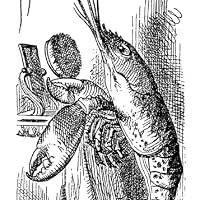
It almost goes without saying that The Red Fairy Book is another enchanting installment of Andrew Lang's Fairy Book collection. Being one of the earlier books, it features illustrations not only of the excellent H.J. Ford, but of another artist named Lancelot Speed. I enjoyed Speed's drawings; they always looked elegant, with sumptuous detail. But they tended to be much less faithful to the stories than Ford's pictures. For example, Speed's illustrations in the story "Farmer Weatherbeard", his picture of one of the long-nosed old women instead depicts her as young and stately, completely contradicting Lang's descriptions. Otherwise, this book was just as enjoyable as the others of the series. These are the stories that I would like to re-read sometime:
-The Twelve Dancing Princesses
-The Princess Mayblossom
-The Black Thief and the Knight of the Glen
-Princess Rosette
-The Enchanted Pig
-The Voice of Death
-The Six Sillies
-Drakestail
-The Ratcatcher
-The True History of Little Golden-Hood
-The Golden Branch
-The Enchanted Canary
-The Nettle Spinner
-Mother Holle
-The Golden Goose
-The Twelve Dancing Princesses
-The Princess Mayblossom
-The Black Thief and the Knight of the Glen
-Princess Rosette
-The Enchanted Pig
-The Voice of Death
-The Six Sillies
-Drakestail
-The Ratcatcher
-The True History of Little Golden-Hood
-The Golden Branch
-The Enchanted Canary
-The Nettle Spinner
-Mother Holle
-The Golden Goose

June 20, 2013
How I read these books when I was a child. . . .
If you are looking for an introduction to the worlds of possibility in fairy tales, it's still a a good series. And can, of course, be read in any order since it's just collections of fairy tales. Those familiar with many tales may note some of the work done to make it a children's book -- "The Death of Koschei the Deathless" more often appears under the title "Marya Morvenva" and I think was simplified a bit here from most variants I have read.
This one tends heavily toward the French and Norwegian. Alas, in the French, it tends heavily toward Madame d'Aulnoy, who is definitely on th literary, not the folk, side. (Some of the other French ones lean toward legends with their allusions to locations and customs.) Also has others, from the Grimms, or Russian, and other places. Its version of "Twelve Dancing Princesses" was the one impressed on my memory; it was years before I met the Grimms' version. I think "The Wonderful Birch" was my favorite Cinderella tale as a child, and still is a good one.
If you are looking for an introduction to the worlds of possibility in fairy tales, it's still a a good series. And can, of course, be read in any order since it's just collections of fairy tales. Those familiar with many tales may note some of the work done to make it a children's book -- "The Death of Koschei the Deathless" more often appears under the title "Marya Morvenva" and I think was simplified a bit here from most variants I have read.
This one tends heavily toward the French and Norwegian. Alas, in the French, it tends heavily toward Madame d'Aulnoy, who is definitely on th literary, not the folk, side. (Some of the other French ones lean toward legends with their allusions to locations and customs.) Also has others, from the Grimms, or Russian, and other places. Its version of "Twelve Dancing Princesses" was the one impressed on my memory; it was years before I met the Grimms' version. I think "The Wonderful Birch" was my favorite Cinderella tale as a child, and still is a good one.

October 25, 2013
It can be difficult to find a fairy tale collection that manages to hit on a wider spectrum of stories, rather than the hish-hash collections of everything that everyone has memorized or the collections that go out of the way to find the most unknown and unusual. This has both, from the familiar to the distinctly different, and told in a classic Victorian voice. There is a story for everyone here, romantic, macabre, and even funny, and from a variety of countries and cultures. It's a good, basic show of different types of stories, and each one is memorable! Defintely a must-have for the fairy tale collector!

September 5, 2013
I read a lot of fairy tales, both as a kid and as an adult. Unfortunately, all the stories are starting to look the same: a young boy, a young girl, some misfortune, an antagonist, some magic and the happy ending.
I believe that's the reason why I didn't enjoyed this book as I'm supposed to.
I believe that's the reason why I didn't enjoyed this book as I'm supposed to.
March 14, 2022
This took longer to read than I thought, but it was an entertaining journey.
My favorites:
The Golden Branch
Drakestail
Mother Holle
The Golden Goose
The 7 Foals
The Norka
Graciosa and Percinet
My favorites:
The Golden Branch
Drakestail
Mother Holle
The Golden Goose
The 7 Foals
The Norka
Graciosa and Percinet

February 20, 2015
The casual (historical) racisms and misogynies notwithstanding, this is still a vital point in the record of children's fantasy literature.

June 28, 2015
I actually liked this a little bit better than the first one.

February 10, 2018
Moral of the tale...pretty princesses must suffer in the hands of ugly step family and then rescued by King or prince...not very encouraging
February 15, 2018
2.5
Again no surprise here, exactly what to expect. I liked to see some of the older version of my favorite fairy tales! Some are boring and most are repetitive.
Again no surprise here, exactly what to expect. I liked to see some of the older version of my favorite fairy tales! Some are boring and most are repetitive.

April 1, 2015
In the second of twelve Fairy Books, Andrew Lang selected some thirty-seven tales of European origin. The end result leans heavily on the canonical, including no less than eight tales from the Grimm brothers alone. They're not the only over-represented parties; their German stories, the courtly French stories of Madame d'Aulnoy, and the Norwegian tales of folklorists P.C. Asbjornson & Jorgen Moe form almost two-thirds of
The Red Fairy Book
.
If the selections lead to a certain overabundance of princesses, curses, enchanted animals, and evil ogres, so too it seems clear that Lang was establishing "fairy" stories as this particular narrow subset of folklore. It feels a little weird to be complaining these stories are too well-known, when it was Andrew and Leonore Lang who probably popularized them in English in the first place! Still there are plenty of finds in this volume for the patient who make their way through the "Jack and the Beanstalks". Hopefully later books in the series show a little more cultural variety. Rating: 4.5 stars
Favorites:
- Snowdrop (aka Snow White) is the only first tier Grimm tale included, so I'll just copy what I said in my review of the Annotated edition: Iconic. Tatar observes that the queen is the "center of narrative energy" of the story, and the dwarfs her chief obstacles. Strangely, this works. No one should be fooled by the Grimms' revision of stepmother for mother, this is the female version of the Oedipal myth, swirling with parental resentment and chockfull of the sinister symbols of feminine beauty.
- I've never really liked Twelve Dancing Princesses (Belgian, unattributed) before, because hey, why can't they dance all night if they want to? This version features a star-gazing cowherd instead of an old soldier, however, and features a distinctly romantic bent as the "Star-Gazer" woos the youngest princess rather than performing any trickery. The spell ends when she chooses to accept his proposal over erasing his memories like she has with all the other suitors. In fact, all the sisters get their choice of suitor and it's a pleasing coming-of-age allegory in which the princesses still have choices and agency after they've "settled down".
- The Princess Mayblossom (French, Madame D'Aulnoy) - Madame d'Aulnoy wrote her literary tales largely for a very adult, courtly audience, and their adaptations here tend to feel a little too abridged and neutered. "Princess Mayblossom" is the best of the bunch, a witty tale of an accursed princess, who having grown up in a tower, runs off with the first man she sees, the ambassador for the king her parents actually intend for her to marry. Only Mayblossom discovers he's actually also a pompous asshole when they get stuck together on a deserted island and he expects her to do all the work. And that folks, is why you shouldn't lock your daughters in towers no matter how many evil fairies there are in your kingdom, though Mayblossom does manage to dispatch herself of the horrible ambassador and get a happy ending.
- The Death of Koschei the Deathless (Russian, William Ralston) is another tale of the travails of marriage (brilliantly retold in Catherynne Valente's Deathless). Poor Ivan manages to marry off his three sisters to perfectly nice bird husbands, but finds himself entangled in a bigamous situation with the fierce warrior princess Marya Morevna. In a Bluebeard-esque situation, Marya Morevna keeps her previous-husband in the cellar. Only her ex is decidedly undead and whisks her away, and Ivan must pull a Psyche and perform impossible tasks for the Baby Yaga in order to find her again. Lesson: Don't dig into your significant other's relationship history unless you're ready for the whole can of worms. Alternately, marry a bird.
- The Master Thief (Norwegian, Peter Christen Asbjornson) stands in the grand tradition of trickster tales of skewering human weaknesses, including but not limited to greed, piousness, and hubris. That two targets of the titular character's pranks are the priest and the governor reflects a certain flippantness or even cynicism towards traditional institutions.
- The Enchanted Pig (Romanian, Mite Kremnitz) is my new favorite version of "East of the Sun, West of the Moon". Of course the Search for the Enchanted Husband is as old as Cupid and Psyche, but it's the lushness of the telling in "Enchanted Pig" that makes the story sing. This starts with the excellent characterization of the young princess, whose petulance and headstrongness become her own kind of strength ("when she saw that her tears and groans did her no good, she got up, determined to go wherever fate should land her"), but extends also her journey, which takes on a distinctly mythical grandeur. Notably this is a story in which the maiden-heroine becomes a mother-heroine, and is helped along her journey by a trio of crone-mothers, so too was the Prince first cursed by a vengeful witch-mother whose son he'd killed. If the story is marred by a certain Victorian moralism, it makes it up with a kind of sentimentalism that becomes empathetic:
- Another variation of Ashputtle, The Wonderful Birch (Russian/Finnish, unattributed) features something of a "greatest-hits" approach to the tale — Cinderella loses a ring, a circlet, and a shoe. The results are pretty awesome, particularly the devious stepmother whose approach to torturing Cinderella are nothing short of determined: "The witch got ready to go [to the claiming]. She tied a wooden beetle on where her child's foot should have been, a log of wood instead of an arm, and stuck a bit of dirt in the empty socket for an eye". As always, Prince Charming is a bit of a dunce and this ruse actually works.
- The Nettle Spinner (Flemish/French, Charles Deulin) was completely new to me, and a real delight. The rare fairy tale that celebrates the virtue of compassion and loyalty between unrelated women, no less! Basically there's a horrible count who besides sucking at the usual administrative duties, is also a douchey lothario. Rejected by a local village girl, he prevents her marriage, and promises she will never weave a bridal gown until she weaves him a death shroud of nettles first. Only she does, and as she makes progress on the shroud, the count becomes increasingly ill... Lesson: Uteruses before duderuses. Also, never taunt spinners, they have powers over life and death.
If the selections lead to a certain overabundance of princesses, curses, enchanted animals, and evil ogres, so too it seems clear that Lang was establishing "fairy" stories as this particular narrow subset of folklore. It feels a little weird to be complaining these stories are too well-known, when it was Andrew and Leonore Lang who probably popularized them in English in the first place! Still there are plenty of finds in this volume for the patient who make their way through the "Jack and the Beanstalks". Hopefully later books in the series show a little more cultural variety. Rating: 4.5 stars
Favorites:
- Snowdrop (aka Snow White) is the only first tier Grimm tale included, so I'll just copy what I said in my review of the Annotated edition: Iconic. Tatar observes that the queen is the "center of narrative energy" of the story, and the dwarfs her chief obstacles. Strangely, this works. No one should be fooled by the Grimms' revision of stepmother for mother, this is the female version of the Oedipal myth, swirling with parental resentment and chockfull of the sinister symbols of feminine beauty.
- I've never really liked Twelve Dancing Princesses (Belgian, unattributed) before, because hey, why can't they dance all night if they want to? This version features a star-gazing cowherd instead of an old soldier, however, and features a distinctly romantic bent as the "Star-Gazer" woos the youngest princess rather than performing any trickery. The spell ends when she chooses to accept his proposal over erasing his memories like she has with all the other suitors. In fact, all the sisters get their choice of suitor and it's a pleasing coming-of-age allegory in which the princesses still have choices and agency after they've "settled down".
- The Princess Mayblossom (French, Madame D'Aulnoy) - Madame d'Aulnoy wrote her literary tales largely for a very adult, courtly audience, and their adaptations here tend to feel a little too abridged and neutered. "Princess Mayblossom" is the best of the bunch, a witty tale of an accursed princess, who having grown up in a tower, runs off with the first man she sees, the ambassador for the king her parents actually intend for her to marry. Only Mayblossom discovers he's actually also a pompous asshole when they get stuck together on a deserted island and he expects her to do all the work. And that folks, is why you shouldn't lock your daughters in towers no matter how many evil fairies there are in your kingdom, though Mayblossom does manage to dispatch herself of the horrible ambassador and get a happy ending.
- The Death of Koschei the Deathless (Russian, William Ralston) is another tale of the travails of marriage (brilliantly retold in Catherynne Valente's Deathless). Poor Ivan manages to marry off his three sisters to perfectly nice bird husbands, but finds himself entangled in a bigamous situation with the fierce warrior princess Marya Morevna. In a Bluebeard-esque situation, Marya Morevna keeps her previous-husband in the cellar. Only her ex is decidedly undead and whisks her away, and Ivan must pull a Psyche and perform impossible tasks for the Baby Yaga in order to find her again. Lesson: Don't dig into your significant other's relationship history unless you're ready for the whole can of worms. Alternately, marry a bird.
- The Master Thief (Norwegian, Peter Christen Asbjornson) stands in the grand tradition of trickster tales of skewering human weaknesses, including but not limited to greed, piousness, and hubris. That two targets of the titular character's pranks are the priest and the governor reflects a certain flippantness or even cynicism towards traditional institutions.
- The Enchanted Pig (Romanian, Mite Kremnitz) is my new favorite version of "East of the Sun, West of the Moon". Of course the Search for the Enchanted Husband is as old as Cupid and Psyche, but it's the lushness of the telling in "Enchanted Pig" that makes the story sing. This starts with the excellent characterization of the young princess, whose petulance and headstrongness become her own kind of strength ("when she saw that her tears and groans did her no good, she got up, determined to go wherever fate should land her"), but extends also her journey, which takes on a distinctly mythical grandeur. Notably this is a story in which the maiden-heroine becomes a mother-heroine, and is helped along her journey by a trio of crone-mothers, so too was the Prince first cursed by a vengeful witch-mother whose son he'd killed. If the story is marred by a certain Victorian moralism, it makes it up with a kind of sentimentalism that becomes empathetic:
At the sight of her, looking so changed by all that she had suffered for his sake, his heart was moved by such love and longing and by so great a pity that he suddenly became a man.Kremnitz also provides the amusing The Voice of Death, which is something of a cross between a death-myth and the Romanian version of the joke that begins 'there was a man who moved to avoid death'.
- Another variation of Ashputtle, The Wonderful Birch (Russian/Finnish, unattributed) features something of a "greatest-hits" approach to the tale — Cinderella loses a ring, a circlet, and a shoe. The results are pretty awesome, particularly the devious stepmother whose approach to torturing Cinderella are nothing short of determined: "The witch got ready to go [to the claiming]. She tied a wooden beetle on where her child's foot should have been, a log of wood instead of an arm, and stuck a bit of dirt in the empty socket for an eye". As always, Prince Charming is a bit of a dunce and this ruse actually works.
- The Nettle Spinner (Flemish/French, Charles Deulin) was completely new to me, and a real delight. The rare fairy tale that celebrates the virtue of compassion and loyalty between unrelated women, no less! Basically there's a horrible count who besides sucking at the usual administrative duties, is also a douchey lothario. Rejected by a local village girl, he prevents her marriage, and promises she will never weave a bridal gown until she weaves him a death shroud of nettles first. Only she does, and as she makes progress on the shroud, the count becomes increasingly ill... Lesson: Uteruses before duderuses. Also, never taunt spinners, they have powers over life and death.

December 14, 2024
Read via audiobook.
Okay, this review is a bit outside of the norm - it's not reviewing the author's writing per se (Lang only compiled these tales, and did not write them) it's reviewing the stories in this selection and how well they were compiled.
I'd give this selection four stars, not for the writing, but for the selection of tales. I thought this selection had a healthy, solid mix of traditional and more well-known fairytales as opposed to just the most famous ones. As an avid reader of fairytales, I've read the most well-known ones multiple times, so it was nice to read some fairytales that I had not encountered before.
I'd recommend this to anyone interested in both well-known tales as well as someone looking to read some of the "off the beaten path" tales.
Okay, this review is a bit outside of the norm - it's not reviewing the author's writing per se (Lang only compiled these tales, and did not write them) it's reviewing the stories in this selection and how well they were compiled.
I'd give this selection four stars, not for the writing, but for the selection of tales. I thought this selection had a healthy, solid mix of traditional and more well-known fairytales as opposed to just the most famous ones. As an avid reader of fairytales, I've read the most well-known ones multiple times, so it was nice to read some fairytales that I had not encountered before.
I'd recommend this to anyone interested in both well-known tales as well as someone looking to read some of the "off the beaten path" tales.

May 30, 2014
I don’t have as much to say about this book as I did about The Crimson Fairy Book, because a lot of my thoughts are still the same – as a modern reader I often find myself asking “why” when a character randomly does something. I long for more plot, character motivation, sound reasoning! I tried hard to leave those thoughts aside and just enjoy these wacky little tales.
The back of the book explains that this volume contains some familiar tales like Jack and the Beanstalk, Rapunzel, The Ratcatcher and Snowdrop. But it also contains “a wonderful collection of lesser-known tales from French, German, Danish, Russian and Roumanian sources.” It contains 37 tales and is an unabridged copy of the original 1890 edition, complete with 4 plates and 93 illustrations by H.J. Ford.
This book contained several tales that I grew up with as a child: The Twelve Dancing Princesses, Jack and the Beanstalk, The Ratcatcher (I know it as The Pied Piper), Rapunzel and Snowdrop (aka Snow White). I first noticed that The Twelve Dancing Princesses was a little more sinister than I remember. In regards to their dancing adventures, the princes who dance with them all night long are all those who have come to find their secret – they had been made to drink a potion “which froze the heart and left nothing but the love of dancing.” In another tale, Princess Mayblossom (similar to Sleeping Beauty in that the princess is both gifted and cursed by fairies) the princess chooses to run off with a man simply based on his looks and soon regrets it. Yet, instead of learning a lesson, the evil fairy is blamed for the entire occurrence, leaving the princess free of any responsibility for her actions.
There are some stories that felt very familiar, not only to those in The Red Fairy Book, but also to other tales in this book. There are a lot of similar themes, like finding three magic items, receiving three gifts, fighting three enemies. The beautiful people are most often rewarded for being beautiful – though sometimes also clever and good – and they tend to marry other beautiful people. The villains are generally ugly or selfish – very basic representatives of the characteristics that can make us seem like bad people.
I found a nice quote in Jack and the Beanstalk – “…he was a very persevering boy, and he knew that the way to succeed in anything is not to give up.” I also liked the lesson at the end of The Voice of Death – A man decides he doesn’t want to die, so he travels far and wide to find a place where death doesn’t exist. He settles in a town where he’s told people don’t die – they just leave when a voice calls them away and they never return. The man thinks he’ll simply avoid the voice and live forever. Eventually it begins to call him while he’s at the barber shop. First he tries to ignore it, but it persists so much in calling him that he takes the barber’s razor and runs out the door, thinking that he will kill the voice. Instead he falls into a pit and dies. No one can escape death!
It’s fun to read these tales, despite the fact that I might be left scratching my head trying to find a lesson or moral. I do wish that at the beginning or end of each tale it would say what country it’s from. I also think these would be excellent fodder if someone was looking to reference or retell an obscure fairy tale.
The back of the book explains that this volume contains some familiar tales like Jack and the Beanstalk, Rapunzel, The Ratcatcher and Snowdrop. But it also contains “a wonderful collection of lesser-known tales from French, German, Danish, Russian and Roumanian sources.” It contains 37 tales and is an unabridged copy of the original 1890 edition, complete with 4 plates and 93 illustrations by H.J. Ford.
This book contained several tales that I grew up with as a child: The Twelve Dancing Princesses, Jack and the Beanstalk, The Ratcatcher (I know it as The Pied Piper), Rapunzel and Snowdrop (aka Snow White). I first noticed that The Twelve Dancing Princesses was a little more sinister than I remember. In regards to their dancing adventures, the princes who dance with them all night long are all those who have come to find their secret – they had been made to drink a potion “which froze the heart and left nothing but the love of dancing.” In another tale, Princess Mayblossom (similar to Sleeping Beauty in that the princess is both gifted and cursed by fairies) the princess chooses to run off with a man simply based on his looks and soon regrets it. Yet, instead of learning a lesson, the evil fairy is blamed for the entire occurrence, leaving the princess free of any responsibility for her actions.
There are some stories that felt very familiar, not only to those in The Red Fairy Book, but also to other tales in this book. There are a lot of similar themes, like finding three magic items, receiving three gifts, fighting three enemies. The beautiful people are most often rewarded for being beautiful – though sometimes also clever and good – and they tend to marry other beautiful people. The villains are generally ugly or selfish – very basic representatives of the characteristics that can make us seem like bad people.
I found a nice quote in Jack and the Beanstalk – “…he was a very persevering boy, and he knew that the way to succeed in anything is not to give up.” I also liked the lesson at the end of The Voice of Death – A man decides he doesn’t want to die, so he travels far and wide to find a place where death doesn’t exist. He settles in a town where he’s told people don’t die – they just leave when a voice calls them away and they never return. The man thinks he’ll simply avoid the voice and live forever. Eventually it begins to call him while he’s at the barber shop. First he tries to ignore it, but it persists so much in calling him that he takes the barber’s razor and runs out the door, thinking that he will kill the voice. Instead he falls into a pit and dies. No one can escape death!
It’s fun to read these tales, despite the fact that I might be left scratching my head trying to find a lesson or moral. I do wish that at the beginning or end of each tale it would say what country it’s from. I also think these would be excellent fodder if someone was looking to reference or retell an obscure fairy tale.

January 10, 2021
The Red Fairy Book (1890) by Andrew Lang (ed) is the second in Lang's series of "color" fairy tale collections. Lang was a Scots poet, novelist, and literary critic who began collecting these tales in the late nineteenth century in order to conserve "the old stories that have pleased so many generations." The stories include well-known classics such as "Jack and the Beanstalk," "The Twelve Dancing Princesses," "The Golden Goose," and "Rapunzel" as well tales that I had never heard of--like "The Death of Koschei the Deathless" and "The Nettle Spinner." There are also several variations of the Cinderella story that I'd not seen before. His stories transport us to a magical land full enchanted forests and isolated castles where trolls, giants, and fairies can be found.
As a child growing up, I loved those magical worlds. My grandma had given me Lang's first book of fairy tales, The Blue Fairy Book, and I loved it. I reread it more times than I could count. I had no idea then that there was a whole rainbow of other fairy tale books that I might have read as well. So, in 2015, when I found The Yellow Fairy Book at our Friends of the Library used book store, I was super excited. Except--it wasn't exactly Lang's book. Some dude by the name of Brian Alderson had edited Lang's edited book. And I found it rather disappointing (to see why--check out my review by clicking the title.) So...when I found a vintage copy of The Red Fairy Book at our annual community book sale a few years later, I snatched it up, hoping that this time the reading experience would be much closer to what I had when reading The Blue Fairy Book.
There are a number of selfish and mean characters in these stories--from the usual evil stepmothers to disgruntled fathers and kings. There are also good-hearted, kind princesses and princes and children who are willing to withstand the hardships flung at them by others. Sometimes, they don't even really notice that someone is being mean to them:
As King Grumpy was not used to being contradicted in anything, he was very much displeased with his son, and ordered that he should be imprisoned in the tower that was kept on purpose for rebellious Princes, but had not been used for about two hundred years, because there had not been any. The Prince thought all the rooms looked strangely old-fashioned, with their antique furniture, but as there was a good library he was pleased, for he was very fond of reading....
Hey, if I had to be imprisoned and there was a good library handy, I might not mind too much either.
The stories here are definitely more like what I remember of The Blue Fairy Book and I have to say that I did enjoy this older edition of The Red Fairy Book more than the updated Yellow--but I can't say I'm as enchanted with it as I was when I was young. There's something about being a child and reading fairy tales that just can't be reclaimed in my fifties. When I was a child I would have blazed through this book, now it took me several days to finish. An enjoyable read, nonetheless, and I'm very glad to have found another of the color fairy editions.
First posted on my blog My Reader's Block
As a child growing up, I loved those magical worlds. My grandma had given me Lang's first book of fairy tales, The Blue Fairy Book, and I loved it. I reread it more times than I could count. I had no idea then that there was a whole rainbow of other fairy tale books that I might have read as well. So, in 2015, when I found The Yellow Fairy Book at our Friends of the Library used book store, I was super excited. Except--it wasn't exactly Lang's book. Some dude by the name of Brian Alderson had edited Lang's edited book. And I found it rather disappointing (to see why--check out my review by clicking the title.) So...when I found a vintage copy of The Red Fairy Book at our annual community book sale a few years later, I snatched it up, hoping that this time the reading experience would be much closer to what I had when reading The Blue Fairy Book.
There are a number of selfish and mean characters in these stories--from the usual evil stepmothers to disgruntled fathers and kings. There are also good-hearted, kind princesses and princes and children who are willing to withstand the hardships flung at them by others. Sometimes, they don't even really notice that someone is being mean to them:
As King Grumpy was not used to being contradicted in anything, he was very much displeased with his son, and ordered that he should be imprisoned in the tower that was kept on purpose for rebellious Princes, but had not been used for about two hundred years, because there had not been any. The Prince thought all the rooms looked strangely old-fashioned, with their antique furniture, but as there was a good library he was pleased, for he was very fond of reading....
Hey, if I had to be imprisoned and there was a good library handy, I might not mind too much either.
The stories here are definitely more like what I remember of The Blue Fairy Book and I have to say that I did enjoy this older edition of The Red Fairy Book more than the updated Yellow--but I can't say I'm as enchanted with it as I was when I was young. There's something about being a child and reading fairy tales that just can't be reclaimed in my fifties. When I was a child I would have blazed through this book, now it took me several days to finish. An enjoyable read, nonetheless, and I'm very glad to have found another of the color fairy editions.
First posted on my blog My Reader's Block
August 25, 2017
I remember reading this series while babysitting my cousin. The illustrations were wonderful and I loved the darker take on fairy tales, as I had heard them only Disney-fied previously. I hadn't been a huge fan of fairy tales as a child because they were too far removed from reality as I knew it-- there was very little magic in my life and I was far too pragmatic (see: stubborn) to get into them.
I was shocked, however, when I read 'The Enchanted Canary' and it laid bare a reality of fairy tales that immediately showed me why I didn't enjoy them:
"`I ask nothing better than to marry,' replied Desire, `but I have never seen a woman that pleases me. All the girls here are pink and white, and I am tired to death of their eternal lilie and roses.
`My faith!' cried Tubby; `do you want to marry a negress, and give me grandchildren as ugly as monkeys and as stupid as owls?'"
And in that quick excerpt, I looked at my "pink" cousin as she played with her assortment of Barbies and realized my "negress" mother's genes would be the reason I would never find a 'Prince'. The conclusion of the story doesn't fare much better, as the tawny character who tries to steal the Prince's affection is, in a negative fashion, said to have skin the color of clay.
I did notice this same series on the shelves of many of my "pink" friends' homes but never anyone else's-- and while I do see these are old stories from another time, I have since found they reflect the values of the parents in those homes even today. The homes where I was never really welcome to be a guest, the homes where the parents disallowed their children to attend my birthday parties-- they tended to have the entire set.
Still, great books all the same, but be aware of what you are implicitly teaching your child before you decide to read them.
I was shocked, however, when I read 'The Enchanted Canary' and it laid bare a reality of fairy tales that immediately showed me why I didn't enjoy them:
"`I ask nothing better than to marry,' replied Desire, `but I have never seen a woman that pleases me. All the girls here are pink and white, and I am tired to death of their eternal lilie and roses.
`My faith!' cried Tubby; `do you want to marry a negress, and give me grandchildren as ugly as monkeys and as stupid as owls?'"
And in that quick excerpt, I looked at my "pink" cousin as she played with her assortment of Barbies and realized my "negress" mother's genes would be the reason I would never find a 'Prince'. The conclusion of the story doesn't fare much better, as the tawny character who tries to steal the Prince's affection is, in a negative fashion, said to have skin the color of clay.
I did notice this same series on the shelves of many of my "pink" friends' homes but never anyone else's-- and while I do see these are old stories from another time, I have since found they reflect the values of the parents in those homes even today. The homes where I was never really welcome to be a guest, the homes where the parents disallowed their children to attend my birthday parties-- they tended to have the entire set.
Still, great books all the same, but be aware of what you are implicitly teaching your child before you decide to read them.

July 22, 2011
Anyone acquainted with The Complete Grimm's Fairy Tales will find this book familier going, although somewhat lighter fare. I also realized as I began that I should have started with The Blue Fairy Book, something I intend to rectify soon.
I don't know if it's a good idea to plow through this all at once, but if you do, you'll quickly notice and perhaps even grow troubled by the repetitive nature of the tales, since many are, after all, but regional variations on the other. At the same time, it can be interesting as to how exactly they do vary. For example, one tale's trolls' heads come in multiples of three, another's, five. Is this simply a case of one-upsmanship (hey, my hero cut off fifteen heads, not a measly nine!) or is there some reason for the variation? Why do some collect heads as trophies from the corpses of defeated foes (yeah, there's some definite serial-killer type stuff at work here) and others, tongues and/or lungs? (Those with fine sensibilities may want to skip the spoiler)
So, no, I don't know if this is really a good bedtime collection of stories, or maybe it is, depending on your theories concerning child-rearing. (All in all, they probably won't care nearly as much as you do, but…)
ALl in all, I found it a fascinating read on several levels, but it's probably not for everyone. Some of you may want to stick to Mother Goose.
I don't know if it's a good idea to plow through this all at once, but if you do, you'll quickly notice and perhaps even grow troubled by the repetitive nature of the tales, since many are, after all, but regional variations on the other. At the same time, it can be interesting as to how exactly they do vary. For example, one tale's trolls' heads come in multiples of three, another's, five. Is this simply a case of one-upsmanship (hey, my hero cut off fifteen heads, not a measly nine!) or is there some reason for the variation? Why do some collect heads as trophies from the corpses of defeated foes (yeah, there's some definite serial-killer type stuff at work here) and others, tongues and/or lungs? (Those with fine sensibilities may want to skip the spoiler)
So, no, I don't know if this is really a good bedtime collection of stories, or maybe it is, depending on your theories concerning child-rearing. (All in all, they probably won't care nearly as much as you do, but…)
ALl in all, I found it a fascinating read on several levels, but it's probably not for everyone. Some of you may want to stick to Mother Goose.

April 11, 2016
My mother read me these books as a child, but on rereading as an adult, I can definitely tell that she must have left some things out! There are some blatantly racist comments in here, a fair bit of graphic violence, and one female character is even called a "slut," which is a bit jarring in a book of fairy tales. Additionally, it's often hard to find the moral of the stories included, and several of them share the same themes, motifs, etc. (For example, I learned pretty quickly that if our hero encounters a three-headed troll early on, he'll probably have to fight six and nine-headed ones shortly thereafter.) This can sometimes make the stories seem a bit tedious and repetitive. However, it's definitely interesting to read such a diverse collection of tales from different (European) countries, and to encounter them in an earlier, relatively unpolished form, with plenty of their original violence, prejudice, and occasional baffling silliness. A favorite that I actually remembered from childhood was "The Golden Goose," and reminiscing over that story was worth the read by itself.
Displaying 1 - 30 of 189 reviews