

What do you think?

Sei proprio il mio Typo: La vita segreta dei caratteri tipografici
Pressoché sconosciute fino a vent'anni fa, grazie all'avvento della tecnologia informatica oggi le font sono a tutti gli effetti protagoniste del nostro quotidiano. Ma quali sono state le tappe che le hanno portate a uscire dalla ristretta cerchia di addetti ai lavori e di qualche sparuto appassionato? La risposta è in questo saggio di Simon Garfield, che rappresenta un autentico compendio della secolare storia della tipografia, da Gutenberg ai giorni nostri, che conta oltre centomila tra font e caratteri tipografici, ognuno con le sue peculiarità e le sue alterne fortune. Condito di aneddoti sul design delle parole intorno a noi, "Sei proprio il mio typo" si impone come testo di riferimento per quanti desiderano conoscere l'affascinante mondo delle font che, come sottolinea l'autore, non sono il semplice disegno di lettere dell'alfabeto, ma costituiscono un vero e proprio veicolo di emozioni. E, come vedremo, è proprio in virtù di questa loro innata capacità comunicativa che, in molti casi, sono finite per diventare icone universalmente riconoscibili, scolpite per sempre, nel bene e nel male, nell'immaginario collettivo di ogni epoca e latitudine.
361 pages, Paperback
First published October 21, 2010
About the author
Simon Garfield
37 books354 followersSimon Garfield is a British journalist and non-fiction author. He was educated at the independent University College School in Hampstead, London, and the London School of Economics, where he was the Executive Editor of The Beaver. He also regularly writes for The Observer newspaper.
Ratings & Reviews
Friends & Following
Create a free account to discover what your friends think of this book!
Community Reviews
Displaying 1 - 30 of 1,592 reviews

May 19, 2013
Updated - 7/9/13 - see link at bottom
I am hardly a monogamous sort. I find that I am regularly attracted to different types. Sometimes I like them with big bowls. I am definitely fond of zaftig with strokable, curvy edges, sometimes I prefer something a bit more conservative, upright, familiar. And rarely, slender even, maybe with sharp edges. Occasionally I go for something way out there, maybe with spikes or exploding bits. Ok, you can put your filthy mind back where it belongs now. We are talking about font types, but you knew that, right?
One of the great joys to be had in reading is to learn something new about some aspect of life that has been before your eyes all along. Walking down a street with no fonts on display might lead one to suspect involuntary transport to an unintended time and location, say Soviet era Moscow, or worse, Siberia. (and yes, there is a font called Siberian, a unicase, sans-serif). But for almost all of us, we are surrounded by fonts. Simon Garfield has certainly touched many, particularly in the GR community, with his work. We all do love to read and are probably more susceptible to the attraction of beauty, utility and charm in fonts than most. Yeah, we bad. But not only are fonts significant in the books, magazines, newspapers, and web-sites we read, they demand our attention as we walk down the street, step into an elevator, check the time, unwrap our breakfast, decide what faucet to twist when washing our hands, and they call to us from the labels on our clothing, whether obnoxiously plastered on the outside or applied more decently in clothing interiors. They are on traffic lights, highway signs, airport directives, the sides of police, fire and emergency vehicles. And they have, of course, been around in different times. Fonts do seem to capture elements of the zeitgeist.

A favorite haunt of mine back in the day
Thank goodness we have not heard of anyone with an allergy or aversion to fonts. Such an unfortunate would, under the onslaught of type in which we live, soon be reduced to a quivering mound of jelly. Fonts are everywhere and someone not only decided what font needed to be attached to each and every word, someone had to design each and every one. And I am not referring solely to you law-averse sorts (you know who you are) who communicate your needs with literal cut-and-paste design. Really, someone else designed each and every letter.

For particularly lazy criminals this Ransom Note Vector font might come in handy
Garfield offers us a laudable overview not just of what is out there in the world of fonting, (See, I didn’t say he was a font of wisdom on the subject) but how each and every bit of it (OK, OK, not each and every bit, but a whole lot of it) came to be, with notice given to many of those who did the hard work of designing and literally casting the dies which have defined printing for hundreds of years.
For those who might only know of Gutenberg from the project that is named after him, it was illuminating to learn that he had been a blacksmith before inventing the printing press. Working with molten metal definitely relates. Garfield offers us a considerable cast of characters (one might say they were all type cast. I wouldn’t. Or that they comprised a cast to die for. No, not me. That would be too low. But some might.) responsible for how words look. Gill Sans, for example was created by, no shock, Eric Gill. (Mister Sans is unaccounted for) Matthew Carter, the founder of Bitstream, designed Verdana among many others. John Baskerville designed the font that was named for him, but there was no mention of his dog. There really is a guy named Bodoni out there, first name, Giambattista. And on it goes. Some of these type-designers’ stories are more interesting than others. But if you find the one you are reading beginning to induce yawns, hang on for a few pages. There will be another that might catch your interest. There is attention given to the development of fonts in various countries, most notably Switzerland, Germany, France and England. Perhaps the most delicious name in the book belongs to a printer from the 1500s. Wynkun de Worde, the first Fleet Street printer, used an expanding range of typefaces, a big innovation at the time.

(Brothers Blynkun and Nodde de Worde did not get any ink here.)
My absolute favorite item in the book has to do with a spoof published in The Guardian on April Fool’s Day in 1977, to mark the 10th anniversary of the Indian Ocean nationhood of San Serriffe. And no, it was not leaked by a twenty-something intelligence worker.

Some readers, we are told, tried to book holidays there
There is much information of other sorts as well in Just My Type. Garfield looks at research that says that our brains demand evenness in a font. He looks at the gold rush of printing that followed Gutenberg, at whether a font can be German or Jewish, and at tools for helping identify individual fonts, both books and software. And he offers some intel on how this or that locality selected the font to be used across their cities, for things like airport or street signage. In addition there are some bits on characters (the type type, not the human sort) most of us have never heard of. Doctor Seuss would be thrilled.
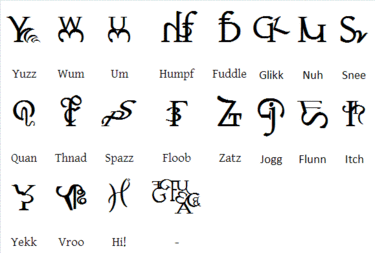
Letters from Seuss’s On Beyond Zebra
There are certainly many bad fonts out there. Garfield offers a list of the ten worst fonts in the world. With the explosive growth in the number of such creatures, I imagine this is a list that will be a challenge to maintain.
Ok, so this can be a fun book for us reader-sorts. But I confess it was not a total love fest for me. I found that the illustrations offered for many of the fonts were not sufficient, or even sometimes available. Also, as someone with a memory that is not nearly so well formed as the metal dies in question here, I found that much of the information seemed to slip past, in one eye and out the other. It was a lot to take in. So, that’s my mandatory gripe. If I could give the book four and a half stars I would, for the occasional glazing over I experienced. But there is such a wealth of interesting information that my kinder parts persuaded me to go ahead and submit a fiver.
One can only pray that the new fonts that continue to fill our world and our sensibilities will do at least as well, and hopefully even better than those that have come before. And it seems that we should take no chances with this, so I offer here the beginning of a celestial wish for visibility, clarity and readability
==============================EXTRA STUFF
The Atlantic Magazine had a fun video showing the history of typography
July 31, 2017 - New York Magazine - Calibri’s Scandalous History - a very Holmesian tale of a font being used as evidence - thanks to GR pal Jan Rice for alerting us to this one
I am hardly a monogamous sort. I find that I am regularly attracted to different types. Sometimes I like them with big bowls. I am definitely fond of zaftig with strokable, curvy edges, sometimes I prefer something a bit more conservative, upright, familiar. And rarely, slender even, maybe with sharp edges. Occasionally I go for something way out there, maybe with spikes or exploding bits. Ok, you can put your filthy mind back where it belongs now. We are talking about font types, but you knew that, right?
One of the great joys to be had in reading is to learn something new about some aspect of life that has been before your eyes all along. Walking down a street with no fonts on display might lead one to suspect involuntary transport to an unintended time and location, say Soviet era Moscow, or worse, Siberia. (and yes, there is a font called Siberian, a unicase, sans-serif). But for almost all of us, we are surrounded by fonts. Simon Garfield has certainly touched many, particularly in the GR community, with his work. We all do love to read and are probably more susceptible to the attraction of beauty, utility and charm in fonts than most. Yeah, we bad. But not only are fonts significant in the books, magazines, newspapers, and web-sites we read, they demand our attention as we walk down the street, step into an elevator, check the time, unwrap our breakfast, decide what faucet to twist when washing our hands, and they call to us from the labels on our clothing, whether obnoxiously plastered on the outside or applied more decently in clothing interiors. They are on traffic lights, highway signs, airport directives, the sides of police, fire and emergency vehicles. And they have, of course, been around in different times. Fonts do seem to capture elements of the zeitgeist.
A favorite haunt of mine back in the day
Thank goodness we have not heard of anyone with an allergy or aversion to fonts. Such an unfortunate would, under the onslaught of type in which we live, soon be reduced to a quivering mound of jelly. Fonts are everywhere and someone not only decided what font needed to be attached to each and every word, someone had to design each and every one. And I am not referring solely to you law-averse sorts (you know who you are) who communicate your needs with literal cut-and-paste design. Really, someone else designed each and every letter.
For particularly lazy criminals this Ransom Note Vector font might come in handy
Garfield offers us a laudable overview not just of what is out there in the world of fonting, (See, I didn’t say he was a font of wisdom on the subject) but how each and every bit of it (OK, OK, not each and every bit, but a whole lot of it) came to be, with notice given to many of those who did the hard work of designing and literally casting the dies which have defined printing for hundreds of years.
For those who might only know of Gutenberg from the project that is named after him, it was illuminating to learn that he had been a blacksmith before inventing the printing press. Working with molten metal definitely relates. Garfield offers us a considerable cast of characters (one might say they were all type cast. I wouldn’t. Or that they comprised a cast to die for. No, not me. That would be too low. But some might.) responsible for how words look. Gill Sans, for example was created by, no shock, Eric Gill. (Mister Sans is unaccounted for) Matthew Carter, the founder of Bitstream, designed Verdana among many others. John Baskerville designed the font that was named for him, but there was no mention of his dog. There really is a guy named Bodoni out there, first name, Giambattista. And on it goes. Some of these type-designers’ stories are more interesting than others. But if you find the one you are reading beginning to induce yawns, hang on for a few pages. There will be another that might catch your interest. There is attention given to the development of fonts in various countries, most notably Switzerland, Germany, France and England. Perhaps the most delicious name in the book belongs to a printer from the 1500s. Wynkun de Worde, the first Fleet Street printer, used an expanding range of typefaces, a big innovation at the time.
(Brothers Blynkun and Nodde de Worde did not get any ink here.)
My absolute favorite item in the book has to do with a spoof published in The Guardian on April Fool’s Day in 1977, to mark the 10th anniversary of the Indian Ocean nationhood of San Serriffe. And no, it was not leaked by a twenty-something intelligence worker.
Some readers, we are told, tried to book holidays there
There is much information of other sorts as well in Just My Type. Garfield looks at research that says that our brains demand evenness in a font. He looks at the gold rush of printing that followed Gutenberg, at whether a font can be German or Jewish, and at tools for helping identify individual fonts, both books and software. And he offers some intel on how this or that locality selected the font to be used across their cities, for things like airport or street signage. In addition there are some bits on characters (the type type, not the human sort) most of us have never heard of. Doctor Seuss would be thrilled.
Letters from Seuss’s On Beyond Zebra
There are certainly many bad fonts out there. Garfield offers a list of the ten worst fonts in the world. With the explosive growth in the number of such creatures, I imagine this is a list that will be a challenge to maintain.
Ok, so this can be a fun book for us reader-sorts. But I confess it was not a total love fest for me. I found that the illustrations offered for many of the fonts were not sufficient, or even sometimes available. Also, as someone with a memory that is not nearly so well formed as the metal dies in question here, I found that much of the information seemed to slip past, in one eye and out the other. It was a lot to take in. So, that’s my mandatory gripe. If I could give the book four and a half stars I would, for the occasional glazing over I experienced. But there is such a wealth of interesting information that my kinder parts persuaded me to go ahead and submit a fiver.
One can only pray that the new fonts that continue to fill our world and our sensibilities will do at least as well, and hopefully even better than those that have come before. And it seems that we should take no chances with this, so I offer here the beginning of a celestial wish for visibility, clarity and readability
Helvetica, full of grace, the font is with thee…you know, just in case.
==============================EXTRA STUFF
The Atlantic Magazine had a fun video showing the history of typography
July 31, 2017 - New York Magazine - Calibri’s Scandalous History - a very Holmesian tale of a font being used as evidence - thanks to GR pal Jan Rice for alerting us to this one

May 13, 2012
Rating: 4.5* of five
***UPDATE 6 Sept 2013***I watched a documentary on Netflix last night called...yes...Helvetica! It was made for Helvetica's 50th anniversary in 2007. I think anyone who liked the idea of this book would enjoy it.
The Publisher Says: A hugely entertaining and revealing guide to the history of type that asks, What does your favorite font say about you?
Fonts surround us every day, on street signs and buildings, on movie posters and books, and on just about every product we buy. But where do fonts come from, and why do we need so many? Who is responsible for the staid practicality of Times New Roman, the cool anonymity of Arial, or the irritating levity of Comic Sans (and the movement to ban it)?
Typefaces are now 560 years old, but we barely knew their names until about twenty years ago when the pull-down font menus on our first computers made us all the gods of type. Beginning in the early days of Gutenberg and ending with the most adventurous digital fonts, Simon Garfield explores the rich history and subtle powers of type. He goes on to investigate a range of modern mysteries, including how Helvetica took over the world, what inspires the seeming ubiquitous use of Trajan on bad movie posters, and exactly why the all-type cover of Men are from Mars, Women are from Venus was so effective. It also examines why the "T" in the Beatles logo is longer than the other letters and how Gotham helped Barack Obama into the White House. A must-have book for the design conscious, Just My Type's cheeky irreverence will also charm everyone who loved Eats, Shoots & Leaves and Schott's Original Miscellany.
My Review: I confess it: I am a type geek. I love a well-designed book. I love to immerse myself in a book and lose all sense of time and space, and then after I've returned to the dull confines of mortal reality, look closely at the object in front of me to winkle out its secrets. Often I find the design of a book can make it a better read (The Night Circus being a great example) or pop me so far out of the story there's no way for me to get back in (no names, I don't want to hear from all those shady gray twilit ladies with their dripping fangs).
So this book was meant for me. Simon Garfield, not a first-time writer apparently though one couldn't prove it by me, is the perfect cicerone into the mysteries of typefaces, fonts, and typography (three separate things); he's as nutsy about the subject as one can get (did you know there's a type museum? It's not open to the public, yes the author knows about it, knows the curator...that's deep), and able with his clear and pleasant prose voice to bring the reader right along on his trip.
It might not be instantly obvious, but every single thing you look at has some relationship to type. TV and movies have type in their credits, the box your microwave dinner comes in is loaded with type, the computer you're using? All type interfaces. The dashboard of your car: Type. The entire made world relates to us through type at some level. Yet many, if not most, of us are blind to its specifics, absorbing only its results and usually its subliminal messages. And they are many. Some typefaces convey authority (Futura, anyone? Helvetica! Trajan!) and others soothing calming pleasure (Optima). Some are bluntly informative (Times New Roman, Baskerville) and others whimsically amusing (Papyrus, the loathed Comic Sans).All of them, without fail, were created by crazy people called type designers to fulfill a function. For better or worse, some become standards, and some sink into the great morass of indifference. Such is, after all, the fate of most things...and most people, even type designers.
The stories of the type designers Garfield profiles were entertaining, and often illuminating: Eric Gill, designer of the famous typeface Gill Sans, was a lech of the first water. He was, in fact, criminally culpable in today's world for many of his sexual adventures. Funny thing...I've never liked Gill Sans. Now I have an excuse! John Baskerville, whose beautiful solid-yet-graceful serif typeface is one of my personal favorites, lived a tough life as a type-founder and, within months of his death, was so little valued by his widow that she offered a stranger who came from Europe to meet her recently deceased husband all his fonts and tools for a song. I suppose it's my subliminal response to underdogs that makes me love the typeface so.
Since type has been part of my existence from little on up, it's hard for me to gauge how good an introduction this book would make to a type-tyro, but my sense is that Garfield's obsessiveness about the topic makes him a good and reliable conductor on the train. Get on with a pleasant tingle of anticipation, alight at each small station dedicated to the history of one specific typeface, and arrive refreshed and amused at the destination, the place of expanded appreciation of the nature of your entire visible world.

This work is licensed under a Creative Commons Attribution-NonCommercial-ShareAlike 3.0 Unported License.
***UPDATE 6 Sept 2013***I watched a documentary on Netflix last night called...yes...Helvetica! It was made for Helvetica's 50th anniversary in 2007. I think anyone who liked the idea of this book would enjoy it.
The Publisher Says: A hugely entertaining and revealing guide to the history of type that asks, What does your favorite font say about you?
Fonts surround us every day, on street signs and buildings, on movie posters and books, and on just about every product we buy. But where do fonts come from, and why do we need so many? Who is responsible for the staid practicality of Times New Roman, the cool anonymity of Arial, or the irritating levity of Comic Sans (and the movement to ban it)?
Typefaces are now 560 years old, but we barely knew their names until about twenty years ago when the pull-down font menus on our first computers made us all the gods of type. Beginning in the early days of Gutenberg and ending with the most adventurous digital fonts, Simon Garfield explores the rich history and subtle powers of type. He goes on to investigate a range of modern mysteries, including how Helvetica took over the world, what inspires the seeming ubiquitous use of Trajan on bad movie posters, and exactly why the all-type cover of Men are from Mars, Women are from Venus was so effective. It also examines why the "T" in the Beatles logo is longer than the other letters and how Gotham helped Barack Obama into the White House. A must-have book for the design conscious, Just My Type's cheeky irreverence will also charm everyone who loved Eats, Shoots & Leaves and Schott's Original Miscellany.
My Review: I confess it: I am a type geek. I love a well-designed book. I love to immerse myself in a book and lose all sense of time and space, and then after I've returned to the dull confines of mortal reality, look closely at the object in front of me to winkle out its secrets. Often I find the design of a book can make it a better read (The Night Circus being a great example) or pop me so far out of the story there's no way for me to get back in (no names, I don't want to hear from all those shady gray twilit ladies with their dripping fangs).
So this book was meant for me. Simon Garfield, not a first-time writer apparently though one couldn't prove it by me, is the perfect cicerone into the mysteries of typefaces, fonts, and typography (three separate things); he's as nutsy about the subject as one can get (did you know there's a type museum? It's not open to the public, yes the author knows about it, knows the curator...that's deep), and able with his clear and pleasant prose voice to bring the reader right along on his trip.
It might not be instantly obvious, but every single thing you look at has some relationship to type. TV and movies have type in their credits, the box your microwave dinner comes in is loaded with type, the computer you're using? All type interfaces. The dashboard of your car: Type. The entire made world relates to us through type at some level. Yet many, if not most, of us are blind to its specifics, absorbing only its results and usually its subliminal messages. And they are many. Some typefaces convey authority (Futura, anyone? Helvetica! Trajan!) and others soothing calming pleasure (Optima). Some are bluntly informative (Times New Roman, Baskerville) and others whimsically amusing (Papyrus, the loathed Comic Sans).All of them, without fail, were created by crazy people called type designers to fulfill a function. For better or worse, some become standards, and some sink into the great morass of indifference. Such is, after all, the fate of most things...and most people, even type designers.
The stories of the type designers Garfield profiles were entertaining, and often illuminating: Eric Gill, designer of the famous typeface Gill Sans, was a lech of the first water. He was, in fact, criminally culpable in today's world for many of his sexual adventures. Funny thing...I've never liked Gill Sans. Now I have an excuse! John Baskerville, whose beautiful solid-yet-graceful serif typeface is one of my personal favorites, lived a tough life as a type-founder and, within months of his death, was so little valued by his widow that she offered a stranger who came from Europe to meet her recently deceased husband all his fonts and tools for a song. I suppose it's my subliminal response to underdogs that makes me love the typeface so.
Since type has been part of my existence from little on up, it's hard for me to gauge how good an introduction this book would make to a type-tyro, but my sense is that Garfield's obsessiveness about the topic makes him a good and reliable conductor on the train. Get on with a pleasant tingle of anticipation, alight at each small station dedicated to the history of one specific typeface, and arrive refreshed and amused at the destination, the place of expanded appreciation of the nature of your entire visible world.
This work is licensed under a Creative Commons Attribution-NonCommercial-ShareAlike 3.0 Unported License.

May 14, 2022
Just My Type: A Book About Fonts by Simon Garfield peeks behind a number of fonts on our PC or Mac dropdown menus to explore what they're been used and misused for, with some terrific history about the art of typesetting as well as controversies that have arisen--as they often do--between geeks who are hyperfocused on a subject a lot of us take for granted. I learned things I never knew I wanted to about type. Typeface is a particular alphabet and its accessories, while a font is a particular set of glyphs within that typeface. Helvetica is a typeface, while 12 point Helvetica or 10 point Helvetica are fonts. Don't you feel hipper already? I can feel a goatee growing while I type this.
-- In an office, somewhere in Scranton, Pennsylvania, Steve Carell is chairing a meeting, Rainn Wilson is shredding paper, John Krasinski is on the phone and Jenna Fischer is looking resentful. We are, of course, at Dunder Mifflin, the paper-supply company at the heart of The Office. The credits roll, the music plays, and when the title of the show comes up in white text on a black background, there is only one typeface that will do the trick: Helvetica. It's clear, it's bold, it sits there like every other sign you barely glance at. For this is a place you've been to before, a place you'll fit right in. It's probably an office you've worked in yourself, a place of awful recognition.

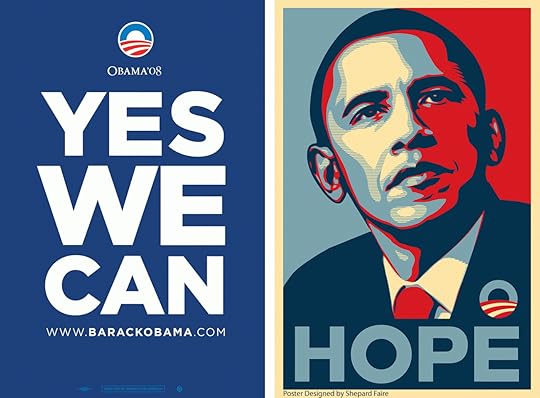
-- As Obama's presidential bid gained momentum, Frere-Jones received nice emails from friends wondering whether he had seen his work employed in this important way. Gary Hustwit, the director of the Helvetica movie, sent him a picture of Obama, microphone in hand, standing in front of a banner that read, all in capitals, "CHANGE WE CAN BELIEVE IN." In the next year, all the dynamic Obama watchwords--CHANGE, HOPE, YES WE CAN--would appear in these simple sans serif letters, notable for their solidity and durability. They also had a unremarkability and inoffensability--a type consciously chosen to suggest forward thinking without frightening the horses. Gotham replaced the Obama team's original choice Gill Sans, which was discarded as too staid and inflexible (Gotham was available in more than forty varities, Gill Sans in fifteen).
"Great choice," observed Alice Rawsthorn in the New York TImes. "No typeface could seem better suited to a dynamic, yet conscientious, American public servant." Rawsthorn also detected "a potent, if unspoken, combination of contemporary sophistication (a nod to his suits) with nostalgia for America's past and a sense of duty."
-- Mention your admiration of Univers--or even Helvetica--to a font enthusiast and he or she is quite likely to respond by talking about Frutiger. Frutiger is the typeface that many typographers believe is the finest ever made for signs and directions. And the reason Frutiger is better than Adrian Frutiger's previous exceptional sans serif, Univers? Because Univers, although a milestone in font design, can be a little rigid and strict; a Univers lower-case e is almost a circle with a cut in it, both precise and scary. Whereas Frutiger is perfect.

-- Still, after all these years, the quick brown fox jumps over the lazy dog. This is a pangram, a phrase containing all the letters of the alphabet, and it endues, like the Alphabet Song in Sesame Street, for the simple reason that the phrase is rare, and no one has yet been able to think of a better one. As such, it is instantly familiar to anyone in the type world--a "display phrase" that will allow you to put a font through its paces, check there's nothing untoward.
The quick brown fox jumps over the lazy dog is not a perfect pangram, because it repeats letters. The truly perfect pangram would contain all the letters of the alphabet in the right order, but the only thing that achieves that is the alphabet. There are phrases that use fewer characters, but they are not as catchy. Here are two of the shortest:
Quick wafting zephyrs vex bold Jim.
Sphinx of black quartz juge my vow.
And here a couple that make a kind of sense:
Zany eskimo craves fixed job with quilting party.
Playing jazz vibe chords quickly excites my wife.
-- The most enduring modern American font--and the most likely to appear on our computer drop-down menus--is Franklin Gothic, a typeface named after Benjamin Franklin and first published in 1905. This was a sans serif face before the style became the rage in England through Johnston and Gill. The American definition of gothic is not the same as the European one: it may be a heavy type, but it has no connection with scribes or the German blackletter. Nor with heavy metal bands.
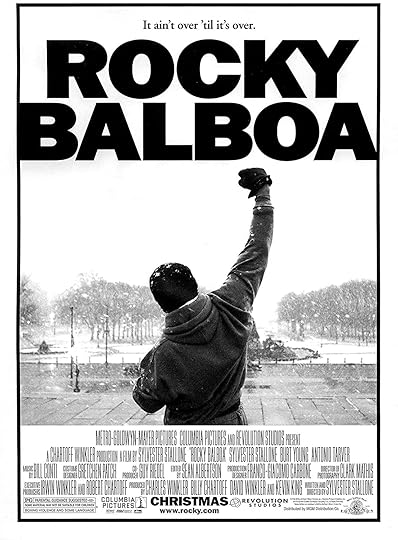
It was made by Morris Fuller Benton, a young star at ATF who created a family of fonts that remain ever present in newspapers and magazines. His Franklin Gothic font had its roots in the German Akzidenz Grotesk, and has survived all manner of fashionable and faddish political pressures. It is not geometric or mathematical or futuristic; it is wide and squat and sure of itself, a slightly less refined form of Univers. It was the closest American type would get to Swiss type, and it was the type that finally threw off the straightjacket of Englishness. Things "All-American" have a habit of using Franklin Gothic to press their case, be it the title on the Rocky films or the block capitals on Lady Gaga's album THE FAME MONSTER.
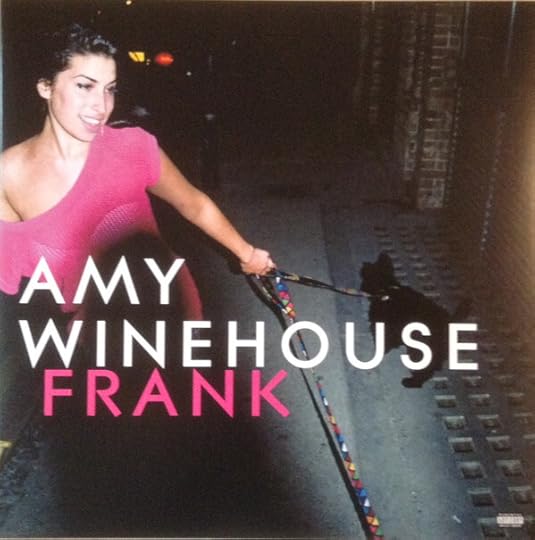
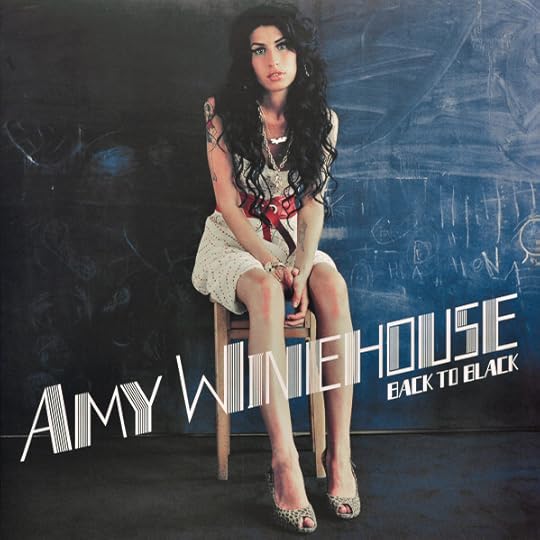
-- Often it's just better to be apart and extreme. Amy Winehouse's debut album Frank featured her name in a sharp angular sans serif that overlapped the title. But her diva image was far better suited to the glamour of the 1930s deco lettering on her follow-up Back To Black. This custom-made type has fine Gill Sans-style capitals at its root, fattened up by a barcode of vertical stripes and bookended by another thicker line. The letters are loaded with historical significance, but the precise pedigree is hazy: an Atlantic ocean liner perhaps, or a poster announcing a new Gershwin show.
The Back To Black font has notable antecedents: the Atlas face designed by KH Schaefer and issued by Francaise type foundry in 1933 (also known as Fatima), and Ondina, designed by K Kranke for the Schriftguss foundry in 1935. It works for Winehouse not just because it reflects her voice, which is something from a former and smokier age, but because it's a shortcut to brand recognition. You need just see the A to recognize the product, the way you just need the long T to recognize the Beatles.
-- The best font for a love letter? Ideally something affectionate with big round Os, but you might also consider an italicized font such as Humana Serif Light which alludes to old-fashioned scribes and may possess "a softening emotional quality, as if the writer is leaning over to talk personally to the reader." But beware: "Implementing such fonts may also serve as an aid to romantic deception."
And what, should one use to end a relationship? "For clarity without harshness," the doctor prescribes plain old Times Roman. "To let them down softly, italicized fonts can be employed. However, the user may unwittingly give the reader false hope. Verdana or Hoefler Text may have a lighter, optimistic yet respectful feel to it. For those who won't take no for an answer, Courier or the more rigid technical fonts indicate there's no room for interpretation, no going back."
Just My Type: A Book About Fonts is snappy and highly readable. Garfield doesn't declare what a "good" or "bad" font is, taking a journalistic approach of letting others plead their case for why Comic Sans is so hated or Helvetica has endured. Type designers are compared to dressmakers, type as couture, with some fonts no more practical than certain runway fashions. As with fashion, there is a place for type that is expressive or pretty to glance at, if nothing more. It really comes down to what the user wants to communicate.
-- In an office, somewhere in Scranton, Pennsylvania, Steve Carell is chairing a meeting, Rainn Wilson is shredding paper, John Krasinski is on the phone and Jenna Fischer is looking resentful. We are, of course, at Dunder Mifflin, the paper-supply company at the heart of The Office. The credits roll, the music plays, and when the title of the show comes up in white text on a black background, there is only one typeface that will do the trick: Helvetica. It's clear, it's bold, it sits there like every other sign you barely glance at. For this is a place you've been to before, a place you'll fit right in. It's probably an office you've worked in yourself, a place of awful recognition.
-- As Obama's presidential bid gained momentum, Frere-Jones received nice emails from friends wondering whether he had seen his work employed in this important way. Gary Hustwit, the director of the Helvetica movie, sent him a picture of Obama, microphone in hand, standing in front of a banner that read, all in capitals, "CHANGE WE CAN BELIEVE IN." In the next year, all the dynamic Obama watchwords--CHANGE, HOPE, YES WE CAN--would appear in these simple sans serif letters, notable for their solidity and durability. They also had a unremarkability and inoffensability--a type consciously chosen to suggest forward thinking without frightening the horses. Gotham replaced the Obama team's original choice Gill Sans, which was discarded as too staid and inflexible (Gotham was available in more than forty varities, Gill Sans in fifteen).
"Great choice," observed Alice Rawsthorn in the New York TImes. "No typeface could seem better suited to a dynamic, yet conscientious, American public servant." Rawsthorn also detected "a potent, if unspoken, combination of contemporary sophistication (a nod to his suits) with nostalgia for America's past and a sense of duty."
-- Mention your admiration of Univers--or even Helvetica--to a font enthusiast and he or she is quite likely to respond by talking about Frutiger. Frutiger is the typeface that many typographers believe is the finest ever made for signs and directions. And the reason Frutiger is better than Adrian Frutiger's previous exceptional sans serif, Univers? Because Univers, although a milestone in font design, can be a little rigid and strict; a Univers lower-case e is almost a circle with a cut in it, both precise and scary. Whereas Frutiger is perfect.
-- Still, after all these years, the quick brown fox jumps over the lazy dog. This is a pangram, a phrase containing all the letters of the alphabet, and it endues, like the Alphabet Song in Sesame Street, for the simple reason that the phrase is rare, and no one has yet been able to think of a better one. As such, it is instantly familiar to anyone in the type world--a "display phrase" that will allow you to put a font through its paces, check there's nothing untoward.
The quick brown fox jumps over the lazy dog is not a perfect pangram, because it repeats letters. The truly perfect pangram would contain all the letters of the alphabet in the right order, but the only thing that achieves that is the alphabet. There are phrases that use fewer characters, but they are not as catchy. Here are two of the shortest:
Quick wafting zephyrs vex bold Jim.
Sphinx of black quartz juge my vow.
And here a couple that make a kind of sense:
Zany eskimo craves fixed job with quilting party.
Playing jazz vibe chords quickly excites my wife.
-- The most enduring modern American font--and the most likely to appear on our computer drop-down menus--is Franklin Gothic, a typeface named after Benjamin Franklin and first published in 1905. This was a sans serif face before the style became the rage in England through Johnston and Gill. The American definition of gothic is not the same as the European one: it may be a heavy type, but it has no connection with scribes or the German blackletter. Nor with heavy metal bands.
It was made by Morris Fuller Benton, a young star at ATF who created a family of fonts that remain ever present in newspapers and magazines. His Franklin Gothic font had its roots in the German Akzidenz Grotesk, and has survived all manner of fashionable and faddish political pressures. It is not geometric or mathematical or futuristic; it is wide and squat and sure of itself, a slightly less refined form of Univers. It was the closest American type would get to Swiss type, and it was the type that finally threw off the straightjacket of Englishness. Things "All-American" have a habit of using Franklin Gothic to press their case, be it the title on the Rocky films or the block capitals on Lady Gaga's album THE FAME MONSTER.
-- Often it's just better to be apart and extreme. Amy Winehouse's debut album Frank featured her name in a sharp angular sans serif that overlapped the title. But her diva image was far better suited to the glamour of the 1930s deco lettering on her follow-up Back To Black. This custom-made type has fine Gill Sans-style capitals at its root, fattened up by a barcode of vertical stripes and bookended by another thicker line. The letters are loaded with historical significance, but the precise pedigree is hazy: an Atlantic ocean liner perhaps, or a poster announcing a new Gershwin show.
The Back To Black font has notable antecedents: the Atlas face designed by KH Schaefer and issued by Francaise type foundry in 1933 (also known as Fatima), and Ondina, designed by K Kranke for the Schriftguss foundry in 1935. It works for Winehouse not just because it reflects her voice, which is something from a former and smokier age, but because it's a shortcut to brand recognition. You need just see the A to recognize the product, the way you just need the long T to recognize the Beatles.
-- The best font for a love letter? Ideally something affectionate with big round Os, but you might also consider an italicized font such as Humana Serif Light which alludes to old-fashioned scribes and may possess "a softening emotional quality, as if the writer is leaning over to talk personally to the reader." But beware: "Implementing such fonts may also serve as an aid to romantic deception."
And what, should one use to end a relationship? "For clarity without harshness," the doctor prescribes plain old Times Roman. "To let them down softly, italicized fonts can be employed. However, the user may unwittingly give the reader false hope. Verdana or Hoefler Text may have a lighter, optimistic yet respectful feel to it. For those who won't take no for an answer, Courier or the more rigid technical fonts indicate there's no room for interpretation, no going back."
Just My Type: A Book About Fonts is snappy and highly readable. Garfield doesn't declare what a "good" or "bad" font is, taking a journalistic approach of letting others plead their case for why Comic Sans is so hated or Helvetica has endured. Type designers are compared to dressmakers, type as couture, with some fonts no more practical than certain runway fashions. As with fashion, there is a place for type that is expressive or pretty to glance at, if nothing more. It really comes down to what the user wants to communicate.

November 24, 2011
Drowning. Feuds. Nazis. Bestiality. Probably not topics you expect to find in a book about fonts. Granted, the drowning was of the Doves font (its creator threw the matrices and the metal letters into the Thames river instead of bequeathing his perfect font to anyone else after his death). And the feuds range the gamut from public backlash over IKEA changing its font from Futura to Verdana to the online movement against Comic Sans (the world's worst font, allegedly). And detail-oriented Nazis declared an official font--a form of German gothic--before later outlawing it because of its connections to Jewish bankers and printers.
But a dog did get buggered, good and proper--and not by a font.*
Just My Type is admittedly not a book for everyone. However, I love fonts. I'm one of those rare people who love to see the page in the back of the book that tells what font the book was set in and provides information about its origin. I'm the type of person who will sit in front of the computer screen for an hour trying out different font types and sizes until I have the perfect lettering for conveying the all important message to my students that they should "Go to the library and bring your notebook." I can spot Garamond or Courier or Verdana from one hundred paces. Yes, I freaking love font. Ergo, I really enjoyed Just My Type, although it's not the sort of book I could sit down and read in one sitting. Instead I opted to dip in and out periodically while reading other books.
Garfield writes with humor and knowledge about the history of print and the impact it had (and continues to have) on the world. It's difficult to believe the tedious and time consuming process that goes into creating a font, and equally difficult to believe is how important getting the right font is for daily routines (such as the effort that went into selecting a proper font for London's subway system). My favorite parts of the book are the "fontbreaks" that appear between chapters; these are very short stories about the origins of some of the world's most notorious or revered fonts. Also helpful is that, when mentioning most types, the actual type in the book changes so the reader can see what the type looks like (although this isn't done consistently and I would have preferred to see it done throughout). If there is a fault with the book, it would be the one I find in most non-fiction books: some information is repeated ad nauseam and there are occasionally abrupt shifts in topic. Other than that, if you're looking for an entertaining and not particularly technical look at fonts, I'd recommend giving this a go.
*Oh, said dog was pestered by Eric Gill, creator of Gill Sans. And noted ass hat.
Cross posted at This Insignificant Cinder
But a dog did get buggered, good and proper--and not by a font.*
Just My Type is admittedly not a book for everyone. However, I love fonts. I'm one of those rare people who love to see the page in the back of the book that tells what font the book was set in and provides information about its origin. I'm the type of person who will sit in front of the computer screen for an hour trying out different font types and sizes until I have the perfect lettering for conveying the all important message to my students that they should "Go to the library and bring your notebook." I can spot Garamond or Courier or Verdana from one hundred paces. Yes, I freaking love font. Ergo, I really enjoyed Just My Type, although it's not the sort of book I could sit down and read in one sitting. Instead I opted to dip in and out periodically while reading other books.
Garfield writes with humor and knowledge about the history of print and the impact it had (and continues to have) on the world. It's difficult to believe the tedious and time consuming process that goes into creating a font, and equally difficult to believe is how important getting the right font is for daily routines (such as the effort that went into selecting a proper font for London's subway system). My favorite parts of the book are the "fontbreaks" that appear between chapters; these are very short stories about the origins of some of the world's most notorious or revered fonts. Also helpful is that, when mentioning most types, the actual type in the book changes so the reader can see what the type looks like (although this isn't done consistently and I would have preferred to see it done throughout). If there is a fault with the book, it would be the one I find in most non-fiction books: some information is repeated ad nauseam and there are occasionally abrupt shifts in topic. Other than that, if you're looking for an entertaining and not particularly technical look at fonts, I'd recommend giving this a go.
*Oh, said dog was pestered by Eric Gill, creator of Gill Sans. And noted ass hat.
Cross posted at This Insignificant Cinder

March 15, 2013
This book answers such basic questions as: What exactly is a typeface? What's the difference between a typeface and a font? What specific features make them good or bad--assuming one can qualify them subjectively in this way? Why are there so many? And why do people keep designing more? Why are some so well liked, whereas others are almost universally mocked and vilified? Why are old ones still used today, whereas many newer (and carefully designed) ones will never be more than historical curiosities?
Simon Garfield knows his subject thoroughly. But the great thing is that he presents it so well. The book is lavishly endowed with anecdotes, humorous asides, historical details, examples of various typefaces and illustrations depicting their use. So what could have been a laborious treatise, of interest exclusively to the specialist, is informative, amusing and highly accessible to the layperson.
And yes, it was font while it lasted.
Simon Garfield knows his subject thoroughly. But the great thing is that he presents it so well. The book is lavishly endowed with anecdotes, humorous asides, historical details, examples of various typefaces and illustrations depicting their use. So what could have been a laborious treatise, of interest exclusively to the specialist, is informative, amusing and highly accessible to the layperson.
And yes, it was font while it lasted.

June 23, 2024
My only uncle was a U.S. Marine during WWII and Korea, and then later went on to a far longer career with IBM - yet to his dying day, in his heart (and all of our minds) he was first and foremost a Marine. And in a way that's kind of what's happened to me as well; from the mid-'70s to the early '90s, I was a professional graphic designer, until I just…stopped. Life happened, I returned to the U.S. and have had enjoyable second and then third careers elsewhere for the past 30+ year. But in my heart of hearts, I realize I am still a designer, even though my grown children have never known - or thought of - me as such.
And so anyway, this was a near perfect book for me (if - or so I thought - perhaps no one else), bringing back just a ton of memories. Yet as with The Book of Eels: Our Enduring Fascination with the Most Mysterious Creature in the Natural World, the book's cover called this an "international bestseller;" and to my astonishment the GR ratings and reviews seem to back that up - so, I dunno, go figure. But by the end I too was convinced that this is indeed a book for everyone, (or at least everyone who's ever admired a movie poster or even simply used Microsoft Word - although my one coworker told me near-daily that "I can't believe you're reading a book about…typefaces??"), and so am most happy that so many of you similar folks out there also found and enjoyed this wonderful book.
Just My Type hit home on so many levels and in so many places. For someone who already considered himself fairly well-steeped in the minutia of typography, I still managed to learned a helluva lot. History, of course - the backstories of the printing and typesetting processes, the "behind the scenes" stories of particular typefaces and type designers (including superstars like Hermann Zapf, Matthew Carter and Milton Glaser; as well as bad guys like Eric Gill, ultimately as famous for his "interest" in incest and bestiality as he was for his typefaces), but also beautiful trivia about the phrase "mind your p's and q's;" where the terms "uppercase" and "lowercase" come from (aka "majuscule" and "miniscule;" since while we often refer to uppercase as "capital letters" there is no equivalent term for lowercase letters); the evolution of the ampersand and the Interrobang, and the difference between Linotype and Monotype machines.
One needs to read this book with Google handy, so you can check out things like the unique "P" in Palatino, or the subtle differences between Helvetica and Arial, (or, okay, Eric Gill's weird sexual fetishes). The book also includes a number of great quotes, my two favorites being "I love to be a designer, but could we get rid of clients somehow please?,*" and "By all means break the rules, and break them beautifully, deliberately and well. That is one of the ends for which they exist."
But again, best of all were the personal memories it brought back. Childhood memories of Dymo label makers and my mom's old Selectric "golf ball" typewriter, where you could actually change fonts (gasp!!); college memories of California job cases and setting type by hand…and then all the professional memories that followed, many of which focused on the "hardware" of the time (all now long extinct) - rubber cement and waxers; T-squares and triangles; X-acto knives and Dexter mat cutters, French curves and ellipse templates; Rapidograph pens and Letraset dry-transfer sheets (which never gave you enough "e"s) - just great stuff.
_______________________________
* Clients - whaddya gonna do? I can now chuckle - although it was crazy frustrating at the time - when I recall how every single Taiwanese client would ultimately tell us: "I love the design - but could you make it RED?," (red being the "lucky color" in all Chinese cultures). But as you can see from the below sample of typographic logos we designed back in the '80s, it did kind of limit the range of one's portfolio…blue NEWS logo? How did you make it in there?? :)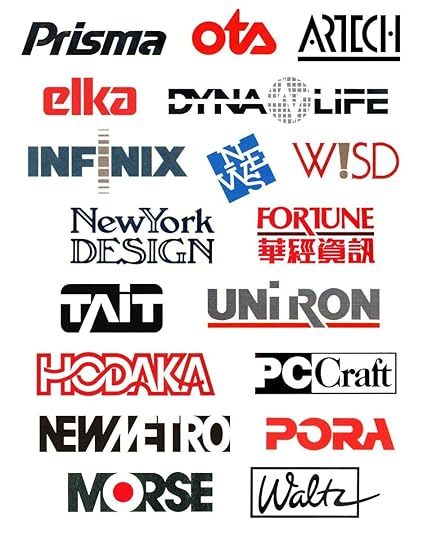
And so anyway, this was a near perfect book for me (if - or so I thought - perhaps no one else), bringing back just a ton of memories. Yet as with The Book of Eels: Our Enduring Fascination with the Most Mysterious Creature in the Natural World, the book's cover called this an "international bestseller;" and to my astonishment the GR ratings and reviews seem to back that up - so, I dunno, go figure. But by the end I too was convinced that this is indeed a book for everyone, (or at least everyone who's ever admired a movie poster or even simply used Microsoft Word - although my one coworker told me near-daily that "I can't believe you're reading a book about…typefaces??"), and so am most happy that so many of you similar folks out there also found and enjoyed this wonderful book.
Just My Type hit home on so many levels and in so many places. For someone who already considered himself fairly well-steeped in the minutia of typography, I still managed to learned a helluva lot. History, of course - the backstories of the printing and typesetting processes, the "behind the scenes" stories of particular typefaces and type designers (including superstars like Hermann Zapf, Matthew Carter and Milton Glaser; as well as bad guys like Eric Gill, ultimately as famous for his "interest" in incest and bestiality as he was for his typefaces), but also beautiful trivia about the phrase "mind your p's and q's;" where the terms "uppercase" and "lowercase" come from (aka "majuscule" and "miniscule;" since while we often refer to uppercase as "capital letters" there is no equivalent term for lowercase letters); the evolution of the ampersand and the Interrobang, and the difference between Linotype and Monotype machines.
One needs to read this book with Google handy, so you can check out things like the unique "P" in Palatino, or the subtle differences between Helvetica and Arial, (or, okay, Eric Gill's weird sexual fetishes). The book also includes a number of great quotes, my two favorites being "I love to be a designer, but could we get rid of clients somehow please?,*" and "By all means break the rules, and break them beautifully, deliberately and well. That is one of the ends for which they exist."
But again, best of all were the personal memories it brought back. Childhood memories of Dymo label makers and my mom's old Selectric "golf ball" typewriter, where you could actually change fonts (gasp!!); college memories of California job cases and setting type by hand…and then all the professional memories that followed, many of which focused on the "hardware" of the time (all now long extinct) - rubber cement and waxers; T-squares and triangles; X-acto knives and Dexter mat cutters, French curves and ellipse templates; Rapidograph pens and Letraset dry-transfer sheets (which never gave you enough "e"s) - just great stuff.
_______________________________
* Clients - whaddya gonna do? I can now chuckle - although it was crazy frustrating at the time - when I recall how every single Taiwanese client would ultimately tell us: "I love the design - but could you make it RED?," (red being the "lucky color" in all Chinese cultures). But as you can see from the below sample of typographic logos we designed back in the '80s, it did kind of limit the range of one's portfolio…blue NEWS logo? How did you make it in there?? :)

September 2, 2011
In this day and age, we easily have the choice of at least fifty fonts in a drop down menu all at a click of a button. Changing the text on your screen from Arial to Times New Roman to Comic Sans can be done in mere minutes. Whether we are writing a paper, a wedding invitation, or creating a presentation, the fonts we choose are important and impactful.
But typesetting wasn’t always at the fingertips of the layperson. It was in the realm of professionals.
Simon Garfield offers us a glimpse into the world of fonts. In a seemingly unorganized book, the author gives us quick vignettes of the history of various fonts and their creators. He jumps from one font to the next and from one technology to the next without giving us much depth. Although the snippets of history that he does offer are interesting, it was not enough to sustain my interest throughout an entire book.
Reading “Just My Type” made me feel like I was at a cocktail party stuck in a corner with someone who just happened to be an expert on the history of typesetting, fonts, and their inventors. At first, the topic sounds delightful, because who hasn’t played with fonts just for fun? But then, he drones on and on, jumping from one random font to another with no unifying theme or depth or analysis. At the end of the party, it feels like mostly a waste of time. Not completely, just mostly.
There are so many ways to unify a book on fonts. The book could be organized chronologically. It could focus on the design aspect. It could focus on the technology. It could focus on the impact of branding, ad campaigns, and society as a whole. But this book does none of that. Instead, it skims the surface on most aspects with a little more attention devoted to the personal history of font creators.
This book won’t tell you what is the best font to choose. It won’t tell you the design determinants of a good font. And it seemed to have mostly skipped over typewriters in general. After I closed the book, I was left wondering why do typewriters often have that Courier-looking font? Was that ugly font ever perceived as being easy to read during its heyday?
I really wanted to like this book. Fonts are fun. Unfortunately, this book wasn’t.
But typesetting wasn’t always at the fingertips of the layperson. It was in the realm of professionals.
Simon Garfield offers us a glimpse into the world of fonts. In a seemingly unorganized book, the author gives us quick vignettes of the history of various fonts and their creators. He jumps from one font to the next and from one technology to the next without giving us much depth. Although the snippets of history that he does offer are interesting, it was not enough to sustain my interest throughout an entire book.
Reading “Just My Type” made me feel like I was at a cocktail party stuck in a corner with someone who just happened to be an expert on the history of typesetting, fonts, and their inventors. At first, the topic sounds delightful, because who hasn’t played with fonts just for fun? But then, he drones on and on, jumping from one random font to another with no unifying theme or depth or analysis. At the end of the party, it feels like mostly a waste of time. Not completely, just mostly.
There are so many ways to unify a book on fonts. The book could be organized chronologically. It could focus on the design aspect. It could focus on the technology. It could focus on the impact of branding, ad campaigns, and society as a whole. But this book does none of that. Instead, it skims the surface on most aspects with a little more attention devoted to the personal history of font creators.
This book won’t tell you what is the best font to choose. It won’t tell you the design determinants of a good font. And it seemed to have mostly skipped over typewriters in general. After I closed the book, I was left wondering why do typewriters often have that Courier-looking font? Was that ugly font ever perceived as being easy to read during its heyday?
I really wanted to like this book. Fonts are fun. Unfortunately, this book wasn’t.

June 24, 2013
I’ll need to look it up when I get home, I guess, but Peter Carey in Theft – A Love Story – or rather, after he has finished the book – says what font the book needs to be printed in. Always a bit of a wanker, this goes some way to push Carey into extreme-nerd-wanker-land.
Now, not that I can talk. I’ve just finished and enjoyed a book on fonts – and a talking book on fonts (which, no matter how beautifully read. you would have to say, somewhat misses the point). But although I’m guilty, in the words of Woody Allen, I’m guilty with an excuse.
I’ve become increasingly interested in the stuff we are not meant to notice, but that affects how we see the world. The point of a good font (and not just point size...) is that it should be pretty much invisible. Not in the sense that you can’t see it, legibility is essential, but you shouldn’t notice it.
All the same, there are so many fonts and all quite different from each other. Some are quite feminine, others hyper-masculine - an interesting thing for fonts to be. Some – like comic sans – even have hate sites on the internet devoted to them http://bancomicsans.com
We all know far too much and far too little about fonts. And fonts are possibly something very few of us should know anything about at all. But, as someone who likes to fall into Fowler's third group of those in his 'the personality of people with reference to the split-infinitive (that is, the group who know what they are while not to getting too worked up about them either way) I thought this book might be an interesting wee look at fonts, giving just enough information to be getting on with. It was all that and more.
Interesting aside I've learnt recently - the word cliché is French and an onomatopoeia (a word that sounds like what it means). It came from printing back in the days when printers arranged letters into a matrix or stereotype - if words or phrases were particularly frequent they would be welded together and cliché was the sound they made as they were dropped into place. Some authorities doubt this is the origin of the word - such authorities should be hunted down and punished. When a story is this good its truth is quite beside the point.
The problem you will have with reading this book – which you should do, by the way – is that you will start noticing fonts everywhere. As someone who gets put out of supermarkets when they start playing crap from the 70s - I have to say I have real sympathy with the people discussed in this book who are just as annoyed by misplaced fonts. "What a crap film - set in 1872 and using signs printed in Gill Sans - not crafted until 1926 - honestly..."
I’m just about to finish another book about the use of colour in films – like I said, I’m a bit obsessed with the stuff people use that we don’t notice, but that ultimately affects how and what we see. I’m really struggling to watch anything at the moment without wondering what impact the choice of colour pallet says. This stuff is utterly and endlessly fascinating to me. I worry that knowing a little about this stuff will make me more boring than I already am and make me think I know more than I really do. So much of this stuff is about having a good eye - and I'm very much unsure that I have such an eye. But the way fonts and colours affect our understanding of texts is something in the realm of 'the truth that likes to hide in plain sight'.
The best stories in this book are literally about the things you see all the time, but don’t really notice. Like the ampersand. You know, this thing. &
I would never have guessed that was based on a crunched up E and T. And of course, et is Latin for And – all makes sense when you’re told. But I didn't know that the ampersand is often the most beautiful character in a font. Which then brings us to the question, what is a character? This is actually really interesting. Obviously all the letters are – in both upper and lower case – but what about, say, @ or #? And how to do you say @? Is it ‘at’? Or is it the ampersat? No, I’m not making this up.
Then there is also handgloves or Hamburgefonts. To see if a font will work there are a number of letters you need to really see - h, g, a and s being among those. Typing handgloves and seeing how the letters look together at various point sizes being as good a way of doing this as any.
DID YOU KNOW A WOMAN WAS SACKED FROM HER JOB FOR TYPING AN EMAIL IN ALL CAPS? People said she was screaming at them – you see, you don’t need to be an Australian novelist to be a wanker.
Did you know that a company set up to combat piracy picked a pirated font for their corporate identity? I kid you not…
There is a lovely distinction made in this book between legibility and readability. I would have thought both would be pretty much the same thing – but just because you can read some lettering at 40 paces doesn’t for a minute mean you would like to read War and Peace written in it.
This was a lovely book. I think it would have been better as a book - rather than an audio book. I assume the printed version has lots of examples of the typefaces and so I might track it down eventually to see and buy – it is just the sort of book that would be a good kind of reference.
Years ago I read an article by Stephen J (did you know J was the last letter added to the alphabet?) Gould where he took me on one of his lovely little trips around a topic of quite esoteric interest (of which he was something of a god) – the topic this time being pangrams – like ‘the quick brown fox jumps over the lazy dog’. It is a very long time since I read this article, couldn't tell you which of his books of essays it was from, but I think I remember Gould was a bit obsessed with getting a pangram that had fewer repeat letters than the fox one (there are four Os – for instance). Still – have a look at this example of life imitating pangram:
http://www.youtube.com/watch?v=f2d6q2...
From Peter Carey's Theft:
"A NOTE ON THE TYPE
This book was set in Janson, a typeface long thought to have been made by the Duchman Anton Janson, who was a practicing type founder in Leipzig during the years 1668-1687. However, it has been conclusively demonstrated that this face is actually the work of Nicholas Kis (1650-1701), a Hungarian, who most probably learned his trade from the master Dutch type founder Dirk Voskens. The type is an excellent example of the influential and sturdy Dutch types that prevailed in England up to the time William Caslon (1692-1766) developed his own incomparable designs from them."
Missed the irony the first time I read this years ago.
Now, not that I can talk. I’ve just finished and enjoyed a book on fonts – and a talking book on fonts (which, no matter how beautifully read. you would have to say, somewhat misses the point). But although I’m guilty, in the words of Woody Allen, I’m guilty with an excuse.
I’ve become increasingly interested in the stuff we are not meant to notice, but that affects how we see the world. The point of a good font (and not just point size...) is that it should be pretty much invisible. Not in the sense that you can’t see it, legibility is essential, but you shouldn’t notice it.
All the same, there are so many fonts and all quite different from each other. Some are quite feminine, others hyper-masculine - an interesting thing for fonts to be. Some – like comic sans – even have hate sites on the internet devoted to them http://bancomicsans.com
We all know far too much and far too little about fonts. And fonts are possibly something very few of us should know anything about at all. But, as someone who likes to fall into Fowler's third group of those in his 'the personality of people with reference to the split-infinitive (that is, the group who know what they are while not to getting too worked up about them either way) I thought this book might be an interesting wee look at fonts, giving just enough information to be getting on with. It was all that and more.
Interesting aside I've learnt recently - the word cliché is French and an onomatopoeia (a word that sounds like what it means). It came from printing back in the days when printers arranged letters into a matrix or stereotype - if words or phrases were particularly frequent they would be welded together and cliché was the sound they made as they were dropped into place. Some authorities doubt this is the origin of the word - such authorities should be hunted down and punished. When a story is this good its truth is quite beside the point.
The problem you will have with reading this book – which you should do, by the way – is that you will start noticing fonts everywhere. As someone who gets put out of supermarkets when they start playing crap from the 70s - I have to say I have real sympathy with the people discussed in this book who are just as annoyed by misplaced fonts. "What a crap film - set in 1872 and using signs printed in Gill Sans - not crafted until 1926 - honestly..."
I’m just about to finish another book about the use of colour in films – like I said, I’m a bit obsessed with the stuff people use that we don’t notice, but that ultimately affects how and what we see. I’m really struggling to watch anything at the moment without wondering what impact the choice of colour pallet says. This stuff is utterly and endlessly fascinating to me. I worry that knowing a little about this stuff will make me more boring than I already am and make me think I know more than I really do. So much of this stuff is about having a good eye - and I'm very much unsure that I have such an eye. But the way fonts and colours affect our understanding of texts is something in the realm of 'the truth that likes to hide in plain sight'.
The best stories in this book are literally about the things you see all the time, but don’t really notice. Like the ampersand. You know, this thing. &
I would never have guessed that was based on a crunched up E and T. And of course, et is Latin for And – all makes sense when you’re told. But I didn't know that the ampersand is often the most beautiful character in a font. Which then brings us to the question, what is a character? This is actually really interesting. Obviously all the letters are – in both upper and lower case – but what about, say, @ or #? And how to do you say @? Is it ‘at’? Or is it the ampersat? No, I’m not making this up.
Then there is also handgloves or Hamburgefonts. To see if a font will work there are a number of letters you need to really see - h, g, a and s being among those. Typing handgloves and seeing how the letters look together at various point sizes being as good a way of doing this as any.
DID YOU KNOW A WOMAN WAS SACKED FROM HER JOB FOR TYPING AN EMAIL IN ALL CAPS? People said she was screaming at them – you see, you don’t need to be an Australian novelist to be a wanker.
Did you know that a company set up to combat piracy picked a pirated font for their corporate identity? I kid you not…
There is a lovely distinction made in this book between legibility and readability. I would have thought both would be pretty much the same thing – but just because you can read some lettering at 40 paces doesn’t for a minute mean you would like to read War and Peace written in it.
This was a lovely book. I think it would have been better as a book - rather than an audio book. I assume the printed version has lots of examples of the typefaces and so I might track it down eventually to see and buy – it is just the sort of book that would be a good kind of reference.
Years ago I read an article by Stephen J (did you know J was the last letter added to the alphabet?) Gould where he took me on one of his lovely little trips around a topic of quite esoteric interest (of which he was something of a god) – the topic this time being pangrams – like ‘the quick brown fox jumps over the lazy dog’. It is a very long time since I read this article, couldn't tell you which of his books of essays it was from, but I think I remember Gould was a bit obsessed with getting a pangram that had fewer repeat letters than the fox one (there are four Os – for instance). Still – have a look at this example of life imitating pangram:
http://www.youtube.com/watch?v=f2d6q2...
From Peter Carey's Theft:
"A NOTE ON THE TYPE
This book was set in Janson, a typeface long thought to have been made by the Duchman Anton Janson, who was a practicing type founder in Leipzig during the years 1668-1687. However, it has been conclusively demonstrated that this face is actually the work of Nicholas Kis (1650-1701), a Hungarian, who most probably learned his trade from the master Dutch type founder Dirk Voskens. The type is an excellent example of the influential and sturdy Dutch types that prevailed in England up to the time William Caslon (1692-1766) developed his own incomparable designs from them."
Missed the irony the first time I read this years ago.

February 11, 2019
I never knew I needed to read a book on fonts, until I read this book on fonts.
You’ll start to see fonts the way you never, ever have before; you’ll start to notice them constantly, to an almost maddening intensity. Everywhere you go, everything you do- fonts, fonts, fonts. This one, that one, every font.
I loved learning the history of fonts in general, and of specific fonts. It’s so cool to realize that font experts can watch films and point out all the anachronism—using fonts created in the 1970s in an 1890s movie, for example—that I wouldn’t have thought about. (Honestly, it never even really occurred to me that modern fonts are created by humans, that a “typeface engineer” (font creator) is a full-time job).
There are also some incredibly cool names in the history of fonts. The name Wynkyn de Worde, for example. Not only is his name apropos for a font-maker (“word”), it’s just an all-around great name. I also like the surname of the da Spira brothers. So elegant.
The book itself is set in a font called Sabon, excluding the “font breaks” (between chapters are a few pages which focus on a particular font’s history, and typically are set in that font). Sabon is considered one of the most readable of all book fonts and looks very familiar to my eyes, so I’d wager it’s used in many books for the sake of its clarity. And clarity, for us bookworms, is certainly commendable.
----------INTERESTING THINGS I LEARNED----------
1. The word “font” is an Americanization of the European “fount” (presumably, similar to the color/colour, labor/labour, and neighbor/neighbour disparities).
2. In traditional serif fonts, the dot of the lowercase “i” isn’t centered; it’s slightly to the left. And the stem of a lower-case “t” is slightly thicker at the base to avoid the appearance of frailty.
3. The majority of books printed in Germany before WW2 were in blackletter (that heavy, gothic font you typically see on signs for German-style biergartens or Ye Old Towne Pub-type places) and were considered a sign of German nationalism. For a while, Hitler heavily encouraged everyone to use only blackletter fonts, and Nazis used them exclusively. However, after invading other countries, blackletter fonts got too difficult to use(other countries didn’t have presses set up for blackletter fonts) so Hitler decided that now, blackletter was a Jewish thing, and only Roman letters (standard fonts we see today) were allowed.
4. A font called Gotham is the trendy new font of the 2000s. It’s used everywhere from the Discovery channel logo to, most iconically, Barack Obama’s presidential campaign.
5. The “Lion King font,” which is called Neuland, is also found on the brand for American Spirit cigarettes AND for Jurassic Park! I don’t know why I never connected those three things before, but realized it was totally true as soon as I read it.
Neuland was created in 1923, which is way earlier than I’d have guessed. It has a distinctly safari vibe (or at least, pop culture has imbued it with that). And there’s definitely some squickily weird racial undertones in the way this font is used in some cases.
----------MY FONT PREFERENCES----------
In case you were wondering. I’m sure you weren’t! But, after all, you are reading a review for a book about fonts, so you might be interested.
I’m quite fond of the following:
--LUMOS, which is recognizable as the font used for titles of chapters in Harry Potter books (Garamond is used for the regular typeface in HP books): it still gives me a friendly little thrill whenever I see it
--BASKERVILLE (whose creator was a friend of Benjamin Franklin): an elegant academic look with fancy Qs
--UNDERGROUND (the font used in the London Underground signs): a gloriously unique, highly recognizable, and perfectly round font
--DIDOT: just a nice, elegant, 19th-century literature-looking font
--CENTURY SCHOOLBOOK: my default font. Oddly, doesn’t get much mention in this book.
--FUTURA: designed in the 1920s, this font was previously used by IKEA; it stirred up quite the ruckus when IKEA switched from it to the relatively ugly Verdana. It was also the font on the plaque left on the moon by Apollo 11.
--AUNT MILDRED: it looks like it was written by Wednesday Addams. How can you not love this font?
I abhor these:
--HELVETICA: this is the most common font seen around the world today. It’s the default for signs, advertisements, everything. Once, a type designer tried to spend a day without Helvetica (whenever he saw it, he had to avert his eyes; he couldn’t take any Helvetica-signed transport or buy Helvetica-branded products or wear clothes with tags in Helvetica or read websites in Helvetica—eliminating most websites, since this is a default web font; he couldn’t use certain cash bills, as Helvetica is on the new US $1 bill; he couldn’t use credit cards with Helvetica, which eliminates nearly all the major cards). Suffice it to say, he didn’t do well. It’s ugly, it’s everywhere, it’s so, so easy to hate.
--TIMES NEW ROMAN: it’s just hideous. Why is this a default font? Get it out of my face.
--ARIAL: it’s weirdly small and devoid of anything suggesting personality. It’s like a serial killer. It’s the Ted Bundy of fonts. Ditto CALIBRI, which is the bane of my existence.
--VERDANA: it’s just boring
Anyway, 10/10 recommend, will change the way you see our font-saturated world for sure.
You’ll start to see fonts the way you never, ever have before; you’ll start to notice them constantly, to an almost maddening intensity. Everywhere you go, everything you do- fonts, fonts, fonts. This one, that one, every font.
I loved learning the history of fonts in general, and of specific fonts. It’s so cool to realize that font experts can watch films and point out all the anachronism—using fonts created in the 1970s in an 1890s movie, for example—that I wouldn’t have thought about. (Honestly, it never even really occurred to me that modern fonts are created by humans, that a “typeface engineer” (font creator) is a full-time job).
There are also some incredibly cool names in the history of fonts. The name Wynkyn de Worde, for example. Not only is his name apropos for a font-maker (“word”), it’s just an all-around great name. I also like the surname of the da Spira brothers. So elegant.
The book itself is set in a font called Sabon, excluding the “font breaks” (between chapters are a few pages which focus on a particular font’s history, and typically are set in that font). Sabon is considered one of the most readable of all book fonts and looks very familiar to my eyes, so I’d wager it’s used in many books for the sake of its clarity. And clarity, for us bookworms, is certainly commendable.
----------INTERESTING THINGS I LEARNED----------
1. The word “font” is an Americanization of the European “fount” (presumably, similar to the color/colour, labor/labour, and neighbor/neighbour disparities).
2. In traditional serif fonts, the dot of the lowercase “i” isn’t centered; it’s slightly to the left. And the stem of a lower-case “t” is slightly thicker at the base to avoid the appearance of frailty.
3. The majority of books printed in Germany before WW2 were in blackletter (that heavy, gothic font you typically see on signs for German-style biergartens or Ye Old Towne Pub-type places) and were considered a sign of German nationalism. For a while, Hitler heavily encouraged everyone to use only blackletter fonts, and Nazis used them exclusively. However, after invading other countries, blackletter fonts got too difficult to use(other countries didn’t have presses set up for blackletter fonts) so Hitler decided that now, blackletter was a Jewish thing, and only Roman letters (standard fonts we see today) were allowed.
4. A font called Gotham is the trendy new font of the 2000s. It’s used everywhere from the Discovery channel logo to, most iconically, Barack Obama’s presidential campaign.
5. The “Lion King font,” which is called Neuland, is also found on the brand for American Spirit cigarettes AND for Jurassic Park! I don’t know why I never connected those three things before, but realized it was totally true as soon as I read it.
Neuland was created in 1923, which is way earlier than I’d have guessed. It has a distinctly safari vibe (or at least, pop culture has imbued it with that). And there’s definitely some squickily weird racial undertones in the way this font is used in some cases.
----------MY FONT PREFERENCES----------
In case you were wondering. I’m sure you weren’t! But, after all, you are reading a review for a book about fonts, so you might be interested.
I’m quite fond of the following:
--LUMOS, which is recognizable as the font used for titles of chapters in Harry Potter books (Garamond is used for the regular typeface in HP books): it still gives me a friendly little thrill whenever I see it
--BASKERVILLE (whose creator was a friend of Benjamin Franklin): an elegant academic look with fancy Qs
--UNDERGROUND (the font used in the London Underground signs): a gloriously unique, highly recognizable, and perfectly round font
--DIDOT: just a nice, elegant, 19th-century literature-looking font
--CENTURY SCHOOLBOOK: my default font. Oddly, doesn’t get much mention in this book.
--FUTURA: designed in the 1920s, this font was previously used by IKEA; it stirred up quite the ruckus when IKEA switched from it to the relatively ugly Verdana. It was also the font on the plaque left on the moon by Apollo 11.
--AUNT MILDRED: it looks like it was written by Wednesday Addams. How can you not love this font?
I abhor these:
--HELVETICA: this is the most common font seen around the world today. It’s the default for signs, advertisements, everything. Once, a type designer tried to spend a day without Helvetica (whenever he saw it, he had to avert his eyes; he couldn’t take any Helvetica-signed transport or buy Helvetica-branded products or wear clothes with tags in Helvetica or read websites in Helvetica—eliminating most websites, since this is a default web font; he couldn’t use certain cash bills, as Helvetica is on the new US $1 bill; he couldn’t use credit cards with Helvetica, which eliminates nearly all the major cards). Suffice it to say, he didn’t do well. It’s ugly, it’s everywhere, it’s so, so easy to hate.
--TIMES NEW ROMAN: it’s just hideous. Why is this a default font? Get it out of my face.
--ARIAL: it’s weirdly small and devoid of anything suggesting personality. It’s like a serial killer. It’s the Ted Bundy of fonts. Ditto CALIBRI, which is the bane of my existence.
--VERDANA: it’s just boring
Anyway, 10/10 recommend, will change the way you see our font-saturated world for sure.

May 9, 2011
I’m only just on target with my challenge, and I think this is because this is another genre of books that I am not swift at reading! I would normally dip into books like this and going at it all in one go wasn’t difficult, but I did go a day every now and again where I didn’t pick this up… I think this is mainly because this topic is linked to my job and after spending all day designing and looking at typefaces, occasionally (as much as I love the subject!) I didn’t want to then carry on reading about the subject in my downtime.
However, this makes me sound like I didn’t enjoy the book, when in fact I really enjoyed it. Each chapter was the story of a font, or of specific uses of different fonts, and told the stories of Gill Sans, Futura, Optima and Helvetica just to name a few. There were some interesting anecdotes, little snippets of history, and some technical information, all told in a relaxed and easy to read way. As someone who has studied Typography at degree level, a lot of the content was information I already knew, the history of many famous typefaces and typographers, and news about different faces being used for different work (the Verdana/Ikea new story, the 2012 Olympic logo and font etc.) but in most cases went into a little bit more detail, so the stories were still interesting.
There were many images of both the faces in use and the typographers at work, and the main bulk of the book itself is set in Sabon and Univers 45 Light. Within the publishing details at the beginning of the book, the author explains the typefaces used which I think is lovely. This is not done much anymore and is a real shame as if I like the look and feel of a typeface when I’m reading a book, I like to know what it is!
When a chapter is on a specific typeface, the first paragraph is set in that face which I think is a really nice touch, and throughout the book every face that is mentioned has an example, either in the form of text set in the face or an image, so you do not need to rush off to your computer very 5 seconds to see what the author is talking about!
The stories were short and sweet, and I would highly recommend this to anyone who has the slightest interest in typography, even if you have no real prior knowledge. the book doesn’t use lots of terminology, and when it does, it explains it all very well.As someone who loves typography, this book was definitely a must red for me, but I think most people would find it interesting, it’s a rich and varied subject about something that we all see and use everyday without really thinking about it.
However, this makes me sound like I didn’t enjoy the book, when in fact I really enjoyed it. Each chapter was the story of a font, or of specific uses of different fonts, and told the stories of Gill Sans, Futura, Optima and Helvetica just to name a few. There were some interesting anecdotes, little snippets of history, and some technical information, all told in a relaxed and easy to read way. As someone who has studied Typography at degree level, a lot of the content was information I already knew, the history of many famous typefaces and typographers, and news about different faces being used for different work (the Verdana/Ikea new story, the 2012 Olympic logo and font etc.) but in most cases went into a little bit more detail, so the stories were still interesting.
There were many images of both the faces in use and the typographers at work, and the main bulk of the book itself is set in Sabon and Univers 45 Light. Within the publishing details at the beginning of the book, the author explains the typefaces used which I think is lovely. This is not done much anymore and is a real shame as if I like the look and feel of a typeface when I’m reading a book, I like to know what it is!
When a chapter is on a specific typeface, the first paragraph is set in that face which I think is a really nice touch, and throughout the book every face that is mentioned has an example, either in the form of text set in the face or an image, so you do not need to rush off to your computer very 5 seconds to see what the author is talking about!
The stories were short and sweet, and I would highly recommend this to anyone who has the slightest interest in typography, even if you have no real prior knowledge. the book doesn’t use lots of terminology, and when it does, it explains it all very well.As someone who loves typography, this book was definitely a must red for me, but I think most people would find it interesting, it’s a rich and varied subject about something that we all see and use everyday without really thinking about it.
December 18, 2017
Although it kind of goes astray at the end, the vast majority of this overview of fonts, typefaces, and typography is immensely entertaining and informative. Garfield’s explanations of typography and his renditions of history feel effortless; his prose never gets in the way of the information. In that regard, this book is living up to the ideal designer Adrian Frutiger espouses in the chapter about his work: “If you remember the shape of your spoon at lunch, it has to be the wrong shape.” The Platonic ideal.
Each time Garfield references a font, the first paragraph of that chapter is printed in that style, with a little notation off to the side. Which is an obvious idea that no one does. It allows you to compare the various typefaces directly and gives you an example right there of what he’s talking about.
Back in the 1990s publishers were constantly monkeying with their typefaces and I would become so distracted by the letters that it would bring my reading to a screeching halt. The lowercase g and the question mark in particular tended to extremely bizarre shapes. I kept wondering who would design such atrocities. It was the opposite of a comfortable spoon. Unsurprisingly, I own almost no books from that era. I just couldn’t force myself to keep those monstrosities around the house. Fortunately this book is set in an unobtrusive and legible font that doesn’t advertise itself.
There are also numerous illustrations, ranging from purely factual to very amusing. He even includes the classic poster that John Lennon referenced on Sgt. Pepper’s, “Being for the benefit of Mr. Kite.” I actually kept setting the book down so I could go look at the various websites and YouTube videos he references, which often led me down rabbit holes of watching clip after clip about typography. One evening I ended up watching at least a half-dozen TED talks on the subject.
Fortunately I had already seen the superb documentary Helvetica, which I highly recommend. Even if you have no interest in typography, it’s fascinating to see how that font has basically taken over the world. I was at the post office over the weekend and it felt like I was inside a box comprised entirely of Helvetica.
This is a breezy, fun read that is also jam-packed with information, history and design theory. Awesomesauce.
Each time Garfield references a font, the first paragraph of that chapter is printed in that style, with a little notation off to the side. Which is an obvious idea that no one does. It allows you to compare the various typefaces directly and gives you an example right there of what he’s talking about.
Back in the 1990s publishers were constantly monkeying with their typefaces and I would become so distracted by the letters that it would bring my reading to a screeching halt. The lowercase g and the question mark in particular tended to extremely bizarre shapes. I kept wondering who would design such atrocities. It was the opposite of a comfortable spoon. Unsurprisingly, I own almost no books from that era. I just couldn’t force myself to keep those monstrosities around the house. Fortunately this book is set in an unobtrusive and legible font that doesn’t advertise itself.
There are also numerous illustrations, ranging from purely factual to very amusing. He even includes the classic poster that John Lennon referenced on Sgt. Pepper’s, “Being for the benefit of Mr. Kite.” I actually kept setting the book down so I could go look at the various websites and YouTube videos he references, which often led me down rabbit holes of watching clip after clip about typography. One evening I ended up watching at least a half-dozen TED talks on the subject.
Fortunately I had already seen the superb documentary Helvetica, which I highly recommend. Even if you have no interest in typography, it’s fascinating to see how that font has basically taken over the world. I was at the post office over the weekend and it felt like I was inside a box comprised entirely of Helvetica.
This is a breezy, fun read that is also jam-packed with information, history and design theory. Awesomesauce.

March 6, 2020
An entertaining romp through the history of-and personalities behind-great fonts.

October 28, 2017
Started well, better than expected until I hit the wall....
First half (or so) was first rate. Then, less so. Then, I gave up. Tant pis.
First half (or so) was first rate. Then, less so. Then, I gave up. Tant pis.

June 24, 2011
Note: I won this book in a First Reads giveaway.
This made for an enjoyable and easy read. For anyone who’s studied typography or design, I can’t imagine the book would contain anything they don’t already know, but for a clueless layman like myself it’s full of interesting information on something most of us probably give little thought to. As someone coming to this book with precious little knowledge on the subject beyond a passing familiarity with some of the more widely-used fonts out there, I found it contained just the right amount of technical detail to satisfy the curiosity of a non-expert, served up with plenty of anecdotal information and examples that made it very readable and accessible. I enjoyed learning about the people, stories and original purpose behind various typefaces, and how they came to be. The book also finally solved for me the ‘mystery’ (which I had vaguely wondered about, but apparently not enough to bother spending two minutes of my life researching the answer) of where Calibri suddenly sprang from back in 2007.
I liked the way that in most cases, the book gave an example of the typeface being discussed, especially the chapters devoted to a specific typeface, which use the entire first paragraph as an example, giving the reader a better feel for what the author's saying. However, in some cases, where a typeface is just mentioned in passing, the example is limited to just setting the font name in that face, which I found mildly infuriating when the author is writing about how the typeface in question features particularly attractive or unique letters which are not used in the font name, leaving me trying to picture what’s being described and wanting to run to the computer and look the thing up and see for myself. The copy I received was an uncorrected proof, though, so this may be addressed at a later stage.
This is the kind of book you can easily dip in and out of, although I read it straight through over the course of a few days. If, like me, you’re no expert but have ever found yourself admiring a particularly appealing typeface and wanting to know what it is, or grinding your teeth over a colleague’s inexplicable choice of font, you will probably find this one worth a go.
This made for an enjoyable and easy read. For anyone who’s studied typography or design, I can’t imagine the book would contain anything they don’t already know, but for a clueless layman like myself it’s full of interesting information on something most of us probably give little thought to. As someone coming to this book with precious little knowledge on the subject beyond a passing familiarity with some of the more widely-used fonts out there, I found it contained just the right amount of technical detail to satisfy the curiosity of a non-expert, served up with plenty of anecdotal information and examples that made it very readable and accessible. I enjoyed learning about the people, stories and original purpose behind various typefaces, and how they came to be. The book also finally solved for me the ‘mystery’ (which I had vaguely wondered about, but apparently not enough to bother spending two minutes of my life researching the answer) of where Calibri suddenly sprang from back in 2007.
I liked the way that in most cases, the book gave an example of the typeface being discussed, especially the chapters devoted to a specific typeface, which use the entire first paragraph as an example, giving the reader a better feel for what the author's saying. However, in some cases, where a typeface is just mentioned in passing, the example is limited to just setting the font name in that face, which I found mildly infuriating when the author is writing about how the typeface in question features particularly attractive or unique letters which are not used in the font name, leaving me trying to picture what’s being described and wanting to run to the computer and look the thing up and see for myself. The copy I received was an uncorrected proof, though, so this may be addressed at a later stage.
This is the kind of book you can easily dip in and out of, although I read it straight through over the course of a few days. If, like me, you’re no expert but have ever found yourself admiring a particularly appealing typeface and wanting to know what it is, or grinding your teeth over a colleague’s inexplicable choice of font, you will probably find this one worth a go.

May 29, 2020
Prolific writer of non-fiction Garfield takes a look at the history and evolution of fonts from the pre-digital days to the ascension of Calibri as part of Microsoft Vista. Pretty informative and interesting to a degree, but let's face it, it is a book about fonts! 6 out of 12.


June 27, 2011
Read and reviewed in May 2012, just updated my review to my current ordering system.
Book Information: Genre: Nonfiction, typography
Recommended for: People interested in the typography that surrounds us.
My Thoughts: I find fonts fascinating; I love to use unusual fonts in personal correspondence (although I prefer Times New Roman for other uses), and I love to learn about fonts and typesetting, which leads me to read the little bit at the end of many books that tells about the font being used in it. Therefore, I was very interested in reading Just My Type. However, I quickly found that the e-ARC was a mess and completely unreadable. I had wanted the book anyway, so I bought it and read the physical copy. Lesson one learned: don’t try to read graphics-intensive books on an e-reader. It just won’t work...
One thing I would have loved to have seen was a section that showed the various fonts side-by-side – sure, there were words and letters in the different fonts here and there – even entire chapters written in a different font while its history was told – but not a section dedicated to showing as many of the fonts as possible side-by-side. I would have really enjoyed that – but several books where people can take a look at fonts are mentioned, so I’ll be checking that out.
Garfield makes a discussion of fonts and typography amusing, filled with anecdotes and quirkiness. I especially got a kick out of Chapter 18: Breaking the Rules – mostly because the use of multiple fonts within a single page (sometimes as often as every paragraph) is something I have often done while writing letters to friends. It’s unfortunate that it is so difficult to use fonts effectively within the on-line world in some ways – in other ways, it’s probably for the best. For those who are interested in typography, fonts or the history of writing, this is a must-read.
Disclosure: I received a free ARC eBook galley from NetGalley in return for an honest review. However, it was completely unreadable, so I just bought a hardcover copy for myself.
Synopsis from NetGalley: Fonts surround us every day, on street signs and buildings, on movie posters and books, and on just about every product that we buy. But where do they come from, and why do we need so many? Who is responsible for the staid practicality of Times New Roman, the cool anonymity of Arial, or the irritating levity of Comic Sans (and the movement to ban it)?
Typefaces are now 560 years old, but we barely knew their names until about twenty years ago when the pull-down font menus on our first computers made us all the gods of type. Beginning in the early days of Gutenberg and ending with the most adventurous digital fonts, Simon Garfield explores the rich history and subtle powers of type. He goes on to investigate a range of modern mysteries, including how Helvetica took over the world, what inspires the seemingly ubiquitous use of Trajan on bad movie posters, and exactly why the all-type cover of Men Are from Mars, Women Are From Venus was so effective. It also examines why the “T” in the Beatles logo is longer than the other letters and how Gotham helped Barack Obama into the White House.
A must-have book for the design conscious, Just My Type’s cheeky irreverence will also charm everyone who loved Eats, Shoots & Leaves and Schott’s Original Miscellany.
Book Information: Genre: Nonfiction, typography
Recommended for: People interested in the typography that surrounds us.
My Thoughts: I find fonts fascinating; I love to use unusual fonts in personal correspondence (although I prefer Times New Roman for other uses), and I love to learn about fonts and typesetting, which leads me to read the little bit at the end of many books that tells about the font being used in it. Therefore, I was very interested in reading Just My Type. However, I quickly found that the e-ARC was a mess and completely unreadable. I had wanted the book anyway, so I bought it and read the physical copy. Lesson one learned: don’t try to read graphics-intensive books on an e-reader. It just won’t work...
One thing I would have loved to have seen was a section that showed the various fonts side-by-side – sure, there were words and letters in the different fonts here and there – even entire chapters written in a different font while its history was told – but not a section dedicated to showing as many of the fonts as possible side-by-side. I would have really enjoyed that – but several books where people can take a look at fonts are mentioned, so I’ll be checking that out.
Garfield makes a discussion of fonts and typography amusing, filled with anecdotes and quirkiness. I especially got a kick out of Chapter 18: Breaking the Rules – mostly because the use of multiple fonts within a single page (sometimes as often as every paragraph) is something I have often done while writing letters to friends. It’s unfortunate that it is so difficult to use fonts effectively within the on-line world in some ways – in other ways, it’s probably for the best. For those who are interested in typography, fonts or the history of writing, this is a must-read.
Disclosure: I received a free ARC eBook galley from NetGalley in return for an honest review. However, it was completely unreadable, so I just bought a hardcover copy for myself.
Synopsis from NetGalley: Fonts surround us every day, on street signs and buildings, on movie posters and books, and on just about every product that we buy. But where do they come from, and why do we need so many? Who is responsible for the staid practicality of Times New Roman, the cool anonymity of Arial, or the irritating levity of Comic Sans (and the movement to ban it)?
Typefaces are now 560 years old, but we barely knew their names until about twenty years ago when the pull-down font menus on our first computers made us all the gods of type. Beginning in the early days of Gutenberg and ending with the most adventurous digital fonts, Simon Garfield explores the rich history and subtle powers of type. He goes on to investigate a range of modern mysteries, including how Helvetica took over the world, what inspires the seemingly ubiquitous use of Trajan on bad movie posters, and exactly why the all-type cover of Men Are from Mars, Women Are From Venus was so effective. It also examines why the “T” in the Beatles logo is longer than the other letters and how Gotham helped Barack Obama into the White House.
A must-have book for the design conscious, Just My Type’s cheeky irreverence will also charm everyone who loved Eats, Shoots & Leaves and Schott’s Original Miscellany.

October 25, 2014
The fact that this book was immensely popular when first published in 2010/11 speaks well for the interest in its subject matter. Going from the general responses of Goodreads readers, I feel that simply referring readers of my review to those comments as more than adequately covering the matter. For those not aware of what fonts are, and how they are present everywhere in our consumer world, then this book is a must — and I might even suggest a 5 star rating for them.
This is undoubtedly a fun book to read, and Garfield seems to be having a bit of a romp through all the many manifestations and implications. The work is full of many bits of historical information, examples of many fonts, and informative and even amusing anecdotes relating to the development of fonts over the centuries, all communicated with a certain verve and vivacity that is a pleasure for the reader. Enjoy!
My own particular interest in the use of fonts for manipulative purposes is perhaps my contribution to this. We are so familiar with these things that we tend not to notice that power — and it is most blatant use in through the advertising industry (such as in advertising for the cinema, product names for special purchases (cars and perfumes, for example) and for what is called “establishing Corporate Identity”) and even used for political campaigns.
Questions of copyright, and accessibility, together with “battles” regarding appropriate or inappropriate fonts are also discussed, as well as the more esoteric aspects of pure design matters, are quickly explored and discussed. The palette is quite crowded, but more in a stimulating way than just overwhelming.
I was particularly intrigued to read about the use of fonts being politically dangerous! It happened during the time of the rise of the Nazis (who else?!). They developed a version of Gothic blackletter, modifying the Fraktur font into what became known as “the jackboot gothic”, deemed to go well with the swastika. Font designer Paul Renner (who designed the sans serif Futura font in 1927) renounced gothic text and wanted to move towards more modernist roman types. This sympathy resulted in his arrest by the Nazis in 1933, who believed that only traditional gothic text could fully express the purity of the German nation. Ironically, everything changed in January, 1941: the Nazis noted that gothic script was associated with the documents of Jewish bankers and the Jewish owners of the printing press — so the script was re-labelled “Schwabacher-Jewish” by the Nazis, and its use outlawed by decree… :-)
This is undoubtedly a fun book to read, and Garfield seems to be having a bit of a romp through all the many manifestations and implications. The work is full of many bits of historical information, examples of many fonts, and informative and even amusing anecdotes relating to the development of fonts over the centuries, all communicated with a certain verve and vivacity that is a pleasure for the reader. Enjoy!
My own particular interest in the use of fonts for manipulative purposes is perhaps my contribution to this. We are so familiar with these things that we tend not to notice that power — and it is most blatant use in through the advertising industry (such as in advertising for the cinema, product names for special purchases (cars and perfumes, for example) and for what is called “establishing Corporate Identity”) and even used for political campaigns.
Questions of copyright, and accessibility, together with “battles” regarding appropriate or inappropriate fonts are also discussed, as well as the more esoteric aspects of pure design matters, are quickly explored and discussed. The palette is quite crowded, but more in a stimulating way than just overwhelming.
I was particularly intrigued to read about the use of fonts being politically dangerous! It happened during the time of the rise of the Nazis (who else?!). They developed a version of Gothic blackletter, modifying the Fraktur font into what became known as “the jackboot gothic”, deemed to go well with the swastika. Font designer Paul Renner (who designed the sans serif Futura font in 1927) renounced gothic text and wanted to move towards more modernist roman types. This sympathy resulted in his arrest by the Nazis in 1933, who believed that only traditional gothic text could fully express the purity of the German nation. Ironically, everything changed in January, 1941: the Nazis noted that gothic script was associated with the documents of Jewish bankers and the Jewish owners of the printing press — so the script was re-labelled “Schwabacher-Jewish” by the Nazis, and its use outlawed by decree… :-)
![Profile Image for laurel [the suspected bibliophile].](https://i.gr-assets.com/images/S/compressed.photo.goodreads.com/users/1645808644i/7494844._UX200_CR0,6,200,200_.jpg)
September 4, 2024
I thought this was going to be a snooze-fest but it was surprisingly engaging!
All about fonts! If you're intrigued by fonts and font history, check this book out and become a font-head yourself. Or a fount of knowledge. Oh damn do the puns just type-set themselves...
Fair note: being written in 2010 it is a little dated. It also had one sentence of just jaw-dropping racism that had me flabbergasted.
All about fonts! If you're intrigued by fonts and font history, check this book out and become a font-head yourself. Or a fount of knowledge. Oh damn do the puns just type-set themselves...
Fair note: being written in 2010 it is a little dated. It also had one sentence of just jaw-dropping racism that had me flabbergasted.

October 8, 2015
What can I say? This was one of the best books I've read in a while. Of course, I'll never forgive it for completely ruining any chance I'd ever have to simply enjoy a sign on a shop or a book cover or a restaurant menu, or any written item I chance to see around me. I can never go back to simply "reading" the title, instead I examine the font and wonder what subliminal message it conveys (and more often than not, the shop owner or movie poster designer might not even imagine what their choice of font reveals). I guess I'm a type geek, probably I always was, and I truly enjoy fiddling with all the different typefaces our modern age offers us. Gaining some insight about the inner workings of this sphere was really eye opening - better late than never, I suppose.
The author has a wonderful writing style that I thoroughly enjoyed - which cannot be said about the narrator of the audio book, to whom I owe my deepest gratitude for forcing me to read the actual book, and SEEING all the types mentioned in it. I wonder what possessed me to think I could simply get the audio version.
Highly recommended to anyone who's even remotely interested in the subject.
The author has a wonderful writing style that I thoroughly enjoyed - which cannot be said about the narrator of the audio book, to whom I owe my deepest gratitude for forcing me to read the actual book, and SEEING all the types mentioned in it. I wonder what possessed me to think I could simply get the audio version.
Highly recommended to anyone who's even remotely interested in the subject.

August 12, 2014
Somehow this manages to be a loose survey of typefaces, a typographic history, and a look at how type functions in our lives without feeling too long or too brief. I found this a delightful read filled with wonderful examples and anecdotes as charming as they were insightful (Ever wanted to know about the origins of Comic Sans or the edgy life of Gill Sans's creator? Or which font was destroyed by one of its creative partners deciding to throw the metal originals into a river? Or which font Obama rode to the Oval Office?). I think Garfield strikes a perfect balance between making this accessible to the lay reader and still meaty enough for the typophiles out there.

Read
September 28, 2021Príbehy zo sveta typografie. Od prvých znakov používaných pri Gutenbergovej kníhtlači, až po Calibri – predvolený font vo Worde. Príjemné čítanie, poučilo, pobavilo.

February 25, 2012
Hard to believe, perhaps, but this book about fonts, typefaces, the shapes of the letters that make up the text we read every day, is lively and entertaining in a way that defies its only apparently trivial topic. From the reviled Comic Sans, to the historic impacts of powerhouse fonts like Times New Roman and Helvetica, to less common faces (like one of my personal favorites, Zapf Optima), Simon Garfield shares his enthusiasm for type in a series of clear, erudite, and wide-ranging essays. You don't have to know a lot about fonts to start this book; most likely, you'll know a lot more about them when you finish. Each chapter is short (and the specific "Fontbreak" sections even shorter), which makes for a fast-moving and accessible experience. And in contexts ranging from the importance of legible highway signage to the effect the right font can have on someone's election chances, Garfield relates the mundane details of typography to the most pressing of real-life issues.
As one would expect, the book itself, as a designed artifact, has also been beautifully constructed. It has a pleasant heft and size, a good mix of text and illustrative images, and of course the font chosen for the main body of the book is a clean, readable, yet relatively uncommon one called Sabon, about which Garfield says, "It is not the most beautiful type in the world, nor the most original or arresting. It is, however, considered one of the most readable of all book fonts, and it is one of the most historically significant."
I do wish that the particular library copy I read had not been annotated by a blithering (and of course anonymous) idiot. First, of course, one should probably think twice about scribbling in a library book at all... and second, if one must, at least refrain from doing so so badly, merely underlining obvious emphases and doodling redundant letter forms!
Garfield expresses some fairly strong opinions about fonts, though I honestly found none I disagreed with. I don't know how a professional would react to this book—I am no great shakes as a graphic designer, myself—but as an interested amateur, I found it fascinating.
As one would expect, the book itself, as a designed artifact, has also been beautifully constructed. It has a pleasant heft and size, a good mix of text and illustrative images, and of course the font chosen for the main body of the book is a clean, readable, yet relatively uncommon one called Sabon, about which Garfield says, "It is not the most beautiful type in the world, nor the most original or arresting. It is, however, considered one of the most readable of all book fonts, and it is one of the most historically significant."
I do wish that the particular library copy I read had not been annotated by a blithering (and of course anonymous) idiot. First, of course, one should probably think twice about scribbling in a library book at all... and second, if one must, at least refrain from doing so so badly, merely underlining obvious emphases and doodling redundant letter forms!
Garfield expresses some fairly strong opinions about fonts, though I honestly found none I disagreed with. I don't know how a professional would react to this book—I am no great shakes as a graphic designer, myself—but as an interested amateur, I found it fascinating.

October 28, 2013
(3.5) First book I've read on this topic, learned a bit
I liked the historical discussion as well as the brief introduction to the terminology of typefaces and typography. I wish Garfield spent more time here so that he could use the more precise language to describe many of the fonts that he discusses.
Did a good job of using the fonts themselves in the text (though from a few bugs in the ARC it looked like maybe they were pasted textboxes on top of the text?--how daunting a task to be responsible for the typesetting of a book about typography!), but sometimes he refers to typefaces that either a) he doesn't show at all or b) doesn't show the specific letters to which he refers in the text. It would've been cool to show the full alphabet of each font that gets discussed (though maybe that'd've gotten expensive?).
Wished he dove into kerning a bit more...how to tell when it's good/bad and show how often the spacing between letters varies based on the actual pairs of letters abutting one another. Makes me curious how you fully specify a font: can you specify different kerning or even letter shapes based on the surrounding letters?
The little vignettes on specific typefaces were pretty cool, though they kind of appeared randomly between some chapters, not sure the reasoning. I guess they might've gotten burdensome if they all came at once.
One other criticism: a lot of time was spent on corporate logos, advertising etc. I guess it's a place where font choice is very noticeable, but I kind of preferred the discussion of use of fonts for books, periodicals, online.
Overall though learned a fair amount...again mostly the terminology: counters, bowls etc.
Tidbit that I hope will stick with me: I didn't know the difference between typeface and font: typeface refers to the whole class of fonts that include the various sizes and weights of a typeface, each specific combination of which defines a single font (e.g. 12 pt courier new bold).
I liked the historical discussion as well as the brief introduction to the terminology of typefaces and typography. I wish Garfield spent more time here so that he could use the more precise language to describe many of the fonts that he discusses.
Did a good job of using the fonts themselves in the text (though from a few bugs in the ARC it looked like maybe they were pasted textboxes on top of the text?--how daunting a task to be responsible for the typesetting of a book about typography!), but sometimes he refers to typefaces that either a) he doesn't show at all or b) doesn't show the specific letters to which he refers in the text. It would've been cool to show the full alphabet of each font that gets discussed (though maybe that'd've gotten expensive?).
Wished he dove into kerning a bit more...how to tell when it's good/bad and show how often the spacing between letters varies based on the actual pairs of letters abutting one another. Makes me curious how you fully specify a font: can you specify different kerning or even letter shapes based on the surrounding letters?
The little vignettes on specific typefaces were pretty cool, though they kind of appeared randomly between some chapters, not sure the reasoning. I guess they might've gotten burdensome if they all came at once.
One other criticism: a lot of time was spent on corporate logos, advertising etc. I guess it's a place where font choice is very noticeable, but I kind of preferred the discussion of use of fonts for books, periodicals, online.
Overall though learned a fair amount...again mostly the terminology: counters, bowls etc.
Tidbit that I hope will stick with me: I didn't know the difference between typeface and font: typeface refers to the whole class of fonts that include the various sizes and weights of a typeface, each specific combination of which defines a single font (e.g. 12 pt courier new bold).

January 22, 2018
Simon Garfield is a British author who has written non-fiction works delving into everything from the history of AIDS in Britain, to the attitudes of the British during and after WW2. He's a splendid writer who concentrates on - shall we say - somewhat "quirky" topics. Case in point is his current book on fonts (or founts, as they used to be called).
Fonts came into being with the invention of the printing press in the late 15th century. It is shocking to realise that the printing of books for the masses has only existed for a fraction of man's existence. Books are such an integral of our lives that its amazing to think only 600 years ago books were owned only by the very wealthy or religious orders.
Garfield traces the history of fonts from their earliest days, paying special attention to those which we're most familiar with - Helvetica, Gill Sans, Arial, and Akzidenz Grotesk (a favorite of mine, if only for the name). He writes about the artisans behind the lettering, and most interesting, how certain fonts cause emotional responses in the people who view them. Why were some fonts popular for hundreds of years, only to fall from favor? How do fonts determine what consumers buy and what they don't buy? And how boring our lives would be if everything was printed in the same font.
Garfield has a lively writing style and is never boring. He gives a very good reference section at the back of the book, which is very helpful to those readers who want to know more.
By the way, if you're reading this, then be sure to read the review by Rob Hardy in this section. His long and interesting review is spot on - he's a reviewer's reviewer - and Rob's are the gold standard of reviews.
Fonts came into being with the invention of the printing press in the late 15th century. It is shocking to realise that the printing of books for the masses has only existed for a fraction of man's existence. Books are such an integral of our lives that its amazing to think only 600 years ago books were owned only by the very wealthy or religious orders.
Garfield traces the history of fonts from their earliest days, paying special attention to those which we're most familiar with - Helvetica, Gill Sans, Arial, and Akzidenz Grotesk (a favorite of mine, if only for the name). He writes about the artisans behind the lettering, and most interesting, how certain fonts cause emotional responses in the people who view them. Why were some fonts popular for hundreds of years, only to fall from favor? How do fonts determine what consumers buy and what they don't buy? And how boring our lives would be if everything was printed in the same font.
Garfield has a lively writing style and is never boring. He gives a very good reference section at the back of the book, which is very helpful to those readers who want to know more.
By the way, if you're reading this, then be sure to read the review by Rob Hardy in this section. His long and interesting review is spot on - he's a reviewer's reviewer - and Rob's are the gold standard of reviews.

September 28, 2011
Just think - Garfield reminds us - before the personal computer most people knew next to nothing about typeface. But once we were given the opportunity to use it, we took off and often overdid it, used the same typeface for everything (comic sans), or used multiple typefaces on a page rather than bothering with expressive language. But that was part of the learning process and most of us settled in to a few reliable typefaces, which we call fonts. That's another thing I like about this author. He tells us the history and distinctions between typeface and font then says don't worry about it: use typeface and font interchangeably because after all "...there are worse sins."
(Bodoni is the typeface and Bold is the font.)
The difference between legible and readable?
Recommended as a charming and sometimes humorous treatment of typeface history.
(Bodoni is the typeface and Bold is the font.)
The difference between legible and readable?
Recommended as a charming and sometimes humorous treatment of typeface history.

February 9, 2013
This book was a big disappointment to me! It barely talked about the fonts at all, or their use. More about the history of the person who created the font. I wanted it to take a look at what fonts say or imply, but it didn't go into any of that fascinating stuff. It did not answer the question, "What does your favorite font say about you?" I was just disappointed that this book did not meet my expectations.

January 25, 2016
As a lifelong enthusiast of computer technology, I have always loved fonts. One of the things I've always liked about Print Shop or other desktop publishing software is the new typefaces that come with them, as well as the ability to do crazy things with your text. As a result, you'd probably think I'd enjoy a book like this...but I didn't. Though it had its cute moments, it was dull overall, and had some unnecessary content. I think I'll stick to using fonts instead of reading about them.

October 7, 2015
I REALLY did enjoy this one. Who would have thought a book all about fonts would be so exciting and interesting. It was quite well written, and kept my interest throughout. Considering how little I knew about fonts walking into this book, I can't believe how much more knowledge I've gained.

January 21, 2022
Anmerkung: Ich habe eine andere, stark eingekürzte Version dieses Buches gelesen (60 Seiten stark). Hier wurden laut Anmerkung ausgewählte Kapitel des vollständigen Buches abgedruckt. (Seltsamerweise ist die ISBN identisch.)
Nun ja, nichtsdestotrotz ein interessanter Einblick in die Typografie, den ich aber von der Inhaltsbeschreibung her etwas anders dargestellt erwartet hatte. Faktenwissen, das für jeden Gestalter, Grafiker, Schriftsetzer etc. auf jeden Fall spannend und nachvollziehbar ist. Für Laien dürfte sich das jedoch etwas schwieriger darstellen.
Für mich gibt es deutlich bessere und unterhaltsamere Fachliteratur, die das Thema zugänglicher vermitteln kann. Wie "Ursache und Wirkung" von Erik Spiekermann - um nur ein Beispiel zu nennen.
Fazit:
Kompaktes (Fach)Wissen für Typografie-Fans und/oder -Interessierte mit einigen interessanten Aha-Momenten.
Nun ja, nichtsdestotrotz ein interessanter Einblick in die Typografie, den ich aber von der Inhaltsbeschreibung her etwas anders dargestellt erwartet hatte. Faktenwissen, das für jeden Gestalter, Grafiker, Schriftsetzer etc. auf jeden Fall spannend und nachvollziehbar ist. Für Laien dürfte sich das jedoch etwas schwieriger darstellen.
Für mich gibt es deutlich bessere und unterhaltsamere Fachliteratur, die das Thema zugänglicher vermitteln kann. Wie "Ursache und Wirkung" von Erik Spiekermann - um nur ein Beispiel zu nennen.
Fazit:
Kompaktes (Fach)Wissen für Typografie-Fans und/oder -Interessierte mit einigen interessanten Aha-Momenten.

December 28, 2025
An informative, entertaining, & digestible look at fonts—history, usage, fun facts, significant contributors. Ironically, I would never have picked this book up of my own accord, because I hate the cover design so much. lol. But it turned out to be very valuable—I think a lot about hand-drawn & showy fonts, but I don’t often consider the ones that blend into the background. Historically speaking, those are the most important ones!! I “learned” a lot of this stuff in my undergrad, but now I can REALLY learn it & be a truly educated graphic designer 😎
Displaying 1 - 30 of 1,592 reviews