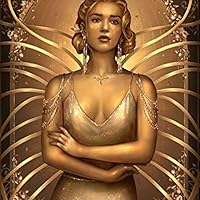
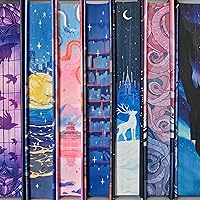
The stunning final book in the acclaimed Torch Trilogy, perfect for fans of Sabaa Tahir, Margaret Atwood, and Adrienne Young, set in a future dystopia in which two girls hundreds of miles apart are bound by songlight, the forbidden ability to telepathically communicate.
Moira Buffini (born 1965) is an English dramatist, director, and actor.
She was born in Carlisle to Irish parents, and studied English and Drama at Goldsmiths. She subsequently trained as an actor at the Welsh College of Music and Drama.
For Jordan, co-written with Anna Reynolds in 1992, she won a Time Out Award for her performance and Writers' Guild Award for Best Fringe play. Her 1997 play Gabriel was performed at Soho theatre, winning the LWT Plays on Stage award. Her 1999 play Silence earned Buffini the Susan Smith Blackburn Prize for best English-language play by a woman. Loveplay followed at the RSC in 2001, then Dinner at the National Theatre in 2003 which transferred to the West End and was nominated for an Olivier Award for Best Comedy.
Buffini wrote Dying For It, a free adaptation of Nikolai Erdman's classic, The Suicide, for the Almeida in 2007. She followed it with Marianne Dreams, a dance play with choreographer Will Tuckett, based on Catherine Storr's book. Her play for young people, A Vampire Story was performed as part of NT Connections in 2008.
Buffini is said to advocate big, imaginative plays rather than naturalistic soap opera dramas, and is a founder member of the Monsterists, a group of playwrights who promote new writing of large scale work in the British theatre. She has been described by David Greig as a metaphysical playwright. All her plays have been published by Faber.
Buffini is also a prolific screenwriter. In 2010 her film adaptation of Posy Simmon's Tamara Drewe was released followed by her adaptation of Jane Eyre for BBC Films and Ruby Films in 2011. The script appeared on the 2008 Brit List, a film-industry-compiled list of the best unproduced screenplays in British film. It received nine votes, putting it in second place. Buffini also adapted her play A Vampire Story for the screenplay of Neil Jordan's film Byzantium released in 2013.
She took part in the Bush Theatre's 2011 project Sixty Six for which she wrote a piece based upon a chapter of the King James Bible.
this was the most perfect ending to the torch trilogy and has no doubt become one of my favorite dystopian series. i was worried going into this thinking i wouldn’t remember much of the previous books but was quickly proven wrong because just by the first chapter i was immediately transported into the world! we follow all these characters from different sides of the world, all fighting the same war, all connected, hoping for freedom, and everything about it was perfect. there have been so many hardships throughout this story and it’s been a wonderful (and heart wrenching) journey! i was rooting for these characters every chapter and i couldn’t have pictured a more perfect ending for each one. these characters have my heart.
thank you so much to netgalley and the publishers for the advanced readers copy! and a huge huge thank you to the author for writing such a wonderful series i’ll forever love!!
This is exactly what YA dystopian fantasy should be: brutal, thought-provoking, character-driven and utterly addictive!
I genuinely don't have enough words for how much I loved this trilogy. If you miss the brutal, addictive dystopian YA of the 2010s, this series feels like a perfect blend of The Hunger Games and The Handmaid's Tale — although definitely leaning much more heavily into the latter.
The world is cruel and oppressive, but what makes this trilogy so compelling is everything it explores within that world: tyranny, political oppression, trauma, grief, identity, LGBTQ+ representation, cultural prejudice, female empowerment and the devastating consequences of believing one group is inherently superior to another. Yet none of these themes ever felt forced or preachy; they are woven naturally into the story and its characters. And the characters! Some I genuinely hated at the beginning, only to find myself completely invested in their journeys by the end. Watching characters confront their beliefs, trauma and prejudices, change, grow and ultimately come full circle was one of my favourite parts of the entire trilogy.
The magic system is wonderfully unique, the plot is gripping, and the sense of sisterhood and female strength throughout was incredibly uplifting. After so much brutality and heartbreak, the epilogue brought a wholesome and healing sense of closure. It may have been a little too convenient in places, but honestly? After everything these characters endured, I was more than happy to let them have their happy endings.
One of my favourite YA series of all time, without a doubt. I finished this ARC feeling completely emotionally wrung out, ridiculously satisfied, and already missing these characters. It was an epic and satisfying end to whats been an incredible series to read. I know I'll be thinking about this trilogy for a very, very long time.
Thank you so much to Moira Buffini, Faber and Netgalley for allowing me this ARC. I am beyond greatful.
This is the final book in The Torch Trilogy. I have enjoyed each book and will be sorry that there is no more. That being said, the author has brought the characters through many battles, and the finale has been a fabulous book.
You do need to read this trilogy in order; well, in my opinion, you do, because there is a large cast of characters, the various groups and also the different aspects of the different societies. This may sound complicated, and it is, but the author has done a brilliant job of keeping things under control and still managing the story flowing between them all.
The world that the author has set this trilogy on is ruled by different classes of people, some of whom accept the torchlight ability, or song light as others call it, a powerful telepathic ability. Not everyone has this, so you can see why there is a divide. The battle for those who do and do not have abilities is very much in the hands of the more powerful leaders.
So, when those who live in fear begin to push the boundaries, then there will be bloodshed. This is the focus of this book: the uprising, the anger and feelings of those at the lower end of the food chain, the fear of those who may be affected and those who are trying to maintain their own positions. The sense of who is looking out for themselves is brilliant, as there is a certain amount of propaganda that blurs the lines, creating a tense sense of suspicion and distrust and adding to the overall danger of what is in store for people.
This is a wonderful finale, thrilling, full of danger, answering questions and a brilliant story from beginning to end. If you are a fan of trilogies with a dystopian, action and adventure vibe, then this is one you should have a look at. I would definitely recommend it.
I've said it before and I'll say it again - this trilogy is severely underrated. I will be screaming from the rooftops to anyone who wants a fantastic YA dystopian, that this is the read for you.
This book is non-stop action, and will have you not wanting to put it down from the moment you first pick it up. This is fast paced, go go go from the very start and will constantly have you on the edge of your seat. In my opinion, this is a last book done perfectly right. Although it was non-stop action, not a single scene felt rushed. All the questions I had were answered and all plot strings tied with a bow.
These characters are ones that will stick with me forever. I re-read the first two books in preparation for the Flarestorm, and getting to be alongside them throughout their journey, seeing all that they go through and overcome gut-wrenching. Each and every character truly goes through it, and I admire how strong they are to keep pushing through it all. These characters are all so multi-layered and I believe they're truly all phenomenally written.
Swan is one of the most complex characters I have ever read. Her thought processes change every few seconds, and you go from loving her to hating her, to screaming at her to loving her again.
This book explores so many themes, including political oppression, cultural abuse, LGBTQ+, trauma, grief and so much more. You see how years and years of brainwashing can make even good-hearted people believe the worst, and Buffini shows how these beliefs cannot be changed overnight.
This trilogy will go down as one of my favourite dystopians of all time, and I highly recommend everyone read it. I would absolutely love to see more from this author, particularly a few years into the future!
Thank you to the publisher and netgalley for the opportunity to read this e-arc.
What a fantastic way to bring this series to a close! This is one of those books that pulls you straight back into its world, with so much happening that you really don’t want to put it down.
The stakes are higher than ever as revolution gathers momentum and the fight between those with songlight and those without reaches a dramatic turning point. All our familiar characters are facing their own struggles, with danger, betrayal and impossible choices waiting around every corner.
I really enjoyed seeing how everyone’s individual stories came together as the bigger picture unfolded. There are moments of tension, heartbreak, hope and some lovely emotional touches that make you feel invested in what happens to them all. The themes of love, loyalty, trust and fighting for what you believe in run throughout, giving the story plenty of depth alongside all the action.
There are quite a few twists and turns, and I loved how the author kept building the tension as everything moved towards the final showdown. It’s an emotional rollercoaster, and I found myself rooting for the characters right to the very end.
A brilliant, action-packed and emotional finale that does justice to the series. I’m sad to say goodbye to this world and its characters, but what a journey it’s been! Definitely a series I’d recommend, especially if you love fantasy, rebellion, strong characters and a story filled with heart.
Thank you to the publisher for approving me to read this book, I’m rating it 4.0 stars.
I’m sad its over, it’s been quite the ride. This story sucked me in with its dark and archaic premise rooted in religion and politics. There’s a villainisation of people with songlight, and the journey from book 1 to book 3 is amazing, to see the growth within the many characters we follow on this path.
A lot happens in this final instalment and some characters surprised me and some were not my favourite in this final book. I will always be a massive fan of lark and nightingale out of all the characters, it’s this beautiful found family element mixed with sisterhood and feminine rage as they navigate their power and who they are becoming in the current state of the world.
Things come to a head in this book with loss, sacrifice and bold choices, it did have me on edge wondering how things might work out and who would get to see the end. A really fantastic series that was unqiue, powerful and engaging throughout.
Thanks to the publisher and Netgalley for providing me with an eARC in exchange for an honest review.
This series is hands down one of the best dystopian series I've ever read and this book is one hell of a way to finish it off.
The stress I felt while reading Flarestorm was very real as I had no idea where things were going to go. I gasped out loud at several points, had tears in my eyes and had to stop reading to stop my heart pounding. This exactly what I want from the final book of a trilogy.
The story follows all the characters from the previous two books, with the multiple POVs keeping the pacing going while also raising your stress levels. Each character has a very clear voice, so they're easy to follow. Seeing how each story has been woven together so beautifully was also fantastic.
I honestly cannot express how incredible this trilogy is and how amazing the finale was to read. I'm going to be insufferable as I try to convince everyone to read it.
My issue with YAs published in the last 5 to 7 years is that there is no character with backbone, the bigger plot seems to elude everyone, and the storyline has plot holes bigger than the Milky Way. BUT. There are exceptions to this, and Buffini's trilogy is one of them. Characters who develop their sense of self and stick to it, no one is annoyingly unperceptive, and the stakes are so high that they make the best decisions given their dire circumstances. If you want a YA that doesn't shy away from discussing segregation, discrimination, patriarchy, and other important topics that we face in the modern world, then this book is for you.
With the fate of Brightland in peril, and the rebels marching on its capital, the power struggle underway sees the key players in the previous two books dealing with challenges of their own...
The final story in the trilogy features a daring escape plan and an unlikely reunion. But are happy endings really that simple?
This is an action packed finale that does justice to the other books in the series. There is no doubt that fans will enjoy this one also!
I received a free copy of this book from Netgalley in exchange for an honest review
Solid 4-star series! This was a great ending to the trilogy and it had me on the edge of my seat the entire time! It's not often that I read a whole series in a month but I loved experiencing this series so close together. The number of POVs that we get adds so much to the story, and while I did get a little bit lost at times it was easy to pick up the parts that I missed. I'd love to get a novella that shows the way the world ends up after a few years and what their lives all look like and the govt etc.
This was a DNF for me. I enjoyed books 1 and 2 but struggled to return to this world. The names and code names and mutli POVs were clunky but tbh this might be more of a me think at the moment.
Thank you to Netgalley and the publishers for the opportunity to read early
There is a moment in any dystopian trilogy where rebellion stops being an idea and becomes something much uglier: people have to decide what they are willing to destroy, forgive, sacrifice or become in order to build the world they have been fighting for. Flarestorm is strongest whenever it lives in that uncomfortable space.
This is not a quiet finale. Lark is trapped underground and trying to organise an escape, Nightingale’s abilities are still being exploited by the Brethren, Petra is fleeing across unknown territory, Rye is forced to pursue her, Piper is caught up with the Sealanders, and Swan is facing consequences and betrayals of her own as revolution reaches the Capital. At the same time, the conflict between people with songlight and those without it is becoming almost impossible to contain.
That scale is both what impressed me and what ultimately held the book back.
Moira Buffini has built such a complicated cast by this point that Flarestorm often feels less like following one story and more like watching an entire society fracture at once. Characters are imprisoned, escaping, travelling, plotting, surviving and questioning where their loyalty belongs. It gives the finale a genuine sense that history is happening everywhere simultaneously.
But I missed intimacy.
Lark and Nightingale are still the emotional centre of this trilogy for me. Their songlight connection was what originally made this world feel different from other dystopias: communication becomes friendship, intimacy, resistance and danger all at the same time. The concept that began with two girls connecting across enormous distances has now grown into something capable of challenging entire systems of power. The original trilogy premise has always treated songlight as both gift and potential death sentence, and seeing that conflict reach its political conclusion is satisfying.
I particularly liked Lark here because she no longer feels like someone simply reacting to oppression. She understands that people are looking to her now. That changes her. There is more steel in her decisions, but also more fear because her mistakes no longer belong only to her.
Nightingale’s situation affected me differently. Her power continues to make her valuable to people who are willing to reduce her to a tool, and some of her chapters were among the most claustrophobic in the book. I have always found the contradiction at the centre of her character fascinating: she possesses something extraordinary, yet that same gift repeatedly allows other people to justify controlling her.
And then there is Swan.
I don’t think I ever liked her, exactly, but she remains one of the characters I found most interesting to read. Buffini rarely reduces people to neat categories of monster and hero. Swan has made choices that are difficult to forgive, but the writing is much more interested in how ideology, fear, ambition and survival can corrupt someone than in simply labelling her evil. The final book explicitly puts her in the position of facing a major betrayal, which forces another shift in a character who has spent so much of the trilogy believing she understands power.
That moral ambiguity is where Buffini’s writing shines.
Her dystopian world has always been frightening because so many terrible things are justified through words like purity, protection, civilisation and order. Flarestorm continues asking whether people who overthrow one oppressive system are automatically immune from creating another.
They aren’t.
The Sealanders add another layer to that problem. What initially looked like the possibility of rescue or a different social model in Torchfire has become considerably more complicated. Their attitude toward songlight presents another extreme, and I appreciated that the trilogy ultimately refuses the simplistic answer that persecuted power becomes inherently virtuous once the oppressed group gains control. Torchfire had already established the three-way ideological conflict between Brightland, Ayland and the returning Sealanders; Flarestorm finally forces those competing visions into direct confrontation.
This is also why I found the political sections more compelling than some of the action.
There is plenty of action. Gunfire, escapes, rebellion and larger threats all arrive as the conflict escalates. Apple But the scenes that stayed with me were usually conversations: someone discovering that a person they trusted has changed, characters trying to justify morally questionable decisions, old loyalties becoming impossible to maintain.
Buffini writes those arguments very well.
Her background as a dramatist is visible in the dialogue. Characters frequently have distinct rhythms and ways of thinking, and confrontations can become more tense through conversation than through physical danger. She is particularly good at making two people sound as though they are arguing about one subject while years of history are sitting underneath every sentence. The prose itself remains sharp rather than decorative. This isn’t a series where every landscape receives paragraphs of lyrical description. Buffini tends to focus more on social structures, internal conflict and dialogue, and that approach suits the brutality of Brightland.
Occasionally, though, the writing feels almost too efficient.
There are so many characters and storylines requiring resolution that some events happen before their emotional impact has properly settled. Someone experiences something enormous, we get a painful reaction, and then the narrative has to move because another character hundreds of miles away is currently facing a crisis of their own.
The multi-POV structure was exciting earlier in the trilogy because it made the world feel huge. Here, it occasionally made me impatient.
I would reach a pivotal moment with Lark or Nightingale and then suddenly be somewhere else with Petra, Rye, Piper or Swan. There is nothing inherently wrong with the other storylines — several are genuinely interesting — but the constant movement diluted some of the tension for me.
Petra and Rye’s storyline was probably the clearest example. Petra is seeking asylum after leaving the airship that had once been her home, while Rye is being compelled to track her down. Fnac I liked what this plot contributed to the larger political picture, yet emotionally I sometimes found myself waiting to return to the characters I had been attached to for longer. That may simply be the unavoidable problem of finishing such an expansive trilogy.
The romance also landed unevenly for me.
There are relationships here I have cared about since Songlight, and the possibility of reunion after everything these characters have endured should be overwhelmingly emotional. Some moments absolutely were. Others felt slightly compressed by everything else the finale needed to accomplish.
Elsa/Lark and Rye in particular carry so much history that I wanted more silence around certain moments — more time to let them look at who the other person has become after separation, trauma and war. Their love remains important, but by this point neither of them is the same person who entered the trilogy. Promotional material itself centres the question of whether their relationship can survive everything that has happened between them.
I wanted the book to linger there.
Instead, revolution rarely gives anyone much time.
Where Flarestorm ultimately succeeds is in refusing to make revolution clean. People make compromises. Some choices are brave for terrible reasons; others are terrible for understandable ones. Survival has changed these characters, and victory cannot restore them to who they were before.
That gave the ending weight.
I didn’t love every resolution equally, and with a UK paperback listed at more than 600 pages, there were still paradoxically places where I wanted the story to slow down rather than fit in another development.
Yet I respect what Buffini attempts enormously.
The trilogy began with telepathy as a secret between individuals. It ends by asking what happens when communication itself becomes political power.
Who gets to speak?
Who gets listened to?
Who decides which kind of person is human enough to deserve freedom?
And when the oppressed finally gain enough power to answer those questions themselves, will they answer them any better? Those ideas were more memorable to me than the battles.
So although Flarestorm didn’t become the near-perfect finale I hoped for, it remained intelligent, ambitious and emotionally complicated right to the end. I loved some characters, wanted considerably more time with others, and occasionally felt overwhelmed by everything Buffini was trying to resolve.
But I never felt that the trilogy had nothing left to say.
3.25/5 ⭐
Thank you to Moira Buffini, Faber & Faber and NetGalley for providing me with an ARC. I really appreciate the opportunity to read the conclusion to The Torch Trilogy and share my thoughts. All opinions expressed in this review are completely my own.
Thank you to the author, publisher, and NetGalley for the eARC!
Flarestorm is utter perfection. It is a hard task to finish a trilogy with so many strings, twists, and POVs. Every chapter, I was wondering if this was certainly the end of the story, as I couldn’t imagine that all the plots would be tied together; there is simply not enough time and space in one book to finish the fight and do justice to all the characters. And oh, how wrong have I been. Every single detail falls perfectly into place, everyone finishes right where they belong, there is true satisfaction at the end of the book, and an honor to have the opportunity to read it so early on.
The political arrangements are fluctuating from radical violent discrimination of Brightland right into the more conspicuous inequality of Sealand, with Ayland leading as the example of one nation, built on respect, trust, and open-minded desire to connect. Everyone believes themselves to be correct, right, and honest, while completely negating the other side’s right to exist.
Reading the book puts you at emotional risk, constantly worried for the well-being and future of our main characters; Lark, Nightingale, Rye, Piper, Petra, and Zara are faced with impossible choices around each corner. They choose who to trust, who to play, who to give their hearts to. They risk their lives and their sanity, having to make the decisions to take someone else’s life during this war. There is no peace without spilled blood; there is no easy victory. Everyone needs to dirty their hands, commit sins, and hope they are supporting the right side. Lark, Rye, and Petra find themselves not only suffering due to the difficult wartime circumstances, but are also torn between the respective loves of their lives. It is never easy when one has to choose, doing their best not to hurt others they care about. Piper’s change of heart, his understanding, his desire to do better, and Nightingale’s bravery, her gentle strength, that can literally set the entire world on fire, make for very compelling characters. However, no one holds a candle to my favorite, most corrupted character: Zara Swan. It is hard to gain the trust of someone who only ever felt pain, who was the victim of rage, abuse, an object to possess and dispose of. And it is so easy to lose that trust; without much effort, one can make them feel betrayed, played, made a fool of. Zara’s allegiance changes, her plans are adjusted on the fly, as she fights to stay afloat, stay alive, and keep the little power she can get to remain free. Despite the push and pull of all the leaders around her, others’ goals and opinions, she always chooses herself. Ironically, her decision to put herself first leads to the ultimate victory. Proving that even so-called broken people, without values and ethics beyond their own well-being, can be the agents for change, the harbingers of a better future.
I read the second book in the trilogy over a year ago, but I had no problem following the story in Firestorm from the very first page. Each character is fleshed out, with their own distinctive voices, and within a couple of pages you know exactly where we are, and how we get there. It is an example of how to tie all the loose ends into a coherent and satisfactory story, with a just resolution for all characters, no plot holes, without rushing or losing the tension. Thank you for giving us hope, for showing everyone that Ayland is the way to be.
Thank you so much to Faber and Faber, Moira Buffini and NetGalley for sending me an eARC of Flarestorm!
Flarestorm is the gripping final book in The Torch Trilogy, following three nations who come into contact with each other and find that their cultures are vastly different from one another's. Their views on those with songlight, the ability to speak telepathically to others with songlight over vast distances, is truly the thing that separates them, and in this final book, the uprising and fight for Brightland specifically is underway. I won't say much more because of spoilers, but I've really enjoyed this trilogy, and this final book is an amazing end to the series.
I will say that I struggled with the beginning of this book as it's a little bit slower to get into, and I definitely think I could have done with rereading the first two prior to jumping into Flarestorm, as it took me a bit of time to reconnect with the characters and remember what had happened to them previously. However, once I hit the half way mark, the action really sucked me in and I found myself binging parts of the story, especially the last 150-ish pages which I read today. The pacing could have done with a bit of a rework as I found the beginning to be quite slow and then the ending happened very quickly, but that's only a minor nitpick.
One of my absolute favourite themes in this book is female friendships, especially the one formed between Lark and Nightingale. They are so wonderful to read, and I love whenever they're together either physically or in songlight. They're so precious and I love how fierce and loving their friendship is. I also enjoyed the inclusion of Petra into the friendships and to see how that has grown from Torchfire to now. One thing I wasn't a huge fan of is how Lark in particular saw Zara, with certain slut-shaming comments being directed her way. Those comments made me feel a bit icky so that tainted my view of Lark a little bit. Zara as a character was so layered and interesting, but I can see why Lark would have viewed her in the way that she did, even if it was completely incorrect.
The ending of Flarestorm wrapped everything up nicely, and there were moments where I was so scared for our characters and was on the edge of my seat. I can't help but wonder if there'll be a follow-up book set at some point in the future following the fallout from this book, as while the ending wasn't left open, there were still some questions I had about where the politics and relationships between Brightland, Ayland and Sealand would go from here. It'd be fun to get a new book in the series if Moira Buffini had any extra stories to tell!
If you loved Songlight and Torchfire, definitely pick up Flarestorm as it was a really good ending to the series. If you haven't yet started The Torch Trilogy and are looking for a YA dystopian series with telepathy, strong female friendships and a lot of political maneuverings, I'd definitely recommend you start Songlight immediately!
Following Moira Buffini’s Torch Trilogy has been such a pleasure, and Flarestorm delivers the epic finale I was hoping for. I picked up Songlight because I knew Buffini’s work as a playwright. It hooked me, and I wish more people were talking about this series.
There is a steampunk feel to this world, with echoes of Philip Pullman’s Northern Lights. Aircraft, propaganda, resistance networks and industrial landscapes sit alongside mysterious powers, giving this dystopia a distinctive atmosphere. Buffini’s vivid, cinematic imagery makes it a world I would love to see on screen.
What makes it compelling is the tenderness within its brutality. Alongside torture, forced marriage, eugenics and war are oatcakes shared between prisoners, banned songs and people risking everything for strangers. These acts of care show us what the characters are fighting to preserve.
The Brethren turn difference into grounds for persecution, using language to deny people’s humanity. Yet Buffini also questions what might replace their regime. Other societies harbour prejudices: defeating an oppressor does not automatically mean dismantling oppression.
The queer relationships are essential to this vision. Love can expose people to danger, making sanctuary and acceptance profoundly moving. Warm conversations leave room for discovery and desire, while a quiet trans-inclusive thread affirms living “according to our spirits”. Yet Wren challenges whether Sealand extends that freedom to everyone. Acceptance has to reach beyond a privileged few.
The relationships are intense and occasionally melodramatic, but that suits the story’s emotional openness. Love shapes decisions, sustains resistance and becomes a source of power. Lark’s belief that “the only way through it is to love” captures what I treasure about these books.
For all its losses, Flarestorm remains hopeful without making reconciliation seem easy. Its characters can be damaged, compromised and cruel, yet the possibility of change remains open. Again and again, people survive through collective care: sharing food, singing together, protecting one another and refusing the isolation imposed on them. “We are not alone. We are together”.
There is so much I have loved about these books, and this finale did not disappoint. It is deliciously epic, politically charged and full of feeling, with an ending that left me deeply satisfied. I’m already planning a reread of the whole trilogy next year. That is how much I loved it.
Thank you to Faber and Faber and NetGalley for the advance reading copy.
If you're looking for your next ya dystopian series on par with "The Hunger Games" or "Divergent", this series is for you! "Flarestorm", the final book in the Torch Trilogy, ends with an epic and incredibly satisfying conclusion, and is an underated trilogy that I HIGHLY recommend.
This series drew me in immediately. I COULD NOT put book 1 down, and books 2 and 3 followed the same pattern. They're fast paced and really well written. I was rooting for all the main characters, even the ones who were morally grey and didn't always have everyone's best interests at heart. I truly felt something for these characters as they are in such an oppressive world. In this series you explore the oppression of women, oppression of those with magic (from one point of view), oppression of those without magic(from another culture), and the oppression of LGBTQ characters. All of which are fighting desperately for their freedom from these oppressive societies and are intricately linked to one another by chance. It was really difficult to read such heavy oppression, but rewarding once the characters started to fight back and create a better world for all. This book is told through multiple POV's (around 5-6) and I was heavily invested in ALL of those characters. Even though the chapters were short and we switched POV's each chapter, I was thoroughly engaged and didn't dislike or get bored reading any. I truly cannot say enough good things about these books, as this series was stunning.
There were only 2 small things that bugged me in this final installment that led me to knock off half a star rating: First, I am just NOT a Kingfisher fan in terms of the romance. The author was trying to play up the love triangle trope but it just didn't work for me. There was no redemption for him and Elsa in my eyes. Second, one of the villains was just so over the top that it seems almost cartoony or corny. I got to one part and was just rolling my eyes like "does he hear himself?" Other than that, the book was excellent all the way through!
This series would be great for upper YA reader as it deals with some heavy topics (but it deals with them in a way that I think is age appropriate and easy to understand). As an adult I still thought it was extremely engaging, thought provoking, and better written than a lot of other adult fantasy out there these days. 4.5/5 stars
Thank you so much to NetGalley and HarperCollins Children's Books for providing an ARC in exchange for an honest review.
I received a review copy from the publisher in preparation for a UKYASpotlight interview. It has not affected my opinions.
FLARESTORM is an epic finale to this series.
There is a lot happening here. All six narrators are back, and often quite spread out as their adventures intersect and diverge. I was pleased with how easily I followed it all (given I'm still a bit spaced out post-op!) there's so much to cover too, as there is the rebellion in Brightlinghelm and the threat of the Sealanders to deal with. It's got such an epic scope.
The amount of stuff happening, and the ability to change perspective quickly, means that the pacing is high. There's always something happening and the author's experience with scripts shows with the big dramatic breaks akin to episode enders. I was surprised that I didn't mind the fact that part one is just Lark, Nightingale, and Swan - focused on Brightlinghelm and the rebellion there. The first 2/3 of part two is the Sealander conflict (Piper, Rye, and Petra), but then all of them begin to intersect and all perspectives are along for the rest of the book.
Swan remains the most complex character of the book. She is so hard to like at times. You understand her, and I'm glad she wasn't nice (Nightingale is the deeply compassionate and likeable one, to the point of being too good at times!) but I still wanted to yell at her to be less selfish at times!
The book continues its messy relationships, all coming to a head when Rye and Lark realise the other isn't dead, and now have to contend with the mess of their feelings. It isn't clean, but that's life. I did feel like it tried to stitch everyone up into romantic relationships - I felt for a moment that there might be an exploration of aceness (which would have been nice given how much the book has platformed other queer relationships) but no, she "just hadn't met the right person yet" (and then does). le sigh. This was a very minor thing, though.
In all, it was epic and I was speeding up toward the end to find out what happened.
Flarestorm is a high intensity, action packed end to The Torch Trilogy. It is also the weakest book in the series. I struggled through the start of the book. The series has a massive amount of characters, some with multiple names that are used interchangeably throughout. I spent the first thirty percent of this book trying to wrap my head around who is who. Having not reread the previous two books before delving into this one I also had to try hard to remember exactly where each of these characters had been at the end of the previous book. As a result I found myself quickly frustrated with the book. Whilst I did manage to mostly wrap my head around what was going on the plot meant that I found myself feeling a little lost in space. I think this is because there were so many narrative threads happening at the same time in this book. I can see how Buffini tried to tie them all up, and they mostly succeed at it, but because of how rushed some scenes are I think a lot of hard-hitting plot points missed their mark. There was hardly time to take stock of the different things that were going on. However, my biggest issue with this book was the relationships between the characters. At times this book felt a bit like a soap opera in how the relationships between the characters plays out. This one was in love with that one but they didn’t love them back. This one was jealous of that one. That one didn’t know how to tell this one about their feelings. Instead of these relationships giving the story heart it made the story feel hollow and cheap. Despite these problems I am still rating Flarestorm 3 stars. Why? Because I LOVED the first two books in this series. Whilst I didn’t nearly enjoy the conclusion as much it’s predecessors there is still a lot to like about this book. The worldbuilding. The premise. How complex some of the characters are. I simply feel like the story was too big and that the narrative threads had grown wild and unruly and tying them into a single book that flowed well was never going to be an easy task.
I have finally read the third instalment in Moira Buffini’s amazing trilogy, which began with Songlight, followed by Torchfire. I’ve been waiting for more than a year to find out how the story ends, and the final book in the series did not disappoint.
The world set up in the first two books features a form of telepathy called songlight, which can be used to find other telepaths, or ‘torches’, and communicate in images and words. By the third book, the countries of Ayland and Brightland are still at war, while Brightland’s government is facing challenges from within. Petra and the airship crew from Sealand find themselves in the middle of the conflict, forced to choose between Ayland and Brightland, and their contrasting treatment of torches.
Flarestorm picks up immediately after the shocking cliffhanger at the end of Torchfire. Brightland is thrown into a full-scale civil war, the strong female leads are all fighting for survival in their own situations, and the actions of the Sealanders could tip the balance between Brightland and Ayland. Everyone with songlight is under threat, and those without are caught up in the hostilities.
It’s an absolutely breathless read. The action keeps coming, the stakes are high, and the danger for each of the main characters keeps rising. Loyalties are tested, sides switched, and our characters find themselves forging unexpected alliances to survive.
I couldn’t stop turning the pages.
The ending brings everything together – Ayland, Brightland, and Sealand; torches and people without songlight; leaders, fighters and the people caught up in the fighting.
The book is narrated by Lark, Nightingale, Swan, Petra, Piper and Rye, giving the reader access to every element of the story and every twist of the plot. It’s a fantastic conclusion to the trilogy, and I can’t recommend these books highly enough!
Reading this trilogy is to be plunged into a fast paced, twisty world and all the reader can do is hold on. Inspired by John Wyndham's dystopian classic The Chrysalids with clear The Handmaid's Tale influences throughout, Buffini explores what unites and divides humans in this thought provoking YA trilogy. Set in the future after some cataclysmic event, the series starts in Brightland, a theocratic patriarchy where people with sonlight - telepathic powers - are hunted, tortured and killed. Their traditional enemies are Ayland where telepaths and non-telepaths live in harmony. In the second book we also meet the Sealanders, a technologically advanced nation who were sheltered from the cataclysm and who treat their non-telepaths as second class citizens. Now, in Flarestorm, the beliefs, prejudices and ambitions of all three countries collide, as their citizens start to question the norms that have shackled them for decades. At 80% of the way through Flarestorm I found myself checking that this was indeed the last in a trilogy because it didn't seem possible that Buffini could wrap all the interwined plotlines satisfactorily in the time left. It's obvious the author is also a screenwriter. Not a word is wasted, every scene moves the plot on remorselessly, a growing cast, each with their own journey, is juggled masterfully, each main character narrating in first person present, upping the peril to an almost unbearable tension with very real danger hanging over them almost to the last page. The Torch Trilogy is an exemplary example of what a dystopian YA can be, asking searching questions about the world we live in now whilst offering an entertaining thrill ride. Highly recommended.
It’s a new era of dystopian fiction, y’all, and I would argue that the Torch Trilogy is lighting the way. One of the things it accomplishes so cleverly is making it obvious that, while our YA heroes and heroines are doing heroic acts, there are also adults and armies and systemic change happening behind them. Lark is diving headfirst into danger but Heron and Curl are directing the army at her back and planning for what a future of equality looks like (while Lark is trying to figure out which boy her heart belongs to).
Plus the diversity adds so much - in a world defined by division, the “others” of any kind (whether trans, gay, having magic powers, or simply being a woman in a misogynistic world) suffered and rebelled together, and often not for the same reasons or with the same intensity. But it felt like a very real picture of an actual coup (minus the magic powers, anyway).
Zara Swan is a cleverly executed character, and she has been from the beginning. She is a victim, yes, and she has carved herself a tiny measure of power and she constantly uses it to tear others down so she doesn’t have to feel helpless. Her selfishness and also her trauma make her something of a villain but one we as the reader understand clearly even if we don’t like her.
I feel like it all ended rather neatly, with everyone being pretty happily paired off and the future looking smooth and bright. But honestly, it took a lot to get there, so I can let a bit of that overwhelming and kind of impossible optimism slide.
{Thank you Faber for the advanced copy in exchange for my honest review; all thoughts are my own}
Flarestorm was one of my most anticipated reads of 2026! Thought provoking and powerful, this is a perfect conclusion to a phenomenal trilogy that will stay with me for the rest of my life. Flarestorm has the perfect resonance!
I was terrified to start reading this book after Songlight and Torchfire. The way Moira balances hope on the tiniest tightrope had me literally on the edge of my seat all the way through. The duality of man is highlighted flawlessly and characters dance an extremely fine line of the conflicting sides of human nature. Survival has been a driving force behind so many decisions made in this overall story and nothing is simply just black and white.
The character growth in this book is phenomenal, watching so many of the characters challenge their belief systems and work together was incredibly satisfying! They are some of the best characters I have ever read! Flawed, messy, questionable some of the time and yet so real. They are written in a way that breathes life into them I was rooting so hard for them to get the endings they deserved!
This was an absolute emotional rollercoaster! My heart ached for the characters and the things they had to endure, I cried, grieved alongside them and actually had to take a break at one part as I was absolutely devastated! I also celebrated their victories, laughed, and felt the warmth of the love they shared for each other and the ending wrapped up beautifully.
A massive thank you to NetGalley, Faber and Faber Ltd and Moira Buffini for providing me with this ARC, all opinions are my own.
Favourite Character: Swan (it’s so hard to choose between 5 characters)
Least Favourite Character: Brightland’s whole leadership group (just a straight up awful group of people)
A near perfect ending to a perfect series. I’m so sad that this is the end 😭😭😭
It’s crazy to me how these characters have grown from book 1 through to the end of this book. I could NEVER imagine the Lark from Songlight doing the things she had to do in this book. Never.
Idk if it’s just my rose coloured glasses, but I really don’t see how this could have any negatives. I think the ending was quite simple, but I think that’s what makes it feel like the right thing, as there was a constant build up and you knew what would be coming, but you never knew how.
Character relationships was the main feature of this book to me. You had love pentagons (not love triangles) so you never knew how it would end up; you had abhorrent hate which ruined chances of success (think Starlord and Thanos); and you had growth. So much growth.
And once again, the uniqueness around songlight as the “magic” in this book had so many different facets (political and weaponry), and that just encapsulates so much of this book.
I am recommending this series to everyone. I hope everyone enjoys it as much as I do.
Thank you to Netgalley and Faber publishing for providing me with an ARC of this book.
The third and final instalment of the dystopian Torch trilogy for young adults certainly does not disappoint. Buffini’s writing has become more refined throughout the three books, and this final book is by far my favourite.
Throughout, the action is intense and bloody, as the people of Brightlinghelm come together to continue their dramatic revolution. Through multiple points of view, we see how a united front can depose leaders and governments, and how kindness and compassion can create a powerful wave of resistance and connection. Buffini shows real skill in keeping track of the multiple storylines and their corresponding timelines, intertwining them and revealing how one action can create an extensive ripple effect to the other characters. Quite how she kept all this in such tight control is beyond me, but the effect makes exhilarating reading. I genuinely gasped out loud at one point. Believe me, you’ll find yourself unable to put the book down. I loved it, and dare I say, I really hope there is room for a fourth novel where Lark and Kingfisher navigate a new life in Ayland, perhaps featuring a certain Zara Swan…?
Many thanks to Netgalley for the e-arc, and to Pheobe Williams at Faber for inviting me to review it.
Thanks to Netgally and the publisher for the ARC. This finale really delivers. The first 20 to 30 percent had me a bit confused, honestly, and it took some time to fully get back into the story, but once it clicked I was completely immersed. Buffini brings so much emotion into this closing book that I genuinely didn't know what to do with myself by the end, I spent most of the book rooting hard for some characters and condemning others, so when everything finally came to a head I felt pretty wrecked. The ending itself is really well done, and I loved that the epilogue gave little closing moments for each remaining POV. It made me feel content with where everyone landed rather than left hanging. That said, this is a long book, and it does feel like it at points, so pacing might test some readers' patience early on. If you've been with this trilogy from the start, this is a satisfying, emotional send off that sticks the landing.
I received this book as an ARC from Netgalley, however all opinions are my own.
So the reason I wanted to read this is obviously because I also read the first two books in the series, also as ARCs. Honestly friends, if this wasn't the final book in the series I probably would have DNFd it. Do not get me wrong, there were so many enjoyable moments throughout this book, but because of it being the last one it felt like the author was trying to get everything wrapped up as quickly as possible and it honestly felt disjointed and rushed. I also felt super uncomfortable with how they treated the only trans character throughout this story, especially considering we had such a good experience of meeting him in the second book. Personally, I don't think I'll be reading anything else by Moira due to the experience of reading this series as a whole. I also wouldn't necessarily recommend this series, which is dissapointing consdering how strong the first book was.
What an ending to the series! This last book really brought everything together - and although it was all neat and tidy (possibly too neat and tidy for me - but it is a YA!), there were some moments that had me on the edge of my seat.
The intersectionality stands out from anything else I've read. Acceptance and allyship is always more powerful than division, and I think that's something we need to remember right now. It was a pleasure seeing everyone pull together as the friendships and connections overlapped.
While the MCs are (mostly) full of love, the villains of this piece are truly, lip-curlingly vile and the contrast is powerful. I struggled with Swan - her thoughts and desire for power disgusted me and, although she became morally grey to survive, I'm not sure I truly buy her redemption arc.
A brilliant, thought-provoking read from Buffini.
---
I received an ARC in exchange for an honest review.
I tend not to leave reviews on books anymore as I struggle with finding the right words but The Torch Trilogy are some of my all time favourite books and deserve to be appreciated fully.
When I first picked up Songlight, I was very apprehensive as it wasn’t my typical read and I thought I wouldn’t like it at all. I then proceeded to read both Songlight and Torchfire within one week…
The story over all three books has been absolutely phenomenal and isn’t like anything I’ve ever read before, as well as some incredibly complex (and sometimes infuriating) characters that show such important representation in so many way with disability, people of colour, and members of the LGBTQIA+.
Was the ending the exact one I wanted? No. Was I over the moon with the ending? YES! Just an overall incredible series that I will recommend to anyone and everyone.
(Apologies to anyone who witnessed me yelling whilst listening in the car at THAT scene…)
Moira Buffini’s Flarestorm delivers an emotionally charged, high-stakes conclusion to The Torch Trilogy, bringing the battle over telepathic "songlight" to a dramatic boiling point. Buffini excels at weaving multiple perspectives—including Lark, Nightingale, Petra, and Zara Swan—into a cinematic, morally complex narrative where rebellion is messy and acts of quiet human kindness shine brightly against political brutality. While juggling so many sprawling subplots and intense relationship dynamics occasionally makes the pacing feel slightly uneven or melodramatic, the rich world-building and poignant exploration of freedom and survival keep you invested until the very end. Overall, it is a gripping, thought-provoking finale that leaves a lasting impression.