

What do you think?
Longman Handbooks for Language Teachers
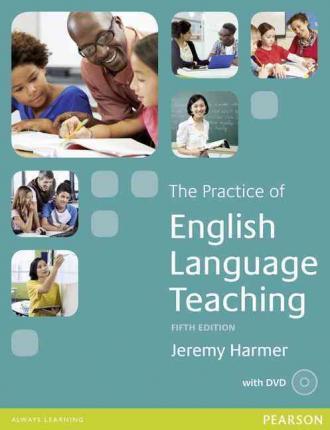
The Practice of English Language Teaching
The highly acclaimed Practice of English Language Teaching is the essential guide for teachers of English in a wide range of contexts. The fifth edition has been revised to reflect new developments in language teaching. It explains current pedagogy to teachers who want to access the most relevant ELT practices and incorporate them into their lessons.
446 pages, Paperback
Published January 1, 2015
Ratings & Reviews
Friends & Following
Create a free account to discover what your friends think of this book!
Community Reviews
Displaying 1 - 30 of 73 reviews

July 29, 2011
Although very thorough,THE PRACTICE OF ENGLISH LANGUAGE TEACHING is more difficult than the other introduction to English as a second-language teaching guides. It is laden with theory, written in small print, and has an exceptionally dull presentation style. Think of the droning of the worst professor you ever had and it will give you an accurate feel for this book. I was excited about the accompanying CD, but the teaching examples on it were also not very inspiring. If, however, you are interested in the research that lead to the practices used in modern language pedagogy, this book may be for you.
If you are planning on taking CELTA or another practical English teaching course, this book is not very useful. Instead, I recommend "Learning Teaching" by Scrivener, or even Jeremy Harmer's other books in the Longman English language teaching series. This one just doesn't have the practical material that will be useful when you actually get to the classroom.
If you are planning on taking CELTA or another practical English teaching course, this book is not very useful. Instead, I recommend "Learning Teaching" by Scrivener, or even Jeremy Harmer's other books in the Longman English language teaching series. This one just doesn't have the practical material that will be useful when you actually get to the classroom.

February 25, 2020
هواي استفاديت منه - ضافي لي معلومات واشياء سرية وبسيطة ضمن اللغة -و قواعد حتى احسن من لغتي الانجليزية, كتاب شامل وكامل-=

November 19, 2015
He aquí la BIBLIA para todos nosotros, meros mortales que osamos enseñar english as a foreign language. Acá está todo lo necesario, bien explicado y detallado, en forma llevadera y no demasiado agobiante.

September 28, 2015
Hated reading this; it was boring as fuck. It very literally put me to sleep. Still manages to be a fantastic resource.

May 4, 2011
What can I say about a coursebook I had to read, tear apart and rearrange into dry essays on teaching theory?
Useful, but not fun.
Useful, but not fun.

June 21, 2012
The book clearly and in simple words presents how to teach English in every classroom. It is good guide to teaching English. In comparison to H.D. Brown's books it is light lecture and readable.

June 25, 2022
Might be useful for newbies only.
May 25, 2011
I'm learning how to teach!

July 9, 2017
I know a person reading this book and it takes up all of her time. 0/10, will never try reading this never-ending piece of paper.
*Reading this book may get you stuck in a time loop.
*Reading this book may get you stuck in a time loop.
This entire review has been hidden because of spoilers.

July 24, 2011
Appallingly dull, repetitive writing combined with common-sense teaching advice did not endear me to this book. It was a struggle to wade through and did not reveal anything new. Possibly good for somebody who is new to teaching and can stay awake with the unimpressive, faux-academic prose. One hopes the next edition will liven up the text a bit and engage the reader rather than lecturing blandly.
May 27, 2014
I had to study this book during a university class. I didn't find it quite useful; there's barely anything about it that you could apply to your lessons.

Did Not Finish
May 5, 2024The title and ad-copy did not make clear that this is primarily helpful for teaching English as a second language. I've already studied that elsewhere, so there wasn't much here for me.
It was incredibly dry and long, and I ended up skipping around to only parts I thought might be useful, but it was very meh.
Also, the emphasis is on British English. American and other Englishes are mentioned here and there, but the focus on the British wasn't very applicable for this American. (The author is British, so the focus does make sense.)
It could certainly be useful to beginner TEFL/ESL teachers, or as a reference.
It was incredibly dry and long, and I ended up skipping around to only parts I thought might be useful, but it was very meh.
Also, the emphasis is on British English. American and other Englishes are mentioned here and there, but the focus on the British wasn't very applicable for this American. (The author is British, so the focus does make sense.)
It could certainly be useful to beginner TEFL/ESL teachers, or as a reference.

December 11, 2024
(read in May 2024 and forgot to add it)
Useful read for aspiring teachers and teachers alike as it deals with the most known theories about language teaching and in this regard, about teaching English as a foreign language. It also gives insight on how to handle the class and other methodologies and it's definitely worth a read if you are a teacher or want to become one but it tends to be repetitive and imo it should've been organized better
Useful read for aspiring teachers and teachers alike as it deals with the most known theories about language teaching and in this regard, about teaching English as a foreign language. It also gives insight on how to handle the class and other methodologies and it's definitely worth a read if you are a teacher or want to become one but it tends to be repetitive and imo it should've been organized better

Read
June 24, 2026Yeah I’m logging my CELTA textbooks so I don’t fall behind on my goodreads goal. Here’s to a July full of less grammar and more reading for fun!!!

September 6, 2022
The Practice of English Language Teaching provides a helpful guide for new teachers. It gives an abundance of theoretical background on English language teaching. It consists of all different kinds of activities and information a well-rounded teacher should be aware of.
One of the reasons I liked the book is because of the various ideas and activities that can be useful to young teachers like me. It starts with a journey of ELT throughout the years to the present day. It explains Global English, and how it became a lingua franca. The next chapters contain various concepts, methodologies, techniques, and strategies that are undeniably rich sources for a teacher. Another reason I find this book great is because of the personal experiences that came from exchanging ideas between colleagues. The author does not make negative comparisons between teachers and the different techniques they use. Being objective makes it easier to follow and see it as a good guidebook.
I personally liked the following quotes:
“The resources that are currently available are truly amazing. As we shall see, they offer
an amazing variety of routes for learning and discovery. Yet we shall not see them as methodologies for learning, but rather as tools to help us whatever approaches and techniques we have chosen to use. And we need to remind ourselves that many classrooms both in the developing or developed world do not have access to very modern technology. Yet this does not prevent students– and has never prevented them - from learning English successfully.” (page 176)
As recently as ten years ago it would have been impossible to find a single non-native speaker teacher working in a language school in, say, Britain or Australia. But that is no longer the case. The process may be slow in this respect, but there are signs of such progress. In the end,
provided teachers can use the language (and know about it), it is the quality of their teaching that counts, not where they come from or how they learnt or acquired English.” (p.120)
“A lesson will often have more than one aim. We might well say, for example, that our
the overall objective is to improve our students reading ability, but that our specific aims are to encourage them to predict content, to use guessing strategies to overcome lexical
problems and to develop an imaginative response to what they encounter.” (p.371)
Overall, it was a very good read. I recommend every teacher to have it on their shelf. As a good teacher and leader, Jeremy Harmer delivered great messages in the book; one of them is to keep sharing knowledge of how good teachers work and think to ensure that our students are provided with the most effective learning environment there is.
One of the reasons I liked the book is because of the various ideas and activities that can be useful to young teachers like me. It starts with a journey of ELT throughout the years to the present day. It explains Global English, and how it became a lingua franca. The next chapters contain various concepts, methodologies, techniques, and strategies that are undeniably rich sources for a teacher. Another reason I find this book great is because of the personal experiences that came from exchanging ideas between colleagues. The author does not make negative comparisons between teachers and the different techniques they use. Being objective makes it easier to follow and see it as a good guidebook.
I personally liked the following quotes:
“The resources that are currently available are truly amazing. As we shall see, they offer
an amazing variety of routes for learning and discovery. Yet we shall not see them as methodologies for learning, but rather as tools to help us whatever approaches and techniques we have chosen to use. And we need to remind ourselves that many classrooms both in the developing or developed world do not have access to very modern technology. Yet this does not prevent students– and has never prevented them - from learning English successfully.” (page 176)
As recently as ten years ago it would have been impossible to find a single non-native speaker teacher working in a language school in, say, Britain or Australia. But that is no longer the case. The process may be slow in this respect, but there are signs of such progress. In the end,
provided teachers can use the language (and know about it), it is the quality of their teaching that counts, not where they come from or how they learnt or acquired English.” (p.120)
“A lesson will often have more than one aim. We might well say, for example, that our
the overall objective is to improve our students reading ability, but that our specific aims are to encourage them to predict content, to use guessing strategies to overcome lexical
problems and to develop an imaginative response to what they encounter.” (p.371)
Overall, it was a very good read. I recommend every teacher to have it on their shelf. As a good teacher and leader, Jeremy Harmer delivered great messages in the book; one of them is to keep sharing knowledge of how good teachers work and think to ensure that our students are provided with the most effective learning environment there is.

August 18, 2014
This is a good book to read if you are studying to become an English teacher where English is the secondary language for the students though it can be a little difficult to finish. As a learning material book, the theories are plenty and at times 'heavy' to read about, though if that surprises you it may be a good time to ask yourself why you want to be a teacher. If I could complain about one thing though, it is the fact that the author himself is not good at listing exactly where he gets his theories from and whom they belong to, which is frustrating when you're using the book for your exams. I think I spent a week googling them all to be sure that several of the theories weren't Harmer's.
None the less, it's a great book for becoming aware of some of the methods of teaching, as well as the evolution of teaching through out the years regarding language, not to mention a great reminder to support students attempts of answering rather then hammering and penilizing them for minor mistakes.
None the less, it's a great book for becoming aware of some of the methods of teaching, as well as the evolution of teaching through out the years regarding language, not to mention a great reminder to support students attempts of answering rather then hammering and penilizing them for minor mistakes.

October 30, 2017
In the introduction Harmer says that he will provide an overview of the state of English language teaching at the time he wrote the book. It is a good book to have on the shelf of a language school, for example, but it was hard at times to know who the target audience is, as some sections of the book seem to be targetted at new teachers, while others cover the background of the profession. I originally bought it as one of the recommended books for my CELTA. Reading it 10 years on, it provides a summary of many of the things I've learnt since then, but I'm not sure how much I would have got out of it at the time. Glad I've finally read it!

October 1, 2013
Amazing way of summarizing almost everything I needed to know for my big test.
Read
May 16, 2014it is useful for my thesis
Read
November 9, 2015I want to download the book, is it OK?

May 28, 2022
I definitely prefer Scrivener over Harmer. Even though the information is useful, it's at times quite convoluted. Not the easiest to read nor understand.

Want to Read
August 18, 2015Learn about the teaching language

December 21, 2021
CAWPILE Rating: 8,5
Characters: not applicable
Ambient / Worldbuilding: not applicable
Writing style: 9
Plot: not applicable
Intrigue: not applicable
Logic / Relationships: not applicable
Enjoyment: 8
It is a very complete book about the matter mentioned in the title. It compiles within the same space different topics, methods, activities and reflexion points that teachers of ESL (and maybe teachers in general) would find useful.
I loved the way it is organised and how well everything is explained. Although it is taken for granted that the target audience for this book will have previous knowledge about the matter, the explanations are simple, yet thorough, and the language specific, but understandable. I also loved how at the end of every chapter we can find recommendations for every point discussed in it. I found it very thoughtful and I will be reading further for sure!
I will come back to it in the future, I have no doubts. Not just for knwoledge or "advice", but for motivation as well. It does a fantastic job reminding me why I love teaching.
Characters: not applicable
Ambient / Worldbuilding: not applicable
Writing style: 9
Plot: not applicable
Intrigue: not applicable
Logic / Relationships: not applicable
Enjoyment: 8
It is a very complete book about the matter mentioned in the title. It compiles within the same space different topics, methods, activities and reflexion points that teachers of ESL (and maybe teachers in general) would find useful.
I loved the way it is organised and how well everything is explained. Although it is taken for granted that the target audience for this book will have previous knowledge about the matter, the explanations are simple, yet thorough, and the language specific, but understandable. I also loved how at the end of every chapter we can find recommendations for every point discussed in it. I found it very thoughtful and I will be reading further for sure!
I will come back to it in the future, I have no doubts. Not just for knwoledge or "advice", but for motivation as well. It does a fantastic job reminding me why I love teaching.

August 1, 2020
So many teachers recommended this book, today I finished reading it and I feel so disappointed, I didn't gain much out of it, as it is theoretical and doesn't provide enough practical info or examples that could be used in a real classroom, mostly based on theories.

January 20, 2019
The best book for an English teacher and not only! As a future teacher myself, I found it really helpful for my lessons' plans.

March 28, 2019
Very informative and insightful.
Easy to read
Easy to read

April 2, 2019
Helpful, with great examples that I'm excited to try. Overall easy to understand and yet challenging if presented with the right questions and extra material. Loved the DVD.

March 28, 2020
The author nearly mentioned every aspect the teacher should be aware of.
However, what boggled me most is the lack of good publications.
However, what boggled me most is the lack of good publications.
Want to Read
January 4, 2021aa

Want to Read
March 8, 2021Interesting books
Displaying 1 - 30 of 73 reviews