5 Giraffes is a fascinating account of giraffes living in the wild and in captivity. While giraffes are an iconic part of the African landscape, some races of giraffes are facing extinction in the wild. From their leafy diets to their hidden social lives, giraffes are important creatures that must be protected – and the lives of these special five will show you why.
5 Giraffes shares the stories of five celebrated giraffes: The reticulated giraffes Lmara lives a free life on would wish for all animals. Young Safari, one of the first giraffes ever to be born by artificial insemination, is an important member of a scientific research team. Brave Gemina is an example of a giraffe’s ability to overcome a natural disability in a zoo. Foo8 lives in Kenya and illustrates the deep love a mother can have for her calf, and Msitu demonstrates how learning can benefit animals in captivity.
* Explore the lives of Lmara, Safari, Gemina, Foo8, and Msitu. * Learn about the challenges of captivity and endangerment in the wild. * Read about challenges of captivity and endangerment in the wild. * Find out fun facts, like why giraffes have long necks or how they drink from a body of water. * Discover what you can do to become a Giraffe Guardian.
Canadian Anne Innis Dagg has loved giraffes her whole life. She pioneered a study of their behaviour for a year in Africa in the 1950s, and has written many scientific papers and four books about them. Her ground-breaking early research and lifelong commitment to giraffe conservation make her one of the worlds leading giraffe experts and a true friend to giraffes everywhere. She lives in Waterloo, Ontario.
Recently saw an outstanding documentary called "The Woman Who Loves Giraffes" about Anne Innis Dagg (RT score - 100%), and recommend it for absolutely EVERYONE. She is often called "the Jane Goodall of giraffes," but that's unfair to Dagg, as she was researching her giraffes in Africa four years before Goodall even got there - in fact, she was the first person of either sex to seriously study any wild African animal in its natural environment. (See the wonderful trailer here: https://www.youtube.com/watch?v=c_vDC... or you can watch the whole film on Kanopy, if your library uses that.)
The film also describes how Dagg was denied tenure in the (at the time) highly discriminatory Canadian university system, and so without academic sponsorship and funding, and eventually dropped out of sight - or so she thought. But turns out she had become a legend among giraffe researchers, with her seminal (1976) book on giraffe biology and behavior becoming "the bible" for decades. As a result, in the late '90s she was welcomed back into "the giraffe community" as a rock star, and has since received both the popular and academic recognition she was so long denied, returned to Africa, and (obviously) become the subject of this award winning film. (She is also a long-time feminist, and along with her daughter took part in the 2017 Woman's March at the age of 85.)
PLEASE watch this film if you can find it, or at least Google Dagg and read any of the excellent articles about her:
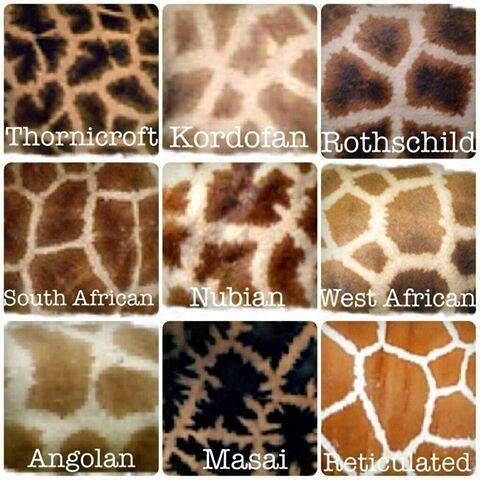
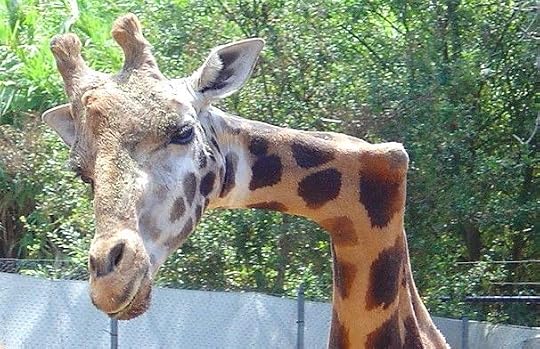
After the film, I of course wanted to read more about both Dagg and giraffes, but this book was all our library had.* Still, it proved a wonderful source of basic information on giraffe behavior and conservation, and Dagg's personality and passion are evident on every page. As always when reading science books for young readers, I learned a ton - how to tell males from females (no, not that; females are much smaller, they travel in groups [while males are loners], and they have tufts of black hair on their ossicones [horns to you amateurs] while the males have had the hair scraped off during their incessant head-butting of other males**); their closet living relatives (okapis - and nothing else); differences between the unique sub-species (see below); and lots of other good stuff. (One of the titular "5 giraffes" is the adorable Gemina, a female with a bizarre, nearly 90° bend in her neck, who has become a celebrity in her own rite as an inspiration for children with scoliosis and other disabilities, and has both been featured on several reality shows and as the subject of her own book, Gemina: The Crooked-Neck Giraffe)
Again - PLEASE, all of you do something to learn more about this delightful woman and these amazing animals. Alien as they appear, they often don't get the same love and support as gorillas, elephants, even rhinos - but they are no less threatened. You can help by donating to any of a number of organizations, but particularly the Reticulated Giraffe Project (www.reticulatedgiraffeproject.net), the Anne Innis Dagg Foundation (https://anneinnisdaggfoundation.org/), the Giraffe Conservation Alliance (http://www.giraffealliance.org), or any other reputable (do your research!) animal conservation group. * Have since found out that Hoopla has two of her other excellent books, Pursuing Giraffe: A 1950s Adventure (both as an ebook and audiobook), and The Social Behavior of Older Animals (ebook only), which I've added to my TBR list. Kickass woman indeed!
Besides feeling concussed by the amount of times I was hit over the head with the fact that the author believes girafffes should ALWAYS be in the wild (I get it. I got it.)...I enjoyed reading the stories of Lmara, Gemina, Msitu, Safari, F008, and Wasswa (Wait! There's 6 giraffes!) A little shorter, a little less repetitive and much less preachy and this would have been a fantastic read.
Fell in love with this beautifully photographed and illustrated book for older children. The author, who has been studying giraffes since 1956 in Africa talks about 5 giraffes she has known and while telling their stories also imparts information about, well, everything giraffe, including diagrams of how they walk and run. I learned so much but most fascinating? They communicate via infrasound, vocal noises that are so low humans can't hear them.
This title is nominated for the 2019 Hackmatack award in the non-fiction category. 5 Giraffes tells us everything we wanted to know about giraffes, and more. The book profiles 5 different giraffes, some in the wild and others in captivity. I learned that there are 9 different giraffe species in Africa, and the total population (at the time of book publication) had dropped to 80,000. For me, I felt like this book was information overload, but I'm sure that it would appeal to animal lovers (aspiring veterinarians, biologists) ages 10 and up. This one might be challenging for the younger kids in the group.
Follow the of five giraffes and learn about habitat, anatomy, history and their unique social lives in the wild and within confines. With awesome photos and information about saving this great species, animal lovers’ ages nine to 13 will devour this wonderful book.
Even though this book was written for older children, I learned so much! I did not know that leaves contain enough protein to feed an animal as large as a giraffe. I did not know that they walked in such an unique way, or that they use infrasound to communicate. The author has devoted her life to studying these magnificent creatures, and I am glad she is passing that knowledge on to the next generation.
Anne Innis Dagg has studied giraffes all her life, and wrote this very interesting book about five giraffes in particular. She has included so much extra fascinating information and a chapter on researching giraffes to save them from extinction. The illustrations are fabulous, mostly being photography. Chapters: 1 - One giraffe: mighty Lmara; 2 - Food - a tall order of leaves; 3 - The evolution of giraffes; 4 - Two giraffes: young Safari; 5 - Hot and cold; 6 - Three giraffes: brave Gemini; 7 - The giraffe's unusual body; 8 - Walk this way; 9 - Four giraffes: F008: a mother's love; 10 - Five giraffes: clever Msitu; 11 - Seeing double; 12 - Researching giraffes to save them; 13 - Help wanted: saving giraffes; Glossary.