

What do you think?

The World of Hrishikesh Mukherjee: The Filmmaker Everyone Loves
One of india’s best-loved film directors, Hrishikesh Mukherjee is perhaps best known today for his perennially popular creations like Anand, Chupke Chupke and Gol Maal. But Hrishi-da’s best work was provocative, wide-ranging and always aware of the complexities of people and their relationships, even when the setting was a simple, middle-class household. often combining breezy narratives with serious ideas, his films created a distinct world with recurring themes such as the relationship between fantasy and life, an individual’s journey towards becoming more responsible in a flawed world, performance (naatak-baazi) as a revelation of character, and gender relations in a conservative society.
Jai Arjun Singh looks closely at Hrishikesh Mukherjee’s oeuvre, from well-known films like Satyakam, Guddi, Abhimaan and Khubsoorat to lesser known (but equally notable) works such as Mem-Didi, Biwi Aur Makaan and Anuradha. Combining a fan’s passion with a critic’s rigour, the world of Hrishikesh Mukherjee is a book for anyone who takes their filmed entertainment seriously.
Jai Arjun Singh looks closely at Hrishikesh Mukherjee’s oeuvre, from well-known films like Satyakam, Guddi, Abhimaan and Khubsoorat to lesser known (but equally notable) works such as Mem-Didi, Biwi Aur Makaan and Anuradha. Combining a fan’s passion with a critic’s rigour, the world of Hrishikesh Mukherjee is a book for anyone who takes their filmed entertainment seriously.
- GenresNonfictionMedia Tie In
336 pages, Hardcover
First published September 15, 2015
Ratings & Reviews
Friends & Following
Create a free account to discover what your friends think of this book!
Community Reviews
Displaying 1 - 14 of 14 reviews

February 2, 2016
Jai Arjun Singh's ‘The World of Hrishikesh Mukherjee’ comes with a singularly apt subtitle: ‘The Filmmaker Everyone Loves’. That phrase, or so it emerges from Jai’s analysis of the man and his films (more his films as a reflection of the man), could well be turned on its head and still applied fairly accurately: the filmmaker who loved everyone.
Not completely accurate, of course (it’s still a generalization), but as anybody who is familiar with Hrishikesh Mukherjee’s oeuvre can tell, there’s a certain humanism about his storytelling. Characters are rarely pitch black; even dark grey is an unusual colour, and if it is present in a character, chances are it will eventually veer away towards the white rather than the black. Think Chupke-Chupke, think Golmaal, Mem-Didi, Bawarchi, Majhli Didi, Naram Garam, Rang Birangi, Anuradha… there are no larger-than-life villains here, nothing that is irredeemably bad about a character.
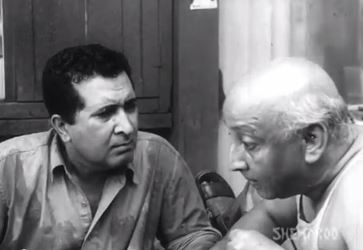
That, as Jai explains in the section An absence of bad men (part of the chapter A World in Miniature), is a hallmark of the ‘humanism often associated with directors like Satyajit Ray, Yasujiro Ozu or Krzysztof Kieslowski—put very simply, the idea that circumstances and situations are bad, not people themselves’. And Hrishikesh Mukherjee took this idea forward in different ways in his films: not just by creating stories that the middle class could relate to, but by peopling them with likeable characters. By ‘seeing good things in people’, as Jai points out, with examples such as Bindu’s Chitra from Abhimaan, a far cry from the callous and conniving vamp the actress usually played.
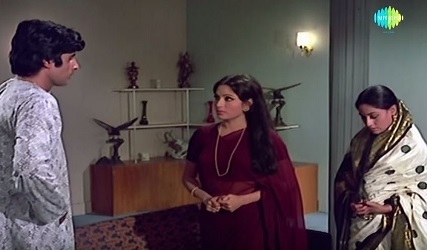
In the thirteen chapters that comprise this book, Jai covers just about every aspect of Hrishikesh Mukherjee’s cinema. It begins with Plots and Storeys. This is not just about the plots of Hrishi-da’s films and the importance of the ‘makaan’ or house in them, but also about his own house, Anupama, which used to become almost an adda, and which actually was the set in many of the man’s films.
From there, Jai wanders on to other topics big and small: seriousness and lightness; ethics; the ‘puppet’ characters who dance to the tunes of a Mehmood in Biwi aur Makaan or a Deven Verma in Rang-Birangi. Relationships between male and female characters. The dignity accorded to supporting characters, and the fact that even comic characters are not subjected to being merely pie-in-the-face props designed to get some guffaws from the front rows. The ‘fluidity of identity’ (the smooth, unflappable way in which characters tend to—Wodehouse-like—assume identities).
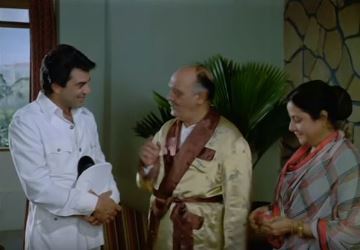
And, music. An accomplished sitar player himself, Hrishikesh Mukherjee invariably paid special attention to the songs in his films—to their music, their lyrics, and their picturization (which, as Jai points out, he never left—as several other directors were wont to do—to the tender mercies of assistants).
This book is not, as the author mentions in the introduction, a biography of Hrishikesh Mukherjee. There are only a couple of pages about his coming to Bombay and his ascent in the film industry (and there’s even less about his personal life). What it is, is a book about Hrishikesh Mukherjee’s cinema.
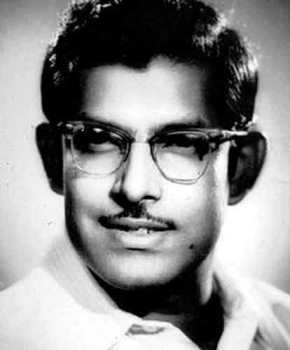
There are some anecdotes sprinkled here and there (for instance, Sharmila Tagore’s confession of feeling guilty that she—then young and obstinate—had insisted on a heavy bouffant for her role as Uma in Anupama, which really didn’t suit the character at all, as Hrishikesh Mukherjee had warned her). There are excerpts from interviews, both with people who worked with the director as well as his relatives, and with Hrishikesh Mukherjee himself (one is from an interview given to Shilpi, whose father Tarun Bose played one of the most important roles in one of Hrishikesh Mukherjee’s best films, the poignant Anupama).
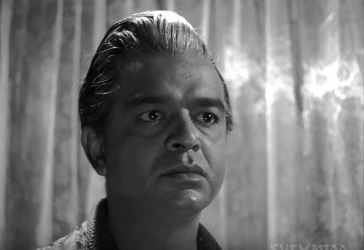
Halfway through the book is a collection of glossy colour reproductions of material related to Hrishikesh Mukherjee and his films: stills, song booklets, and photographs. The book ends with a chronological filmography of the filmmakers, including a brief (very brief) synopsis of each film, its main cast and crew, and year of release.
What I really liked about The World of Hrishikesh Mukherjee is the overall feel to the book: it’s analytical, it will teach you a lot (it certainly taught me to look at elements of Hrishikesh Mukherjee’s—and I daresay, perhaps other filmmakers’—cinema in ways I had probably never paid much attention to before). Yet, it has nothing in it which will put off someone who’s basically a fan; you don’t need to have a done a course in film appreciation to appreciate this book. It’s immensely reader-friendly.
Add to that the fact that Jai Arjun Singh’s sense of humour surfaces every now and then. In the main text, of course, but equally often in the irreverent and delightful footnotes, which are almost like asides: (referring to Kotwal Saab, where ‘Bharat comes to his senses, a brush with a bullet having apparently cleared his mind’s cobwebs’, Jai adds as a footnote, ‘But more realistically than the Mithun film where a bullet passes through the hero’s brain, conveniently excising a malignant tumour’. Or—really corny, this one, though it did make me snigger—‘In that film [Rang Birangi] Ravi’s irresponsible stereotyping…’ comes with the footnote ‘Or ‘stereo-typisting’. Sorry.’ (which, if you don’t know Rang Birangi, refers to the fact that Deven Verma’s character Ravi tries to spice up his friends’ marriage by suggesting a flirtation with his secretary).
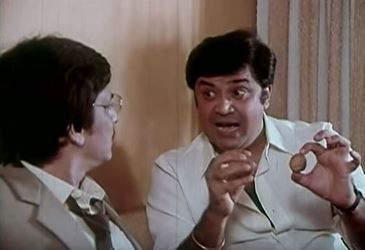
Verdict? Yes. An absolute and complete yes. I am a fan of books that make me feel, by the time I finish them, that I’ve come away richer for having read them. That the hours spent on reading it have taught me something valuable. This did, and in a comfortable, chatty, often humorous way. Don’t miss this if you’re a Hrishikesh Mukherjee fan. No, not if you want the gossip about the man or every little detail about his life, but if you like the films he made.
Not completely accurate, of course (it’s still a generalization), but as anybody who is familiar with Hrishikesh Mukherjee’s oeuvre can tell, there’s a certain humanism about his storytelling. Characters are rarely pitch black; even dark grey is an unusual colour, and if it is present in a character, chances are it will eventually veer away towards the white rather than the black. Think Chupke-Chupke, think Golmaal, Mem-Didi, Bawarchi, Majhli Didi, Naram Garam, Rang Birangi, Anuradha… there are no larger-than-life villains here, nothing that is irredeemably bad about a character.

That, as Jai explains in the section An absence of bad men (part of the chapter A World in Miniature), is a hallmark of the ‘humanism often associated with directors like Satyajit Ray, Yasujiro Ozu or Krzysztof Kieslowski—put very simply, the idea that circumstances and situations are bad, not people themselves’. And Hrishikesh Mukherjee took this idea forward in different ways in his films: not just by creating stories that the middle class could relate to, but by peopling them with likeable characters. By ‘seeing good things in people’, as Jai points out, with examples such as Bindu’s Chitra from Abhimaan, a far cry from the callous and conniving vamp the actress usually played.

In the thirteen chapters that comprise this book, Jai covers just about every aspect of Hrishikesh Mukherjee’s cinema. It begins with Plots and Storeys. This is not just about the plots of Hrishi-da’s films and the importance of the ‘makaan’ or house in them, but also about his own house, Anupama, which used to become almost an adda, and which actually was the set in many of the man’s films.
From there, Jai wanders on to other topics big and small: seriousness and lightness; ethics; the ‘puppet’ characters who dance to the tunes of a Mehmood in Biwi aur Makaan or a Deven Verma in Rang-Birangi. Relationships between male and female characters. The dignity accorded to supporting characters, and the fact that even comic characters are not subjected to being merely pie-in-the-face props designed to get some guffaws from the front rows. The ‘fluidity of identity’ (the smooth, unflappable way in which characters tend to—Wodehouse-like—assume identities).

And, music. An accomplished sitar player himself, Hrishikesh Mukherjee invariably paid special attention to the songs in his films—to their music, their lyrics, and their picturization (which, as Jai points out, he never left—as several other directors were wont to do—to the tender mercies of assistants).
This book is not, as the author mentions in the introduction, a biography of Hrishikesh Mukherjee. There are only a couple of pages about his coming to Bombay and his ascent in the film industry (and there’s even less about his personal life). What it is, is a book about Hrishikesh Mukherjee’s cinema.

There are some anecdotes sprinkled here and there (for instance, Sharmila Tagore’s confession of feeling guilty that she—then young and obstinate—had insisted on a heavy bouffant for her role as Uma in Anupama, which really didn’t suit the character at all, as Hrishikesh Mukherjee had warned her). There are excerpts from interviews, both with people who worked with the director as well as his relatives, and with Hrishikesh Mukherjee himself (one is from an interview given to Shilpi, whose father Tarun Bose played one of the most important roles in one of Hrishikesh Mukherjee’s best films, the poignant Anupama).
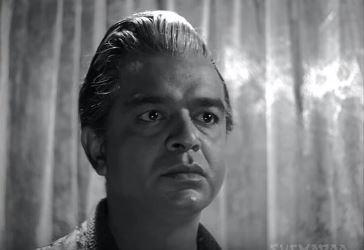
Halfway through the book is a collection of glossy colour reproductions of material related to Hrishikesh Mukherjee and his films: stills, song booklets, and photographs. The book ends with a chronological filmography of the filmmakers, including a brief (very brief) synopsis of each film, its main cast and crew, and year of release.
What I really liked about The World of Hrishikesh Mukherjee is the overall feel to the book: it’s analytical, it will teach you a lot (it certainly taught me to look at elements of Hrishikesh Mukherjee’s—and I daresay, perhaps other filmmakers’—cinema in ways I had probably never paid much attention to before). Yet, it has nothing in it which will put off someone who’s basically a fan; you don’t need to have a done a course in film appreciation to appreciate this book. It’s immensely reader-friendly.
Add to that the fact that Jai Arjun Singh’s sense of humour surfaces every now and then. In the main text, of course, but equally often in the irreverent and delightful footnotes, which are almost like asides: (referring to Kotwal Saab, where ‘Bharat comes to his senses, a brush with a bullet having apparently cleared his mind’s cobwebs’, Jai adds as a footnote, ‘But more realistically than the Mithun film where a bullet passes through the hero’s brain, conveniently excising a malignant tumour’. Or—really corny, this one, though it did make me snigger—‘In that film [Rang Birangi] Ravi’s irresponsible stereotyping…’ comes with the footnote ‘Or ‘stereo-typisting’. Sorry.’ (which, if you don’t know Rang Birangi, refers to the fact that Deven Verma’s character Ravi tries to spice up his friends’ marriage by suggesting a flirtation with his secretary).

Verdict? Yes. An absolute and complete yes. I am a fan of books that make me feel, by the time I finish them, that I’ve come away richer for having read them. That the hours spent on reading it have taught me something valuable. This did, and in a comfortable, chatty, often humorous way. Don’t miss this if you’re a Hrishikesh Mukherjee fan. No, not if you want the gossip about the man or every little detail about his life, but if you like the films he made.
August 19, 2019
Thoroughly enjoyed the book. The writing was very good. The eye of the writer lost no detail when talking about the finer aspects of a movie. And thanks to this book I watched my hitherto un-watched movies - "Biwi Aur Makaan" and "Musafir". I agree with the author re his surprise at why the former movie failed to impress viewers. Very musical, lyrical and light. Must read for every Hindi movie fan (of yesteryears!)

September 22, 2015
A rewarding excursion through the varied works of this filmmaker who was in a class by himself when it came to creating meaningful and enduring works, collated in a meticulously-researched and cogently argued manner by the author and enlivened by his ready wit.

December 11, 2015
When I started reading this I was a bit surprised to find that I had seen more Hrishikesh Mukherjee movies than I had thought (12 in case you're interested in the number). Some of these are among my favorite movies (and not only favorite comedies) of all time (Golmaal, Chupke Chupke for example) , some of the serious ones I found very interesting even when younger (Namak Haram, Abhimaan for example) and some I liked even though I realized they were flawed in many ways ( Anand).
Despite my relative familiarity with the director's work, this was a book I picked up mostly because of the author, whose blog I have followed for close to a decade. After Baradwaj Rangan (who mostly writes on newer releases on his blog and for the Hindu), it was Jai Arjun Singh's blog that I went to when I wanted intelligent, well-thought out pieces on Indian cinema. And this includes all types of cinema, be it the so called "art" (or "parallel") movies of Shyam Benegal, Ray etc but more importantly (for me) "masala" movies of the Manmohan Desai kind or the ones that were sort of in-between (the Hrishikesh Mukherjee, Basu Chatterjee kind). And the "World of Hrishikesh" does not disappoint. Full of well reasoned theories, analysis of some of Hrishikesh Mukherjee's best movies or should I say some of his most interesting movies since Jai finds interesting things worth exploring even in some of the director's more flawed work. In doing so, Jai reveals that to call such movies "simple" is to do them a disservice for there is lots more to them if one recognizes the broader themes that the director held close to his heart. He also shows why calling some of his work regressive is to analyze superficially. (I will admit that this is what I thought when I saw "Kissi se na kehna" after Hrishi-da passed away). You might not agree with all of the analysis and indeed, I saw "Naram Garam" and "Rang Birangi" after reading this and actively hated the former (the latter is mildly amusing though it uses familiar ideas from the director's better work) but they will provide you with the tools to look at the movies differently or to appreciate some aspects of them better. (I believe Jai himself makes the point that many of Hrishi-da's later works had interesting aspects to them even if the complete experience wasn't up to par). Jai also writes about some of my favorite, under-appreciated actors like Dharmendra, Asrani and Deven Verma and how the director found ways to tap hidden reservoirs of talent in each of them or found ways to present actors who had been stereotyped in entirely different ways (Dharam again, Amitabh and even Bindu).
In the end though, while certainly being more than simple, I still think there aren't enough different ideas and thoughts present in Hrishi-da's movies and neither, with a few notable exceptions, is there much to talk about in terms of technique/craft and hence, the book can become a bit dull at times. But if you are a fan of the writer or the director or of some of his movies or even if not and you just like well written books, there is absolutely no better read out there and you should give this a chance.
Despite my relative familiarity with the director's work, this was a book I picked up mostly because of the author, whose blog I have followed for close to a decade. After Baradwaj Rangan (who mostly writes on newer releases on his blog and for the Hindu), it was Jai Arjun Singh's blog that I went to when I wanted intelligent, well-thought out pieces on Indian cinema. And this includes all types of cinema, be it the so called "art" (or "parallel") movies of Shyam Benegal, Ray etc but more importantly (for me) "masala" movies of the Manmohan Desai kind or the ones that were sort of in-between (the Hrishikesh Mukherjee, Basu Chatterjee kind). And the "World of Hrishikesh" does not disappoint. Full of well reasoned theories, analysis of some of Hrishikesh Mukherjee's best movies or should I say some of his most interesting movies since Jai finds interesting things worth exploring even in some of the director's more flawed work. In doing so, Jai reveals that to call such movies "simple" is to do them a disservice for there is lots more to them if one recognizes the broader themes that the director held close to his heart. He also shows why calling some of his work regressive is to analyze superficially. (I will admit that this is what I thought when I saw "Kissi se na kehna" after Hrishi-da passed away). You might not agree with all of the analysis and indeed, I saw "Naram Garam" and "Rang Birangi" after reading this and actively hated the former (the latter is mildly amusing though it uses familiar ideas from the director's better work) but they will provide you with the tools to look at the movies differently or to appreciate some aspects of them better. (I believe Jai himself makes the point that many of Hrishi-da's later works had interesting aspects to them even if the complete experience wasn't up to par). Jai also writes about some of my favorite, under-appreciated actors like Dharmendra, Asrani and Deven Verma and how the director found ways to tap hidden reservoirs of talent in each of them or found ways to present actors who had been stereotyped in entirely different ways (Dharam again, Amitabh and even Bindu).
In the end though, while certainly being more than simple, I still think there aren't enough different ideas and thoughts present in Hrishi-da's movies and neither, with a few notable exceptions, is there much to talk about in terms of technique/craft and hence, the book can become a bit dull at times. But if you are a fan of the writer or the director or of some of his movies or even if not and you just like well written books, there is absolutely no better read out there and you should give this a chance.

September 25, 2015
It has a good assimilation of many events / anecdotes related to the enigma called Hrishida. In fact a huge amount of research has been conducted by the author but I somehow disliked the substantial amount of qualitative analysis that the author has placed in. I am sure it could have been better.
The four rating is primarily because of the first two statements.
The four rating is primarily because of the first two statements.
March 11, 2016
This was a good cozy read for today as i had fever. The book is not a biography and mostly deals with his cinema. But, ironically a book that extols d virtues of Hrishi-da as an editor, could have been better edited. While d first half went past breezily, it started seeming repetitive later.

August 21, 2026
### The World of Hrishikesh Mukherjee — Jai Arjun Singh
I picked up *The World of Hrishikesh Mukherjee* by Jai Arjun Singh because I have been a fan of Hrishikesh Mukherjee for as long as I can remember. Having grown up watching his films, I thought a deeper look into his world would be a compelling read. The fact that Singh has also written a book on *Jaane Bhi Do Yaaro* was another reason I picked it up.
And it did not disappoint.
If you have watched Hrishikesh Mukherjee’s films and want to understand what went behind them, this book has plenty to offer. The amount of research is evident. The detailing is extensive enough that I can see myself returning to the book while revisiting his films.
What I particularly liked was that the book goes beyond reviewing the films. It explores the stories behind them—the whys and hows, the choices Mukherjee made, and the thinking behind his style of filmmaking. It made me look at some familiar films with a slightly different lens.
There are moments when the detailing can feel a little too much, and I did find myself getting bored occasionally. But for someone who takes cinema seriously, that is a small price to pay.
If you are a filmy and a fan of Hrishikesh Mukherjee, I would recommend this book.
If you haven't watched his films, start with *Anand* and *Gol Maal*—two films that show very different sides of his range. Then look at his filmography and decide if you want to enter his world a little deeper.
And if you happen to be in Pune, I’ll be happy to lend you my copy.
I picked up *The World of Hrishikesh Mukherjee* by Jai Arjun Singh because I have been a fan of Hrishikesh Mukherjee for as long as I can remember. Having grown up watching his films, I thought a deeper look into his world would be a compelling read. The fact that Singh has also written a book on *Jaane Bhi Do Yaaro* was another reason I picked it up.
And it did not disappoint.
If you have watched Hrishikesh Mukherjee’s films and want to understand what went behind them, this book has plenty to offer. The amount of research is evident. The detailing is extensive enough that I can see myself returning to the book while revisiting his films.
What I particularly liked was that the book goes beyond reviewing the films. It explores the stories behind them—the whys and hows, the choices Mukherjee made, and the thinking behind his style of filmmaking. It made me look at some familiar films with a slightly different lens.
There are moments when the detailing can feel a little too much, and I did find myself getting bored occasionally. But for someone who takes cinema seriously, that is a small price to pay.
If you are a filmy and a fan of Hrishikesh Mukherjee, I would recommend this book.
If you haven't watched his films, start with *Anand* and *Gol Maal*—two films that show very different sides of his range. Then look at his filmography and decide if you want to enter his world a little deeper.
And if you happen to be in Pune, I’ll be happy to lend you my copy.
September 7, 2018
I found the book to be an average read. However if you are into Hrishikesh Mukherjee films it is a good book to have even if just for the filmography in the back. Although I have seen most of the popular ones, after reading the book I might see some of my favorites again or see those I haven't seen before (like Alaap).

June 17, 2024
Must read for all Hrishi da fans to realise life is beyond the constant charging of goals, milestones, ROCEs, investments, and is made special by the smallest moments of joy spent with family and friends

June 30, 2020
I ENJOY HIS FILMS, SO IT WAS AN INTERESTING READ FOR ME.
November 22, 2024
Quite analytical. Never saw Hrishikesh Mukherjee's films in such a light. I need to revisit his films.

October 10, 2015
An exceptional addition to Indian film literature, this book is a thoughtful and engaging delving into the cinema of 'the filmmaker everyone loves'.
It is not a conventional biography but an in-depth look at the many themes that are common to most of Hrishikesh Mukherjee's films.
Jai Arjun Singh shows us why he is one of the best writers on cinema we have by deftly mixing an expert's head with a fan's heart. And the end result is like exactly like Hrishikesh Mukherjee's best films - engaging enough to be watched/read many times.
It is not a conventional biography but an in-depth look at the many themes that are common to most of Hrishikesh Mukherjee's films.
Jai Arjun Singh shows us why he is one of the best writers on cinema we have by deftly mixing an expert's head with a fan's heart. And the end result is like exactly like Hrishikesh Mukherjee's best films - engaging enough to be watched/read many times.

December 19, 2015
A complete fan's labour of love and tribute to the great director. Dissects many of the movies scene by scene and brings out the nuances with intimate detailing. The director's penchant for economy, editing and underplayed storytelling without any flashy sequence shines through the pages. Excellent introduction to the genre of movies that Hrishi-da is famous for.
December 13, 2024
A refreshing biography
Displaying 1 - 14 of 14 reviews