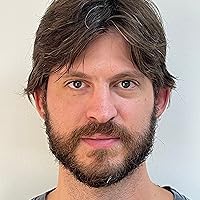
Жак Рансьер - всемирно известный философ, профессор университета Париж VIII (Сен-Дени) - представлен в России прежде всего переводами своих актуальных исследований в области эстетики. Впервые представляемый русскому читателю центральный труд мыслителя, книга "Несогласие" (1995), знакомит с философией политики Рансьера, без которой невозможно полноценное восприятие его влиятельной философской системы.
Jacques Rancière (born Algiers, 1940) is a French philosopher and Emeritus Professor of Philosophy at the University of Paris (St. Denis) who came to prominence when he co-authored Reading Capital (1968), with the Marxist philosopher Louis Althusser.
Rancière contributed to the influential volume Reading "Capital" (though his contribution is not contained in the partial English translation) before publicly breaking with Althusser over his attitude toward the May 1968 student uprising in Paris. Since then, Rancière has departed from the path set by his teacher and published a series of works probing the concepts that make up our understanding of political discourse. What is ideology? What is the proletariat? Is there a working class? And how do these masses of workers that thinkers like Althusser referred to continuously enter into a relationship with knowledge? We talk about them but what do we know? An example of this line of thinking is Rancière's book entitled Le philosophe et ses pauvres (The Philosopher and His Poor, 1983), a book about the role of the poor in the intellectual lives of philosophers.
Most recently Rancière has written on the topic of human rights and specifically the role of international human rights organizations in asserting the authority to determine which groups of people — again the problem of masses — justify human rights interventions, and even war.
In 2006, it was reported that Rancière's aesthetic theory had become a point of reference in the visual arts, and Rancière has lectured at such art world events as the Freize Art Fair. Former French presidential candidate Ségolène Royal has cited Rancière as her favourite philosopher.
"Disagreement is not the conflict between one who says white and another who says black. It is the conflict between one who says white and another who also says white but does not understand the same thing by it or does not understand that the other is saying the same thing in the name of whiteness."
Important, illuminating, less obfuscating than some of his other works, this book is a good introduction to Ranciere's conception of politics (& thus his conception of aesthetics, the structure of which he sees as strictly parallel to that of politics). It is, however, very repetitive in such a way that the experience of reading the book sometimes felt intellectually stultifying to me.
was rewatching an old presidential debate about a month ago and was struck by a sudden/estranging but familiar sense that what i was watching was theatre rather than politics in any meaningful sense. ranciere more than any theorist ive encountered so far provides the best language to articulate this feeling
C'était la première fois que je lisais un ouvrage complet de Rancière. Je dois dire que ça m'a été plutôt pénible parce que bien complexe pour mon petit niveau (et je suis pas fan de comment il écrit). Comme disait je sais plus qui, "c'est sympa Rancière mais bon faut les trouver ses interstices quoi". Je suis bien d'accord. Il s'avère qu'au bout du bout j'ai réussi à comprendre un tantinet sa réflexion qui est intéressante mais un peu frustrante car peu mobilisable hors de son système de pensée très spatial/géométrique. Mais je conseille en vrai.
Consensus en democratie zijn tegengestelde begrippen. Democratie is daarentegen het middel bij uitstek waardoor politiek (d.i. dissensus - Rancière gebruikt het concept hier nog niet, maar in zijn latere werk wel) tot uiting kan komen: "La démocratie est, en général, le mode de subjectivation de la politique" (p.139). Politiek is de onderbreking van politionele orde (la police). De politionele orde is de manier waarop de eigenlijk contingente sociale orde (aisthesis, la configuration du sensible, la partition du sensible) wordt voorgesteld als natuurlijk, logisch of gerechtvaardigd. Het is de orde die lichamen, stemmen, machten, collectiviteiten, groepen etc. hun plek geeft. "On appelle généralement du nom de politique l’ensemble des processus par lesquels s’opèrent l’agrégation et le consentement des collectivités, l’organisation des pouvoirs, la distribution des places et fonctions et les systèmes de légitimation de cette distribution. Je propose de donner un autre nom à cette distribution et au système de ces légitimations. Je propose de l’appeler police" (p.51). Rancière noemt dus "politie" o.m. wat in de volksmond "de politiek" heet.
De politionele orde stelt de gemeenschap voor als vertegenwoordigd door al zijn delen. Het is een dominerend systeem dat doet alsof alle mensen en groepen in de samenleving een gelijk deel zijn van het geheel. Maar in elke sociale orde is er een deel dat geen deel is (le part des sans-part, interne exclusie). Politiek is de actie waarbij dit deel dat geen deel is, een claim maakt op hun deel-zijn. Het is het aanwijzen van deze fout van ongelijkheid (le tort) in de politionele orde en de claim op gelijkheid die het wezen van het politieke uitmaken. "Il y a de la politique quand la contingence égalitaire interrompt comme « liberté » du peuple l’ordre naturel des dominations, quand cette interruption produit un dispositif spécifique : une division de la société en parties qui ne sont pas de « vraies » parties ; l’institution d’une partie qui s’égale au tout au nom d’une « propriété » qui ne lui est point propre, et d’un « commun » qui est la communauté d’un litige" (p.38-9).
Consensusdemocratie is dus een contradictio in terminis omdat de mogelijkheid tot consensus altijd al veronderstelt dat alle delen van het geheel vertegenwoordigd worden om een rationele deliberatie op te zetten. Het is - in Rancières termen - een politionele orde die de verschijningssfeer (sphère d'apparence) voor politieke actie wegneemt voor het deel dat geen deel is.
Politiek draait dus rond onenigheid (mésentente, later dissensus). Onenigheid is geen meningsverschil "entre celui qui dit blanc et celui qui dit noir. Elle est le conflit entre celui qui dit blanc est celui qui dit blanc mais n’entend point la même chose ou n’entend point que l’autre dit la même chose sous le nom de la blancheur" (12). Het gaat om de betekenis, invulling, uitvoering van concepten, voornamelijk gelijkheid (in de ontologische zin: gelijk zijn, niet louter een gelijk deel hebben). "La politique n’existe que par l’effectuation de l’égalité de n’importe qui avec n’importe qui en liberté vide d’une partie de la communauté qui dérègle tout compte des parties" (94).
Gelijkheid is echter niet inherent politiek. Geen begrip is inherent politiek. Waarom? "La raison en est simple. La politique n’a pas d’objets ou de questions qui lui soient propres. Son seul principe, l’égalité, ne lui est pas propre et n’a rien de politique en lui-même. Tout ce qu’elle fait est de lui donner une actualité sous forme de cas, d’inscrire, sous la forme du litige, la vérification de l’égalité au cœur de l’ordre policier. Ce qui fait le caractère politique d’une action, ce n’est pas son objet ou le lieu où elle s’exerce mais uniquement sa forme, celle qui inscrit la vérification de l’égalité dans l’institution d’un litige, d’une communauté n’existant que par la division" (p.55). Elk begrip kan politiek worden, indien het een polemische ontmoeting mogelijk maakt tussen de politionele orde en het deel dat geen deel is. Een actie is politiek indien het zich ent op een scheiding in de gemeenschap die ongelijkheid construeert, en die ongedaan probeert te maken.
Politiek is dus aporetisch, paradoxaal, een schandaal: het is een oneindige strijd om gelijkheid in de politionele orde te installeren, maar heeft zelf geen basis, geen fundament, geen essentie (95).
De traditie van de politieke filosofie is zelf deel van de politionele orde omdat ze deze aporie probeert op te lossen door oftewel de perfecte samenleving te construeren (archipolitiek, Plato), of door politiek te definieren als het gelijk deelnemen aan de politionele orde, afwisselend regeren en geregeerd worden (parapolitiek, Aristoteles) of door de radicale valsheid van de politionele orde aan te tonen en politiek (in Rancières zin) zowel als politie te proberen elimineren (metapolitiek, Marx) - p.100-125
Politiek en politie zijn volgens Rancière altijd aan elkaar verbonden. Politiek is oneindig, heeft geen basis, geen essentie, maar materialiseert - zeer zelden! - in de onenigheid en de actie (i guess?). Ze gebruikt de spanning tussen de zogenaamde, louter theoretische gelijkheid van alle mensen en burgers waarop de (huidige) politionele orde gebaseerd is (cf. Déclaration 1789), en de feitelijke ongelijkheid in de sociale realiteit, om gelijkheid voort te brengen (127-8).
Soit, da's de essentie. Als je het zelf wil lezen, begin bij het voorwoord van Rancière, en lees zeker H5 voor de kritiek op consensusdemocratie. Daarin zit de kern van zijn democratietheorie, alsook een poging om anti-migratiesentimenten te verklaren en zijn visie op de relatie tussen staat, economie en recht. In H1 staan de belangrijkste concepten, H2 en H3 bouwen daarop verder (het begin van H2 bevat het police-politique onderscheid, maar ik denk dat de kern wel echt in het voorwoord en H1 zit). H4 is een kritiek op de traditie van politieke filosofie, die heel moeilijk volgbaar is en niet zo heel relevant meer. Ik heb geen flauw idee wat H6 is, oprecht. Het is een poging om aan te wijzen waar politiek vandaag (dus anno 1996) kan materialiseren, maar verzinkt in besprekingen van negationisme, de relatie tussen geschiedenis en recht, filosofie en genocide, de banaliteit van het kwaad en de opkomst van het 'humanitair' discours.
This is one of the best books on politics that i can imagine, thought definitely not a novel! Ranciere dissects the origins and practices of politics and its intersection with philosophy poetically. It is also fascinating. Recommended for those who follow politics and philosophy
Jacques Rancière widerspricht in "La mésentente" der Idee, dass die nachsowjetische Konsensdemokratie eine Rückkehr der Politik sei, und sieht darin vielmehr deren Liquidierung. Echte Politik definiert er als das paradoxe Eingreifen der "Anteilslosen" (sans-part) – also jener, die keinen traditionellen Anspruch auf Macht durch Geburt, Reichtum oder Wissen besitzen. Der moderne "Konsens" neutralisiert genau diesen Anteil, indem er Politik auf die bloße Verwaltung der ökonomischen Dominanz reduziert. Das Buch zeigt auf, wie diese scheinbar friedliche Verwaltung stattdessen neue Formen von Ausgrenzung, Hass und Gewalt hervorbringt, was die ungebrochene Aktualität seiner Analyse beweist. Rancière trifft dabei eine zentrale Unterscheidung zwischen der "Politik" (la politique) als dem Moment des Streits und der "politischen Philosophie", die diesen Streit historisch (etwa als Archi-, Para- oder Meta-Politik) beenden will. Politik ist für ihn die "Mésentente" (der Zwist), bei dem die "Ungezählten" die bestehende "polizeiliche" Ordnung der Güterverteilung herausfordern und Gleichheit einfordern. Demokratie ist dabei kein Idealzustand, sondern die bloße Bedingung der Möglichkeit für Politik – also gerade keine stabile Regierungsform, sondern der disruptive Moment der Gleichheitsforderung selbst – also der Moment, in dem die Ausgeschlossenen überhaupt sprechen können.Das Paradox der konsensualen "Post-Demokratie" besteht darin, dass das Ende des politischen Streits eine neue Xenophobie oder Diskriminierung hervorbringt, da Konflikte nun auf "reale" Ursachen wie die ethnische Herkunft zurückgeführt werden. Abschließend sei jedoch in aller Schärfe auf das Paradoxon hingewiesen, das in der (scheinbaren) Abnahme des "Anteils der Anteillosen" liegt: Wenn die post-demokratische Ordnung den Anspruch erhebt, alle Konflikte im Konsens aufzulösen und jeden "Anteil" restlos zu verwalten, entzieht sie der Politik selbst den Boden. Politik, im Sinne Rancières, existiert nur durch das Aufbegehren derer, die ungezählt sind. Ein Zeitalter, in dem der "Anteil der Anteillosen" stetig abzunehmen scheint, ist demnach ein Zeitalter, in dem die politische Subjektivität selbst erlischt und der fundamentale Zwist (la mésentente) dem reinen Management der "polizeilichen" Ordnung weicht. Es ist die Stille, die nach dem Ende der Politik eintritt.
“The struggle between the rich and the poor is not social reality, which politics then has to deal with. It is the actual institution of politics itself. There is politics when there is a part of those who have no part, a part or party of the poor. Politics does not happen just because the poor oppose the rich. It is the other way around: politics (that is, the interrup tion of the simple effects of domination by the rich) causes the poor to exist as an entity.”
“Politics exists simply because no social order is based on nature, no divine law regu lates human society.”
“Politics occurs when there is a place and a way for two heterogenous processes to meet. The first is the police process in the sense we have tried to define. The second is the process of equality.”
“the more it needs to legitimize itself through monotr -,us reiteration of the impossibility of the im possible, even if it mt.kas protecting this negative self-legitimization behind the thin barrier of the law that determines the point at which the emptiness of the truth must end, the limit that the argument of the impossibility of the impossible must not overstep.”
The part in legitimization can be traced back in parallel to Eichmann problem of illegal but legitimate acts.
La trama ontológica del Imperio se construye mediante la actividad más allá de toda medida de la multitud y sus poderes virtuales. Estos poderes constitutivos, virtuales, entran en interminable conflicto con los poderes constituidos del Imperio. Y son completamente positivos puesto que su “ser-contra” es un “ser-para”, en otras palabras, una resistencia que se vuelve amor y comunidad. Estamos situados precisamente en esa bisagra de la finitud infinita que enlaza lo virtual con lo posible, comprometida con el pasaje desde el deseo a un futuro venidero.
It was important for me to remember that this was published in 1999. Policing and politics have changed since then. By my reckoning, there's more politics in Europe and especially the US.
Excellent. Ouvrage nécessaire pour tous ceux qui veulent vraiment comprendre de quoi parle J. Rancière dans son oeuvre. Ici, la mésentente, le partage du sensible, le régime de visibilité deviennent des façons de percevoir le monde esthétique et politique.
overall very good and insightful. though chapter 2 was kinda odd. he basically throws Althusser under the bus only to arrive at basically the same theory with less intuitive definitions. anyways, we fucked.