

What do you think?

An Inland Voyage
Purchase one of 1st World Library's Classic Books and help support our free internet library of downloadable eBooks. Visit us online at www.1stWorldLibrary.ORG To equip so small a book with a preface is, I am half afraid, to sin against proportion. But a preface is more than an author can resist, for it is the reward of his labours. When the foundation stone is laid, the architect appears with his plans, and struts for an hour before the public eye. So with the writer in his preface: he may have never a word to say, but he must show himself for a moment in the portico, hat in hand, and with an urbane demeanour. It is best, in such circumstances, to represent a delicate shade of manner between humility and superiority: as if the book had been written by some one else, and you had merely run over it and inserted what was good. But for my part I have not yet learned the trick to that perfection; I am not yet able to dissemble the warmth of my sentiments towards a reader; and if I meet him on the threshold, it is to invite him in with country cordiality.
140 pages, Hardcover
First published January 1, 1878
About the author
Robert Louis Stevenson
7,980 books7,290 followersRobert Louis Balfour Stevenson was a Scottish novelist, poet, and travel writer, and a leading representative of English literature. He was greatly admired by many authors, including Jorge Luis Borges, Ernest Hemingway, Rudyard Kipling and Vladimir Nabokov.
Most modernist writers dismissed him, however, because he was popular and did not write within their narrow definition of literature. It is only recently that critics have begun to look beyond Stevenson's popularity and allow him a place in the Western canon.
Most modernist writers dismissed him, however, because he was popular and did not write within their narrow definition of literature. It is only recently that critics have begun to look beyond Stevenson's popularity and allow him a place in the Western canon.
Ratings & Reviews
Friends & Following
Create a free account to discover what your friends think of this book!
Community Reviews
Displaying 1 - 30 of 56 reviews

December 27, 2016
A Journey through Time
The first book of Stevenson is a kind of guide to an adventure (or to a bet?): with a friend, two canoes (the Cigarette and the Arethusa, which also become the nicknames of the two travelers), and a note-book, through rivers and canals, in Belgium and France, in 1876.
There are no introduction or motivations to the trip, nor preliminary descriptions: we are immediately at the start, in Antwerp, and soon inside the Scheldt
[precisely where the river of Antwerp has its mouth in the sea, as Ariosto said: «dove il fiume d’Anversa ha foce in mare» (Orlando furioso, canto IX)].
Stevenson doesn't linger in many descriptions of landscapes, he rarely -
fortunately - writes on navigation itself, he gives no technical detail. His interest is human and moral: what matters most are the encounters and existential considerations, in search for a kind of wisdom, not without irony, looking for a friendly, open understanding of the world.
«After a good woman, and a good book, and tobacco, there is nothing so agreeable on earth as a river.»
And so we meet groups of children, other travelers, itinerant traders, warm or repulsive hosts, local judges who invite you to dinner, families living on barges, enthusiastic members of a yacht club...
And it is the return (to the "civilization") that gives full sense to the journey, to the exception, the romance, the curiosity.
Because it's when you come home that «you find Love or Death awaiting you beside the stove; and the most beautiful adventures are not those we go to seek».
The first book of Stevenson is a kind of guide to an adventure (or to a bet?): with a friend, two canoes (the Cigarette and the Arethusa, which also become the nicknames of the two travelers), and a note-book, through rivers and canals, in Belgium and France, in 1876.
There are no introduction or motivations to the trip, nor preliminary descriptions: we are immediately at the start, in Antwerp, and soon inside the Scheldt
[precisely where the river of Antwerp has its mouth in the sea, as Ariosto said: «dove il fiume d’Anversa ha foce in mare» (Orlando furioso, canto IX)].
Stevenson doesn't linger in many descriptions of landscapes, he rarely -
fortunately - writes on navigation itself, he gives no technical detail. His interest is human and moral: what matters most are the encounters and existential considerations, in search for a kind of wisdom, not without irony, looking for a friendly, open understanding of the world.
«After a good woman, and a good book, and tobacco, there is nothing so agreeable on earth as a river.»
And so we meet groups of children, other travelers, itinerant traders, warm or repulsive hosts, local judges who invite you to dinner, families living on barges, enthusiastic members of a yacht club...
And it is the return (to the "civilization") that gives full sense to the journey, to the exception, the romance, the curiosity.
Because it's when you come home that «you find Love or Death awaiting you beside the stove; and the most beautiful adventures are not those we go to seek».

September 28, 2022
It’s now some time since I finished Robert Louis’s Stevenson’s account of a journey by canoe along the rivers and canals of northern Belgium and France, in the company of his friend Sir Walter Grindlay Simpson. I’ve been too busy up till now to get to a review whose tone, I hope, will match the leisurely nature of their trip. I’m sitting on a ferry at the moment, so that’s about as near as I will get to a canoeing trip these days, and I have plenty of time in which to take pleasure in leafing through this book again.
This hardback edition from Andrew Sagar includes descriptions of a later stage in RLS’s journey, south of Paris, which were not in the original; he and Simpson may have walked much of this section. The villages and woods along their way are depicted in exquisite watercolours by Michael Reynolds.
The book was kindly mentioned to me by Zoeb , and it is every bit as charming and entertaining as he promised. I was drawn to it, as I am fond of RLS’s writing, and there is a local connection, in that his uncle Alan Stevenson built many of the lighthouses around the coasts of Scotland, including the one where I live. Also, their journey began in Belgium, where I spent several happy months, and ended at Pontoise, in whose adjoining village of Pierrelaye I stayed for quite a long period, so I could better imagine the route. I found it interesting that Andrew Sagar, who provides a modern travel guide and commentary, drew comparisons between then (1876, not long after the Franco-Prussian War) and the present time, and I could also bring into play my own memories from the early 1970’s. It seems that in France, along the Sambre and the Oise,
“the region was conceivably even more industrial in Stevenson’s time . . . in this century though, (the 20th) northern France has taken the brunt of two savage wars with Germany, so a good deal of what RLS saw here has been destroyed. Neat, carefully-tended Commonwealth war cemeteries, in or near many of the towns or villages, are a grim reminder of those events.”
Andrew Sagar often comments on some feature that RLS has not visited, or not mentioned (although as regards sightseeing the travellers must have been considerably hampered by their canoes!). Neither is there any mention in RLS of a timed schedule, which is refreshing in this day and age – Simpson had a private income and Stevenson was gathering material for his travel book, so they could meander at will. Robert Louis gives us a succession of amusing or thought-provoking anecdotes that include personal reflection, though when he does describe his physical surroundings in the “fine, green, fat landscape, or rather a mere green water lane” one falls immediately under his spell. These lyrical passages are too long to quote here, as is the reflective chapter (my favourite) on the cathedral at Noyon. He begins by likening the apparently truncated building to a battleship, and one of Michael Reynolds’ delicate sketches perfectly illustrates this; but I’ll quote from the next section:
“I find I never weary of great churches. It is my favourite kind of mountain scenery. Mankind was never so happily inspired as when it made a cathedral: a thing as single and specious as a statue to the first glance, and yet, on examination, as lively and interesting as a forest in detail. The height of spires cannot be taken by trigonometry; they measure absurdly short, but how tall they are to the admiring eye! And where we have so many elegant proportions, growing one out of the other, and all together into one, it seems as if proportion transcended itself and became something different and more imposing. I could never fathom how man dares to lift up his voice and preach in a cathedral. What is he to say that will not be an anti-climax? For though I have heard a considerable variety of sermons, I have never yet heard one that was so expressive as a cathedral. It is the best preacher itself, and preaches day and night; not only telling you of man’s art and inspirations in the past, but convicting your own soul of ardent sympathies; or rather, like all good preachers it sets you preaching to yourself, - and every man is his own doctor of divinity in the last resort.”
There are a few “old people” attending the service and RLS ends the chapter with a reflection on them, and the nature of what they are hearing. Here is an extract from this:
“One other circumstance distressed me. I could bear a Miserere myself, having had a good deal of open air exercise of late; but I wished the old people somewhere else. It was neither the right sort of music or the right sort of divinity for men and women who have come through most accidents by this time, and probably have an opinion of their own upon the tragic element in life. A person up in years can generally do his own Miserere by himself; although I notice that such an one often prefers Jubilate Deo for his ordinary singing. On the whole, the most religious exercise for the aged is probably to recall their own experience; so many friends dead, so many hopes disappointed, so many slips and stumbles, and withal so many bright days and smiling providences; there is surely the matter of a very eloquent sermon in all this.”
I thoroughly enjoyed the village anecdotes, especially as RLS seems to have a propensity to be taken for a pedlar, a beggar or a spy; but a tranquil section on the widest part of the Oise reminded me of a canoeing trip I did once, down the beautiful Loch Sheil, starting at its head in Glenfinnan, which most people will now be familiar with as the location of the viaduct featured in the ‘Harry Potter’ films. Here, on the wide section of the Oise, RLS felt that he was “about as near Nirvana as would be convenient in practical life.” He continues:
“This frame of mind was the great exploit of our voyage, take it all in all. It was the farthest piece of travel accomplished. Indeed, it lies so far from the beaten paths of language that I despair of getting the reader into sympathy with the smiling, complacent idiocy of my condition: when ideas came and went like motes in a sunbeam; when trees and church spires along the bank surged up from time to time into my notice, like solid objects through a rolling cloud-land; when the rhythmical swish of boat and paddle in the water became a cradle-song to lull my thoughts asleep; when a piece of mud on the deck was sometimes an intolerable eyesore, and sometimes quite a companion for me, and the object of pleased consideration; and all the time, with the river running and the shores changing upon either hand, I kept counting my strokes and forgetting the hundreds, the happiest animal in France.”
Oh yes, and the lovely part where, after many days of rain, RLS is philosophical:
“We had now brought ourselves to a pitch of humility, in the matter of weather, not often attained except in the Scottish Highlands. A rag of blue sky or a glimpse of sunshine set our hearts singing; and when the rain was not heavy we counted the day almost fair.”
And the sun has just come out in the Sound of Mull as I set off on my own trip south, leaving those rainy Highlands . . .
This hardback edition from Andrew Sagar includes descriptions of a later stage in RLS’s journey, south of Paris, which were not in the original; he and Simpson may have walked much of this section. The villages and woods along their way are depicted in exquisite watercolours by Michael Reynolds.
The book was kindly mentioned to me by Zoeb , and it is every bit as charming and entertaining as he promised. I was drawn to it, as I am fond of RLS’s writing, and there is a local connection, in that his uncle Alan Stevenson built many of the lighthouses around the coasts of Scotland, including the one where I live. Also, their journey began in Belgium, where I spent several happy months, and ended at Pontoise, in whose adjoining village of Pierrelaye I stayed for quite a long period, so I could better imagine the route. I found it interesting that Andrew Sagar, who provides a modern travel guide and commentary, drew comparisons between then (1876, not long after the Franco-Prussian War) and the present time, and I could also bring into play my own memories from the early 1970’s. It seems that in France, along the Sambre and the Oise,
“the region was conceivably even more industrial in Stevenson’s time . . . in this century though, (the 20th) northern France has taken the brunt of two savage wars with Germany, so a good deal of what RLS saw here has been destroyed. Neat, carefully-tended Commonwealth war cemeteries, in or near many of the towns or villages, are a grim reminder of those events.”
Andrew Sagar often comments on some feature that RLS has not visited, or not mentioned (although as regards sightseeing the travellers must have been considerably hampered by their canoes!). Neither is there any mention in RLS of a timed schedule, which is refreshing in this day and age – Simpson had a private income and Stevenson was gathering material for his travel book, so they could meander at will. Robert Louis gives us a succession of amusing or thought-provoking anecdotes that include personal reflection, though when he does describe his physical surroundings in the “fine, green, fat landscape, or rather a mere green water lane” one falls immediately under his spell. These lyrical passages are too long to quote here, as is the reflective chapter (my favourite) on the cathedral at Noyon. He begins by likening the apparently truncated building to a battleship, and one of Michael Reynolds’ delicate sketches perfectly illustrates this; but I’ll quote from the next section:
“I find I never weary of great churches. It is my favourite kind of mountain scenery. Mankind was never so happily inspired as when it made a cathedral: a thing as single and specious as a statue to the first glance, and yet, on examination, as lively and interesting as a forest in detail. The height of spires cannot be taken by trigonometry; they measure absurdly short, but how tall they are to the admiring eye! And where we have so many elegant proportions, growing one out of the other, and all together into one, it seems as if proportion transcended itself and became something different and more imposing. I could never fathom how man dares to lift up his voice and preach in a cathedral. What is he to say that will not be an anti-climax? For though I have heard a considerable variety of sermons, I have never yet heard one that was so expressive as a cathedral. It is the best preacher itself, and preaches day and night; not only telling you of man’s art and inspirations in the past, but convicting your own soul of ardent sympathies; or rather, like all good preachers it sets you preaching to yourself, - and every man is his own doctor of divinity in the last resort.”
There are a few “old people” attending the service and RLS ends the chapter with a reflection on them, and the nature of what they are hearing. Here is an extract from this:
“One other circumstance distressed me. I could bear a Miserere myself, having had a good deal of open air exercise of late; but I wished the old people somewhere else. It was neither the right sort of music or the right sort of divinity for men and women who have come through most accidents by this time, and probably have an opinion of their own upon the tragic element in life. A person up in years can generally do his own Miserere by himself; although I notice that such an one often prefers Jubilate Deo for his ordinary singing. On the whole, the most religious exercise for the aged is probably to recall their own experience; so many friends dead, so many hopes disappointed, so many slips and stumbles, and withal so many bright days and smiling providences; there is surely the matter of a very eloquent sermon in all this.”
I thoroughly enjoyed the village anecdotes, especially as RLS seems to have a propensity to be taken for a pedlar, a beggar or a spy; but a tranquil section on the widest part of the Oise reminded me of a canoeing trip I did once, down the beautiful Loch Sheil, starting at its head in Glenfinnan, which most people will now be familiar with as the location of the viaduct featured in the ‘Harry Potter’ films. Here, on the wide section of the Oise, RLS felt that he was “about as near Nirvana as would be convenient in practical life.” He continues:
“This frame of mind was the great exploit of our voyage, take it all in all. It was the farthest piece of travel accomplished. Indeed, it lies so far from the beaten paths of language that I despair of getting the reader into sympathy with the smiling, complacent idiocy of my condition: when ideas came and went like motes in a sunbeam; when trees and church spires along the bank surged up from time to time into my notice, like solid objects through a rolling cloud-land; when the rhythmical swish of boat and paddle in the water became a cradle-song to lull my thoughts asleep; when a piece of mud on the deck was sometimes an intolerable eyesore, and sometimes quite a companion for me, and the object of pleased consideration; and all the time, with the river running and the shores changing upon either hand, I kept counting my strokes and forgetting the hundreds, the happiest animal in France.”
Oh yes, and the lovely part where, after many days of rain, RLS is philosophical:
“We had now brought ourselves to a pitch of humility, in the matter of weather, not often attained except in the Scottish Highlands. A rag of blue sky or a glimpse of sunshine set our hearts singing; and when the rain was not heavy we counted the day almost fair.”
And the sun has just come out in the Sound of Mull as I set off on my own trip south, leaving those rainy Highlands . . .

April 6, 2020
One fine day, Robert Louis Stevenson, at the time a bohemian wanderer with a gift of poetic observation and not quite the imaginative and profound storyteller that he would turn out to be eventually, and his friend Sir Walter Grindlay Simpson took out their canoes for a long and winding voyage through the canals and inlets of Belgium and France.
On the way, they found themselves halted time and again at many a lock, lodged for nights at inns and met an extraordinary assortment of colourful, eccentric and eclectic folks and were also mistaken for tradesmen and pedlars. And as they plodded on, making their way down the river Oise into the inner pastoral recesses of France, Stevenson, discovering his penchant for chronicling adventures in all their glory, excitement disappointment and exhilaration, thought profoundly and held forth on what he thought or felt, not just about the journey but also about the very essence of any adventure, or of life and its little and major pleasures and experiences themselves.
That might sound like quite a mouthful but trust me, this slim, concise volume, just shy of 150 pages, is quite, as someone else called it here, a charming book in that wonderful, old-school sense that makes so much of classic literature still so compulsively readable today. And if you are to believe what critics have said about it, then, yes, "An Inland Voyage" is indeed one of the first specimens of fine travel writing and the template that it laid down - of mesmerising descriptions, a lively voice full of humour and candour, mishaps and misadventures, well-etched and nuanced character observations and profound reflections on life and experiences - continues to be the default point of reference for even the most seasoned travel writer today.
I leave it all to the uninitiated to discover them but I would like to also talk about the narrator, Stevenson, himself. An eternal wanderer, a profound, discerning thinker and a relentless, dextrous storyteller, his evocative, wry and effusive voice is what makes this light, lively and jaunty adventure such a beautiful piece of work. He does not merely bask in the languid, transcendent and utterly intimate spectacle of his odyssey or lament the spells of rain and poor weather but he also describes, with eager enthusiasm, the many eclectic characters - fellow boating fanatics, motherly and overbearing landladies, thrifty, shrewd traders, besotted local lasses and even wandering artists - that he comes across and even goes further to reveal their aspirations, eccentricities, virtues and incongruities with a subtle, warm and witty style that makes us fall for them whole-heartedly.
And then, of course, there are his deeper reflections, thoughts and opinions which accompany his picturesque, vivid observations and fill this book with a poetic weight that can be found in only the finest travel writing today. I marked many of them and here are a few nuggets of wisdom for your benefit:
"Quiet minds cannot be perplexed or frightened but go in fortune or misfortune at their own private pace like a clock during a thunderstorm."
"If this lively and beautiful river were, indeed, a thing of death's contrivance, the old ashen rogue had famously outwitted himself with us. I was living three to the minute. I was scoring points against him every stroke of the paddle, every turn of the stream. I have rarely had better profit of my life."
"In sparsely inhabited places, we make all we can of each encounter; when it comes to a city, we keep to ourselves and never speak unless we have trodden on a man's toes."
Go on, pack your bags for this lovely, lithe voyage in a canoe down the canals and rivers of Europe and discover adventure, life and the meaning of these two things.
On the way, they found themselves halted time and again at many a lock, lodged for nights at inns and met an extraordinary assortment of colourful, eccentric and eclectic folks and were also mistaken for tradesmen and pedlars. And as they plodded on, making their way down the river Oise into the inner pastoral recesses of France, Stevenson, discovering his penchant for chronicling adventures in all their glory, excitement disappointment and exhilaration, thought profoundly and held forth on what he thought or felt, not just about the journey but also about the very essence of any adventure, or of life and its little and major pleasures and experiences themselves.
That might sound like quite a mouthful but trust me, this slim, concise volume, just shy of 150 pages, is quite, as someone else called it here, a charming book in that wonderful, old-school sense that makes so much of classic literature still so compulsively readable today. And if you are to believe what critics have said about it, then, yes, "An Inland Voyage" is indeed one of the first specimens of fine travel writing and the template that it laid down - of mesmerising descriptions, a lively voice full of humour and candour, mishaps and misadventures, well-etched and nuanced character observations and profound reflections on life and experiences - continues to be the default point of reference for even the most seasoned travel writer today.
I leave it all to the uninitiated to discover them but I would like to also talk about the narrator, Stevenson, himself. An eternal wanderer, a profound, discerning thinker and a relentless, dextrous storyteller, his evocative, wry and effusive voice is what makes this light, lively and jaunty adventure such a beautiful piece of work. He does not merely bask in the languid, transcendent and utterly intimate spectacle of his odyssey or lament the spells of rain and poor weather but he also describes, with eager enthusiasm, the many eclectic characters - fellow boating fanatics, motherly and overbearing landladies, thrifty, shrewd traders, besotted local lasses and even wandering artists - that he comes across and even goes further to reveal their aspirations, eccentricities, virtues and incongruities with a subtle, warm and witty style that makes us fall for them whole-heartedly.
And then, of course, there are his deeper reflections, thoughts and opinions which accompany his picturesque, vivid observations and fill this book with a poetic weight that can be found in only the finest travel writing today. I marked many of them and here are a few nuggets of wisdom for your benefit:
"Quiet minds cannot be perplexed or frightened but go in fortune or misfortune at their own private pace like a clock during a thunderstorm."
"If this lively and beautiful river were, indeed, a thing of death's contrivance, the old ashen rogue had famously outwitted himself with us. I was living three to the minute. I was scoring points against him every stroke of the paddle, every turn of the stream. I have rarely had better profit of my life."
"In sparsely inhabited places, we make all we can of each encounter; when it comes to a city, we keep to ourselves and never speak unless we have trodden on a man's toes."
Go on, pack your bags for this lovely, lithe voyage in a canoe down the canals and rivers of Europe and discover adventure, life and the meaning of these two things.

April 17, 2012
This is one of my favorite books and I have read it several times. This said, I have this one good talent, which is to be able to put a novel in its historical period, and enjoy it as is. Most people will find it outdated, when I thoroughly enjoyed the novelty of a book about idle traveling and quiet discoveries. I come back to it often as a haven form modern times.

January 22, 2015
I was hopeful I would love this book about canoeing through France and Belgium in 1876, though I was familiar with only one line—"Quiet minds cannot be perplexed or frightened, but go on in fortune and misfortune at their own private pace, like a clock during a thunderstorm."—which I have been writing on bathroom walls since 1978.
Stevenson's novels were read by children when I was young, and I have particular affection still for Treasure Island, but I had never read his travel books—a bit of an innovation in its day. I was delighted with what I found. Stevenson speaks fondly of women and Gypsies, and thus earns my affection. He writes beautifully, and thus earns my admiration.
And there is this, yet another great truth among many in this slim volume: "You may paddle all day long; but it is when you come back at nightfall, and look in at the familiar room, that you find Love or Death awaiting you beside the stove; and the most beautiful adventures are not those we go to seek."
Perhaps the particular edition I am reading deceives only 4 stars for the unattractive format. I wish I'd tracked down an old copy, smelling of aging paper and bearing the stains and creases of much use.
http://janpriddyoregon.blogspot.com/2...
Stevenson's novels were read by children when I was young, and I have particular affection still for Treasure Island, but I had never read his travel books—a bit of an innovation in its day. I was delighted with what I found. Stevenson speaks fondly of women and Gypsies, and thus earns my affection. He writes beautifully, and thus earns my admiration.
And there is this, yet another great truth among many in this slim volume: "You may paddle all day long; but it is when you come back at nightfall, and look in at the familiar room, that you find Love or Death awaiting you beside the stove; and the most beautiful adventures are not those we go to seek."
Perhaps the particular edition I am reading deceives only 4 stars for the unattractive format. I wish I'd tracked down an old copy, smelling of aging paper and bearing the stains and creases of much use.
http://janpriddyoregon.blogspot.com/2...
April 24, 2013
It's been eight years since I read this book but I wrote something for my blog that might serve (obliquely) as a review:
Afloat
A swimmer is literally out of his element. Human beings were not meant to live underwater. Nor were we meant to live on the water, and perhaps that’s why I get a feeling when paddling my canoe that’s not unlike the feeling I get when swimming. It’s as if I were living, briefly, in a different kind of world, as if I were a different kind of creature. Shoving off from shore onto the frictionless surface of the lake, carried forward by my own momentum, is like diving into a pool. In a moment of breathless transition so fine it’s almost undetectable, all the rules change.
Last weekend my teenage daughter and I had an all-day canoe adventure on Sauvie Island, northwest of Portland, near the confluence of the Willamette and Columbia Rivers. Shaped like a paisley, Sauvie is some 20,000 acres big. Sailors from George Vancouver’s expedition first reconnoitered the island in 1792. Lewis and Clark camped here in 1805. In the 1830s the Hudson’s Bay Company, from its base upriver at Fort Vancouver, founded a dairy farm on the island. Sauvie these days is a hushed rural paradise, though it’s briefly overrun each fall when families from the city visit the island’s farms to pick pumpkins for their Halloween jack-o-lanterns.
The best part of Sauvie Island – the northern half – is a wildlife refuge and largely uninhabited, a maze of lakes and waterways and wetlands accessible only by dirt road, foot trail, and boat. That’s where we like to paddle. Our canoe, which is almost too big to carry atop the car, is a green, seventeen-foot Old Town which we christened the Finley, in honor of Oregon naturalist and early wildlife photographer William L. Finley. It weighs about 75 pounds, and you have to work pretty hard taking it off the car and carrying it from the road to the hand-launch, especially when there are just two of you.
My daughter and I put in at the northern end of Steelman Lake about nine in the morning. With only a fisherman or two on the near shore, and the water entirely to ourselves, we paddled past abandoned hunters’ blinds and round a peninsula and across a body of water called West Arm, and from there into a passage called The Narrows that ends at a levee of boulders beyond which lies massive Sturgeon Lake. We made a tricky portage, carrying the canoe up the steep bank and through the woods (past a few cows and their calves) to circumvent the levee and put in again on the west side of Sturgeon.
From amid a number of islands and peninsulas extending into the center of Sturgeon Lake the Gilbert River gathers water to feed northward into the Columbia. On one of these islands (in a lake, on an island, in a river) we pulled up for a lunch of bread, cheese, salami, and chocolate, plus tea with milk and sugar, boiled on my little backpacker stove. Then we paddled up the winding Gilbert River echoing with birdsong and out a gap into the broad eastern lobe of Sturgeon Lake, the farthest point of our expedition. With fish jumping all around us and postcard views of decapitated Mt St Helens and glacier-cloaked Mt Adams, we chased a pair of bald eagles from one dead, half-submerged tree to another.
We brought no books with us that day, though I was tempted. But “there is a time for all things under heaven,” as we read in Ecclesiastes, and this was a time for booklessness. Besides, any books we brought might have got wet. But sometimes when I’m out in the canoe and I begin to daydream about living on the water forever, or at least taking a weeklong paddling trip, I think of Robert Louis Stevenson’s An Inland Voyage. It was his first book, I think, the record of a canoe trip he and his friend Walter Simpson took through the interlocking canals and waterways of France and Belgium in 1876.
An Inland Voyage has an adolescent quality to it; it’s not Stevenson’s best. But there are a few passages that make suitable contemplation for a day on the water. Stevenson reminds his readers – and especially, I think, his fellow paddlers – that “hurry is the resource of the faithless,” and that “life is not by necessity the kind of thing we make it” in our workaday world. We nod in agreement. Then, elsewhere, he says that “it is a great thing if you can persuade people that they are somehow or other partakers in a mystery. It makes them feel bigger.” But the truth is that no persuasion is necessary when you’re out in the middle of the lake and the water’s still and soft, and the pink and gold cotton-ball clouds of evening are reflected on its surface all around you. You do feel, at that moment, somehow bigger – and then smaller – and then bigger again.
Afloat
A swimmer is literally out of his element. Human beings were not meant to live underwater. Nor were we meant to live on the water, and perhaps that’s why I get a feeling when paddling my canoe that’s not unlike the feeling I get when swimming. It’s as if I were living, briefly, in a different kind of world, as if I were a different kind of creature. Shoving off from shore onto the frictionless surface of the lake, carried forward by my own momentum, is like diving into a pool. In a moment of breathless transition so fine it’s almost undetectable, all the rules change.
Last weekend my teenage daughter and I had an all-day canoe adventure on Sauvie Island, northwest of Portland, near the confluence of the Willamette and Columbia Rivers. Shaped like a paisley, Sauvie is some 20,000 acres big. Sailors from George Vancouver’s expedition first reconnoitered the island in 1792. Lewis and Clark camped here in 1805. In the 1830s the Hudson’s Bay Company, from its base upriver at Fort Vancouver, founded a dairy farm on the island. Sauvie these days is a hushed rural paradise, though it’s briefly overrun each fall when families from the city visit the island’s farms to pick pumpkins for their Halloween jack-o-lanterns.
The best part of Sauvie Island – the northern half – is a wildlife refuge and largely uninhabited, a maze of lakes and waterways and wetlands accessible only by dirt road, foot trail, and boat. That’s where we like to paddle. Our canoe, which is almost too big to carry atop the car, is a green, seventeen-foot Old Town which we christened the Finley, in honor of Oregon naturalist and early wildlife photographer William L. Finley. It weighs about 75 pounds, and you have to work pretty hard taking it off the car and carrying it from the road to the hand-launch, especially when there are just two of you.
My daughter and I put in at the northern end of Steelman Lake about nine in the morning. With only a fisherman or two on the near shore, and the water entirely to ourselves, we paddled past abandoned hunters’ blinds and round a peninsula and across a body of water called West Arm, and from there into a passage called The Narrows that ends at a levee of boulders beyond which lies massive Sturgeon Lake. We made a tricky portage, carrying the canoe up the steep bank and through the woods (past a few cows and their calves) to circumvent the levee and put in again on the west side of Sturgeon.
From amid a number of islands and peninsulas extending into the center of Sturgeon Lake the Gilbert River gathers water to feed northward into the Columbia. On one of these islands (in a lake, on an island, in a river) we pulled up for a lunch of bread, cheese, salami, and chocolate, plus tea with milk and sugar, boiled on my little backpacker stove. Then we paddled up the winding Gilbert River echoing with birdsong and out a gap into the broad eastern lobe of Sturgeon Lake, the farthest point of our expedition. With fish jumping all around us and postcard views of decapitated Mt St Helens and glacier-cloaked Mt Adams, we chased a pair of bald eagles from one dead, half-submerged tree to another.
We brought no books with us that day, though I was tempted. But “there is a time for all things under heaven,” as we read in Ecclesiastes, and this was a time for booklessness. Besides, any books we brought might have got wet. But sometimes when I’m out in the canoe and I begin to daydream about living on the water forever, or at least taking a weeklong paddling trip, I think of Robert Louis Stevenson’s An Inland Voyage. It was his first book, I think, the record of a canoe trip he and his friend Walter Simpson took through the interlocking canals and waterways of France and Belgium in 1876.
An Inland Voyage has an adolescent quality to it; it’s not Stevenson’s best. But there are a few passages that make suitable contemplation for a day on the water. Stevenson reminds his readers – and especially, I think, his fellow paddlers – that “hurry is the resource of the faithless,” and that “life is not by necessity the kind of thing we make it” in our workaday world. We nod in agreement. Then, elsewhere, he says that “it is a great thing if you can persuade people that they are somehow or other partakers in a mystery. It makes them feel bigger.” But the truth is that no persuasion is necessary when you’re out in the middle of the lake and the water’s still and soft, and the pink and gold cotton-ball clouds of evening are reflected on its surface all around you. You do feel, at that moment, somehow bigger – and then smaller – and then bigger again.

August 11, 2017
A bordo del Arethusa, Robert Louis Stevenson. Navegando a su lado, el Cigarette. Jóvenes, libres de preocupaciones y con hambre de aventuras, dos amigos se adentran en el continente siguiendo el curso del río Oise a su paso por tierras belgas y francesas. Como los verdaderos viajes, el suyo reproduce a escala todos los elementos del gran viaje que es la vida. Sufrimientos y sinsabores se alternan con momentos de idílica belleza y dorada tranquilidad. A las inclemencias del tiempo, el afán traicionero de las corrientes o el desamparo de no encontrar un techo que dé cobijo a los vagabundos extranjeros, se suceden conversaciones a la luz de las estrellas, despedidas llenas de afecto, la tan ansiada comida caliente y un sinfín de paisajes e impresiones que dejarán una honda huella en el corazón. Poco a poco, el sueño se desvanece, como se desvanece la bruma que flota sobre el Oise cuando ensancha su cauce, corriendo hacia el mar. La proa apunta hacia la civilización, y en ella los héroes se convierten de nuevo en seres insignificantes en quienes ninguna mirada vuelve a reparar. Pero lo hacen con la sublime satisfacción de los que como ellos han salido a ver mundo y sienten la llamada del hogar.
Primer libro publicado por Stevenson, ha habido que esperar al año 2008 para verlo traducido finalmente al castellano. Me lo he pasado muy bien leyéndolo. Desde el inicio y sin muchas explicaciones me vi embarcado en ese balandro, disfrutando de tan aventurera expedición. El tiempo lo dirá, pero creo que es una de esas lecturas que me dejará un buen puñado de imágenes para el recuerdo. Toda la narración está a menudo salpicada de reflexiones sencillas pero profundas, mientras que en otras ocasiones hace gala de un humor incisivo, barnizado con fina ironía, que da brillo al conjunto. Solo en los dos o tres últimos capítulos pierde fuerza: la magia se va desvaneciendo a medida que se presiente el final del viaje, y el autor devanea acerca de las diferencias entre católicos y protestantes con demasiada y quizá innecesaria insistencia. Con todo, por sus páginas sobrevuela ese vitalismo tan saludable e inspirador que, pese a sus muchos padecimientos personales, Stevenson siempre supo mantener.
Primer libro publicado por Stevenson, ha habido que esperar al año 2008 para verlo traducido finalmente al castellano. Me lo he pasado muy bien leyéndolo. Desde el inicio y sin muchas explicaciones me vi embarcado en ese balandro, disfrutando de tan aventurera expedición. El tiempo lo dirá, pero creo que es una de esas lecturas que me dejará un buen puñado de imágenes para el recuerdo. Toda la narración está a menudo salpicada de reflexiones sencillas pero profundas, mientras que en otras ocasiones hace gala de un humor incisivo, barnizado con fina ironía, que da brillo al conjunto. Solo en los dos o tres últimos capítulos pierde fuerza: la magia se va desvaneciendo a medida que se presiente el final del viaje, y el autor devanea acerca de las diferencias entre católicos y protestantes con demasiada y quizá innecesaria insistencia. Con todo, por sus páginas sobrevuela ese vitalismo tan saludable e inspirador que, pese a sus muchos padecimientos personales, Stevenson siempre supo mantener.

October 27, 2009
This is Stevenson's first published book and a charming one. When he was writing (1876) there doesn't seem to have been a distinct travel-book genre. You sense he's feeling his way. But with confidence. I've read that he wrote these early travel books in order to make money and establish an independence from his comfortable family. So it is almost as though he were selling copy to a magazine. Nevertheless the quality of his writing, the details he chooses to describe, and the interest of viewing Belgian and northern French towns and villages (and canals and rivers) in the years between the Franco-Prussian and First World Wars make this an exceptionally interesting book and one I enjoyed. He travels in a kayak with a friend and drolly records their mishaps and encounters with uncomprehending country folk. That two grown men would spend day after day paddling the rivers and canals of their homelands seem remarkable to the people they encounter. When out of their boats they are generally assumed to be peddlers, and of course to a nineteenth century middle-class person this was highly amusing. It's because of details like this that I found the book interesting. For his time, I imagine Stevenson's comments on the attractiveness of the young women they see was probably considered daring and possibly a little louche. Evidently he met Fanny Osborne, the woman who years later would become his wife, on this trip, but there is no mention of her or any encounter with other well-to-do travelers. My lasting impression of this book will be enjoyment of the details given and the light humor with which he records the adventures and mishaps of the trip.

June 25, 2019
When I picked this up, I was expecting a travel book, and that is what I got in every sense of the word. You will probably not learn much about the geographical attractions that the "Cigarette" and the "Arethusa" crossed in their journey downriver, but you will certainly learn much about people, about nature and humanity in general, and come to the conclusion that travelling is not moving around geographically, but a way of living in it's own right.
"You may paddle all day long; but it is when you come back at nightfall, and look in at the familiar room, that you find Love and Death awaiting you beside the stove; and the most beautiful adventures are not those we go to seek."
"You may paddle all day long; but it is when you come back at nightfall, and look in at the familiar room, that you find Love and Death awaiting you beside the stove; and the most beautiful adventures are not those we go to seek."
December 27, 2018
J'ai été plutôt déçue par la traduction du livre, très scolaire, alors qu'il s'agit d'un récit de voyage. Certains moments d'extase ne décollent pas à cause de cela. L'auteur apparaît comme une personne qui ne veut pas rendre accessible son récit au plus grand nombre, et je me demande si c'est aussi le cas dans la version originale. On ne ressent pas de proximité avec l'auteur, on reste un peu à l'extérieur de son périple. Dommage, car certains passages sont magnifiques, comme celui sur la torpeur du voyageur.

February 11, 2026
Part travel journal, part wandering reflections about life, religion, and art, this is Stevenson's first book, an account of a trip by canoe through the canals of Belgium and northern France. The author strives, sometimes a little too hard, to capture the picturesque image. But there are flashes of the style that he would grow to master. I especially enjoyed aphoristic nuggets such as ‘the receipt of letters is the death of all holiday feelings’.

maybe
February 6, 2020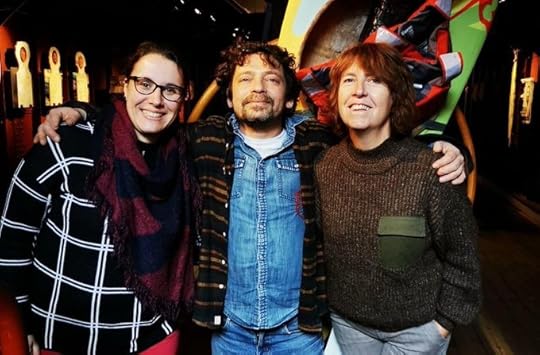
“In Stevenson’s wake”
An exhibition of photography by 3 French artists, who followed the route of Robert Louis Stevenson’s 1878 canoe-based travelogue An Inland Voyage.
http://www.leparisien.fr/oise-60/a-lo...
October 7, 2020
https://nwhyte.livejournal.com/3485824.html
Stevenson's first non-fiction book, a voyage by canoe through Belgium and France in 1878 with a Scottish baronet friend. It's interesting to look at the route between Antwerp and (more or less) Paris by water rather than by the more familiar road or rail. There are some nice moments of local colour. But this isn't Three Men in a Boat, and the ending is rather abrupt.
Stevenson's first non-fiction book, a voyage by canoe through Belgium and France in 1878 with a Scottish baronet friend. It's interesting to look at the route between Antwerp and (more or less) Paris by water rather than by the more familiar road or rail. There are some nice moments of local colour. But this isn't Three Men in a Boat, and the ending is rather abrupt.

November 25, 2023
"You may paddle all day long; but it is when you come back at nightfall, and look in at the familiar room, that you find Love or Death awaiting you beside the stove; and the most beautiful adventures are not those we go to seek."
If that quote doesn't inspire you to read this book, then I'm in the wrong company.
If that quote doesn't inspire you to read this book, then I'm in the wrong company.

March 27, 2017
This was a pleasant book to read. RLS is such a good-humoured travel writer.
February 1, 2020
RLS is a magnificent writer, and both this short travelogue and ‘Travels with a donkey in the Cevennes’ are charming, captivating, and give the reader such a definitive mis en place of the bucolic French countryside. His observations are truly inspired, such as “To detect the flavor of an olive is no less a piece of human perfection than to find beauty in the colours of the sunset.” Or this, “To know what you prefer, instead of humbly saying Amen to what the world tells you you ought to prefer, is to have kept your soul alive.” A lovely read!

May 26, 2025
{Review of the 2004 Folio Society Edition from the three volume collection Travels with Robert Louis Stevenson 3 Volumes, which contains An Inland Voyage (1878), as well as the additional essays "Fontainebleau" (1884), "Forest Notes" (1876), "Ordered South" (1874), and "Davos in Winter" (1881)}
I continue to find the greatest pleasures in Stevenson's literature of place, which merely cement my belief that he is an author I truly would have liked to know. He can describe the scene and setting in a simple yet evocative manner that makes you envious of being there ("There was not a sound audible but that of the sheep-bells in some meadows by the river, and the creaking of a cart down the long road that descends the hill."), and simultaneously paint the charm of people whom you wish you had met and shared an hour. Stevenson gives you the wonders of the journey itself, as well as the reasons the journeys mean so much to us. "To see about one in the world,’ said the husband, ‘il n’y a que ça—there is nothing else worth while. A man, look you, who sticks in his own village like a bear,’ he went on, ‘—very well, he sees nothing. And then death is the end of all. And he has seen nothing.”
I was actually reading a portion in a tavern, which caused one particular passage to resonate even greater with me:
It certainly gave additional layers of meaning to my simple conversations with the tavernkeeper, and while I don't see any exploratory travels in my near future, I hope I can still find some of the same joys close to home.
I continue to find the greatest pleasures in Stevenson's literature of place, which merely cement my belief that he is an author I truly would have liked to know. He can describe the scene and setting in a simple yet evocative manner that makes you envious of being there ("There was not a sound audible but that of the sheep-bells in some meadows by the river, and the creaking of a cart down the long road that descends the hill."), and simultaneously paint the charm of people whom you wish you had met and shared an hour. Stevenson gives you the wonders of the journey itself, as well as the reasons the journeys mean so much to us. "To see about one in the world,’ said the husband, ‘il n’y a que ça—there is nothing else worth while. A man, look you, who sticks in his own village like a bear,’ he went on, ‘—very well, he sees nothing. And then death is the end of all. And he has seen nothing.”
I was actually reading a portion in a tavern, which caused one particular passage to resonate even greater with me:
Little did the Bazins know how much they served us. We were charged for candles, for food and drink, and for the beds we slept in. But there was nothing in the bill for the husband’s pleasant talk; nor for the pretty spectacle of their married life. And there was yet another item unchanged. For these people’s politeness really set us up again in our own esteem. We had a thirst for consideration; the sense of insult was still hot in our spirits; and civil usage seemed to restore us to our position in the world.
How little we pay our way in life! Although we have our purses continually in our hand, the better part of service goes still unrewarded. But I like to fancy that a grateful spirit gives as good as it gets. Perhaps the Bazins knew how much I liked them? perhaps they also were healed of some slights by the thanks that I gave them in my manner?
It certainly gave additional layers of meaning to my simple conversations with the tavernkeeper, and while I don't see any exploratory travels in my near future, I hope I can still find some of the same joys close to home.

November 30, 2020
Although Robert Louis Stevenson is best known today for his fiction, he loved to travel, and his writings include a great deal of wonderful travel literature. "I travel for travel's sake. The great affair is to move," he wrote. And it is clear in An Inland Voyage—as it was in Travels with a Donkey in the Cevennes and The Amateur Emigrant, both of which I previously reviewed—that being in motion triggered his powers of observation and reflection, giving rise to the creation of vivid scenes, characters, and stories.
An Inland Voyage chronicles a canoeing trip that Stevenson took in 1876 with his friend, Sir Walter Simpson. The pair travel from Belgium through France, each in his own canoe—the Arethusa (Stevenson) and the Cigarette (Simpson). It is Stevenson's first experience in a canoe, but he seems to manage fairly well, apart from the time the boat gets away from him altogether, leaving him clinging to a tree, still clutching his oar. He wryly imagines a future epitaph that would read: "He clung to his paddle."
The trip is rough going at times. The friends encounter wet weather and are frequently drenched. They have to deal with numerous locks. And as Stevenson explains in Travels with a Donkey, pleasure travelers are so rare at this time that people don't quite know what to make of them: innkeepers mistake them for "pedlars" and refuse them rooms.
But Stevenson, the consummate traveler, finds humor and points of interest everywhere. "After a good woman, and a good book, and tobacco, there is nothing so agreeable on earth as a river," he says. He enjoys the barges, with "their flower-pots and smoking chimneys," "ranged one after another like houses in a street," enterprises that enable their owners "both to travel and to stay at home"; he enjoys the fishermen, "stupefied with contentment," whom he sees as "an important part of river scenery"; he even enjoys the very mindlessness of canoeing, the "ecstatic stupor" he attains. "A pity to go to the expense of laudanum, when here is a better paradise for nothing," he says. Indeed, he considers this state of mind "the great exploit of our voyage" and "the farthest piece of travel accomplished."
Whether he is writing about a forest—"a city of nature's own"—or lamenting how the receipt of letters on a journey is "the death of all holiday feeling" and makes him feel like "a tethered bird," Stevenson's observations awaken a fresh and unexpected view of the world, which seems to me just what travel literature—like travel itself—should do.
An Inland Voyage chronicles a canoeing trip that Stevenson took in 1876 with his friend, Sir Walter Simpson. The pair travel from Belgium through France, each in his own canoe—the Arethusa (Stevenson) and the Cigarette (Simpson). It is Stevenson's first experience in a canoe, but he seems to manage fairly well, apart from the time the boat gets away from him altogether, leaving him clinging to a tree, still clutching his oar. He wryly imagines a future epitaph that would read: "He clung to his paddle."
The trip is rough going at times. The friends encounter wet weather and are frequently drenched. They have to deal with numerous locks. And as Stevenson explains in Travels with a Donkey, pleasure travelers are so rare at this time that people don't quite know what to make of them: innkeepers mistake them for "pedlars" and refuse them rooms.
But Stevenson, the consummate traveler, finds humor and points of interest everywhere. "After a good woman, and a good book, and tobacco, there is nothing so agreeable on earth as a river," he says. He enjoys the barges, with "their flower-pots and smoking chimneys," "ranged one after another like houses in a street," enterprises that enable their owners "both to travel and to stay at home"; he enjoys the fishermen, "stupefied with contentment," whom he sees as "an important part of river scenery"; he even enjoys the very mindlessness of canoeing, the "ecstatic stupor" he attains. "A pity to go to the expense of laudanum, when here is a better paradise for nothing," he says. Indeed, he considers this state of mind "the great exploit of our voyage" and "the farthest piece of travel accomplished."
Whether he is writing about a forest—"a city of nature's own"—or lamenting how the receipt of letters on a journey is "the death of all holiday feeling" and makes him feel like "a tethered bird," Stevenson's observations awaken a fresh and unexpected view of the world, which seems to me just what travel literature—like travel itself—should do.
December 8, 2024
This could be five stars—I thoroughly enjoyed it in this re-reading. It is charming, thought-provoking and puts you in a good mood with the universe. The voice seems to be that of the intelligent, gregarious, amusing undergraduate—someone in their early twenties anyway—whose conversation is going to keep you entertained all the while you are together. (And who would not like to return to those days and those conversations again?) What strikes me is his enthusiasm not for life but for living, for experiencing each moment—even being drenched by rain or being shooed away from an in because taken for a tramp or an itinerant salesman ('Ces messieurs sont des marchands?'—the landlady's exploratory question before turning them away)—and taking every opportunity to expand his thoughts, philosophical or lyrical. He's not writing a conventional travel book: at one point he says 'I could look up my history books, if you were very anxious, and tell you a date or two', just like a travel writer might do, but of course he doesn't and instead he gives us his experiences, emotions, thoughts—he entertains us but also makes us think, just like the perfect companion or fellow-traveller on this journey of life.
January 5, 2026
Voyage en Canoé sur les rivières du nord ou Croisière à l’intérieur des terres est l’une des premières œuvres écrites par Robert Louis Stevenson. Concrètement c’est un journal de voyage dans lequel l’auteur fait le récit, jour après jour, de son voyage en canoé qu’il effectue avec un compagnon, à travers la Belgique et la France. Deux remarques me viennent en tête à la lecture. Premièrement que c’est très drôle, on retrouve ici le côté ironique (parfois même cynique) que Stevenson perpétuera ensuite à travers ces romans. Il se moque des lieux et des gens qu’il rencontre, ce qui devient un peu agaçant parfois, mais qui en même temps documente beaucoup la vie des lieux qu’il traverse (d’Anvers à Pontoise) à la fin du 19ème siècle, donc ça m’intéresse beaucoup. Deuxièmement – et c’est mon côté politique des auteurs qui ressort – mais je ne peux pas m’empêcher de voir dans ce premier récit les prémisses des grands œuvres d’aventures que Stevenson écrira ensuite. Dans cette envie de voyager autour du monde, de découvrir bien des territoires – ce que Stevenson continuera de faire toute sa vie, jusqu'à mourir de l’autre côté du globe – il y a déjà un parfum de l’Ile au Trésor.

August 27, 2023
This book is a delight. Its content – sketches of rural Belgium and France and their inhabitants, among them rowing club toffs, fishermen, innkeepers and “a bevy of girls in Parisian costumes playing croquet… these slim figures all corseted and ribboned” setting off a throb of the writer's heart tickled by erotic daydreaming – held my attention throughout.
But the prose style itself was enchanting. It carries us into rapids of action and surprise, of the kind we know from Stevenson's swashbuckling tales of adventure. But this book shows writing at another pace. It's a go-with-the-flow travelogue whose languid tempo carried me along as if in Stevenson’s canoe, and with it, his out-of-the-body contemplative enjoyment of the voyage: “I have stupefied myself in this way more than once; indeed, I dearly love the feeling.” No captive to the uptight culture of the Victorian era, Stevenson produced here something like California dreamin’.
But the prose style itself was enchanting. It carries us into rapids of action and surprise, of the kind we know from Stevenson's swashbuckling tales of adventure. But this book shows writing at another pace. It's a go-with-the-flow travelogue whose languid tempo carried me along as if in Stevenson’s canoe, and with it, his out-of-the-body contemplative enjoyment of the voyage: “I have stupefied myself in this way more than once; indeed, I dearly love the feeling.” No captive to the uptight culture of the Victorian era, Stevenson produced here something like California dreamin’.
March 19, 2025
R.L. Stevenson est plus connu pour L'île au trésor que pour ce récit de voyage en canoë. Accompagné par son ami le baronnet Sir Walter Grinflay, surnommé Cigarette, comme son canoë, Stevenson explore les cours d'eau du nord: le sud de la Belgique et le nord de la France" L'escaut, la Ambre et l'Oise, entre 1875 et 1879. Son récit est une source primaire qui décrit les campagnes françaises de la fin du XIXeme siècle. Les chapitres, tous de la même longueur, suivent le trajet géographiquement, et se concentrent sur un aspect de chaque étape. Ce n'est pas qu'une simple description du trajet, c;est aussi un journal d'anecdotes et du ressenti de la météo. Il pleut souvent pendant le voyage, et les colporteurs de sont pas bien vus par les locaux.
Une lecture intéressante et divertissante qui. nous présente l'auteur sous un jour différent. C'est étonnant qu'il ne nomme jamais les participants par leur vrai nom, mais par les noms des canoës: La Cigarette et L'Arethuse.
Une lecture intéressante et divertissante qui. nous présente l'auteur sous un jour différent. C'est étonnant qu'il ne nomme jamais les participants par leur vrai nom, mais par les noms des canoës: La Cigarette et L'Arethuse.

April 16, 2026
In 1876, Robert Louis Stevenson and a friend took a canoe trip through Belgium and Southern France. This happy rambling little book tells of people they met along the way, things they saw, and the adventures they had – some fortunate, and some unfortunate. All in all, it was just a delightful story, full of fun observations and character sketches of the people they meet along the way. Often times they were mistaken for peddlers, because the locals couldn’t understand why these men would just be canoeing; sometimes this mistaken identity was a good thing, and other times it was unfortunate. Find a copy – it’s in the public domain – and sit down for a fun cozy read.

December 30, 2022
This was an adventure in nature and endurance for R L Stevenson and his friend Sir Walter Simpson (Cigarette), they traversed down the river, through canals and locks, battling rain, wind and humanity. I enjoyed this intriguing adventure that these two men took in 1876 on the Oise river. The story tells of a different time and atmosphere; conjures up a relaxed atmosphere filled with conversation, food and local flavours. Enjoyable.

Read
March 22, 2021Great travel piece. Re-read it and really enjoyed. RLS writes with such graphic details and the poetry in his expressions is just ace. The travellers experience newness and joys. I must read the piece again. It's really too good. Viva, RLS!

August 22, 2026
A companion read to The Pull of the River as this short travelogue was part of the inspiration for their trip. Stevenson’s trip takes us and his companion through France and a forgotten world of village life.

October 6, 2026
Robert Louis Stevenson and a friend he refers to as “The Cigar” go on a long canoe trip starting in Belgium and heading into northern France. It’s a mix of local history and travelogue, from long before the conveniences of tourism existed.
July 2, 2017
I read most of it by candle light, it added an incredible atmosphere to an even more incredible story.
December 3, 2017
Took a while to read. I had to research the areas that he wrote about, but that is why I kept at it.
December 27, 2017
Charming, with philosophical asides and vivid sketches of characters met on a canoeing journey through Belgium and northern France. A little gem!
Displaying 1 - 30 of 56 reviews