

What do you think?

Ambedkar
Dr. Bhimrao Ramji Ambedkar's statues are found in the most remote villages in the country, where they represent the aspirations of all Dalits. In this book, the author presents with empathy Ambedkar's struggle to become educated, overcome the stigma of untouchability and pursue his higher studies abroad.
167 pages, Hardcover
First published January 1, 2004
About the author
Gail Omvedt
34 books67 followersDr. Gail Omvedt is an American-born Indian scholar, sociologist and human rights activist. Omvedt has been involved in Dalit and anti-caste movements, environmental, farmers' and women's movements.
She was born in Minneapolis, and studied at Carleton College, and at UC Berkeley where she earned her PhD in sociology in 1973. She has been an Indian citizen since 1983.
In recent years she has been working as a consulting sociologist on gender, environment and rural development, for the United Nations Development Programme (UNDP), Oxfam Novib (NOVIB) and other institutions.
Wikipedia
She was born in Minneapolis, and studied at Carleton College, and at UC Berkeley where she earned her PhD in sociology in 1973. She has been an Indian citizen since 1983.
In recent years she has been working as a consulting sociologist on gender, environment and rural development, for the United Nations Development Programme (UNDP), Oxfam Novib (NOVIB) and other institutions.
Wikipedia
Ratings & Reviews
Friends & Following
Create a free account to discover what your friends think of this book!
Community Reviews
Displaying 1 - 30 of 35 reviews

October 14, 2020
Reading political biographies is not something I usually do, but I came across Omvedt's journal article about peasant women's movements in India, and was immediately taken with her style of writing, and her compassionate involvement in these movements. In any case, this book is a short, short read about Dr. B. R. Ambedkar and his involvement in what can be considered the making of India.
This book is important to read insofar as the history of India is concerned; what is taught in schools in India does not touch upon the diversity of knowledge that Ambedkar brought to the political climate of India, and there have been active attempts to invisibilize his contribution, and this is particularly true with all his debates with Gandhi. As Omvedt writes towards the closing of this book:
What I particularly liked about this book was the Omvedt contextualises the various prominent works of Ambedkar to his own intellectual journey and the politics of the time. Of course, Ambedkar made his position on various clear at many different times in his life, and this is something that Omvedt seems to be able to highlight well. Instead of a strictly linear narrative, Omvedt clarifies what Ambedkar did at the time, and what he may have thought later on. This particularly is striking with regards to Ambedkar's engagement with Communist politics, of which he was a fervent supporter as he fought for the rights of the landless, but he also did not think that economic reform was the end-all and be-all of all issues in the country.
Let me try to outline each of the chapter for those who might want to know what Omvedt covers.
1. Describes Ambedkar's childhood and early adulthood. Inspite of acquiring many scholarships to perform scholarly work of uncomparable quality, he faced caste discrimination repeatedly, especially after he moved to Satara. This background gives us a possible glimpse into how the eradication of this cultural-religious force became an important aim.
2. Anti-caste work that Ambedkar was involved in with allyship from Shahu Maharaj. Also delves into the growing non-Brahman movement of the time.
3. Majorly about the issues surrounding the Poona Pact - Ambedkar's attempt to get separate electorate for the untouchables, and Gandhi's stringent refusal of letting this happen. An interesting quote from this chapter:
4. A brief discussion regarding Ambedkar's rejection of Hinduism.
5. Regarding communism and Brahmanism.
6. Ambedkar's views on the formation of Pakistan.
7. A brief outline of Ambedkar's work in the Constituent Assembly.
8. This was my favourite chapter, particularly because it was about the Hindu Code Bill that Ambedkar (among others) try to get passed. It was the single most progressive bill, but it was because of Hindu orthodoxy that it did not get passed. This is also the chapter that, as a feminist, was important to me, because it reveals the anti-women ideologies of Hinduism.
9. Final years and his own conversion to Buddhism. Ambedkar had been studying Buddhism for many years before converting, and urging others, to convert to Buddhism to reject the inequalities that are inherent in Hinduism.
This book is important to read insofar as the history of India is concerned; what is taught in schools in India does not touch upon the diversity of knowledge that Ambedkar brought to the political climate of India, and there have been active attempts to invisibilize his contribution, and this is particularly true with all his debates with Gandhi. As Omvedt writes towards the closing of this book:
With his breadth of economic and cultural analysis, Ambedkar should have stood in the forefront of the men whose ideas shaped India. Yet he is barely admitted into their ranks. With the failure of a broad political alliance, in spite of his many writings and policies on the crucial issues of the time, from the question of Pakistan to that of the economic structuring of independent India, Ambedkar has retained a place in the collective memory of India primarily as the leader of India’s untouchables. With his movement no longer a political threat to Congress dominance, his leadership qualities could be recognized and used when he was made chair of the Drafting Committee of the Indian Constitution, and then law minister in the first cabinet of independent India. But this was a failure of the broader transformative project that Dalits and non-Brahmans had sought to project for the new nation, a failure which in the end laid the way open for a renewed and often ugly and brutal growth of militant Hindutva forces in independent India.
What I particularly liked about this book was the Omvedt contextualises the various prominent works of Ambedkar to his own intellectual journey and the politics of the time. Of course, Ambedkar made his position on various clear at many different times in his life, and this is something that Omvedt seems to be able to highlight well. Instead of a strictly linear narrative, Omvedt clarifies what Ambedkar did at the time, and what he may have thought later on. This particularly is striking with regards to Ambedkar's engagement with Communist politics, of which he was a fervent supporter as he fought for the rights of the landless, but he also did not think that economic reform was the end-all and be-all of all issues in the country.
The Hindu code was the greatest social reform measure ever undertaken by the Legislature in this country. No law… in the past or… the future can be compared to it in its significance. To leave inequality between class and class, between sex and sex which is the soul of Hindu society untouched and to go on passing legislation relating to economic problems is to make a farce of our Constitution and to build a palace on a dung heap (Ambedkar 1995, 14, bk 1:1325)
Let me try to outline each of the chapter for those who might want to know what Omvedt covers.
1. Describes Ambedkar's childhood and early adulthood. Inspite of acquiring many scholarships to perform scholarly work of uncomparable quality, he faced caste discrimination repeatedly, especially after he moved to Satara. This background gives us a possible glimpse into how the eradication of this cultural-religious force became an important aim.
2. Anti-caste work that Ambedkar was involved in with allyship from Shahu Maharaj. Also delves into the growing non-Brahman movement of the time.
3. Majorly about the issues surrounding the Poona Pact - Ambedkar's attempt to get separate electorate for the untouchables, and Gandhi's stringent refusal of letting this happen. An interesting quote from this chapter:
At a personal level also, the fast represented a failure of non-violence. In fact Ambedkar posed a unique problem to Gandhi’s whole non-violent methodology. Ambedkar was not a colonial ruler whose inner guilt or suppressed psychological tendencies made him vulnerable to universalistic and moral appeals; he was a leader of the most oppressed group within Indian society, and one who was perhaps uniquely free from the sense of shame injected into most untouchables by orthodox Hinduism. Gandhi could also not appeal to a genuine latent identity with Hinduism. What was left was only external pressure: though directed against Ambedkar, the pressure that came through the fast-to-death was one brought by Gandhi’s caste Hindu followers—the fear of a wide village backlash against Dalits.
4. A brief discussion regarding Ambedkar's rejection of Hinduism.
5. Regarding communism and Brahmanism.
6. Ambedkar's views on the formation of Pakistan.
7. A brief outline of Ambedkar's work in the Constituent Assembly.
8. This was my favourite chapter, particularly because it was about the Hindu Code Bill that Ambedkar (among others) try to get passed. It was the single most progressive bill, but it was because of Hindu orthodoxy that it did not get passed. This is also the chapter that, as a feminist, was important to me, because it reveals the anti-women ideologies of Hinduism.
9. Final years and his own conversion to Buddhism. Ambedkar had been studying Buddhism for many years before converting, and urging others, to convert to Buddhism to reject the inequalities that are inherent in Hinduism.

November 14, 2019
Apart from Untouchability, Gail Omvedt has also thrown light on other works of Ambedkar like on Economy, Education, Industry, Agriculture, Irrigation projects, Women's rights, Religion, Land, Labour & Uniform Civil Code. It is short but significant.
"If Gandhi was Bapu, the 'father' of a society in which he tried to inject equality while maintaining the 'Hindu' framework, Ambedkar was Baba to his people and the great liberator from that framework." - Gail Omvedt.
"If Gandhi was Bapu, the 'father' of a society in which he tried to inject equality while maintaining the 'Hindu' framework, Ambedkar was Baba to his people and the great liberator from that framework." - Gail Omvedt.

February 11, 2021
அண்ணலின் வாழ்கை வரலாற்றை மிக சுருக்கமாக, அவர் வாழ்ந்த காலத்தில் நடந்த புற நிகழ்வுகள் மூலம் நம் முன் விவரிக்கிறார்” Gail omvedt”. ஒரு அமெரிக்கரான இவர் இந்தியாவில் உள்ள சாதி வேற்றுமை பற்றியும், அம்பேத்கரின் வாழ்க்கையை பற்றியுமான ஆய்வு நூல்களை எழுதி வருகிறார் அப்படி எழுதியது தான் “Ambedkar: Towards an enlightned india”.
அனைவரும் வாசிக்கவேண்டிய அவசியமான நூல். சுருக்கமாக சில செய்திகளை மட்டும் இங்கே பகிர்கிறேன்.
1918இல் Journal of an indian economic society என்ற இதழில் Bertrand russell எழுதிய புத்தகத்திற்கு நூல் அறிமுகம் எழுதி வெளியிட்டு இருப்பார். தொடக்க காலங்களில் அம்பேத்கர் தனியுடைமைக்கு எதிரானவர் எல்லாம் இல்லை(இறுதி காலகட்டங்களிலும் அப்படிதான்), பொருளாதார ஏற்றத்தாழ்வுகள் அதிக அளவில் இருக்க கூடாது என்று தான் நினைத்தார். விவசாயம் பற்றி வெளியிட்ட கட்டுரை ஒன்றில் விவசாயம் அல்லாத தொழில்கள் மற்றும் தொழில்நுட்ப வளர்ச்சியும் தான் இந்தியாவில் உள்ள விவசாயிகள் மற்றும் விவசாய துறையின் இன்னல்களுக்கு பெரும் தீர்வாக அமையும் என்று பதிவு செய்கிறார்.
இந்திய கம்யூனிஸ்ட்களில் வாக்கு வங்கி அரசியல் வீழ்ச்சிக்கு முக்கிய காரணம், இந்தியா போன்ற சாதிய சமுகத்தில் வர்க்க முரண்களை முதன்மை படுத்தி சாதியை கண்டு கொள்ளாமல் விட்டது தான். அவர்கள் அம்பேத்கருடனும், பெரியருடனும் (சாதி ஒழிப்பு அரசியலில்) சேர்ந்து பயணிக்காமல் விட்டது தான் அவர்களின் பெருத்த பின்னடைவுக்கு காரணம் என்றும் ஆசிரியர் பதிவு செய்கிறார்.
அம்பேத்கரின் இறுதி காலத்தில் எவர் எழுதிய "பௌத்தமும் அவர் தம்மமும்(Buddha ad his dhamma)" என்ற நூலை வெளியிட அரசிடம் உதவு கேட்டு நேருவுக்கு கடிதம் எழுதியுள்ளார், அதில் "நூலை வெளியிட ரூபாய் 20,000 அளித்து அரசு உதவி செய்ய வேண்டும்" என்று எழுதியுள்ளார், அதை படித்த நேரு தன்னால் அந்த தொகையை நிர்வகிக்க முடியாது என்றும் அதை எஸ். ராதாகிருஷ்ணனுக்கு(ஆமா! அவரே தான் ) அனுப்பியுள்ளேன் அவர் உதவுவார் என்றும் பதில் எழுதியுள்ளார். ஆனால் ராதாகிருஷ்ணனோ வேதாந்தா தத்துவமும் பௌத்த தத்துவமும் ஒன்று தான் என்றும் இதை அரசு வெளியிட எந்த அவசியமும் இல்லை என்றும் கூறி நிராகரித்துள்ளார்.
இது போன்ற பல அறியப்படா செய்திகள் நூல் முழுவதும் இடம்பெற்றுள்ளன, அம்பேத்கரின் நோக்கம் எல்லாம் இந்த இந்திய சமூகத்தை சாதியின் பிடியில் இருந்து விடுவித்து ஒரு அறிவார்ந்த சமூகமாக சீரமைக்க வேண்டும் என்பது தான். அதற்கான பாதையை முன்னிலை படுத்தி நாம் அனைவரும் ஒன்றிணைந்து பயணிக்க வேண்டும், அடுத்த தலைமுறை அவர் கண்ட கனவில் வாழ வழிவகுப்போம்.
தோழர்கள் அனைவரும் அவசியம் வாசியுங்கள்.
BOOK: Ambedkar: towards an enlightened india
AUTHOR: Gail Omvedt
#Do_read
அனைவரும் வாசிக்கவேண்டிய அவசியமான நூல். சுருக்கமாக சில செய்திகளை மட்டும் இங்கே பகிர்கிறேன்.
1918இல் Journal of an indian economic society என்ற இதழில் Bertrand russell எழுதிய புத்தகத்திற்கு நூல் அறிமுகம் எழுதி வெளியிட்டு இருப்பார். தொடக்க காலங்களில் அம்பேத்கர் தனியுடைமைக்கு எதிரானவர் எல்லாம் இல்லை(இறுதி காலகட்டங்களிலும் அப்படிதான்), பொருளாதார ஏற்றத்தாழ்வுகள் அதிக அளவில் இருக்க கூடாது என்று தான் நினைத்தார். விவசாயம் பற்றி வெளியிட்ட கட்டுரை ஒன்றில் விவசாயம் அல்லாத தொழில்கள் மற்றும் தொழில்நுட்ப வளர்ச்சியும் தான் இந்தியாவில் உள்ள விவசாயிகள் மற்றும் விவசாய துறையின் இன்னல்களுக்கு பெரும் தீர்வாக அமையும் என்று பதிவு செய்கிறார்.
இந்திய கம்யூனிஸ்ட்களில் வாக்கு வங்கி அரசியல் வீழ்ச்சிக்கு முக்கிய காரணம், இந்தியா போன்ற சாதிய சமுகத்தில் வர்க்க முரண்களை முதன்மை படுத்தி சாதியை கண்டு கொள்ளாமல் விட்டது தான். அவர்கள் அம்பேத்கருடனும், பெரியருடனும் (சாதி ஒழிப்பு அரசியலில்) சேர்ந்து பயணிக்காமல் விட்டது தான் அவர்களின் பெருத்த பின்னடைவுக்கு காரணம் என்றும் ஆசிரியர் பதிவு செய்கிறார்.
அம்பேத்கரின் இறுதி காலத்தில் எவர் எழுதிய "பௌத்தமும் அவர் தம்மமும்(Buddha ad his dhamma)" என்ற நூலை வெளியிட அரசிடம் உதவு கேட்டு நேருவுக்கு கடிதம் எழுதியுள்ளார், அதில் "நூலை வெளியிட ரூபாய் 20,000 அளித்து அரசு உதவி செய்ய வேண்டும்" என்று எழுதியுள்ளார், அதை படித்த நேரு தன்னால் அந்த தொகையை நிர்வகிக்க முடியாது என்றும் அதை எஸ். ராதாகிருஷ்ணனுக்கு(ஆமா! அவரே தான் ) அனுப்பியுள்ளேன் அவர் உதவுவார் என்றும் பதில் எழுதியுள்ளார். ஆனால் ராதாகிருஷ்ணனோ வேதாந்தா தத்துவமும் பௌத்த தத்துவமும் ஒன்று தான் என்றும் இதை அரசு வெளியிட எந்த அவசியமும் இல்லை என்றும் கூறி நிராகரித்துள்ளார்.
இது போன்ற பல அறியப்படா செய்திகள் நூல் முழுவதும் இடம்பெற்றுள்ளன, அம்பேத்கரின் நோக்கம் எல்லாம் இந்த இந்திய சமூகத்தை சாதியின் பிடியில் இருந்து விடுவித்து ஒரு அறிவார்ந்த சமூகமாக சீரமைக்க வேண்டும் என்பது தான். அதற்கான பாதையை முன்னிலை படுத்தி நாம் அனைவரும் ஒன்றிணைந்து பயணிக்க வேண்டும், அடுத்த தலைமுறை அவர் கண்ட கனவில் வாழ வழிவகுப்போம்.
தோழர்கள் அனைவரும் அவசியம் வாசியுங்கள்.
BOOK: Ambedkar: towards an enlightened india
AUTHOR: Gail Omvedt
#Do_read

May 8, 2018
Dr B R Ambedkar : The chief architect of the Indian constitution : -
-----------------------------------------------------------------
'' Without education knowledge is lost ; without knowledge development is lost ; without development wealth is lost ; without wealth Shudras are ruined. "
- Jotirao Phule
Ambedkar, towards an enlightened India, is a concisely written biography of Baba Saheb Ambedkar, and latter is the chief architect of the Indian constitution and independent India's first law minister.
In this book the Author tells us that how a boy who was born in a family of untouchables, faced the discrimination because of his caste, he was forced to sit separately in his school, and he was not allowed to study Sanskrit, because it was banned for the untouchables.
But the story doesn't ends here, this boy was very stubborn and because of his excellence in studies he received the scholarship from the maharaja of Baroda.
And after completing his BA from Bombay, he went to Columbia University, and later to London, where he lived and studied for almost 3years, and afterwards he returned to India with good quality education behind him, a huge achievement for a boy who had faced the discrimination because of his caste.
Later he joined the Indian freedom movement, and started working for the "Depressed classes" of India.
He wanted a complete overhaul of the Indian caste system, and he firmly believed in the ideals of the first french revolution of liberty, equality and fraternity. Later he emerged as one of the greatest leader of the '' Depressed classes '' of India.
Mahatma Gandhi is ''Bapu'' for the people of Hindustan and DR. B R Ambedkar is ''Baba'' for the people of India.
The two gems of mother India, Gandhiji and Baba Saheb Ambedkar.
This book is a gem, and it deserves to be read and digest by every rational Indian.
My Ratings : ⭐⭐⭐⭐⭐ ( 5/5 )
I hope you like the Review, Thanks for reading, Jai Hind.
For more information related to books you can also visit my website - https://dontbignorant.in/
-----------------------------------------------------------------
'' Without education knowledge is lost ; without knowledge development is lost ; without development wealth is lost ; without wealth Shudras are ruined. "
- Jotirao Phule
Ambedkar, towards an enlightened India, is a concisely written biography of Baba Saheb Ambedkar, and latter is the chief architect of the Indian constitution and independent India's first law minister.
In this book the Author tells us that how a boy who was born in a family of untouchables, faced the discrimination because of his caste, he was forced to sit separately in his school, and he was not allowed to study Sanskrit, because it was banned for the untouchables.
But the story doesn't ends here, this boy was very stubborn and because of his excellence in studies he received the scholarship from the maharaja of Baroda.
And after completing his BA from Bombay, he went to Columbia University, and later to London, where he lived and studied for almost 3years, and afterwards he returned to India with good quality education behind him, a huge achievement for a boy who had faced the discrimination because of his caste.
Later he joined the Indian freedom movement, and started working for the "Depressed classes" of India.
He wanted a complete overhaul of the Indian caste system, and he firmly believed in the ideals of the first french revolution of liberty, equality and fraternity. Later he emerged as one of the greatest leader of the '' Depressed classes '' of India.
Mahatma Gandhi is ''Bapu'' for the people of Hindustan and DR. B R Ambedkar is ''Baba'' for the people of India.
The two gems of mother India, Gandhiji and Baba Saheb Ambedkar.
This book is a gem, and it deserves to be read and digest by every rational Indian.
My Ratings : ⭐⭐⭐⭐⭐ ( 5/5 )
I hope you like the Review, Thanks for reading, Jai Hind.
For more information related to books you can also visit my website - https://dontbignorant.in/

October 10, 2012
If you find political biographies too long and tedious, then this one's for you. A short and precise summary of the life of one of India's greatest gems.

December 20, 2015
Dr. Ambedkar is unique. We see his statues in each town, we still hear his name frequently in our daily discourse, our school textbooks sing paeans to him, yet, we know little of him. He remains an enigma to most of us. At least to me, he did until I read this book. Gail Omvedt did a good job in presenting a concise biography of Dr. Ambedkar. She is a sociologist and it reflects in her writing. Without delving deep into his personal life, Omvedt shows how Ambedkar was functional in our nation building. I recommend you to start with this book to understand one of the greatest intellectuals, rather, the man who challenged Gandhi.

February 9, 2022
As an academic, human rights activist, and political thinker, Gail Omvedt had contributed a vast body of literature from the anti-caste, Ambedkarite, and Buddhist perspectives. This book is a short introduction to Dr. BR Ambedkar’s life journey from his early childhood days to the religious conversion before his death. Lucidly composed, this book can be a beginner’s guide to understand the evolution of a man who dethroned Manu from his high pedestal.
Throughout the book, the author had presented rare historical anecdotes which are often overlooked or ignored from the mainstream narrative. But these mundane details had to be seen with a focal lens to understand Ambedkar’s ideas on democracy, religion. Etc. Ambedkar’s correspondence with the Hindu Mahasabha that was pressurizing him to convert to Sikhism shows the political radicalization of Ambedkar’s spirituality who visualized the whole idea of religious conversion as a tool for emancipation and not customary integration.
Ambedkar’s road to Buddhism is extremely well handled in this book, by accurately invoking the revival of Buddhism and Dalit assertion that prevailed in the parts of Tamil Nadu in the 1920s. Thus, if Ambedkar had introduced Buddhism to his readers through his ‘Buddha and his Dhamma’, in this book, Gail Omvedt had reviewed the culmination of the long trend of Dalit collective inclination to Buddhism much before Ambedkar’s Nagpur mass conversion.
From specific chapters, it is evident that the evolution of Ambedkar’s economic ideology portrays a man who refrained from confining him to any ‘-isms’ and being open to adopting that fits the rationality. Earlier, Anand Teltumbde had written an elaborate prologue to Ambedkar’s ‘India and Communism’, where he analyzed Ambedkar’s relationship with the Communists who systematically and deliberately neglected caste. Gail Omvedt had made a precise narration on those events that made Ambedkar distance himself from the Communists who labeled him as a ‘petty bourgeois misleader’.
In 1997, Arun Shourie wrote an entire book to criticize BR Ambedkar as a self-centered, unpatriotic, power-hungry & British-stooge. But, Ambedkar had redefined the definition of nationalism and its narrative mainly dictated by the elite political class and had put forth his counter-narrative that true ‘nation building’ is the 'creation of social equality and cultural integration in a society held enslaved for so long by the tyrannies of caste'. Rightly he observed, “India is a peculiar country and her nationalists and patriots are a peculiar people. A patriot and a nationalist in India sees with open eyes his fellow men treated as being less than man. But his humanity does not rise in protest. He knows that men and women for no cause are denied their rights. But it does not rouse his sense of justice and fair play. Hundreds of evil practices that injure man and society are perceived by him. But they do not sicken him with disgust. The patriot’s one cry is power for him and his class. I am glad I do not belong to that class of patriots.”
Throughout the book, the author had presented rare historical anecdotes which are often overlooked or ignored from the mainstream narrative. But these mundane details had to be seen with a focal lens to understand Ambedkar’s ideas on democracy, religion. Etc. Ambedkar’s correspondence with the Hindu Mahasabha that was pressurizing him to convert to Sikhism shows the political radicalization of Ambedkar’s spirituality who visualized the whole idea of religious conversion as a tool for emancipation and not customary integration.
Ambedkar’s road to Buddhism is extremely well handled in this book, by accurately invoking the revival of Buddhism and Dalit assertion that prevailed in the parts of Tamil Nadu in the 1920s. Thus, if Ambedkar had introduced Buddhism to his readers through his ‘Buddha and his Dhamma’, in this book, Gail Omvedt had reviewed the culmination of the long trend of Dalit collective inclination to Buddhism much before Ambedkar’s Nagpur mass conversion.
From specific chapters, it is evident that the evolution of Ambedkar’s economic ideology portrays a man who refrained from confining him to any ‘-isms’ and being open to adopting that fits the rationality. Earlier, Anand Teltumbde had written an elaborate prologue to Ambedkar’s ‘India and Communism’, where he analyzed Ambedkar’s relationship with the Communists who systematically and deliberately neglected caste. Gail Omvedt had made a precise narration on those events that made Ambedkar distance himself from the Communists who labeled him as a ‘petty bourgeois misleader’.
In 1997, Arun Shourie wrote an entire book to criticize BR Ambedkar as a self-centered, unpatriotic, power-hungry & British-stooge. But, Ambedkar had redefined the definition of nationalism and its narrative mainly dictated by the elite political class and had put forth his counter-narrative that true ‘nation building’ is the 'creation of social equality and cultural integration in a society held enslaved for so long by the tyrannies of caste'. Rightly he observed, “India is a peculiar country and her nationalists and patriots are a peculiar people. A patriot and a nationalist in India sees with open eyes his fellow men treated as being less than man. But his humanity does not rise in protest. He knows that men and women for no cause are denied their rights. But it does not rouse his sense of justice and fair play. Hundreds of evil practices that injure man and society are perceived by him. But they do not sicken him with disgust. The patriot’s one cry is power for him and his class. I am glad I do not belong to that class of patriots.”

January 28, 2023
'Ambedkar: Towards an Enlightened India' describes with empathy the lifelong efforts of a national leader whose thought remains key to understanding the paradoxes of 21st century India. This biography by sociologist Gail Obvedt explores the life and thoughts of Ambedkar in concise terms.
It starts with Ambedkar's education, his struggle in getting a job, a home etc. and his gradual involvement in Dalit organisational work and beginning his fight for Dalit human rights. The book describes his representation at the Round Table Conferences and The Poona Pact where he was blackmailed by the Mahatma to give up his demand for separate electorate. His confrontation with Gandhi is also described where he rejects his anti- industrialism and romanticisation of traditional village society.
The book also captures his class radicalism and his views on India-Pakistan question, women's rights and linguistic states. Further, the book tells about his contribution in shaping the Constitution and his post-independence years where he gravitates to Buddhism and rejects Brahmanical Hinduism by taking diksha at Nagpur. He sees Buddhism as the rational and moral embodiment of the cherished values of Liberty, Equality and Fraternity.
His defeat in getting the Hindu Code Bill passed and his frustration with Independent India's hollow growth is best reflected in his statement where he equates all economic reforms as building a castle on a dung heap. Ambedkar died disillusioned with India and his dream of a liberal socio-economic welfare state.
The story of how this man rose from the poorest of India's untouchables, downtrodden masses to become an acknowledged shaper of independent India and a symbol of rationalist liberation in a new millennium is captured well here. What Ambedkar considered the dung heap was of course the cultural and social inheritance of varnashrama dharma against which he posed the Enlightenment values of Liberty, Equality and Fraternity. The fight remains.
It starts with Ambedkar's education, his struggle in getting a job, a home etc. and his gradual involvement in Dalit organisational work and beginning his fight for Dalit human rights. The book describes his representation at the Round Table Conferences and The Poona Pact where he was blackmailed by the Mahatma to give up his demand for separate electorate. His confrontation with Gandhi is also described where he rejects his anti- industrialism and romanticisation of traditional village society.
The book also captures his class radicalism and his views on India-Pakistan question, women's rights and linguistic states. Further, the book tells about his contribution in shaping the Constitution and his post-independence years where he gravitates to Buddhism and rejects Brahmanical Hinduism by taking diksha at Nagpur. He sees Buddhism as the rational and moral embodiment of the cherished values of Liberty, Equality and Fraternity.
His defeat in getting the Hindu Code Bill passed and his frustration with Independent India's hollow growth is best reflected in his statement where he equates all economic reforms as building a castle on a dung heap. Ambedkar died disillusioned with India and his dream of a liberal socio-economic welfare state.
The story of how this man rose from the poorest of India's untouchables, downtrodden masses to become an acknowledged shaper of independent India and a symbol of rationalist liberation in a new millennium is captured well here. What Ambedkar considered the dung heap was of course the cultural and social inheritance of varnashrama dharma against which he posed the Enlightenment values of Liberty, Equality and Fraternity. The fight remains.

November 26, 2019
This is a short book of 150 pages, introducing Ambedkar's life, his struggles achievements and dejections which he had to gone through living in India.
Hindu-society, at ground level is not much changed from his times. Although, Dalits have achieved confidence and better living status, but not the respect from upper castes. A caste superiority still can be observed, but Dalits have left now feeling inferior. And for this, thank to Baba Saheb (Ambedkar)
The book also present a good comparison between Gandhi and Ambedkar. No doubt, Ambedkar had greater burdens on his shoulders. He was fighting for equal right and opportunity irrespective of castes and economical status while Gandhi was of the view that Dalits can live happily in Hindu-social structure.
Hindu-society, at ground level is not much changed from his times. Although, Dalits have achieved confidence and better living status, but not the respect from upper castes. A caste superiority still can be observed, but Dalits have left now feeling inferior. And for this, thank to Baba Saheb (Ambedkar)
The book also present a good comparison between Gandhi and Ambedkar. No doubt, Ambedkar had greater burdens on his shoulders. He was fighting for equal right and opportunity irrespective of castes and economical status while Gandhi was of the view that Dalits can live happily in Hindu-social structure.

August 13, 2012
A short yet vital introduction to the life and ideas of a remarkable man.

August 20, 2013
A short, crisp and balanced biography of Dr. Ambedkar...

January 23, 2022
A very concise biography of Babasaheb Bhimrao Ambedkar by Gail Omvedt, covering all the important aspects/history of the time which shaped one of the greatest leaders of the world who instated the slogan of the french revolution 'Liberty, Equality, Fraternity' in the doctrine of Indianness through his numerous struggles and the Indian constitution.

May 29, 2020
An extremely quick read. Too brief. Polemical. It should've traced his intellectual and political journey. Ahistorical. A bare introduction. Who is Ambedkar the person finally?

March 5, 2024
A Caged Revolutionary
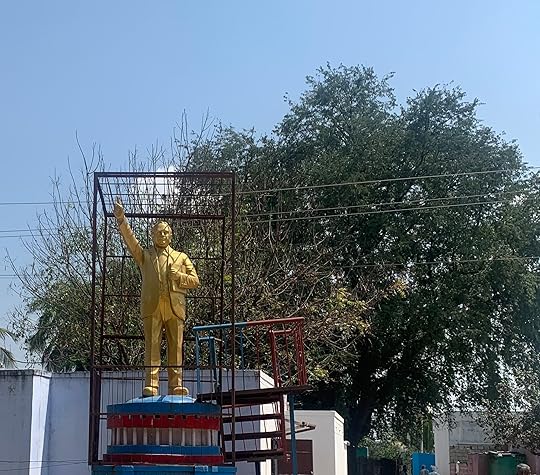
From the moment I delved into the pages of Gail Omvedt’s Ambedkar: Towards an Enlightened India, I found myself captivated by the profound narrative of a man who was not just a leader but the epitome of leadership itself. This book, a concise yet powerful exposition of Dr. B.R. Ambedkar’s life and legacy, serves as a beacon of enlightenment, much like the man it portrays.
Having been introduced to Dr. Ambedkar through Arundhati Roy’s The Doctor and the Saint, I was mesmerized to learn about the depth of his vision for India—a vision that transcended the mere upliftment of the Dalits to encompass the very essence of liberty, equality, fraternity, and rationality. These are the pillars upon which modern nation-states are built, and Dr. Ambedkar’s writings and actions laid the groundwork for such a democratic India.
Yet, the deep-seated divisions within Indian society hindered the full realization of Ambedkar’s potential. It is a poignant reflection on what could have been—an India not just freed from colonial rule in 1947, but one revolutionized in the truest sense, akin to the French Revolution.
As I turned the pages, I was struck by the thought that had Ambedkar been at the helm as Prime Minister, India’s trajectory might have mirrored that of today’s most developed nations. His was a vision ahead of its time, and perhaps, it will take another 200-300 years for future generations to fully appreciate his revolutionary ideas when religion wanes and rationality prevails.
The book’s brevity does not detract from its impact; at 125 pages, it is a testament to Omvedt’s skill in capturing the essence of Ambedkar’s political, personal, and intellectual journey. It is a narrative that resonates with the relevance of his ideas for modern India.
In closing, I am reminded of the poignant images of a caged Ambedkar statue, symbolizing the constraints placed upon him and, by extension, upon India. These images serve as a stark reminder of the lost opportunities for a nation that could have flourished but was instead held back by its own divisions.

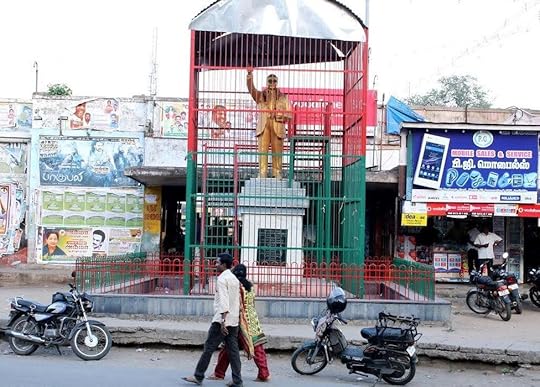
In summary, Omvedt’s book is not just a review of a great personality but a mirror reflecting the lost chances of a country at the crossroads of history. It is a must-read for anyone seeking to understand the true potential of India through the eyes of one of its greatest visionaries.
From the moment I delved into the pages of Gail Omvedt’s Ambedkar: Towards an Enlightened India, I found myself captivated by the profound narrative of a man who was not just a leader but the epitome of leadership itself. This book, a concise yet powerful exposition of Dr. B.R. Ambedkar’s life and legacy, serves as a beacon of enlightenment, much like the man it portrays.
Having been introduced to Dr. Ambedkar through Arundhati Roy’s The Doctor and the Saint, I was mesmerized to learn about the depth of his vision for India—a vision that transcended the mere upliftment of the Dalits to encompass the very essence of liberty, equality, fraternity, and rationality. These are the pillars upon which modern nation-states are built, and Dr. Ambedkar’s writings and actions laid the groundwork for such a democratic India.
Yet, the deep-seated divisions within Indian society hindered the full realization of Ambedkar’s potential. It is a poignant reflection on what could have been—an India not just freed from colonial rule in 1947, but one revolutionized in the truest sense, akin to the French Revolution.
As I turned the pages, I was struck by the thought that had Ambedkar been at the helm as Prime Minister, India’s trajectory might have mirrored that of today’s most developed nations. His was a vision ahead of its time, and perhaps, it will take another 200-300 years for future generations to fully appreciate his revolutionary ideas when religion wanes and rationality prevails.
The book’s brevity does not detract from its impact; at 125 pages, it is a testament to Omvedt’s skill in capturing the essence of Ambedkar’s political, personal, and intellectual journey. It is a narrative that resonates with the relevance of his ideas for modern India.
In closing, I am reminded of the poignant images of a caged Ambedkar statue, symbolizing the constraints placed upon him and, by extension, upon India. These images serve as a stark reminder of the lost opportunities for a nation that could have flourished but was instead held back by its own divisions.
In summary, Omvedt’s book is not just a review of a great personality but a mirror reflecting the lost chances of a country at the crossroads of history. It is a must-read for anyone seeking to understand the true potential of India through the eyes of one of its greatest visionaries.

June 16, 2021
Quick Review:
Contains great information, but the problem with this book is that it is crammed with too much information within its 160-odd pages - the information that could easily be spread out across at least a dozen books.
It tries to encompass too much in too little of a space, and seems to be rushed and cramped.
This book is better suited as a summary/glossary (rather than an introduction) of Ambedkar's life and his activities so you should read it only if you are very familiar with this subject matter and you need a book to brush up and quickly revise your knowledge.
Not recommended for beginners or even the people with moderate level of knowledge about the political climate of Ambedkar's era.
Contains great information, but the problem with this book is that it is crammed with too much information within its 160-odd pages - the information that could easily be spread out across at least a dozen books.
It tries to encompass too much in too little of a space, and seems to be rushed and cramped.
This book is better suited as a summary/glossary (rather than an introduction) of Ambedkar's life and his activities so you should read it only if you are very familiar with this subject matter and you need a book to brush up and quickly revise your knowledge.
Not recommended for beginners or even the people with moderate level of knowledge about the political climate of Ambedkar's era.
June 18, 2017
The one time i had cried while reading a book was when dumbledore died in the harry potter series...and then after a long time this book brought me tears. These tears were more out of pride than out of grief- that i belong to the same country and community as Babasaheb Dr.B.R.Ambedkar.
Dhananjay keer's biography on Babasaheb was one of mere facts and based on a 'neutral' frame(i.e an idea where one can perceive both Babasaheb and gandhi in a good light without affecting either's greatness).
But Gail Omvedt has perfectly drawn out ideas on why this neutral frame should be rejected for a healthy and happy India. I consciously avoid the word 'developed' india here. This is because India might become a rich and developed country without making an effort to remove its social evils but under its foundation will lie the uncared carcasses of over exploited and over worked bahujans.
This book is an unbiased and logical version on not just Babasaheb's life and ideology but also sheds light on the true meaning of freedom struggle. Freedom struggle and nation building are two different things. While the gandhian freedom struggle was based on a mere transfer of power to the indians, Babasaheb's was one of removing the social evils which was the root cause of constant invasions through the centuries.It shows why Babasaheb is the real father of modern India. In addition, Babasaheb's paramount role in nation building and the revival of buddhism have been discussed most elegantly.
Dhananjay keer's biography on Babasaheb was one of mere facts and based on a 'neutral' frame(i.e an idea where one can perceive both Babasaheb and gandhi in a good light without affecting either's greatness).
But Gail Omvedt has perfectly drawn out ideas on why this neutral frame should be rejected for a healthy and happy India. I consciously avoid the word 'developed' india here. This is because India might become a rich and developed country without making an effort to remove its social evils but under its foundation will lie the uncared carcasses of over exploited and over worked bahujans.
This book is an unbiased and logical version on not just Babasaheb's life and ideology but also sheds light on the true meaning of freedom struggle. Freedom struggle and nation building are two different things. While the gandhian freedom struggle was based on a mere transfer of power to the indians, Babasaheb's was one of removing the social evils which was the root cause of constant invasions through the centuries.It shows why Babasaheb is the real father of modern India. In addition, Babasaheb's paramount role in nation building and the revival of buddhism have been discussed most elegantly.

June 13, 2017
When designing a solution, there is the obvious to factor in. Also the basic necessity. But almost always, imagination and the number of possible solutions, is proportional to the effort invested into understanding the problem.
Dr. Ambedkar was about that difference. He represented the results of going the extra mile.
The seemingly impossible climb to educate himself, and to constant learning subsequently.
In an overwhelming problem, he chose to see not just the obvious solutions, but what else can be. Of course, being a part of the so-called problem, helped. But as did his empathy and refusal to allow the status-quo to go unchanged.
How can the solution be more inclusive? How can it be equal? And more progressive?
India's growth as a country, would have been unimaginably superior, with arguably a fraction of the religious tensions, had the forerunners in the freedom struggle given Dr. Ambedkar a stronger role in shaping our country. But he did, nevertheless, contribute immensely towards the fabric of the country, apart from almost single-handedly bringing much respect and recognition to our country abroad, and for which, we would remain ever grateful.
This book is a very interesting and detailed glimpse into the mind, life and times of Baba Saheb.
Dr. Ambedkar was about that difference. He represented the results of going the extra mile.
The seemingly impossible climb to educate himself, and to constant learning subsequently.
In an overwhelming problem, he chose to see not just the obvious solutions, but what else can be. Of course, being a part of the so-called problem, helped. But as did his empathy and refusal to allow the status-quo to go unchanged.
How can the solution be more inclusive? How can it be equal? And more progressive?
India's growth as a country, would have been unimaginably superior, with arguably a fraction of the religious tensions, had the forerunners in the freedom struggle given Dr. Ambedkar a stronger role in shaping our country. But he did, nevertheless, contribute immensely towards the fabric of the country, apart from almost single-handedly bringing much respect and recognition to our country abroad, and for which, we would remain ever grateful.
This book is a very interesting and detailed glimpse into the mind, life and times of Baba Saheb.
December 28, 2017
A super quick introduction to the life of Dr. Bhimrao Ramji Ambedkar.
Though, it was heavy sometimes with a lot of information loaded in a single chapter which was not easy to decipher. But overall a decent and smooth introduction.
Unfortunately, the Kindle version published by the Penguin group is having several basic spelling mistakes (including one in title of a chapter).
It looks like the Kindle version was a OCR version of the paperback copy and the software was not able to figure out couple of words.
Though, it was heavy sometimes with a lot of information loaded in a single chapter which was not easy to decipher. But overall a decent and smooth introduction.
Unfortunately, the Kindle version published by the Penguin group is having several basic spelling mistakes (including one in title of a chapter).
It looks like the Kindle version was a OCR version of the paperback copy and the software was not able to figure out couple of words.
December 3, 2025
The Book Emphasizes the introduction of the life of Ambedkar and how he went through the phase of untouchability to becoming the law and justice minister.
The author deeply embodies how ambedkar wanted the untouchability to be eradicated by bringing reforms in Hinduism.
Anyone can understand the true essence of the book if they have any tiny idea of the name AMBEDKAR.
Worth reading..!
The author deeply embodies how ambedkar wanted the untouchability to be eradicated by bringing reforms in Hinduism.
Anyone can understand the true essence of the book if they have any tiny idea of the name AMBEDKAR.
Worth reading..!
December 5, 2021
Shows light on the important event in Dr Ambedkar's life and the context in which he made the crucial decision.
Though not covered wholistically, with the limited space, Omvedt highlighted his life interestingly.
Though not covered wholistically, with the limited space, Omvedt highlighted his life interestingly.
Read
February 16, 2020Very Good.
May 28, 2020
Very informative and thought full book.

September 11, 2022
Comprehensive piece of work. The man is a legend.
Read
March 28, 2024i am really interested in reading the biographies of famous leaders and polictions .
This entire review has been hidden because of spoilers.

July 20, 2025
a deep dive into Ambedkar's personal life his struggles throughout his lifevbring forth the deep rooted hypocrisy of hinduism

January 19, 2023
Despite being eloquently and concisely written, this biography of Ambedkar feels a little incomplete (about a 100 pages missing), especially for someone reading about Ambedkar for the first time. But still a very good primer on his life, philosophy, and contributions to India.

October 21, 2020
Finished reading this book. If you want to read and know about Babasaheb in a biographical sense, this is it. Read this book by Gail Omvedt! A short, precise, unbiased biography about THE greatest gem India has ever seen — Dr Bhimrao Ramji Ambedkar. Please read! Jai Bhim!💙

Read
February 25, 2017i wanna read this book
This entire review has been hidden because of spoilers.
May 12, 2025
BUILDING A PALACE ON A DUNG HEAP:
This book is not just a biography but an analytical, constructive work on Ambedkar's ideas. It presents us with ideas of the most controversial man in India, it is a critique of Gandhi, his moral standing, and all that's wrong with his philosophy.
But it lacks in certain nuance of being a critical work or scholarly work against a hackneyed biographical work. It may seem to present a non-biased critical work, but that is not the case.
It is concise and gives you the basic framework to understand what is Ambedkar, but it is not enough; the book cites a plethora of Ambedkar's work on various subjects, which must be added to get a somewhat rough idea of the man and the myth.
Ambedkar vs Gandhi:
The ideals of both the great leaders are drastically in opposition to each other, but whose is a success is the question.
It differs from person to person on which ideals are the one to be followed, it is quite a subjective matter but how may we judge the prevailing of one over other.
To see to it I propose a test of time, after almost 80 years of the Indian Independence, whose ideas prevail.
And the answer is AMBEDKAR.
The Congress party which was set on the Mahatma’s footsteps stands aloof today, and nothing can be seen that iterates Gandhism.
Nor is the great ideals of Gandhi are nowhere to be seen in the present framework of the socio-politic sphere of India where the idea of Non-violence and his notion of nationalism are nowhere to be seen.
But Ambedkar prevails, The Constitution of India serves as the edifice of Ambedkar’s philosophy and today he has become ‘the’ Politics of India where he has become the head of the political force in India. No political party can be at odds with him if it wants to stay in power.
In the test of time Ambedkar prevails.
This book is not just a biography but an analytical, constructive work on Ambedkar's ideas. It presents us with ideas of the most controversial man in India, it is a critique of Gandhi, his moral standing, and all that's wrong with his philosophy.
But it lacks in certain nuance of being a critical work or scholarly work against a hackneyed biographical work. It may seem to present a non-biased critical work, but that is not the case.
It is concise and gives you the basic framework to understand what is Ambedkar, but it is not enough; the book cites a plethora of Ambedkar's work on various subjects, which must be added to get a somewhat rough idea of the man and the myth.
Ambedkar vs Gandhi:
The ideals of both the great leaders are drastically in opposition to each other, but whose is a success is the question.
It differs from person to person on which ideals are the one to be followed, it is quite a subjective matter but how may we judge the prevailing of one over other.
To see to it I propose a test of time, after almost 80 years of the Indian Independence, whose ideas prevail.
And the answer is AMBEDKAR.
The Congress party which was set on the Mahatma’s footsteps stands aloof today, and nothing can be seen that iterates Gandhism.
Nor is the great ideals of Gandhi are nowhere to be seen in the present framework of the socio-politic sphere of India where the idea of Non-violence and his notion of nationalism are nowhere to be seen.
But Ambedkar prevails, The Constitution of India serves as the edifice of Ambedkar’s philosophy and today he has become ‘the’ Politics of India where he has become the head of the political force in India. No political party can be at odds with him if it wants to stay in power.
In the test of time Ambedkar prevails.
May 16, 2015
Gail Omvedt presents a very precise text for anyone wishing to have a peek inside the extraordinary life of Dr. Ambedkar. Without citing any unnecessary piece of information, Gail sticks to an exceptionally simple style of writing which is fairly easy to grab. A must read of everyone before going ahead with Dr. Ambedkar's self written works. Jai Bheem.
Displaying 1 - 30 of 35 reviews