

What do you think?
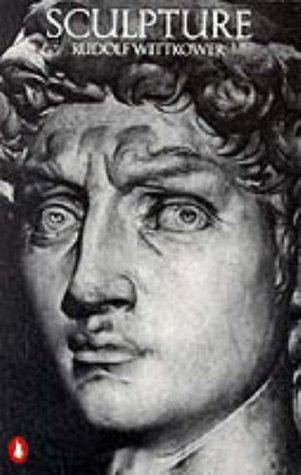
Sculpture: Processes and Principles
With the aid of over 180 photographs, this book studies what unites and separates sculptors across the centuries. It looks at the masters of Archaic Greece, the Middle Ages, through the great names of Michelangelo, Cellini and Bernini to Rodin, Brancusi and Henry Moore. By studying their working methods and techniques, the author discloses their artistic ideas and convictions, thereby opening up new avenues of approach for the spectator.
- GenresArtArt HistoryNonfiction
288 pages, Paperback
First published January 1, 1977
Ratings & Reviews
Friends & Following
Create a free account to discover what your friends think of this book!
Community Reviews
Displaying 1 - 9 of 9 reviews

April 17, 2017
The subtitle of this book, "processes and principles," really says it all. The twelve chapters here are the twelve lectures Wittkower gave as Slade Professor of Fine Arts at Cambridge in 1970-71. His largest emphasis isn't on the merits of the finished works, but on how a particular sculptor worked and what rules or notions he relied on. He shows some of the tools that would be used (point or punch, flat chisel, claw chisel, hammer, rasps, drill or augur) from the Greeks onward. He spends most of his time on Michelangelo and Bernini. The Greeks only get perfunctory treatment. The anonymous medieval cathedral sculptors get substantial coverage.
Michelangelo said that sculpting entailed subtraction, and modelling was more like painting in that it entailed addition. What he meant was that the sculptor would create a model (or multiple models), in addition to drawings and sketches, of what he intended for the final work. Michelangelo's models were made by hand of clay (which became terracotta) or wax. So in making the model, you would be taking clay and shaping it with your hands and adding on bits of clay wherever necessary. Then a frame with points, and calipers to make sure you got all the distances right, would be used to "transfer" the design to marble. Michelangelo would draw his design/figure onto the marble and begin chipping away - subtracting from the block of marble. Vasari wrote that Michelangelo's method was as if the statue was lying supine under water, and gradually the water drained away so that the surface form of the statue was exposed bit by bit. In this way Michelangelo was "releasing" the human form trapped in the marble block. His preferred tool was the claw chisel; in many places on his works, the marks of the claw chisel can be seen. Where he didn't want the marks to remain, he would use abrasives to polish the surface.
Bronzes were done in a completely different way - from casts of the model. Liberated from the limits and difficulties of the block of stone, works in bronze could be "freer," says Wittkower.
Michelangelo created most of his works himself. For Bernini, working more than 100 years later, that would have been impossible. Bernini's commissions were enormous (e.g. busts of the 38 martyr popes for the chapels and nave of St. Peter's) and necessitated a large workshop. At one point he had all of the 39 highly skilled sculptors in Rome working for him. So while he designed the works, creating the models, the execution of them was left to others. Bernini was also willing to use more than one block of marble for a statue, which would have been unthinkable to Michelangelo and his Renaissance colleagues.
Some artists and theorists felt that sculpting was only stonecarving, not model-making. By that definition, Rodin didn't do much sculpting. He created hundreds of models which were then executed in bronze. In the early 20th century there was a new crop of sculptors, including Constantin Brancusi and Henry Moore, who were only interested in carving/sculpting, not in modelling.

April 18, 2018
Veramente interessante. 😊

December 13, 2021
Me lo leí como lectura obligatoria en mi Grado. Realmente es muy interesante y fácil de leer. Terminas sabiendo muchísimo mas sobre las técnicas y herramientas que han sido utilizadas en la creación de esculturas a lo largo de la historia.
Las imágenes vienen en blanco y negro.
Las imágenes vienen en blanco y negro.

August 28, 2018
A classic. One of the first art history books to study the technique of sculpture through times. Some parts are nowadays however very dated

February 14, 2024
El libro es muy bueno para conocer las técnicas y materiales que se han ido utilizando a lo largo de la historia y puede servir para aplicarse a la práctica artística. Además, incluye muy buenos ejemplos de obras y artistas. El problema de este libro es que mientras que los primeros capítulos son muy interesantes y fáciles de asimilar a pesar de la densidad, los últimos capítulos parecen un puré de artistas y obras que dificultan la lectura al no desarrollar los temas a una mínima extensidad, sino que salta de dato en dato, mareando al lector. Aún así, creo que es una lectura base para cualquier persona que quiera entrar en la escultura.
August 14, 2025
Wittkower scrive di storia dell'arte con un linguaggio chiaro, fluido, trasparente. La narrazione cronologica e i continui confronti tra grandi maestri e artisti con metodo analitico, che deriva dalla sua formazione pregressa, rendono immagini limpide sia per gli intenditori sia per chi non è quotidianamente immerso in questi temi. A mio parere, un libro d'obbligo per chi si vorrebbe accingere alla professione di storico dell'arte. Lo consiglierei anche a chi vorrebbe approcciarsi al mondo della storia dell'arte per la prima volta. Wittkower resta uno degli storici dell'arte più potenti di tutti i tempi.
April 26, 2025
Muy buena introducción al proceso técnico de esculpir y su evolución a lo largo de la historia en base a las distintas concepciones teóricas, estéticas e ideológicas, definiendo muy bien las diferencias con las que se trata la talla y el modelado en cada etapa

October 29, 2025
¿Dónde está Eros y Psique? pregunto
September 14, 2021
L'ho letto come lettura obbligatoria per l'accademia. È un testo utile, interessante e facile da comprendere. Lo consiglio a chi vuole avere un infarinatura di base sulla scultura per l'accademia/università.
Displaying 1 - 9 of 9 reviews