What do you think?
Rate this book


Paperback
First published January 1, 1947
Enlightenment, understood in the widest sense as the advance of thought, has always aimed at liberating human beings from fear and installing them as masters. Yet the wholly enlightened earth is radiant with triumphant calamity.
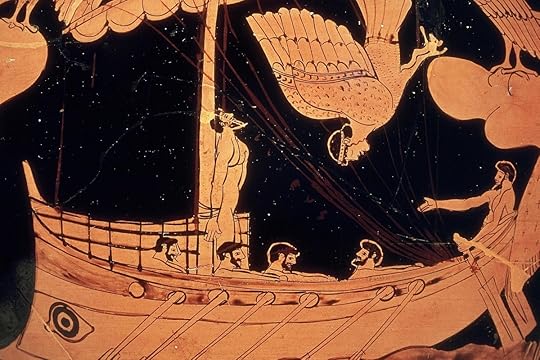
The tide of what has been has receded from the rock of the present, and the future lies veiled in cloud on the horizon. What Odysseus has left behind him has passed into the world of shades: so close is the self to the primeval myth from whose embrace it has wrested itself that its own lived past becomes a mythical prehistory. It seeks to combat this by a fixed order of time. The tripartite division is intended to liberate the present moment from the power of the past by banishing the latter beyond the absolute boundary of the irrecoverable and placing it, as usable knowledge, in the service of the present. The urge to rescue the past as something living, instead of using it as the material of progress, has been satisfied only in art, in which even history, as a representation of past life, is included. As long as art does not insist on being treated as knowledge, and thus exclude itself from praxis, it is tolerated by social praxis in the same way as pleasure. But the Sirens’ song has not yet been deprived of power as art. They have knowledge “of all that has ever happened on this fruitful earth” and especially of what has befallen Odysseus himself: “For we know all that the Argives and the Trojans suffered on the broad plain of Troy by the will of the gods.” By directly invoking the recent past, and with the irresistible promise of pleasure which their song contains, the Sirens threaten the patriarchal order, which gives each person back their life only in exchange for their full measure of time. When only unfailing presence of mind wrests survival from nature, anyone who follows the Sirens’ phantasmagoria is lost. If the Sirens know everything that has happened, they demand the future as its price, and their promise of a happy homecoming is the deception by which the past entraps a humanity filled with longing. Odysseus has been warned by Circe, the divinity of regression to animal form, whom he has withstood and who therefore gives him the strength to withstand other powers of dissolution. But the lure of the Sirens remains overpowering. No one who hears their song can escape. Humanity had to inflict terrible injuries on itself before the self—the identical, purpose-directed, masculine character of human beings—was created, and something of this process is repeated in every childhood. The effort to hold itself together attends the ego at all its stages, and the temptation to be rid of the ego has always gone hand-in-hand with the blind determination to preserve it.