

What do you think?

The Ballad of Dorothy Wordsworth
The night before the marriage of her brother William Wordsworth to their childhood friend, Dorothy Wordsworth wore his wedding ring upon her finger; too distraught to attend the ceremony, she collapsed utterly when it was done. She would never recover, changing over time from what Thomas de Quincey described as "the very wildest person I have ever known" to a recluse.
But this handmaiden to her brother and his close friend Coleridge was herself a writer of spectacular originality. Both men borrowed her imagery—hammered out on their epic walks across the English countryside—for the best of their work. Her words survive intact in the Grasmere Journals, which record the Wordsworths’ life of severe asceticism mixed with an ecstatic communion with nature. In this inspired close reading of the journals, Frances Wilson reconstructs the rich and strange emotional life of a woman too often dismissed as a self-effacing saint. It is a feat of imaginative biography.
But this handmaiden to her brother and his close friend Coleridge was herself a writer of spectacular originality. Both men borrowed her imagery—hammered out on their epic walks across the English countryside—for the best of their work. Her words survive intact in the Grasmere Journals, which record the Wordsworths’ life of severe asceticism mixed with an ecstatic communion with nature. In this inspired close reading of the journals, Frances Wilson reconstructs the rich and strange emotional life of a woman too often dismissed as a self-effacing saint. It is a feat of imaginative biography.
304 pages, Hardcover
First published February 17, 2009
About the author
Frances Wilson
45 books83 followersFrances Wilson was educated at Oxford University and lectured on nineteenth- and twentieth-century English literature for fifteen years before becoming a full-time writer. Her books include Literary Seductions: Compulsive Writers and Diverted Readers and The Ballad of Dorothy Wordsworth: A Life, which won the British Academy Rose Mary Crawshay Prize. She reviews widely in the British press and is a fellow of the Royal Society of Literature. She divides her time between London and Normandy.
Ratings & Reviews
Friends & Following
Create a free account to discover what your friends think of this book!
Community Reviews
Displaying 1 - 30 of 47 reviews

February 6, 2018
This was an OK biography about Dorothy Wordsworth. I do plan on reading other biographies about her. This bio seemed like it was more of an introduction to her than a full in-depth study.
So if you are looking for a quick taste of Dorothy's life give this book a try.
So if you are looking for a quick taste of Dorothy's life give this book a try.


May 8, 2013
Terrible writing, I really had to force myself to finish this book. I think what bothered me the most was how the author, Frances Wilson, would compare these real life people -- Dorothy Wordsworth, her brother, William Wordsworth, and Coleridge-- with book characters. Here are a few examples --
". . . The relationship between Dorothy and William is simply too demanding, or to embarrassing, to deal with. These biographers are positioned in relation to their story like Nelly Dean, the tone less narrator of the events that compose Wuthering Heights."
". . . William described himself and Dorothy as resembling two swans-- birds who mate for life-- and in her last dark years the now inarticulate sounds she made were compared to those of "a partridge or a turkey. But the bird that comes most to my mind when I read Dorothy's journals is the albatross draped around the Ancient Mariner's neck in Coleridge's famous Rime."
" . . . the end of her childhood came, as with the other changes in her life, without warning. In May 1787, aged fifteen, Dorothy left Halifax and was summoned to live, like Fanny Price in Jane Austen's Mansfield Park."
" . . . The delay of her mourning perhaps explain the prematurity of the grief she later felt for the anticipated loss of William to Mary Hutchinson. Like the White Queen in Through the Looking Glass, Dorothy had learned to weep before she pricked her finger."
" . . . When I read of Dorothy's accounts of her love for William in the Grasmere Journals, I am moved in the same way as I am by Catherine Earnshaw's description of her love for Heathcliff in Emily Bronte's Wuthering Heights."
" . . . How much worse foe the female foot traveler. In Pride and Prejudice, written at the same time as Dorothy's journals, even Elizabeth Bennett's relatively short walk to visit her sick sister Jane at Netherfield is a mark of her unconventionality."
" . . . Dorothy dressed for some reasons in 'bridal white', as though she were Bertha Mason in Jane Eyre, trying on the veil of the woman her bigamous husband is about to marry."
At least the quotes are correct except for the last one! Bertha Mason never tried on the veil, it was Jane Eyre who did. I really dislike so much of this book. Dorothy story begins with both parents dying within a short time. Her 4 older brothers were sent off to boarding school. Dorothy was the youngest, so she was sent to be raised by her second cousin. She always remembered their home before her parents deaths, since it was the day of her birth. She never return back home. She helped her aunt with the house work and their haberdashery business. Dorothy was forgotten and deprived. She helped with chores and spent time " wandering wild." At fifteen, she was sent to help a family. She never felt at home and always feel like a stranger.
William and Dorothy were "united in misery." He took her to live with him, and to write his words down on paper. They were very close. One part of the book hints at incest but I don't see that. I see a little girl who lost her whole family and just wanted to be apart of those she loved, William did that for her. Throughout his life, she lived with him. There is also a reference to Henry James and his sister, Alice. I think that must have been the norm, since any woman who was a spinster would have no way to support herself. Only the eldest male heir could support it.
". . . The relationship between Dorothy and William is simply too demanding, or to embarrassing, to deal with. These biographers are positioned in relation to their story like Nelly Dean, the tone less narrator of the events that compose Wuthering Heights."
". . . William described himself and Dorothy as resembling two swans-- birds who mate for life-- and in her last dark years the now inarticulate sounds she made were compared to those of "a partridge or a turkey. But the bird that comes most to my mind when I read Dorothy's journals is the albatross draped around the Ancient Mariner's neck in Coleridge's famous Rime."
" . . . the end of her childhood came, as with the other changes in her life, without warning. In May 1787, aged fifteen, Dorothy left Halifax and was summoned to live, like Fanny Price in Jane Austen's Mansfield Park."
" . . . The delay of her mourning perhaps explain the prematurity of the grief she later felt for the anticipated loss of William to Mary Hutchinson. Like the White Queen in Through the Looking Glass, Dorothy had learned to weep before she pricked her finger."
" . . . When I read of Dorothy's accounts of her love for William in the Grasmere Journals, I am moved in the same way as I am by Catherine Earnshaw's description of her love for Heathcliff in Emily Bronte's Wuthering Heights."
" . . . How much worse foe the female foot traveler. In Pride and Prejudice, written at the same time as Dorothy's journals, even Elizabeth Bennett's relatively short walk to visit her sick sister Jane at Netherfield is a mark of her unconventionality."
" . . . Dorothy dressed for some reasons in 'bridal white', as though she were Bertha Mason in Jane Eyre, trying on the veil of the woman her bigamous husband is about to marry."
At least the quotes are correct except for the last one! Bertha Mason never tried on the veil, it was Jane Eyre who did. I really dislike so much of this book. Dorothy story begins with both parents dying within a short time. Her 4 older brothers were sent off to boarding school. Dorothy was the youngest, so she was sent to be raised by her second cousin. She always remembered their home before her parents deaths, since it was the day of her birth. She never return back home. She helped her aunt with the house work and their haberdashery business. Dorothy was forgotten and deprived. She helped with chores and spent time " wandering wild." At fifteen, she was sent to help a family. She never felt at home and always feel like a stranger.
William and Dorothy were "united in misery." He took her to live with him, and to write his words down on paper. They were very close. One part of the book hints at incest but I don't see that. I see a little girl who lost her whole family and just wanted to be apart of those she loved, William did that for her. Throughout his life, she lived with him. There is also a reference to Henry James and his sister, Alice. I think that must have been the norm, since any woman who was a spinster would have no way to support herself. Only the eldest male heir could support it.

September 16, 2016
4.5*
This is an engaging, well balanced biography of Dorothy Wordsworth, who I find absolutely fascinating. Wilson focuses in on Dorothy's Alfoxden and Grasmere Journal years, really pulls it apart, to a level that some readers might think unneccessary. I found this really entertaining, plus it supports Wilson's arguments at the same time. The relationship between Dorothy and her brother William is discussed in some depth, but it covers all the opinions that had been currently voiced at the time of publication (2008). It is left up to the reader to formulate their own opinion, which I really appreciated. It is my first biography of Dorothy, so I do not know if it contains anything new or groundbreaking. It is, however, a great entrance into exploring Dorothy Wordsworth.
This is an engaging, well balanced biography of Dorothy Wordsworth, who I find absolutely fascinating. Wilson focuses in on Dorothy's Alfoxden and Grasmere Journal years, really pulls it apart, to a level that some readers might think unneccessary. I found this really entertaining, plus it supports Wilson's arguments at the same time. The relationship between Dorothy and her brother William is discussed in some depth, but it covers all the opinions that had been currently voiced at the time of publication (2008). It is left up to the reader to formulate their own opinion, which I really appreciated. It is my first biography of Dorothy, so I do not know if it contains anything new or groundbreaking. It is, however, a great entrance into exploring Dorothy Wordsworth.

April 4, 2021
Informative but tediously boring

July 17, 2013
I had some moments of doubt about this one. Frances Wilson writes with vast assurance about the murky depths of Dorothy Wordsworth's mind even while admitting that Dorothy herself had no idea what was going on there. In a sense, she's trying to have it both ways: she portrays Dorothy as an unstable, permeable membrane of a person, a woman without a clear identity, and yet she gives Dorothy a vivid and legible self: throughout the book, she speculates in great detail about what exactly D was thinking and feeling. She's very sure of herself. At many places in the text, she gets quite snippy about the speculations of previous biographers of the Wordsworths, as if only she has the psychological penetration to comprehend these tangled relationships of more than 200 years ago.
But perhaps she does. Her scholarship is impressive. She presents some new sources of material about Dorothy, and she weaves a great tangle of letters, journals, poetry and prose from Dorothy and the Wordsworths' whole circle of family, friends, and enemies, into a compelling tapestry of D's everyday life. This is her job as biographer, to bring a life to life, and she does it. She convinces me that she has good evidence for her version of D's life--mostly her inner life. So I decided to cast my reservations aside and read the book like a novel, to experience it as I would a movie based on D's Grasmere journals, i.e. to give Wilson some leeway and quit holding her feet to the fire. After all, there's no proving she's wrong. There's no proving she's right either, of course. So I went along for the ride. She's a fine writer who can build a story out of mere fragments, and I admire that.
I'll be going to Grasmere again this September, and I'll see it through new eyes. Not Dorothy's, but she'll be tenderly in my mind.
But perhaps she does. Her scholarship is impressive. She presents some new sources of material about Dorothy, and she weaves a great tangle of letters, journals, poetry and prose from Dorothy and the Wordsworths' whole circle of family, friends, and enemies, into a compelling tapestry of D's everyday life. This is her job as biographer, to bring a life to life, and she does it. She convinces me that she has good evidence for her version of D's life--mostly her inner life. So I decided to cast my reservations aside and read the book like a novel, to experience it as I would a movie based on D's Grasmere journals, i.e. to give Wilson some leeway and quit holding her feet to the fire. After all, there's no proving she's wrong. There's no proving she's right either, of course. So I went along for the ride. She's a fine writer who can build a story out of mere fragments, and I admire that.
I'll be going to Grasmere again this September, and I'll see it through new eyes. Not Dorothy's, but she'll be tenderly in my mind.
March 18, 2009
Surprisingly, detailed analysis of Dorothy Wordsworth's Grasmere journals make for good reading. The book is a good length and has a nice narrative feel to it.The romantic genius cluster is a fascinating one and all the members are included here - STC, WW, De Quincey, the Hutchinsons. Though she never published, DW was influential to all, devoted to Coleridge, and the center of her brother's world (no case for incest here.) The more I read, however, the more I dislike WW - he enjoys surrounding himself with originals while becoming more and more a copy of a conservative gentleman.

May 10, 2009
I was somewhat disappointed by this book. I bought it because I heard the author interviewed on NPR, and I've always wanted to know more about Dorothy's diaries and her influence on her brother William's poetry. While I did learn a good deal about this brother-sister relationship, and while there were satisfyingly ample excerpts from Dorothy's Grasmere journals, the biographer has that annoying (and all-too-common) habit of presuming to know exactly what was going on in a long-dead person's mind at any given time and what their acts and jottings "really" meant. After a while I didn't especially believe anything Wilson was telling me; I just read for the indisputable facts. Also, I was misled by the author in her interview. Both she and the book jacket suggest that Dorothy had a breakdown when her brother got married (their sibling closeness had been quite marriage-like), after which this formerly lively woman became a mad invalid in the attic. This breakdown amounts to about five minutes (literally) of prostration on her bed as the couple returns from church. After that, she gets up and is quite cheerful for about thirty years. Her madness occurred in her sixties and seems to have been a sort of early Alzheimers or something of mixed biological and psychological genesis.

February 16, 2009
I really wish I could give this more stars. I love Dorothy Wordsworth. The bio was just kind of, well, boring. Repetitive, is a better word. Meandering.
And yes, it is about Romantic poets, so that's probably an appropriate stylistic choice, but I just found myself getting bored instead of really diving into the world.
And yes, it is about Romantic poets, so that's probably an appropriate stylistic choice, but I just found myself getting bored instead of really diving into the world.

October 23, 2024
It's a dense book to get through, and in my opinion, Dorothy's persona and work are glorified without giving the reader much to connect with the author's perspective. That said, it's absolutely fascinating and provides a well-rounded biography of these complex individuals. Wilson addresses the famous rumours of incest but also delves into the personalities of the Wordsworth siblings—charismatic, reclusive, wild, and conservative.
I enjoyed the read, and I appreciated that she never seemed to make assumptions about the Wordsworths, which I value greatly in a biography.
I enjoyed the read, and I appreciated that she never seemed to make assumptions about the Wordsworths, which I value greatly in a biography.
May 10, 2026
Informative and a good starting point to understand the importance of Dorothy Wordsworth in Romanticism.

January 22, 2015
I bought this book from a second hand book seller, intrigued to read more of the story of Dorothy Wordsworth and her relationship with her brother William.
Dorothy is utterly fascinating and it makes a great read in the genre of womens social history, that for the most part still bears a relationship to issues for women in modern day society.
It is a portrayal of a potentially perceptive and talented women with intuitive intelligence, grounded in base practicality.
I could say a lot more about Dorothy and William's relationship because it's fascinating! However if there was a drawback on this book it would be that Frances Wilson writes with a forensic analysis, there are tons of quotes and references all very good, it's very well written and researched but can feel a little bogged down but doesn't necessarily give all the answers.
April 1, 2019
I'm delighted I picked up this book when I had the chance - It made for a quick and entertaining read, and I must admit that contrary to a few other reviewers, I appreciated the fanciful speculation of Dorothy and the people in her life (especially in comparison to literary characters and events). The chapters each focusing around a specific aspect, as well as being entirely themed around Dorothy's reaction to William's wedding, was a nice touch. While not painting as complete a picture of Dorothy's life as I would have liked, this served perfectly well as an introduction to Dorothy Wordsworth (particularly the years in which she wrote the Grasmere Journals) and is a good jumping point before diving into more in-depth biographies.
June 4, 2017
Having just visited Dove Cottage, the Wordsworth home in Grasmere, England, I devoured this account of Dorothy Wordsworth based on the author's interpretation of Dorothy's journals, letters and writings. Well-researched and thoughtfully presented, it made Wordsworth, Dorothy and Samuel Coleridge come alive for me. Wilson also offers context by comparing the close sibling relationship and the questions that arise about its nature with literary relationships in Bronte's Wuthering Heights and Jane Austen's works.
September 2, 2009
I would say the Wordsworths were the sort of people who lie still in trenches for hours trying to find out what it's like to be dead, except I'm not sure there are any other people in this category.

November 24, 2025
Sent off by her father to boarding school at age 4, travelling by herself in a coach, William’s young sister was said to have had ‘wild eyes’. In Wilson’s book about Dorothy’s four notebooks, known as the Grasmere journals, covering the last years living at Dove Cottage in the English Lakes district, Dorothy writes almost daily about her headaches and her doses of laudanum. Otherwise there is the health record of bowel trouble and toothache as her teeth failed. She did finally lose the last of them in later years. Despite detailed mention of the plants and landscape beauty of the lakes and hills where she and William walked daily in all weathers, I was disappointed to find few references to his composing processes except for Dorothy noting when she copied out his poems and how William agonised about revisions.
These notebooks cover the years 1800 to 1803 but her role as muse or assistant as William described briefly in The Prelude was not published until 1850, the year after his death. Wilson describes Dorothy’s need to walk as an act of defiance against her father’s denial of her intelligence. Her role as childminder, gardener and cook was established early and continued at Dove Cottage. On their walks together, the longest being 18 miles going between inns in England and Germany where they were the epitome of the cranky , complaining English tourists. They stretched their meagre income but they were not to be compared with the poorest class such as represented by Dorothy’s recorded visits from beggars. Their fortunes improved overnight when the 4,000 pounds that were owed to her father for many years were paid to them by his employer’s heir, after both
fathers had died.
Again, I was disappointed to find no details about the oral composing that took place in their daily walks as William talked and Dorothy remembered and wrote the verses up later. How much interaction was there? The only evidence Wllson found were some exact words found in the Daffodils poem. Coleridge’s visits get little attention but the letters show how he delighted in her conversation and clearly treated her as an intellectual equal. However, Wilson centres both the form and focus of her book, on the passionate relationship between brother and sister, signified by Dorothy’s refusal to attend her brother’s wedding. Several scholars and the use of improved technology have given different versions of what Dorothy blotted out of her notebook that day in 1802. The most extreme opinion was that their feelings for each other could be described as ‘romantic incest’, a concept I find ridiculous. The main clue relied on, is her recording of William’s departure that morning when, perhaps the wedding ring (no one seems to have thought that William might have given her another ring previously) was worn on her forefinger overnight.Then, on her bed, she gives it back to him, but he puts it back on and ‘blessed me fervently’ or ‘as I blessed the ring softly’?
The ring is not recorded as being given back to William. Forensic examination seems to be almost contradictory, especially as the facsimile reproductions in this book reveal that Dorothy’s handwriting was very messy at all times. Did she write this and other entries in bed where she frequently retired of an afternoon ‘leaving the servant to wash up’? Here,I presume that Molly the rarely mentioned neighbour who took in washing and probably helped with other housekeeping chores worked in the next room.
Everything in this book depends on this conjecture which I found quite excessive and not very informative for any reader with a literary interest in the Wordsworths and their friend Coleridge. For this, I will have to go back to Richard Holmes, the biographer of Coleridge and the writer of The Age of Wonder about the romantic poets and science.
These notebooks cover the years 1800 to 1803 but her role as muse or assistant as William described briefly in The Prelude was not published until 1850, the year after his death. Wilson describes Dorothy’s need to walk as an act of defiance against her father’s denial of her intelligence. Her role as childminder, gardener and cook was established early and continued at Dove Cottage. On their walks together, the longest being 18 miles going between inns in England and Germany where they were the epitome of the cranky , complaining English tourists. They stretched their meagre income but they were not to be compared with the poorest class such as represented by Dorothy’s recorded visits from beggars. Their fortunes improved overnight when the 4,000 pounds that were owed to her father for many years were paid to them by his employer’s heir, after both
fathers had died.
Again, I was disappointed to find no details about the oral composing that took place in their daily walks as William talked and Dorothy remembered and wrote the verses up later. How much interaction was there? The only evidence Wllson found were some exact words found in the Daffodils poem. Coleridge’s visits get little attention but the letters show how he delighted in her conversation and clearly treated her as an intellectual equal. However, Wilson centres both the form and focus of her book, on the passionate relationship between brother and sister, signified by Dorothy’s refusal to attend her brother’s wedding. Several scholars and the use of improved technology have given different versions of what Dorothy blotted out of her notebook that day in 1802. The most extreme opinion was that their feelings for each other could be described as ‘romantic incest’, a concept I find ridiculous. The main clue relied on, is her recording of William’s departure that morning when, perhaps the wedding ring (no one seems to have thought that William might have given her another ring previously) was worn on her forefinger overnight.Then, on her bed, she gives it back to him, but he puts it back on and ‘blessed me fervently’ or ‘as I blessed the ring softly’?
The ring is not recorded as being given back to William. Forensic examination seems to be almost contradictory, especially as the facsimile reproductions in this book reveal that Dorothy’s handwriting was very messy at all times. Did she write this and other entries in bed where she frequently retired of an afternoon ‘leaving the servant to wash up’? Here,I presume that Molly the rarely mentioned neighbour who took in washing and probably helped with other housekeeping chores worked in the next room.
Everything in this book depends on this conjecture which I found quite excessive and not very informative for any reader with a literary interest in the Wordsworths and their friend Coleridge. For this, I will have to go back to Richard Holmes, the biographer of Coleridge and the writer of The Age of Wonder about the romantic poets and science.
November 25, 2024
Though I’d have preferred the chapters to be structured more around Dorothy’s own life rather than the relationship with her brother, this was (overall) a beautifully executed biography.
Wilson extracts moments from the Grasmere journals and surrounding texts and colors life into a once shadowy and uncertain figure.
The moments described are soooo vivid and they have stuck closely with me- the warm, orange hearth at Dove Cottage, the calm mirror lake on a quiet morning, the gentle wind as it picked up Dorothy’s skirts on a walk to the local baker- the scenes Dorothy knew well, the ones which backgrounded her scribbled writing. What a lovely immersion.
(To note: I was really bothered that Dorothy was referred to by her first name and William got to simply be Wordsworth… if anyone is Wordsworth in this biography, it is Dorothy. ITS HER BIOGRAPHY!!)
Wilson extracts moments from the Grasmere journals and surrounding texts and colors life into a once shadowy and uncertain figure.
The moments described are soooo vivid and they have stuck closely with me- the warm, orange hearth at Dove Cottage, the calm mirror lake on a quiet morning, the gentle wind as it picked up Dorothy’s skirts on a walk to the local baker- the scenes Dorothy knew well, the ones which backgrounded her scribbled writing. What a lovely immersion.
(To note: I was really bothered that Dorothy was referred to by her first name and William got to simply be Wordsworth… if anyone is Wordsworth in this biography, it is Dorothy. ITS HER BIOGRAPHY!!)

March 23, 2025
I think far more people have heard of William Wordsworth than of his sister, Dorothy Wordsworth. Well, this is about her. It also includes some of their family ties. It includes quotes from well-known authors such as Virginia Woolf and Robert Frost. You might like it, especially since it's some sort of Women Author Appreciation Month... I researched Women History Month is March 1-March 31, so there's still time to pick this book up!

October 7, 2017
Picked this up because of my constant interest in womens' social history & found it a great informative read, if a little dry at times. Francis Wilson obviously knows her stuff & takes a new look at Dorothy's journals & letters, managing to bring fresh insights into the peculiar relationship between D and her brother William. This has actually inspired me to find more of Dorothy's poetry, but not William's.

December 10, 2018
This biography, in combination with a FutureLearn.com course on William Wordsworth, left me with a much better appreciation of the poet and his cohorts and his sister, Dorothy. Typical of women of the era, she gave up so much for her brother, but she was no doormat and made a satisfying life for herself.
A book well worth reading, and try reading her letters and his poems at the same time. Most satisfying.
A book well worth reading, and try reading her letters and his poems at the same time. Most satisfying.
December 18, 2018
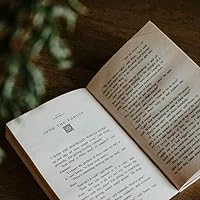
"I pass like night, from land to land :/ I have strange power of speech"
In excessive simplicity yet in uncommon obscurity... A silhouette
Mutton & moonscapes
Into Coleridges nocturnal realm
Sometimes her birds transport her to another world
Spontaneous sibling shadow sinister suffocation sublime shining
In excessive simplicity yet in uncommon obscurity... A silhouette
Mutton & moonscapes
Into Coleridges nocturnal realm
Sometimes her birds transport her to another world
Spontaneous sibling shadow sinister suffocation sublime shining
Read
August 20, 2019A really brilliant and original reading of Dorothy Wordsworth's life. Exemplary originality and critical analysis, plus thorough research. It's an extraordinary example of finding a way to excavate the past convincingly. For those Wordsworthians who have worked to discover more about Dorothy's identity, this is a significant contribution.

June 22, 2018
3.5 stars
August 11, 2019
Found it difficult to read

December 22, 2024
Beautifully written and utterly soporific

February 14, 2026
Incredibly nuanced portrait of a woman who was cloven to her brother, for better or for worse. I was moved to tears!

November 22, 2012
I was deeply disturbed by the life and sufferings of Dorothy. Dorothy's beautiful writing and poems come from so much repression and pain. Not a superficial study but a book that takes you deep into the inner world of a suffering soul. Brother William's poems were written with her inspiration and help. 'Freed' from her brother she wrote in "Thoughts on my sick-bed"
......The violet betrayed by its noiseless breath,
The daffodil dancing in the breeze,
The caroling thrush, on his naked perch,
Towering above the budding trees.
Our cottage-hearth no longer our home,
Companions of Nature were we,
The Stirring, the Still, the Loquacious, the Mute—
To all we gave our sympathy.
Yet never in those careless days
When spring-time in rock, field, or bower
Was but a fountain of earthly hope
A promise of fruits & the splendid flower.
No! then I never felt a bliss
That might with that compare
Which, piercing to my couch of rest,
Came on the vernal air.
When loving Friends an offering brought,
The first flowers of the year,
Culled from the precincts of our home,
From nooks to Memory dear.
With some sad thoughts the work was done.
Unprompted and unbidden,
But joy it brought to my hidden life,
To consciousness no longer hidden.
I felt a power unfelt before,
Controlling weakness, languor, pain;
It bore me to the Terrace walk
I trod the Hills again; —
No prisoner in this lonely room,
I saw the green Banks of the Wye,
Recalling thy prophetic words,
Bard, Brother, Friend from infancy!
No need of motion, or of strength,
Or even the breathing air;
—I thought of Nature’s loveliest scenes;
And with Memory I was there.
......The violet betrayed by its noiseless breath,
The daffodil dancing in the breeze,
The caroling thrush, on his naked perch,
Towering above the budding trees.
Our cottage-hearth no longer our home,
Companions of Nature were we,
The Stirring, the Still, the Loquacious, the Mute—
To all we gave our sympathy.
Yet never in those careless days
When spring-time in rock, field, or bower
Was but a fountain of earthly hope
A promise of fruits & the splendid flower.
No! then I never felt a bliss
That might with that compare
Which, piercing to my couch of rest,
Came on the vernal air.
When loving Friends an offering brought,
The first flowers of the year,
Culled from the precincts of our home,
From nooks to Memory dear.
With some sad thoughts the work was done.
Unprompted and unbidden,
But joy it brought to my hidden life,
To consciousness no longer hidden.
I felt a power unfelt before,
Controlling weakness, languor, pain;
It bore me to the Terrace walk
I trod the Hills again; —
No prisoner in this lonely room,
I saw the green Banks of the Wye,
Recalling thy prophetic words,
Bard, Brother, Friend from infancy!
No need of motion, or of strength,
Or even the breathing air;
—I thought of Nature’s loveliest scenes;
And with Memory I was there.

June 9, 2013
Where to begin with this one? I'll speak plainly: I am a Dorothy Wordsworth fan; she was a better poet than her brother. There, I said it.
Wilson's biography is a bit unconventional; there's more of Wilson's narrative voice attempting to explain the story of the poets' lives than the Wordsworths speaking for themselves through diaries, correspondence, etc. This is by no means a nuts and bolts biography of Dorothy's life; it's far too short for that. It's a poetic retelling (and in some ways, reshaping) of DW's legacy and at times Wilson goes too far in that for my liking. Conjecturing that the siblings slept together because Dorothy writes of saving William's half-eaten apple core from the previous evening is a bit of a stretch. It might make for good screen writing, but not in a biography, please. Too much guesswork, too little research. "Ballad" is entertaining, but not to be taken too seriously.
Wilson's biography is a bit unconventional; there's more of Wilson's narrative voice attempting to explain the story of the poets' lives than the Wordsworths speaking for themselves through diaries, correspondence, etc. This is by no means a nuts and bolts biography of Dorothy's life; it's far too short for that. It's a poetic retelling (and in some ways, reshaping) of DW's legacy and at times Wilson goes too far in that for my liking. Conjecturing that the siblings slept together because Dorothy writes of saving William's half-eaten apple core from the previous evening is a bit of a stretch. It might make for good screen writing, but not in a biography, please. Too much guesswork, too little research. "Ballad" is entertaining, but not to be taken too seriously.
March 29, 2009
I knew nothing about the Wordsworths, William or Dorothy before I read this book. (I was inspired to read it in part by National Poetry Month) The intense brother and sister relationship, (what I sense as) Dorothy's own thwarted ambition and the description of the era is utterly fascinating. I bought this at Fox bookstore in Philadelphia, one of the city's oldest bookstores. The older woman at the cashier suggested to me that I would want to read Dorothy's journals. I thought to myself that this book would probably be enough, however the wise woman was right. I tracked down Dorothy's journals through abebooks.com. More on Dorothy Wordsworth to follow...
Displaying 1 - 30 of 47 reviews