

What do you think?

The Path of the Just - מסילת ישרים
Book by Moshe Chayim Luzzatto
340 pages, Hardcover
First published November 22, 2007
About the author
Moshe Chayim Luzzatto
35 books24 followersMoshe Chaim Luzzatto (Hebrew: משה חיים לוצאטו, also Moses Chaim, Moses Hayyim, also Luzzato) (1707 in Padua – 16 May 1746 in Acre (26 Iyar 5506)), also known by the Hebrew acronym RaMCHaL (or RaMHaL, רמח"ל), was a prominent Italian Jewish rabbi, kabbalist, and philosopher.
Ratings & Reviews
Friends & Following
Create a free account to discover what your friends think of this book!
Community Reviews
Displaying 1 - 26 of 26 reviews
September 10, 2026
Mesillat Yesharim, The Path of the Upright, lays out a nine-step climb toward moral and spiritual completeness. Luzzatto opens the discussion with the claim that a person "was created solely to delight in God and to derive pleasure in the radiance of the Shechina," and directs the chapters toward that single aim.
Its structure comes from a saying attributed to Rabbi Pinchas ben Yair, a rabbi quoted in the Talmud, the body of Jewish legal debate that developed after the Hebrew Bible. Each stage grows from the one before it, moving from care in action to eagerness, from eagerness to blamelessness, from blamelessness to restraint, from restraint to purity, from purity to devotion, from devotion to humility, from humility to dread of wrongdoing, and finally to holiness.
Luzzatto devotes each chapter to naming the habits, excuses, and appetites that block a person at every rung, then offers counsel for climbing past them. The tone stays calm and instructive throughout, closer to a manual than a sermon, addressed equally to scholars and ordinary readers.
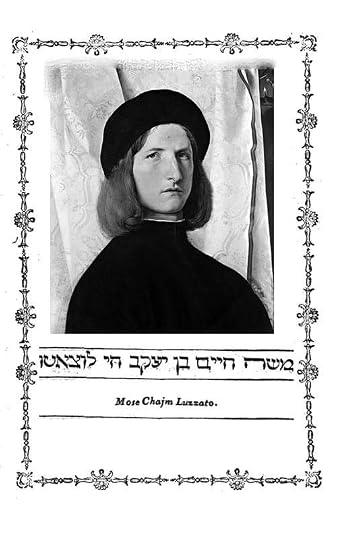
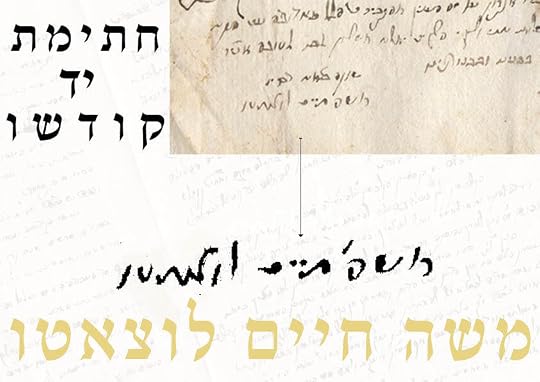
Moshe Chaim Luzzatto, known by the acronym Ramchal, was born in Padua in 1707 into a family of scholars and merchants. In the book's opening line he states plainly that he composed it "not to teach men what they do not know, but to remind them of what they already know," a modest framing for a work that would reshape Jewish ethical study.
[image error]
A prodigy in Talmud, Hebrew grammar, and Kabbalah, the mystical strand of Jewish thought focused on hidden meaning in the biblical text, he began composing Hebrew poetry and drama while young. Reports of visions and a heavenly teacher drew suspicion from rabbinic authorities, uneasy after an earlier mystic, Sabbatai Zevi, had convinced many Jews he was the messiah before converting to Islam. Luzzatto agreed to limit his mystical teaching to calm these fears, then left Padua for Amsterdam and composed Mesillat Yesharim there in the 1730s. He later settled in Acre, in the Land of Israel, and died young, in 1746, along with his wife and son, during a plague.
[image error]
Mesillat Yesharim became a foundation stone of Jewish ethical literature almost immediately after its appearance, and it stayed there. In 19th-century Lithuania, Rabbi Yisrael Salanter founded the Musar movement, a program of character training through close reading of texts like this one, and placed the book at the center of its curriculum. Yeshivot, academies for Talmud study, across Europe adopted it as a first text for young students.
A well-known account has the Vilna Gaon, a leading eighteenth-century Lithuanian rabbi, saying he would have walked to meet the author for this book alone. Editions in Hebrew, English, Yiddish, and other languages continue to circulate, and study groups still meet over its chapters in pairs, using a method of Torah learning called chavruta. Few works of Jewish thought outside the canonical legal codes have kept so steady a readership across three centuries.
[image error]
The reasoning moves slowly, returning to each fault from several angles. The psychological observations under the theology stand up well outside any specific belief system. On laziness, Luzzatto notes that a person facing a real duty will reach for "sayings of the Sages, verses from the Prophets, and logical arguments" to lighten the load, then adds that such reasoning comes "not from his logical thought, but from his laziness." A secular Jew could pass over the sections on reward and punishment in a future world and still gain a working method for self-examination, one flaw named and faced at a time.
Approached as a program of character work, outside strict religious claims, the book takes a place beside any contemporary guide to habit change, with three centuries of testing behind its advice.

[image error]
❤️ 🇮🇱
Its structure comes from a saying attributed to Rabbi Pinchas ben Yair, a rabbi quoted in the Talmud, the body of Jewish legal debate that developed after the Hebrew Bible. Each stage grows from the one before it, moving from care in action to eagerness, from eagerness to blamelessness, from blamelessness to restraint, from restraint to purity, from purity to devotion, from devotion to humility, from humility to dread of wrongdoing, and finally to holiness.
Luzzatto devotes each chapter to naming the habits, excuses, and appetites that block a person at every rung, then offers counsel for climbing past them. The tone stays calm and instructive throughout, closer to a manual than a sermon, addressed equally to scholars and ordinary readers.
Moshe Chaim Luzzatto, known by the acronym Ramchal, was born in Padua in 1707 into a family of scholars and merchants. In the book's opening line he states plainly that he composed it "not to teach men what they do not know, but to remind them of what they already know," a modest framing for a work that would reshape Jewish ethical study.
[image error]
A prodigy in Talmud, Hebrew grammar, and Kabbalah, the mystical strand of Jewish thought focused on hidden meaning in the biblical text, he began composing Hebrew poetry and drama while young. Reports of visions and a heavenly teacher drew suspicion from rabbinic authorities, uneasy after an earlier mystic, Sabbatai Zevi, had convinced many Jews he was the messiah before converting to Islam. Luzzatto agreed to limit his mystical teaching to calm these fears, then left Padua for Amsterdam and composed Mesillat Yesharim there in the 1730s. He later settled in Acre, in the Land of Israel, and died young, in 1746, along with his wife and son, during a plague.
[image error]
Mesillat Yesharim became a foundation stone of Jewish ethical literature almost immediately after its appearance, and it stayed there. In 19th-century Lithuania, Rabbi Yisrael Salanter founded the Musar movement, a program of character training through close reading of texts like this one, and placed the book at the center of its curriculum. Yeshivot, academies for Talmud study, across Europe adopted it as a first text for young students.
A well-known account has the Vilna Gaon, a leading eighteenth-century Lithuanian rabbi, saying he would have walked to meet the author for this book alone. Editions in Hebrew, English, Yiddish, and other languages continue to circulate, and study groups still meet over its chapters in pairs, using a method of Torah learning called chavruta. Few works of Jewish thought outside the canonical legal codes have kept so steady a readership across three centuries.
[image error]
The reasoning moves slowly, returning to each fault from several angles. The psychological observations under the theology stand up well outside any specific belief system. On laziness, Luzzatto notes that a person facing a real duty will reach for "sayings of the Sages, verses from the Prophets, and logical arguments" to lighten the load, then adds that such reasoning comes "not from his logical thought, but from his laziness." A secular Jew could pass over the sections on reward and punishment in a future world and still gain a working method for self-examination, one flaw named and faced at a time.
Approached as a program of character work, outside strict religious claims, the book takes a place beside any contemporary guide to habit change, with three centuries of testing behind its advice.
[image error]
❤️ 🇮🇱

August 27, 2017
This book is a work of genius. Reading it as part of a Mussar group made me a better person.
This is not a book for beginners, and should be read from beginning to end.
If you are experienced with Mussar, I recommend the virtual class Path of the Soul by the Mussar Institute. Every week covers another chapter.
This is not a book for beginners, and should be read from beginning to end.
If you are experienced with Mussar, I recommend the virtual class Path of the Soul by the Mussar Institute. Every week covers another chapter.

February 15, 2025
I believe the commentary is helpful for those who are more humanist leaning than I, but for those of us who are already quite invested in the kabbalist tradition it almost seemed to try to sanitize a book that didn't really need much sanitizing. In some chapters, the commentary gives better translations of the central terms than what Kaplan chose, and that discussion of the meaning of the terms is very helpful.
The main corpus of the book was very helpful in mulling over my relationship to morality in general and the mitzvot in particular. I might start reading this one every Elul.
The main corpus of the book was very helpful in mulling over my relationship to morality in general and the mitzvot in particular. I might start reading this one every Elul.

January 7, 2010
Interesting quote from the first line: "I wrote this book no to teach people what they do not know, but rather to remind them of what they already know and clearly understand." I think that's a pretty strong reminder of needing to pay attention to our internal moral compass.

Read
August 10, 2024I read a lot of Jewish related books, typically Yiddish novels or books of Jewish history, but aside from reading the Torah, I've never actually read any Jewish religious books.
As Mesillat Yesharim is just a book written in plain language on how to live a good and ethical life, goals I'm deeply interested in which aren't inherently religious, this is perhaps the only Jewish religious book actually accessible to me.
Mesillat Yesharim is one of the most important, influential and widely studied Jewish books ever written, and even to this day, is studied at Yeshivas across the world. Written just over 300 years ago, Mesillat Yesharim is an interesting book to read both as a point of historical context and for what it reveals about the Litvish mindset.
While orthodox (and ultra-orthodox) Jews won't like me saying this, this book is quite extremist in its level of commitment to living a proper Jewish life, largely focused on benefits only experienced in The World To Come (HaOlam HaBa) rather than on planet earth. A lot of runners/cyclists talk about having a love of suffering, which is quite familiar in this book, which has a major focus on discipline and deprivation, meeting classic Litvish stereotypes.
Unfortunately, as a practical book to improve your life, maybe only 10% of the arguments are general arguments of value to a non-religious person, with 90% of the book's arguments focused on preaching the virtue of specific aspects of Jewish law/custom. I preferred the Vilna Gaon's mussar letter over this: https://www.pirchei.co.il/specials/gr...
As Mesillat Yesharim is just a book written in plain language on how to live a good and ethical life, goals I'm deeply interested in which aren't inherently religious, this is perhaps the only Jewish religious book actually accessible to me.
Mesillat Yesharim is one of the most important, influential and widely studied Jewish books ever written, and even to this day, is studied at Yeshivas across the world. Written just over 300 years ago, Mesillat Yesharim is an interesting book to read both as a point of historical context and for what it reveals about the Litvish mindset.
While orthodox (and ultra-orthodox) Jews won't like me saying this, this book is quite extremist in its level of commitment to living a proper Jewish life, largely focused on benefits only experienced in The World To Come (HaOlam HaBa) rather than on planet earth. A lot of runners/cyclists talk about having a love of suffering, which is quite familiar in this book, which has a major focus on discipline and deprivation, meeting classic Litvish stereotypes.
Unfortunately, as a practical book to improve your life, maybe only 10% of the arguments are general arguments of value to a non-religious person, with 90% of the book's arguments focused on preaching the virtue of specific aspects of Jewish law/custom. I preferred the Vilna Gaon's mussar letter over this: https://www.pirchei.co.il/specials/gr...

December 16, 2015
“Mesillat Yesharim” (‘The Path of the Just”) is a foundational text of the mussar movement. But that doesn’t mean this 18th-Century work will be appealing to all of today’s mussar students.
Many of the book’s recommendations are geared for people at the highest spiritual levels, and could be counterproductive for others, especially people with mental illness.
The Path of the Just entails a renunciation and rejection of both ego and physical pleasure, to be replaced by extreme humility and full-time Torah study, respectively.
While this may be the book’s limitation, there are some ideas and teachings that will be of value to just about anyone.
Rabbi Luzzatto’s observes “one really finds himself planted in the midst of a fierce battle. For everything in this world, whether for good or bad, is there to test man.”
Then there’s this one: “If he finds within past deeds any wrongdoing, he must contemplate and investigate to determine which tactic he should use to turn aside from this wrongdoing and cleanse himself of it.”
Good stuff, to be sure. Even better would be a contemporary commentary on The Path of the Just rather than this rather unfiltered translation.
Many of the book’s recommendations are geared for people at the highest spiritual levels, and could be counterproductive for others, especially people with mental illness.
The Path of the Just entails a renunciation and rejection of both ego and physical pleasure, to be replaced by extreme humility and full-time Torah study, respectively.
While this may be the book’s limitation, there are some ideas and teachings that will be of value to just about anyone.
Rabbi Luzzatto’s observes “one really finds himself planted in the midst of a fierce battle. For everything in this world, whether for good or bad, is there to test man.”
Then there’s this one: “If he finds within past deeds any wrongdoing, he must contemplate and investigate to determine which tactic he should use to turn aside from this wrongdoing and cleanse himself of it.”
Good stuff, to be sure. Even better would be a contemporary commentary on The Path of the Just rather than this rather unfiltered translation.
Read
May 11, 2008I have finished this as well but I need to re-read it another twenty or so times. So not quite sure how to review it as 2 readings is still not enough.
January 29, 2020
Talk about a book with a hidden side. Reading the introduction, it hit me that the author was describing a path that, frankly, has an esoteric/magical side. The language is all there and persists throughout the text. Looking it up, I see that Ramha"l is absolutely documented to have been involved in the Italian magic/alchemy scene. Anyone without a background in that literature can read Mesilath Yesharim as an ethical how-to book, but if you do have the background, you'll see that there's a whole other conversation happening beneath the surface.
As an ethical manual, it is beautiful, but Jeffrey Cohan's review said it best: this is not well-suited to individuals prone to mental illness. Additionally, it is very difficult for us modern Jews to really envision the kind of life Ramha"l is prescribing because it is so easy to conflate a simple understanding of his stated goals with ultra-Orthodoxy. That path that, on closer inspection, couldn't be more opposed to the spirit of honest, ceaseless self-inquiry. For additional proof we can look to Ramha"l's own modelling of his ideal path in his own life, which was as a beardless, banished rabbi/playwright who communicated with spirits and delved deeper into the identity of the Divine than any of his contemporaries could stand. So readers, beware of anachronistic association!
A final warning: if you have even the faintest scrap of Hebrew, do not read this book in English alone. Get at least a bilingual edition. Ramha"l's Hebrew is shockingly modern (the Vilna Gaon praised its clarity) and you'll be surprised at what you can get through... and what damage loaded, Christianised English terminology can do to the original intent of this work.
As an ethical manual, it is beautiful, but Jeffrey Cohan's review said it best: this is not well-suited to individuals prone to mental illness. Additionally, it is very difficult for us modern Jews to really envision the kind of life Ramha"l is prescribing because it is so easy to conflate a simple understanding of his stated goals with ultra-Orthodoxy. That path that, on closer inspection, couldn't be more opposed to the spirit of honest, ceaseless self-inquiry. For additional proof we can look to Ramha"l's own modelling of his ideal path in his own life, which was as a beardless, banished rabbi/playwright who communicated with spirits and delved deeper into the identity of the Divine than any of his contemporaries could stand. So readers, beware of anachronistic association!
A final warning: if you have even the faintest scrap of Hebrew, do not read this book in English alone. Get at least a bilingual edition. Ramha"l's Hebrew is shockingly modern (the Vilna Gaon praised its clarity) and you'll be surprised at what you can get through... and what damage loaded, Christianised English terminology can do to the original intent of this work.

Read
August 15, 2024Everything in this book is accurate, but its phrasing is clumsy. What I mean by this is that someone who is not already familiar with Jewish philosophy to a certain extent can easily misinterpret it.
I just worry that people will go away believing that Judaism is about asceticism. A concept I worry can misinterpreted are the discussions comparing this current world, and the world yet to come. Indeed, the world yet to come is merely a fraction of our current world - devoid of any point of reference, it will possess a distinct quality. But, the belief that this world is a mere stepping stone, and that a greater world awaits us, is such a Christian, un-Jewish idea.
I just worry that people will go away believing that Judaism is about asceticism. A concept I worry can misinterpreted are the discussions comparing this current world, and the world yet to come. Indeed, the world yet to come is merely a fraction of our current world - devoid of any point of reference, it will possess a distinct quality. But, the belief that this world is a mere stepping stone, and that a greater world awaits us, is such a Christian, un-Jewish idea.

September 26, 2018
This is a Mussar classic, and highly worth reading. The text walks the reader/seeker through 8 traits that each person should attempt to acquire in their daily life, in pursuit of the 9th and final trait of Holiness. While I found a few of the categories hair-splitting in terms of nearness to each other (and methods of suggested acquisition), there were a number of really excellent observations as well. Recommended, especially for anyone studying Mussar. This makes for a good Elul read, as it is not overly complicated but offers practical advice in manageable doses.

December 10, 2019
The Path of the Just is a powerfully deep text, presenting the ethics and values
Of being a mensch in talk and in deed. This text does require multiple readings and life reflections to deepen the understanding both intellectually and emotionally. It is a powerful source to understand Mussar.
Of being a mensch in talk and in deed. This text does require multiple readings and life reflections to deepen the understanding both intellectually and emotionally. It is a powerful source to understand Mussar.
May 15, 2020
One of my favorite Jewish works of all time. Always have a copy on hand wherever I travel. In the words of the blessed Vilna Gaon "not a single word or letter is redundant". A sefer/book meant to be read over and over.

January 10, 2025
"The foundation of saintliness and the root of perfection in the service of God lies in a man's coming to see clearly and to recognize as a truth the nature of his duty in the world and the end for which he was created."
This reflects the book's focus on ethical and spiritual development, emphasizing the importance of understanding one's purpose and striving for moral and spiritual perfection.
This reflects the book's focus on ethical and spiritual development, emphasizing the importance of understanding one's purpose and striving for moral and spiritual perfection.

May 22, 2019
An interesting book to read as part of a class with an engaging, thoughtful teacher. I would not read this on my own.
Class is ongoing but I'm tired of having this on my "currently reading" shelf.
Class is ongoing but I'm tired of having this on my "currently reading" shelf.

January 25, 2022
Studied over three years and more to learn.

January 4, 2023
The language and style may be dated, but the truths contained in this book remain fresh.

May 21, 2023
Dated at points, and at times asking for too rigorous a life, but still an inspiring work of self-betterment.
October 6, 2025
Better than I thought, precisely how the author says, depends who you are in what new stuff are you gonna take from this, but it’s interesting to read it.

June 1, 2012
An excellent book, well laid out, so clear and understandable although the subject is very serious. As I understand it this is a famous book of mussar, Mesillat Yesharim. He lays the book out in the stages necessary to attain closeness with our Creator. "These stages are: Watchfulness, Zeal, Cleanliness, Separation, Purity, Saintliness, Humility, Fear of Sin and Holiness."
These are my notes in brief:
Watchfulness (depart from evil)
Zeal (do good) (the positive commandments)
Cleanliness (Vanquish evil inclination) (negative commandments)
--------these things lead to righteousness-----------
Separation (Be holy, separate yourselves) (negative commandments)
Purity (Create in my G-d a pure heart) (positive commandments)
Saintliness (comprehensive performance of all the mitzvot) (positive commandments) (The Torah begins and ends with lovingkindness)
Humility: "The essence of humility is in a person's not attachings importance to himself for any reason whatsoever. His company is pleasant, he gives pleasure to his fellowman. He is perforce never aroused to anger and to controversy. He does everything quietly and calmly. Happy are those who have been privileged to attain this trait."
"Pride is most prevalent among the more ignorant."
"Another deterrent to humility is keeping company with or being served by flatterers."
Fear of Sin (negative commandments)(Know what is above you: a seeing eye, a listening ear and a book in which all of your deeds are inscribed.)
Holiness (positive commandments) (But first, he must have attained all of the noble traits previously mentioned)
These are my notes in brief:
Watchfulness (depart from evil)
Zeal (do good) (the positive commandments)
Cleanliness (Vanquish evil inclination) (negative commandments)
--------these things lead to righteousness-----------
Separation (Be holy, separate yourselves) (negative commandments)
Purity (Create in my G-d a pure heart) (positive commandments)
Saintliness (comprehensive performance of all the mitzvot) (positive commandments) (The Torah begins and ends with lovingkindness)
Humility: "The essence of humility is in a person's not attachings importance to himself for any reason whatsoever. His company is pleasant, he gives pleasure to his fellowman. He is perforce never aroused to anger and to controversy. He does everything quietly and calmly. Happy are those who have been privileged to attain this trait."
"Pride is most prevalent among the more ignorant."
"Another deterrent to humility is keeping company with or being served by flatterers."
Fear of Sin (negative commandments)(Know what is above you: a seeing eye, a listening ear and a book in which all of your deeds are inscribed.)
Holiness (positive commandments) (But first, he must have attained all of the noble traits previously mentioned)
June 21, 2012
Mesilas Yesharim is very much a book directed at spiritual self improvement for people who are already steeped in Jewish law and observance. I was surprised by how much resonated with me - I am not a big scholar, nor am I able to devote my time to study, but the concepts as I would encounter them would just make sense.
Luzatto has a style which can take some adjustment - he will say things like "it is obvious to everyone that X follows Y in the way that dawn follows night", and cite a verse which is sort-of-related. I initially bristled at this, considering it insufficient proof of a proposition, but then came to see that what he's doing is not proving in the classic logical sense but rather using these statements as jumping-off points for discussions of virtues and their means of acquisition.
I would definitely say that on the whole the book is worth reading.
Luzatto has a style which can take some adjustment - he will say things like "it is obvious to everyone that X follows Y in the way that dawn follows night", and cite a verse which is sort-of-related. I initially bristled at this, considering it insufficient proof of a proposition, but then came to see that what he's doing is not proving in the classic logical sense but rather using these statements as jumping-off points for discussions of virtues and their means of acquisition.
I would definitely say that on the whole the book is worth reading.
September 1, 2023
Following the righteous path
I would recommend this book to those people of the Jewish faith who are seeking to follow a more just, ethical path while becoming better kind people. It is an extremely deep and profound book which will appeal to Torah scholars. It is especially useful during the month of Elul in which all Jews prepare for Rosh Hashanah and Yom Kippur. This book helps one reflect on his life and seek to work harder on developing his good character traits. I started this book last year as a 40 day project for the month of Elul and studied daily with my local Rabbi. I finally finished this lengthy book on my own. It is so profound and meanigful.
I would recommend this book to those people of the Jewish faith who are seeking to follow a more just, ethical path while becoming better kind people. It is an extremely deep and profound book which will appeal to Torah scholars. It is especially useful during the month of Elul in which all Jews prepare for Rosh Hashanah and Yom Kippur. This book helps one reflect on his life and seek to work harder on developing his good character traits. I started this book last year as a 40 day project for the month of Elul and studied daily with my local Rabbi. I finally finished this lengthy book on my own. It is so profound and meanigful.

February 13, 2014
There really isn't a reason to give this book a lower rating. It's not even from my religion, but still very inspirational and simple enough for me to follow. The citations from the Bible and rabbis definitely help. All in all, definitely a good read.

January 10, 2015
A Jewish analogue to A Serious Call to a Devout and Holy Life. Extremely thoughtful and worth rereading or subsequent dipping.

September 21, 2024
Absolutely loved this book! It makes complicated matters simple in order for anyone to understand. This is about inner challenges in order to become a better person. Strong advice is reading it more than once for there is a lot of wisdom within the pages.
March 7, 2007
If it's not too sacreligious, this masterpiece of personal growth truly is my favorite in that it is life altering and offers new inisght with every read.

Read
September 23, 2010The Path of the Upright: Mesillat Yesharim by Moses Hayyim Luzzatto (1995)
Displaying 1 - 26 of 26 reviews