

What do you think?

Hume: An Intellectual Biography
This is the first book to provide a comprehensive overview of the entire career of one of Britain's greatest men of letters. It sets in biographical and historical context all of Hume's works, from A Treatise of Human Nature to The History of England, bringing to light the major influences on the course of Hume's intellectual development, and paying careful attention to the differences between the wide variety of literary genres with which Hume experimented. The major events in Hume's life are fully described, but the main focus is on Hume's intentions as a philosophical analyst of human nature, politics, commerce, English history, and religion. Careful attention is paid to Hume's intellectual relations with his contemporaries. The goal is to reveal Hume as a man intensely concerned with the realization of an ideal of open-minded, objective, rigorous, dispassionate dialogue about all the principal questions faced by his age.
633 pages, Hardcover
First published September 30, 2015
About the author
James A. Harris
11 books1 followerLibrarian Note:
There is more than one author in the Goodreads database with this name.
James A. Harris is Reader in the History of Philosophy at the University of St Andrews.
There is more than one author in the Goodreads database with this name.
James A. Harris is Reader in the History of Philosophy at the University of St Andrews.
Ratings & Reviews
Friends & Following
Create a free account to discover what your friends think of this book!
Community Reviews
Displaying 1 - 12 of 12 reviews

Read
September 10, 2016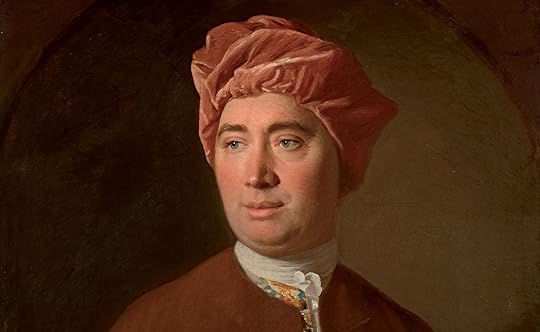
Detail of a portrait of David Hume (1711-1776) by Allan Ramsay
To see Hume as first and foremost a man of letters, and to see philosophy as having been for him a style of thought and of writing rather than a subject matter or body of doctrine, provides a way of avoiding the dilemma forced upon the intellectual biographer by the two most common approaches to his literary career.
One of the stellar figures of the 18th century European Enlightenment, David Hume was born in Edinburgh to a father who was a less than brilliantly successful lawyer and a mother who had to raise the family by herself when her husband died in Hume's early childhood. The extended family was not rich, but there was some money for basics and private tutors, and there was the family country home to which one could retreat when things became too tight. Hume managed to enter the University of Edinburgh at the age of ten with the intention of ultimately following in his father's footsteps. However, as he wrote in his entertaining My Own Life, written in April, 1776, he "found an unsurmountable aversion to every thing but the pursuits of philosophy and general learning; and while they fancied I was poring upon Voet and Vinnius, Cicero and Virgil were the authors which I was secretly devouring." In the end, the family did not insist. Less than impressed by his professors, Hume left the university without a degree and studied and thought so hard on his own that he had a breakdown. After years of incomplete recovery he found work with a sugar merchant which was so incompatible with his nature that his family financed a retreat in the French countryside where he recovered and managed to complete his first major work, A Treatise of Human Nature, at the age of twenty-eight.(*) Thereafter, he went through a series of odd jobs as tutor or secretary to notable families and/or men with the intent to maintain his intellectual independence and preserve time enough for his studies and writing. Again from My Own Life: "I resolved to make a very rigid frugality supply my deficiency of fortune, to maintain unimpaired my independency, and to regard every object as contemptible, except the improvement of my talents in literature."
But, like James A. Harris in Hume: An Intellectual Biography (2015), my focus here is on Hume's work, not his life.(**)
Hume was not a professional philosopher, but an 18th century man of letters with an interest in philosophical matters typical for the time and caste; though the beginnings of specialization, with all of its advantages and disadvantages, can be perceived towards the end of that century, Hume was one of the more typical, omnivorously interested embodiments of the Enlightenment. Thus he wrote treatises, essays and multiple volume works on philosophical, scientific, commercial, religious, political and constitutional matters of varied descriptions, as well as a History of England that became a bestseller and provided Hume with a long desired financial independence. This behavior caused men of later, more specialized and sour ages to view Hume, in John Stuart Mill's words, as "the prince of dilettanti". Perhaps, but it is precisely on the shoulders of these Enlightenment generalists that much of Western intellectual culture stands.(***)
Harris rejects the attempts by Hume's defenders and critics to read everything Hume wrote in terms of the Treatise. Despite the fact that I have only read the Treatise and My Own Life, I must concur with his view, for if Hume had considered his life's work as all of a piece - a working out of the science of man called for in the Treatise, say - he surely would have taken the opportunity of an overview of his work written at the end of his life, namely My Own Life, to make that clear. He didn't.
Harris examines the intellectual and historical context, the content and the interrelations amongst Hume's many varied works with a natural emphasis on the major texts: the remarkable Treatise, in which, among many other things, reason is used to subvert the authority of reason and the very possibility of enlightened reform and improvement is cast into question by his account of human nature; An Enquiry Concerning the Principles of Morals, which in My Own Life Hume called his best work and in which he admitted that "human nature" might be culture, time and place dependent; the Dialogues Concerning Natural Religion, which dispassionately triangulated the sources of religion in passions like fear and hope and which he held back from publication during his lifetime out of concern for the expected reaction, a few published essays brought him the reputation of being an atheist and a narrowly averted trial for heresy, nonetheless; and The History of England, which ran through several changes of scope and ultimately comprised six volumes tracing the history of England from the Roman invasion in 55 BCE to the Revolution of 1688.
Nonetheless, Harris does locate a unity in Hume's work, a unity of method/purpose: in each text Hume attempted to distill general principles from the particular, even in the History, in which Harris writes that Hume alternated between "general principles able to explain long-term and large-scale social, political, economic, and cultural change" and a "novelist's interest in the foibles and weaknesses of particular human beings." Apparently, Hume's History sent up howls from the entire political spectrum in Great Britain; according to Voltaire, Hume's was the first politically nonpartisan history of England. In point of fact, already in Book III of the Treatise and ever thenceforth Hume systematically dismantled the myths of both the Whigs and the Tories.
Of great interest to me was the degree to which Hume's philosophizing was coupled to his own experience; his philosophy was not the largely dessicated and ultimately lifeless philosophizing of our contemporary academics,(4*) nor was it one of the airy edifices founded on unverifiable metaphysical assumptions that grace the philosophical landscape. (Indeed, like Locke and Berkeley, but much more radically, Hume rampaged thoroughly through the metaphysical china shop.) For example, on Harris' account, Hume's breakdown was due to a systematic implementation of the spiritual exercises recommended by the classical Stoics and "modernized" by Shaftesbury. Hume concluded from his unhappy experience that the Stoics had misconceived the fundamental needs of humankind and resolved to place human nature - whatever it may be - at the center of his philosophy with little concern for ontology and metaphysics. In this, of course, he was anticipated by Locke and others, but there are distinguishing elements in his project. He intended to derive moral philosophy and criticism (i.e. aesthetics), among other matters, from human nature, and this nature he intended to circumscribe not with the a priori, but by deriving the science of mind from a "cautious observation of human life" with data collected from "men's behaviour in company, in affairs and in their pleasures." (In point of fact, he also used history and literature as part of his data.)
Clearly written and manifesting an apparently thorough knowledge of 18th century French and British thought, Harris' Hume is assorted with one hundred pages of notes and a thirty-five page bibliography. I found of particular value Harris' careful and detailed portrayal of the intellectual setting in which Hume's thought developed, presenting the ideas of authors such as Locke, Berkeley, Bayle, Hutcheson, Schaftesbury, Mandeville, Malebranche, Montesquieu, to mention but a few, that Hume adapted or argued against. My budding interest in 17th and 18th century Skeptics recently renewed by Walter Rehm's Der Untergang Roms im abendländischen Denken has been significantly encouraged by this book. And I'm going to put a toe into Hume's history of England to test the waters. Busy, busy, busy...
(*) Hume later commented, "It fell dead-born from the press, without reaching such distinction, as even to excite a murmur among the zealots." Convinced that it was "the manner, not the matter" that was the problem, Hume exerted himself mightily to produce more accessible texts in the future; once they were written, he would revise and revise and revise again, both from the point of view of stylistic felicity and clarity and from that of Truth. He spent the last sixteen years or so of his life repeatedly revising his earlier works.
(**) Harris recommends Ernest Campbell Mossner's The Life of David Hume for a more standard biography.
(***) Part of Harris' effort in this volume is a rather extensive tracing of Hume's reception history, into whose fascinating convolutes I shall not further enter here.
(4*) Which is not to say that I think contemporary philosophy is worthless; technical fields like the philosophy of science or the philosophy of language are purposeful, but they are of no use to human beings trying to answer the first, the fundamental questions of philosophy such as "What is the Good?" and "How should I lead my life?"

November 28, 2020
This was a tough, tough book to review. I took a lot of notes. Early on, my appetite whetted by the Introduction, I would have been very ready to five-star it. The framing of Hume as a man of letters, or to go French along with the mot of him as "le bon David," as a "litterateur," seemed a promising new focus. And yet?
By the time I got to Harris' mishandling (that's the best I can call it) about Hume's infamous footnote about "the Negros" in "Of National Characteristics," it lost a star right there, and was slipping a bit before then. (Sadly, no other reviewer has noted this here.)
How it handled his "Essays Moral and Political" in general shoved it into three-star territory (tho Harris later admitted to me that he agreed many of the essays are "shallow" [and they are]), along with other things.
Then, his handling of Hume the historian moved it back into four-star range.
But, next, while this is an intellectual biography, it could have been more personal on the Hume-Rousseau situation. Finally, tying back to "that footnote," Hume's reaction to Beattie — and Harris' take on that — undercut "le bon David" of legend.
Harris claims Mossner, in his bio of Hume, is too hagiographic.
I think the same could be said of Harris, too.
And, so, and in part because none of the other three-star reviewers here three-star it for Harris' take on Hume, just "difficulties," three stars it is.
Details from some of my extensive notes about the book below. I will have even more on my philosophy and aesthetics blog ... three posts in all. One, an extension of this review. Another, how Beattie's calling Hume out on racism refutes "presentism" claims. And the third will note how, per Kant, Harris' bio "awakened me from dogmatic slumber."
==
Hume had a breakdown in reasoning that occurred in conjunction with or shortly after what must have been his loss of faith, whether that was a crisis or not. He simply couldn’t accept any more the diet of Stoicism he was getting at university. ...
Direct vs indirect passions is an interesting matter. It probably could have been studied even more. (By Hume as well as Harris analyzing him as a philosopher.) ...
Next, and this is where Harris started slipping, for me. He rejects the claim that Hume was a "divided" philosopher. Other commenters on this book accept that, and accept Hume's own claim he rejected the Treatise because it was "the manner, not the matter" of how it read, rather than what it said. Rather, this is to accept Hume's public self-preservation at face value. Especially on the issue of the passions, Hume DID reject "the matter" of the Treatise and never did accept it — or return to it — again.
In Essays, Moral, Political and Literary is where Hume makes his racial inferiority comments. Harris costs himself a star by not discussing this. It’s NOT, contra some commenters, throwaway comments. It wasn’t just anti-Black racism, either. He had similar thoughts about American Indians. ...
And, his revision of that original footnote made it worse, by making it into specifically anti-Black racism.
Hume was challenged on his racist views in his own time, above all by the Scottish philosopher James Beattie. Harris treats both the footnote and Hume's editing of it, and why, in only a footnote. He then claims that it was NOT in response to Beattie, though the evidence is pretty clearly against him. Worse, in an email, he said he couldn't remember what he wrote. This area will be covered MUCH more in my blog.
Also, the sharpness of Hume's reaction to Beattie undercuts le bon David, which is part of Harris' whole focus.
And, that leads me to the New York Review of Books, take, which said: "Mossner’s life of Hume is suffused with an affection for its subject that, according to Harris, sometimes obstructs a 'properly dispassionate' examination of the facts.” This is the petard-hoisting area. Again, I think Harris is guilty of some of this himself.
Next, whether it's Hume himself stressing the claim, or Harris burnishing it? On "The Natural History of Religion," polytheistic gods weren't, and aren't, always kind and cuddly, and monotheistic ones aren't always harsh father figures. Contra the former, see Shiva, or even more, Kali. Contra the latter, see the deified versions of the Buddha in many "denominations" within Mahayana.
The book was generally good on Hume's skill as a historian. And, I agree that Elizabeth was an absolute monarch and that the Stuarts got bad press. Nonetheless, in his later revisions to his volumes of history, Hume comes off as a "trimmer." If that's part of how one gets to be "le bon David," pass.
Again, more at my blog. I'll post links when posts are up.
By the time I got to Harris' mishandling (that's the best I can call it) about Hume's infamous footnote about "the Negros" in "Of National Characteristics," it lost a star right there, and was slipping a bit before then. (Sadly, no other reviewer has noted this here.)
How it handled his "Essays Moral and Political" in general shoved it into three-star territory (tho Harris later admitted to me that he agreed many of the essays are "shallow" [and they are]), along with other things.
Then, his handling of Hume the historian moved it back into four-star range.
But, next, while this is an intellectual biography, it could have been more personal on the Hume-Rousseau situation. Finally, tying back to "that footnote," Hume's reaction to Beattie — and Harris' take on that — undercut "le bon David" of legend.
Harris claims Mossner, in his bio of Hume, is too hagiographic.
I think the same could be said of Harris, too.
And, so, and in part because none of the other three-star reviewers here three-star it for Harris' take on Hume, just "difficulties," three stars it is.
Details from some of my extensive notes about the book below. I will have even more on my philosophy and aesthetics blog ... three posts in all. One, an extension of this review. Another, how Beattie's calling Hume out on racism refutes "presentism" claims. And the third will note how, per Kant, Harris' bio "awakened me from dogmatic slumber."
==
Hume had a breakdown in reasoning that occurred in conjunction with or shortly after what must have been his loss of faith, whether that was a crisis or not. He simply couldn’t accept any more the diet of Stoicism he was getting at university. ...
Direct vs indirect passions is an interesting matter. It probably could have been studied even more. (By Hume as well as Harris analyzing him as a philosopher.) ...
Next, and this is where Harris started slipping, for me. He rejects the claim that Hume was a "divided" philosopher. Other commenters on this book accept that, and accept Hume's own claim he rejected the Treatise because it was "the manner, not the matter" of how it read, rather than what it said. Rather, this is to accept Hume's public self-preservation at face value. Especially on the issue of the passions, Hume DID reject "the matter" of the Treatise and never did accept it — or return to it — again.
In Essays, Moral, Political and Literary is where Hume makes his racial inferiority comments. Harris costs himself a star by not discussing this. It’s NOT, contra some commenters, throwaway comments. It wasn’t just anti-Black racism, either. He had similar thoughts about American Indians. ...
And, his revision of that original footnote made it worse, by making it into specifically anti-Black racism.
Hume was challenged on his racist views in his own time, above all by the Scottish philosopher James Beattie. Harris treats both the footnote and Hume's editing of it, and why, in only a footnote. He then claims that it was NOT in response to Beattie, though the evidence is pretty clearly against him. Worse, in an email, he said he couldn't remember what he wrote. This area will be covered MUCH more in my blog.
Also, the sharpness of Hume's reaction to Beattie undercuts le bon David, which is part of Harris' whole focus.
And, that leads me to the New York Review of Books, take, which said: "Mossner’s life of Hume is suffused with an affection for its subject that, according to Harris, sometimes obstructs a 'properly dispassionate' examination of the facts.” This is the petard-hoisting area. Again, I think Harris is guilty of some of this himself.
Next, whether it's Hume himself stressing the claim, or Harris burnishing it? On "The Natural History of Religion," polytheistic gods weren't, and aren't, always kind and cuddly, and monotheistic ones aren't always harsh father figures. Contra the former, see Shiva, or even more, Kali. Contra the latter, see the deified versions of the Buddha in many "denominations" within Mahayana.
The book was generally good on Hume's skill as a historian. And, I agree that Elizabeth was an absolute monarch and that the Stuarts got bad press. Nonetheless, in his later revisions to his volumes of history, Hume comes off as a "trimmer." If that's part of how one gets to be "le bon David," pass.
Again, more at my blog. I'll post links when posts are up.

Read
May 9, 2016"In the Old Calton cemetery in Edinburgh, David Hume’s mausoleum, a stout, cylindrical tower, dominates the surrounding tombstones. Contrasting with this imposing tomb, Hume insisted that it carry a simple inscription: “only my name with the year of my birth and death, leaving to posterity to add the rest.” Unfortunately, given Hume’s importance to Western philosophy, posterity has done a rather lopsided job in adding much to this epitaph."
Read the full review, "David Hume, Lonely Philosopher," on our website: http://www.theamericanconservative.co...
Read the full review, "David Hume, Lonely Philosopher," on our website: http://www.theamericanconservative.co...

March 29, 2018
Hume has always been one of my favorite characters in the survey of western philosophy. His relentless skepticism and cheerful atheism, combined with a love of a pint with friends, appealed to me, so when I saw this new book listed somewhere I put it on the to-read list. It was hard going in parts because I just don't have the mind for abstract reasoning. But the part that was riveting was the section on the writing of his volumes of history of England. Political factionalism in Britain in the mid 18th century was every bit as intensely acrimonious and aggressively ignorant as in the US today. Your party affiliation (Whig or Tory) determined whether you thought William the Conqueror did or did not change the government of England in 1066. Hume was intent on writing a history that did not align itself with a party line but was impartial. The whole explanation of this context and this work was fascinating. While the History probably doesn't have much to offer us in this age of re-examination of primary sources, there was a lot here that sounds very contemporary.
My biggest complaint is that the proofing seemed rather lax, there were many more errors than I would have expected from Cambridge University Press. Then there was the statement in passing that Henry VI was deposed by "his own son" Edward IV. Um, no...There was a whole famous war, and Henry was Lancaster and Edward was York. Even if your only exposure to English history comes from Shakespeare you know that, and I am sure Professor Harris knows it too...
My biggest complaint is that the proofing seemed rather lax, there were many more errors than I would have expected from Cambridge University Press. Then there was the statement in passing that Henry VI was deposed by "his own son" Edward IV. Um, no...There was a whole famous war, and Henry was Lancaster and Edward was York. Even if your only exposure to English history comes from Shakespeare you know that, and I am sure Professor Harris knows it too...
January 16, 2020
The book introduced me to the political setting of England at the time of Hume and gives a complete account of what, who, and how was influencing Hume. It is really, really, interesting.
However, the book is probably written with academics in mind, rather than the general public. Also, some sentences could be made easier to read. For example, there are too many double negations (like pg 379 "the dispute failed to endanger their friendship"), and also many too long parenthetical sentences that make the subject and the verb of a sentence quite distant.
However, the book is probably written with academics in mind, rather than the general public. Also, some sentences could be made easier to read. For example, there are too many double negations (like pg 379 "the dispute failed to endanger their friendship"), and also many too long parenthetical sentences that make the subject and the verb of a sentence quite distant.

May 11, 2019
Very well written, gives a clear and concise view of Hume’s thoughts on religion, politics and economics. Gives good historical context for the enlightenment. I am glad Hume was one of Thomas Jefferson’s favorites.

November 27, 2019
Harris's approach is to set Hume's thinking in its historical context, and there is some excellent investigative work trying to piece together the different influences that fed into A Treatise on Human Nature, which can otherwise appear to have come out of nowhere to completely transform the history of philosophy. Harris has some interesting conjectures about Hume's early intellectual development, particularly how the ideas of the Stoics and Shaftesbury may have contributed to a personal breakdown in his youth, although generally the book skips over the personal aspects of Hume's life. The chapters on Hume's historical writing draw out the political implications for the 18th-century reader, and the confusing nature of British politics amidst the 'rage of party' is explained well. It's a useful reminder that politics in the UK has had previous moments of extreme polarisation, and it made me wonder what a self-consciously disinterested and detached observer like Hume would make of the present divisions over Brexit.
Harris's prose is clear if very occasionally laboured. Sticking tightly to the chronology of composition leads to some awkward structural issues, for example with the discussion of the Dialogues Concerning Natural Religion split in two. It's written for an academic rather than a general audience, but it's still accessible to the general reader. And as a guide to Hume's works, it's difficult to think of a better place to start.
Harris's prose is clear if very occasionally laboured. Sticking tightly to the chronology of composition leads to some awkward structural issues, for example with the discussion of the Dialogues Concerning Natural Religion split in two. It's written for an academic rather than a general audience, but it's still accessible to the general reader. And as a guide to Hume's works, it's difficult to think of a better place to start.
February 24, 2019
I learned a lot, and will go back to particular passages; I suggest reading as much of Hume’s work as you have time. That will help you relate to the book better.
December 4, 2022
I wish I could give a book more than 5 stars; this would be one to get extra stars. I was exposed to Hume when I took a trip to Edinburgh this October. It was....an enlightening experience! Then I started to read about Hume, and Harris's book was first in the queue, along with listening to A Treatise of Human Nature on my underwater earphones while I swim every day. What a revelation. This is not an easy read, but it is thorough and informative. It changed my view of Hume's core ideas and helped me understand the Scottish Enlightenment.
I noticed some similarity with Buddhist thought: desires cause us to have our particular world view. I looked up Hume and Buddhism and found Alison Gopnik's intriguing "Could David Hume have known about Buddhism?" The similarities are quickly identifiable as one comprehends Hume's core ideas. However, Gopnik creates a plausible circumstantial argument that Hume wrote his first important work at a Jesuit university that had had Jesuit scholars pass through with prior experience in Buddhist communities in Asia. I digress from Harris's wonderful book...
At any rate, it's one of the more challenging reads that I've had for a long time, but so helpful in understanding Hume and his transformative philosophy.
I noticed some similarity with Buddhist thought: desires cause us to have our particular world view. I looked up Hume and Buddhism and found Alison Gopnik's intriguing "Could David Hume have known about Buddhism?" The similarities are quickly identifiable as one comprehends Hume's core ideas. However, Gopnik creates a plausible circumstantial argument that Hume wrote his first important work at a Jesuit university that had had Jesuit scholars pass through with prior experience in Buddhist communities in Asia. I digress from Harris's wonderful book...
At any rate, it's one of the more challenging reads that I've had for a long time, but so helpful in understanding Hume and his transformative philosophy.

October 21, 2020
There are significant stretches of this book overburdened with details, making it at times a dense read.
However, I did enjoy it. It's best gift is understanding Hume within his intellectual context. At two particular places this was most enjoyable. First in learning more about the philosophical influences upon him, such as Shaftesbury, Mandeville, Hutcheson, and others. Second was learning about the differing understandings of British history in the 18th century, in particular how those different understanding approached the concept of liberty. This was relevant to then understanding what approach Hume took in his own History.
The book had a grand conclusion, stating that Hume had achieved the dreams he set for himself as a young man. Would that more biographies could end that way.
However, I did enjoy it. It's best gift is understanding Hume within his intellectual context. At two particular places this was most enjoyable. First in learning more about the philosophical influences upon him, such as Shaftesbury, Mandeville, Hutcheson, and others. Second was learning about the differing understandings of British history in the 18th century, in particular how those different understanding approached the concept of liberty. This was relevant to then understanding what approach Hume took in his own History.
The book had a grand conclusion, stating that Hume had achieved the dreams he set for himself as a young man. Would that more biographies could end that way.

August 13, 2021
Not an easy book to get through. Geared towards someone studying Hume's ideas at a university level. It certainly covers the breadth and depth of his ideas, with too much focus on where his ideas originated rather than the ideas themselves.
August 5, 2020
Very scholarly and far too much directed towards the specialized academic. Lots and lots of details drowning the important points. I could not see the forest for all the trees!
Displaying 1 - 12 of 12 reviews