Sir Isaac Newton, creator of the first and perhaps most important scientific theory, is a giant of the scientific era. Despite this, he has remained inaccessible to most modern readers, indisputably great but undeniably remote. In this witty, engaging, and often moving examination of Newton's life, David Berlinski recovers the man behind the mathematical breakthroughs. The story carries the reader from Newton's unremarkable childhood to his awkward undergraduate days at Cambridge through the astonishing year in which, working alone, he laid the foundation for his system of the world, his Principia Mathematica, and to the subsequent monumental feuds that poisoned his soul and wearied his supporters. An edifying appreciation of Newton's greatest accomplishment, Newton's Gift is also a touching celebration of a transcendent man.
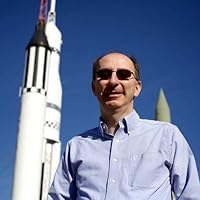
David Berlinski is a senior fellow in the Discovery Institute’s Center for Science and Culture.
Recent articles by Berlinski have been prominently featured in Commentary, Forbes ASAP, and the Boston Review. Two of his articles, “On the Origins of the Mind” (November 2004) and “What Brings a World into Being” (March 2001), have been anthologized in The Best American Science Writing 2005, edited by Alan Lightman (Harper Perennial), and The Best American Science Writing 2002, edited by Jesse Cohen, respectively.
Berlinski received his Ph.D. in philosophy from Princeton University and was later a postdoctoral fellow in mathematics and molecular biology at Columbia University. He has authored works on systems analysis, differential topology, theoretical biology, analytic philosophy, and the philosophy of mathematics, as well as three novels. He has also taught philosophy, mathematics and English at Stanford, Rutgers, the City University of New York and the Université de Paris. In addition, he has held research fellowships at the International Institute for Applied Systems Analysis in Austria and the Institut des Hautes Études Scientifiques. He lives in Paris.
This is an autobiography of Isaac Newton and high level introduction to his discoveries. The mathematics are dived into a little deeper in the appendix, but I think reader with little interest in the details could skip those and still find the book worthwhile. The book does not skip over Newton's non-mathematical pursuits as one I read years ago did.
Many marvelous things, all at once. Reviewed in the United States on March 19, 2019 I'm not exactly sure what this book is. David Berlinski's prose is so beautiful that his writing is a happening in and of itself.
There are million dollar words *everywhere.* (Lapidary. Carapace. Detritus. Priapic. Alembic. Subsizar. Diapason. Peccadilloes. Amanuensis. Objurgation. Oblate. Rebarbative. Pupate. Filigree. Scholium. Gravamen.)
There are powerful sentences and turns of phrase that can augment anyone's lexical powers.
("He could have as well asked the sea to shed its salt."/"We have no way of knowing what took place between the two men and so must forever alternate between assigning to Newton and de Duillier an intimacy that they did not exhibit or innocence that they did not enjoy."/" The embroilment to which he refers was plainly sexual and just as plainly imaginary."/" He had reached the age in which even very great men are capable of appreciating beauty without wishing to posses it.")
Cerebral prose is one part of the book, for certain.
Another part of the book is a pithy biography of Isaac Newton.
In any case, Newton was of these types of men who create so much but leave very little personal imprint behind.
Characterizations of such people are all speculation and Berlinski obliges us by not indulging in that at too much length.
Another part of this book is some basic Physics about the things that Newton characterized. People who have taken a couple of semesters of undergraduate Physics or Calculus should be able to understand most of this. Indeed, they may even already know most of this.
I think that the fourth conceivable description of the book is: a discussion of the Philosophy of Science as seen through the one man in particular.
For example, Berlinski notes that before Isaac Newton's building beautiful experiments, theory was most important--with a secondary emphasis on explaining actual experimental results.
What made Newton so great--and what we even knew before reading this book-- is that he invented the Calculus to explain things that *actually existed*. (When he wanted to observe and explain natural phenomenon and he ran out of mathematical tools, he made his own.)
Newton was also a first class engineer, and he made contributions in other fields, such as Optics.
Any one of these things could not stand alone, but if you put all four of them together then you have the makings of a decent book.
Berlinski's treatment of Isaac Newton is more sympathetic than, say, Stephen Hawking. (I remember the first sentence of his biography sketch of Isaac Newton. "Isaac Newton was not a pleasant man.")
Of Newton, the man:
Newton was the anti-Einstein in terms of his bearing. (Albert Einstein was somebody who had an absolutely massive personality, and that was what sustained him later in his career .)
He was very similar, however, in the sense that all of his best mathematical and theoretical work was done in a very short period in his early life (1684-1686). Einstein did almost all of his best work in one single year in his twenties.
Even though Berlinski's treatment of The Subject is more generous then what I have known up until now, there is no denying that he was a petty, mean-spirited, vindictive person in defense of ideas in which he had an eagle steak. An academic, in short. (p.144)
Later, he was to reveal a superb practical sense as a Man of Action (as evidenced by is administration of the English Mint).
It has also been written that a lot of the work that Newton did was in service of his proving that there is a G-d.
The truth is not quite so simple.
Newton held to the doctrine of Arianism (which I just learned in reading this book, and which may have been its best didactic purpose).
And an Arian of that time (spelled with an "i" and not a "y") was probably the equivalent of Sam Harris or Richard Dawkins to us in these times.
Of Newton, the scientist:
Something that is underappreciated and that the writer brings forth for us is that Newton was actually a first-rate experimentalist AND engineer-- and that he became a theoretician insofar as it was necessary to support / explain his experimental data.
It appears that he also had broad interests: He studied Alchemy as well as Theology.
Berlinski's attempts to not get too heavily into either the biographical details of Newton's life or the scientific and mathematical details of his work result in a slight volume that left me unsatisfied in both aspects. It may have worked better if it was edited down to the size of a New Yorker profile and published in a magazine. Berlinski's A Tour of the Calculus is far more successful.
Newton's Gift is a pretty standard biography of everyone's favorite physicist. Weaving in and out of Newton's scientific life with what passed for his personal life, Berlinski tries -- and mostly succeeds -- in pulling together a picture of the great scientist and very, very, ordinary man.
My beef with Berlinski's books is that his prose is just a little too ornate.
Newton's Gift by David Berlinski is a compact yet intellectually rich meditation on the life, mind, and legacy of Isaac Newton—but it is far from a conventional biography. Berlinski is not interested in retelling familiar historical episodes; instead, he invites the reader into the inner architecture of Newton’s genius and, more provocatively, into the enduring mystery of scientific creativity itself.
The book revolves around what Berlinski calls Newton’s “gift”: not merely his discoveries in calculus, optics, or gravity, but the deeper, almost unsettling ability to see structure where none was previously visible. Newton appears here as a solitary, intensely private thinker, whose breakthroughs were less the product of steady accumulation and more akin to sudden, luminous insight. Berlinski subtly challenges the modern tendency to reduce scientific progress to method and incrementalism; Newton’s work, he suggests, resists such simplification. It carries an element of the inexplicable—something closer to intuition, or even inspiration, than algorithmic reasoning.
One of the book’s strengths lies in its tone: elegant, restrained, and quietly philosophical. Berlinski moves fluidly between history, mathematics, and metaphysics, raising questions about whether the laws of nature are discovered or invented, and whether the human mind is uniquely attuned to the deep order of the universe—or simply projecting patterns onto it. Newton’s achievements, particularly in unifying celestial and terrestrial mechanics, are presented not just as scientific milestones but as moments that altered humanity’s sense of its place in the cosmos.
Yet Berlinski also preserves the tension: for all Newton’s clarity, the ultimate foundations of reality remain opaque. The laws describe, but do not explain why there is such order to describe at all. In this sense, the “gift” is double-edged—it illuminates the world while simultaneously revealing how much lies beyond illumination.
From an Islamic intellectual perspective, this tension resonates deeply. The Qur’anic worldview repeatedly invites reflection (tafakkur) on the order of the heavens and the earth, not as an end in itself but as a sign (ayah) pointing beyond creation to the Creator. Newton’s ability to discern mathematical harmony in the cosmos can be seen as part of a broader human capacity bestowed by God—a trust (amanah) that enables knowledge but does not grant ultimate comprehension. Berlinski’s subtle acknowledgment of mystery aligns, perhaps unintentionally, with a classical Islamic epistemology: that reason is powerful but bounded, and that the elegance of natural law is itself an indication of divine wisdom rather than a self-sufficient explanation. In this light, Newton’s “gift” is not merely intellectual brilliance—it is a glimpse into a universe that is both intelligible and, at its core, profoundly transcendent.
I definitely learned a lot about Newton by reading this book, but it wasn’t entirely clear what the goal of the book was. Some pieces of Newton’s personality, character, biographical details. But also several chapters where Newton was almost not mentioned in which were contained explanations of mathematical concepts which Newton invented/discovered/explored and their applications. All of which were quite in depth, and not nearly as interesting as the other parts of the book (at least for someone already quite familiar with the basics of calculus, vectors, laws of motion and gravity…). A worthwhile read, and written in such poetic prose, however would not recommend to just anyone.
An enjoyable book for those who enjoy the history of mathematics. It is limited in scope and talks mostly about Sir Isaac Newton and his contemporaries giving a good picture of Newton's contributions to Mathematics and Physics.
It is also interesting as Berlinksi is clear in his affirmation that science has limits and cannot explain everything. He does not refer to a creator but he leaves the door open to that possibility.
Does its job, this is an intro book into the life of Newton. It is short and simple to read as it was meant to be. Don't feel bad if you get lost in the math or physics, this is not the book to use if you seeing it for the first time. The author recommends Richard Westfall's book "Never at Rest" for the definitive biography of Newton.
I'm a physicist. I've been formally familiar with Newton's laws since high school and intuitively much longer than that. I knew he was brilliant but I didn't realize how truly revolutionary his thinking was - for his time - until I read this book. Amazing. The book is not a detailed biography. It is more of a snapshot in time, Newton's time of brilliance. I highly recommend it.
Berlinski's wit and turn of phrase present as ever in this book. His is an elegant presentation of the concepts and ideas as well as the history. I can't help but think the layperson discussion of physics could have been a little clearer, as I only followed after recollecting high school physics classes. But perhaps its just as well as is.
This is a loose biography of a very interesting man. That said, I've read phyusics and math books that were more interesting. Berlinski is an academic, and his writing shows it--overly-lavish with his prose. The most interesting part of his work was the appendix.
The author presents a small look at Newton's life and the physics and other work he did. A lot is unknown, and still other stories left out, but the author does a decent job keeping the higher level mathematics in the appendix, allowing the more casual reader to focus on Newton's life.
As a non-scientist, I loved this book.... up to about 1/2 way through. I love science but I’m not a scientist and start to glaze over when things get too technical, which for me was about halfway through the book. Berlinski is a great writer, however. Thumbs up!
Newton led a pretty boring life but had a few great accomplishments during that life. I think I would have rather read The Principia in its original text (translated into English, of course)
After reading A Tour of the Calculus, I decided to read Berlinski's work on Isaac Newton. Berlinski continues to write with his poetic style, and has really reduced the amount of pretension in his writing. However, the book felt unoriginal to a good degree, because his writing on calculus feels like a recycled version of his last book. Still, I appreciate a book that really tries to detail Newton's theories as opposed to just glaze over it. Berlinski concludes "Newton's Gift" with a philosophical discussion of the limits of science and material thought. He argues that if we continue to follow science and reason, we will reach an endpoint where we will essentially know everything about the universe, even universal field equations. Yet these field equations will leave us the question of why these equations are the way we are. Having known everything about the universe, this leads ultimately to the conclusion something must be outside the universe, beyond material thought. This doesn't quite calculate, as if we do know everything about the universe, we will probably have a greater grip on knowledge, and maybe even manipulate more than just the universe. Will the quest for knowledge really ever end? I'm not sure, but it's an intriguing question.
Very interesting summary of Newton's discoveries with a history angle. To read one chapter, a very basic background in the concepts of calculus is helpful (limits, instantaneous velocity, derivatices, integrals); remembering details of these is not required. The last chapter on the details of Newtonian math requires a bit of algebra and memory of calculus and its notations. Again, the details of these concepts are not necessary; familiarity suffices. Don't know or remember much about calculus class? Because the topic is limited to two chapters, one of which is really an appendix, so you don't even have to read it, you'll get by and enjoy the book despite the math if you enjoy the history of science.
If you've ever been lucky enough to be within earshot while I gush about science writing that I like, you'll notice a few themes. Mainly that "I recommend this for the lay person who is interested" and "the author makes it so exciting and accessible!" Yup, that's how I feel about this one, too. But he really DOES cover the science without making it feel out of reach. it's NOT a biography, which is also a plus. (I can barely get through Clash biographies, and they're my favoritest band ever.)
Berlinski dares to include diagrams and equations (only a few and mostly segregated in an appendix) in a cogent and accessible introduction to Newton's "the system of the world." His book is a witty and humane survey of the life of a great man and of some of that man's great ideas. Highly recommended for those who wish to begin to understand the way that the world actually works...in distinction to the way that wishful thinkers want it to work.
This is a very brief look at the life of Isaac Newton. I'm reading it as a sort of follow on to The System of the World by Neal Stephenson as a gauge to how much was fact and how much was fiction in that tome. This book is readable, quick, informative, and mostly well written, although I would not rank it with the serious biographies of Newton.
Whenever I read Berlinski, I can't help but wear a fascinated and somewhat triumphant grin. If the vastness and power of Newton's genius is ulitmately inaccessible to modern readers, it is Berlinski on whom we may rely for a peek at the man wrapped in that genius. Also, I feel like I should be wearing a bowtie.
“Nature and Nature’s laws lay hid in night: God said, Let Newton be! and all was light.” Paul C.Lalchungnunga Zarkawt Valley Aizawl 796007 Mizoram N.E.-India paullcn@hotmail.com AM ON Facebook Too +91 9892928724 0389-2340373
Very interesting take on a giants life. Fascinating insights regarding Newton's mathematical understanding of the universe presented in a coherent fashion. The author elegantly presents key aspects of Newton's concept to grasp reality based on systematic, mathematical, all-unifying simplicity.
A facinating and often fun glimpse into the life of Issac newton. Some of his concepts and more understandable gifts to physics are explained. Overall quite interesting