SUGAR - a carbohydrate or toxic chemical; an excuse for obesity or the cause; much maligned or a natural ingredient? If nothing else, sugar triggers controversy, blame and myths on a global scale…and everyone seems to have an opinion, informed or otherwise. The Internet and the media are alight with articles citing added sugar as the leading cause of every disease and social ill from cancer to juvenile delinquency.
How can this be true when per capita sugar consumption has been falling for the past forty years in most developed countries and has only increased slightly in the US? It is wrong to blame sugar for our ills; we need to find the real culprits.
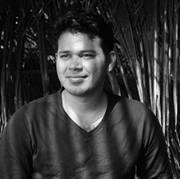
In this far-reaching and wide-ranging book Jonathan Kingsman, a 37-year sugar-industry veteran, dispels many myths, both about sugar and about how commodity markets work. He looks carefully at human rights, environment sustainability, speculation, food prices, commodity trading, market manipulation, government intervention and health. He provides some surprising conclusions.
Anyone who is interested in how their food is produced and how it arrives on their plate, or into their cereal bowl will enjoy this book.
With contributions from, or interviews with:
•Isara Vongkusolkit, Chairman of Mitr Phol Sugar Group
•Sunny Verghese, Co-Founder and CEO of Olam International Limited
•Robert Kuok, Sugar King of Asia and international businessman
•Chris Mahoney, Director of the Agricultural at Glencore International PLC
•Greg Page, Executive Chairman of Cargill Inc.
•Ralph Potter, Mentor to the sugar trade
•Luc Tappy, Professor of Physiology at the University of Lausanne
•Sven Sielhorst, Co-ordinator of the Sugarcane Programme at Solidaridad
The sugar you put into your coffee at the restaurant after lunch is so taken for granted that it is there totally free for your use, and nobody cares whether you add two or three teaspons of it into your cup. Nonetheless, the sugar industry is a biillionaire business that employs a number of peiple around the world. This book starts from this paradox in order to explain everything one would ever want to know on the issue. A wonderful job from the author, a well-known sugar consultant. It's a really interesting book.
Beginners in the world of online casinos are advised to start with the best sites that have high ratings. Such casinos provide reliability and security. For a successful start, it is important to study the rules of the games, use bonuses and promotions. Online casinos for beginners provide the opportunity to play at any time of the day, choose from different games and make deposits in convenient ways. For beginners, it is important to stay reasonable in your bets, enjoy the process and gradually master the art of gambling. And to choose a top slots casino, check out https://bestslotssites.org/ all about the industry leaders and their offers for you!
With the development of telecommunication technology and the constant increase in the speed of the Internet, the gambling industry has also changed. Simply put, now gambling fans do not have to look for a land-based casino - now they can play slot machines in online casinos without leaving their favorite sofa. Or, through a live casino with a live dealer, a user of high-speed Internet and, for example, a first-time customer of a casino can be transported to the atmosphere of a modern gaming club - again from his favorite cozy sofa. Or, sitting at the kitchen table, during your lunch break, replenish your account in slot machines in a Ukrainian casino or withdraw money from there - the main thing is to reach the age of 21 - in a word, not only technological progress, but also , oddly enough, the covid pandemic has brought some benefit. Looking at the successful cases of gamblers, even beginners involuntarily want to try their hand at an online casino. But how not to get lost in the endless number of slot machines? The answers to these questions will be in our review.
What is important for beginners to know
Of course, choosing a suitable gaming establishment is not the easiest task for an experienced gambler, not to mention a beginner. However, for those who are taking their first steps in the world of gambling, there are certain algorithms. First, it is not at all necessary to test every gaming club, risking your own money. The initial check can be done by finding a casino rating on any specialized website - it is not so difficult to find it on the Internet. Of course, one specific casino rating is not an indicator, but familiarizing yourself with three to five rating options, for example, “the best online casinos. At the very least, it allows you to create a long list, removing establishments that do not meet one or more basic parameters.
Perhaps the main criterion when choosing an online casino is security. This applies both to the safety of the customer's financial and personal data and to the security of transactions. Some casinos offer to use cryptocurrencies rather than real money - usually a young online casino provides such an option. But whether such an establishment should be included in the list of reliable casinos where you can play proven slot machines for money is a controversial issue. Often, casino websites also operate a bookmaker with the same name - and even some Ukrainian casinos offer not only to try your luck in a game for money in hundreds of online slots, but also to make bets on sports. At the same time, you watch TV shows in good quality online. It is rather a plus if this casino offers new players not only the experience of casino gambling on the Internet, but also online betting for money - especially if it is a licensed casino (see here).
In addition, a good online casino allows beginners to play for free in demo mode to feel the atmosphere of the game of this online casino or to develop their own strategy. Casinos with a no deposit bonus as a customer-oriented tool also deserve attention - such establishments should also be included in their own ranking of the best online casinos for money.
In addition, there are several other factors that affect your impressions of the gaming club: a bonus program and the availability of mobile applications to make playing in the casino even more convenient. Customer reviews about which online slot machines give a high percentage of returns even with minimal bets or what is good about the catalog of online games - does the casino regularly replenish it or not? It is important to familiarize yourself with the deposit and withdrawal methods before you start playing at an online casino. Of course, play for real money.
This entire review has been hidden because of spoilers.
The author is a former sugar trader and touches on a few factors relating to the sugar industry: the history and industry, the trading business, and ESG issues.
He describes the history of the sugar industry, and where demand and supply come from today. Sugar is one of the most political industries, especially in places like India where it is the second largest employer (after cotton). Interestingly 55-60% of agriculture at the time of writing was not viable (but supported by the government), even though agricultural production needs to increase 70% to 2050 to meet growing demand.
He goes into the functioning of sugar (and agricultural) trading, and some of his experiences. Trading houses arbitrage, take risk, provide financing, and help get product from where its not wanted to where it needs to be. Over time, as the informational advantage has disappeared due to the internet, they have moved into production assets to give themselves an advantage.
He also describes the research and misconceptions on the health aspects of sugar. He provided some interesting, counter-intuitive data on consumption trends in the developed world. Water and human rights are two other issues facing the industry. Because sugar cane is so water intensive and is planted in areas already facing water issues it can create potential problems in the future.
He covered a lot of interesting ground but it was at a very high level, and each section has interviews with industry insiders. The book is not particularly exciting or captivating. I read this book as part of research on a sugar company and to give me context on the industry.
I actually find small practical features surprisingly interesting because they can make the experience feel more organized without taking attention away from the games. I sometimes become completely absorbed in entertainment and lose track of how much time has passed, so I appreciate features that help me remain aware of my session. While using https://caswinoaustralia.com/casino/jackpots/, I liked having a comfortable environment where I could explore different games while keeping my experience organized. The platform felt easy to navigate, and I enjoyed being able to move between different options without difficulty. I think little details like this can make the overall experience feel more comfortable while still keeping the main focus on simple entertainment.
Meh this is a worky book by a sugar trader who breaks down the history, policy, market, sustainability and health issues with sugar. Centrepiece interviews are interesting and the ludicrous government policy mess is the highlight.
Insightful book, a window into an industyr we don't usually see. Although, Jonathan Kingsman is somewhat biased( openly so which I find assuring) due to him being involved in the industry for his professional career.
An excellent read. For starters in Sugar industry like analysts, traders etc. it will prove to be an extremely handy reference book. It deals with several aspects of sugar business from history to uses, to major players, the political influence and policies, the health aspects underlining the truth vs hype. It leads us into fundamentals of the sugar industry which would and could impact its demand supply dynamics. This book however does not talk about how trades and money can be made in sugar trading. Though it contains interviews of several prominent players (including traders) in the sugar industry (my personal favorite is the interview with the founder of Olam). The book highlights us areas which we need study further to get a deeper understanding of the sugar industry. A brilliant place to start from.