

What do you think?

The Family Interrupted
When the poet Luis Cernuda flees Spain in February of 1938, he has no idea that he will never again set foot on his native land. In exile in England, his former lover finds him a disheartening job that only intensifies his feelings of bitterness and despair: caring for 3,800 refugee children who have also fled to England after the city of Bilbao fell to Franco s army. Seventy years later, a young Mexican filmmaker living in New York receives a mysterious email that throws his life into complete disarray and forever links him to the famous Spanish poet. The Family Interrupted (the title of Cernuda s only play, which had gone missing for fifty years until Octavio Paz found it in a shoe box in his mother s house) is, as Jorge Volpi once said, A beautiful example of two decanting narratives constructed with the precision and accuracy of a watchmaker. From the opening lines, the characters destiny seems almost preordained. "
160 pages, Paperback
First published March 1, 2011
About the author
Eloy Urroz
29 books7 followersEloy Urroz is a Mexican writer and Professor of Spanish and Latin American Literature at The Citadel in South Carolina. Though born in New York, Urroz grew up in Mexico City and is of Mexican nationality. He is one of the founding members of the Crack Movement, along with such writers as Ignacio Padilla and Jorge Volpi. Urroz has written eight novels, four books on literary criticism, four books of poetry, three political reportages and dozens of essays, articles, and reviews on Latin American and Peninsular Culture and Literature. Some of his novels have been translated into English, French, Italian, Portuguese, and German. In the United States, his novels are published by Dalkey Archive Press.
Ratings & Reviews
Friends & Following
Create a free account to discover what your friends think of this book!
Community Reviews
Displaying 1 - 6 of 6 reviews

July 19, 2016
No me ha dejado clavado en la silla, porque el conflicto no alcanza en ningún momento la intensidad que promete al principio, pero sí es una novela disfrutable, escrita por un narrador sólido y que no resulta vacua si se entiende como un artefacto para la reflexión sobre los asuntos que le preocupan al a su autor. Reseña completa: http://www.libros-prohibidos.com/eloy...

December 24, 2018
I've come to enjoy the books I've discovered from Dalkey Archives. This is another and it was a treat to discover Urroz and, via him Luis Cernuda.

January 6, 2025
Me costó una eternidad este libro. Quizás por leerlo en paralelo con otros menos “interesantes” -para mí-, o quizás por algo más prosaico, mala historia!

December 4, 2025
leyendo esto me dieron ganas de ser un buen padre (soy una mujer de 20 años btw)

October 11, 2018
Short translated novels can either pass right by you or hit you like a ton of bricks. The trajectory this one was on, straight for my midsection, was clear from the moment I saw it on a display on the second floor of the Longmont library. It has a simple, elegant design, and a structure that is clear and yet intricate. It follows two men: Luis Salerno, a contemporary man living in New York, self-exiled from Mexico, as he sorts through his memories and ideologies; and poet Luis Cernuda, who has fled Spain in 1938. Both men are ensnared by the romantic loves in their presents and pasts; Luis Salerno also lives in a network of family ties that are sometimes tight, sometimes cut. The narratives of both men center around fatherhood born of mourning. It is unclear whether redemption is available to both men, but in the end, it is offered to Salerno, and this feels to a reader like compensation enough.
October 4, 2016
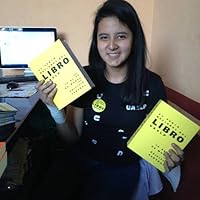
No tengo palabras para describir esta obra, este libro que narra dos historias que terminan entrelazadas de una manera sorprendente. Son dos historias, dos Luis, dos muertes, pero un gran libro que provoca sentimientos y aun después de terminar de leerlo tuve que guardar un tiempo de silencio pues me dejo con un mar de sentimientos. Espero leer algo más de este gran escritor muy pronto.
Displaying 1 - 6 of 6 reviews