

What do you think?
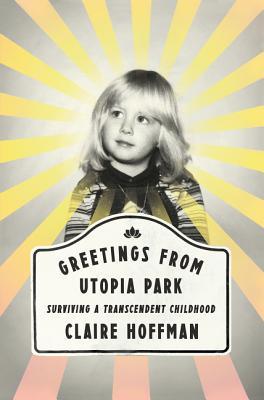
Greetings from Utopia Park: Surviving a Transcendent Childhood
In this and intimate memoir, an acclaimed journalist reflects on her childhood in the heartland, growing up in an increasingly isolated meditation community in the 1980s and ’90s—a fascinating, disturbing look at a fringe culture and its true believers.
When Claire Hoffman is five-years-old, her mother informs her and her seven-year-old brother Stacey, that they are going to heaven—Iowa—to live in Maharishi’s national headquarters for Heaven on Earth. For Claire’s mother, Transcendental Meditation—the Maharishi’s method of meditation and his approach to living the fullest possible life—was a salvo that promised world peace and enlightenment .
At first this secluded utopia offers warmth and support, and makes these outsiders feel calm, secure, and connected to the world. Claire attends the Maharishi school, where her meditations were graded and she and her class learned Maharishi's principals for living. But as Claire and Stacey mature, their adolescent skepticism kicks in, drawing them away from the community and into delinquency and drugs. Eventually, Claire moves to California with her father and breaks from Maharishi completely. A decade later, after making a name for herself in journalism and starting a family, she begins to feel exhausted by cynicism and anxiety. She finds herself longing for the sparkle filled, belief fueled Utopian days in Iowa, meditating around the clock. So she returns to her hometown in pursuit of TM’s highest form of meditation — levitation. This journey will transform ideas about her childhood, family, and spirituality.
Greetings from Utopia Park takes us deep into this complex, unusual world, illuminating its joys and comforts, and its disturbing problems. While there is no utopia on earth, Hoffman reveals, there are noble goals worth striving for: believing in belief, inner peace, and a firm understanding that there is a larger fabric of the universe to which we all belong.
When Claire Hoffman is five-years-old, her mother informs her and her seven-year-old brother Stacey, that they are going to heaven—Iowa—to live in Maharishi’s national headquarters for Heaven on Earth. For Claire’s mother, Transcendental Meditation—the Maharishi’s method of meditation and his approach to living the fullest possible life—was a salvo that promised world peace and enlightenment .
At first this secluded utopia offers warmth and support, and makes these outsiders feel calm, secure, and connected to the world. Claire attends the Maharishi school, where her meditations were graded and she and her class learned Maharishi's principals for living. But as Claire and Stacey mature, their adolescent skepticism kicks in, drawing them away from the community and into delinquency and drugs. Eventually, Claire moves to California with her father and breaks from Maharishi completely. A decade later, after making a name for herself in journalism and starting a family, she begins to feel exhausted by cynicism and anxiety. She finds herself longing for the sparkle filled, belief fueled Utopian days in Iowa, meditating around the clock. So she returns to her hometown in pursuit of TM’s highest form of meditation — levitation. This journey will transform ideas about her childhood, family, and spirituality.
Greetings from Utopia Park takes us deep into this complex, unusual world, illuminating its joys and comforts, and its disturbing problems. While there is no utopia on earth, Hoffman reveals, there are noble goals worth striving for: believing in belief, inner peace, and a firm understanding that there is a larger fabric of the universe to which we all belong.
288 pages, Hardcover
First published June 7, 2016
About the author
Claire Hoffman
2 books79 followersClaire Hoffman works as a magazine writer living in Los Angeles, writing for national magazines, covering culture, religion, celebrity, business and whatever else seems interesting. She was formerly a staff reporter for the Los Angeles Times and Rolling Stone.
She has a masters degree in religion from the University of Chicago, and a masters degree in journalism from Columbia University. She serves on the board of her family foundation, the Goldhirsh Foundation, as well as the Columbia Journalism School. Claire is a native Iowan and has been meditating since she was three years old.
She has a masters degree in religion from the University of Chicago, and a masters degree in journalism from Columbia University. She serves on the board of her family foundation, the Goldhirsh Foundation, as well as the Columbia Journalism School. Claire is a native Iowan and has been meditating since she was three years old.
Ratings & Reviews
Friends & Following
Create a free account to discover what your friends think of this book!
Community Reviews
Displaying 1 - 30 of 162 reviews

July 20, 2016
It was ok, more 2 1/2 stars than 2 since I feel like I did learn something new, which is always a nice thing to happen. I knew very little about TM other than what I'd read in Patti Boyd's memoir about her & the Beatles spending a few months with the Maharishi in India in the late 60's. Patti's perspective was focused on the Maharishi's superstar followers and how they were treated and this memoir is focused on the foot soldiers of the movement - on the little guy. Because there can't be people at the top without a whole lot of people on the bottom for them to stand on a la Yertle the Turtle.
I thought the author cut her mother a lot of slack - A LOT - for how gullible and trusting she was. All that money spent on seminars & taped lectures & special flying meditation. *eyeroll* Yeah, of course the family struggled with money. Her mom was giving it all to the TM organization! Claire does mention that the Maharishi was sued and that some former followers accused him of swindling them. (Duh. Of course he is swindling everyone! Just like L Ron Hubbard or Jim & Tammy Fay Baker!) However, Claire doesn't spend a lot of time on the controversies surrounding the Maharishi and I wish she had done so. Maybe she felt it would have colored her story too much; lessen the benefits she says she gets from meditating?
My favorite part of the book was just reading about the day to day life at the campus in Fairfield Iowa. I love getting glimpses into other lifestyles like that. It's why I enjoy memoirs - getting the inside scoop on a way of life I'd otherwise not know about. I can't get over the schooling she received. I'm amazed she went to college and has a successful life. I would guess it's all due to her own innate intelligence and the fact she loved to read and read a lot. She certainly didn't learn anything relevant at that school!
While reading this memoir, I kept thinking about Scientology and how similar it is to TM. All the money in order to get to different levels of enlightenment, the omnipresent but absent leader/father figure, the self-contained campus, the special vocabulary, the idea that you are special for being a part of the movement, that your movement alone will save the world etc. I'm going to have to say that Scientology wins for becoming more successful than TM - Hubbard's successor, that sociopath Miscavige, really propelled Scientology into a billion dollar business. Maharishi should have picked a more competent narcissist and sociopath to succeed him lol.
I think this memoir would have made an excellent long New Yorker article. As a book, it ended up feeling too slight, too "is that all there is". Maybe if the author had waited another 30 years to write the memoir, it would have been a deeper, more complete book. Really, if I were queen of the world I would pass a law saying you have to be at least 65 to write your memoir.
I thought the author cut her mother a lot of slack - A LOT - for how gullible and trusting she was. All that money spent on seminars & taped lectures & special flying meditation. *eyeroll* Yeah, of course the family struggled with money. Her mom was giving it all to the TM organization! Claire does mention that the Maharishi was sued and that some former followers accused him of swindling them. (Duh. Of course he is swindling everyone! Just like L Ron Hubbard or Jim & Tammy Fay Baker!) However, Claire doesn't spend a lot of time on the controversies surrounding the Maharishi and I wish she had done so. Maybe she felt it would have colored her story too much; lessen the benefits she says she gets from meditating?
My favorite part of the book was just reading about the day to day life at the campus in Fairfield Iowa. I love getting glimpses into other lifestyles like that. It's why I enjoy memoirs - getting the inside scoop on a way of life I'd otherwise not know about. I can't get over the schooling she received. I'm amazed she went to college and has a successful life. I would guess it's all due to her own innate intelligence and the fact she loved to read and read a lot. She certainly didn't learn anything relevant at that school!
While reading this memoir, I kept thinking about Scientology and how similar it is to TM. All the money in order to get to different levels of enlightenment, the omnipresent but absent leader/father figure, the self-contained campus, the special vocabulary, the idea that you are special for being a part of the movement, that your movement alone will save the world etc. I'm going to have to say that Scientology wins for becoming more successful than TM - Hubbard's successor, that sociopath Miscavige, really propelled Scientology into a billion dollar business. Maharishi should have picked a more competent narcissist and sociopath to succeed him lol.
I think this memoir would have made an excellent long New Yorker article. As a book, it ended up feeling too slight, too "is that all there is". Maybe if the author had waited another 30 years to write the memoir, it would have been a deeper, more complete book. Really, if I were queen of the world I would pass a law saying you have to be at least 65 to write your memoir.
June 11, 2016
I was eagerly anticipating this book, having also grown up as part of the Transcendental Meditation movement, in Fairfield Iowa. I was curious what her approach would be, in dealing with the vast, and polarizing subject, of the TM movement. I loved that she kept it personal and layered, rather than making a sweeping, final judgement.
I found Hoffman's, account to be so vividly drawn that while reading it, I stopped comparing it to my own experience, and lost myself in her voice. I loved being sucked into the dueling, exotic worlds of her childhood-the TM movement, and rural Iowa. But what I enjoyed most was how universal the themes were despite the intensely, specific settings. Many of us analyze and try to come to peace with our pasts. And many of us, as we become parents, try to syphon the best of our childhoods to pass down to our children, while shielding them from the worst.
I found Hoffman's, account to be so vividly drawn that while reading it, I stopped comparing it to my own experience, and lost myself in her voice. I loved being sucked into the dueling, exotic worlds of her childhood-the TM movement, and rural Iowa. But what I enjoyed most was how universal the themes were despite the intensely, specific settings. Many of us analyze and try to come to peace with our pasts. And many of us, as we become parents, try to syphon the best of our childhoods to pass down to our children, while shielding them from the worst.

March 17, 2016
A cast of characters doesn't get any better than this: Levitating yogis, a dreamy, beautiful, transcendent mommy, Midwestern thugs in metal t-shirts, and one wide-eyed, unicorn-loving, pure-hearted girl–all of this in, yes, Greetings from Utopia Park, by my friend Claire Hoffman.
This childhood was not easy, you gather from Claire's story. She tells of the ups and downs of growing up in a religious community, in this case the Fairfield, Iowa community built by the famous guru Maharishi Mahesh Yogi, the home of Transcendental Meditation. TM was made famous by some of the Maharishi's disciples: Paul, John, George and Ringo, and was subsequently slammed by the same. David Lynch (Eraserhead, Blue Velvet) is another famous proponent of the sect, who has written books and made videos in support of the organization, and has become its unofficial spokesperson. In TM each person is given a special, magic mantra, all of their own. They use it to meditate, and eventually, hopefully, reach enlightenment.
Claire's mom, a single mom, managed to pursue peace and truth while raising two children and struggling to make a living–a feat in itself. Claire and her brother grew up as members of a community that sought enlightenment and harmony, but struggled under its share of controversy. She thinks hard about her experiences, and what they meant, and how they shaped her. To live in a utopia–what a privilege! But to look behind the curtains almost destroys her belief. How do you know you're on the One True Path? Sham or Shangri-La? Were the rumors about her guru true? All believers must confront their doubt. All seekers must question what they find. In the era of Hoffman's childhood, many sought something greater, something higher. Many of them were parents, who wanted the best for their children, and brought them along.
The beauty won from this alternately lovely and terrible childhood was hard fought for. She details the picnics and ceremonies, the school days and meditations. She feels the pain of being an outsider among the uninitiated. Watches her friends go astray. And in the end, after her angry teens and resentful twenties, now a married mother in her thirties, Claire goes back to what was good and true about her upbringing, and returns to her spiritual home. She goes back to meditation, to reap its fruits. She makes her peace with her childhood and her mother's decisions. And she takes her small daughter down to the TM center to learn her mantra, and meditate.
The suffering can be borne and meaning wrung out of wasted days. Deceptive gurus and false messiahs litter the paths of pilgrims. But they don't have the last word. First there is a mountain, then there is no mountain, then there is. Sometimes you climb the mountain, and you fall and fail. Maybe there is a different path that will take you up. Sometimes a different mountain. Greetings from Utopia Park tells you the path of the seeker is a path with a heart.
Keep climbing, keep seeking.
This childhood was not easy, you gather from Claire's story. She tells of the ups and downs of growing up in a religious community, in this case the Fairfield, Iowa community built by the famous guru Maharishi Mahesh Yogi, the home of Transcendental Meditation. TM was made famous by some of the Maharishi's disciples: Paul, John, George and Ringo, and was subsequently slammed by the same. David Lynch (Eraserhead, Blue Velvet) is another famous proponent of the sect, who has written books and made videos in support of the organization, and has become its unofficial spokesperson. In TM each person is given a special, magic mantra, all of their own. They use it to meditate, and eventually, hopefully, reach enlightenment.
Claire's mom, a single mom, managed to pursue peace and truth while raising two children and struggling to make a living–a feat in itself. Claire and her brother grew up as members of a community that sought enlightenment and harmony, but struggled under its share of controversy. She thinks hard about her experiences, and what they meant, and how they shaped her. To live in a utopia–what a privilege! But to look behind the curtains almost destroys her belief. How do you know you're on the One True Path? Sham or Shangri-La? Were the rumors about her guru true? All believers must confront their doubt. All seekers must question what they find. In the era of Hoffman's childhood, many sought something greater, something higher. Many of them were parents, who wanted the best for their children, and brought them along.
The beauty won from this alternately lovely and terrible childhood was hard fought for. She details the picnics and ceremonies, the school days and meditations. She feels the pain of being an outsider among the uninitiated. Watches her friends go astray. And in the end, after her angry teens and resentful twenties, now a married mother in her thirties, Claire goes back to what was good and true about her upbringing, and returns to her spiritual home. She goes back to meditation, to reap its fruits. She makes her peace with her childhood and her mother's decisions. And she takes her small daughter down to the TM center to learn her mantra, and meditate.
The suffering can be borne and meaning wrung out of wasted days. Deceptive gurus and false messiahs litter the paths of pilgrims. But they don't have the last word. First there is a mountain, then there is no mountain, then there is. Sometimes you climb the mountain, and you fall and fail. Maybe there is a different path that will take you up. Sometimes a different mountain. Greetings from Utopia Park tells you the path of the seeker is a path with a heart.
Keep climbing, keep seeking.

Read
May 9, 2016Really great. I known Claire for a long time and this was a whole new window into her life. It's always a privilege to get to know someone more intimately through a book. Thank you for sharing, Claire!

August 1, 2016
As an almost-contemporary of the author's mother and an acquaintance with some of the key leaders in the TM (Transcendental Meditation) movement as well as having practiced TM myself for over 20 years (1972 - 1996), but never having "joined" the "movement," I was quite curious to read more about the cult I didn't belong to but whose main practice I did benefit from for a while. I knew people who did belong, went to high school with several who became teachers/leaders, who helped fund it, who attended and graduated from "Maharishi U," who were on "Purusha" (male celibacy) for over 20 years (interestingly, all these leaders were men...) I also knew many practitioners of TM (some of whom I "brought" to it myself), including several high school and college lovers and my current Buddhist teacher, none of whom continued meditating using this technique even as long as I had.
Having heard Claire HoffmanHoffman interviewed on NPR a few months ago, which piqued my curiosity about her memoir (I had not heard about any of this from a child's perspective before), I then requested the book from our local library. So, it was with some positive anticipation that I began to read.
Disappointed almost from the beginning (I had zero interest in the dysfunctional families & histories of her parents), my like it/don't like it responses continued throughout Greetings from Utopia Park: Surviving a Transcendent Childhoodthe book. Nevertheless, I did read it in its entirety (something I don't usually do with a mediocre book), hoping to get the part where she figures stuff out. Instead, her editors (and her, I suppose) edited her self-ejection from the cult completely out of the book, choosing instead to go from the part where she decides to leave and then skipping ahead about 15 years, inexplicably.
Then, to make matters worse, Hoffman seems to have learned almost nothing in the intervening years except that she doesn't have to maintain her daily meditation practice to be under its thrall. She never understands what is missing from her knowledge base even though she becomes the "religion" writer for more than one outlet, including the "LA Times." She gains almost no information that would help her wade through the junk she was fed and pick out what might be useful, either. I gleaned more from one blog post from a former big donor and leader in the TM movement (happening to be one of the guys I went to high school with but didn't know well) whom she references near the end than I did from reading her entire book.
Did she truly not get "out"? No, she did not. In fact, she brings her young daughter into it and decides that TM is "her family legacy" or tradition and seems quite proud of it. She develops no functional, adult insight into her experiences, to the extent that she makes some of the same mistakes her mother did once she is a mother herself, spending ridiculous amounts of money to learn a "flying" technique which was almost useless even after she supposedly learned it.
Sad and sadder, she seems happy enough with her ignorance and ends the book on a "high" note about TM.
The problems with this book, besides the weird editing choices and timeline, are the lack of growth exhibited by the author and her complete ignorance of that lack. If writing a memoir is supposed to be the result of soul-searching, personal growth, development of insight and such to then share with a wider audience, this author was unqualified to write this memoir at this time.
As a semi-autobiography, however, it has some interesting parts and she does capture the emotional climate of her childhood and inner life quite well in several parts. Her longing (and failures) to belong in her two available Iowan peer groups ("Townies" and "'Rus"), her unmitigated and cultishly devotional beliefs, their magical thinking and other child-like perspectives are faithfully rendered, as are her and her brother's adolescent/young adult rebellions.
There was far too much space in this short book devoted to her parents' and their love-lives, employment disasters, housing problems and other mistakes, none of which added to the book appreciably. I would have liked to have read more about the missing years between her leaving for college and her becoming a wife/mother.
Then, I'd really like to read the book she could write in about 20 years, after (I hope, after) she finds a legitimate spiritual teacher and path (both of which I was fortunate enough to find). Hopefully, she would then know what TM'ers had been missing, what Maharishi and his followers had misconstrued and how she and millions of others had been misled, betrayed, defrauded, stolen from and deliberately kept ignorant and confused.
As of now, Hoffman has very little understanding and a long way to go. I wish her luck.
Having heard Claire HoffmanHoffman interviewed on NPR a few months ago, which piqued my curiosity about her memoir (I had not heard about any of this from a child's perspective before), I then requested the book from our local library. So, it was with some positive anticipation that I began to read.
Disappointed almost from the beginning (I had zero interest in the dysfunctional families & histories of her parents), my like it/don't like it responses continued throughout Greetings from Utopia Park: Surviving a Transcendent Childhoodthe book. Nevertheless, I did read it in its entirety (something I don't usually do with a mediocre book), hoping to get the part where she figures stuff out. Instead, her editors (and her, I suppose) edited her self-ejection from the cult completely out of the book, choosing instead to go from the part where she decides to leave and then skipping ahead about 15 years, inexplicably.
Then, to make matters worse, Hoffman seems to have learned almost nothing in the intervening years except that she doesn't have to maintain her daily meditation practice to be under its thrall. She never understands what is missing from her knowledge base even though she becomes the "religion" writer for more than one outlet, including the "LA Times." She gains almost no information that would help her wade through the junk she was fed and pick out what might be useful, either. I gleaned more from one blog post from a former big donor and leader in the TM movement (happening to be one of the guys I went to high school with but didn't know well) whom she references near the end than I did from reading her entire book.
Did she truly not get "out"? No, she did not. In fact, she brings her young daughter into it and decides that TM is "her family legacy" or tradition and seems quite proud of it. She develops no functional, adult insight into her experiences, to the extent that she makes some of the same mistakes her mother did once she is a mother herself, spending ridiculous amounts of money to learn a "flying" technique which was almost useless even after she supposedly learned it.
Sad and sadder, she seems happy enough with her ignorance and ends the book on a "high" note about TM.
The problems with this book, besides the weird editing choices and timeline, are the lack of growth exhibited by the author and her complete ignorance of that lack. If writing a memoir is supposed to be the result of soul-searching, personal growth, development of insight and such to then share with a wider audience, this author was unqualified to write this memoir at this time.
As a semi-autobiography, however, it has some interesting parts and she does capture the emotional climate of her childhood and inner life quite well in several parts. Her longing (and failures) to belong in her two available Iowan peer groups ("Townies" and "'Rus"), her unmitigated and cultishly devotional beliefs, their magical thinking and other child-like perspectives are faithfully rendered, as are her and her brother's adolescent/young adult rebellions.
There was far too much space in this short book devoted to her parents' and their love-lives, employment disasters, housing problems and other mistakes, none of which added to the book appreciably. I would have liked to have read more about the missing years between her leaving for college and her becoming a wife/mother.
Then, I'd really like to read the book she could write in about 20 years, after (I hope, after) she finds a legitimate spiritual teacher and path (both of which I was fortunate enough to find). Hopefully, she would then know what TM'ers had been missing, what Maharishi and his followers had misconstrued and how she and millions of others had been misled, betrayed, defrauded, stolen from and deliberately kept ignorant and confused.
As of now, Hoffman has very little understanding and a long way to go. I wish her luck.

June 21, 2016
This is a fascinating look at Transcendental Meditation and enlightenment. I don't know much about meditation other than the most basic knowledge, so I was interested in reading about how a child grew up in the culture and returned as an adult, learning how to cope and how to grow and change, both as a mother and as a women and a wife.
Since the book is a memoir, there is obviously some information about her family history, but the book is mostly about the TM movement and its founder, but it's also to a certain extent a coming of age story. There's a lot of suffering here, but mostly it's about Claire's loneliness, something I think we can all relate to.
While this is a great memoir and is very well written, I did have a few issues with it. I felt Claire really skirted the truth about a lot of issues - she brought up some subjects / controversies, but really didn't dive into them - again, this book is a memoir and not a tell all, but in books like this I always say the same thing - why bring up the subject at all if you aren't going to delve into it?
I also didn't care for the ending, where Claire really glosses over the last few years of her life, only very briefly mentioning her time with her father / late teen/early adult years. Considering this book was supposed to be a contrast between her youth and her adult years, this was disappointing.
All in all, an interesting read about a subject I knew little about.
-
received book from author as part of a book tour

October 2, 2016
This book sounded interesting to me because I am always up for learning about a different religion, especially one considered to be strange or, even better, cult-like to outsiders. I knew almost nothing about Transcendental Meditation before reading this book, so in that area this was a total win for me, as Hoffman does a pretty good job familiarizing the reader with the religion and explaining why they do certain things and what it’s all supposed to mean. I was fascinated by this religion, and specifically loved when Hoffman went into details about the different rules and rituals, the symbolism of different aspects of the faith, and some of the history behind the faith and its leader, Maharishi. This was by far my favorite aspect of the book – every time she started getting into details about the faith and the practice of meditation that seemed to be the bedrock of that faith, I was riveted to the page, eager to take in more and more information.
Unfortunately, that’s kind of where the love for this book starts and stops with me. I didn’t really connect to Hoffman, so that made it really difficult for me to latch onto any specific aspect of her personality OR care about her story. I was interested, yes, but did I care what happened to her? No, not at all, which is a definite issue when reading a memoir – for me, at least, I kinda have to give a crap about the person telling me their story. And in this case, for whatever reason, I just couldn’t.
The other issue I had was that when I turned the final pages, I was still asking myself why. Why did Hoffman choose to write this book? What story was she really trying to tell? Was the point for her to explore how and why people blindly follow religious figures, even to their personal detriment? Or was the point to say that, sure this religion is kind of messed up and weird, but lots of people who follow it are normal and just looking for a spiritual path, and actually they might be right about doing it this way? The fact that I can’t really tell where Hoffman falls on the wide spectrum between those two ideas is strange to me, and I don’t enjoy not understanding what the whole point of her telling this story actually was. Maybe this is a weird thing for me to be annoyed by, but it really turned the book into one that I just couldn’t fall in love with.
So. I was definitely interested in parts of Greetings from Utopia Park, but overall the book did not thrill me. I’m not sure if I’d read more from this author, but I’m glad I got the chance to learn about a faith practice that I had no previous knowledge about before picking up the book.
Unfortunately, that’s kind of where the love for this book starts and stops with me. I didn’t really connect to Hoffman, so that made it really difficult for me to latch onto any specific aspect of her personality OR care about her story. I was interested, yes, but did I care what happened to her? No, not at all, which is a definite issue when reading a memoir – for me, at least, I kinda have to give a crap about the person telling me their story. And in this case, for whatever reason, I just couldn’t.
The other issue I had was that when I turned the final pages, I was still asking myself why. Why did Hoffman choose to write this book? What story was she really trying to tell? Was the point for her to explore how and why people blindly follow religious figures, even to their personal detriment? Or was the point to say that, sure this religion is kind of messed up and weird, but lots of people who follow it are normal and just looking for a spiritual path, and actually they might be right about doing it this way? The fact that I can’t really tell where Hoffman falls on the wide spectrum between those two ideas is strange to me, and I don’t enjoy not understanding what the whole point of her telling this story actually was. Maybe this is a weird thing for me to be annoyed by, but it really turned the book into one that I just couldn’t fall in love with.
So. I was definitely interested in parts of Greetings from Utopia Park, but overall the book did not thrill me. I’m not sure if I’d read more from this author, but I’m glad I got the chance to learn about a faith practice that I had no previous knowledge about before picking up the book.

November 22, 2016
Greetings from Utopia Park: Surviving a Transcendent Childhood By Claire Hoffman
The Fab Four. Really, that’s where it all begins. The mother of the author, my age by the way, was a young Beatles fan back in the day. The book is a byproduct of Beatlemania which was a byproduct of popular mass media culture.
Some just liked the music I suppose. Others, more enthusiastic, maybe then ended up starting a band, the boys mostly probably. Still others, maybe, like the author’s mother living in an unhappy home, wanted and needed more. They needed an out, a direction, or maybe just an escape. They might have followed the Four into some other thing things they explored with the eyes of the press and the PR people looking on. They might have taken pot or LSD. Some, like the mother in this book, got into TM. There are a lot of people who try stuff, dabble with this or that, and just go on with their more or less conventional lives. Others get more deeply involved. This book is about a deep involvement of that sort and a mother who brings her two children into it.
The book is the voice of one of these children. Ms. Hoffman’s mother is abandoned in NYC by her wannabe writer alcoholic husband. He has left with the rent unpaid for months. The mother is already into TM founded in the 1950s by indian man Maharishi Mahesh Yogi. He is the guy who the Beatles and other celebrities were into for a spell around 1968. But then most of them wandered off. Mia Farrow was supposedly hit on by the yogi. The book says that the Beatles song Sexy Sadie is about that and how she made a fool of everyone by exposing the guru as, as what, well a man I suppose.
Around the time of the father leaving, and really leaving, untrackable, the guru makes a call out to his followers that he is building a school, a community of meditators in Fairfield, Iowa having purchased with contributor money the campus of a bankrupt college.
Most of the book is a lucid account of a young girl growing up in that community.
The main problem is that the mother is still struggling to get by, make a living. The cult makes big promises of World Peace if enough people meditate enough. (It's not much of a spoiler to report that World Peace did not occur.)
But mother works hard to support herself, her two young children while paying the increasingly inflating cost of being a follower. She wants the new transcendental techniques that guru is selling, and it is more expensive that the earlier stuff. This involves flying meditation. I saw this demonstrated once, I think it was on the Phil Donahue show. They sat in lotus position on a foam rubber surface and well, they did get off the surface a little. It was really just hopping. But I guess if one gets good, becomes a better meditator, one can levitate.
There is a town and gown sort of thing in Fairfield. But it is a little more extreme because the outsiders coming in are really a different sort of people. So the children, the author and her older brother, being poor and unable to pay of the on-site Maharishi School, end up in the public school where they are bullied as outsiders. Public school even in the 1980s being as it is a culture somewhat similar to prison. That doesn’t last long because someone unnamed gives the kids a scholarship to Maharishi School which is a lot better than the public school and also avoids the bullying. But by high school as costs keep rising the brother and then Claire Hoffman end up in public school anyway which is difficult for them because they are guru kids still teased and worse. But this ends up opening their worlds from the insular protective shell of private cult education.
The author becomes disillusioned with the Transcendental Meditation movement in her high school years. There is a moment when she takes psychedelic mushrooms with her high school friends and discovers what the devotees, many of them who likely came to TM after experiences with psychedelics and hoping to get there naturally, are searching for. Maybe the parents shouldn’t have abandoned the shrooms and such in the first place.
Transcendental Meditation as a group with a charismatic, and in this case exotic leader, ends up trying to keep up with his increasingly grandiose schemes. They need to build things and that will result in something miraculous, World Peace. This is fine for the well-heeled who can follow along the money trail because, American don’t value things that they don’t have to pay for. That is a rather ugly way to look at us and leaves the people who can’t pay out or struggling to always keep up, and if one meditates better wealth should be a byproduct. But mom was also interested in listening to the tapes of “Reverend” Ike, so clearly she was a prime mark.
Ultimately the author marries rich and become a little more involved in TM again.
It is not stated, but it seems to me that this sort of thing is really for people with disposable income, income that can be used for self-exploration. In her childhood her struggling mother did not have money enough that paying for the services involved with being a follower, This was a constant problem and something that separated her from her children because a single mother has to be away, out of the house acquiring money. The entire situation is stressful which defeats the purpose of the meditation.
When Ms. Hoffman finds herself in a position of having then she looks back at her roots and tries with some success to believe. She can afford this luxury. It is not something that stressed the finances of the family.
This book is a very enjoyable read. I have an interest in this sort of thing. Some years ago I went to some “non-dualistic” satsangs. I even attended a retreat in the hills of Virginia conducted by someone who had claimed more enlightenment than I have. He was later brought down a few pegs by getting sexually involved with a follower, human stuff.
But the thing is I am not a follower. I was taken to a non-denominational christian church as a kid and ultimately rebelled choosing commercial entertainment over religion, and it’s commercial philosophy of individualism. I have sometimes wished I could be a joiner. I understand there is great potential and personal benefit available with some groups.
More personal thoughts:
I am interested in psychedelics but can’t seem to get out of the old style underground scene where one just bought the acid, or whatever. Like maybe, “here is your mantra, good luck”. Today what I know with very limited experience about the ayahuasca moment is that it is very much a controlled group thing, where the group can go further together by doing and focusing as one. But along with that come experts, guides, therapists, all needing to make a living so some of these things tend to follow the way of the most capitalist culture and get more expensive which eliminates some who are interested and could possibly benefit.
Theses reacting to groups in the past, childhood church membership, might be reactive to group spiritual dynamics, and shy away. Some are just shy and don’t mix well, or are fearful and suspicious of natural charismatic leaders that emerge.
Get with people if you can and do something together. Contrary to the Objectivist notions that are unfortunately the restrictions of my life, there are great things you can do with others.
Of course there are hazards as this interesting account shows. The leader can get too needy, and if you don’t have the money you might get into trouble keeping up.
I cane by the book after hearing Claire Hoffman interviewed on Expanding Mind podcast.
http://expandingmind.podbean.com/e/ex...
The Fab Four. Really, that’s where it all begins. The mother of the author, my age by the way, was a young Beatles fan back in the day. The book is a byproduct of Beatlemania which was a byproduct of popular mass media culture.
Some just liked the music I suppose. Others, more enthusiastic, maybe then ended up starting a band, the boys mostly probably. Still others, maybe, like the author’s mother living in an unhappy home, wanted and needed more. They needed an out, a direction, or maybe just an escape. They might have followed the Four into some other thing things they explored with the eyes of the press and the PR people looking on. They might have taken pot or LSD. Some, like the mother in this book, got into TM. There are a lot of people who try stuff, dabble with this or that, and just go on with their more or less conventional lives. Others get more deeply involved. This book is about a deep involvement of that sort and a mother who brings her two children into it.
The book is the voice of one of these children. Ms. Hoffman’s mother is abandoned in NYC by her wannabe writer alcoholic husband. He has left with the rent unpaid for months. The mother is already into TM founded in the 1950s by indian man Maharishi Mahesh Yogi. He is the guy who the Beatles and other celebrities were into for a spell around 1968. But then most of them wandered off. Mia Farrow was supposedly hit on by the yogi. The book says that the Beatles song Sexy Sadie is about that and how she made a fool of everyone by exposing the guru as, as what, well a man I suppose.
Around the time of the father leaving, and really leaving, untrackable, the guru makes a call out to his followers that he is building a school, a community of meditators in Fairfield, Iowa having purchased with contributor money the campus of a bankrupt college.
Most of the book is a lucid account of a young girl growing up in that community.
The main problem is that the mother is still struggling to get by, make a living. The cult makes big promises of World Peace if enough people meditate enough. (It's not much of a spoiler to report that World Peace did not occur.)
But mother works hard to support herself, her two young children while paying the increasingly inflating cost of being a follower. She wants the new transcendental techniques that guru is selling, and it is more expensive that the earlier stuff. This involves flying meditation. I saw this demonstrated once, I think it was on the Phil Donahue show. They sat in lotus position on a foam rubber surface and well, they did get off the surface a little. It was really just hopping. But I guess if one gets good, becomes a better meditator, one can levitate.
There is a town and gown sort of thing in Fairfield. But it is a little more extreme because the outsiders coming in are really a different sort of people. So the children, the author and her older brother, being poor and unable to pay of the on-site Maharishi School, end up in the public school where they are bullied as outsiders. Public school even in the 1980s being as it is a culture somewhat similar to prison. That doesn’t last long because someone unnamed gives the kids a scholarship to Maharishi School which is a lot better than the public school and also avoids the bullying. But by high school as costs keep rising the brother and then Claire Hoffman end up in public school anyway which is difficult for them because they are guru kids still teased and worse. But this ends up opening their worlds from the insular protective shell of private cult education.
The author becomes disillusioned with the Transcendental Meditation movement in her high school years. There is a moment when she takes psychedelic mushrooms with her high school friends and discovers what the devotees, many of them who likely came to TM after experiences with psychedelics and hoping to get there naturally, are searching for. Maybe the parents shouldn’t have abandoned the shrooms and such in the first place.
Transcendental Meditation as a group with a charismatic, and in this case exotic leader, ends up trying to keep up with his increasingly grandiose schemes. They need to build things and that will result in something miraculous, World Peace. This is fine for the well-heeled who can follow along the money trail because, American don’t value things that they don’t have to pay for. That is a rather ugly way to look at us and leaves the people who can’t pay out or struggling to always keep up, and if one meditates better wealth should be a byproduct. But mom was also interested in listening to the tapes of “Reverend” Ike, so clearly she was a prime mark.
Ultimately the author marries rich and become a little more involved in TM again.
It is not stated, but it seems to me that this sort of thing is really for people with disposable income, income that can be used for self-exploration. In her childhood her struggling mother did not have money enough that paying for the services involved with being a follower, This was a constant problem and something that separated her from her children because a single mother has to be away, out of the house acquiring money. The entire situation is stressful which defeats the purpose of the meditation.
When Ms. Hoffman finds herself in a position of having then she looks back at her roots and tries with some success to believe. She can afford this luxury. It is not something that stressed the finances of the family.
This book is a very enjoyable read. I have an interest in this sort of thing. Some years ago I went to some “non-dualistic” satsangs. I even attended a retreat in the hills of Virginia conducted by someone who had claimed more enlightenment than I have. He was later brought down a few pegs by getting sexually involved with a follower, human stuff.
But the thing is I am not a follower. I was taken to a non-denominational christian church as a kid and ultimately rebelled choosing commercial entertainment over religion, and it’s commercial philosophy of individualism. I have sometimes wished I could be a joiner. I understand there is great potential and personal benefit available with some groups.
More personal thoughts:
I am interested in psychedelics but can’t seem to get out of the old style underground scene where one just bought the acid, or whatever. Like maybe, “here is your mantra, good luck”. Today what I know with very limited experience about the ayahuasca moment is that it is very much a controlled group thing, where the group can go further together by doing and focusing as one. But along with that come experts, guides, therapists, all needing to make a living so some of these things tend to follow the way of the most capitalist culture and get more expensive which eliminates some who are interested and could possibly benefit.
Theses reacting to groups in the past, childhood church membership, might be reactive to group spiritual dynamics, and shy away. Some are just shy and don’t mix well, or are fearful and suspicious of natural charismatic leaders that emerge.
Get with people if you can and do something together. Contrary to the Objectivist notions that are unfortunately the restrictions of my life, there are great things you can do with others.
Of course there are hazards as this interesting account shows. The leader can get too needy, and if you don’t have the money you might get into trouble keeping up.
I cane by the book after hearing Claire Hoffman interviewed on Expanding Mind podcast.
http://expandingmind.podbean.com/e/ex...

June 3, 2016
3.5 stars. From my blog: annieburdickwritten.blogspot.com
I had a few complaints about this book, though they were mingled among a multitude of things I thoroughly enjoyed about it. The first couple of chapters felt slow and dry to me, going more into the backstory of the movement and the lives of Claire's parents and grandparents, whose stories were compelling, but not the ones I was most interested in hearing about. The last chapter again felt a little dry and unexciting, after I'd flown through the entire midsection in the course of a couple of hours. The best parts of the book for me were the fast paced, highly readable chapters focusing on Claire's unique and troubled childhood, which transitioned into an equally tumultuous young adulthood.
Claire's story is captivating, and at times had me wrapped up in it like a novel would. In fact, her character development and progression throughout the many events of her life often felt more like a work of fiction than of fact. However, a few of the other portions of the book that were more informational sometimes tended slightly closer to fact dumping. I had a harder time focusing on the facts and statistics she gave when describing the Transcendental Meditation Movement itself; it's history, founders, and finances were somewhat less fascinating to me than the author's personal stories from that experience.
However, I also found the book's premise to be unique and highly intriguing. I had very little previous knowledge of this meditation movement that apparently swept the country in the 1970s and 1980s, but it's supposed corruption, seemingly impossible beliefs, and it's effects on the author's life all fascinated me. The entire time, I could see what the author seemed to realize later in life; it seemed that much of the intention of the movement was money. In every "good intention" and attempt at World Peace, I saw another corrupt, money-hungry person, using a very nontraditional method to find his success. However, I also saw the pull and the intrigue for those involved. The practices and results that meditation offered seemed wildly captivating and yes, transcendent. Through the author's own multi-faceted perspective on the movement, the reader is also afforded the same, part-cynical, part-reverent viewpoint the author seems to take.
The writing in this book was quick, intelligent and relatively unadorned, though there were some incredibly graceful, descriptive passages that seemed to ebb and flow like moving water. The cast of characters were all the more complex and multi-dimensional because they were real and truly lived this incredible and bizarre moment in history and space.
I highly recommend this book to anyone who loves memoirs, or is interested in the Transcendental Meditation Movement and its effects on those who truly experienced it.
*I received an advanced copy of this book from TLC Book Tours in exchange for my honest review*
I had a few complaints about this book, though they were mingled among a multitude of things I thoroughly enjoyed about it. The first couple of chapters felt slow and dry to me, going more into the backstory of the movement and the lives of Claire's parents and grandparents, whose stories were compelling, but not the ones I was most interested in hearing about. The last chapter again felt a little dry and unexciting, after I'd flown through the entire midsection in the course of a couple of hours. The best parts of the book for me were the fast paced, highly readable chapters focusing on Claire's unique and troubled childhood, which transitioned into an equally tumultuous young adulthood.
Claire's story is captivating, and at times had me wrapped up in it like a novel would. In fact, her character development and progression throughout the many events of her life often felt more like a work of fiction than of fact. However, a few of the other portions of the book that were more informational sometimes tended slightly closer to fact dumping. I had a harder time focusing on the facts and statistics she gave when describing the Transcendental Meditation Movement itself; it's history, founders, and finances were somewhat less fascinating to me than the author's personal stories from that experience.
However, I also found the book's premise to be unique and highly intriguing. I had very little previous knowledge of this meditation movement that apparently swept the country in the 1970s and 1980s, but it's supposed corruption, seemingly impossible beliefs, and it's effects on the author's life all fascinated me. The entire time, I could see what the author seemed to realize later in life; it seemed that much of the intention of the movement was money. In every "good intention" and attempt at World Peace, I saw another corrupt, money-hungry person, using a very nontraditional method to find his success. However, I also saw the pull and the intrigue for those involved. The practices and results that meditation offered seemed wildly captivating and yes, transcendent. Through the author's own multi-faceted perspective on the movement, the reader is also afforded the same, part-cynical, part-reverent viewpoint the author seems to take.
The writing in this book was quick, intelligent and relatively unadorned, though there were some incredibly graceful, descriptive passages that seemed to ebb and flow like moving water. The cast of characters were all the more complex and multi-dimensional because they were real and truly lived this incredible and bizarre moment in history and space.
I highly recommend this book to anyone who loves memoirs, or is interested in the Transcendental Meditation Movement and its effects on those who truly experienced it.
*I received an advanced copy of this book from TLC Book Tours in exchange for my honest review*

June 20, 2016
Greetings from Utopia Park is a memoir about the author's time growing up in the Transcendental Meditation Movement headed by Maharishi. The largest headquarters in the US is centered in Iowa. Her story is one of poverty, trying to fit in and figuring out how meditation can help her in her life.
I have read other memoirs about growing up in cults/religious organizations and I really enjoyed them. While this one was well written, I had a hard time connecting with it. I think I was expecting more of something along the lines of Troublemaker by Leah Remini. I'm not sure after finishing the book that I really got a sense of the organization as a whole. The author hints several times at possible scandals but never really provides a lot of background on them. I also got the sense, that while she questioned a lot of the teachings and rituals put forth by Marharishi, she was reluctant to really commit to saying anything bad about it.
I am not a meditator, but I have friends who do and they fully believe that it helps calm them and focus them throughout the day. I was glad to see that while the author doesn't live in "Utopia" anymore, she does still use mediation. The ending was a bit fast. I would have liked to see her life with her father in California and college to see how it contrasted with life in Iowa. But sadly, that is kind of glossed over.
I think that people who like memoirs will find this one interesting. While it isn't the best memoir I have read, I still felt compelled to read the whole book.
I have read other memoirs about growing up in cults/religious organizations and I really enjoyed them. While this one was well written, I had a hard time connecting with it. I think I was expecting more of something along the lines of Troublemaker by Leah Remini. I'm not sure after finishing the book that I really got a sense of the organization as a whole. The author hints several times at possible scandals but never really provides a lot of background on them. I also got the sense, that while she questioned a lot of the teachings and rituals put forth by Marharishi, she was reluctant to really commit to saying anything bad about it.
I am not a meditator, but I have friends who do and they fully believe that it helps calm them and focus them throughout the day. I was glad to see that while the author doesn't live in "Utopia" anymore, she does still use mediation. The ending was a bit fast. I would have liked to see her life with her father in California and college to see how it contrasted with life in Iowa. But sadly, that is kind of glossed over.
I think that people who like memoirs will find this one interesting. While it isn't the best memoir I have read, I still felt compelled to read the whole book.
June 14, 2016
I devoured this book. I find myself lost in thought, memories flooding over me. I've wanted to write this book, but it was too hard, too personal. Claire managed to write an expose of sorts, but still remain sweet, loving, and gentile. You can tell that she really does love her mother, truly is in a place of peace with her upbringing, and her past.
Claire and I were not close friends, but we have many, many, many shared experiences. To be honest, I was worried that this would be yet another puff piece (a la Oprah Winfrey) that glamorized my hometown. I'm so glad that she was brave enough to include some of the dark side. I felt that she toed the line in an admirable and brave way.
Highly recommend.
Claire and I were not close friends, but we have many, many, many shared experiences. To be honest, I was worried that this would be yet another puff piece (a la Oprah Winfrey) that glamorized my hometown. I'm so glad that she was brave enough to include some of the dark side. I felt that she toed the line in an admirable and brave way.
Highly recommend.

April 28, 2024
4.5 but rounding up to five because I don’t want memoir authors to feel bad about their lives.
I enjoyed this book! Obviously it taking place largely in Iowa made it kind of fun. I feel like it really balanced well the personal narrative and background on TM.
I enjoyed this book! Obviously it taking place largely in Iowa made it kind of fun. I feel like it really balanced well the personal narrative and background on TM.

May 7, 2021
A memoir about growing up as part of the Transcendental Meditation cult. I am more willing to use that "c" word than the author. Despite all the evidence - which she presents! - that the Maharishi was a money-hungry narcissist who was good at marketing his brand, she still has fondness for the people and the practices. She won't even discredit the "flying" practice, which ... oh, never mind.
I was kind of bored reading the first chapters of the book, but after her family moved to the large Maharishi community in Iowa, I found it more interesting. There are no hair-raising exposés here; the community was composed of mostly well-meaning if somewhat deluded people. Things weren't bad for the kids. They were indoctrinated with a variety of Hindu ideas and practices (Maharishi's preferred ones of that week or year), but given lots of support and encouragement to be themselves, and exposed to a certain amount of the predominant American culture. The author's mother was loving and supportive. The author basically gives her a pass, but several things were hard for me to overlook. Like how they lived in poverty while her mother paid for her courses, and especially the part where one in a series of her mother's not-great boyfriends got physically rough with her brother.
As a teenager, she had to navigate life in the public high school because her mother couldn't afford the Maharishi one. There was always culture clash between the meditator kids and the townie kids, but she managed to straddle the worlds. She'd already cultivated preteen and teenage cynicism (helped along by her cynical father, who she spent some time with once he came back into her life after five years without any communication), so that helped.
In the epilogue, she asks, "So was the Movement a failure? Were we made the fools?" She decides not. "They pursued a dream, and even if it was just a dream, what mattered was the believing. The willingness to believe is everything." I so disagree with that. I mean, think of other dreams that people have pursued, individually and en masse. So many quixotic personal failures, up to things like Jim Jones, and on a still larger scale, Soviet and Chinese communism. On a recent visit to Iowa, the author seemed to find it rather sad to see the people still in the group still dedicating their lives to a promise that turned out to be baseless. But she kind of envied their certainty.
I am a contemporary of the author's mother, and my kids are the author's contemporaries. Like her mother, I believed in peace and love and joined a spiritual community, where I lived for 12 years (and my kids for their first 6). Though I left almost 40 years ago, I'm still trying to figure out how much of a fool I was; how much of what I did was reasonable and helpful to me and the world, and which parts were my own, or our collective, delusions. Good intentions have merit. But if you want to save the world, it's good to have frequent reality checks. Maharishi promised that large groups of people meditating would, on its own, change the world. As the author says, he pointed to the fall of the Berlin Wall as evidence that they were being successful. This was a delusion. Although the author seems aware of that one, she is still much more positive about Maharishi and the community than I would have expected.
I was kind of bored reading the first chapters of the book, but after her family moved to the large Maharishi community in Iowa, I found it more interesting. There are no hair-raising exposés here; the community was composed of mostly well-meaning if somewhat deluded people. Things weren't bad for the kids. They were indoctrinated with a variety of Hindu ideas and practices (Maharishi's preferred ones of that week or year), but given lots of support and encouragement to be themselves, and exposed to a certain amount of the predominant American culture. The author's mother was loving and supportive. The author basically gives her a pass, but several things were hard for me to overlook. Like how they lived in poverty while her mother paid for her courses, and especially the part where one in a series of her mother's not-great boyfriends got physically rough with her brother.
As a teenager, she had to navigate life in the public high school because her mother couldn't afford the Maharishi one. There was always culture clash between the meditator kids and the townie kids, but she managed to straddle the worlds. She'd already cultivated preteen and teenage cynicism (helped along by her cynical father, who she spent some time with once he came back into her life after five years without any communication), so that helped.
In the epilogue, she asks, "So was the Movement a failure? Were we made the fools?" She decides not. "They pursued a dream, and even if it was just a dream, what mattered was the believing. The willingness to believe is everything." I so disagree with that. I mean, think of other dreams that people have pursued, individually and en masse. So many quixotic personal failures, up to things like Jim Jones, and on a still larger scale, Soviet and Chinese communism. On a recent visit to Iowa, the author seemed to find it rather sad to see the people still in the group still dedicating their lives to a promise that turned out to be baseless. But she kind of envied their certainty.
I am a contemporary of the author's mother, and my kids are the author's contemporaries. Like her mother, I believed in peace and love and joined a spiritual community, where I lived for 12 years (and my kids for their first 6). Though I left almost 40 years ago, I'm still trying to figure out how much of a fool I was; how much of what I did was reasonable and helpful to me and the world, and which parts were my own, or our collective, delusions. Good intentions have merit. But if you want to save the world, it's good to have frequent reality checks. Maharishi promised that large groups of people meditating would, on its own, change the world. As the author says, he pointed to the fall of the Berlin Wall as evidence that they were being successful. This was a delusion. Although the author seems aware of that one, she is still much more positive about Maharishi and the community than I would have expected.

July 1, 2016
Claire Hoffman’s memoir, GREETINGS FROM UTOPIA: Surviving a Transcendent Childhood(Harper), is about a five-year old abandoned by dad, living with her mother and seven-year old brother, Stacey at the Maharashi’s national headquarters for Heaven on earth, in Fairfield, Iowa. I’d argue most people don’t know Fairfield, Iowa, which is located smack in the middle of the US of A, is ground zero for the Transcendental Movement, but it is.
I’m familiar with the whole TM arrangement in Iowa, because I recently read a novel, ROOVILLE(Sparkpress), by Julie Long, who although it was a novel, based on her knowledge, must have had some personal interaction with the TM community in Fairfield.
Back to Claire, her mother really does the best she can at that point. They are given a safe place, schedules and rules to follow, and a philosophy: with the promise of enlightenment. But as Claire gets older, she starts questioning the whole commune deal, gets into drugs and wants to know what’s out there beyond Fairfield.
I was raised Catholic and attended Catholic schools, which I have fond memories of. We went to church every Sunday, followed by a large family dinner. Everything was fine until the Pentecostal movement swept through Catholic churches and my mother was touched by the Holy Spirit and “born again.” She decided to pick up, leave and follow God’s plan for her life.
Like Claire, I’m also a journalist, so I can read and write about religion from some perspective. It doesn’t completely eliminate the many questions I have about organized religion, particularly when it comes to isolating members.
I found Claire’s novel interesting. She approached her writing as a journalist. I felt after reading it, there’s much more to the story. Claire is honest, but GREETINGS FROM UTOPIA isn’t the whole story. I’ve read many memoirs and most have some element of interest, but to be a great memoir, the writer has to be willing to be completely raw on the page. Perhaps there will be a follow-up. There’s certainly enough material.
I applaud Claire for her success. She had an extremely tough upbringing, nothing was handed to her and she worked hard to achieve her success. Bravo, Ms. Hoffman.
HarperCollins | Amazon | Barnes & Noble
Claire Hoffman writes for national magazines and holds a Master’s degree in Religion from the University of Chicago, and a Master’s degree in Journalism from Columbia University. She was a staff reporter for the LA Times and has reported for the NY Times. She serves on the board of her family foundation, the Goldhirsh Foundation, as well as ProPublica and the Columbia Journalism School. She lives in LA.
Find out more about Claire at her website and follow her on Twitter.
I’m familiar with the whole TM arrangement in Iowa, because I recently read a novel, ROOVILLE(Sparkpress), by Julie Long, who although it was a novel, based on her knowledge, must have had some personal interaction with the TM community in Fairfield.
Back to Claire, her mother really does the best she can at that point. They are given a safe place, schedules and rules to follow, and a philosophy: with the promise of enlightenment. But as Claire gets older, she starts questioning the whole commune deal, gets into drugs and wants to know what’s out there beyond Fairfield.
I was raised Catholic and attended Catholic schools, which I have fond memories of. We went to church every Sunday, followed by a large family dinner. Everything was fine until the Pentecostal movement swept through Catholic churches and my mother was touched by the Holy Spirit and “born again.” She decided to pick up, leave and follow God’s plan for her life.
Like Claire, I’m also a journalist, so I can read and write about religion from some perspective. It doesn’t completely eliminate the many questions I have about organized religion, particularly when it comes to isolating members.
I found Claire’s novel interesting. She approached her writing as a journalist. I felt after reading it, there’s much more to the story. Claire is honest, but GREETINGS FROM UTOPIA isn’t the whole story. I’ve read many memoirs and most have some element of interest, but to be a great memoir, the writer has to be willing to be completely raw on the page. Perhaps there will be a follow-up. There’s certainly enough material.
I applaud Claire for her success. She had an extremely tough upbringing, nothing was handed to her and she worked hard to achieve her success. Bravo, Ms. Hoffman.
HarperCollins | Amazon | Barnes & Noble
Claire Hoffman writes for national magazines and holds a Master’s degree in Religion from the University of Chicago, and a Master’s degree in Journalism from Columbia University. She was a staff reporter for the LA Times and has reported for the NY Times. She serves on the board of her family foundation, the Goldhirsh Foundation, as well as ProPublica and the Columbia Journalism School. She lives in LA.
Find out more about Claire at her website and follow her on Twitter.
June 5, 2016
Greetings from Utopia Park is a bittersweet view of life, faith, and, ultimately, motherhood - initially as seen through the eyes of a child open to the world's possibility - then through an adult's perspective, still open, yet grounded in the reality of how there may be little grounding after all. Hoffman's book immediately transported me into my childhood self. She captures the hope, wonder, and fear that characterize that time in all of our lives, despite any differences in our collective upbringings.
The book left me with the aching honesty that we must answer these life questions in our own way, at our own pace, and often without definitive answers. This is a lovely, thought-provoking book that Hoffman deems aptly and affectionately "a love letter to her (mother) and to the religious experience." Brava!
The book left me with the aching honesty that we must answer these life questions in our own way, at our own pace, and often without definitive answers. This is a lovely, thought-provoking book that Hoffman deems aptly and affectionately "a love letter to her (mother) and to the religious experience." Brava!
July 8, 2016
As someone who has practiced TM since 1972, I found this account fascinating and familiar. Hoffman was immersed in the Maharishi meditation program from childhood; she learned to reject the false aspects of it all; and then, ultimately, finds herself still benefiting from and continuing the practice in adulthood and as a parent. Believing is the most important thing, she notes. And the benefits -- including her ability to become a balanced and professional adult -- are undeniable, even when she has constantly maintained skepticism about it all. As a TM trainer once told me, even when you think you have had a bad meditation, there are likely benefits taking place you don't immediately recognize. It feels good, it provides restfulness and escape, it doesn't conflict with any other belief system you care to maintain, and it is easy.
June 6, 2016
I read an uncorrected proof of this book and I could not put it down. Completely absorbing story of a young girl's upbringing immersed in the Transcendental Meditation community. Compelling insights into the community at the time and fascinating stories of her unique upbringing with her mother and brother. This is one of those few books that I've read where I was sad when it was over because I wanted to keep reading more and more... I hope Claire Hoffman writes another book on the subject!

July 15, 2016
This book was horrible! I bought it based on a podcast (10% Happier) where Dan Harris couldn't rave enough... It is one of the most boring memoirs I have ever read. There is just no satisfaction in reading this book. Which, is a complete shame, as the subject matter is of great interest to me. I hate to give bad reviews, but I seriously did not enjoy this book what so ever.


March 30, 2018
This is one of the hard books to review because it was just....fine. It was okay. Middle of the road. I read it, it was a pleasant way to spend some time, but that was it.
Claire Hoffman was raised in the Transcendental Meditation mecca in Fairfield, Iowa: Utopia Park. She describes growing up with her mom and brother, her mom a true TM believer who works many jobs to support her kids. Claire is a devote TMer until her high school years when she rebels, big surprise, and then she comes returns as an adult to make peace with her childhood.
I did not know much about TM before reading this book, so it was interesting from that perspective. But, otherwise, Claire seems like a typical rebellious teenager. She describes her youth in detail then skims through her high school years, and it felt unbalanced.
Eh. I don't know what else to say.
Claire Hoffman was raised in the Transcendental Meditation mecca in Fairfield, Iowa: Utopia Park. She describes growing up with her mom and brother, her mom a true TM believer who works many jobs to support her kids. Claire is a devote TMer until her high school years when she rebels, big surprise, and then she comes returns as an adult to make peace with her childhood.
I did not know much about TM before reading this book, so it was interesting from that perspective. But, otherwise, Claire seems like a typical rebellious teenager. She describes her youth in detail then skims through her high school years, and it felt unbalanced.
Eh. I don't know what else to say.
February 23, 2020
This memoir provided enough detail to paint a good picture of Claire's childhood. It was well-written and interesting. There are sad parts to her upbringing but she doesn't keep you there as the point of the book is to show you her journey and what she's learned. I gained an education on the transcendental movement which was eye opening. And, as with most things in life, some is good and some is not. Claire explains this through her experience. Claire doesn't wrap it up with a grand lesson or a pretty bow but she does leave you with a sense of satisfaction while also a sense of possibility. It doesn't sound as if Claire is done learning - which is good - but she seems to have found some Enlightenment that will assist her throughout the rest of her life.

April 23, 2026
If you've seen the Netflix documentary about the meditation cult in America, with origins in India, then you'll be interested in this book. It's from the perspective of a low-income child who grew up there, rather than from the perspective of the rich people on the inside.
The author's perspective is dynamic. She's not out to completely 100% vilify the cult. This makes for a much more interesting read.
This book heavily focuses on her challenging family dynamic, not solely the inner workings of the cult.
The author's perspective is dynamic. She's not out to completely 100% vilify the cult. This makes for a much more interesting read.
This book heavily focuses on her challenging family dynamic, not solely the inner workings of the cult.

May 1, 2023
While not a book about the entire history of TM per se, I did learn a lot about the TM movement from this interesting and nuanced memoir. Hoffman's approach to the practice of TM meditation is similar to what I experienced learning breath work from Kundalini yoga / Yogi Bhajan: there is little to nothing to doubt about the practice itself, and everything to doubt about the man in power who passed it down.

May 3, 2016
I received an uncorrected proof copy of this book from HarperCollins.
This memoir tells Claire Hoffman's story of growing up in a family that practiced Transcendental Meditation. When Claire's father abandoned her family, her mother moves Claire and her brother Stacey to Iowa, the national headquarters for Transcendental Meditation or Heaven on Earth. Led by Maharishi, this method of meditation and "living life to the fullest" promised world peace and enlightenment. Claire, who has always innocently followed her mother's fervent beliefs, quickly learns that non-meditators in the town look down on Claire and her brother. Claire increasingly questions the legitimacy of Maharishi's teachings and goes through a difficult adolescence before finally moving to California to live with her father. This book is a inside look at her childhood that shaped her ideas on both family and spirituality.
Transcendental Meditation centered around meditating for ten to twenty minutes twice a day, focusing on your own, individual mantra. With famous followers such as the Beatles and Shirley MacLaine, "by the mid-1970s, the Movement estimated that it had 600,000 practitioners" (17). Claire's home in Iowa was completely dominated by TM and its followers. The neighborhood where she lived with built by TM followers and, when finances allowed it, she attended a private TM school that focused on Maharishi's teachings.
Although Claire unquestioningly embraces meditation and her mother's TM-based beliefs as a young child, as she grows older she begins to question the dubious teachings of Maharishi. As the memoir progresses, the teachings of TM appear increasingly ridiculous and implausible. Maharishi's researchers claimed that they found that when "1 percent of a community practiced TM, the crime rate was reduced by 16 percent" (60). Not only did much of the math of the supposed "scientific research" paid for by Maharishi seem questionable, but the figurehead himself comes across as a joke. When Claire finally gets to see him in person, the effect is far from confirmation of her spiritual beliefs: "He was silent for a moment. And then he burped. A big, froglike belch - as if he were at home alone rather than on a stage with thousands of people watching his every move" (66). I couldn't help but enthusiastically agree when Claire says she "thought of the dark fairy tale about the emperor with no clothes" (67).
Most ridiculous was the TM's belief that they could learn how to fly or levitate through meditation. Claire's mother takes the class and Claire eagerly imagines adults zooming through the air through the power of meditation. Yet her mother finally admits to her that in fact, most everyone in the class was in the "hopping phase." These constant disappointments put a great strain on Claire's belief in the movement; "Why would my mom spend so much time there if she had just been hopping around for hours? And why would we have endured all the townies yelling names at us if we weren't really flying?" (113).
The conclusion of this memoir felt disjointed and abrupt. Hoffman rapidly skims over many years of her life after leaving her home in Iowa and jumps ahead to her being a wife and mother, still questioning her childhood beliefs. I was shocked to find that despite her portrayal of her mother's beliefs, she returns to Iowa to learn how to "fly." After seemingly rejecting the teachings of TM, Hoffman gradually returns to them, even teaching her own daughters how to meditate. She says that "meditation provides a space that is uniquely my own, a mode of being that is totally separate from the ups and downs of the everyday" (261). Although I disagreed, her spiritual conclusion is legitimate, yet I was disappointed that she spends relatively little time relaying to the reader how she arrived at that conclusion. In the end, I didn't feel as if I had Hoffman's full story. On the other hand, this was an interesting read about a movement that I knew little about.
This memoir tells Claire Hoffman's story of growing up in a family that practiced Transcendental Meditation. When Claire's father abandoned her family, her mother moves Claire and her brother Stacey to Iowa, the national headquarters for Transcendental Meditation or Heaven on Earth. Led by Maharishi, this method of meditation and "living life to the fullest" promised world peace and enlightenment. Claire, who has always innocently followed her mother's fervent beliefs, quickly learns that non-meditators in the town look down on Claire and her brother. Claire increasingly questions the legitimacy of Maharishi's teachings and goes through a difficult adolescence before finally moving to California to live with her father. This book is a inside look at her childhood that shaped her ideas on both family and spirituality.
Transcendental Meditation centered around meditating for ten to twenty minutes twice a day, focusing on your own, individual mantra. With famous followers such as the Beatles and Shirley MacLaine, "by the mid-1970s, the Movement estimated that it had 600,000 practitioners" (17). Claire's home in Iowa was completely dominated by TM and its followers. The neighborhood where she lived with built by TM followers and, when finances allowed it, she attended a private TM school that focused on Maharishi's teachings.
Although Claire unquestioningly embraces meditation and her mother's TM-based beliefs as a young child, as she grows older she begins to question the dubious teachings of Maharishi. As the memoir progresses, the teachings of TM appear increasingly ridiculous and implausible. Maharishi's researchers claimed that they found that when "1 percent of a community practiced TM, the crime rate was reduced by 16 percent" (60). Not only did much of the math of the supposed "scientific research" paid for by Maharishi seem questionable, but the figurehead himself comes across as a joke. When Claire finally gets to see him in person, the effect is far from confirmation of her spiritual beliefs: "He was silent for a moment. And then he burped. A big, froglike belch - as if he were at home alone rather than on a stage with thousands of people watching his every move" (66). I couldn't help but enthusiastically agree when Claire says she "thought of the dark fairy tale about the emperor with no clothes" (67).
Most ridiculous was the TM's belief that they could learn how to fly or levitate through meditation. Claire's mother takes the class and Claire eagerly imagines adults zooming through the air through the power of meditation. Yet her mother finally admits to her that in fact, most everyone in the class was in the "hopping phase." These constant disappointments put a great strain on Claire's belief in the movement; "Why would my mom spend so much time there if she had just been hopping around for hours? And why would we have endured all the townies yelling names at us if we weren't really flying?" (113).
The conclusion of this memoir felt disjointed and abrupt. Hoffman rapidly skims over many years of her life after leaving her home in Iowa and jumps ahead to her being a wife and mother, still questioning her childhood beliefs. I was shocked to find that despite her portrayal of her mother's beliefs, she returns to Iowa to learn how to "fly." After seemingly rejecting the teachings of TM, Hoffman gradually returns to them, even teaching her own daughters how to meditate. She says that "meditation provides a space that is uniquely my own, a mode of being that is totally separate from the ups and downs of the everyday" (261). Although I disagreed, her spiritual conclusion is legitimate, yet I was disappointed that she spends relatively little time relaying to the reader how she arrived at that conclusion. In the end, I didn't feel as if I had Hoffman's full story. On the other hand, this was an interesting read about a movement that I knew little about.

February 22, 2017
This is the story of a woman who grew up in the Transcendental Meditation movement of the Maharishi University in the 80s and 90s in Fairfield, IA.
I grew up not far from Fairfield, and still live in Iowa, so I was perhaps a bit more knowledgeable about this practice than some people out there, but it is still very much a mystery to people who are not directly involved in the practice, so I was able to learn much from this author.
Claire, her older brother Stacey, her mother were abandoned by her father in NYC when she was quite young. Being evicted from their apartment sent them on a quest to find where they were supposed to be. Eventually, Claire's mom wound up seeking something more to her own life, winding up in Fairfield, following Maharishi's beliefs quite blindly.
I have recently been watching Leah Remini's reality show about her split from Scientology, and I am sensing a lot of similarities between Scientology and Transcendental Meditation (TM). They both involve participants living on-site, worshiping several hours each day, not revealing details about the religion or their society to the public, and paying un-Godly amounts of money just to be able to practice their religion.
Throughout Claire's year growing up she has a love/hate relationship with TM. Her mother is a dedicated servant to TM, however her brother left Iowa and their family the second he graduated high school and was old enough to branch out on his own.
When her family first moved to Fairfield, her mother could not afford for both her and her kids to practice. So she used their sparse money to keep herself in the program while sending her kids to be shamed for their belief at public school. Claire and Stacey never fit in with the townies who looked down on the TM folks, and when one of Claire's mothers' secret admirers paid the way for Claire and Stacey to go to school within the TM boundaries, they were thrilled to be a part of the same community their mother was in. However, many years later when the money dried up again, their mother only had enough to send one of them to the private school, so Stacey had to transfer back to the public school system, where he was once again an outcast who was bullied daily for his family's beliefs. Stacey transformed from a happy, smart kid into one who took out his anger on his family, Claire in particular.
Meanwhile, Claire's belief was floundering as she began hanging out with townie kids, drinking and experimenting in other ways. Fast forward a few years, and Claire is on her own attending graduate school in NYC and enjoying a successful career as a writer.
It kind of sounds like she no longer keeps in touch with her mother or father or brother, as they are not really mentioned too much towards the end of the book, however I attended a book signing the author was at in Iowa City last fall and her mother came to support her, so I know they have a loving relationship now.
Post TM, in her real life, the author is enjoying her career and her new family, however she feels like there is something missing so she decided to try meditation once more. She finds that she enjoys the practice, however not necessarily to the point where it needs to take over her entire life. In fact, at the end of the book she introduces her daughter to the meditation that she herself grew up enjoying only to find that her daughter likes it but it may not be her thing.
I enjoyed the honesty and insight into TM that is rarely heard or seen. I feel the author had a different life than most children growing up, and see how strongly it has affected her as she grew into adulthood. I won this book via First Reads.
I grew up not far from Fairfield, and still live in Iowa, so I was perhaps a bit more knowledgeable about this practice than some people out there, but it is still very much a mystery to people who are not directly involved in the practice, so I was able to learn much from this author.
Claire, her older brother Stacey, her mother were abandoned by her father in NYC when she was quite young. Being evicted from their apartment sent them on a quest to find where they were supposed to be. Eventually, Claire's mom wound up seeking something more to her own life, winding up in Fairfield, following Maharishi's beliefs quite blindly.
I have recently been watching Leah Remini's reality show about her split from Scientology, and I am sensing a lot of similarities between Scientology and Transcendental Meditation (TM). They both involve participants living on-site, worshiping several hours each day, not revealing details about the religion or their society to the public, and paying un-Godly amounts of money just to be able to practice their religion.
Throughout Claire's year growing up she has a love/hate relationship with TM. Her mother is a dedicated servant to TM, however her brother left Iowa and their family the second he graduated high school and was old enough to branch out on his own.
When her family first moved to Fairfield, her mother could not afford for both her and her kids to practice. So she used their sparse money to keep herself in the program while sending her kids to be shamed for their belief at public school. Claire and Stacey never fit in with the townies who looked down on the TM folks, and when one of Claire's mothers' secret admirers paid the way for Claire and Stacey to go to school within the TM boundaries, they were thrilled to be a part of the same community their mother was in. However, many years later when the money dried up again, their mother only had enough to send one of them to the private school, so Stacey had to transfer back to the public school system, where he was once again an outcast who was bullied daily for his family's beliefs. Stacey transformed from a happy, smart kid into one who took out his anger on his family, Claire in particular.
Meanwhile, Claire's belief was floundering as she began hanging out with townie kids, drinking and experimenting in other ways. Fast forward a few years, and Claire is on her own attending graduate school in NYC and enjoying a successful career as a writer.
It kind of sounds like she no longer keeps in touch with her mother or father or brother, as they are not really mentioned too much towards the end of the book, however I attended a book signing the author was at in Iowa City last fall and her mother came to support her, so I know they have a loving relationship now.
Post TM, in her real life, the author is enjoying her career and her new family, however she feels like there is something missing so she decided to try meditation once more. She finds that she enjoys the practice, however not necessarily to the point where it needs to take over her entire life. In fact, at the end of the book she introduces her daughter to the meditation that she herself grew up enjoying only to find that her daughter likes it but it may not be her thing.
I enjoyed the honesty and insight into TM that is rarely heard or seen. I feel the author had a different life than most children growing up, and see how strongly it has affected her as she grew into adulthood. I won this book via First Reads.

May 1, 2026
Until recently, I knew little about Transcendental Meditation and didn’t care much. I’d heard about it in the old days along with everyone else. I had several friends who did trained in it, including my old friend Allen Parker from Cambridge, who was a walking encyclopedia about spiritual movements and who had done the training when he was younger. At the time they said they were giving him a mantra exclusively designed for him, but later there was an expose in Rolling Stone which said, among other things, that everyone in a certain age range had the same password, and listed them; sure enough, Allen had the password for his age group. Eventually he substituted his own mantra, but kept meditating as long as I knew him. I was trained in vipassana and Zen, and never used a mantra. But it sounded okay to me.
I tuned in more recently when I re-united with an old friend from high school who had given his life to TM, working for the organization. We hadn’t seen each other for fifty years, so we had a lot to catch up on. He knew I meditated and had a million questions about my experience, but I noticed that, for whatever reason, he didn’t say much about his experience when I questioned him. He did say that various studies insisted that TM was the one and only valid method of meditation, which I thought was idiotic, but he didn’t push that on me and wasn’t obnoxious about it. We had great conversations in general, and I thought he was a sweet compassionate person.
It came up in various ways that he was low on funds. That puzzled me, because I knew that TM charged a lot, and he’d worked for them for years. He lived in the TM community in Fairfield, Iowa. A little later he called and told me he’d gotten a job as director of the TM office in a major city, so I figured his problems were over. But not long after that I heard from classmates that his car had broken down and he had no money to get a new one. An extraordinarily generous member of my class gave him $5,000 for a used car, and he made do with that. Later I heard he was having some health issues and was low on funds again.
My question for him when we got together for dinner was, Where does all the money go? He said something vague about, well, we offer a lot of scholarships, which explained exactly nothing (if it didn’t cost so much they wouldn’t need scholarships). One of my friends told me that a couple of years ago he had looked into signing up for the course, and there was a sliding scale; they wanted $950 from him. He’s not a wealthy person. He may not even have been at the top of the scale.[1]
In general, I don’t judge spiritual movements or various techniques. But when the money gets extravagant, that’s a red flag for me.
Claire Hoffman is the child of that original group of TM practitioners. Her parents met at a TM retreat, and Claire, as a child of five, got her mantra from a center in Manhattan for $35 (those were the days). Children were told just to repeat the mantra to themselves for five minutes while they were doing other things, but having one made Claire feel part of the community. Her older brother also got his mantra early on. Their father, though taken with the practice, had ambitions as a writer, and went through the Iowa Writers Workshop. He dragged the family to various places while he looked for work, and before long started having problems with alcohol. The parents split up, and Claire’s mother, floundering without much money, decided to move to the TM community in Iowa, where she could at least be around like-minded people.
I still think there was something brilliant about the original mission of TM, suggesting that people meditate twice a day for twenty minutes at a pop. The self-serving studies (conducted by their own scientists) showing that their method is the best one are preposterous, and the idea of a secret mantra is hokey, but I believe that if vast numbers of people meditated any old way twice a day, the world would be a better place. Meditation is a profound practice that develops over time. All of the supposed techniques lead eventually to a practice of just sitting in openness.
But Maharishi couldn’t leave it at that. He had all kinds of ambitions both spiritual and financial—he apparently said that he charged so much for instruction just because Americans only valued something they paid substantial sums for—and he eventually assembled a group of 7,000 people to meditate together in Iowa for a month and bring about world peace. Claire’s mother, though she didn’t have the entry fee (a secret admirer paid it for her), participated. I’ve been to retreats with a hundred people, and I can imagine that 7,000 people meditating together might be exhilarating (how many bathrooms, I immediately want to ask), but did anyone notice, at the end of a month, that they hadn’t actually brought about World Peace? Nobody mentions that fact.
Maharishi eventually said that if your practice was really sincere, you would be blessed not just with spiritual benefits, but with financial ones. He thereby became the Reverend Ike of the Eastern world (“God will bless you financially”). Claire’s poor mother, who was completely sincere, was not blessed financially, and they lived in one crummy house after another, using food stamps and going to the local public school (where kids mocked anyone from the TM community, calling them “gurus”); you would think the wealthy people in a religious community would help out those less fortunate, but that didn’t seem to happen.
Claire inherited her father’s bookish nature and is an excellent and entertaining writer. She eventually rebelled against the TM community the way any teenager would. Her father wandered back into the picture, sobered up and in recovery, and encouraged her rebellion. He was, in many ways, a lot more fun than her mother. And though Claire—who was a real beauty, and very attractive to the local boys—experimented with alcohol and drugs, she managed to pull up short of cocaine and not go entirely haywire, as some of her friends were doing. She got away to California with her father and went to college, eventually to divinity school and a journalism program, found various good jobs and established herself as a writer. This book was her first (her second, which came out recently, was about Amy Semple Mcpherson).
As people will do when they get older and have a family, she began to wonder if there wasn’t something helpful in the religion she had left, returned to Fairfield and began to participate again. By that time Maharishi had died, but his movement, and that community, continued. She finds something worthwhile in meditation, and has continued the practice. But she definitely sees the flaws in a movement that had made so many outrageous claims and became what I can’t help seeing as a cult.
There are, of course, many celebrity TM practitioners, including David Lynch, Clint Eastwood, Jerry Seinfeld (what a trio). Lynch in particular was taken with the practice, instrumental in spreading it, and eventually established a foundation to offer scholarships to those who wanted to take it up. He spoke of it as being an aid to his creativity, and I’m sure that’s true. Any practice that takes you into that vast spacious part of your mind will spark creativity.
I was left with the feeling that, if people like Lynch could promote TM, it could settle back into its original function of encouraging lots of people to meditate, and give up on goals like financial blessing and world peace (we seem further away from that than ever). Maharishi should have quit while he was ahead. He had an opportunity to do enormous good. But he got ambitious.
[1] We charge nothing for meditation instruction at my Zen Center, and I sometimes teach a six week class that costs $60.
www.davidguy.org
I tuned in more recently when I re-united with an old friend from high school who had given his life to TM, working for the organization. We hadn’t seen each other for fifty years, so we had a lot to catch up on. He knew I meditated and had a million questions about my experience, but I noticed that, for whatever reason, he didn’t say much about his experience when I questioned him. He did say that various studies insisted that TM was the one and only valid method of meditation, which I thought was idiotic, but he didn’t push that on me and wasn’t obnoxious about it. We had great conversations in general, and I thought he was a sweet compassionate person.
It came up in various ways that he was low on funds. That puzzled me, because I knew that TM charged a lot, and he’d worked for them for years. He lived in the TM community in Fairfield, Iowa. A little later he called and told me he’d gotten a job as director of the TM office in a major city, so I figured his problems were over. But not long after that I heard from classmates that his car had broken down and he had no money to get a new one. An extraordinarily generous member of my class gave him $5,000 for a used car, and he made do with that. Later I heard he was having some health issues and was low on funds again.
My question for him when we got together for dinner was, Where does all the money go? He said something vague about, well, we offer a lot of scholarships, which explained exactly nothing (if it didn’t cost so much they wouldn’t need scholarships). One of my friends told me that a couple of years ago he had looked into signing up for the course, and there was a sliding scale; they wanted $950 from him. He’s not a wealthy person. He may not even have been at the top of the scale.[1]
In general, I don’t judge spiritual movements or various techniques. But when the money gets extravagant, that’s a red flag for me.
Claire Hoffman is the child of that original group of TM practitioners. Her parents met at a TM retreat, and Claire, as a child of five, got her mantra from a center in Manhattan for $35 (those were the days). Children were told just to repeat the mantra to themselves for five minutes while they were doing other things, but having one made Claire feel part of the community. Her older brother also got his mantra early on. Their father, though taken with the practice, had ambitions as a writer, and went through the Iowa Writers Workshop. He dragged the family to various places while he looked for work, and before long started having problems with alcohol. The parents split up, and Claire’s mother, floundering without much money, decided to move to the TM community in Iowa, where she could at least be around like-minded people.
I still think there was something brilliant about the original mission of TM, suggesting that people meditate twice a day for twenty minutes at a pop. The self-serving studies (conducted by their own scientists) showing that their method is the best one are preposterous, and the idea of a secret mantra is hokey, but I believe that if vast numbers of people meditated any old way twice a day, the world would be a better place. Meditation is a profound practice that develops over time. All of the supposed techniques lead eventually to a practice of just sitting in openness.
But Maharishi couldn’t leave it at that. He had all kinds of ambitions both spiritual and financial—he apparently said that he charged so much for instruction just because Americans only valued something they paid substantial sums for—and he eventually assembled a group of 7,000 people to meditate together in Iowa for a month and bring about world peace. Claire’s mother, though she didn’t have the entry fee (a secret admirer paid it for her), participated. I’ve been to retreats with a hundred people, and I can imagine that 7,000 people meditating together might be exhilarating (how many bathrooms, I immediately want to ask), but did anyone notice, at the end of a month, that they hadn’t actually brought about World Peace? Nobody mentions that fact.
Maharishi eventually said that if your practice was really sincere, you would be blessed not just with spiritual benefits, but with financial ones. He thereby became the Reverend Ike of the Eastern world (“God will bless you financially”). Claire’s poor mother, who was completely sincere, was not blessed financially, and they lived in one crummy house after another, using food stamps and going to the local public school (where kids mocked anyone from the TM community, calling them “gurus”); you would think the wealthy people in a religious community would help out those less fortunate, but that didn’t seem to happen.
Claire inherited her father’s bookish nature and is an excellent and entertaining writer. She eventually rebelled against the TM community the way any teenager would. Her father wandered back into the picture, sobered up and in recovery, and encouraged her rebellion. He was, in many ways, a lot more fun than her mother. And though Claire—who was a real beauty, and very attractive to the local boys—experimented with alcohol and drugs, she managed to pull up short of cocaine and not go entirely haywire, as some of her friends were doing. She got away to California with her father and went to college, eventually to divinity school and a journalism program, found various good jobs and established herself as a writer. This book was her first (her second, which came out recently, was about Amy Semple Mcpherson).
As people will do when they get older and have a family, she began to wonder if there wasn’t something helpful in the religion she had left, returned to Fairfield and began to participate again. By that time Maharishi had died, but his movement, and that community, continued. She finds something worthwhile in meditation, and has continued the practice. But she definitely sees the flaws in a movement that had made so many outrageous claims and became what I can’t help seeing as a cult.
There are, of course, many celebrity TM practitioners, including David Lynch, Clint Eastwood, Jerry Seinfeld (what a trio). Lynch in particular was taken with the practice, instrumental in spreading it, and eventually established a foundation to offer scholarships to those who wanted to take it up. He spoke of it as being an aid to his creativity, and I’m sure that’s true. Any practice that takes you into that vast spacious part of your mind will spark creativity.
I was left with the feeling that, if people like Lynch could promote TM, it could settle back into its original function of encouraging lots of people to meditate, and give up on goals like financial blessing and world peace (we seem further away from that than ever). Maharishi should have quit while he was ahead. He had an opportunity to do enormous good. But he got ambitious.
[1] We charge nothing for meditation instruction at my Zen Center, and I sometimes teach a six week class that costs $60.
www.davidguy.org

January 19, 2026
A must read for Iowans

July 7, 2016
Part of this book's strength (open minded towards TM; respectful assessment of The Movement and its followers) is also its weakness (unsatisfying lack of conclusions drawn). The author did a great job of setting the scene and giving readers lots of background information about the Maharishi, TM and all the related jargon and practices, the major players, etc. She also conveyed a real sense of her childhood. Interestingly, as (in her telling of her story) she got older, and her understanding and memories of her experiences and everything going on around her would likely have gotten stronger, the narrative grew more detached and felt rushed. And ironically, as Claire grappled with trying to figure out how much of The Movement was genuine, and how much was a way to capitalize on it, I had flashes (though never questioning her account nor her struggles) that she has stepped outside of herself a bit, detaching and viewing this as a slam dunk in this age of memoirs about unconventional upbringings.
I found helpful the author's explanation of how the town was divided into two very different groups of people. I do think that her depiction of the meditators was much more charitable than her depiction of the "townies." Some of her efforts to help the reader understand the type of people she was surrounded by veered dangerously close to snobbery--however, she had some experiences, particularly at a very young age, that were very unpleasant and understandably shaped her opinion negatively.
Claire paints herself as a perpetual outsider, and I think I detected a hint of pride in that. There were moments in the book where I felt like she might bring that on herself. For example, she mentions that she could've easily afforded to stay home and "stare at her baby all day" had that been what she wanted to do. She is an undeniably smart, educated, analytical woman, and as a new-ish mom today, she most certainly is well aware of the so-called "mommy wars," so I was surprised by how carelessly she tossed that out there for people to take offense to in any number of ways.
Overall, I really appreciated learning about a childhood very different from most that I am familiar with. I liked learning about this culture-within-a-culture, which remained somehow separate from society while influencing it and being influenced by it.
I found helpful the author's explanation of how the town was divided into two very different groups of people. I do think that her depiction of the meditators was much more charitable than her depiction of the "townies." Some of her efforts to help the reader understand the type of people she was surrounded by veered dangerously close to snobbery--however, she had some experiences, particularly at a very young age, that were very unpleasant and understandably shaped her opinion negatively.
Claire paints herself as a perpetual outsider, and I think I detected a hint of pride in that. There were moments in the book where I felt like she might bring that on herself. For example, she mentions that she could've easily afforded to stay home and "stare at her baby all day" had that been what she wanted to do. She is an undeniably smart, educated, analytical woman, and as a new-ish mom today, she most certainly is well aware of the so-called "mommy wars," so I was surprised by how carelessly she tossed that out there for people to take offense to in any number of ways.
Overall, I really appreciated learning about a childhood very different from most that I am familiar with. I liked learning about this culture-within-a-culture, which remained somehow separate from society while influencing it and being influenced by it.

February 22, 2018
This story was hard to read in places, not because of poor writing. If the writing had been less skillful, I wouldn’t have been able to read it at all. It was hard to read because I kept having an intellectual argument about how people could be so stupid.
The transcendental meditation movement, in particular the cult following of Maharishi Mahesh Yogi, never made sense to me. I had carefully extricated myself from another cult, that of the Church of Christ, so I never remotely entertained the idea of another rigid structure to sit on my head and eat the days of my life.
I get that some people want to run and hide inside concepts like this, like someone has figured shit out and if you just listen to them and do what they say, you’ll see the light. Sorry, but it really doesn’t work that way. You can’t find nirvana on someone else’s path.
So this story of a woman’s growing up years with an alcoholic father and a mother who took refuge in TM rubbed me completely the wrong way. Even more upsetting was the author’s failure to ultimately call BS on the whole process.
Yes, maybe meditation is a useful practice. I choose not to waste my time that way, but if it works to bring relaxation and peace of mind to some, that’s fine. But nowhere in this book does the author really come out and say that TM under the Maharishi was a bucket of spit engineered with his personal satisfaction and enrichment as the goal. She doesn’t say that her mom, herself, and all the other people she knew were suckered into feeding this weasel’s grandiose scheme.
She does manage to accurately report on the ultimate scandal in the media exposure of his scheme and share with readers the timeline of his rise and fall. That’s valuable. And it’s valuable that she acknowledges the time and effort it took for her to distance herself from the cult aspect of his teachings.
For me, the book was an eye opener, yet another one, on the subject of how deluded people can be about issues of religion and spirit. Very depressing.
The transcendental meditation movement, in particular the cult following of Maharishi Mahesh Yogi, never made sense to me. I had carefully extricated myself from another cult, that of the Church of Christ, so I never remotely entertained the idea of another rigid structure to sit on my head and eat the days of my life.
I get that some people want to run and hide inside concepts like this, like someone has figured shit out and if you just listen to them and do what they say, you’ll see the light. Sorry, but it really doesn’t work that way. You can’t find nirvana on someone else’s path.
So this story of a woman’s growing up years with an alcoholic father and a mother who took refuge in TM rubbed me completely the wrong way. Even more upsetting was the author’s failure to ultimately call BS on the whole process.
Yes, maybe meditation is a useful practice. I choose not to waste my time that way, but if it works to bring relaxation and peace of mind to some, that’s fine. But nowhere in this book does the author really come out and say that TM under the Maharishi was a bucket of spit engineered with his personal satisfaction and enrichment as the goal. She doesn’t say that her mom, herself, and all the other people she knew were suckered into feeding this weasel’s grandiose scheme.
She does manage to accurately report on the ultimate scandal in the media exposure of his scheme and share with readers the timeline of his rise and fall. That’s valuable. And it’s valuable that she acknowledges the time and effort it took for her to distance herself from the cult aspect of his teachings.
For me, the book was an eye opener, yet another one, on the subject of how deluded people can be about issues of religion and spirit. Very depressing.

June 25, 2016
Clare grew up with a mom who practiced Transcendental Meditation (TM) and a dad who was alcoholic. The dad eventually left and it was just Claire, her older brother, and her mom. They moved to Iowa, where there was a community of TM followers and Claire started to struggle with being an outsider. Having to attend the public school because her mom couldn't afford the tuition for TM school, Claire was bullied for being a 'ru'. When someone donated money for the two kids to attend school, Claire felt like she fit in for a while until she started to question what was being taught.
Having known absolutely nothing about TM or what it meant, this book provided a good background. There were sprinklings of the history of the movement throughout Claire's story as she tied what was happening to her with what was happening to the movement. It's not really a cult, it's not really a religion, it's probably best described as a movement. Claire explained very well what she was questioning and why she was questioning it. And frankly came to a very logical resolution where she didn't give it up, didn't adopt it wholly, but wound up somewhere in the middle.
The pacing of this book was excellent for an autobiography. I would have liked to read more about what happened when she went to her father as a teenager and how this was different from living at Utopia Park but this was glossed over. An interesting book, even if you don't know anything about TM.
Having known absolutely nothing about TM or what it meant, this book provided a good background. There were sprinklings of the history of the movement throughout Claire's story as she tied what was happening to her with what was happening to the movement. It's not really a cult, it's not really a religion, it's probably best described as a movement. Claire explained very well what she was questioning and why she was questioning it. And frankly came to a very logical resolution where she didn't give it up, didn't adopt it wholly, but wound up somewhere in the middle.
The pacing of this book was excellent for an autobiography. I would have liked to read more about what happened when she went to her father as a teenager and how this was different from living at Utopia Park but this was glossed over. An interesting book, even if you don't know anything about TM.
Displaying 1 - 30 of 162 reviews