F*CK RELATIONSH!TS
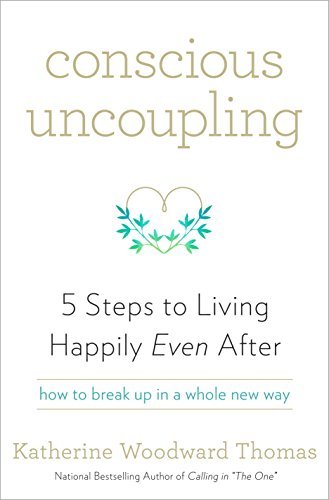
Conscious Uncoupling: 5 Steps to Living Happily Even After - Book by Katherine Woodward Thomas
We need to divorce ourselves from the idea that romantic relationships are meant to last forever. A relationship that ends in a loving, respectful separation isn’t a failure. In fact, a separation is a precious opportunity to grow: to practice kindness to your partner and yourself; to take stock of your life’s hopes and dreams; and to travel down a more rewarding path.
Actionable advice:
Learn the new lingo!
Break-up. Divorce. Ex-partner. A lot of the language around separation can feel inescapably negative. Some therapists encourage using updated, more positive terms. You’re not getting a divorce; you’re getting a wevorce. They’re not your ex; they’re your wasband or your werewife. Your former brother-in-law is now your brother-out-law. And if these strike you as too silly to say out loud, just say them to yourself. You might find they make a big difference!
---
A conscious uncoupling is a respectful, generous, and loving separation.
You’ve probably heard of conscious uncoupling. In fact, ever since a breakup announcement was posted online by a certain well-known actress and her musician husband – yes, that would be Gwyneth Paltrow and Chirs Martin – the words conscious uncoupling have entered the mainstream lexicon. But do you know what conscious uncoupling actually entails?
Imagine an openhearted breakup, characterized by kindness, generosity, and forgiveness. A process for separation that avoids those primal urges to diminish, badmouth, or lash out at your partner. Sounds too good to be true, doesn’t it?
But it’s not new-age nonsense. In fact, conscious uncoupling is rooted in the ancient Buddhist notion of karma. Karma teaches that your actions toward others are seeds that, when planted, blossom in your life.
Conscious uncoupling applies this principle in the context of your breakup. If your intention is to punish your partner, extract justice, and exact revenge, then you’ll only succeed in planting the seeds of animosity and bitterness. Acting toward your partner with generosity, kindness, and forgiveness will invite generosity, kindness, and forgiveness into your life – as well as theirs.
Essentially, conscious uncoupling asks you to consider how your actions during your breakup will bear fruit in your life. Are you salting the earth, or are you creating a fertile compost from which a new life, new loves, and new passions can grow?
The latter option sounds like the perfect way to move on from your partner. But conscious uncoupling might not be perfect for everyone. Please note that the method isn’t suitable for anyone trapped in an abusive relationship.
So, would conscious uncoupling work for you? To answer that question, ask yourself the following: Do you have an authentic desire to end your relationship – and to end it well? Is all hope lost for lasting future happiness in your relationship? Have you talked through your feelings about your relationship with your partner? Have you taken concrete steps to address fundamental problems in your relationship, without success?
If you answered yes to all four of these questions, you’re probably a great candidate for conscious uncoupling.
---
It’s time to move on, and move into your new, liberated life.
It seems like all fairy tales end in the same way, with the prince and princess married off and those six little words: And they lived happily ever after.
Now that you’re nearing the end of your conscious uncoupling, you know how unproductive it is to cling to the idea of ever after. But that doesn’t mean you can’t create your own fairy-tale ending. Welcome to your happily even after.
The final step in your conscious uncoupling is to create your happily even after life.
Inside a relationship, no matter how dysfunctional, the prospect of separation can feel like the end of the world. But the worst thing you could have imagined might just be the best thing that’s ever happened to you. You’re liberated. Liberated to reconnect with yourself, to reimagine your life, to reset your course. You’re liberated – if you can let yourself admit it.
There are all kinds of factors that can hinder your happily even after. But, with care and consciousness, you can overcome them all. Here are some of the most common obstacles on your path to freedom and happiness:
First, you might have decided to “stay friends” with your ex. Trying to force the friendship too soon can leave you attached to your ex, stopping you both from moving on. Now is the time to give each other some space. Once you’ve healed, you can find your way back to each other to forge a new and fulfilling platonic connection.
Second, you might be thinking of your kids. For parents, creating a sense of normalcy for their children is a top priority. But there’s no normalcy in the aftermath of a separation. Pretending that Mom and Dad are just the same as before – only in different houses – keeps you unhealthily bonded to your ex. And it stops your children from processing their own grief and anger.
Finally, you might be stuck in the painful process of dividing assets. Remember, just because you can get something doesn’t mean you should. Consider the mental cost of fighting with your ex over every last scrap. Sometimes, the most spiritually profitable tactic is to let go gracefully and get started on your new life.