

What do you think?
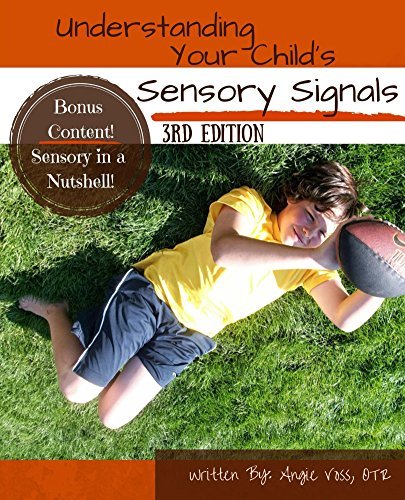
Understanding Your Child's Sensory Signals
The 3rd edition is now available, with changes to include a new updated cover and Sensory in a Nutshell! This easy to read, practical application,reference handbook includes over 210 of the most common sensory signals and cues your child may be giving you. PLUS BONUS CONTENT...Sensory in a Nutshell! Just a little bit more, but not too much to overwhelm you. This practical, daily application handbook is helping parents, teachers, and caregivers all over the world to understand sensory signals and cues from a child rather than jumping to the conclusion of behavior driven. This user friendly "go to" handbook is geared for daily use and as a quick sensory reference guide designed to work hand in hand with ASensoryLife.com, where you can find printable handouts, sensory how-to videos, sensory tools and equipment ideas and links, as well as a sensory ideas on a budget. Enjoy the simple, organized format to give you the essential and useful information to respond to the child's sensory needs right on the spot! The handbook provides simple every day sensory strategies and techniques to help ALL children; including SPD, autism spectrum disorders, ADD/ADHD, APD, and developmental disabilities. This handbook provides guidance and understanding as to why children do what they do in regards to unique sensory processing differences and needs. When you respect a child's sensory differences, it will change how you respond. Keep it Real. Keep it Simple. Keep it Sensory!
132 pages, Kindle Edition
First published September 28, 2015
Ratings & Reviews
Friends & Following
Create a free account to discover what your friends think of this book!
Community Reviews
Displaying 1 - 22 of 22 reviews
January 12, 2021
This is one I go through semi annually and recommend at least once a month to friends or clients. Such a simplistic and straight to the point way to see your child’s sensory needs and build an appropriate sensory diet.
September 25, 2025
This is such an easy-to-read and navigable book for those needing a quick reference and actionable ideas about sensory needs. It's appropriate not just for helping kids, but also for adults who may wonder about their own sensory challenges and urges in the present, and looking back on their past.
The book has an intro to sensory processing basics (at the back), and the table of contents otherwise consists of a long list of descriptors of sensory-based behaviors, described in the kinds of terms a person would casually use (not clinical language). That allowed me to quickly find the sections that sounded just like my kid, and each section was to-the-point with some info about why the behavior may be happening and a short bullet-point list what might be useful supports for the underlying sensory need(s).
The book has wonderfully affirming language and framing, recognizing sometimes-perplexing behaviors as based in valid bodily needs, and explaining how to meet those needs more consistently. I have found that it's helped me embrace and step up my game in offering more sensory experiences to suit my kid's particular sensory profile. (The book doesn't guide you in creating a profile, but if you note which sensory systems are relevant to the behaviors you relate to, you may be able to compile a list of which ones are coming up the most/most strongly.) Even though I think I'm pretty sensory-informed as a non-occupational therapist, I gained a stronger appreciation for how many ways proprioceptive and sensory integration difficulties are evidenced in my kid's behaviors, and how dysregulating that can be on a consistent basis. My main difficulty in applying this learning has been that my particular ND kid's strong preference for autonomy means suggestions/invitations often don't land well, and we're still working out how to help him remember and use his support options. However, we're on an OT waiting list and this book will be a valuable tool while we wait for professional assessment and advice.
The book has an intro to sensory processing basics (at the back), and the table of contents otherwise consists of a long list of descriptors of sensory-based behaviors, described in the kinds of terms a person would casually use (not clinical language). That allowed me to quickly find the sections that sounded just like my kid, and each section was to-the-point with some info about why the behavior may be happening and a short bullet-point list what might be useful supports for the underlying sensory need(s).
The book has wonderfully affirming language and framing, recognizing sometimes-perplexing behaviors as based in valid bodily needs, and explaining how to meet those needs more consistently. I have found that it's helped me embrace and step up my game in offering more sensory experiences to suit my kid's particular sensory profile. (The book doesn't guide you in creating a profile, but if you note which sensory systems are relevant to the behaviors you relate to, you may be able to compile a list of which ones are coming up the most/most strongly.) Even though I think I'm pretty sensory-informed as a non-occupational therapist, I gained a stronger appreciation for how many ways proprioceptive and sensory integration difficulties are evidenced in my kid's behaviors, and how dysregulating that can be on a consistent basis. My main difficulty in applying this learning has been that my particular ND kid's strong preference for autonomy means suggestions/invitations often don't land well, and we're still working out how to help him remember and use his support options. However, we're on an OT waiting list and this book will be a valuable tool while we wait for professional assessment and advice.

Read
December 14, 2023I picked this book up to explain some interesting things my younger child does that I knew were related to sensory input and brain regulation. Not only did it provide some explanation for what is going on it also had ideas to try to help her. I also found a number of things that applied to me both as an adult and explained things I did as a child.
The book has a huge variety of sensory signals from distress over guests in the home to walking on tiptoes. Each one has an explanation of what is going on and which body system (proprioceptive, vestibular, etc.) is being activated or is involved in the behavior. This is followed by a series of suggestions for various things to try. Nearly all of them include the "let them do it, it's not harming anyone or anything" which sadly seems uncommon as advice. However this is never the only advice since many of the things she describes can be signs of distress or over or under regulation of a system and some intervention can be helpful to deactivate and regulate the child's brain/body.
I will say the ebook version of this book is awful. The formatting is all over the place and the table of contents is an absolute fucking nightmare. I do wish she had maybe grouped the various signals into sections formed around the different systems they involve even if it meant copy and pasting the same behavior into several sections. The book is designed to work in tandem with her website, but I do wish she had a section in the actual book that describes some of the techniques and tools she regularly suggests (Bubble Mountain, for example) as it would make it a little easier to find the help you need.
All in all this book is a god send with so much information that is easily broken into things you may have observed your child doing and concrete, easy to implement help.
The book has a huge variety of sensory signals from distress over guests in the home to walking on tiptoes. Each one has an explanation of what is going on and which body system (proprioceptive, vestibular, etc.) is being activated or is involved in the behavior. This is followed by a series of suggestions for various things to try. Nearly all of them include the "let them do it, it's not harming anyone or anything" which sadly seems uncommon as advice. However this is never the only advice since many of the things she describes can be signs of distress or over or under regulation of a system and some intervention can be helpful to deactivate and regulate the child's brain/body.
I will say the ebook version of this book is awful. The formatting is all over the place and the table of contents is an absolute fucking nightmare. I do wish she had maybe grouped the various signals into sections formed around the different systems they involve even if it meant copy and pasting the same behavior into several sections. The book is designed to work in tandem with her website, but I do wish she had a section in the actual book that describes some of the techniques and tools she regularly suggests (Bubble Mountain, for example) as it would make it a little easier to find the help you need.
All in all this book is a god send with so much information that is easily broken into things you may have observed your child doing and concrete, easy to implement help.

January 14, 2023
This has been sitting on my nightstand for at least a year now. Finally opened it today and was encouraged to see how far we've come. The book is divided into many small sections--each detailing a specific sensory behavior, explaining the likely cause, and offering some suggestions to help with it.
My child's sensory issues were always pretty specific. Out of the 200+ behaviors listed, she only ever displayed about a dozen, and has improved significantly over the past three years. While not as applicable to our lives now, this would be a great book for families who are just beginning their journey with their sensory kid.
My child's sensory issues were always pretty specific. Out of the 200+ behaviors listed, she only ever displayed about a dozen, and has improved significantly over the past three years. While not as applicable to our lives now, this would be a great book for families who are just beginning their journey with their sensory kid.

January 1, 2025
This was difficult to decide how many stars to rate. There is very good information in here. Information that I have even highlighted and will refer to again. I also think this book could definitely be a great resource to parents of newly diagnosed children learning about sensory needs. However, the book is poorly organized, repetitive, and a few of the things mentioned I don't necessarily agree with. Specifically speaking, adding things to seatbelts are dangerous and not recommended, and some of her recommendations on topic 10 at the end of the book are not evidence based and even have peer reviewed studies stating the opposite. Overall, I will say this is 3/5 in my opinion.

June 21, 2020
A must have sensory dictionary
This is an invaluable reference book that identifies (better than any resource I have seen) the sensory signals your child may be giving — and most importantly identifies the meaning/sensory need behind them and what you can do to help. As a parent, this gives you a roadmap / reference book to turn to at home when needed. For me, it explains things my daughter has been sending signals on for years. I wish I had found this book a long time ago.
This is an invaluable reference book that identifies (better than any resource I have seen) the sensory signals your child may be giving — and most importantly identifies the meaning/sensory need behind them and what you can do to help. As a parent, this gives you a roadmap / reference book to turn to at home when needed. For me, it explains things my daughter has been sending signals on for years. I wish I had found this book a long time ago.
December 13, 2020
The info is really helpful and the format of the table of contents is great as it lists the various sensory signals such as “always rocking or tilting chair” and the appropriate page gives a short sensory explanation and around 7-8 ideas on how to help. I wish the 200+ sensory signals were more organized into sensory categories as finding a specific behavior can be difficult to find quickly.

September 29, 2017
Oh how I wish I knew about this book and had the opportunity to use and share it during my educational career. It has invaluable information not only for parents but anyone working with students. The tactics for accomodating learning styles are numerous and beneficial to student and instructor!!

January 12, 2018
This is an extremely useful guide that identifies what we may perceive as 'odd' behaviour in children, gives explanations as to why they might be happening, then provides practical solutions. Very much enjoyed learning about vestibular and prioreceptor systems in the body.

March 6, 2019
This book completely blew me away! I am new to the Austism pathway and reading the sensory signals that applied to my child were so freeing. To finally know the reasons they do these things. Or the potential reasons. Recommend this to a parent who has a child newly embarking on the pathway.
October 21, 2020
Brilliantly simple and highly informative book
Must read for everyone - parents, caregivers, teachers, behaviorists, therapist, etc. The book title says it all and helps us to be a bit more kinder to our children.
Must read for everyone - parents, caregivers, teachers, behaviorists, therapist, etc. The book title says it all and helps us to be a bit more kinder to our children.

May 23, 2026
This is an insanely helpful book for anyone with sensory-seeking or sensory-sensitive children.
It covers every sensory behaviour you can think of, with handy tips on how to help/deal with them.
Read with plenty of colour tabs to mark the bits you want to refer back to easily!
It covers every sensory behaviour you can think of, with handy tips on how to help/deal with them.
Read with plenty of colour tabs to mark the bits you want to refer back to easily!
December 9, 2017
I found this really helpful and a good read. Although the layout for kindle is a little annoying.

May 24, 2018
A great quick read, perfect for finding the sensory needs of any child and how to fill them.
September 27, 2020
This was a great book to read to understand our child's sensory needs and how to help with meltdowns. Some surprising tips like spinning or head inversion were very useful for us!
This entire review has been hidden because of spoilers.
December 9, 2020
Full of good ideas
This concise guide is crammed with eye opening insights and great ideas. Will be an invaluable resource for our family.
This concise guide is crammed with eye opening insights and great ideas. Will be an invaluable resource for our family.

January 7, 2024
Love the quick explanations and to recommend to parents/teachers/caregivers/therapists! Minus one star because I wish it was a little more organized!

March 16, 2024
You look up a question & there's an answer. So needed & helpful in a minefield of books

August 17, 2024
This was life changing for me! Both my kids have sensory processing disorder. I needed this book so bad!
February 24, 2025
The lack of definitions kills half of this books usefullness. Some explaining would help.
February 10, 2016
Great reference guide
As an OT i am always looking for great references for families. This has a good quick reference guide with great go to strategies.
As an OT i am always looking for great references for families. This has a good quick reference guide with great go to strategies.

April 23, 2017
Encyclopedic
Many topics covered, but they are arranged in an encyclopedic fashion. I would have preferred real life experiences that am OTR has had, and resources for all the sensory items mentioned in the blood. Where are these items available Nd which ones work the best...
Many topics covered, but they are arranged in an encyclopedic fashion. I would have preferred real life experiences that am OTR has had, and resources for all the sensory items mentioned in the blood. Where are these items available Nd which ones work the best...
Displaying 1 - 22 of 22 reviews