In Defense of Morality
12 August 2022 – Oxford
Originally this was going to be my Canterbury review, however it turned out to be much longer than I expected, and I had left the collection of Lovecraft short stories back at the hotel, so I didn’t get around to actually reading, and then writing, anything in Canterbury. Oh well, maybe another time, if I manage to get back there. However, it turned out to be a pretty good Oxford Book, even though the editor and translator were actually from Cambridge. Still, being a university town, reading some Ancient Greek philosophy seemed to be somewhat appropriate.
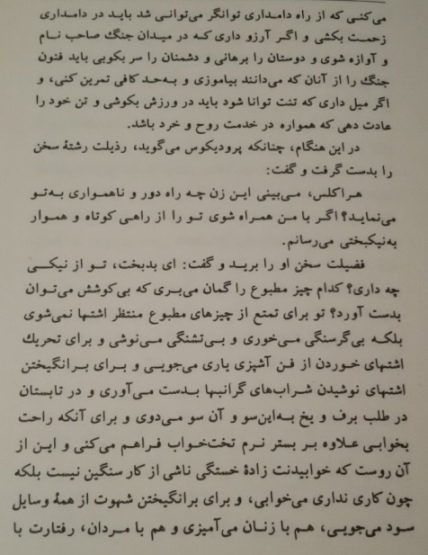
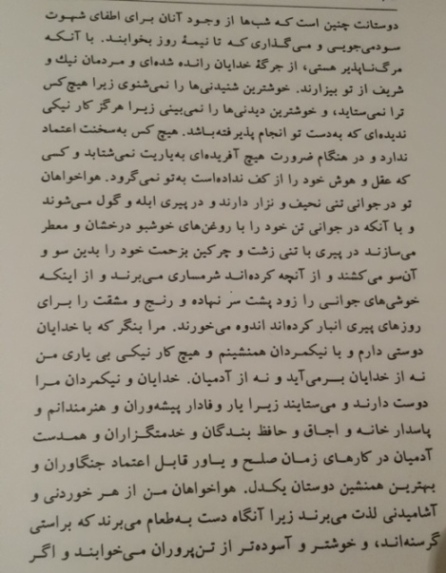
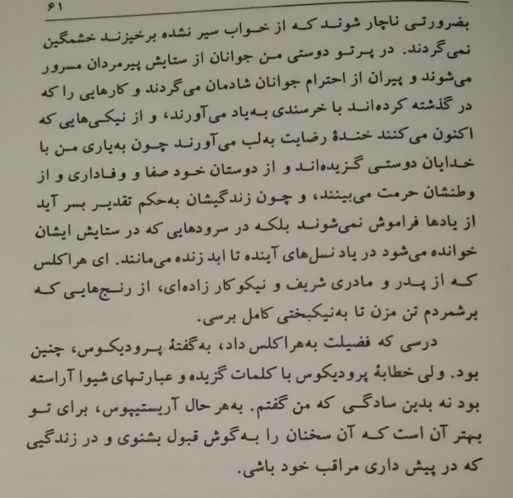
One thing that stood out, that sort of made me wonder what the editors were talking about, was that there was no mention of the purpose of the book in the introduction. This was a little odd considering that Xenophon clearly spells this out at the beginning and the end. Sure, there is a lot of Socratic philosophy in these pages (which shouldn’t surprise anybody considering that it is called ‘
The Memoirs of Socrates’), but Xenophon opens by stating that this work’s purpose is to prove that Socrates was not guilty of the crimes for which he was executed, but rather that it was his enemies that were looking for an excuse to do him in.
In the end, this work isn’t going to convince anybody who is dead set against Socrates, in much the same way that arguing with somebody who is dead set in their ways isn’t going to change their minds (I was going to say ‘arguing with an idiot’, but some people tend to have good reasons for being set in their ways, though there are others that, well, you just want to walk away from because you are doing more damage to your sanity than anything else). Actually, Xenophon points this out in one of his anecdotes, namely that we shouldn’t argue with people to change our opponent’s mind but instead change the mind on those who are listening to the debate. In fact, I believe this is the whole point of the debate, not to convince the otherside, but to convince the audience.
There are some interesting things that come out of this text, and some of them no doubt will make people rather uncomfortable. I’m not going to mention them here (though these issues also arise in The Symposium) except to say that, well, these are issues that we assume go without saying, yet in this text, and in the Platonic texts, there is a debate as to whether they are right or not. It makes you realise how much we don’t know about Ancient Athens. Like, homosexuality was a big thing, though it was vastly different than what we have today. There certainly were lovers (Achilles and Patroclus is a clear example), but they didn’t marry and have children (or adopt children as the case may be). It was also an incredibly patriarchal society, so women hardly got a mention.
We see a lot of Xenophon’s military background coming to play here. In fact this is one of the first topics (the other being sex). The suggestion, which we see in Plato as well, is the concern about how completely incompetent people can be elected to high positions. Actually, I don’t think there is a real solution because we can’t take away the right to vote from people who don’t have an education, namely because even if one has an education doesn’t mean that they will wisely cast their vote, nor will an uneducated person unwisely cast their vote. In fact, there is an awful lot of educated people that will be charmed by a demagogue, as well as quite a few educated people that don’t care about voting, and have no interest in finding out about the candidates, or even turning up at the voting booth.
Yet they do have a point – only highly skilled carpenters become master carpenters, and you need some pretty good qualifications to get there. However, to become a politician all you need to do is convince people to vote for you. In fact, to become Prime Minister all you need to do is convince the party room to vote for you. The problem is that completely incompetent people end up getting elected. Here in Australia we had to put up with some advertising executive (that wasn’t particularly good in any case) make announcements for the entire time he was in office, but do absolutely noting. After his tenure came to an end, he chucked a hissy fit and blamed pretty much everybody for voting him out because he was a half-decent person and the population didn’t appreciate how good they had it under him. In fact, he now sits on the backbench with a foul look on his face (though I find it interesting that despite being a pentacostal Christian, that he isn’t asking any questions as to why God might have deserted him).
Still, we can’t forget that in Ancient Athens the military leaders were also elected, which I have to admit seems like that is only going to lead to endless amounts of trouble. I was going to suggest imagining DT being elected into such a position until I realised that he was actually commander in chief. Mind you, if the generals end up screwing up, they also ended up being put on trial, and if found guilty of incompetence, then the penalty was generally death. I guess with that hanging over your head would probably provide a disincentive for demagogues from taking over the army, but honestly, when have laws and penalties ever stopped people from being dodgy?
However, I would have to say that this work differs significantly from that of Plato, one thing being that Xenophon was a general whereas Plato was a teacher. Still, while people might not consider Xenophon to be anywhere in the league of Plato, we do need to remember that the nature of this work is twofold – first of all it is a defence of Socrates and of his teaching, and secondly it is a means of preserving what Socrates taught down through the millennium. It is clear that Xenophon held Socrates in high regard, though he might not have been associating with him for as long as Plato was. Still, it is an interesting work, and does give us a different view on much of his teachings.