بداية في الحياة هي احدي روايات "مشاهد من الحياة الخاصة" التي اراد منها بلزاك ان تظهر المشاكل التي تطرحها الحياة في ممارساتها الأولي التي تشمل الفعاليات الفتوة و الشباب و أخطاءهما و بداياتهما في العالم الاجتماعي.
French writer Honoré de Balzac (born Honoré Balzac), a founder of the realist school of fiction, portrayed the panorama of society in a body of works, known collectively as La comédie humaine.
Honoré de Balzac authored 19th-century novels and plays. After the fall of Napoléon in 1815, his magnum opus, a sequence of almost a hundred novels and plays, entitled, presents life in the years.
Due to keen observation of fine detail and unfiltered representation, European literature regards Balzac. He features renowned multifaceted, even complex, morally ambiguous, full lesser characters. Character well imbues inanimate objects; the city of Paris, a backdrop, takes on many qualities. He influenced many famous authors, including the novelists Marcel Proust, Émile Zola, Charles John Huffam Dickens, Gustave Flaubert, Henry James, and Jack Kerouac as well as important philosophers, such as Friedrich Engels. Many works of Balzac, made into films, continue to inspire.
An enthusiastic reader and independent thinker as a child, Balzac adapted with trouble to the teaching style of his grammar. His willful nature caused trouble throughout his life and frustrated his ambitions to succeed in the world of business. Balzac finished, and people then apprenticed him as a legal clerk, but after wearying of banal routine, he turned his back on law. He attempted a publisher, printer, businessman, critic, and politician before and during his career. He failed in these efforts From his own experience, he reflects life difficulties and includes scenes.
Possibly due to his intense schedule and from health problems, Balzac suffered throughout his life. Financial and personal drama often strained his relationship with his family, and he lost more than one friend over critical reviews. In 1850, he married Ewelina Hańska, his longtime paramour; five months later, he passed away.
Balzac's A Start in Life, at first I was not certain how much I would like this story but at the end it was quite the message which I loved. It shows that even a person who seems hopeless to help because their character is so weak and who has caused others distress, are worth saving and helping with guidelines to direct their character.
I did not read this edition but a collection of his works which included the highlights below. I tried to find Balzac's sister's story so I could read it too, unfortunately it was unavailable.
"Un début dans la vie was serialised in the review La Législature in 1842 under the title Le Danger des mystifications. In 1845 it appeared under its present title in the second Furne edition of La Comédie humaine. Balzac wrote the novel during one of his many visits to the commune of L’Isle-Adam in Val-d’Oise, a few kilometres north of Paris. Un début dans la vie is based on a short-story by Balzac’s sister Laure Surville, which was later published in 1854 under the title Le Voyage en coucou (The Journey in a Rickety Carriage). Balzac retold the story, transforming it into a profound study of human vanity and its consequences."
My Delphi collection synopsis below.
"The novel’s action mostly takes place in a rickety old stage-coach of Pierrotin, which regularly carries passengers and goods between Paris and Val-d’Oise. On one trip from Paris, Comte Hugret de Sérizy, a senator and wealthy aristocrat, is travelling incognito in order to investigate reports that Monsieur Moreau, the steward of his country estate at Presles, is being less than honest in his dealings on the count’s behalf with a neighbouring landowner Margueron. "
The story in short- The Count de Serizy is incognito during the ride to his estate. The talk of the passengers changes lives and their future course.
The one point of this story that dragged was the section in the clerk's office with humor and the office journal. I found it boring and not funny.
This story starts with omnibus of passengers and ends full circle but there are changes in the people some fourteen years later. Leading a life of folly and vanity compared to living a life of work and honor.
As I read The Human Comedy, they characters reappear and having my Kindle is helpful, I can search names to remember their circumstances. Each story can be read alone but I love experiencing how Balzac intended this to be read.
"There does not exist, or rather, there seldom exists, a criminal who is wholly criminal. Neither do we ever meet with a dishonest nature which is completely dishonest. It is possible for a man to cheat his master to his own advantage, or rake in for himself alone all the hay in the manger, but, even while laying up capital by actions more or less illicit, there are few men who never do good ones. If only from self-love, curiosity, or by way of variety, or by chance, every man has his moment of beneficence; he may call it his error, he may never do it again, but he sacrifices to Goodness, as the most surly man sacrifices to the Graces once or twice in his life"
I had no hope in Oscar helping his mother or making a success in life and did not realize until 1/3 through that this story centers on him and not the count. Oscar's vanity was set for folly but his learning his lessons after each mistake and his friends helping but also having their limits. George, the clerk started out to be admired but ended up being pitied, not learning his lesson like Oscar.
I was happy Oscar learned his lessons especially since his mother had given up so much and others helped him. In saving the count's son shows how giving a helping hand to Oscar that others gave him was something unexpected but shows life is not so clear but has many paths to make before and makes a person worthwhile. Pierrotin has a carriage service and looks to expand with a new carriage but he needs the rest of the money that he does not have and will lose his money put to it. Comet de Serizy looks to travel incognito. De Serizy has an estate which he wants to buy an addition nearby for his wife who does not treat him too kindly. She was widowed before he married her and has money herself. The count has a history with his caretaker, Moreau whose father saved his family and who the count returns favors but Moreau after being married and having children looks to increase his monies by cheating his care of the count's estate. The count is told by another of this double dealing and decides to go incognito to see for himself. Pierroton wonders about the Claparts who have a son named Oscar and Moreau stays there when in Paris and gives them food from the country. Moreau has helped Madame Husson because she was a protected him when he was sought after. She had been rich and liaison of a king and married a man that killed himself. Pregnant she married Clapart but his intelligence was nil and they lived quite poorly. Clapart had thought she had money before he married her. The passengers; Oscar going to see Moreau, his mother knows him; Georges (two youngmen); Pere Leger a farmer; an artist and his helper and the Count Serizy. This ties in The Purse and Ball at Sceaux. The painter from The Purse marries and is helped by the father Fontaine from Ball at Sceaux. So Georges is the helper to help the count but he does not know the count, only the count hearing his story knows he is lying and finds papers under his seat which has the sale for the count. The painter is the one from The Purse who fell in love and married but he sees a beautiful girl in his travels who he tries to make love to her despite her old husband, he was not arrested because the duenna and girl tell of giving the pirate husband opium which causes his death. I am not happy with that Schinner and forgetting his wife. The count finds out that ledger and Moreau are out to sell and make him lose out in a property. The Count tells Pierrotin that if he does not give the count away he will earn the rest of the money for his coach. Oscar tells that he knows the count and that his wife does not love him because of his face. The count still unknown gives his goodbyes. It seems the artist in the coach was not Schinner but two other artist which if correct is nice for his wife not to have a cheat of a husband. Joseph and Leon were the artist in the coach. The count will have Reybert take over for Moreau and he told him all he heard against him, he is allowed to keep a certain amount of money but the helping out from the count ends. The painter's father is known by the count and he will help him out. Georges is a clerk that was told of his indiscretion with the papers and of the money spent. Moreau tells his wife of their ruin and is mad at Oscar bringing him to the count but the young boy does not say anything or show anything worthy. Madame Clapart sees Uncle Cardot about Oscar's career. Oscar does not seem happy that his uncle talked about being a lawyer and the uncle sees that the boy needs folly to stay away. Moreau tells the mother of his new venture because of Oscar follies and tells he will help but with a firm hand. Oscar is working and going to school with a man that Moreau recommended where they are all from poor families and worked hard. Oscar has been sticking into the woods with the help of senior clerk, Desroches who sees that Oscar can not be truly great because of his lack of want to be doing this kind of work but doing it nonetheless. George Marest has come into some money after an uncle died and his cousin is working at the office of Oscar. Georges has been seeing a young ballet dancer, Florentine who has been discovered at the age of 14 by Uncle Cardot, who has been keeping her mother and herself. Frederic, George's cousin looks to use his inheritance to build up a career, so that is why he comes to be at Oscar's office. Godeschal is the head clerk that has been over looking Oscar and knows about his vanity which he tries to keep in check and he hears about Oscar's last meeting with Georges. Oscar goes to Florentine's home thinking she is something grand not a dancer with the other clerks. Godeschal has left early and Oscar ends up using all his money plus the money of the company. Florentine has him bet more and he is too drunk to leave in the morning. He hears his uncle's name mentioned.Oscar has no longer help from Godeschal, Moreau, Uncle Cardot. The mistress Florentine tells Cardot who has seen his nephew asleep in her room but she says if you do not help kin, then she will not be his girl. She tells him that nothing happening and he gives Oscar the money but it is the last time. Then he is fired because a kind note of Godeschal's sister which tries to save Oscar but Derouches sees. So Moreau finds out and tells the mother that he must go into the military and so Oscar does but is helped by Moreau in getting the count Serizy to put him in a better regiment with his son. After 1930, Oscar who goes to the side of the people which gives him honor and in battle goes out of his way to help the count's son with harm to himself too. The count's son dies but the gratitude of the family to Oscar remains. Oscar loses an arm in battle. His step father has lived to harassed his mother still. Oscar is given a place near Presles by count serizy and is wife. He travels there on Pierrotin's coach and is changed and learned discretion whereas Georges is back but his money is gone. He is selling insurance. Pere Leger is richer. Moreau we learn has done better. Pierrotin has prospered and the painter has married too. Oscar makes a mistake in thinking that Pierrotin has not improved but he has and Oscar marries his daughter.
4,5 stele. Romanul publicat de Balzac în 1842 ar fi putut să se intituleze la fel de bine Un debut în viață, dar cu stângul. Sau, mai exact spus, Două încercări de debut în viață, dar ambele la fel de nereușite. Sau poate că, glumind puțin, una dintre lecțiile principale pe care le primește eroul nostru, tantălăul cu numele Oscar Husson, este aceea de a ști să-ți ții gura când te afli în compania unor persoane necunoscute. Dar aceste generalități sterile nu reușesc să redea nimic din savoarea acestui roman. Deși are o intrigă foarte simplă, fiind alcătuit din două episoade centrale și un fel de epilog în care autorul decide să-i mai dea o șansă lui Oscar după toate neroziile comise de acesta (deși, dacă e să fim onești, naivului și ușor arogantului Oscar nu i se poate imputa că este un personaj negativ, el nu face ceea ce face din răutate, ci doar pentru că nu-și poate controla înclinațiile specifice vârstei; probabil că, după standardele lumii actuale, corupția intendentului Moreau, precum și planul minuțios prin care acesta vrea să-l înșele pe binefăcătorul său, contele Hugret de Sérisy, sunt acțiuni infinit mai nocive decât limbarița stupidă a protejatului său), totuși romanul este o mică bijuterie, atât în ceea ce privește abilitatea extraordinară a lui Balzac de a jongla cu un număr foarte mare de caractere extrem de diferite, cât și în a găsi măsura potrivită în care să combine umorul cu critica și reflecția socială și istorică. În tot cazul, scena care se desfășoară în trăsura lui Pierrotin, ce înaintează molcom dinspre Paris către L’Isle-Adam, în care sunt înghesuiți eroii noștri, dintre care unii se vor dovedi extrem de talentați în a fabula, - de exemplu pictorul Joseph Bridau, simpaticul ucenic, Léon de Lora, sau Georges Marest, secretarul notarului, căruia, însă, Balzac nu i-a pregătit o soartă deloc ușoară - este delicioasă. În final, am decis să atașez și o mostră de reflecție balzaciană, cu plusurile și minusurile ei: "Ordinea morală îşi are legile sale, ele sunt implacabile şi eşti întotdeauna pedepsit când le-ai desconsiderat. E una mai ales de care animalul el însuşi ascultă fără crâcnire şi întotdeauna. Şi anume, aceea care ne porunceşte să fugim întotdeauna de cel care ne-a mai dăunat o dată, cu sau fără intenţie, voluntar sau involuntar. Creatura de la care am avut o pagubă sau o neplăcere ne va fi întotdeauna funestă. Oricare ar fi rangul său, oricare ar fi gradul de afecţiune care ne leagă de acea persoană, trebuie să rupem relaţiile cu ea, pentru că ea ne-a fost trimisă de piaza rea. Deşi sentimentul creştin se opune conduitei amintite, supunerea la această lege teribilă este esenţialmente socială şi conservatoare. Fiica lui Iacob al II-lea, care s-a aşezat pe tronul tatălui său, trebuie să-l fi rănit de multe ori încă dinainte de uzurpare. Iuda îi dăduse cu siguranţă vreo lovitură mortală lui Iisus înainte de a-l trăda. Există în noi o vedere interioară, ochiul sufletului, care presimte catastrofele, și repugnanţa pe care o simţim pentru acea fiinţă fatală este rezultatul acestei previziuni; dacă religia ne porunceşte să o învingem, ne rămâne neîncrederea a cărei voce trebuie să o ascultăm neîncetat". Lectură plăcută!
O ultimă observație: editorul francez al acestei ediții de pe GR a ales drept copertă o reproducere după portretul lui Renoir pictat de Frédéric Bazille, un pictor impresionist mai puțin cunoscut, ce a murit la vârsta de 28 de ani, în 1870, în timpul Războiului Franco-Prusac. Destinul lui Bazille seamănă întrucâtva cu acela al eroului nostru, probabil că acesta este unul dintre motivele pentru care a fost ales tabloul acesta, ce se află la Musée d'Orsay din Paris.
Yaşamda bir başlangıç, bir yolculukla başlıyor.. Neredeyse aynı olan yolcuların çıktığı bir yolculuk ile de son buluyor. Ancak bu kişiler artık eskisi gibi değil. Kimisi yeteneklerini heba ediyor, kimisi şans kapısını aralayıp aydınlık yollardan ilerliyor, kimisi hayallerinin tersi yönde gidip saygınlığı buluyor. Çünkü Balzac biliyor, yaşam her daim bir akış içinde ve biz de durmaksızın değişme ihtimalleri ile boğuşuyoruz. Dalgaları sevdiğimiz gibi onlara karşı bir şey hissetmeyip sadece alışkanlık haline de getirebiliyoruz. Açgözlülük, gurur, önyargılar, sınıf mücadeleleri hepsi insanlığa içkin.. . Balzac karakter yaratma ustası benim için.. Kendisi oluşturduğu karakter için soyağacı yazan, bir karakterin ismine karar verebilmek için haftalarca düşünebilen bir yazar. Bu denli takıntılı oluşu yazdıklarına da yansıyor elbet. Okurken isimler karışabiliyor, verilen detaylarda kaybolabiliyorsunuz. Ama ne yapıp edip kafanızda soru işareti kalmadan bitiyor eser. Aslında anlıyorsunuz ki okurken işleniyor zihninize, bu hem beynimizin eğlenceli bir oyunu hem de Balzac gücü.. .
This is one of Balzac's best stories ever. It's the story of a foolish, spoilt boy who brags about his place in life in front of his intended patron, who's travelling incognito on the same coach. Other occupants of the coach, all dependent on his patronage in one way or another, do the same. The way in which Balzac creates the setting, introduces the characters and leaks in the story of the Comte and how he plans to catch his dishonest steward out but reels in everyone else as well, is nothing short of brilliant. The story demonstrates human frailty with compassion and wisdom.
This was an ok story. In a way, if you are picking up Balzac, you probably know what to expect, and that is also the case with this novella.
Characters: 3
I found it particularly interesting to read this story in the modern time, since you can just google everyone. Here we are spending our time with a few people who do not know one another, but are riding together in a carriage. Boasting begins and each person begins to build a web of lies as to who they are.
Their real personas are either enlarged or replaced entirely by another one. This makes it funny, in a way. How far would a person go?
Plot: 3
Very quickly we are riding in a carriage full of very important personages. There isn’t much plot to the story, although there is a little attempt at a plot twist that as a reader you see coming from a mile away. Don’t get me wrong, it is still funny nonetheless. I kept thinking about being able to just google what the famous person looks like or logically think about the possibility of a famous and wealth person riding a carriage, crammed into a small space with 5 others. Its like believing Jeff Bezos flying coach.
Setting: 2 Setting was ok. There was not much of a setting here, as you can imagine. Just typical surroundings, mansions and road in a carriage. This story was not about the setting. As Balzac likes to do, this story focused more on describing life as it was back in his days.
Overall, if you enjoy classics, this is a fun story to read. It does not take much time to finish and it is in many places very funny. Don’t expect genius to shine thorugh here.
The first part of this novel is fascinating for its depiction of the French coach service, which is reminiscent of other 19th century “coach” narratives: Dickens’ Pickwick Papers (published a couple years earlier), Maupassant's “Ball of Fat,” Twain's Roughing It, Bret Harte's Overland stories, etc. The difference being that Balzac’s detailed descriptions far surpass these other stories.
Beyond this opening section, the novel is a commentary on the ways in which social climbers mask their true identities and take on false personas to rise in status. The protagonist, Oscar, is a rather flatly-sketched character -- Balzac’s attempt to depict the French “everyman," as he suggests in the closing lines of the novel -- whose bumbling mistakes lead him to learn important life lessons as he navigates the rungs of the social ladder. It’s an enjoyable enough average novel from Balzac with humor and, like much of his work, a little too neatly tied up at the end, complete with the type of chance occurrences that can only happen in this kind of 19th century fiction.
In the same year that he wrote the somber The Peasants (1844), Balzac writes a tale (A Start in Life) that is just the opposite. Instead of rural types taking on and totally defeating the gentry, the Comte de Serizy detects dishonesty in his steward and by fast action replaces him. Here, however, the focus is on a seemingly minor character, Oscar Husson, originally played for laughs. He appears to be unbelievably vain and craven, but somehow manages to recover his life in the course of time and make something of himself.
We have touches here of a French Horatio Alger as we see Oscar fail once, fail twice, and finally strive and succeed. This is perhaps one of the most comical of Balzac's narratives, and a pleasure to read.
This entire review has been hidden because of spoilers.
This is a two part novel with a pleasing and sentimental final reunion of the characters who shared the carriage in the opening section. It is the social satire and Balzac's sense of mischief which enliven and provide the gallop for this journey, which is hugely enjoyable and the highlight of the read.
A great example of Balzac's genius for turning everyday seemingly meaningless ordinary scenes into complete stories. It is a slow burn, but it is so well written that I just couldn't put this book down. Lovely little novella.
I think this may be my favourite Balzac yet, it's genuinely funny in parts, it has some characteristically detailed interiors, and its circular plot really works. We've all known an Oscar.
UN DÉBUT DANS LA VIE-HONORE DÉ BALZAC ✒️"On ne s’amuse donc que dans les lourdes voitures de France, dans ce pays si babillard, si indiscret, où tout le monde est empressé de rire et de montrer son esprit, où la raillerie anime tout, depuis les misères des basses classes jusqu’aux graves intérêts des gros bourgeois" ✒️"Tous ceux qui se rappellent leur adolescence ne s’étonneront pas d’apprendre qu’après une journée si remplie d’émotions et d’événements, Oscar ait dormi du sommeil des justes, malgré l’énormité de ses fautes. Le lendemain, il ne trouva pas la nature aussi changée qu’il le croyait, et il fut étonné d’avoir faim, lui qui se regardait la veille comme indigne de vivre." 🛺Kako dublje ulazim u Balzakovu Ljudsku komediju,to više otkrivam divnih a zanemarenih dela. 🛺Ovaj roman je adaptacija pripovetke koju je napisala Balzakova sestra Laure Surville,a kojoj je on dodao socijalnu analizu u svom stilu. 🛺Sve počinje vožnjom kočijom i završava se vožnjom istom kočijom,petnaest godina kasnije 🛺Maladić s početka,siromašan a ponosit,željan da se "pokaže u društvu" pribegava lažima i izmišljotinama,koje za njega samog imaju ozbiljne posledice. 🛺Uz mnoštvo prepreka,uz neprestanu borbu njegove majke da ga izvuče iz siromaštva i kroz njegove razne nestašluke koji ga u tome sprečavaju,dolazi se to te vožnje na kraju priče gde je on,konačno,postao ono što se od njega želelo "un vraie bourgeois". Pravi predstavnik buržoazije. #7sensesofabook #bookstagram #knjige #literature #readingaddict #balzac
Eine echte Komödie voll Insiderwitz. Allein die Ausgangskonstellation, der bekannteste Hahnrei der feinen Gesellschaft reist inkognito in einer Postkutsche aufs Land, um einen langjährigen Verwalter der Untreue zu überführen. Doch keiner der Mitreisenden ist, was er vorgibt zu sein oder verfolgt das offizielle Reiseziel. Graf Sérizy, unter Napoleon wie unter den Bourbonen eine Größe in der Politik, in anderen Romanen der HC eine häufig bemitleidete Gestalt, da immer abwesend und bei der Arbeit, während die Gattin mit dem aktuellen Favoriten Hof hält oder durch die Salons tingelt oder die attraktiven Neuankömmlinge aggressiv abcheckt. Der Graf hat Moreau aus Dankbarkeit gegenüber dessen Vater über das Gut Presles eingesetzt, da ihn der inzwischen verstorbene Retter während der Schreckensherrschaft versteckt und ihm dadurch das Leben gerettet hatte. Doch der überaus rührige Verwalter hat nicht nur die letzten zehn Jahre in die eigene Tasche gewirtschaftet, sondern konspiriert bei einem aktuellen Grundstückskauf mit einem anderen Mitreisenden gegen seinen Wohltäter, damit die beiseite geschaffte Viertelmillion um weitere 40.000 anwächst. Ausgerechnet die eigenen guten Taten werden Moreau zum Verhängnis, er unterstützt seit langer Zeit eine tief gestürzte Größe aus der französischen Revolution: Madame Clappart, einst als Verkörperung der Aspasia Teil des Establishments und seiner Orgien. Außer einem Kind ohne Vater ist der ehemaligen Schönheit vom Dienst nichts geblieben, zumal sie später einen Mann geheiratet hat, der nichts konnte als gut aussehen und während Ära Napoleons für immer in den unteren Rängen der Verwaltung stecken blieb. Inzwischen ist die Frau aber nur noch Übermutter, die ihr kaum lebenstüchtiges, aber umso geltungssüchtigeres Söhnchen Oskar mit tausend guten Ratschlägen für ein Praktikum bei ihrem Gönner Moreau in dieselbe Kutsche wie den Grafen setzt, den keiner der reisenden persönlich kennt, obwohl jeder weiß, was es mit dessen Frau auf sich hat. Als Vertraute von Moreau kennt Frau Clappard das peinliche Geheiminis des Grafen, das keine Nähe zu seiner Gattin zulässt und Oskar, der früher mal heimlich mitgehört hat, plaudert es aus, um seine Reisegenossen zu beeindrucken. Weitere Streiche des enorm geltungsbedürftigen Kindes der Revolution, das sich 1830 auf die Seite der siegreichen Aufständischen schlägt und doch noch Karriere macht, runden diesen kurzen Roman ab, der gleich Appetit auf den nächsten Balzac weckt.
"Todos os franceses são iguais perante o "coucou".
Esse romance nasceu a partir de um conto escrito e publicado por Laure, irmã predileta de Balzac. O coucou é uma carruagem, uma espécie de ônibus meio chinfrim da época. Pierrotin, meu personagem preferido nessa história, é o simpático e bonachão proprietário de um desse e consegue aumentar sua capacidade máxima de passageiros de forma inacreditavelmente desconfortável porém eficaz. O livro vai nos contar uma viagem cheia de acontecimentos e suas consequências nesse curioso meio de transporte. Os personagens vão nos sendo apresentados conforme tomam seus assentos e isso é feito de forma gradual e minuciosa. Temos um par de França (conde de Sérisy) que viaja incógnito com um objetivo que deve afetar a vida de vários dos passageiros; Oscar, um vaidoso adolescente; Jorge, um rapaz cheio de boa conversa; Mistigris (com seus divertidos trocadilhos) e Bridau, pintores. Interessante como os destinos dos personagens vão se entrelaçando e como a narrativa vai se desenvolvendo à medida que segue a viagem. Mais uma vez Balzac me deixa ansiosa para terminar a leitura pois, pra variar, faltando menos de uma página ainda não sabia que fim teria. Gênio. Destaque para o capítulo XI - A Vida e os Engodos no Mundo dos Cartórios, provavelmente meio autobiográfico já que Balzac trabalhou por alguns anos em um.
Histórico de leitura
99% (302 de 304)
"Oscar é um homem comum, manso, sem pretensões, modesto e sempre se mantendo, como o seu governo, num justo meio. Não causa nem inveja nem desdém. É, enfim, o burguês moderno."
66% (202 de 304)
""Faça dele um advogado, só lhe resta defender tese nessa profissão; é possível que seus defeitos se tornem qualidades, pois o amor-próprio fornece língua à metade dos advogados."
52% (159 de 304)
"Esse sensato ancião não falara aos filhos de suas rendas vitalícias, os quais, vendo-o viver de modo tão mesquinho, julgavam todos ter-se ele despojado de sua fortuna em benefício deles, e por isso redobravam de cuidados e de ternura."
49% (148 de 304)
"Esse rapaz é só vaidade. Um orgulhoso se humilha, pois há grandeza em certas humilhações."
26% (80 de 304)
"Assim se passam as coisas nos carros franceses. Os ingleses empenham-se, por orgulho, em não descerrar os dentes; o alemão, no carro, é triste, e os italianos demasiado prudentes para conversar; os espanhóis não tem absolutamente diligências e os russos não tem estradas. A gente portanto só se diverte nos pesados veículos da França, nesta terra tão tagarela, tão indiscreta, onde todos se apressam em rir e em mostrar espírito, onde o gracejo tudo anima; desde a miséria das classes baixas até os graves interesses dos grandes burgueses."
23% (69 de 304)
"Oscar alcançava esse último quartel da adolescência, no qual pequenas coisas provocam grandes alegrias e grandes tristezas, em que se prefere uma desgraça a uma toilette ridícula, em que o amor-próprio, não se ligando aos grandes interesses da vida, se prende a frivolidades, ao vestuário, ao desejo de parecer homem."
20% (62 de 304)
"Aos vinte e dois anos a sra. Husson, no seu abandono, desposou um funcionário chamado Clapart, rapaz de vinte e sete anos que, no dizer de todos, prometia muito. Deus guarde as mulheres dos belos rapazes que prometem muito!"
20% (61 de 304)
"O sr. Clapart, com uma sobrecasaca surrada, chinelos ignóbeis, sempre de óculos verdes, mostrava-lhe, ao tirar um casquete de cinco anos, um crânio pontudo, de cujo alto caíam filamentos delgados e sujos aos quais um poeta recusaria o nome de cabelos."
12% (36 de 304)
"Não obstante, à força de "carrear as gentes", para empregar uma das suas expressões, acabara considerando seus passageiros como embrulhos que caminhassem, e que portanto exigiam menos cuidado que os outros, objeto essencial dos transportes."
3% (9 de 304)
"As estradas de ferro, num futuro já agora não muito distante, deverão fazer desaparecer certas indústrias, modificar algumas outras, principalmente as que concernem aos vários modos do transporte em uso nos arredores de Paris. Também, breve, as pessoas e as coisas que formam os elementos desta cena lhe darão o mérito de um trabalho arqueológico."
La vigesimocuarta escena de "La comedia humana" nos lleva por unos derroteros que hasta el momento no había explotado Honoré de Balzac, un escritor impresionante por lo prolífico y por la cantidad de recorridos narrativos que explotó a lo largo de su cortísima vida (murió con apenas 50 años).
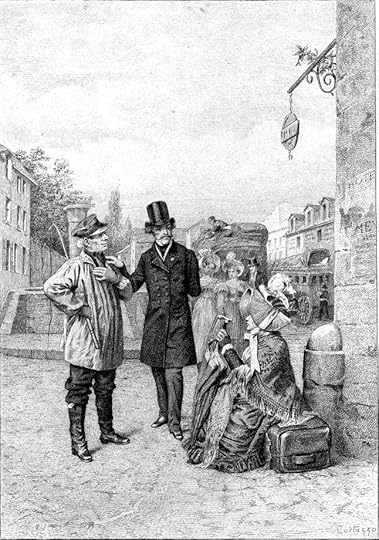
Este libro comienza con la explicación de los servicios de carruajes entre diferentes puntos de Francia, hasta que nos centramos en el que nos lleva, en 1822, desde L'Isle Adam hasta París. En un pequeño negocio, montado por un emprendedor ambicioso, un coucou (un tipo de coche de la época) se prepara para hacer el viaje, sin prisas, según van llegando diferentes personajes.
Como si se tratara de "La diligencia", de John Ford, vamos conociendo a todos aquellos que viajan a la capital, o a poblaciones a mitad del camino, pero descubrimos que todos, o prácticamente todos, mienten sobre su origen. Algunos porque no quieren ser descubiertos como nobles y otros, simplemente, para hacerse los graciosos.
En lo que parece que va a ser una "road novel", más o menos a la mitad del libro van bajando los pasajeros y descubrimos que todos ellos se relacionan de alguna manera, centrándonos en la vida de Oscar Husson, el graciosillo del viaje, que por sus bromas pierde la oportunidad de llegar a ser alguien. O al menos lo hace de momento, porque en el resto del libro vemos cómo evoluciona de jovencito un poco gañán a un hombre de provecho.
Al final del libro, Balzac vuelve a reunir a gran parte de los personajes en la misma ruta, y descubrimos cómo el karma ha funcionado, más o menos a largo plazo, aunque ninguno (quitando los especuladores) ha pasado por la vida sin dejarse parte por el camino, en algunos casos literalmente.
Opening lines: Les chemins de fer, dans un avenir aujourd’hui peu éloigné, doivent faire disparaître certaines industries, en modifier quelques autres, et surtout celles qui concernent les différents modes de transport en usage pour les environs de Paris.
Scènes de la vie privée : 3* La maison du Chat-qui-pelote (1830) 3* Le bal de Sceaux (1830) 3* La Bourse (1830) 4* La Vendetta (1830) 3* Madame Firmiani (1832) 3* Une Double Famille (1830) 4* La paix du ménage (1830) 3* La Fausse Maîtresse (1842) 3* Étude de femme (1830) 4* Albert Savarus (1842) 4* Mémoires de Deux Jeunes Mariées (1841) 3* Le Colonel Chabert (1844, first published as La transaction, 1832) 4* Une fille d'Eve (1839) 3* La Femme Abandonee (1833) 4* La Grenadière (1832) 3* Le Message (1833) 3* Gobeseck (1830) 3* Autre Etude de Femme (1839-1842) 4* La Femme de Trente Ans (1834) 4* Le Contrat de Marriage (1835) 3* La Messe de L'Athee (1832) 2* Beatrix (1839) 4* La Grande Bretèche (1832) 3* Modeste Mignon (1844) 2* Honorine (1843) 3* Un Début dans la Vie (1844) End of the series "Études de moeurs: Scènes de la vie privée series".
"Falha-se sempre na realidade aquela vida que se planeou com a imaginação" (Eça de Queirós)
Inicialmente, é-nos introduzido um conjunto de personagens, muito diverso entre si, que se conhecem numa viagem de "coucou". Esta viagem torna-se atribulada, porquanto está recheada de mentiras e artimanhas. No entanto, culmina na desgraça de Oscar Husson, o "herói" (apesar de nada heróico fazer) da narrativa.
Assim, pecando pela indiscrição, vê o seu futuro arruinado. Porém, através da força de vontade da sua mãe (sabendo da incompetência inerente à personalidade do filho), consegue uma segunda oportunidade de sucesso na vida, igualmente vantajosa à primeira, outrora desperdiçada.
Acontece que, pior do que a indiscrição, surge a vaidade, e Oscar destrói, pela segunda vez, o seu futuro brilhante como Procurador de França.
Aprendidas as duras lições, consegue singrar na vida, prosseguindo carreira militar (e perdendo um braço pelo caminho).
Finalmente, 15 anos volvidos, as personagens iniciais reunem-se, por mero acaso, no mesmo "coucou", agora melhorado. Aqui, conclui-se que houve progressos e desavenças, na vida de cada um.
Nada melhor resume este livro do que o excerto final d'Os Maias, talvez inspirado por Balzac.
Certo é que o destino mais provável de ser alcançado é o da mediocridade.
Now that I've read this novel, I've reached the end of the section of the "Comedie humaine" that Balzac called "Scenes de la vie privee" (scenes of private life). It's the story of Oscar (an odd French name), who, despite weakness of character, becomes a solid citizen. But it's also about a million other things, chock full of details and complications, which, in many ways, are more believable than Oscar's story. I confess that I couldn't follow a lot of the details of the characters' schemes to defraud each other, the various types of lawyers, and the elaborate descriptions of clothing. You'd need an encyclopedia to figure all that out. But some of the episodes are masterful, such as the coach ride in which young passengers vie with each other with tall tales about themselves. Just that could make a fine movie. According to my Kindle, I've only read 17% of the "Comedie humaine." What's always astonishing with Balzac is his extensive knowledge, the information that he packs into his novels. Was it accurate? Does it matter after so many years? He is also extremely cynical about his characters, seldom attributing high motives to them. Even Oscar's mother, whose devotion to her son is admirable, is flawed.
A comic novel in which an intrigue about property serves as the excuse for a trip in a public dilegence, where a group of people try to mystify each other with strange tales of their lives. At the conclusion of the trip, one of the seemingly least important characters turns out to be the main subject of the novel; there are some other largely comic scenes and the novel ends with about the same cast of characters on the same route many years later.
تختلف وجهات النظر الحياتيه بين شخصيات العمل البلزاكى وتتنوع وتعترض بعضها بعضا فى سياق العمل الدرامى وهى تتعارض بشكل واقعى لا تعسفى بحيث تنسج مع بعضها وتحيك عملا واقعيا كاملا سواء اكتسى طابع الملهاة او المأساة ولا يكون اى منهما الا فى الظاهر ولا يحتوى هذا الظاهر فى جوفه الا نقيضه . هذه هى احدى القراءات الممكنة لأعمال بلزاك وبما اننا بصدد التعليق على عمل محدد فمن الواجب التنويه بأن اى قراءة لأى عمل ادبى لا تتكون الا من خلال افصاح العمل عن ذاته من خلال تركيبه واذا تنوعت هذه الرؤى فلا بد ان احداها هو المسيطر على سياق العمل ورغم ان الرؤية السابقة تسرى فى مجمل الاعمال البلزاكية الا انها اشد وضوحا فى سياق تلك الرواية الصغيرة والتى يزيد قصرها من شدة وضوحها فالقارئ يمكن ان يتنبه الى الرؤية الفنية العامة للكاتب فى سياق الاعمال الصغيرة بوضوح اكبر ، الى جانب البساطة والتلقائية فى سير الاحداث والقدرة الادبية على الوصف من وصف للاماكن والحوارات النفسية وعلاقة النفس بمحيطها والعكس وغير ذلك من جوانب الابداع الادبى عند بلزاك وهى الادوات التى عرف الكاتب جيدا كيف يستغلها فى صالح ابراز رؤيته العامة من خلال تفاصيل كل عمل . اما عن هذا العمل المستوحى من قصة حقيقية فقد اراد بلزاك ان يبرز فيه دور الحظ فى الحياة والذى لا يمكن تفسيره ولا جلبه بالقصد فهو يجسد العشوائية وهو حدوث غير المتوقع او فوق المتوقع والذى قد يبقى على المتخاذل ويهدم المبادر او يعلى من الجاهل ويغمر العالم او ينجى الاثم ويهلك البرئ وهو ما لم يجرؤ احد على الخوض فى الحديث عنه من حيث تبيان علته او اثر وجوده فى مواجهة وجود الله . وهو فى هذه الرواية مجرد ابراز لهذا الاثر لا محاولة للتعليل وانما للتعايش . هذا الى جانب حوار مستمر على مدار الاعمال البلزاكية بين روح الشباب وروح القدماء . بين روح البرجوازية والارستقراطية . بين روح البراءة واللؤم . بين روح الفقر والغنى . بين روح الطموح وروح الخمول . بين روح الثورة وروح الموروث ...... هذا الحوار المستمر بين كافة مستويات التناقضات المختلفة والمتنوعة والمتشابكة فى تجسدها بشخصيات العمل الروائى تجسدا واقعيا من النشأة وظروف الحياة وتبلور الارادة الذاتية والخبرات المخزونة بالوعى ، نقول ان هذا الحوار الواقعى يضيف الى ثراء العمل البلزاكى وتعدد قراءاته ولكنه لا يبعث على التشتت فالرؤية العامة لدى بلزاك -السالفة الذكر - هى الوحدة التى تحكم الاجزاء ولا تخرج هذه الاجزاء عنها الا بقدر ما تخرج امور حياتنا اليومية المعتادة عن المتوقع او بقدر ما تفاجئنا الاقدار فى سياق الحياة . فلا يحرم الكاتب قارئه من متعة الذهول بين حين واخر وبشكل مألوف وهى حالة يضطر القارئ فيها للتصالح مع القدر او تكوين مفهوم عبثى عن الحياة بشكل عام . او قد يُكوِن نقدا ذاتيا يجمع ويقبل شتى التناقضات سواء المفهومة او تلك التى لم تُفهم بعد .
On change de cadre et on délaisse le sujet des femmes dans cette longue nouvelle.
L’action s’ouvre sur un trajet en coucou (sorte de diligence pour 6 passagers) avec des personnages qui mentent sur leur situation, un comte qui tait son nom, un élève en peinture qui fait des bons mots.
Ce petit monde se retrouvera quelques années plus tard, et leurs situations auront bien changées.
J’ai eu de la peine pour Oscar, le personnage principal, pauvre collégien qui se rend chez le comte et qui, lui aussi, par colère, ment sur son identité et se moque du comte qu’il n’a pas reconnu.
Cela lui vaudra de retourner chez sa mère plus vite que prévu, de perdre l’appui du comte, de se retrouver dans une étude de notaire où il fera encore des siennes, pour finir dans l’armée et en sortir gradé après avoir « pris du plomb dans la tête » (aurait dit ma grand-mère).
J’ai appris l’existence du Champ d’asile, une colonie française éphémère, fondée au Texas en 1818 par cent vingt officiers bonapartistes, qui furent chassé par les espagnols quelques mois plus tard.
Sur les châtiments corporels : Aussi, le système des punitions corporelles, quoique des philanthropes l’aient fortement attaqué dans ces derniers temps, est-il nécessaire en certains cas pour les enfants ; et, d’ailleurs, il est le plus naturel, car la nature ne procède pas autrement, elle se sert de la douleur pour imprimer un durable souvenir de ses enseignements. (p.515)
Beinahe könnte man denken, dies sei die Vorlage für John Fords Stagecoach. Der erste Teil besteht aus einer Kutschfahrt. An Bord unser Protagonist Oscar Husson, und eine Handvoll Leute, die sich plaudernd die Zeit vertreiben. Besonders hervor tut sich ein Mann, Georges, der offensichtlich das Blaue vom Himmel lügend von seinen Abenteuern im Orient erzählt. Das Ganze ist sehr lustig erzählt. Der junge Oscar, um überhaupt etwas beizutragen, berichtet von der Hautkrankheit des, bei Balzac offenbar notwendigen Pairs und deutet die Untreue dessen Gattin an. Leider befindet sich besagter Pair inkognito auch in der Kutsche. Der will nämlich seinen betrügerischen Aufseher aufsuchen. Dieser Aufseher ist aus einem Grunde, den ich nicht verstanden habe der Wohltäter Oscars. Jedenfalls muss sich Oscar wegen dieser peinlichen Angelegenheit als 3. Schreiber verdingen. Kaum zum zweiten Schreiber hochgedient verspielt er 500 Francs, die sein Chef ihm anvertraut hatte. So muss er Soldat werden, verliert einen Arm gewinnt aber an Würde. Am Ende sitzen wieder fast alle in einer Kutsche. So interessant ist das nicht. Oscar, so schließt Balzac ist zum langweiligen Bürger geworden. Schöne Pointe, wenn man das mag. Mir war das erzählerisch zu uneinheitlich. Als Novelle, nach der Fahrt abgeschlossen, hätte mir dieses Werk gut gefallen.
This entire review has been hidden because of spoilers.
Yazarın 88 anlatıdan oluşan yapıtı İnsanlık Güldürüsü'nün 1844 te basılan anlatılarından biri. Fransa'da 19. Yüzyılın ilk yarısında posta arabasıyla yapılan bir yolculuğun romanı. Arabada 6 kişi vardır. Kimliğinı gizleyen bir bakan, bir çiftçi, bir noter yazmanı, bir ressam ve öğrencisi, bir de ergen. Hepsi aynı yere giderler. Bakanın çifliğine. Ama onun aralarında olduğunu bilmediklerinden aleyhinde atar tutarlar. Çiftliğe vardıklarında gerçeği görüp donakalacaklardır. Çevirmen Tahsin Yücel'in dile hakimiyeti konuşmalarda geçen çarpıtılmış atasözlerini açıklayan dip notları hayranlık verici. Balzac'ın roman kişilerini tanıtırken en önemli özellikleri olarak ne kadar frankları olduğunu vurgulaması kendi yoksulluğu ve girdiği her işi batırmasıyla mı ilgili acaba? Aradan onbeş yıl geçer. Bu onbeş yılda arabadaki 6 kişinin başından çok şeyler geçer. Kimi evlenir ama aşkla değil kızın getireceği drahoma hesabıyla. Kimi zengin kimi yoksul olmuşlardır. Romanın sonunda yine aynı sürücünün posta arabasında bir araya gelirler.
Tym razem bardziej realistyczne (prawie flaubertowskie) niż romantyczne oblicze Balzaca. Jest to nadal "scena z życia prywatnego", skupiona na niełatwym dojrzewaniu nierozważnego Oscara Hussona do zacnej mieszczańskiej przeciętności, nakreślona jednak na szerokim tle społeczno-historycznym: podparyski dyliżans służy jako soczewka, w której skupia się obyczajowość różnych grup społecznych, a przeskok o 15 lat pozwala odmalować zmiany, jakie przyszły wraz z monarchią lipcową. Dużo barwnych postaci, często będących nawiązaniem do reszty "Komedii Ludzkiej". Uwagę zwraca nadopiekuńcza matka Oscara, dawna "Aspazja Dyrektoriatu", później żona rozczarowującego nieudacznika-męczyduszy, wreszcie skurczona, pobożna wdowa - jej losy w największym chyba stopniu odzwierciedlają ustrojowo-społeczne przemiany we Francji na przełomie XVIII i XIX wieku.