Jump to ratings and reviews
Rate this book

Awakening the Evangelical Mind: An Intellectual History of the Neo-Evangelical Movement

Rate this book
The first major study to draw upon unknown or neglected sources, as well as original interviews with figures like Billy Graham, Awakening the Evangelical Mind uniquely tells the engaging story of how evangelicalism developed as an intellectual movement in the middle of the 20th century. Beginning with the life of Harold Ockenga, Strachan shows how Ockenga brought together a small community of Christian scholars at Harvard University in the 1940s who agitated for a reloaded Christian intellect.

With fresh insights based on original letters and correspondence, Strachan highlights key developments in the movement by examining the early years and humble beginnings of such future evangelical luminaries as George Eldon Ladd, Edward John Carnell, John Gerstner, Gleason Archer, Carl Henry, and Kenneth Kantzer.

229 pages, Kindle Edition

First published October 6, 2015

13 people are currently reading
137 people want to read

About the author

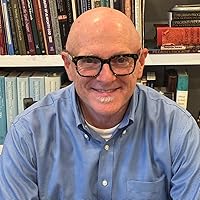
Owen Strachan

44 books139 followers
Dr. Owen Strachan is Provost and Research Professor of Theology at Grace Bible Theological Seminary (GBTS). Before coming to GBTS, he served as Associate Professor of Christian Theology and Director of the Residency PhD Program at Midwestern Baptist Theological Seminary (MBTS). He holds a PhD from Trinity Evangelical Divinity School, an MDiv from Southern Seminary, and an AB from Bowdoin College. Strachan has published fourteen books and writes regularly for the Christian Post, and Thoughtlife, his Patheos blog. Strachan hosts the City of God podcast. He is married and is the father of three children.
You can also connect with Strachan on Facebook.

Ratings & Reviews

What do you think?
Rate this book

Friends & Following

Create a free account to discover what your friends think of this book!

Community Reviews

5 stars
25 (35%)
4 stars
27 (38%)
3 stars
15 (21%)
2 stars
4 (5%)
1 star
0 (0%)
Displaying 1 - 11 of 11 reviews
Profile Image for David J. Harris.
269 reviews29 followers
October 21, 2016
In Awakening the Evangelical Mind, Owen Strachan tells the story of how a group of post-war scholars including Carl Henry and Harold Ockenga sought to once again revive the life of the mind in American Christianity. Historically, the Christian faith had exercised a tremendous influence in answering the questions of the day. In every cultural context since the dawn of the early church, the Christian community had produced thinkers who brought the Christian worldview to every intellectual pursuit in life. But at the turn of the 20th century, that began to change. Fundamentalism, which began as an effort to take institutions from the hands of modernists by sheer force, was a movement that came to resent not only liberal scholarship, but the life of the mind itself. In the face of fundamentalism's soon collapse in the early 1900's, it retreated from public engagement altogether. Instead of seeing Christianity as having a voice in the academic landscape, fundamentalists, who wanted to keep their connections strong and suffering institutions powerful, re-shaped Christianity as simply a matter of personal choice, not a source for engagement in the real questions of the culture. They withdrew from the mainstream and attempted to build their own institutions "separate" from the fallen world. And fallenness included serious academic involvement. But the men who led the "awakening" as Strachan calls it, believed that the faith once delivered was not simply something personal and therapeutic, but was historically true and grounded in reality, and therefore able to be scrutinized by the thinkers of the day and stand strong. Thinking isn't dangerous: it's actually Christian. Therefore serious study is Christian and necessary to engage the public. The fruits of their labor, as the author demonstrates, are still with us today, and the Christian mind lives on.

I want to be clear that this is not a critique of fundamentalism as a whole. Obviously, the doctrinal positions fundamentalists held and their unwillingness to back down from those positions are admirable. The particular trait of the fundamentalists that comes under the microscope of the book is their view of education and understanding of how to best engage the public. And that critique is a pretty good one.

I received a free copy of this book from the publisher and was not required to write a positive review.
Profile Image for Jason.
172 reviews1 follower
December 11, 2015
When the influence of evangelical scholarship began to wane at main line seminaries and colleges in the late 19th century in America, outlets for serious intellectual development of the evangelical mind receded. At the height of the fundamentalist movement, in the 1920's, evangelical scholarship was probably at its lowest point, from without and least respected and wanted, from within the movement of American evangelical Christianity.

Owen Strachan, a theologian at Midwestern Baptist Seminary, has attempted in this short book to show how leading younger evangelicals began to reemphasis the role of mind and its role in evangelical life, leading to today's neo evangelicalism. Strachan gives particular attention to Harold Ockenga, and his gathering of serious, conservative Christian scholars at Harvard in the 30's. He later turns his attention to Carl Henry, who founded Christianity Today, George Ladd, and others like Van Til and the critical role of the founding of Westminster Seminary in the 30's.

While a useful retelling, the most important feature of this work is the concluding chapter that attempts to analysis what happened, its successes and failures. The audience of this book should be any evangelical pastor and serious lay leader who wants to understand the movement they are a part of better and more fully, in order to understand how challenges have been and can be met in the future. While often dealing with individuals that could be obscure to many readers, this is not a difficult book and can be read in a couple of sittings, making it a useful resource.
Profile Image for David Goetz.
277 reviews1 follower
November 26, 2017
Decent examination of Harold John Ockenga as the father of neo-evangelicalism and Edward Carnell, Carl F. H. Henry, and the rest of the "Cambridge evangelicals" who did graduate work at Harvard in the 1930s and 1940s. Strachan's goal is to do "intellectual history by way of social history," showing the neo-evangelicals' as the fountainhead of an "intellectual awakening that took place among conservative Christians in America" and also showing their "intellectual insecurity, their sometimes preening ambition, [and] their considerable interest in proving themselves before a non-Christian audience that likely took less stock of the group than they might have wanted to admit."

I knew quite a bit about Henry going in, the basics but not much more about Ockenga, and nothing of Carnell, so the sections on the latter two men were informative. The sections on Ockenga's unusual combination of Keswick-style holiness theology and old-school Congregational Calvinism were fascinating, as were the parts on Machen's influence on him and on Machen's role in getting Ockenga hired at Park Street Church in Boston. The sections on Ockenga's predecessor at Park Street, A.Z. Conrad, were likewise interesting; he seems deserving of greater attention than he's received. Again, I had never heard of Carnell before reading this book, so it was surprising to hear Strachan consistently identify him as clearly the brightest of all the Cambridge evangelicals, and it was sad to read of his depression and early death. An entire chapter is devoted to Henry's ambition to start a Harvard-quality Christian university (unfortunately named "Crusade University"), which was interesting but maybe longer than it needed to be.

The conclusion gives Strachan's reflections on the neo-evangelicals, which were the best part of the book. Basically, Christians should be marked by intellectual vigor because we're called to love God with our minds. Additionally, we should underestimate neither the power of institutions to shape culture nor the power of small institutions (contra Henry here) to train men and women in a comprehensive "Christian world-life view" (Henry's term) so that we might be salt and light for Christ in the world.
360 reviews2 followers
December 17, 2019
The subtitle of this book is “An Intellectual History of the Neo-Evangelical Movement.” Essentially, the author shows how the lives of men like Harold John Ockenga, Carl Henry, Billy Graham, and Edward Carnell all fit together in what might be called a reformation of the protestant church in America during the 40’s and 50’s. I had known bits and pieces of this, but this the first time I have seen these things brought together.

The essential lessons from this book are that biblical Christianity does not have to take an intellectual back seat to the secular world. These men all valued education highly and sought to create institutions which would carry on their vision. It wasn’t just about their own intellectual preparation but the duplication and even multiplication of themselves in the next generation. It is interesting that they dreamed of a “Christian Harvard” a first class research university fully committed to the evangelical faith. It is an insight into their time that one of the things which stopped them was working out a moral and ethical code for the prospective student body. Some wanted a mandated wake up at 5 a.m. so the students could have an hour long devotional time before the day started. Some wanted it to be as disciplined as West Point because that would mark the students for life. I am sure there were others who were less rigorous, but they did seem divided on drinking, smoking, and movie attendance. There is a familiar ring to all of that.

This is the sort of book that one needs to help put things in perspective. I had read the biography of Carl Henry, but I knew very little about the other men in this history. It was a book well worth reading.
Profile Image for Andy Efting.
27 reviews
October 7, 2017
Owen Strachan paints an overly favorable portrait of the early leaders of New Evangelicalism. While there probably was a needed reversal of anti-intellectualism within mainstream fundamentalism, Strachan fails to balance this noble cause with their rejection of separation and where that rejection led the movement. The only thing he barely mentions is Graham’s giving Christian recognition to unbelievers by putting “nonevangelical ministers on his platforms.” There is much more that could be said about this tendency that too often resulted in a philosophy of calling someone a believer if only that someone would call the Neo-Evangelicals scholars. The quest for better scholarship was not bad but the overemphasis on this goal to the exclusion of Biblical obedience to separation from unbelief has left evangelicalism in the mess that it is. I also thought it was odd to spend so much time on Carl Henry’s failed initiative to establish a Harvard for evangelicalism.

There were certainly some interesting tidbits regarding Ockenga, Carnell, and Henry, but, overall, I feel that Marsden and Mccune provide a better overview and analysis.
Profile Image for Roger Watkins.
1 review
July 18, 2017
Good book, great bibliography

I was a student of Dr. Strachan's a few years ago and can't recommend him more highly. However, if you have read several books about modern church history, especially books relating to the Neo-evangelicals, then this book won't have very many new insights for you. Even so, his bibliography has a great number of book recommendations to further your understanding of modern church history. I'd especially recommend it to new readers of the discipline. I must say, though, that I see more flaws with Neo-evangelicals and their institutions than Strachan. I find much more wisdom and hope in the work of local churches and ecclesiastical partnerships than I do parachurches and institutional endeavors.
Profile Image for Nate Bate.
277 reviews8 followers
September 8, 2020
A succinct yet comprehensive overview of the evangelical movement beginning with its founding members and tracing through to its modern leaders. Much of this was familiar to me, and so I did not read every word. I had forgotten about Fuller's radio program, and I don't recall knowing that Ockenga was a proponent of the second blessing. I find myself identifying with the intellectual curiously and hunger of the evangelical movement's founders.

I value what this book offers, and it would be a great introduction to folks who are unfamiliar with the origins of this movement. I would think this would be an excellent undergrad textbook.
Profile Image for Gerald Thomson.
Author 1 book9 followers
April 9, 2024
A very interesting survey of the intellectual movement known as the “new evangelicals,“ led by Harold John Ockenga, Carl F. H. Henry and Billy Graham. Strachan describes the environment where the need for an apologetics approach to Christianity was needed to compete in the marketplace of ideas, especially in elite universities. He then traces the contributions and influences of Ockenga and Henry to help that movement of academic presence, scholarship and publication. This book will fill in some holes regarding the history of the Christian church in the 20th century.
Profile Image for Samuel G. Parkison.
Author 8 books193 followers
May 14, 2017
This was an inspiring read. The content is fascinating, and Dr. Strachan is by all accounts a wordsmith, which means that this book was incredibly readable. This was the perfect book to read as I gear up for doctoral work this Fall--I'm looking forward to pushing--and being pushed by--my fellow students and "brothers in arms" to pursue academic excellence for the good of our culture, the upbuilding of the Church, and the glory of God.
Profile Image for Wagner Floriani.
146 reviews34 followers
July 28, 2019
Invigorating. An enjoyable read, well written, and a quick page turner. Only wish there was more space dedicated to a present look of the institutions and individuals referenced throughout.
Profile Image for Dr. David Steele.
Author 8 books264 followers
November 14, 2015

In the late 1940’s, V.W. Steele resigned as the Senior pastor at Bethel Baptist in Everett, Washington. He stepped away from his pulpit at the height of a revival as he felt prompted by God to move to another ministry. He loaded up the car with his young family made the long journey to Los Angeles. Providentially, he was commissioned by Charles Fuller to partner together and preach the gospel in Idaho, Montana and North Dakota. Pastor Steele was my grandfather, so I have a particular interest in his venture with Charles Fuller, the popular preacher on the Old Fashioned Revival Hour radio broadcast.


My grandfather pastored churches in a day where the battle lines were drawn. He lived in a day when men were willing to lose life and limb for the sake of doctrinal convictions. But he also lived in a day when the church was in a titanic struggle against the cultural monster of modernism.


Dr. Owen Strachan’s book, Awakening the Evangelical Mind provides an invaluable service for the church as he explores where the battle lines were drawn and introduces readers to the key players. These neo-evangelicals, including Harold Ockenga, Carl Henry, Billy Graham, and others helped establish the Christian mind in a culture awash in an sea of modernism.


Strachan traces the evangelical trajectory of these seminal thinkers by guiding readers through key historical turning points and decisions that were decisive for the establishment of the Christian mind in America. The author demonstrates how select Christian colleges and Seminaries were launched and the men who envisioned them. These are important historical details that the author skillfully tells; stories that have either been forgotten or worse yet, never heard!


R.C. Sproul and Mark Noll have both lamented about the decline of the Christian mind. Strachan’s excellent work is a much-needed corrective and salve for the soul. Strachan is eager to prop up the long history of the evangelical mind and optimistic about its future: “If the evangelical mind is not always appreciated, this simply cannot be because it does not exist. It does exist, and its contributions over two millennia are monumental.”


The author argues that evangelicals face some important decisions in the days ahead:


The church faces a profound choice: it can retreat and huddle, nursing its wounds as it accepts its intellectual marginalization. Or, it can learn once more from Ockenga, Henry, Graham, and the Cambridge evangelicals, and promote outstanding education that not only engages the questing heart but freshly awakens the evangelical mind.


Awakening the Evangelical Mind is a call to the next generation of Christian leaders to lead with biblical conviction and bold courage; to continue the legacy that was established by some great men of the faith.



Displaying 1 - 11 of 11 reviews

Can't find what you're looking for?

Get help and learn more about the design.