

What do you think?

جميلة
بينما يقاتل زوجها بعيداً على الجبهة، تمضي جميلة أيامها في نقل أكياس الحنطة من البَيْدَر إلى محطّة القطار في قريتها الصغيرة في القوقاز، مع سعيد، شقيق زوجها الأصغر، ودانيار، الوافد الجديد إلى القرية، بعدما أُصيب في أرض المعركة.
يراقب سعيد جميلة، المرحة والمفعمة بالحيوية، ودانيار الحزين المحبّ للعزلة، وما يجري بينهما من إعجابٍ متبادل. وفي الممر الجبلي الذي يقطعه الثلاثة يومياً، بعرباتهم المحمّلة بالحنطة، وعلى وقع الغناء الشجي الذي ينشده دانيار للوطن والأرض والجبال، سرعان ما تقع جميلة في حب دانيار، فتهرب معه قبل عودة زوجها، ليدرك الفتى الغضّ سيّد حقيقة الحب وجوهر السعادة...
يراقب سعيد جميلة، المرحة والمفعمة بالحيوية، ودانيار الحزين المحبّ للعزلة، وما يجري بينهما من إعجابٍ متبادل. وفي الممر الجبلي الذي يقطعه الثلاثة يومياً، بعرباتهم المحمّلة بالحنطة، وعلى وقع الغناء الشجي الذي ينشده دانيار للوطن والأرض والجبال، سرعان ما تقع جميلة في حب دانيار، فتهرب معه قبل عودة زوجها، ليدرك الفتى الغضّ سيّد حقيقة الحب وجوهر السعادة...
79 pages, Paperback
First published January 1, 1958
About the author
Chingiz Aitmatov
176 books981 followersChinghiz Aitmatov (Чингиз Айтматов, Tschingis Aitmatow, Čingiz Ajtmatov, Tšõngõz Ajtmatov, Cengiz Aytmatov, Tsjingiz Ajtmatov, Tchinguiz Aïtmatov, جنكيز ايتماتوف) was an author who wrote in both Russian and Kyrgyz. He was the best known figure in Kyrgyzstan literature.
Aitmatov's parents were civil servants in Sheker. The name Chingiz is the same as the honorary title of Genghis Khan. In early childhood he wandered as a nomad with his family, as the Kyrgyzstan people did at the time. In 1937 his father was charged with "bourgeois nationalism" in Moscow, arrested and executed in 1938.
Aitmatov lived at a time when Kyrgyzstan was being transformed from one of the most remote lands of the Russian Empire to a republic of the USSR. The future author studied at a Soviet school in Sheker. He also worked from an early age. At fourteen he was an assistant to the Secretary at the Village Soviet. He later held jobs as a tax collector, a loader, an engineer's assistant and continued with many other types of work.
In 1946 he began studying at the Animal Husbandry Division of the Kirghiz Agricultural Institute in Frunze, but later switched to literary studies at the Maxim Gorky Literature Institute in Moscow, where he lived from 1956 to 1958. For the next eight years he worked for Pravda. His first two publications appeared in 1952 in Russian: The Newspaper Boy Dziuio and Ашым. His first work published in Kyrgyz was Ак Жаан (White Rain) in 1954, and his well known work Jamilya appeared in 1958. 1980 saw his first novel The Day Lasts More than a Hundred Years; his next significant novel, The Scaffold was published in 1988. The Day Lasts More than a Hundred Years and other writings were translated into several languages.
Aitmatov suffered kidney failure and on 16 May 2008 was admitted to a hospital in Nuremberg, Germany, where he died of pneumonia on 10 June 2008, aged 79. His obituary in The New York Times characterized him as "a Communist writer whose novels and plays before the collapse of the Soviet Union gave a voice to the people of the remote Soviet republic of Kyrgyz" and adds that he "later became a diplomat and a friend and adviser to the Soviet leader Mikhail S. Gorbachev."
Chinghiz Aitmatov belonged to the post-war generation of writers. His output before Jamila was not significant, a few short stories and a short novel called Face to Face. But it was Jamila that came to prove the author's work. Louis Aragon described the novellete as the world's most beautiful love story, raising it even above Rudyard Kipling's World's Most Beautiful Love Story. Aitmatov's representative works also include the short novels Farewell, Gulsary!, The White Ship, The Day Lasts More Than a Hundred Years, and The Scaffold.
Aitmatov was honoured in 1963 with the Lenin Prize for Jamila and later he was awarded a State prize for Farewell, Gulsary!. Aitmatov's art was glorified by admirers. Even critics of Aitmatov mentioned high quality of his novels.
Aitmatov's work has some elements that are unique specifically to his creative process. His work drew on folklore, not in the ancient sense of it; rather, he tried to recreate and synthesize oral tales in the context of contemporary life. This is prevalent in his work; in nearly every story he refers to a myth, a legend, or a folktale. In The Day Lasts More Than a Hundred Years a poetic legend about a young captive turned into a mankurt serves a tragic allegory and becomes a significant symbolic expression of the philosophy of the novel.
A second aspect of Aitmatov's writing is his ultimate closeness to our "little brothers" the animals, for their and our lives are intimately and inseparably connected. The two center characters of Farewell, Gulsary! are a man and his stallion. A camel plays a prominent role in The Day Lasts More Than a Hundred Years; one of the key turns of the novel which decide
Aitmatov's parents were civil servants in Sheker. The name Chingiz is the same as the honorary title of Genghis Khan. In early childhood he wandered as a nomad with his family, as the Kyrgyzstan people did at the time. In 1937 his father was charged with "bourgeois nationalism" in Moscow, arrested and executed in 1938.
Aitmatov lived at a time when Kyrgyzstan was being transformed from one of the most remote lands of the Russian Empire to a republic of the USSR. The future author studied at a Soviet school in Sheker. He also worked from an early age. At fourteen he was an assistant to the Secretary at the Village Soviet. He later held jobs as a tax collector, a loader, an engineer's assistant and continued with many other types of work.
In 1946 he began studying at the Animal Husbandry Division of the Kirghiz Agricultural Institute in Frunze, but later switched to literary studies at the Maxim Gorky Literature Institute in Moscow, where he lived from 1956 to 1958. For the next eight years he worked for Pravda. His first two publications appeared in 1952 in Russian: The Newspaper Boy Dziuio and Ашым. His first work published in Kyrgyz was Ак Жаан (White Rain) in 1954, and his well known work Jamilya appeared in 1958. 1980 saw his first novel The Day Lasts More than a Hundred Years; his next significant novel, The Scaffold was published in 1988. The Day Lasts More than a Hundred Years and other writings were translated into several languages.
Aitmatov suffered kidney failure and on 16 May 2008 was admitted to a hospital in Nuremberg, Germany, where he died of pneumonia on 10 June 2008, aged 79. His obituary in The New York Times characterized him as "a Communist writer whose novels and plays before the collapse of the Soviet Union gave a voice to the people of the remote Soviet republic of Kyrgyz" and adds that he "later became a diplomat and a friend and adviser to the Soviet leader Mikhail S. Gorbachev."
Chinghiz Aitmatov belonged to the post-war generation of writers. His output before Jamila was not significant, a few short stories and a short novel called Face to Face. But it was Jamila that came to prove the author's work. Louis Aragon described the novellete as the world's most beautiful love story, raising it even above Rudyard Kipling's World's Most Beautiful Love Story. Aitmatov's representative works also include the short novels Farewell, Gulsary!, The White Ship, The Day Lasts More Than a Hundred Years, and The Scaffold.
Aitmatov was honoured in 1963 with the Lenin Prize for Jamila and later he was awarded a State prize for Farewell, Gulsary!. Aitmatov's art was glorified by admirers. Even critics of Aitmatov mentioned high quality of his novels.
Aitmatov's work has some elements that are unique specifically to his creative process. His work drew on folklore, not in the ancient sense of it; rather, he tried to recreate and synthesize oral tales in the context of contemporary life. This is prevalent in his work; in nearly every story he refers to a myth, a legend, or a folktale. In The Day Lasts More Than a Hundred Years a poetic legend about a young captive turned into a mankurt serves a tragic allegory and becomes a significant symbolic expression of the philosophy of the novel.
A second aspect of Aitmatov's writing is his ultimate closeness to our "little brothers" the animals, for their and our lives are intimately and inseparably connected. The two center characters of Farewell, Gulsary! are a man and his stallion. A camel plays a prominent role in The Day Lasts More Than a Hundred Years; one of the key turns of the novel which decide
Ratings & Reviews
Friends & Following
Create a free account to discover what your friends think of this book!
Community Reviews
Displaying 1 - 30 of 1,356 reviews

April 28, 2014
I think the confusion about what this Aitmatov's 1958 short lyrical novella actually *is* stems from the often-quoted remark by the French writer Louis Aragon, hailing it as 'the most beautiful love story in the world'.
It *is* a love story of sorts, but it's *not* a romance. Seeing it as just a tale of two lovers is akin to reducing 'Anna Karenina' to nothing more but Anna and Vronsky's affair.
Love in this novella is far more than simply romance. It has a multitude of faces; it encompasses everything - from tender attraction between two young people to kind familial affection to deeply ingrained love for the quiet beauty of your homeland to the love of art and longing for self-expression.

In 1943, a small Kyrgyz village on the shores of a turbulent river in the shadow of the mountain range was teetering on the edge between old tribal life and the new expectations of Soviet living. Tribal laws still held strong, but the former nomads were now living in the villages and working in kolkhoz; patriarchal customs were observed, but since young men were away at the war the work fell on the shoulders of children and women.
Sait is a fifteen-year-old boy teetering on the brink of adulthood, the only son of his family not at war, a boy doing adult work, a boy who never dared to open his heart to the passion of art that lay deep within it - what kind of a craft is painting pictures anyway? In the naive remnants of his innocence, he feels fiercely protective of Jamilia, his sister-in-law, whose husband is away at war. It is through Sait's naive, mesmerized and often confused but yet astute eyes that we get to experience this short lyrical story of love, beauty and growing up.

It is through Sait's eyes that we see the development of that quiet, subdued love that grows between Jamilia, his sister-in-law, a young boisterous woman, the lively heart of every gathering, and Daniyar, a wounded soldier, quiet and introspective and therefore easily dismissed by those accustomed to domineering and outwardly assertive dzhigits. Sweet it may be, but there's nothing particularly new in this touching love that the old weary world has not seen before - its slow development from sometimes thoughtless teasing, its growth from eventual admiration, respect and understanding that sings to the souls of those involved.

What is amazing is the unexpected effect of this love, of which he is but an observer, on young Sait. It is through Jamilia and Daniyar's experiences that he opens his eyes to the overwhelming beauty of the land itself that surrounds him - the nature and the history, both ancient and present. It is through them that his heart opens to encompass the love for his land with which all the pages of this too-short of a book are saturated. The magic of Daniyar's voice - inspired by his feeling for Jamilia - uncovers the beauty of the world and allows it to deeply touch Sait's soul.
And it is through Jamilia and Daniyar - through their decision to pursue their hearts - that Sait dares to consider his own love and his own desires. It is through them that the boy - or perhaps, now a young man - discovers his own passion, until then deeply buried under the weight of duty, denial and tradition. Daniyar's songs open his eyes to the beauty around them. Jamilia's determination and courage allow his to see the possibilities before him.

4.5 stars.
It *is* a love story of sorts, but it's *not* a romance. Seeing it as just a tale of two lovers is akin to reducing 'Anna Karenina' to nothing more but Anna and Vronsky's affair.
Love in this novella is far more than simply romance. It has a multitude of faces; it encompasses everything - from tender attraction between two young people to kind familial affection to deeply ingrained love for the quiet beauty of your homeland to the love of art and longing for self-expression.
In 1943, a small Kyrgyz village on the shores of a turbulent river in the shadow of the mountain range was teetering on the edge between old tribal life and the new expectations of Soviet living. Tribal laws still held strong, but the former nomads were now living in the villages and working in kolkhoz; patriarchal customs were observed, but since young men were away at the war the work fell on the shoulders of children and women.
Sait is a fifteen-year-old boy teetering on the brink of adulthood, the only son of his family not at war, a boy doing adult work, a boy who never dared to open his heart to the passion of art that lay deep within it - what kind of a craft is painting pictures anyway? In the naive remnants of his innocence, he feels fiercely protective of Jamilia, his sister-in-law, whose husband is away at war. It is through Sait's naive, mesmerized and often confused but yet astute eyes that we get to experience this short lyrical story of love, beauty and growing up.
It is through Sait's eyes that we see the development of that quiet, subdued love that grows between Jamilia, his sister-in-law, a young boisterous woman, the lively heart of every gathering, and Daniyar, a wounded soldier, quiet and introspective and therefore easily dismissed by those accustomed to domineering and outwardly assertive dzhigits. Sweet it may be, but there's nothing particularly new in this touching love that the old weary world has not seen before - its slow development from sometimes thoughtless teasing, its growth from eventual admiration, respect and understanding that sings to the souls of those involved.
"This was a man deeply in love. He was in love, I felt, not just with another person; it was a different, enormous love - love for life, for the land. Yes, he saved this love in himself, in his music; he lived for this love. An indifferent person could not have sung like that, no matter how good of a voice he had."
What is amazing is the unexpected effect of this love, of which he is but an observer, on young Sait. It is through Jamilia and Daniyar's experiences that he opens his eyes to the overwhelming beauty of the land itself that surrounds him - the nature and the history, both ancient and present. It is through them that his heart opens to encompass the love for his land with which all the pages of this too-short of a book are saturated. The magic of Daniyar's voice - inspired by his feeling for Jamilia - uncovers the beauty of the world and allows it to deeply touch Sait's soul.
"This whole world of beauty and unrest was revealed to me through Daniyar's song. Where did he learn all this, who told him all this? I understood that such love for his land could have come only from someone who longed for it with his whole heart of many years; who earned this love through suffering. As he was singing, I could see him - a small boy, wandering along the roads in the steppe. Was it then that the songs about homeland were born in his soul? Or was it when he was marching the fiery miles of the war?
Listening to Daniyar, I wanted to fall on the ground and firmly, like a son, embrace it - if only because it could inspire such love in a person. For the first time I felt inside me the awakening of something new, something I couldn't even name yet, but it was something irresistible, the need to express myself, yes, express - not just see and feel the world myself, but to bring my vision, my thoughts and feelings to others; to tell people about the beauty of our land with as much inspiration as Daniyar had. I was trembling with unexplained fear and happiness for something unknown. But back then I haven't yet realized that I needed to take up a paintbrush."
And it is through Jamilia and Daniyar - through their decision to pursue their hearts - that Sait dares to consider his own love and his own desires. It is through them that the boy - or perhaps, now a young man - discovers his own passion, until then deeply buried under the weight of duty, denial and tradition. Daniyar's songs open his eyes to the beauty around them. Jamilia's determination and courage allow his to see the possibilities before him.
"If I just could to some degree reproduce Daniyar's song! It had almost no words; without words it was able to reveal the great soul of humanity. I haven't heard a song like that before or since: it was unlike either Kazakh or Kyrgyz songs, and yet it had both of them in it. Daniyar's music absorbed the best melodies of the two brotherly peoples, and wove them together into one unforgettable song. It was the song of the steppes and the mountains, at times brightly soaring like the Kyrgyz mountains, at times vastly rolling, like the Kazakh steppes."This 'most beautiful love story in the world' is such precisely because of this - because of the exhilarating, all-encompassing love and admiration for life and land that stems from every word in it, going lightyears beyond the simple romance, pouring its soul out on the pages, beckoning the reader to look past the familiar and into the heart of real wondrous beauty, and to find something wonderful deep inside our souls on this journey.
"I remembered them leaving the village, and I had an irresistible desire to set out on the road, set out just like they did, courageously and decidedly, on the difficult road to happiness."
"I look at them and hear Daniyar's voice. It beckons me to set out on a journey - and so I need to get ready. I will walk through the steppe to my village, I will find new colors there.
Let Daniyar's melody resonate in every one of my brush strokes! Let Jamilia's heart beat in every one of my brush strokes!"
4.5 stars.

January 18, 2016
هذه الروايه التي وصفت بأنها أجمل قصة حب في العالم تحكي قصة حب واقعية حدثت ابان الحرب العظمى بين السوفييت والألمان في احدى قرى سهوب القزخ .
جمالية النص وانسيابيته وعذوبة مفرداته تنبع من بساطة القصة من أدب حب الفقراء ذلك الحب النقي الخالي من اية قيود او تعقيدات ماديه او مجتمعية كانت .
جمالية النص وانسيابيته وعذوبة مفرداته تنبع من بساطة القصة من أدب حب الفقراء ذلك الحب النقي الخالي من اية قيود او تعقيدات ماديه او مجتمعية كانت .

August 28, 2015
هیچ مردی نمی فهمد که در فکر یک زن چه می گذرد
کتاب های چنگیز آیتماتف در زمان جنگ می گذرند
ولی نه در میدان جنگ
بلکه در دِهی از صدها دهکده ای که مردان جوان به جنگ رفته اند
پیرمردان و بچه ها مانده اند
و مادران و زنانی که در بین شان نو عروس هم هست
..و چند ماهی از ازدواج شان نگذشته؛ مردانشان را به جنگ برده اند
غم مادران و دیگر زنان یک طرف، درد جمیله یک طرف
او دلتنگ لذت همآغوشی نیست
وگرنه آغوش مرد بی شعوری مثه عثمان و یا هر مرد با شعور دیگری را رد نمی کرد
دردش چیز دیگریست
..همان چیزی که در نامه های رسیده از شوهرش می جوید
:و در آخر
لویی آراگون، شاعر و نویسنده ی فرانسوی، جمیله را زیباترین داستان عاشقانه ی جهان نامیده است
:یکی از جملات زیبای کتاب
مثل پرنده ای بودم که پریدن را از هر کاری آسان تر می داند
کتاب های چنگیز آیتماتف در زمان جنگ می گذرند
ولی نه در میدان جنگ
بلکه در دِهی از صدها دهکده ای که مردان جوان به جنگ رفته اند
پیرمردان و بچه ها مانده اند
و مادران و زنانی که در بین شان نو عروس هم هست
..و چند ماهی از ازدواج شان نگذشته؛ مردانشان را به جنگ برده اند
غم مادران و دیگر زنان یک طرف، درد جمیله یک طرف
او دلتنگ لذت همآغوشی نیست
وگرنه آغوش مرد بی شعوری مثه عثمان و یا هر مرد با شعور دیگری را رد نمی کرد
دردش چیز دیگریست
..همان چیزی که در نامه های رسیده از شوهرش می جوید
:و در آخر
لویی آراگون، شاعر و نویسنده ی فرانسوی، جمیله را زیباترین داستان عاشقانه ی جهان نامیده است
:یکی از جملات زیبای کتاب
مثل پرنده ای بودم که پریدن را از هر کاری آسان تر می داند

January 21, 2016
حين لا يتميز المرء بأي شيء فإن الناس ينسونه شيئًا فشيئًا
لا تُغريني صورة لامرأة متعلمة، مثقفة، ومتحررة تُناضل وتحارب من أجل شيء ما؛ أيًا كان هذا الشيء الذي تحارب من أجله قدر ما تُغريني صورة لامرأة بسيطة تحت قمع اجتماعيًا كان أو سياسيًا (الحرب) ولازالت تحارب بالقدر الذي تستطيع.
للأسف دائمًا ما يعتقد البعض أن الرجال يذهبون للحرب، بينما تجلس النساء تنتظر!
لكن النساء تخوض حرب أشد ضراوة، حرب لا تعرف فيها من هو العدو بالتحديد ولا يمكن وضع خطط واستراتيجيات كما في حروب الرجال.
النساء تحارب الجوع، الفقر، الموت، الخوف، الانتظار...إلخ
يحارب الرجال من أجل مجدهم الخاص، من أجل أن يكتب التاريخ بطولاتهم
وتحارب النساء من أجل الأطفال والشيوخ، وحتى من أجل الرجال أنفسهم
تحارب النساء من أجل الجميع، وتبقى ف النهاية (الجندي المجهول) وفقط!
وهناك، في الدرب الذي سلكه الناس إلى الحرب؛ ظلت مرارة آثارهم...
الأفضل ألا تعرفوا شيئا عن الحرب
بالنسبة ليّ هذا هو مغزى القصة، وهذا هو ما أحببته بها
جميلة؛ الفتاة التي ذهب زوجها للحرب وعاشت بين عائلته تعمل وتنتظره!
تعمل عمل لا يقوى على تحمله الرجال
يستمد منها الصبي (الراوي) العزيمة والبأس، إذا كانت جميلة هذه تستطيع حمل هذه الأكياس على ظهرها بقوة وصبر لم لا أقدر أنا؟
أعجبتني قوتها، قدرتها على الضحك والمرح رغم الظروف
قدرتها على العمل بقوة وبأس دون أن تطلب المساعدة من أحد
ودون أن تعتقد أنها امرأة "بعضلات ضعيفة" لن تقدر على العمل
الاعتداد بالنفس، الثقة، القوة، المرح والجمال
هذا هو ما أعجبني، شخصية البطلة وصورتها المرسومة بعناية رغم ظروفها ورغم الحرب!
لم تعجبني القصة التي يُقال عنها أنها أجمل قصة حب في العالم!
أجمل قصة للحب على أساس من الخيانة
هكذا قصص تثير حفيظتي وتقززي، مهما كان جمالها ومهما كانت مبرراتها
ربما هذا هو الشيء الذي أفسد استمتاعي بها
لكنها في النهاية قصة جيدة وخفيفة..
تمّت

September 17, 2022
"Джамиля" - не просто повесть о любви. Это гимн женской независимости, женских прав, эмансипации. Даже сейчас общество в Кыргызстане, да и у нас в Казахстане, особенно в сельской глубинке, достаточно патриархально. Раньше почти не было разводов, и не потому, что семьи были крепкие. Где-то люди боялись, что скажут люди, некоторые боялись, что исключат из партии, и другие подобные надуманные причины. В бывших среднеазиатских республиках в описываемое время разведённая женщина имела мало шансов выйти замуж, можно сказать, никаких. Наверное, то, что Данияр был сиротой, намного облегчило ее решение. И вот представьте себе, насколько смела была Джамиля, чтобы пойти против общества, против устоев, навстречу своей любви, чтобы изменить мужу, лечащемуся в госпитале после ранения - однозначно, общественное мнение было бы на стороне фронтовика, героя. И не просто изменить, а уйти совсем. А ведь у Данияра ничего не было, кроме рваной шинели, да и сам он был инвалид. Джамиля - сильная, незаурядная женщина. И ей нужен был такой же мужчина. Эпизод с перегруженным мешком, который то и здоровый мужчина не всякий поднимет, и показывает его сильный характер. Его песни, так как он их исполняет, с большой любовью к родине, жизни, Джамиле показывают его чистую и прекрасную душу. Они были созданы друг для друга, и они нашли друг друга.

August 26, 2022
The novel I read previous to this one was a love story set in WW2, and I have continued with a not dissimilar theme with this 1958 novel, set in 1943 in Soviet Kirghizia – present day Kyrgyzstan. The author wrote in both Kyrgyz and Russian. I assume this novel was in the latter language - I’m not sure how many Kyrgyz to English translators there are available for the purposes of literature. It’s a novella of less than 100 pages.
The story is told in retrospect by a man called Seit, who is aged about 15 when the events take place, and the title character is his sister-in-law, whose husband Sadyk is away at the front. Although Seit refers to Sadyk as his brother, they aren’t biological brothers, so to speak, as their family is a composite one. Jamilia is young, beautiful and has a lively personality, all of which make her attractive to men. The complication in their lives comes in the form of a wounded soldier called Daniyar, who arrives back in the village to work with them on the harvest. His injuries mean he is unable to go back to the frontline. He and Jamilia “develop feelings” for each other, and Seit becomes aware of their secret.
Daniyar seemed a rather melancholy character for someone like Jamilia, but they say that opposites can attract. In some ways this is a fairly simple tale, but it is told in lyrical style. I realise of course that a translation is only a rendering of the original, but the translator has beautifully conveyed Seit’s emotions. The landscapes of Kyrgyzstan and the customs of its people form a significant part of this novella, especially the former. I found the text very appealing.
There is an inevitable clash between Jamilia’s feelings and the strict traditions of her community, and although Seit is only a third party, the events have a life-changing effect on him.
I imagine this portrayal of a Kyrgyz woman would have been a bit scandalous in 1958, both in terms of Kyrgyz life and in the idea that she fell in love whilst her husband was away serving at the front. It’s my first encounter with the literature of Kyrgyzstan, and I enjoyed it.
That’s enough love stories for a bit though…
The story is told in retrospect by a man called Seit, who is aged about 15 when the events take place, and the title character is his sister-in-law, whose husband Sadyk is away at the front. Although Seit refers to Sadyk as his brother, they aren’t biological brothers, so to speak, as their family is a composite one. Jamilia is young, beautiful and has a lively personality, all of which make her attractive to men. The complication in their lives comes in the form of a wounded soldier called Daniyar, who arrives back in the village to work with them on the harvest. His injuries mean he is unable to go back to the frontline. He and Jamilia “develop feelings” for each other, and Seit becomes aware of their secret.
Daniyar seemed a rather melancholy character for someone like Jamilia, but they say that opposites can attract. In some ways this is a fairly simple tale, but it is told in lyrical style. I realise of course that a translation is only a rendering of the original, but the translator has beautifully conveyed Seit’s emotions. The landscapes of Kyrgyzstan and the customs of its people form a significant part of this novella, especially the former. I found the text very appealing.
There is an inevitable clash between Jamilia’s feelings and the strict traditions of her community, and although Seit is only a third party, the events have a life-changing effect on him.
I imagine this portrayal of a Kyrgyz woman would have been a bit scandalous in 1958, both in terms of Kyrgyz life and in the idea that she fell in love whilst her husband was away serving at the front. It’s my first encounter with the literature of Kyrgyzstan, and I enjoyed it.
That’s enough love stories for a bit though…

March 29, 2023
Es un libro tan breve que quizás no vaya a permanecer en mi memoria durante demasiado tiempo pero a pesar de eso disfruté de cada página, el autor tiene una habilidad especial para contar esta historia de amor tan bonita..
Lo que más me gustó fue el uso de las costumbres y el folclore del país, el autor logra que nos adentremos en la vida en una aldea en Kirguistán en los años 40, las penurias y dureza del trabajo se ven suavizadas por la mirada nostálgica del narrador (que recuerda su infancia) y por el carismático carácter de Yamilia, siempre alegre y con una personalidad arrolladora.
Es de esos libros pequeños, costumbristas y hermosos, que disfrutas tanto por su historia como por cómo se cuenta. Muy recomendable.
Lo que más me gustó fue el uso de las costumbres y el folclore del país, el autor logra que nos adentremos en la vida en una aldea en Kirguistán en los años 40, las penurias y dureza del trabajo se ven suavizadas por la mirada nostálgica del narrador (que recuerda su infancia) y por el carismático carácter de Yamilia, siempre alegre y con una personalidad arrolladora.
Es de esos libros pequeños, costumbristas y hermosos, que disfrutas tanto por su historia como por cómo se cuenta. Muy recomendable.

October 8, 2016
I bought this little book in a charity shop on a total whim, purely because I didn't think I had ever read an author from Kyrgyzstan. I am so glad I did, because it was absolutely wonderful.
The narrator of the tale is teenager Seit, and Jamilia is his sister-in-law. The story tells of the love between Jamilia and a shy newcomer to the village, Daniyar. I think because it is told by the youngster, there is a certain innocence in the telling, which is very effective.
My copy of this book has a quote on the front cover to the effect that this is "the most beautiful love story in the world". What that doesn't convey is that this is not just a love story in the sense of a romance, but also about a deeper love - a love for the land, for tradition, for music, for art, for life itself. Take, for example, this description of Seit hearing Daniyar sing for the first time:
He was a man deeply in love. I felt it was not simply a love for another person, it was somehow an uncommon, expansive love for life and earth. He had kept his love within himself, in his music, in his very being. A person with no feeling, no matter how good his voice, could never have sung like that.
There is such a wonderful sense of time and place here too - I felt totally immersed in rural life on the steppe. The language/translation is lyrical and flowing. I loved the fact, too, that the romantic heroine Jamilia is a strong, capable and assertive woman.
This book is an absolute gem. I loved it - can you tell?!
The narrator of the tale is teenager Seit, and Jamilia is his sister-in-law. The story tells of the love between Jamilia and a shy newcomer to the village, Daniyar. I think because it is told by the youngster, there is a certain innocence in the telling, which is very effective.
My copy of this book has a quote on the front cover to the effect that this is "the most beautiful love story in the world". What that doesn't convey is that this is not just a love story in the sense of a romance, but also about a deeper love - a love for the land, for tradition, for music, for art, for life itself. Take, for example, this description of Seit hearing Daniyar sing for the first time:
He was a man deeply in love. I felt it was not simply a love for another person, it was somehow an uncommon, expansive love for life and earth. He had kept his love within himself, in his music, in his very being. A person with no feeling, no matter how good his voice, could never have sung like that.
There is such a wonderful sense of time and place here too - I felt totally immersed in rural life on the steppe. The language/translation is lyrical and flowing. I loved the fact, too, that the romantic heroine Jamilia is a strong, capable and assertive woman.
This book is an absolute gem. I loved it - can you tell?!

February 27, 2019
عندما تجتمع مأساة كالحرب يولد شئ جميل كالحب
رواية خفيفة ذات وصف رائع دقيق
رواية خفيفة ذات وصف رائع دقيق

June 15, 2016
* Yaşamın çok değerli olduğunu herkes bilir; ama çoğu kimse yaşamın her anında bunun farkında değildir. Değerlidir yaşam; öyle bilgisayar oyunlarında oynanan, yanınca "yeniden başla"ya tıklayarak sıfırdan başlayamıyoruz çünkü. Tek can hakkımız var ve yemeğini yiyip suyunu içtiğimiz, havasını tükettiğimiz dünyamızdaki bu hakkımız ortalama olarak 70 yılla, başka bir deyişle 614.000 saatle sınırlıdır. Şayet geri sayım yapan bir saatimiz olsaydı kolumuzda, yani zaman ileriye doğru değil de, 614.000 saatten geriye doğru saysaydı, daha bir kıymetli olurdu yaşamımız ve kalan her günümüz. Artık her anını ve her saatini dolu dolu yaşamak için kafa yorardık muhtemelen; çünkü tükenen bir ömre sahip olduğumuzun daha bir farkında olurduk. Böyle olsaydı eğer, sanırım birçoğumuz kendimiz için bir
yaşam listesi
yapardık: nereleri gezmeli, ne yapmalı/yapmamalı, ne yemeli, ne içmeli, kimleri sevmeli, kimlerden uzak durmalı vs vs. Sanırım bu listede kitaplar için de bir yer olurdu: ne okumalı ya da ne okumamalı. Sizi bilmiyorum ama benim için bu listede Chingiz Aitmatov'un mutlaka yeri olurdu.
** Oldukça sade, kısa betimlemeler ve yormayan yazım diliyle okuyucuyu büyük bir ustalıkla öyküye ortak ediyor Aitmatov. Zaten kendinizi verdiniz mi, çorap söküğü gibi geliyor gerisi. Savaş sebebiyle eşi cephede olan Cemile'nin Daniyar'la herkesten köşe bucak saklanarak ve saklayarak yaşadıkları tarifsiz aşkı, ikinci dünya savaşının kırsal kesimlerde yarattığı tahribatı ve geride kalan köylülerin cephedeki çocuklarına erzak taşımak için giriştikleri insanüstü çabayı 75 sayfalık tek bir kitapta, hepsi bir arada, okuyabilirsiniz.
*** Ve son olarak yaşam değerlidir; ama okuduklarınızla daha bir değerlidir. Kitap için ömrünüzden eksilen değerli 2 saatinizin karşılığını fazlasıyla alacağınıza inanıyorum. İyi okumalar.
** Oldukça sade, kısa betimlemeler ve yormayan yazım diliyle okuyucuyu büyük bir ustalıkla öyküye ortak ediyor Aitmatov. Zaten kendinizi verdiniz mi, çorap söküğü gibi geliyor gerisi. Savaş sebebiyle eşi cephede olan Cemile'nin Daniyar'la herkesten köşe bucak saklanarak ve saklayarak yaşadıkları tarifsiz aşkı, ikinci dünya savaşının kırsal kesimlerde yarattığı tahribatı ve geride kalan köylülerin cephedeki çocuklarına erzak taşımak için giriştikleri insanüstü çabayı 75 sayfalık tek bir kitapta, hepsi bir arada, okuyabilirsiniz.
*** Ve son olarak yaşam değerlidir; ama okuduklarınızla daha bir değerlidir. Kitap için ömrünüzden eksilen değerli 2 saatinizin karşılığını fazlasıyla alacağınıza inanıyorum. İyi okumalar.

September 1, 2020
Djamila é um belíssima história de amor! Fiquei encantada com a escrita de Aitmatov. Deveras poética e sensorial. Senti-me transportada no tempo e no espaço. Valeu muito a pena a leitura.
(Comprei na Feira do Livro do Porto, no domingo passado, por apenas 5 euros. Tem razão quem diz que esta capa amarela não tem sentido. Djamila não é a rapariga do brinco de pérola!)
(Comprei na Feira do Livro do Porto, no domingo passado, por apenas 5 euros. Tem razão quem diz que esta capa amarela não tem sentido. Djamila não é a rapariga do brinco de pérola!)

March 9, 2024
Der 15-jährige Said lebt in einem kleinen Dorf in der kasachischen Steppe. Es ist zur Zeit des 2. Weltkrieges und er passt auf seine Familie auf bzw. unterstützt sie, wo er nur kann. Seine beiden Brüder sind im Krieg .
Said schaut außerdem auch nach seiner Schwägerin, der wunderschönen, stolzen Djamila, die bei seiner Familie wohnt und von allen geliebt wird.
Said und Djamila transportieren zusammen mit dem Kriegsheimkehrer Danijar Getreide.
Und über eine gewisse Zeit hinweg beobachtet Said ein feines Band, welches zwischen seiner Schwägerin und dem schüchternen, zurückgezogenen Danijar entsteht.
Eine wundervolle Geschichte, die mit viel Liebe zur Natur und zu Menschen von Aitmatow verfasst wurde.
In diesem sehr dünnen Büchlein erfahren wir auch ein wenig von dem harten Leben damals. Und dennoch lesen wir Leichtigkeit und Lebensfreude. Vor allen Dingen aber von Sehnsucht und Liebe.
Mir hat es sehr gut gefallen und gerne möchte ich noch ein weiteres Buch von Aitmatow lesen. Freue mich da schon sehr über mehr Seiten.
Besonders schön fand ich die relativ neue, illustrierte Ausgabe. Die haben diese ruhige Geschichte sehr schön ergänzt.
Gefallen hat mir dazu die Tatsache, dass auch Said selbst in der Erzählung malt . Toll gemacht.
Said schaut außerdem auch nach seiner Schwägerin, der wunderschönen, stolzen Djamila, die bei seiner Familie wohnt und von allen geliebt wird.
Said und Djamila transportieren zusammen mit dem Kriegsheimkehrer Danijar Getreide.
Und über eine gewisse Zeit hinweg beobachtet Said ein feines Band, welches zwischen seiner Schwägerin und dem schüchternen, zurückgezogenen Danijar entsteht.
Eine wundervolle Geschichte, die mit viel Liebe zur Natur und zu Menschen von Aitmatow verfasst wurde.
In diesem sehr dünnen Büchlein erfahren wir auch ein wenig von dem harten Leben damals. Und dennoch lesen wir Leichtigkeit und Lebensfreude. Vor allen Dingen aber von Sehnsucht und Liebe.
Mir hat es sehr gut gefallen und gerne möchte ich noch ein weiteres Buch von Aitmatow lesen. Freue mich da schon sehr über mehr Seiten.
Besonders schön fand ich die relativ neue, illustrierte Ausgabe. Die haben diese ruhige Geschichte sehr schön ergänzt.
Gefallen hat mir dazu die Tatsache, dass auch Said selbst in der Erzählung malt . Toll gemacht.

October 23, 2025
One of the reasons I enjoy reading fiction is that it can capture a place in time, beyond what an average person can experience or envision on their own. It can capture lost languages, cultures, time periods, emotions, innocence and love. This is exemplified by this novella moreso than any other book I have read. It is a coming of age story focusing on Kyrgyz youth, living a traditional lifestyle in the Steppe. It captures their customs, folklore, traditions way of life and so on so much better than any anthropological text could, and humanises them. This way of life is very likely lost or diminished following the Soviet period. The efficiency and effusiveness of the text is spectacular. It really immerses you in the world of the characters in such a short space of time.
The story revolves around the forbidden love between Daniyar, an injured young man and Jamilia, who is the sister in law of the main character. It covers naive young love, coming of age, so well that it captures this as a moment in time too. The titular Jamilia is compelling in her strong mindedness, charisma, strength and humour. Our narrator's perspective genuinely reads like the writings of a young man coming of age, and centring Daniyar, who would often be marginalised in other tales is also brilliant.
The story revolves around the forbidden love between Daniyar, an injured young man and Jamilia, who is the sister in law of the main character. It covers naive young love, coming of age, so well that it captures this as a moment in time too. The titular Jamilia is compelling in her strong mindedness, charisma, strength and humour. Our narrator's perspective genuinely reads like the writings of a young man coming of age, and centring Daniyar, who would often be marginalised in other tales is also brilliant.

October 21, 2015
" انا احبك منذ زمن بعيد , وكنت احبك وانتظرك قبل ان اعرفك ! "
...
جميله , قرويه كازاخستانيه قوية الشخصيه جميله الخلقه قوية الاراده , متزوجه ب"صادق " الجندي البعيد في الحرب وهو الذي ينظر للزواج بأنه" واقع حال " او "شر لا بد منه " , تمر الايام بطريقتها الرتيبه المعتاده لحين وصول دانيال , لتتخذ حياة جميله منحاً اخر .
"حين تقتلع الرياح شجره قويه من جذورها فانها لا تنتصب واقفه بعد ذلك ابدا"
عند انتهائك من قراءة الكتاب فأنك ستكون امام امرين ;
الاول ان تقيم محكمه اخلاقيه لجميله
والثاني ان تلتفت الى نفسك, سوف تنطبق عليك الحكمه القائله (حين تشير باصبعك لاتهام شخص تذكر ان اصابعك الثلاثه الاخرى تشير اتجاهك) .. تساءل فقط , هل تعيش حياتك لانك خططت لها ام لان غيرك رسمها لك ولونها ؟
اين انت من احلامك ؟ طموحك؟
أتعيش حياتك انت ام تكرر ماعاشه من حولك بكل رتابه ؟
أ تعطي دون ان ترى امتنانا ؟
أ تُحِب دون ان تُحَب ؟
أتشعر انك هامش في كتاب شخص إعتبرته المقدمه والعرض والخاتمه في كتاب حياتك ؟
" sometimes you have to let go , not all the people in your life are meant to stay "
ان عقدت المحكمه لمحاسبه جميله , يكفي لتعليق "زوجها " على تصرفها ان تقف موقف المدافع عن جميله . فالحياة واحده من الحمق ان نضيعها مع من لا يستحق , البكاء على الاطلال او الندم .
الروايه ليست دعوه للخيانه يا ساده , هي دعوه للحياة , للمغامره لترك اي شخص او اي شيء لا يتسحق البقاء معنا , سواء كان شخصا , حزنا , او ذكريات .
روايه خفيفه وقصيره , تستحق 3 نجوم لكن قيمتها ب 4 نجوم لغايه في نفسي *


June 28, 2025
Es un poema. Es una canción. Es una pintura. El poema del corazón de Yamila, la canción de Daniar, la pintura de Seit. Leer esta pequeña novela es como leer un poema conmovedor sobre el amor, como ver una pintura en éxtasis de la estepa soviética, como escuchar una canción sobre la fusión de hombre y naturaleza.
Con un lirismo fresco y renovador, Aitmatov, escritor nacido en Kirguisia (parte de la ex URSS), construye esta novelina localizada en un pequeño pueblo de esa zona, rozando las estepas kazajstanas, y lo hace casi encarnado en ella. Sus propias experiencias y sentires, las costumbres, tradiciones e idiosincrasia, la cultura, e incluso el folclor de su pueblo están retratados de una forma completamente verosímil y honesta, no hay exotización y es evidente que el autor crea una ficción a partir de una vivencia profunda de su cultura.
Realmente son exquisitas las descripciones de paisajes y personas, su cotidianidad en esta zona rural, el trabajo en el campo, la forma de relacionarse entre unos y otros, todo visto desde el ángulo del narrador, Seit, un muchacho observador y sensible. Sus ojos siempre dirigidos a la encantadora y libre Yamila, esposa de su hermano quien se ha marchado a la guerra (estamos en 1942, la Segunda Guerra Mundial). Yamila tiene un brillo singular, una belleza natural exultante que cautiva a todos. La llegada de Daniar a la aldea traerá aires aún más libres y secretos de la estepa y la naturaleza en su relación con el hombre. Daniar es una extensión de aquello que les rodea, el entorno salvaje deslumbrante. Y así, deslumbrado por aquello, Daniar canta sus canciones, y es cuando Seit entiende que aquel ser de quien incluso se burlaban por su timidez y su talante de estar ido en otro mundo, es en realidad un ser completo, iluminado por la profundidad de su conexión con la naturaleza. Seit entonces solo puede pintar aquello, un cuadro quizás pueda captar ese espíritu, el de Yamila y Daniar. Pronto las cosas se encauzarán pero el único en saberlo o entenderlo será Seit. Para los demás será una ruptura del orden. El muchacho pintor quedará mirando a la estepa e imaginando el devenir. Maravilloso texto.
P.D. Esta novela es como el misterio develado detrás del "Otro", el desconocido, que aparece en novelas como 'El desierto de los tártaros' o 'Esperando a los bárbaros', incluso en una parte de 'Olvidado Rey Gudú'.
Con un lirismo fresco y renovador, Aitmatov, escritor nacido en Kirguisia (parte de la ex URSS), construye esta novelina localizada en un pequeño pueblo de esa zona, rozando las estepas kazajstanas, y lo hace casi encarnado en ella. Sus propias experiencias y sentires, las costumbres, tradiciones e idiosincrasia, la cultura, e incluso el folclor de su pueblo están retratados de una forma completamente verosímil y honesta, no hay exotización y es evidente que el autor crea una ficción a partir de una vivencia profunda de su cultura.
Realmente son exquisitas las descripciones de paisajes y personas, su cotidianidad en esta zona rural, el trabajo en el campo, la forma de relacionarse entre unos y otros, todo visto desde el ángulo del narrador, Seit, un muchacho observador y sensible. Sus ojos siempre dirigidos a la encantadora y libre Yamila, esposa de su hermano quien se ha marchado a la guerra (estamos en 1942, la Segunda Guerra Mundial). Yamila tiene un brillo singular, una belleza natural exultante que cautiva a todos. La llegada de Daniar a la aldea traerá aires aún más libres y secretos de la estepa y la naturaleza en su relación con el hombre. Daniar es una extensión de aquello que les rodea, el entorno salvaje deslumbrante. Y así, deslumbrado por aquello, Daniar canta sus canciones, y es cuando Seit entiende que aquel ser de quien incluso se burlaban por su timidez y su talante de estar ido en otro mundo, es en realidad un ser completo, iluminado por la profundidad de su conexión con la naturaleza. Seit entonces solo puede pintar aquello, un cuadro quizás pueda captar ese espíritu, el de Yamila y Daniar. Pronto las cosas se encauzarán pero el único en saberlo o entenderlo será Seit. Para los demás será una ruptura del orden. El muchacho pintor quedará mirando a la estepa e imaginando el devenir. Maravilloso texto.
P.D. Esta novela es como el misterio develado detrás del "Otro", el desconocido, que aparece en novelas como 'El desierto de los tártaros' o 'Esperando a los bárbaros', incluso en una parte de 'Olvidado Rey Gudú'.

September 28, 2013
Peguei neste livro com grandes expectativas. Vindo do sótão (sacrilégio!) da Biblioteca Municipal era-me totalmente desconhecido, mas a recomendação era por demais positiva.
Abafei o ruido à minha volta com musica nos ouvidos, suficientemente alta para me distanciar do mundo.
E é assim, que por vezes na nossa vida criamos momentos mágicos que nos irão ficar na memória.
Em modo repetição, o Air de Bach, fundiu-se nos acordes melodiosos de uma das escritas mais bonitas que já li. Tinham-me aconselhado a lê-lo devagar. Devorei-o em duas horas.
Louis Aragon, poeta francês afirmou que esta, era "a mais bela história de amor do mundo."
Não é um romance lamechas, é a história de um amor genuíno e sofrido contrariado pelas circunstâncias, indestrutível na sua força e vitorioso na sua fé.
Mas é também um amor pela terra, pela família, um apego às tradições, um grito de liberdade e esperança.
As descrições das paisagens são sublimes. Perdemo-nos na lonjura das estepes, espraiamos o olhar pelas montanhas, vales e rios, despertamos com a trovoada e deixamos que o universo da história nos possua.
Não é um livro para toda a gente. É para quem gosta de ser arrastado pelas emoções e perder-se na harmonia das palavras.
Ao contrário do que fiz, deve ser saboreado lentamente.
Digno de estar na nossa biblioteca, para ler e reler e reler...
http://www.youtube.com/watch?v=E2j-fr...
Abafei o ruido à minha volta com musica nos ouvidos, suficientemente alta para me distanciar do mundo.
E é assim, que por vezes na nossa vida criamos momentos mágicos que nos irão ficar na memória.
Em modo repetição, o Air de Bach, fundiu-se nos acordes melodiosos de uma das escritas mais bonitas que já li. Tinham-me aconselhado a lê-lo devagar. Devorei-o em duas horas.
Louis Aragon, poeta francês afirmou que esta, era "a mais bela história de amor do mundo."
Não é um romance lamechas, é a história de um amor genuíno e sofrido contrariado pelas circunstâncias, indestrutível na sua força e vitorioso na sua fé.
Mas é também um amor pela terra, pela família, um apego às tradições, um grito de liberdade e esperança.
As descrições das paisagens são sublimes. Perdemo-nos na lonjura das estepes, espraiamos o olhar pelas montanhas, vales e rios, despertamos com a trovoada e deixamos que o universo da história nos possua.
Não é um livro para toda a gente. É para quem gosta de ser arrastado pelas emoções e perder-se na harmonia das palavras.
Ao contrário do que fiz, deve ser saboreado lentamente.
Digno de estar na nossa biblioteca, para ler e reler e reler...
http://www.youtube.com/watch?v=E2j-fr...

February 27, 2019
الغلاف مكتوب عليه اجمل قصة حب في العالم... طبعا ده قلقني وقلت مش طالبه رومانسية ومحن يحروقوا الدم لكن حد ثقة واكرر ثقة ده قالي ده بتتكلم عن الحرب بردو مش حب بس.. فقلت انسي الغلاف وهتطلع عن الحرب والحب ده يبقي جزء بسيط
لكن للأسف طلعت قصة حب وياريت عدلة لأ قصة حب تافهة وضايعة... واحدة اسمها جميلة في قرية زوجها صادق في الحرب اللي كانت بين السوفييت والألمان هو واغلب ورجال القرية
اخو جوزها الصغير وهي ومعاهم جندي مصاب واعرج اسمه دينارا بيشيلوا كل يوم شوالات قمح يودوها للميناء وانا مستني اي احداث غير رحلة كفاح طريقة عمل الدنش ده مفيش كلها شوالات قمح
اخو جوزها الصغير بيحبها كصديقة وبيغير عليها جدا.. جميلة واخو جوزها ماسكين الواد دينارا ده تريقة وهو ساكت مبيتكلمش لكن واضح انه هيموت علي جميلة والكل اصلا هيموت عليها.. كانت نغشة ودلوعة القرية
لدرجة ان مشهد بيحكي عن جنود راجعين من الحرب قعدوا يهرجوا مع جميلة وبنات تانية ويحضنوا فيهم وينزلوا المياة وقالوا لازم ناخد بوسة من جميلة عشان نمشي فضحكت وباست الجنود وكانت مرحرحة علي الاخر ومش عارف مش جوزها صادق ده مسلمين ولا ايه ولا بوذيين
المهم جميلة مش شايفة دينارا ده بربع جنيه.. مرة وهما راجعين قالتلوا دينارا ما تغني... راح مغني بس حبته اه والله يعني معملش حاجة مهمة هو غني بس راحت البت سحسحت... واخو جوزها كمان حبه..والحصان حبه.. . ليه محمد محي غني يعني
يعني ادينا مقدمات للحب ده وانها تهرب معاه وهما مش لاقيين جنيه ياكلوا بيه لكن غني اغنيتين تهرب معاه واخو جوزها في الاخر كمان طلع كان بيحبها والمفروض بقي ان جوزها ده كان وحش وانه غلطان انه كان بيدور عليها عشان يديها ميت جزمة علي ودنها اللي سمعت اغاني دينارا ده مثلا
قصة الحب صفر وشوية الأحداث البسيطة ممكن نجمة كمان لكن النهاية قفلتني وطبعا كانت درس اني اركز مع الغلاف واسيب الثقة
لكن للأسف طلعت قصة حب وياريت عدلة لأ قصة حب تافهة وضايعة... واحدة اسمها جميلة في قرية زوجها صادق في الحرب اللي كانت بين السوفييت والألمان هو واغلب ورجال القرية
اخو جوزها الصغير وهي ومعاهم جندي مصاب واعرج اسمه دينارا بيشيلوا كل يوم شوالات قمح يودوها للميناء وانا مستني اي احداث غير رحلة كفاح طريقة عمل الدنش ده مفيش كلها شوالات قمح
اخو جوزها الصغير بيحبها كصديقة وبيغير عليها جدا.. جميلة واخو جوزها ماسكين الواد دينارا ده تريقة وهو ساكت مبيتكلمش لكن واضح انه هيموت علي جميلة والكل اصلا هيموت عليها.. كانت نغشة ودلوعة القرية
لدرجة ان مشهد بيحكي عن جنود راجعين من الحرب قعدوا يهرجوا مع جميلة وبنات تانية ويحضنوا فيهم وينزلوا المياة وقالوا لازم ناخد بوسة من جميلة عشان نمشي فضحكت وباست الجنود وكانت مرحرحة علي الاخر ومش عارف مش جوزها صادق ده مسلمين ولا ايه ولا بوذيين
المهم جميلة مش شايفة دينارا ده بربع جنيه.. مرة وهما راجعين قالتلوا دينارا ما تغني... راح مغني بس حبته اه والله يعني معملش حاجة مهمة هو غني بس راحت البت سحسحت... واخو جوزها كمان حبه..والحصان حبه.. . ليه محمد محي غني يعني
يعني ادينا مقدمات للحب ده وانها تهرب معاه وهما مش لاقيين جنيه ياكلوا بيه لكن غني اغنيتين تهرب معاه واخو جوزها في الاخر كمان طلع كان بيحبها والمفروض بقي ان جوزها ده كان وحش وانه غلطان انه كان بيدور عليها عشان يديها ميت جزمة علي ودنها اللي سمعت اغاني دينارا ده مثلا
قصة الحب صفر وشوية الأحداث البسيطة ممكن نجمة كمان لكن النهاية قفلتني وطبعا كانت درس اني اركز مع الغلاف واسيب الثقة

October 21, 2015
"شيئا فشيئا اعتاد الناس طباع دانيار الغريبة
و بعد ذلك لم يعودوا يلحظون ذلك علي الإطلاق، و لعل هذا ما كان ينبغي
حين لا يتميز المرء بأي شئ فإن الناس ينسونه شيئا فشيئا"
قال عنها لويس أراغون أنها "أفضل قصة حب في العالم" .
لا أنسي احباطي الأول بعد أمنية ماركيز أن يكون هو صاحب فتيات جميلات
https://www.goodreads.com/review/show...
التي لم تتعد كونها إحباط كبير.
********************
جار كتابة ريفيو
للتحميل:
http://www.mediafire.com/?c0m5zt69lcph6a
و بعد ذلك لم يعودوا يلحظون ذلك علي الإطلاق، و لعل هذا ما كان ينبغي
حين لا يتميز المرء بأي شئ فإن الناس ينسونه شيئا فشيئا"
قال عنها لويس أراغون أنها "أفضل قصة حب في العالم" .
لا أنسي احباطي الأول بعد أمنية ماركيز أن يكون هو صاحب فتيات جميلات
https://www.goodreads.com/review/show...
التي لم تتعد كونها إحباط كبير.
********************
جار كتابة ريفيو
للتحميل:
http://www.mediafire.com/?c0m5zt69lcph6a
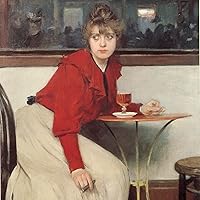
November 6, 2025
A novelette from Kyrgyzstan, originally written in Russian, and detailing a burgeoning affair in a remote agrarian community.
It is World War II and most of the men are away at the front, so the women and teenage boys are left to care for the farms. Seit and Jamila are in-laws of a sort. Jamila is married to the daughter of Seit’s father’s other wife—the two families share a farm. Jamila may have married her husband Sadak for love, but Seit also speculates that he was humiliated by losing a wagon race to her and “kidnapped her shortly afterwards.” Both characters are in their mid teens, and they are sent together with the crippled Daniar to carry grain to the station daily.
And Jamila and Daniar fall in love. It is very simple, except for the presence of Seit. We might expect Seit to become jealous, or to be angry on behalf of his family’s honour. But Seit responds more strangely: he falls under the magic of the landscape of the steppe, and under the spell of being in the presence of love, and he becomes an artist.
And again it’s a very simple story that could very easily teeter into silliness or sentimentality, or become ponderous and full of itself. But it never does. It maintains a light touch, and leaves you with a sense of colour and light and a summer wind blowing down from the mountains and over the wide plain, and ice-cold rivers, and a laughing girl.
It is World War II and most of the men are away at the front, so the women and teenage boys are left to care for the farms. Seit and Jamila are in-laws of a sort. Jamila is married to the daughter of Seit’s father’s other wife—the two families share a farm. Jamila may have married her husband Sadak for love, but Seit also speculates that he was humiliated by losing a wagon race to her and “kidnapped her shortly afterwards.” Both characters are in their mid teens, and they are sent together with the crippled Daniar to carry grain to the station daily.
And Jamila and Daniar fall in love. It is very simple, except for the presence of Seit. We might expect Seit to become jealous, or to be angry on behalf of his family’s honour. But Seit responds more strangely: he falls under the magic of the landscape of the steppe, and under the spell of being in the presence of love, and he becomes an artist.
And again it’s a very simple story that could very easily teeter into silliness or sentimentality, or become ponderous and full of itself. But it never does. It maintains a light touch, and leaves you with a sense of colour and light and a summer wind blowing down from the mountains and over the wide plain, and ice-cold rivers, and a laughing girl.

July 31, 2026
Si mi memoria no me falla, creo que esta es la primera novela de Automática Editorial, realmente un cuento largo de apenas 80 páginas y letra grande, que me decepciona. Narrada con un estilo que no llamó mi atención en ningún momento, no vi esa historia de amor más bella del mundo, que dice Louis Aragon, y sí un canto a esa peligrosa idea del amor romántico, ese amor, y solo ese, que el universo nos tiene destinado desde el principio de los tiempos. Únicamente destaco, siendo un libro de 1958, la libertad y valentía de Yamilia para luchar por la vida que desea.

October 18, 2021
En una aldea de Kirguistán, cerca del límite con la estepa de Kazajistán, vive la joven Yamilia con la familia de su reciente esposo, que está en la guerra.
Transcurre 1942, y todas las Repúblicas Soviéticas han entregado a sus hombres para luchar contra el avance de los nazis; en la aldea, ya organizada como koljós (granja colectiva) trabajan los niños, los ancianos, las mujeres, los heridos de guerra.
Entre el trabajo intenso, el cumplimiento de las costumbres que se remontan a los no tan lejanos tiempos del nomadismo, con una mezcla del Islam y las antiguas creencias, las canciones son un bálsamo para la vida cotidiana.
Y en torno a Yamilia, comienza a aparecer el amor; amor inocente como la tierra, e intenso como las tormentas, y sobre todo, prohibido, ya que es una mujer casada; y el precio podría ser el destierro, la pérdida de la pertenencia.
Una bella historia, enriquecida por la excelente exposición de la naturaleza y la cultura.
Transcurre 1942, y todas las Repúblicas Soviéticas han entregado a sus hombres para luchar contra el avance de los nazis; en la aldea, ya organizada como koljós (granja colectiva) trabajan los niños, los ancianos, las mujeres, los heridos de guerra.
Entre el trabajo intenso, el cumplimiento de las costumbres que se remontan a los no tan lejanos tiempos del nomadismo, con una mezcla del Islam y las antiguas creencias, las canciones son un bálsamo para la vida cotidiana.
Y en torno a Yamilia, comienza a aparecer el amor; amor inocente como la tierra, e intenso como las tormentas, y sobre todo, prohibido, ya que es una mujer casada; y el precio podría ser el destierro, la pérdida de la pertenencia.
Una bella historia, enriquecida por la excelente exposición de la naturaleza y la cultura.

February 21, 2015
A lyrical, dreamy, soft-hued portrait of a young rural girl and her desire for life and love from one of the lesser-known masters of Russian prose from the periphery of the erstwhile Soviet Union.

February 9, 2021
আঁকাআঁকির কাজ কি শুধুই রঙতুলিতেই সম্ভব? কথার মাধ্যমে কেন নয়!?
কির্গিজ লেখক চিঙ্গিজ আইৎমাতভের জামিলা: এক টুকরো রঙিন ছবি।

এমনি এক ছবির বর্ণনা দিয়ে এই ছোট্ট বইটির যাত্রা; তফাত শুধু ঐ ছবিতে প্রায় অদৃশ্যমান দু'জন মানুষও আছে- যার একজন জামিলা; আঁকিয়ের প্রিয় জামিলা।
সেইত আর জামিলা অবাক হয়ে শোনে। এই কণ্ঠের উৎস কোথায়? এই কথার জোগানদাতা কি তাহলে দানিয়ারের সেই পরম আশ্রয়দাতা "নির্জনতা"? নির্জনতাও তো কিছু বলে যায় যা সদা চঞ্চল কর্ণকুহরে প্রবেশই করে না।
তাহলে কি দানিয়ারের সেই নির্জনতার আঘাতে চঞ্চল জামিলার হৃদয় কেঁপে উঠেছিল এমন করে! মন আর মস্তিষ্কের দর কষাকষিতে জয়ী হয় জামিলার মন। আর তাইতো স্বামী সাদিকের বন্ধন ছিন্ন করে জামিলা সব ভুলে দানিয়ারের সাথে স্তেপের আড়ালে অদৃশ্য হয়ে যায়।
এহহে! কূলবধু এভাবে আরেকজনের সঙ্গে পালিয়ে গেল!? যাক গে.....
Have you ever seen Hayao Miyazaki's The Wind Rises ? Not yet?
You may. May be, you will be able to know about both love & dream or you will be bored at the same time!
কয়েকদিন আগেই পড়েছিলাম, আজকে ২য় পাঠ। বকবক করতে করতে বেশিই লিখে ফেলি! আজ নিজের জন্যই লিখলাম। তারপরও, কথা কি মানুষের সব অনুভূতি প্রকাশ করতে পারে.....
( হয়তো অনুবাদ আরেকটু ভাল হতে পারতো, কিন্তু 'জামিলা' জামিলার অনুবাদকে ছাড়িয়ে গেছে :)
~৯ ফেব্রুয়ারি, ২০২১
কির্গিজ লেখক চিঙ্গিজ আইৎমাতভের জামিলা: এক টুকরো রঙিন ছবি।
এমনি এক ছবির বর্ণনা দিয়ে এই ছোট্ট বইটির যাত্রা; তফাত শুধু ঐ ছবিতে প্রায় অদৃশ্যমান দু'জন মানুষও আছে- যার একজন জামিলা; আঁকিয়ের প্রিয় জামিলা।
যুদ্ধের তৃতীয় বছর চলছে। স্তেপের আশেপাশের গ্রামের শক্ত সমর্থ ছেলেরা সব যুদ্ধে গিয়েছে, খেত-খামারের হাল ধরতে হয়েছে বাড়ির শিশুকিশোর, বৌ আর মেয়েদের। সম্ভ্রান্ত পরিবারের ছেলে,জামিলার স্বামী সাদিকও যুদ্ধে গেছে যার ফলে প্রায় সমবয়সী কিচিনে বালা (দেবর) সেইতের সাথে সাথে তাকেও কাজ করতে হয়।
জামিলা চপলা কিশোরী,একই সাথে সুন্দরী আর তেজস্বিনী অনেকটা মুক্ত পাখির মতো তার অবাধ চলাচল।
উৎপাদিত শস্য যুদ্ধক্ষেত্রে পৌঁছানোর দায়িত্ব পড়ে জামিলা, সেইত আর গ্রামের যুদ্ধফেরত আহত সৈনিক দানিয়ারের উপর। দানিয়ার অনাথ, ভবঘুরের মতো অনেকটা; শান্তি প্রিয় যেন নির্জনতাই তার একমাত্র সম্বল। ঠিক জামিলার বিপরীত। দানিয়ারের সাথে ওদের তেমন কথাবার্তা হয় না, বরং ওরা দু'জন এই শান্ত তরুণকে নিয়ে হাসি-ঠাট্টা করে।
রোজ ওরা তিনজন ঘোড়ার গাড়িতে করে শস্যভর্তি বস্তা স্টেশনে পৌঁছে দিয়ে আসে। শস্যের বোঝাগুলো পৌঁছে দিয়ে আগস্টের এক শীতল রাতে স্তেপের মধ্য দিয়ে ফিরছিল ওরা তিন জন। জামিলা কোমল সুরে গান গাইছে। সেইতের মতে,"এরকম রাতে চুপ করে থাকা অসম্ভব- এই রাত আসে গানেরই জন্য । " জামিলা হঠাৎ মজা করে দানিয়ারকে বলে গান গাইতে। সেইত আর জামিলাকে অবাক করে দিয়ে দানিয়ার চাপা স্বরে গেয়ে ওঠে-
"আমার সাধের পাহাড় রে,
নীলচে সাদা পাহাড় রে!
বাপ- পিতেরম'র দ্যাশের ও তুই পাহাড় রে..."
সেইত আর জামিলা অবাক হয়ে শোনে। এই কণ্ঠের উৎস কোথায়? এই কথার জোগানদাতা কি তাহলে দানিয়ারের সেই পরম আশ্রয়দাতা "নির্জনতা"? নির্জনতাও তো কিছু বলে যায় যা সদা চঞ্চল কর্ণকুহরে প্রবেশই করে না।
প্রেম কি? প্রেম কবিতায় জীবনানন্দ বাবু বলেছেন-
"যদিও বীণার মতো বেজে ওঠে হৃদয়ের বন
একবার-দুইবার- জীবনের অধীর আঘাতে-
তবু- প্রেম- তবু তারে ছিঁড়ফেড়ে গিয়েছে কখন!
তেমন ছিঁড়িতে পারে প্রেম শুধু! অঘ্রাণের রাতে
হাওয়া এসে যেমন পাতার বুক চ’লে গেছে ছিঁড়ে!"
তাহলে কি দানিয়ারের সেই নির্জনতার আঘাতে চঞ্চল জামিলার হৃদয় কেঁপে উঠেছিল এমন করে! মন আর মস্তিষ্কের দর কষাকষিতে জয়ী হয় জামিলার মন। আর তাইতো স্বামী সাদিকের বন্ধন ছিন্ন করে জামিলা সব ভুলে দানিয়ারের সাথে স্তেপের আড়ালে অদৃশ্য হয়ে যায়।
এহহে! কূলবধু এভাবে আরেকজনের সঙ্গে পালিয়ে গেল!? যাক গে.....
Have you ever seen Hayao Miyazaki's The Wind Rises ? Not yet?
You may. May be, you will be able to know about both love & dream or you will be bored at the same time!
কয়েকদিন আগেই পড়েছিলাম, আজকে ২য় পাঠ। বকবক করতে করতে বেশিই লিখে ফেলি! আজ নিজের জন্যই লিখলাম। তারপরও, কথা কি মানুষের সব অনুভূতি প্রকাশ করতে পারে.....
( হয়তো অনুবাদ আরেকটু ভাল হতে পারতো, কিন্তু 'জামিলা' জামিলার অনুবাদকে ছাড়িয়ে গেছে :)
~৯ ফেব্রুয়ারি, ২০২১

March 9, 2019
Tão poucas páginas, e um livro tão bonito. Muito mais do que a história de amor que conta, e que parece ser o que sobressai em todas as resenhas que li, do que mais gostei foi da descrição viva das paisagens e da terra, do cheiro do campo nas noites frescas de Verão, após os dias de calor escaldante. Eu nunca vivi na estepe, mas reconheci tudo isto em passeios por paisagens diferentes, mas não menos magníficas, no planalto transmontano. E que bom que continua a haver gente com amor à vida e à terra, capaz de as apreciar.
“Voltávamos da estação já de noite. Daniar ia à frente. Estava uma noite magnífica. Quem não conhece essas noites de Agosto, com as suas estrelas tão cintilantes, longínquas e ao mesmo tempo tão próximas? (…) Os cavalos trotavam animadamente em direcção a casa e a areia grossa chiava debaixo das rodas. O vento trazia da estepe o pólen amargo do absíntio em flor, o aroma quase imperceptível do trigo maduro, e tudo isto, misturado com o cheiro do alcatrão e dos arreios dos cavalos, causava um leve atordoamento.”
"Percebi, de súbito, os seus modos estranhos que chocavam as pessoas e as faziam troçar: a sua natureza sonhadora, o seu amor à solidão e o seu carácter taciturno. Compreendi porque velava no monte de vigia e se quedava sozinho à noite junto do rio; porque apurava sempre o ouvido a outros inaudíveis rumores e porque se lhe iluminavam repentinamente os olhos e alteavam as sobrancelhas. Era um homem profundamente apaixonado. Mas eu notei que não estava apaixonado simplesmente por outra pessoa: era um amor diferente, imenso, era o amor à vida, à terra. Guardava esse amor dentro de si, na música, e vivia inspirado por ele. Uma pessoa indiferente nunca conseguiria cantar assim, por muito formosa e rica que fosse a sua voz.”
“Daniar cantou muito tempo, alheio a tudo. Surpreendida, a noite de Agosto ouvia-o com deleite. Até os cavalos se tinham posto a passo já há muito, como se temessem interromper aquele encanto.”
“Voltávamos da estação já de noite. Daniar ia à frente. Estava uma noite magnífica. Quem não conhece essas noites de Agosto, com as suas estrelas tão cintilantes, longínquas e ao mesmo tempo tão próximas? (…) Os cavalos trotavam animadamente em direcção a casa e a areia grossa chiava debaixo das rodas. O vento trazia da estepe o pólen amargo do absíntio em flor, o aroma quase imperceptível do trigo maduro, e tudo isto, misturado com o cheiro do alcatrão e dos arreios dos cavalos, causava um leve atordoamento.”
"Percebi, de súbito, os seus modos estranhos que chocavam as pessoas e as faziam troçar: a sua natureza sonhadora, o seu amor à solidão e o seu carácter taciturno. Compreendi porque velava no monte de vigia e se quedava sozinho à noite junto do rio; porque apurava sempre o ouvido a outros inaudíveis rumores e porque se lhe iluminavam repentinamente os olhos e alteavam as sobrancelhas. Era um homem profundamente apaixonado. Mas eu notei que não estava apaixonado simplesmente por outra pessoa: era um amor diferente, imenso, era o amor à vida, à terra. Guardava esse amor dentro de si, na música, e vivia inspirado por ele. Uma pessoa indiferente nunca conseguiria cantar assim, por muito formosa e rica que fosse a sua voz.”
“Daniar cantou muito tempo, alheio a tudo. Surpreendida, a noite de Agosto ouvia-o com deleite. Até os cavalos se tinham posto a passo já há muito, como se temessem interromper aquele encanto.”

December 10, 2020
Set during wartime, Chingiz Aitmatov writes evocatively of Soviet Kyrgyzstan. The State might be communist, but the traditions binding women still remain strong. But this is gradually changing as youngsters choose freedom over duty.
In Jamilia, young Jamilia is the young bride of Sadyk. It is unclear whether she was kidnapped or the two fell in love and married. Sadyk eventually had to go to the front to fight. In his absence, the narrator, who is the younger brother of Sadyk, and an artist, is helping to look after Jamilia while she does men's work to help the soldiers. They work together with Daniyar, a local orphan. The rest of the story is quite predictable.
I enjoyed the evocative scenes and the sense of life in wartime Kyrgyzstan, which is rather rare to obtain. The cultural allusions and the references to sexist traditions and how they are breaking down was also quite interesting. But the change did not come due to communism in this story. It comes from within though outside forces (war) makes it possible.
But the story itself was rather weak. Jamilia and Daniyar fall in love but I didn't sense any chemistry between them. Their romance was rather boring. It was the narrator with whom I actually connected. Jamilia's sense of dissatisfaction with her life is shown but not very vividly. Instead, there are random scenes of Jamilia and Daniyar laughing and singing, which added nothing. It would also have been interesting to know how Sadyk feels about his wife.
The French writer, Louis Aragon, who translated Jamilia into French called it "the most beautiful love story in the world" but I suppose our definitions of interesting love stories must vary massively!
In Jamilia, young Jamilia is the young bride of Sadyk. It is unclear whether she was kidnapped or the two fell in love and married. Sadyk eventually had to go to the front to fight. In his absence, the narrator, who is the younger brother of Sadyk, and an artist, is helping to look after Jamilia while she does men's work to help the soldiers. They work together with Daniyar, a local orphan. The rest of the story is quite predictable.
I enjoyed the evocative scenes and the sense of life in wartime Kyrgyzstan, which is rather rare to obtain. The cultural allusions and the references to sexist traditions and how they are breaking down was also quite interesting. But the change did not come due to communism in this story. It comes from within though outside forces (war) makes it possible.
But the story itself was rather weak. Jamilia and Daniyar fall in love but I didn't sense any chemistry between them. Their romance was rather boring. It was the narrator with whom I actually connected. Jamilia's sense of dissatisfaction with her life is shown but not very vividly. Instead, there are random scenes of Jamilia and Daniyar laughing and singing, which added nothing. It would also have been interesting to know how Sadyk feels about his wife.
The French writer, Louis Aragon, who translated Jamilia into French called it "the most beautiful love story in the world" but I suppose our definitions of interesting love stories must vary massively!

November 22, 2025
2,5 Sterne
Ich habe einen Text über Freiheit gelesen – die eigene Innerlichkeit zu entdecken.
Liebe, scheint mir ehr ein Schleier zu sein, das Ungeheure, das D.’s Gesang evoziert einer Bedeutung zuzuführen. Er reißt damit eine Lücke in das Normative Gefüge der streng geführten Gemeinschaft.
Der Text arbeitet leider mit einer äußerst schlichten Sprache. Ein Icherzähler berichtet restrospktiv von den Ereignissen, die in Form eines ländlichen Realismus wiedergegeben werden.
Der Bruch mit dem Symbolischen wird nur imaginär vollführt. Es findet sprachlich keine symbolische Vermittlung statt.
Die einzige starke Szene scheint mir die des Streiches zu sein, in der D. einen viel zu schweren Sack, voller Wut seine Würde zurückzuerkämpfen und dem Wunsch nach Anerkennung eine Treppe hinaufträgt und sein verletztes Bein erneut beschädigt. Hier zeigt sich die zerstörerische Seite einer engen symbolischen Norm, die einen Menschen affektiv zum Äußersten treibt.
Der spätere Bruch damit und der Akt der freiheitlichen Handlung wird literarisch nicht durchgearbeitet.
Dafür ist der Text viel zu kurz und zu sehr in einer Art Idealisierung gefangen.
Als wäre diese Liebe etwas, das Aitmatov inszeniert um nicht politisch zu wirken.
Hier ein Zitat, warum ich überhaupt nur schwer den Begriff Liebe bei diesem Buch in den Mund nehmen möchte:
Danach fährt ein Blitz vom Himmel hinab.
Ich kann nur in Ansätzen die Notwendigkeit oder Dringlichkeit der Geschichte erkennen.
Sie reflektiert sich nicht selbst. Es wird nichts plausibilisiert. Ich kann nur erfühlen was da abgeht. Auf sprachlicher Ebene passiert das nur nicht.
Ich habe einen Text über Freiheit gelesen – die eigene Innerlichkeit zu entdecken.
Liebe, scheint mir ehr ein Schleier zu sein, das Ungeheure, das D.’s Gesang evoziert einer Bedeutung zuzuführen. Er reißt damit eine Lücke in das Normative Gefüge der streng geführten Gemeinschaft.
Der Text arbeitet leider mit einer äußerst schlichten Sprache. Ein Icherzähler berichtet restrospktiv von den Ereignissen, die in Form eines ländlichen Realismus wiedergegeben werden.
Der Bruch mit dem Symbolischen wird nur imaginär vollführt. Es findet sprachlich keine symbolische Vermittlung statt.
Die einzige starke Szene scheint mir die des Streiches zu sein, in der D. einen viel zu schweren Sack, voller Wut seine Würde zurückzuerkämpfen und dem Wunsch nach Anerkennung eine Treppe hinaufträgt und sein verletztes Bein erneut beschädigt. Hier zeigt sich die zerstörerische Seite einer engen symbolischen Norm, die einen Menschen affektiv zum Äußersten treibt.
Der spätere Bruch damit und der Akt der freiheitlichen Handlung wird literarisch nicht durchgearbeitet.
Dafür ist der Text viel zu kurz und zu sehr in einer Art Idealisierung gefangen.
Als wäre diese Liebe etwas, das Aitmatov inszeniert um nicht politisch zu wirken.
Hier ein Zitat, warum ich überhaupt nur schwer den Begriff Liebe bei diesem Buch in den Mund nehmen möchte:
"Ich gebe dich nicht her Liebster, niemandem gebe ich dich! Ich liebe dich schon so lange. Noch bevor ich dich kannte, habe ich dich geliebt und auf dich gewartet, und du bist gekommen, als hättest du gewusst dass ich auf dich warte."
Danach fährt ein Blitz vom Himmel hinab.
Ich kann nur in Ansätzen die Notwendigkeit oder Dringlichkeit der Geschichte erkennen.
Sie reflektiert sich nicht selbst. Es wird nichts plausibilisiert. Ich kann nur erfühlen was da abgeht. Auf sprachlicher Ebene passiert das nur nicht.

June 14, 2013
WORLD WAR II PROPAGANDA
"Do the job he left behind."
"Women in the war -- we can't win without them."
"The girl he left behind is still behind him -- she's a WOW (Woman Ordinance Worker)"
"The more women at work, the sooner we win."
World War II officially lasted from 1939 until 1945, but the causes of the conflict and its horrible aftermath echoed for decades, dominated by unimaginable misery and destruction. In the late 1930s, the global population stood at approximately 2 billion. In less than a decade, the war between the nations of the Axis Powers and the Allies resulted in some 80 million deaths -- killing about 4 percent of the whole world.

[Women propaganda poster]
Due to the male conscription introduced, countries desperately needed people to replace the men in all of their work to ensure that the country kept running. This was especially needed in areas such as munitions manufacture and agriculture which was clearly essential throughout the war. This therefore meant that propaganda was produced that was specifically aimed at women (similar to the poster above) to appeal to the patriotism they would have felt and the desire to be actively involved with the war effort.
Jamilia
Jamilia is set in World War II in (what is believed to be) Kyrgyzstan, a landlocked, mountainous nation in the heart of central Asia, which was a Soviet republic until 1991. While the men are at war, the women fill the traditionally male positions in farming the land.
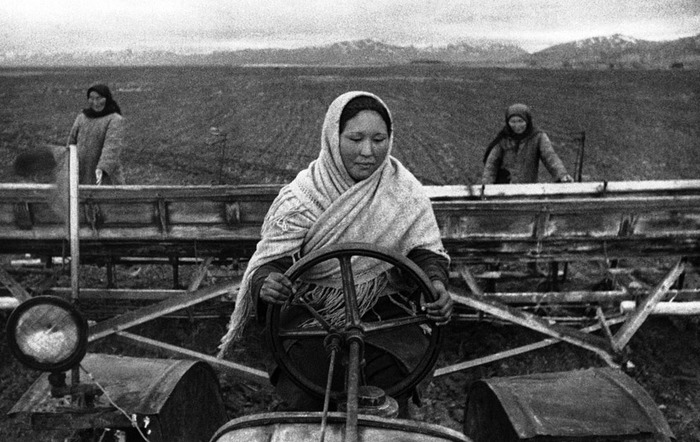
[Young Soviet girl tractor-drivers of Kirghizia (now Kyrgyzstan), efficiently replace their friends, brothers and fathers who went to the front. Picture taken in 1942.]
Jamilia depicts an emergent love affair between a troubled loner (Daniyar - demobilized due to a leg wound) and the title character (Jamilia), a soldier’s wife whose husband is away at war, as they work together on a collective farm to produce grain for the army. Narrated by a young boy (Seit), the soldier’s younger brother, the three are assigned to haul sacks of grain from the threshing-floor to the train station. Without saying too much more, the story not only glorifies the love and the couple’s escape from their stultifying village but also paints a beautiful portrait of an artist as a young man. Inspired by their love, the young narrator determines to be a painter.
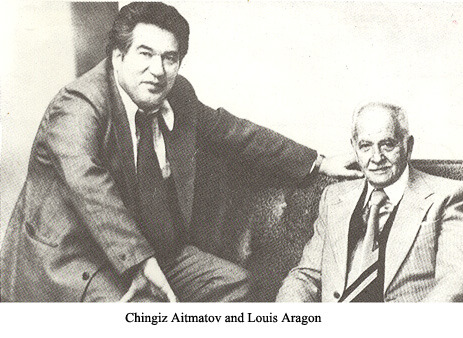
Jamilia is the first major novel by Chingiz Aïtmatov, a Kyrgyz, published originally in Russian in 1958. The French surrealist poet and communist Louis Aragon came across Jamilia in a Soviet literary journal, and was enraptured. Chingiz Aïtmatov's book was, he declared,
Aïtmatov's prose paints a vivid and evocative picture of the collectivization of farming and the rural life led by the people in Kyrgyzstan and surroundings for his characters, and weaves a truly lovely story, that was a joy read. Aïtmatov takes care to use specific Kyrgyz terminology, defines it within the text, and then consistently applies it amongst his characters. A lot can be gleaned of poor village life during war time, and this is to Aïtmatov's credit.
At 96 pages it is difficult to view Jamilia as “The most beautiful love story in the world”. Yes, it is a love story, not only between Jamilia and Daniyar but also about the young artist’s Seit’s love for his country and for his painting. In fact the book is as much about Seit’s journey as it is about Jamilia, and for that journey alone this book is more than worth it.
So while I may not agree that Jamilia is the most beautiful love story in the world, it is hard to imagine a more perfect example of the short novel.
4.5*/5
"Do the job he left behind."
"Women in the war -- we can't win without them."
"The girl he left behind is still behind him -- she's a WOW (Woman Ordinance Worker)"
"The more women at work, the sooner we win."
World War II officially lasted from 1939 until 1945, but the causes of the conflict and its horrible aftermath echoed for decades, dominated by unimaginable misery and destruction. In the late 1930s, the global population stood at approximately 2 billion. In less than a decade, the war between the nations of the Axis Powers and the Allies resulted in some 80 million deaths -- killing about 4 percent of the whole world.
[Women propaganda poster]
Due to the male conscription introduced, countries desperately needed people to replace the men in all of their work to ensure that the country kept running. This was especially needed in areas such as munitions manufacture and agriculture which was clearly essential throughout the war. This therefore meant that propaganda was produced that was specifically aimed at women (similar to the poster above) to appeal to the patriotism they would have felt and the desire to be actively involved with the war effort.
Jamilia
Jamilia is set in World War II in (what is believed to be) Kyrgyzstan, a landlocked, mountainous nation in the heart of central Asia, which was a Soviet republic until 1991. While the men are at war, the women fill the traditionally male positions in farming the land.
[Young Soviet girl tractor-drivers of Kirghizia (now Kyrgyzstan), efficiently replace their friends, brothers and fathers who went to the front. Picture taken in 1942.]
Jamilia depicts an emergent love affair between a troubled loner (Daniyar - demobilized due to a leg wound) and the title character (Jamilia), a soldier’s wife whose husband is away at war, as they work together on a collective farm to produce grain for the army. Narrated by a young boy (Seit), the soldier’s younger brother, the three are assigned to haul sacks of grain from the threshing-floor to the train station. Without saying too much more, the story not only glorifies the love and the couple’s escape from their stultifying village but also paints a beautiful portrait of an artist as a young man. Inspired by their love, the young narrator determines to be a painter.
Jamilia is the first major novel by Chingiz Aïtmatov, a Kyrgyz, published originally in Russian in 1958. The French surrealist poet and communist Louis Aragon came across Jamilia in a Soviet literary journal, and was enraptured. Chingiz Aïtmatov's book was, he declared,
"The most beautiful love story in the world".Aragon's French translation was published in 1959 to wide acclaim. An English translation, published that same year by the Soviet Progress press, was less well received. Aïtmatov received criticism for this work due to his depiction of Jamilia's "unpatriotic" unfaithfulness to her soldier husband (a woman who “waited” for her man was an image that propaganda applauded). Nearly 50 years later in 2007, translator James Riordan rendered Aïtmatov's prose into simple yet lyrical English.
Aïtmatov's prose paints a vivid and evocative picture of the collectivization of farming and the rural life led by the people in Kyrgyzstan and surroundings for his characters, and weaves a truly lovely story, that was a joy read. Aïtmatov takes care to use specific Kyrgyz terminology, defines it within the text, and then consistently applies it amongst his characters. A lot can be gleaned of poor village life during war time, and this is to Aïtmatov's credit.
At 96 pages it is difficult to view Jamilia as “The most beautiful love story in the world”. Yes, it is a love story, not only between Jamilia and Daniyar but also about the young artist’s Seit’s love for his country and for his painting. In fact the book is as much about Seit’s journey as it is about Jamilia, and for that journey alone this book is more than worth it.
So while I may not agree that Jamilia is the most beautiful love story in the world, it is hard to imagine a more perfect example of the short novel.
4.5*/5

February 27, 2023
Djamila von Chingiz Aitmatov
⭐️⭐️⭐️⭐️⭐️ (5*)
„Und in jedem meiner Bilder wird Danijars Lied erklingen, wird Djamilas Herz schlagen.“
Das war eine der schönsten Liebesgeschichten aller Zeiten. Und das auf sehr vielen Ebenen. Eine kurze Erzählung, die emotional jedoch eine enorme Wucht besitzt und lange nachklingt. Es ist erstaunlich, wie viel Tiefe und Menschlichkeit Aitmatov auf so wenigen Seiten entfaltet.
„Als sie Danijar singen hört, verändert sich Djamilas Blick auf ihn – und ihr Leben: Im Lied des verschlossenen Kriegsinvaliden offenbaren sich tiefe Sehnsucht, Schmerz und die Liebe zur Welt. Wie durch Zauber erhellt seine Stimme die sommerliche Augustnacht in den Bergen Kirgisiens. Auch für Said, den 15-jährigen Schwager und ständigen Begleiter Djamilas, ändert sich vieles. Er sieht Liebe wachsen und bewahrt ein Geheimnis für sich. Über Danijars Gesang findet er Zugang zu seiner künstlerischen Natur als Maler und verfolgt staunend mit, wie von allen anderen für unüberwindbar gehaltenen Gesetzen der Tradition entgegengetreten wird. Als Djamilas Ehemann zurückkehrt, ist für den jungen Said der Moment des Abschieds und Aufbruchs in die Welt gekommen.“
Die Szenen des Buches werden einmalig und wundervoll beschrieben. Mit einer unglaublichen Leidenschaft, mit Sehnsucht und auch viel Schmerz. Von der ersten Seite an befand ich mich auf den Feldern Kirgisiens und blickte zusammen mit Said auf die Berge und über die Steppen. Diese Landschaft wird nicht nur Hintergrund, sondern ein eigener Charakter, der Wärme schenkt und zugleich eine stille Melancholie ausstrahlt.
Besonders berührt hat mich, wie zart und zugleich kraftvoll zwischenmenschliche Gefühle dargestellt werden. Es geht nicht nur um Liebe, sondern auch um Freiheit, um Loyalität, um Kunst und darum, seinen eigenen Weg zu finden. Viele Bücher versuchen das, aber nur wenige schaffen es so glaubhaft und so ehrlich.
Dieses Buch ist ein echter Knüller und ein Must-Read für jeden Leser. Wer Geschichten schätzt, die ohne grosse Worte tief greifen und die das Herz sanft, aber bestimmt berühren, wird mit diesem Werk reich belohnt. Ich werde es sicher noch lange in Erinnerung behalten.
Wenn ihr andere Rezensionen von mir sehen wollt oder nach anderen buchbezogenen Inhalten sucht, schaut auf meinem Blog vorbei: https://sachareads.com 🙂
⭐️⭐️⭐️⭐️⭐️ (5*)
„Und in jedem meiner Bilder wird Danijars Lied erklingen, wird Djamilas Herz schlagen.“
Das war eine der schönsten Liebesgeschichten aller Zeiten. Und das auf sehr vielen Ebenen. Eine kurze Erzählung, die emotional jedoch eine enorme Wucht besitzt und lange nachklingt. Es ist erstaunlich, wie viel Tiefe und Menschlichkeit Aitmatov auf so wenigen Seiten entfaltet.
„Als sie Danijar singen hört, verändert sich Djamilas Blick auf ihn – und ihr Leben: Im Lied des verschlossenen Kriegsinvaliden offenbaren sich tiefe Sehnsucht, Schmerz und die Liebe zur Welt. Wie durch Zauber erhellt seine Stimme die sommerliche Augustnacht in den Bergen Kirgisiens. Auch für Said, den 15-jährigen Schwager und ständigen Begleiter Djamilas, ändert sich vieles. Er sieht Liebe wachsen und bewahrt ein Geheimnis für sich. Über Danijars Gesang findet er Zugang zu seiner künstlerischen Natur als Maler und verfolgt staunend mit, wie von allen anderen für unüberwindbar gehaltenen Gesetzen der Tradition entgegengetreten wird. Als Djamilas Ehemann zurückkehrt, ist für den jungen Said der Moment des Abschieds und Aufbruchs in die Welt gekommen.“
Die Szenen des Buches werden einmalig und wundervoll beschrieben. Mit einer unglaublichen Leidenschaft, mit Sehnsucht und auch viel Schmerz. Von der ersten Seite an befand ich mich auf den Feldern Kirgisiens und blickte zusammen mit Said auf die Berge und über die Steppen. Diese Landschaft wird nicht nur Hintergrund, sondern ein eigener Charakter, der Wärme schenkt und zugleich eine stille Melancholie ausstrahlt.
Besonders berührt hat mich, wie zart und zugleich kraftvoll zwischenmenschliche Gefühle dargestellt werden. Es geht nicht nur um Liebe, sondern auch um Freiheit, um Loyalität, um Kunst und darum, seinen eigenen Weg zu finden. Viele Bücher versuchen das, aber nur wenige schaffen es so glaubhaft und so ehrlich.
Dieses Buch ist ein echter Knüller und ein Must-Read für jeden Leser. Wer Geschichten schätzt, die ohne grosse Worte tief greifen und die das Herz sanft, aber bestimmt berühren, wird mit diesem Werk reich belohnt. Ich werde es sicher noch lange in Erinnerung behalten.
Wenn ihr andere Rezensionen von mir sehen wollt oder nach anderen buchbezogenen Inhalten sucht, schaut auf meinem Blog vorbei: https://sachareads.com 🙂

August 2, 2016
Ο Αραγκόν τοποθετείται στον πρόλογο της έκδοσης πολύ καλύτερα απ' όσο θα μπορούσα, οπότε θα παραθέσω αυτούσια τα λόγια του:
Μια σύντομη ιστορία και σύγχρονα απέραντη. Μια ιστορία αγάπης, όπου δεν υπάρχει ούτε μια περιττή λέξη ούτε μία φράση που να μη βρίσκει αντίλαλο μέσα στις καρδιές. […] Η παράξενη επιτυχία της «Τζαμίλια» χρωστιέται στο ότι μαθαίνουμε για έναν τόπο άγνωστο (την Κιργιζία της Κεντρικής Ασίας), για τη ζωή των αντρών και των γυναικών του, που είναι ακόμη σφιχτά δεμένοι με τις πατριαρχικές παραδόσεις και τα έθιμα των νομάδων, που πέρασαν κιόλας, χωρίς συγκρούσεις, στη σοβιετική εποχή – κι όλα αυτά τα μαθαίνουμε από τα μέσα, από πλάσματα, που όλα αυτά τους φαίνονται φυσικά και δε χρειάζονται καμιά εξήγηση, έτσι που η αφήγηση αποκτά καταπληκτική άνεση στην εξέλιξή της.
Μια σύντομη ιστορία και σύγχρονα απέραντη. Μια ιστορία αγάπης, όπου δεν υπάρχει ούτε μια περιττή λέξη ούτε μία φράση που να μη βρίσκει αντίλαλο μέσα στις καρδιές. […] Η παράξενη επιτυχία της «Τζαμίλια» χρωστιέται στο ότι μαθαίνουμε για έναν τόπο άγνωστο (την Κιργιζία της Κεντρικής Ασίας), για τη ζωή των αντρών και των γυναικών του, που είναι ακόμη σφιχτά δεμένοι με τις πατριαρχικές παραδόσεις και τα έθιμα των νομάδων, που πέρασαν κιόλας, χωρίς συγκρούσεις, στη σοβιετική εποχή – κι όλα αυτά τα μαθαίνουμε από τα μέσα, από πλάσματα, που όλα αυτά τους φαίνονται φυσικά και δε χρειάζονται καμιά εξήγηση, έτσι που η αφήγηση αποκτά καταπληκτική άνεση στην εξέλιξή της.

February 16, 2019
64 páginas de puro amor. Fiquei apaixonada pela Djamila e pela escrita do Aitmatov. Tenho pena de haver tão pouco editado em Portugal e edições que têm mais de 20 anos. Relógio D’ Água, por favor editem mais obras de Aitmatov.
Displaying 1 - 30 of 1,356 reviews