The definitive biography of the beguiling Diane Arbus, one of the most influential and important photographers of the twentieth century, a brilliant and absorbing exposition that links the extraordinary arc of her life to her iconic photographs Diane Arbus: Portrait of a Photographer brings into focus with vividness and immediacy one of the great American artists of the twentieth century. Arbus comes startlingly to life on these pages, a strong-minded child of disconcerting originality who grew into a formidable photographer of unflinching courage. Arbus forged an intimacy with her subjects that has inspired generations of artists. Arresting, unsettling, and poignant, her photographs stick in our minds. Why did these people fascinate her? And what was it about her that captivated them?
It is impossible to understand the transfixing power of Arbus’s photographs without exploring her life. Lubow draws on exclusive interviews with Arbus’s friends, lovers, and colleagues; on previously unknown letters; and on his own profound critical insights into photography to explore Arbus’s unique perspective and to reveal important aspects of her life that were previously unknown or unsubstantiated. He deftly traces Arbus’s development from a wealthy, sexually precocious free spirit into first, a successful New York fashion photographer and then, a singular artist who coaxed secrets from her subjects. Lubow reveals that Arbus’s profound need not only to see her subjects but to be seen by them drove her to forge unusually close bonds with these people, helping her discover the fantasies, pain, and heroism within each of them, and leading her to create a new kind of photographic portraiture charged with an unnerving complicity between the subject and the viewer.
Diane Arbus: Portrait of a Photographer brushes aside the clichés that have long surrounded Arbus and her work. It is a magnificently absorbing biography of this unique, hugely influential artist.
Arthur Lubow has devoted a considerable portion of his life to this book. The well documented details are so thorough that it seems there is not too much left to know.
A sad and needy life is portrayed. It began in the home with a depressed mother and distant father. She sought comfort in her brother and this behavior was replicated throughout her life. Lubow documents this in several ways, one of which was shocking to me: Helen Boigon, her psychiatrist. I guess confidentiality does not extend beyond the grave.
You see the slow decline of what is a shallow ego, the depression inherited from her mother, the exhaustion of freelancing in a competitive and brutal profession and the tragedy of her reliance on (perhaps need for) unavailable men as she lost her youth/looks. Lubov notes, but does not speculate on, the impact of the innuendo surrounding her daughter and Marvin Israel, her last doubly unavailable partner. Like many professional women of her time who persisted on the outside of a male establishment and the 1950’s stereotypes of women, she did not grasp feminist concepts.
Until this, the Bosworth biography and the fictional movie “Fur” were the “best” interpretations of her life for the general public. Both leave the impression that she was “friends” with her subjects. Lubow shows how it was not so simple. He shows the shyness in taking photographs, seeking releases and at times, releasing the work. He talks about the major works (twins, nudists, the giant, socialites, pro-Vietnam protesters, upper middle class family life, transvestites, celebrities, the instutionalized, etc.), and how she came to the subjects and how she felt about them. She could be sympathetic/ empathetic or brutal, sometimes promising a subject one treatment and publishing another.
While Diane is scraping together $100 - $500 here and there, her daughters go to private schools and summer camps. Her X-husband is portrayed as similarly strapped. Perhaps there is a stronger relationship with her mother than is presented. This relationship, as two adults seems to be the only loose end.
The aftermath of her suicide is stirring. Lubow tells of the reactions, the tributes and the finger pointing.
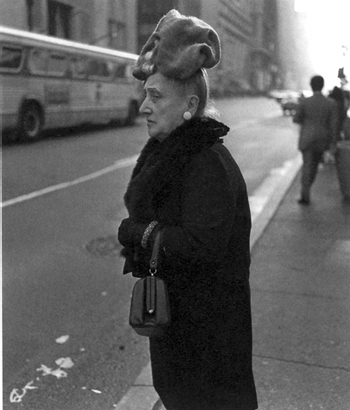
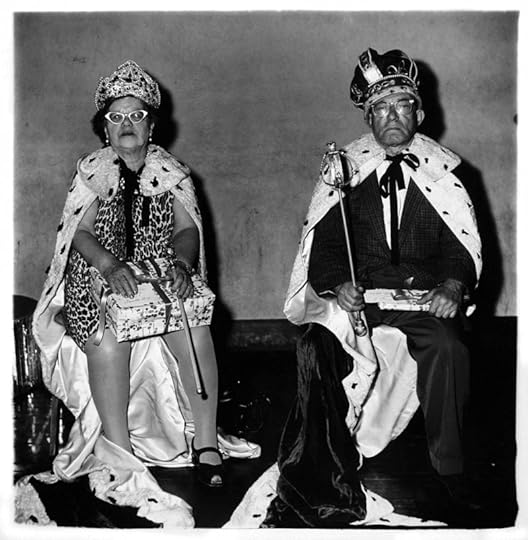
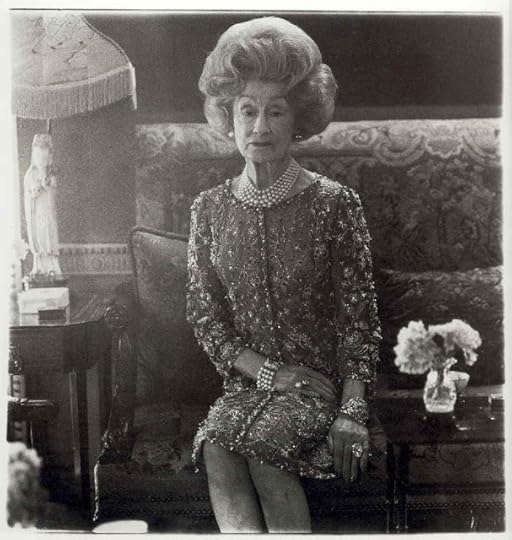
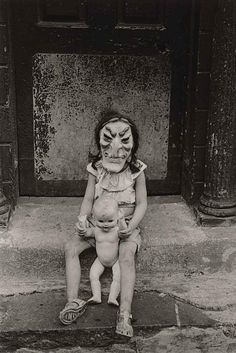
The only disappointment is that there are no Arbus photographs. Several compilations of her photographs are available and those not familiar with her work will most likely need one or two of these volumes to appreciate the descriptions of the work, her relationship the subjects and the relationship of the specific photos to her growth as an artist.
And that’s how you get a 600+ page biography! I can’t help but feel that sometimes the limelight is on the famous people Diane knew. So many unnecessary details from their lives that have little to do with her own story and work! I couldn’t care less about Nancy and Pati’s marital dramas… Sometimes too much context is just that…too much context (including a review of Flatland?!)
This is my third book on Arbus, but if you’re not familiar with the photographer’s life, I’m not sure this would be the best introduction.
This is quite an incredible book. Lubow spent a decade on this book after writing an article about Diane Arbus in the New York Times Sunday magazine. The sheer amount of research and reporting that went into this book is amazing and he provides incredible detail on her relationships with her family, husband, lovers and friends. There was a good Arbus biography that was published in 1984 by Patricia Bosworth, which I think is highly rated. I have not read it and I can not tell you the differences between the two. Lubow does a great job with how Arbus worked and provides details between the making of some of her best work. It was sad to read that she had quite a bit of trouble making ends meet during her lifetime, especially in the 1960s after she was working as afreelancer. Earlier in her career, she worked with her husband as a fashion photographer. These days some of her photographs have sold for $750,000 at auction and a book of her photographs that was published just after she died in 1971 has never been out of print and has sold hundreds of thousands copies.
The book's major setback is that the author was not able to publish any of Arbus' work because her daughters refused to give him the rights to use her work. I am familiar with some of her best work, like a child with a plastic hand grenade in New York's Central Park and a Giant at home with his parents in the Bronx. The author does his best to describe the photographs, but we know a photo is work at least a thousand words.
He also does a great job providing information on her therapy sessions and her mind set. I also found it fascinating how he found such interesting detail about how people who met her in different settings reacted to her and their impressions were very interesting. For example, people that she photographed had one set of memories about her, while her friends knew her in quite a different way.
This is quite a heavy book. It clocks in at over 700 pages, though the actual text is about 600 pages and the rest is notes and the index. I enjoyed it, though I think not having her photographs in the book really takes away from its enjoyment. He referred to many photos I was not familiar with and it was hard to picture them in my mind.
Diane Arbus' daughters donated all her photos and negatives to the Metropolitan Museum of Art in New York and an exhibit of her work will start this week at the former Whitney building, which was purchased by the Met. These photos were mainly taken earlier in her career with a 35mm camera. In about 1962, she switched to a medium format camera and that is when she took her best photos.
Brilliant is a word that aptly describes both Diane Arbus and this bio of her life. I can't begin to imagine the amount of dedication and time Arthur Lubow must have put into researching this book because the detailed account of her life from childhood to its' tragic ending is absolutely mind blowing. A book anyone interested in, not only Arbus, but photography itself, should take the time to read.
Not a review of the book itself, which is highly researched, very well-written, all that. Just for my own personal reference...I didn't like Arbus herself. I know she's sensitive and beguiling and brilliant and all that but by the time I'd gotten halfway through she was still nothing more than a selfish, self-absorbed b-hole. Couldn't get any farther.
Groan--600 pages about a woman who in life must have been a drain on anyone she chose to attach herself to or who felt inclined to be involved with. She is the second prominent New Yorker of Russian Jewish heritage who had no problem with incest--in her case, her brother, in the case of Stella Adler, her father! Throughout her life, from the earliest days of her life it would seem, this woman for whatever reason either felt unappreciated, because of lack of praise or because what praise she received she either felt was false or not deserved. There seemed to be no pleasing her. Although she is considered to be, in some circles, one of the earliest photographers to have helped establish photography as an art form, she constantly was insecure and for most of her life claimed to hate her work--the product as well as the application. How wearing. It was interesting to me that she never actually had a relationship she felt fulfilled by and that those, who were supposedly her greatest personal emotional support, actually had partners who were more important to them and were constants in their lives. She, on the other hand, was an intermittent tangent to their lives and in the case of the males, an occasional bedmate.It was also interesting to note that most of them lived at a significant geographical distance from her. As her personal life is revealed one finds that she functioned in circles that had the stench and muddiness of effluence of a septic system drainage. I was living in Manhattan, though 15 years younger, as she was walking the same streets and living in the same general neighborhoods. In my youthful innocence I knew nothing of what was going on behind those facades by which I walked, thank goodness! Though her life was revealed in some detail at times and with a great deal of analysis by the author, little really was said about her relationship to her two daughters with Allan Arbus. She married him in her teens and they started a photography studio which was primarily involved in fashion magazine layouts--other than newspaper or journalistic photography, the only sphere in which the camera and its users could make a living. She had the eye to create the layout, Allan the technical ability and interest in the actual photography. In time this would change and he would move to California with a new love and become an actor, best known as the shrink in M*A*S*H, and she would become the photographer. She focused on the demimonde of peep shows, female impersonators, freaks, side shows etc and it is mostly for these photos she became famous.
One of the major drawbacks of the book is the extensive descriptions of many of her photos without the actual photos to look at. Here too the author spends extraordinary pains to analyze the meaning of the subjects and how they related to Arbus, her inner self and her self image. It would have been nice to have the pictures to analyze for oneself and then read the author's interpretation. I did look at some of the shots after reading the book but at that point was really too exhausted to want to spend any more time on the subject. In my opinion, rather than relating to these people, whether the freaks or the upper class couples or the families or the children, I think they made her feel superior to them and therefore at least momentarily she felt better about herself. She was cruel to setting up her photos--making a small 4 year old stand at a distance in the snowy Central Park until the happy little girl dissolved in frightened, exhausted tears and gave her the photo she wanted. How nice she had that kind of power. Or the lengthy photo sessions in the yard or the living room of a family's home that wore the husbands to anger and the wives to an anxiety to keep the peace so that she could show her belief that there were cracks in the surface of their apparent serenity and happiness. The best insight to her life, her attitudes on behavior and experience, her relationships to both friends, partners, subjects is provided by the interviews with her therapist. Interestingly, though she might have benefited early on from therapy, no one seems to have recommended it, although it seems she did find it laughable. It was her long-time liason, Marvin Israel, who like her enjoyed manipulating people who got her to go for help. He did it primarily because, though he maintained a relationship with her, he made it quite clear that he loved his wife and had no intention of relegating her to second place. When Diane became too needy and was calling him incessantly he finally pawned her off to a therapist. Not completely, of course, but at least partially. He also, in as similar an uncaring manner as she, carried on a relationship with her older daughter. Many of her friends felt that this as well as her despondency over aging and no longer looking younger than her years, as well as financial stress, as well as an ennui resulting from an inability to find something new in photography all contributed to her suicide. Yes, I should think that would do it to someone as fragile and self absorbed as she. Lest this review seems to make the book unworthy of reading, it is important to note that I did read it, every one of the 600 pages. The thing that kept me going was the history of photography, especially as it became recognized as a creative expression as much as a document of life as it passes day to day, year to year. Also, in addition to Arbus, there were a plethora of photographers working throughout the world and their approach to the technical and artistic aspects of presentation as well as choice of subjects was as wide and varied. That part of the book was incredibly absorbing and, if truth be known, was a major reason for my interest in entering this giveaway. So, though I knew less than nothing about Diane Arbus, other than the name of a woman who was mentioned in the newspapers I read while finishing high school and going to college , I now know more than I wanted about her and find I don't think I would have liked her very much. But, I also know more about her output, more about the people working in the field at the same time, more about how magazines worked at the time, more about how exhibits are designed at museums and more about the field of photography. There are ways I will look at the people and objects I photograph and the settings in which they are found that never occurred to me before. Lighting and distance and composition which have always been more or less instinctive will now at times, not always, be more thought out. It will be interesting to see if there is any improvement.
You can tell a lot about a person from the index in their biography –
Photography - Of the circus - Of dwarves - Ethnic beauties - Of female impersonators - Of institutional residents - Of nudists - Of orgies - Of sex - Of transvestites - Of triplets and twins
When she photographed nudists she participated, wearing only her camera, and when she photographed orgies she likewise participated. I assume she had to lay her camera aside at times on those occasions.
What brought me here was that I thought that what I know about modern photography could be written on the back of a very small photograph and you’d still have room to include the American Constitution complete with all 27 amendments. So I thought let’s start with Diane Arbus. I’m not sure that was such a great idea. It’s like beginning your exploration of rock music with Captain Beefheart. Doesn’t take long before you flee from the sheer unrelenting ugliness. But with Beefheart at least there’s a beat (well, you know, kind of) and some scrummy electric guitar. With Diane Arbus you’re mostly left with just the American ugliness. But she insisted :
You may say I’m telling you these people are ugly. I’m not. I don’t think I am. You may think they’re ugly.
Susan Sontag disagreed – strongly!!
By traducing hideous people who were ignorant of their “ugliness”, or by using the tricks of the camera to make ordinary folks appear monstrous, Arbus… aggressively assailed her viewers with repellant images in a bombardment that desensitized them to society’s injustices and limited their capacity for compassion.
That’s Arthur Lubow’s summary of Susan Sontag’s criticism of Diane Arbus. Mr Lubow defends Diane as well as he can but it’s a rather cringemaking defense. He says well, and maybe Manet manipulated the model who sat for his Olympia, and maybe Proust maligned the real-life versions of his characters – these people are all long dead, no one now cares about that – but we do still care about the great art which we still have. Welllll….hmmm….
What Diane Arbus tells me is that photography, mostly, misses out 90% of what humans are and what they do. The 10% we do take photos of is the 10% we can stand to think of ourselves as inhabiting. What a parade of gargoyles. What a freak show. Midgets, tattooed men (before that became de rigeur), deviants, disabled people (physically and mentally), old rich batty women, gawky rich kids, drunks, junkies, trannies, drag queens, Warhol superstars...
Even relatively normal middle-class Americans are rendered strange in an Arbus photograph
Throughout this long biography Arthur Lubow hovers intensely over the already dreadfully intense Diane, perpetually on the verge of swooping down to offer some wrenching psychological assessment
She had no reserve of self-esteem to fall back on. Having learned prematurely to defend herself against intrusions and dangers, of which the most terrifying and baffling were her mother’s fluctuating moods, she never had a place to develop a coherent sense of who she was. Acutely interested in both the outside world and her internal fantasy life, she was unable to secure her equilibrium between them. She required a cascade of stimulation to ward off collapse into an apathy of nonexistence and unbeing.
I dunno, when somebody talks like this I often think well, couldn’t that apply to most of the people on this planet? Who does ever get to develop a coherent sense of who they are? What does that even mean?
Best will in the world, Diane sure does come across sometimes as a bit creepy, you know.
She told an acquaintance that she would like to take pictures of people sleeping in the same bed. They could be spouses, lovers, or children. Supplied with a key, she would creep into the bedroom and photograph them in slumber. …. Nothing came of the project.
Well, probably for the best I’d say.
In this 700 page biography there are a number of photos OF Diane Arbus but none at all BY her. That’s a shame, and really a drag as Arthur is forced into describing many photos when his book would be so so much better if we could just have them reproduced on the page but he could not get the permission. You have to wonder about the brains behind this permission-granting nonsense. Oh, you’re publishing a pretty-much definitive biography of Diane Arbus? Well, no, you can’t include a single one of her photos! Why? Because we just got out of bed the wrong side today, that’s why! We don’t have to give any reasons! Now be off with you!
In the end I was left with an oppressive feeling of melancholy. Seems that Diane had a really freewheeling life, two lovely daughters, a whole ton of sex, praise from all sides (except Susan Sontag), and she was right there in the very centre of the cauldron that was the 1960s, but she could not shake off the blues. We know that the blues is nothing but a good woman feeling bad, and we know the blues is a low down shaking chill, and Diane’s version led to suicide at the age of 48.
So here is a pretty good biography (probably a little too detailed for casual fans) on this amazing photographer but don’t expect to be filled with the feelings of a young lambkin in springtime a-clicking its heels and leaping from sheer joy because that’s not what this is all about.
Well written, thoroughly researched, but I'm not sure if I like any of these people. Which is disappointing, because I enjoy a great deal of Arbus' photography. Her depictions of individuals with intellectual disabilities have always struck me as cold-hearted, though--I've questioned her connection to and empathy for those models. 300 pages in to this book, I'm wondering if she was capable of empathy for anyone, actually.
Biographies are worth reading when they teach something — otherwise, all we're doing is gawking at the aftermath of someone's life. What this book teaches is useful, though disturbing: vampires are real, though not of the blood-sucking variety, and they tend to flock together.
As for the book itself: it could have been made less tedious with an editor's axe; the research that lies behind it, however, was well done.
An extension of Bosworth's excellent biography. Will probably go down as the go to reference for all things Arbus. I can't decide if I like this book because it's about Arbus or because it's good. Either way it's a winner.
Arthur Lubow's biography is the most thorough one of Diane Arbus to date. While crediting Patricia Bosworth's 1984 biography for its valuable original information, his is almost three hundred pages longer.
One of the reasons is because archives and information have been released since Bosworth wrote her biography. Lubow took over a decade to write his biography and he had access to many people who were personal friends with Arbus. These friends have also since passed away which may be why Lubow's book is much more detailed and graphic about the less savory aspects of her life than Bosworth's biography.
Arbus was born into wealth. Her parents and grandparents were self-made wealthy businessmen. Immigrating to America to escape the Jewish pogroms of Europe, possessing nothing but the clothes on their back, they pushed against the Anti-Semiticism that was prevalent at the time and soon were living the lavish lifestyles of their WASP predecessors. I have to admire a people who never made excuses for themselves but simply worked hard and succeeded.
However, Arbus rejected her privileged upbringing, but she was still very much a product of her environment. Her childhood was without any affection or attention from her parents. According to Lubow she and her brother Howard tried to compensate by being absorbantly affectionate with each other, beyond what would be considered healthy. I do not know how accurate some of Lubow's information is, because Bosworth makes no mention of this and the people involved are all dead, but Arbus apparently casually remarked to her therapist that she and her brother carried on an incestuous relationship since she was very young.
Diane was casual about her sex life. She did not believe in prohibitions of any kind. This belief is partly what drove her to photograph deviants of society. She felt like freak and identified with them. She detested normal people and loathed privilege ones. Her photographs reflect this.
She claimed to be pulling truth out of her subjects but all a photographer can really do is reflect themselves. If they love people, it shows; if they hate people it shows as well.
Arbus hated regular people. Her "regular" people are shown to be ugly, jaded and nightmarish in her photos. People belonging to an underworld, of circus freaks, prostitutes, transvestites, lesbians and drug addicts, are shown with compassion. Interestingly she refused to photograph hippies, insisting that they were fabricated. They weren't truly freaks or outsiders.
She also took photos of people engaged in group sex, in which she participated, and nudists, which she also participated in.
Several people remarked that she dressed and talked like a little girl. This is classic symptoms of sexual abuse as a child and may explain her attraction to the rejects of society.
Diane did not see any reason for sexual fidelity to one's spouse and was open about sleeping with another man to her husband. Lubow claims that her husband, Allan, had no problem with this, but shortly after, he began seeking girlfriends and finally left Diane who was devastated.
Diane also had a lover who was married. She did not care he was married but did not understand why he did not spend more time with her. It's as if she had created her own moral code and could not understand why the rest of the world did not live by its rules.
When someone is intimate with everyone, they can get close to no one and Diane, for someone who only wanted truth, discovered this painful truth as she became more and more isolated and alienated from the people around her. She suffered from severe bouts of depression that was only alleviated when she threw herself into photographing.
Everything she did was an attempt to "feel". She felt numb and wanted to know she was really alive. The sex and photography did this for her, but it did not last and she finally reached the end of her endurance.
One day, she took an overdose of barbituates, got into her bath tub fully dressed and slashed her wrists. She was found by her lover Marvin Israel who never visited her, but came when she did not return his calls. He told no one and her funeral was sparsely attended. This angered many of her friends because they did not know about her death until it was too late.
Biographies are useful in that after reading them one feels as though one has almost acquired a new member to their family. For all of Diane's complexities, I feel an attachment to her and an appreciation for her photography that I did not previously possess.
This is a helpful book for those already familiar with Arbus’ work, as it fills gaps in her life story left by the many myths about her that sprouted in the years following her death. What it achieves in its thoroughness, however, comes at the expense of insight. In “Portrait of a Photographer”, Arthur Lubow attempts to apply the same linear narrative one might when describing a life’s sequence of events to the nebulous emotional and aesthetic domains conveyed in Arbus’ journal entries, letters, conversations, and photographs. What culminates is a comprehensive collection of available facts about Arbus’ life and a dubious interpretation of what inspired and motivated her, leaving the reader equally informed and skeptical. For those who aren’t familiar with Arbus and want to know more, the book by her daughter Doon Arbus, “Revelations”, is a much better starting point.
It took me a long time to work my way through this biography. Lubow's research and knowledge of the subject is thorough. However, I felt like he treated her as a specimen behind a two way mirror in a sanitarium. I had the feeling that he sees her art as a product of mental weakness or illness. A differing view would be that her sensitivity to her environment and those marginalized may have contributed to depression. Perhaps none of that is accurate and due to the number of sittings to finish the book my reading flow left me with the wrong impression.
The story of Diane Arbus is about her photographs and life. It is also a lesson in living the life of an artist and the hardships that come from maintaining ones artistic vision.
Why do people including myself have a fascination with the troubled artists, especially those who commit suicide? Diane was a troubled person who made haunting photographs of people on the margins of society,eg. midgets,nudist, sideshow people. The photos made her reputation. She sought out these people because whatever she was seeking wasn't within "normal society". The question Lubow didn't answer for me, which may not have an answer, is whether she was after danger or some kind of truth. Often she had sex with her subjects. She had an ongoing affair with her brother Howard Nemerov, they slept together two days before her suicide. How significant is this to her mental state, or to her art?
I first heard of Arbus when I read Susan Sontag's "On Photography" many years ago. Sontag bashed her, but I had a passing interest in her. I looked at her photos fascinated in her subjects. I can't explain the power they had on me.
For this biography Lublow wasn't allowed by the Arbus estate to publish any of her photos, but he does an acceptable job describing them.
Wow, what an incredible life. Even though the chapters were shot and bite sized, it took me a solid month to read. Every bit was interesting and engaging. I felt like we are so unalike in personality but as an artist I felt so guided and understood by her. A very cool book and what seemed like a labor of love by the author.
Here are some of my favorite excerpts:
"She participated in the murder of moments, sometimes with her camera, at other times merely with her talk." pg 117
"At this stage in her career, she was figuring out her subject matter, a choice that is more important for a photographer than any other artist." pg 121
"A photograph is a secret about a secret. The more it tells you, the less you know." pg 219
"The project is based on the promise that what is in fact newsworthy is not photographable," Szarkowski wrote, "and what is photographable is generally concerned less with news than with the vicarious sharing of a few basic and constant human experiences." pg 498
"I think I maybe do it because...there are things that nobody would see unless I photographed them." pg 612
Other things I learned from her as an artist were:
You can still be a good photographer and not be technically savy You can say no to things you don’t want to photograph Give yourself a little more credit when other people see things you don’t It’s good to be curious about obscurity It’s ok to take photos that people might not like Take your time Be shameless Be courageous Just ask Being shy is ok Be patient with your life Sometimes it’s normal to be broke from art Be generous when you can
This book was published in hardback in 2016 and the author kindly gifted me with a copy. It took me until now to work up the courage to read it. First my disclaimers: Diane Arbus was my aunt, my mother's sister. I knew her and all the family members, whether still alive or having passed on, who are discussed in the book but my Great-Grandmother Rose Russek. I contributed to the book, as noted by the author.
This is an incredibly solidly researched biography, and it places Diane and her work in the times and places that are significant to political, cultural and artistic changes our nation was going through. When she began doing fashion photography with her husband Allan in the 1950s, photography was hardly a recognized art form. There is no question she moved that needle significantly. But the book captures the Diane that few knew intimately, and catalogs her highs and lows. It is so detailed and gives so much information on her life that it might be overwhelming to the casual reader, but if one is interested in her work, this is an undeniably important source - both for information on her life and for information on photography and its history and meaning. All that aside, I still cried at the loss and the impact her death had on my mom and my cousins and all of us who loved her.
"The Latin root of secret is the verb 'secretus,' meaning to separate or distinguish, to sift apart. Or to put it another way, to find difference. This is Arbus' power–what she could see, or perhaps more accurately, what she could protect–through her pictures. Her photographs unknot the concept of unity. "She was looking for the opposite," Lubow argues, "a seam that was designed to be hidden, a disparity between two things (or people) that were thought to be identical, 'a gap,' as she put it, 'between intention and effect.'" It's hard not to agree with Arbus's own sense that she had "some slight corner on something about the quality of things," that "there are things that nobody would see unless I photographed them"–an extraordinary defense of her practice and ambition with which Lubow concludes his book. This also leads us to the biography's paradox: No matter how much knowledge accumulated there, it doesn't possess Arbus's gift of vision. There are things that nobody will see of her life. And her work, in all its difficult wonder, is a secret that we can keep, but never tell."
-Prudence Peiffer on Arthur Lubow's Diane Arbus: Portrait of a Photographer
Well this is one of THE most detailed biographies, I have ever read and I've read quite a few. I don't however, like every action, every relationship psychoanalyzed and there was a great deal of that in this book. I can't say I am crazy about Arbus's work, but I did find them interesting and realized that she was definitely important in advancing both photography and art. I found some of her thought processes interesting but I really didn't care to know that she slept with damn near everyone. I ended up just feeling sorry for her, she comes across as stunted psychologically and has trouble with empathy. But all of that aside, her work was ground breaking -- it would be more profitable to study her photographs and her writing.
This has been called an extension of the Bosworth biography of Arbus which I personally own. I prefered that bio because it was so much more personal. This one is quiet detached even tho Arbus influences are quite interesting ( wee Gee being one and her ex husband marrying the mousy schoolteacher from the Waltons is another interesting fact. The photos are discussed but yet there are no visuals. Another interesting bit of trivia the creepy twins from The Shining were inspired by an Arbus photo.
And when you face things that scare you and you survive, you've conquered your anxiety, which is worse that the danger could ever be. 87
She was putting into practice the truth Abbott had preached: "What the human eye observes casually and incuriously, the eye of the camera (the lens) notes with relentless fidelity." The photographer had to train her eye to see what the lens did 158
Sometimes Patti felt that when other people were talking, Diane "was rearranging their words for them so their thought wouldn't unravel and make her miss the point." 172
...she resembled a very wise child, which may be merely another way of calling her an artist. 192
She found that when she saw one of her pictures peripherally, without scrutinizing it, "some funny subliminal thing happened" and "it really begins to act on you in a funny way." 198
"Everything grownup is invented by children."371
"Photography tends to deal with facts whereas film tends to deal with fiction," she said. When seeing a film, the spectator suspends disbelief. He doesn't wonder how the images were obtained; instead, he immerses himself in the experience. But when facing a photograph, she believed, the viewer inevitably wonders how the artist captured it. 450
Diane told her own students - the more specific you are the more general it'll be. 507
"I do what gnaws at me," Arbus said. 512
The teacher once told Berenice Abbott, "I've never seen anyone learning like she did," to which Abbott replied, "The capacity to learn is the talent." But Diane's faith in originality as a hallmark of authenticity counterbalanced, and probably outweighed, the love of learning. 519
"Most people know or fear that sometime in their life they're going to have to face some monumental, traumatic experience - so they sort of have this dread hanging in front of them all through life," she said. "But the xxxxx are born with a situation that is traumatic. They know nothing much worse or more frightening can happen tot hem, so they don't have to go through life dreading what may happen, it's already happened. They've passed their test. 718
"There's a quality of legend about xxxx," she said."Like a person in a fairy tale who stops you and demands that you answer a riddle."
"It's what I've never seen before that I recognize." 771
She believed that if you kept intimate company with pictures, you entered into a charged relationship with them. 797
I think life has absolutely to be lived backwards and there is no convenient shortcut like forwards. 1076
I don't like to arrange things. If I stand in front of something, instead of arranging it I arrange myself. 1084
(Freud) It is only when the odd occurence is inserted into an otherwise conventional and realistic background that the uncanny flicks its feathery brush and our spines tingle. 1094
"I mean reality is reality," she once said, "but if you scrutinize reality closely enough...or if in some way you really, really get to it, it seems to me like it's fantastic." 1094
I can't believe that money is any sort of proper reward for art... 1379
Your appearance belonged to the world and not to you. 1624
Nothing is ever the same as they said it was. It's what I've never seen before that I recognize. A photograph is a secret about a secret. The more it tells you the less you know. 1643
Robert Hughes in Time believed that her photographs represent "sympathy at the end of its tether." 1741
Only an intelligent writer with a keen technical sense of the science of photography, coupled with a sensitivity for the complex soul of a tormented genius, could pull this book off. Arthur Lubow does just that, no more and no less. I found his perfection in prose just as riveting as the life he portrayed, the life that was Diane Arbus.
Truth be told, I didn't want to like this strange woman; yet, Arthur carves Diane's story so exacting, her knife-sharp edges cut cleanly into a biography that gives the reader each piece to place into the frame of her jigsaw life, one straight-edge truth at a time. I didn't go so far as to commiserate with her, but by the end of the book, I felt I understood her. Suffice it to say, Diane was a person who sucked the air out of a vacuum, even in her silences. She was so complicated and convoluted in her emotional and intellectual needs that even her photographs were often unintelligible. Therein, lie her genius.
This book covers her life story, her place in her unconventional family, her discovery of photography, the evolution of her craft, her relationships, her children, her friends, her career, her descent into a depression she couldn't manage. Mr. Lubow captures each decade of her life and times as it relates to her craft, both artistically and technologically. We know Diane in the sense of her environment.
Regardless of her insatiable need to be loved and recognized, she was a maverick in her field. There was no one else like her. She infused herself into her work and chose subjects with whom she truly cared about, the freaks and downtrodden sorts of society. Even when Diane was commissioned to photograph the rich and famous, she found another way to portray her subjects. She found their vulnerable places and shot from those angles because she understood those places. She disclosed her subjects' true souls, even if they hated their pictures. Photographers today are still influenced by her work.
I found myself looking up her work every other page of reading because the descriptions were so exciting. Her work is not necessarily anything I would hang on my wall, but it is museum brilliant nonetheless. Her photographs stand the test of time, place, and dimension. The feelings they convey will always be human and relevant. Diane's life came to an abrupt end as history has documented, but for the short time she was on this planet, she made the difference she was shooting for with her camera.
I became an Arbus fan when I was coming of age, which would have coincided with her death. Perhaps it was the angst she depicted, or how her photos expanded the view of my world, or maybe just that they were so good I could study the details for a very long time. When I saw this 600-page bio on clearance at a museum, I picked it up almost on impulse.
Getting through the long and detailed chronicle of this brilliant and tortured artist’s life was heavy going indeed. There were times when the reading experience could weigh me down—not just with Arbus’s moods, but with the extent of detail. A good title for this book might have been “Diane Arbus and Her World”. And, while details surrounding seemingly all her friends and colleagues seemed at times unnecessary, the broader view provided of the New York photography scene, and its growth as an art form in the 60s was fascinating.
The research that must have gone into the book could only be a labor of love, although the author provides a balanced view of this strange and sometimes unlikeable woman.. I especially appreciated the descriptions of her work process, how a shoot might take several hours, with Arbus wearing down her subjects (which might account for the expressions on many of them).
For a full appreciation of the critical aspects of this books, it is crucial to have copies of her works to reference. I borrowed Diane Arbus (the one with the twins on the cover). The author devotes short chapters to almost all of the photos in this book—descriptions of the subject, the situation that involved the posing or the spontaneous shot, and an analysis of the work itself. Without a reference, this aspect of the book would have been frustrating, but as it was, this was my favorite takeaway of this impressive biography.
This was a required reading for a class in my studies in Grad school. I like to start reading the day I get the syllabus, and when I finished this one, I signed up to lead the in class discussion. My notes were copious, but this is what I recall:
The narrative: presented like a dialogue, making it more interesting as opposed to a linear factoid producing no emotion.
Character presentation: We meet numerous people who enter and leave the life of Diane. They are well fleshed out, and let us know how they felt about Diane.
Sublime descriptions: The word use to make mundane occurrences spectacular; p. 37 (mosquito), p. 56 (Diane/Pati departures), p. 571-18 (Morales photo)
The overall themes of Secrets, Relationships and Perception (of self and of Diane), is what makes this Bio the most amazing for me.
The author, Ludlow, then visited our class, and I got to pick his brain, ask professional questions and get some insight into his mind as a bio writer. The most poignant takeaway from him was: Biographers may have a harder time in the next few decades, as "everything is ephemeral" these days; written lettersDiane Arbus: Portrait of a Photographer, deleted emails, photos lost in the 'cloud' How will folks like Lady Gaga, Selena Gomez, insert favorite star here, be written about?
Fascinating portrait of both Arbus and her times. Lubow seems to know everybody and interviewed half of them for this exhaustively researched biography. Ah, the forties, the fifties, the sixties! Arbus is fully human, her weaknesses, foibles, sexual appetites and unique sensibility sympathetically interpreted. By lavishing attention on her personality and psychology, Lubow contextualized the question so often asked: did Arbus exploit her offbeat subjects? The author thinks not, and assembles evidence that she identified with her mavericks, took notes on their stories and regarded them as richly human (rather than the spectacle she is often accused of creating with her portraits). The narrative of course also details the numerous booby-traps, obstacles and misunderstanding a female photographer encountered in this era. Yet, as a downtown New Yorker, Arbus knew many colleagues both male and female, commercial and artistic photographers who nourished her with attention, work referrals, appreciation and good company. The reader might want more depth in sketching Howard Nemerov, her famous poet brother, who also was her lover off and on from her teen years to right before her suicide. Nevertheless, this is a gripping story, told with flare and insight.
Lubow has presented Diane Arbus as an extremely anxious and severely depressed and yet highly creative and revolutionary photographic artist, Arbus' work is a reflection of her own vision on her self, a lonely, insecure, isolated, and rejected by society, while rejecting it in return. Lubow never calls a spade a spade, but he paints a picture of a severely afflicted bipolar woman who, like many nbipolar subjects, was extremely creative . She saw life on a different plane and through a different lens than other artists. her thought patterns, her emotions and her actions all reflect the result of the chemical imbalance of her neurological system that allowed her to produce a Nass of incredible work and yet finally caused her death.
Lubow has captured the essence of Arbus with fine detail. he has shown her triumphs involving her children, and her valleys of despair over the lack of acceptance of her work by publishers and the betrayal by her husband.
The book is a grand study of both Arbus the photographer and Arbus the woman, and the events that produced both. It is a worthwhile volume for any student of photography or of students of creative genius.
I suspect this will end up being the definitive biography of Diane Arbus. I was sooo excited when I saw that this had been released and somehow got lucky enough to reserve a copy from my library. I began devouring it the second I got it and did not stop til I finished. It's exhaustive and very well researched with a lot more information on Diane's photographic techniques and preferences than any other book I have read on Diane, besides the writing her daughter Doon has done to accompany her photo books. It truly covers everything from her childhood and early years in fashion photography to her later years. To say Diane was a complicated person is probably the greatest understatement ever made. She was funny and smart and loving and deeply talented but also extremely troubled and hard to understand. You so often read about artists with children and the children are nearly always secondary to the art. I don't get this feeling with Diane. She adored being a mother and loved her beautiful daughters (something I think is shown in how successful and fascinating they both are.) Her work was an obsession--sometimes healthy and rewarding and sometimes draining and depressing. I have read every book I could get my hands on about Diane and I came away with a much better understanding of her after reading this than any other book I have ever read. It's a huge tome(over 600 pages) and manages to explore her very unusual relationship and marriage with Allan Arbus, her deep and deeply odd relationship with her brother Howard (a poet and genius in his own right) and several of her close friendships. She was mercurial and this affected her relationships quite a bit. Some of her friends came to expect her at times strange behavior but others seem to never get used to it and were put off by it. I think this book also highlighted the depression that stalked Diane her entire life. In my other reading it seemed as if she mostly experienced her darkest times during the period after she and Allan separated and towards the end of her life. This book really explores the fact that the depression had been a problem her entire life and was always sitting at the edge of her soul. I think the author does a good job at exposing some of Diane's most disturbing behaviors without dragging her through the mud. Some of her exploits are undeniably sordid but the way that Diane experienced and expressed herself about them is so childlike and open that it's difficult to be offended or put off. There is also a good amount about how Diane behaved with her many subjects--from friends and acquaintances to the "freaks" at Huberts that fueled her artistic passions. She was often accused of exploiting "strange" people for her art but I have NEVER felt that way. No one is more sensitive than I am about exploitation and I truly believe that Diane admired these people deeply and felt a connection to them--they wore their scars and strangeness on the surface but it echoed her own internal strangeness and alone-ness. I have been a fan of the film Freaks as long as I can remember and that film is often accused of exploitation (Diane interacted with the famed bearded lady from the film at Hubert's) but I have never seen it that way--the "freaks" in the film are the humans and the "normals" are the twisted ones. I believe Diane and the director of Freaks, Tod Browning had a similar view of these people--love and admiration as well as fascination at the survival skills and sometimes even joy that these people possessed. Diane's unusual sexual history is explored as well and it's a doozy. Obviously a lot of this was experienced during the sexual freedom of the 60's but even for that time period, Diane was remarkably free. There was truly very, very little about her that was not unique or at the least very different. This is even true of her sexuality. Of all the many things both sad and fascinating about her life, the thing I don't think I realized until reading this book was how very hard she struggled for money. She was born into a wealthy family and was raised with wealth but the family fortunes had changed a bit by the time Diane was an adult and her family could only help so much. She relied heavily on Allan for assistance (to be honest, I felt this was fair--not only was he the father of her kids, she was his "assistant" for many years during the fashion photography business period and added the spice to their fashion work). Allan himself was not wealthy so this was tough on all concerned. When Allan moved to CA to pursue his acting dreams, Diane did her best to support herself and the girls but often found herself just short of destitute. I found this so upsetting--I know some of it is my own experience with poverty and it's demons but also because she was such a genius. To think of her scrounging for work when the entire photographic community knew she was one of the greats is very, very sad for me. I know it's mostly because of the time period--photographers were not paid the way they are now and were not respected as the artists they were unless they were extremely commercial and well known (Avedon comes to mind) but it's still deeply troubling. You always get the sense that Diane was just this close to achieving what she wanted and needed, but I guess this is typical of the brilliant artist with a dark spot deep within in them. I walked away with a much better understanding of this amazing woman, mother, artist, friend, wife, lover and I am always grateful for that. I feel that Lubow manages to get so much of her personality across with discussion of her mannerisms and anecdotes from friends and family as well as her own work and letters. This is something to be highly prized in biographies of those who are as unknowable as Diane was. Everyone had a slightly different opinion of her and pulling them together in one place really exposes what a kaliedoscope she was as a human being. That is as enchanting as her precious photographs for me.
Wow, what a triumph. You just know that this book required years and years of researching and thinking about before laying down the very first sentence. Apart from sheer grafting - hard work - and consistent attention to detail, biographer Arthur Lubow elevates his material thanks to his sensitivity, intelligence and insightfulness. Even if I didn't feel that I particularly gelled with Arbus herself, I certainly felt an enormous like and respect for Lubow! I do wish the Arbus estate had allowed him to include the photographs he described. From time to time I would remember to google the photo being referenced. What a tangled life she led although I could relate to her chronic self doubt about her art and herself. That relationship with Marvin Israel was torturous but perhaps she could not have been happy with someone who was thoroughly devoted to her. And she could definitely write - I enjoyed her letters to various friends and lovers. I might try the Patricia Bosworth biog now but I would imagine that Lubow's is the definitive biography.
The sort of book you might enjoy and yet feel like you need to take a shower afterward, if only for the bizarre aspects of Arbus's life: incest, group sex, et cetera, which makes me think her pictures of freaks (there's probably a better word for it) were the working out of some kind of objective correlative for her inner life. What emerges is the portrait of a gifted and fragile individual who developed an approach to photographing people, using a flash in daylight to foreground the subject, and went with it as far as she could. And when she had, there was nothing left. One tends to read this book as one might look at an Arbus picture, with a mixture of fascination, pity, and malicious pleasure.