Jump to ratings and reviews
Rate this book

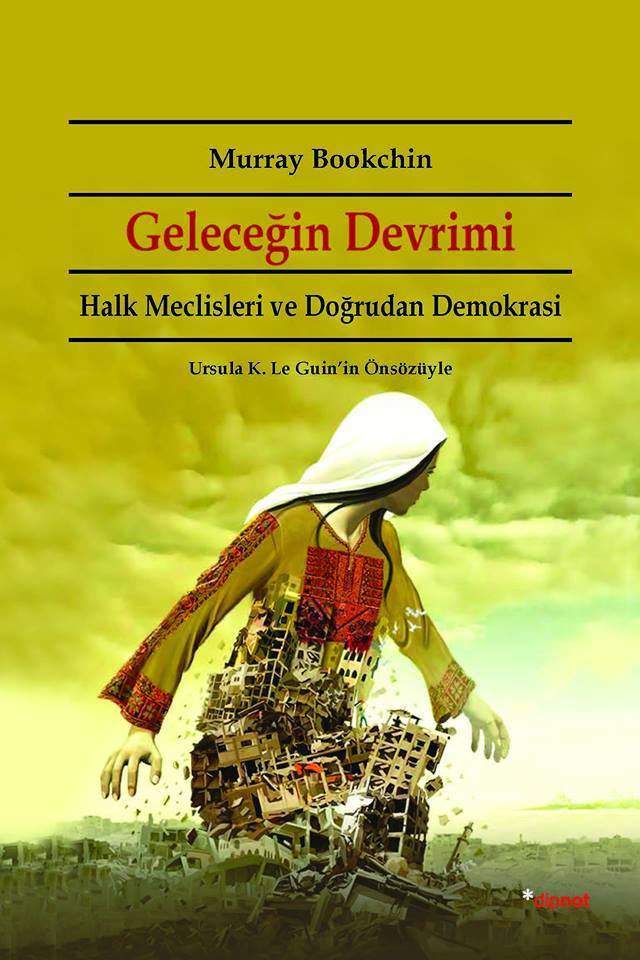
Geleceğin Devrimi: Halk Meclisleri ve Doğrudan Demokrasi

Rate this book
“Bookchin, ömrünü kapitalizmin “ya büyü ya öl” mantığına, o doymak bilmez ethosuna karşı çıkmakla harcadı. Bu kitaptaki dokuz deneme bu çabanın vardığı en son noktayı temsil ediyor: eşitlikçi, doğrudan demokrasinin uygulandığı ekolojik bir toplumun kuramsal payandalarını, böylesi bir toplumun nasıl inşa edilebileceğiyle ilgili pratik bir yaklaşımla birlikte, sunuyor. Bookchin, toplumsal değişimi hedefleyen geçmiş hareketlerin başarısızlıklarını eleştirel gözle inceliyor, doğrudan demokrasi vaadini yeniden diriltiyor ve çevre krizini hakiki bir tercih momentine nasıl dönüştürebileceğimiz konusundaki ümidinin dayanaklarını özetliyor –toplumsal cinsiyetin, ırkın, sınıfın, ulusun paralize edici hiyerarşilerini aşma fırsatından, toplumsal sistemimizin radikal kötülüğüne radikal bir çare bulma fırsatından söz ediyor. (…) Bookchin, arı düşüncesi, ahlaki sorumluluğu ve gerçekçi bir ümidin peşinde ödün vermeden, bütün içtenliğiyle koşması itibarıyla gerçek bir Aydınlanma çocuğudur.”
Ursula K Le Guin

“Bookchin, olağanüstü yeteneği ve enerjisiyle yıllar boyunca farklı alanlarda boy gösterdi: tarih, teknoloji, toplumsal örgütlen-me, adalet arayışı ve özgürlük, vs. Bu alanların her birine ışık ve içgörü kattı, özgün ve provokatif düşünceler ile esinleyici bir vizyon kazandırdı. Radikal demokrasi üzerine yazdığı yazılardan oluşan bu kitap onun büyük başarılarını daha da ileri bir noktaya taşıyor.”
Noam Chomsky

Zuccotti’den Taksim’e meydanlarda şekillenen radikal demokrasi, sergilediği müthiş direniş anlarına rağmen, ortaya henüz işe yarar bir alternatif politika koyamadı. Ne ki tabandaki heyecan ve dayanışma, bugünün baskıcı güçler dizilimini bertaraf etme ve onun yerine vizyoner, eşitlikçi –daha da önemlisi, ulaşılabilir– yeni bir toplum geçirme yetisine sahip bir politik praksis oluşturacak birleşik bir güce dönüşmüş değil henüz. Bookchin doğrudan bu ihtiyaca değiniyor; özgür bir toplumun ne menem bir şey olabileceğine ilişkin bir vizyon, bizi o ideale götürebilecek bir yol haritası ve yeni bir politik strateji sunuyor. Dolayısıyla, biz bu kitabı, dile getirdiği düşüncelerin kâğıt üzerinde kalmaması, bize direnişten toplumsal dönüşüme doğru hareket etmemizi sağlayacak düşünce ve eylemler esinlemesi umuduyla okurlara sunuyoruz.

272 pages, Paperback

First published January 1, 2015

101 people are currently reading
1570 people want to read

About the author

Murray Bookchin

120 books635 followers
Murray Bookchin was an American libertarian socialist author, orator, and philosopher. A pioneer in the ecology movement, Bookchin was the founder of the social ecology movement within anarchist, libertarian socialist and ecological thought. He was the author of two dozen books on politics, philosophy, history, and urban affairs as well as ecology. In the late 1990s he became disenchanted with the strategy of political Anarchism and founded his own libertarian socialist ideology called Communalism.

Bookchin was an anti-capitalist and vocal advocate of the decentralisation of society along ecological and democratic lines. His writings on libertarian municipalism, a theory of face-to-face, assembly democracy, had an influence on the Green movement and anti-capitalist direct action groups such as Reclaim the Streets.

Ratings & Reviews

What do you think?
Rate this book

Friends & Following

Create a free account to discover what your friends think of this book!

Community Reviews

5 stars
111 (29%)
4 stars
145 (38%)
3 stars
91 (24%)
2 stars
20 (5%)
1 star
5 (1%)
Displaying 1 - 30 of 42 reviews
Profile Image for Colleen.
28 reviews8 followers
May 1, 2018
Bookchin is truly one of the most brilliant political theorists of our time, and his proposal for a communalist politics with a libertarian municipalist praxis is one that the Left should take seriously. The essays throughout the book tend to be repetitive in its elaboration of what the political program, economy, and ethics would entail. However, I was left so inspired by the political program presented that I am willing to overlook the editors' work. I think I might have to write a graduate paper on this!
Profile Image for Nicole.
100 reviews
July 10, 2019
I was hoping for more of what should come next, seems reasonable given the title. The critiques of Marxism and anarchism are useful, and I can grasp the general idea and benefits of libertarian municipalism, but I don't have much of an idea how to make that come about after reading this.
Profile Image for William.
163 reviews18 followers
May 23, 2018
description

I'm a fan of Bookchin's thoughts on achieving a libertarian left society through communalism, but he's such a grumpy asshole throughout most of these essays that it's pretty unpleasant to read. I understand that there are no easy victories when it comes to leftist organizing, but some of the marginal assertions (chiefly, that recognition of identity politics will only recreate oppressive power structures, that anarchism doesn't have a coherent political ideology, or that 90s/00s movements failed because of a lack of discipline rather than the sheer weight of globalized capital) are ludicrous to anyone who has actually studied these concepts. All in all, worth a read, but maybe stick to other people iterating on his ideas.
Profile Image for Kriegslok.
467 reviews1 follower
January 5, 2018
In an unlikely future world Murray Bookchin might be considered a saviour and a turning point in the history of the human lemming, the point we turned back from the cliff edge. As Bookchin acknowledges turning around humanity would be a tall order that cannot be achieved overnight or through a simple revolutionary uprising overthrowing the "system". This book is both a critique of attempts past to change the course and fate of humanity as well as an attempt to present an alternative. This is done through a collection of stand alone pieces each dealing with specific themes and written over a couple of decades. There is inevitably some overlap and repetition but I found this helpful in reinforcing and representing information which may not be fully grasped in a single reading from one angle. Writing many of these pieces towards the end of his life Murray Bookchin brings the knowledge of years of activism and theoretical understanding. Unlike many who become trapped in dogma and ideological purity Bookchin never lost of the purpose of revolutionary action - namely to make life happier, easier and fairer for all (that grand Utopian dream). In rejecting the dogmas he does not throw out the baby with the bathwater but insists that theory, ideas, practice needs to change and adapt to a changing world. This is perhaps best expressed in the final chapter "The Future of the Left". Elsewhere he writes about anarchist misconceptions of power and leadership attacking correctly I think the failure of many "alternative" "autonomous" groupings to understand the realities of power and politics and the individualist lifestyle politics that often dominates a cliquey and marooned self appointed vanguard. He also singles out post-modernist approaches as being disruptive of a real politics of change. The chapter on the "national question" is especially good looking at the relationship between the left and national liberation which is admittedly not good or successful. As Bookchin points out the reality has forgotten the liberation aspect while the national aspect has reared its ugly and desperate head to maintain anything but liberationary or egalitarian systems. In place of the revolutionary statist projects of the past Bookchin argues for a "communalist" revolution based upon the development of bottom up systems of direct democracy. Arguing convincingly that there is no reason why direct democracy based on neighbourhood level committees should be any more absurd or unworkable than our existing top down system he argues for communities to take control of their own communities and lives, to wrestle power away from the state. A commune of communes answerable to the communities would work in turn for the people to whom they are in turn directly answerable and recallable. I am grossly simplifying a well developed and argued idea here. Bookchin had no illusions about the difficulties faced or the practicalities to be worked out. Nor did he doubt that attempts at implementing such a democracy would be met with opposition, assimilation and defeats. However, the argument he makes for a communalist future based on learning the lessons of past failure are strong. Indeed today in Kurdistan a "Democratic Confederalist" experiment is taking shape and facing the challenges that Murray Bookchin explores in this book. As a first serious attempt at this new form of revolutionary democratic power the communities involved are doing incredibly well under the most difficult, and far from ideal, of conditions. The degree to which this experiment is successful, or is allowed by hostile states to succeed, remains to be seen. Anyone fed up with conventional party / revolutionary politics and / or wishing to understand developments in revolutionary Kurdistan should read this book.
Profile Image for Andrew.
656 reviews160 followers
July 25, 2019
So Bookchin apparently gets a fair amount of derision from leftists, which I'm only just waking up to. I've seen him called a "Trot" plenty of times, but more often just sort of dismissed as a crank. It's still puzzling to me because I don't see that much to object to here. I'm kind of assuming it's because he criticizes both Marxism and Bakunism/anarchism, which leaves him basically homeless in a dogmatic ideosphere.

With regards to him being a Trotskyite, he does appear to endorse some of Trotsky's analysis. But he also criticizes him just as much as he does Lenin or Marx, so by the same logic he's also a Marxist-Leninist. I think what really seals the deal for most socialists and anarchists against Bookchin is that he proposes non-violent revolution as the most likely path forward.

Regarding this book, Bookchin lays out his argument for "communalism" a.k.a. "libertarian municipalism." He develops ideas he worked on for decades, and corrects his most zealous transgressions from earlier works like Post-Scarcity Anarchism, namely his excessive faith in technology/ecomodernism.

Overall the book is good, if repetitive. What I like about Bookchin is his inventiveness. I know that's frowned upon in the leftist circles that value your comradely-ness based mostly on how much Lenin you can regurgitate, but I don't know maybe I'm just a closet Trot (without knowing what "Trot" even really means).

Moreover, I greatly appreciate Bookchin's inclination to look for a pathway that doesn't involve the exceedingly unlikely event of a violent revolution. . . because, y'know, revolution is practically impossible. His prescription is for a relatively gradual, predominantly electoral takeover of towns/cities, followed by the creation of a confederal network of co-equal city-partners.

My one major gripe is that he is still frustratingly vague on the exact "how" of this process; I really think he could have pushed his thought further to guess at the specifics of decommodification (e.g. Ramping up land trusts? Citywide food programs?). He also, as in Post-Scarcity, neglects to account for capitalist resistance to these projects at the local level. The realtor's association and Chamber of Commerce aren't just going to stand by and watch us cut them out of the economic pie.

There's also, of course, the urgency of climate catastrophe (not as present to Bookchin at the time of writing in the 90s), knowledge of which tosses cold water on such a gradual solution.

Even with these complaints, however, it is refreshing to read a leftist who at least attempts to grapple with modern circumstances. His criticisms of Marxism and anarchism are helpful even if you count yourself in those camps. And his writing style, though repetitive and thus given to skimming, is still more accessible than not. And notwithstanding the lack of time to transform a system this gradually, his ideas at least provide a framework for what a just, sustainable society should ultimately resemble.

I would highly recommend this to everyone, even despite the "Google Murray Bookchin" meme (which I also don't understand, damn I'm getting old).

Not Bad Reviews

@pointblaek
Profile Image for Herman de Jonge.
14 reviews1 follower
December 14, 2016
In this collection of essays Bookchin gives a great analysis of the development and current state of the Left, particularly in its Marxist and anarchist variants from the late 19th century. His analysis is easy to understand and great to read. Yet, his solutions can be seen as somewhat utopian in nature. Not only does he propose a particular institutional form, municipalism. He also proposes a set of values, that are libertarian, egalitarian and ecological in nature. It isn't clear whether and how the two would be necessarily combined. An egalitarian, free and ecological society doesn't necessarily involve municipalism at an institutional level, while a society ordered by municipalism is easily thinkable without embracing libertarian values. A municipalist society that for example embraces a certain kind of religious conservatism would be just as imaginable.
Profile Image for robinson.
21 reviews2 followers
July 21, 2020
The future of the left is probably the most inspiring essay on there
Profile Image for Arkadiy.
4 reviews3 followers
April 12, 2021
Although this is Bookchin's last published work, I tend to recommend it as an introduction to his thought. Here, the reader can get a sense of Bookchin—the political theorist, Bookchin—the ecologist, Bookchin—the historian and Bookchin—the grumpy elder mad at Molotov-throwing youngsters. After reading this collection of essays, the reader will have a clearer picture of which Bookchin they would like to pursue further, if at all.
Profile Image for R. Reddebrek.
Author 10 books28 followers
April 24, 2025
A mixed bag.

This collection can be broken down into two parts the first is a collection of essays written in the 80s and 90s that combined sketch out the core themes of Bookchin's ideas. The second which bookends the collection are three newer essays in which Bookchin tries to present his views in the late 90s-2000s as a distinct and superior synthesis of his past ideas.

The latter is the weakest part of the book, Bookchin let's his emotional side out and he resorts to bad argumentations and misrepresentations of his imaginary opponents. Apart from sections from the final essay I think this collection would be improved by their removal.

The other part is intellectually interesting, Bookchin is honest about the impact Anarchism and Marxism et al had on his thinking and his criticisms of them ring far truer than his cheap shots.

I find his discussion on nationalism and the importance of interedependence amongst communes insightful.

However there is one notable flaw that comes up time and again in this work in both sets of essays. Bookchin repeatedly endorses participation in elections, specifically for local or municiple bodies. This is apparantly a key feature of his new libertarian movement. But in contrast to other tooics discussed it is always vague as to how this would work in practice and how a sucessful example would follow onto the tasks and goals of building an alternate to state power manifest.

Bookchin seems not to have much to say on key issues on how and why. What for example will the elected municipalists do regarding day to day administration and policy while building and extra-parliamentary dual power? Will they abstain and thus allow the opposition to control the town/city or will they do what the CNT/FAI did and take part, an action Bookchin denounces in one of these essays as collaboration with the bourgeois state?
Profile Image for Ward.
126 reviews5 followers
July 28, 2017
Ondanks haar gebreken is deze bundel van essays zeker de moeite waard. Het kan het beste dienen als een introductie tot het gedachtegoed van Bookchin en een eyeopener tot een radicale, moderne en verfrissende vorm van linkse politiek.

Het werk is diep geworteld in de anarchistische traditie, maar erkent tegelijkertijd het grote historische succes van Marxisme en probeert daar het beste uit mee te nemen. Niettemin is Bookchin uiterst kritisch op beide scholen.
De uitleg van Bookchins eigen revolutionaire idee blijft echter veel vager dan zijn kritieken en historische analyses, die op hun beurt juist weer minder vernieuwd en interessant zijn. Hierdoor vond ik vooral de eerste helft van het boek (hfst. 1-5) interessant waar Bookchin zijn libertarian municipalism uiteenzet.

Bookchins these is dat door zijn "coherente systeem" van directe face-to-face democratie—waaruit de opheffing van de staat volgt en de onderdrukking hierdoor—alle andere hiërarchieën ook zullen verdwijnen, inclusief de catastrofale overheersing van de natuur door de mensheid, waardoor een ecologische samenleving zal ontstaan. Dit verband is ietwat vaag uitgezet. Ik hoop hierover meer te vinden in het werk Post-Scarcity Anarchism, hetgeen echter geschreven is voordat Bookchin zijn coherente visie uitwerkte, dat in The Next Revolution behandeld wordt. Ik ben benieuwd.
308 reviews11 followers
August 14, 2015
So after reading three of his books this summer (plus a fourth he co-wrote), I'd say there are few if any authors with whom I agree more on sort of the broader outlines of what a moral society might look like (in this book best summarized in "The Ecological Crisis and the Need to Remake Society"). But on the specifics there are some things in this book that frustrated me, both stylistically (overconfidence) and substantively (vague on some crucial issues, also seems less engaged with climate/environment than he did in the '60s).

My favorite essay from this book, though I didn't always agree, was "Nationalism and the 'National Question.' " But despite a few great essays the book as a whole is kind of repetitive. And it's way less eco-conscious and way more Western-centric than The Ecology of Freedom.
50 reviews
April 4, 2025
In his lifetime, Murray Bookchin was an unorthodox radical, making his name as a green anarchist thinker before drifting apart from anarchism onto a course of his own. But starting with the Kurds in war-torn Syria, and now with local movements to create popular assemblies and cooperatives, there are signs of his influence growing. This is good. At a time when climates, democracy and economies are in crisis, we need radical answers. Bookchin didn't have them all — no-one does — but he had valuable things to say. For starters, perhaps better than any radical left thinker, he understood why the Marxist and anarchist traditions had hit roadblocks and fresh approaches were needed.

For example, consider the whole "Up the workers!" rhetoric. It felt like a cliché without resonance for me even when I became a worker myself. Bookchin writes:
Yes, class struggles still exist, but they occur farther and farther below the threshold of class war. Workers, as I can attest from my own experience as a foundryman and as an autoworker for General Motors, do not regard themselves as mindless adjuncts to machines or as factory dwellers or even as “instruments of history,” as Marxists might put it. They regard themselves as living human beings: as fathers and mothers, as sons and daughters, as people with dreams and visions, as members of communities—not only of trade unions.


Moreover, I think he was onto something with his vision of communalism (not communism!). He wanted politics re-focused around local communities governed by the "face-to-face democracy" of popular assemblies. Higher levels of government could still exist, but re-imagined as confederations of these local units, a "Commune of communes". It's utopian but it offers a route to resolving a great contradiction: our world is more inter-connected and inter-dependent than ever, but us humans evolved to live in face-to-face communities, not under distant national governments.

The Next Revolution is a collection of essays, published eight years after his death, from his later period when he drifted apart from anarchism. The last one was until then unpublished. I don't know how well it reflects his work, but I appreciated what I read, partly because it conveys the important points discussed above. And while I wouldn't call it lyrical or conversational prose, by the (dismal) standards of political theory, it's an accessible read.

A few points get repeated like the quoted paragraph above, but it's hard to see how that could be avoided in a collection like this. My one quibble is that it's ordered by theme rather than chronologically. I would've preferred the latter.
Profile Image for Vincent Tijms.
47 reviews5 followers
Read
November 10, 2020
Een inspirerende bundel essays, die tussen analyse en praktijk in blijft zweven, maar terloops wel alle historische pijnpunten van 'the Left' raakt. Bookchin houdt het overigens niet bij kritiek, maar stelt een synthese tussen anarchisme en marxisme voor: zijn libertair municipalisme, waarin een confederatie van direct democratisch georganiseerde communes een alternatief biedt voor de natiestaat.

Als introductie tot de ideeën van Bookchin werkt deze bundel heel goed, maar de essays zijn wel duidelijk geschreven voor de eigen beweging. Verwacht hier geen krachtige argumenten tegen kapitalisme of voor vrijheid: dit is voor lezers die al geloven dat directe democratie en zelfbestuur mogelijk en noodzakelijk zijn en dat het afschaffen van accumulatie en markt hier onlosmakelijk mee verbonden zijn.

Voor die lezers heeft Bookchin echter wel stevige woorden. De essays komen uit de jaren negentig en het begin van de 21ste eeuw, en Bookchin uit veel kritiek op de dan nog opkomende identity politics en het antiglobalisme. Die kritiek komt er in het kort op neer dat activisten volgens Bookchin te weinig gronding in geschiedenis en theorie hebben om effectief te zijn, doordat ze zich af laten leiden door tijdelijke protesten of randverschijnselen.

Daarnaast moet het proces waarmee Bookchins beoogde samenleving tot stand komt zorgvuldig worden uitgevoerd. Er zijn nieuwe structuren nodig om weerbarstig te blijven tegen de 'bourgeois state', er moet actief gestreden worden tegen interne verdeeldheid op basis van (communale, maar ook sociale of etnische) identiteiten en er zijn omkeerbare vormen van leiderschap nodig. Om dat allemaal te bereiken biedt Bookchin enige gereedschappen: hij beschrijft waarom meerderheidsbeslissingen wenselijk zijn, welke eisen gesteld moeten worden aan vertegenwoordigers van geconfedereerde communes en stelt op deze manier wat belangrijke randvoorwaarden voor zijn libertair municipalisme voor.

Als je het idee van libertair municipalisme interessant vindt, is dit een prikkelende verzameling essays.
Profile Image for Ben.
69 reviews6 followers
January 27, 2025
Bookchin is an engaging polemicist on the surface, but his method is full of straw figures. His critique of Marx? Straw figures, or at best, a critique of a particular dogmatic (productivist, Stalinist) 20th century Marxism. His critique of anarchists? The same: a critique of some anarchists, to be sure, and as someone mainly sympathetic to Marxism I am tempted to agree and enjoy his invective - but I know it is a straw figure. Anarchism is more varied than that. His critique of the Spanish anarchists in the 1936 revolution is a fairly standard Trotskyist critique, one that I find fairly convincing too, but hardly original. And I'm not well versed in anthropology, but his narrative of the emergence of cities as something that civilised the xenophobic little family bands of hunter-gatherers that preceded them seems a bit too simple and convenient for his narrative, too. His dismissal of the working class as an agent of change uses the flimsy straw figure that factory workers are now few and employees are "middle class" because they are white collar (call centres, anyone?)

Which is all a shame, really, because his concepts of localised "municipal" self-government as a revolutionary and democractic project is an interesting one. Like Michel Pablo, the Greek Trotskyist from the same generation as Bookchin, he looks back to the ancient Greek city-states for a working model of direct democracy. Perhaps this little book of polemical essays isn't the best introduction to the idea; maybe Bookchin himself isn't its best expositor, I don't know.
Profile Image for Arthur Davis.
16 reviews
July 27, 2017
The nature of the book as a collection of essays means that it tends to repeat itself, as each portion needs to explain the same ideas in order to make sense on its own. This means that you get multiple shots at understanding the harder concepts, but it also means that the book tends toward pointless review once you have the ideas down.

Those ideas swing wildly in terms of quality throughout the book. One paragraph Bookchin is espousing a clear idea of how a society could be organized from the bottom up rather than the top down, or accurately predicting the rise of reactionary politicians in response to a crisis; but in the next paragraph he's fear-mongering about nuclear power, or decrying the concerns of marginalized groups as "parochial identity politics," or blaming postmodernism for a nonspecific corruption of leftist thought.

A more cohesive book that focused on the author's positive contributions rather than his critiques of others would probably be more valuable. As this is the first of his books that I've read, I cannot say if one of his other works would fit this niche. I sincerely hope so.
Profile Image for Adem.
6 reviews1 follower
January 2, 2025
Komünizm ve Anarşizm eleştirileri mikro düzeyde doğru olsa da makro düzeyde anlaşılmaz ve eksiktir. 19 yy da Kapitalizm eleştirisi yapan Marks'i 20. yy Emperyalizmini anlayamamış olmasıyla yargılamaya çalışmak doğru değildir, ancak; emperyalizm ve faşizm dönemlerini yaşayarak görmüş bir entelektüelin bu sorunları görmezden gelerek yaratmaya çalıştığı ütopya gerçekle örtüşmeyen ve lokal kalan bir fikir ya da ideoloji olarak kalacaktır.
Halk meclisleri ya da doğrudan demokrasi iddiası bugünün Türkiye'sinde son 15 belki 20 yıldır yaşanan olayların ışığında gerçeğe aykırı olduğunu göstermektedir. Tabi ki bölgesel farklılıklar oluşabilir; kapitalizmin merkez ülkeleriyle 3 ve hatta 4 dünya ülkelerinde ki durumların ve sonuçların aynı olması beklenemez ve bu zaten doğanın, eşyanın tabiatına aykırı bir durumdur. Ayağı hava da kalan ancak doğru noktaları hedef alan eleştiri ve bakış açısıyla akla yeni sorular sormamiza yardımcı olabilecek bir kitap 👏🏽
Profile Image for Geoff.
66 reviews8 followers
September 22, 2017
This was a dense and difficult book. The Next Revolution was my introduction to Murray Bookchin and perhaps I should have chosen some other easier places to start. For such a short book, it took me a very long time to read it. It wasn't so much that I don't agree with Mr. Bookchin's analysis, but the delivery of the content was hard to digest. He has a large expanse of history, and if you don't know the history like he does, you can get lost pretty quickly. This collection of essays focuses on his advocating of a libertarian municipalism form of government. He does his best to explain his ideas to the reader, but if Mr. Bookchin is hoping for the next revolution to go in this direction he is going to have to take pains to simplify his message. As written, only the most intrepid will follow along with him
Profile Image for John.
69 reviews2 followers
March 13, 2019
Short and easy to skim. I don't have the theoretical background to get too deep into his arguments, but the general gist seems to be:
* Marxism & anarchism were useful frameworks for their time but now times have changed
* In particular, we see that capitalism was in its youth at the turn of the 20th century, not in its old age, and also that workers are whole entire people and not just revolutionaries
* Let's make city councils stronger, break down big cities into "human-scale municipalities," and move towards a society of loosely interdependent municipalities. This will be a moral society.

Definitely skeptical of that last point, especially since I just read a bunch of stuff about how planning complicated things doesn't really work, and the fraught-ness of top-down restructuring of society.
Profile Image for River.
4 reviews1 follower
August 23, 2019
Bookchin does a great job untangling the mess that is Leftist thought. He highlights the strengths of anarchism and communism and finds a way to ideologically synthesis them with his idea of libertarian communalism. While the work towards a truly free and rational society is likely far off in the future, he asks the questions that must be asked and provides a number of strong answers of his own. Thoroughly recommended to anyone interested in moving beyond the capitalist hellscape we are living in at the moment.
Profile Image for Ben.
16 reviews
August 29, 2025
Conceptually very refreshing socialist pathway that attempts a radically democratic institutionalisation in the process of decommodification. I also think many of bis analyses of the left remain contemporary and as such invaluable to move society away from just a sporadic economic struggle to truly address the ecological crisis. Though I doubt that his idea will suffice for that matter sadly.
The analysis is partially limited by unsatisfactory (economic) assumptions and vague + repetitive talking points.
must read though
Profile Image for Ursula Wren.
38 reviews2 followers
March 6, 2020
I had already read most of these essays in other forms, but the introduction by U.K. Le Guin made me decide to grab this copy as well.

In my opinion, a lot of the essays in this are the less compelling, "grumpy" Bookchin that I don't love as much as the old starry-eyed utopian version. It's a great primer though, and I might recommend it to people who need a more stern criticism of the purist ideologies.
Profile Image for Alex.
4 reviews
April 21, 2022
Interesting read. While I don't necessarily agree with everything Bookchin is saying, I can't help but admire his dedication to find a coherent set of progressive ideas that suit the present. It shows that you can maintain ideological agility and flexibility, while still staying true to your beliefs. I think I a lot of leftist, regardless of where they are on the spectrum, should give this essay collection a go, if only for the thought exercises it evokes.
Profile Image for Dimitrii Ivanov.
580 reviews18 followers
February 27, 2024
Собрание статей, примерно половина - констатация крушения политических стратегий марксистов, синдикалистов и анархистов, половина - описание революции при помощи муниципальных советов (несколько напоминающее "Рабочие советы" Паннекука, т.к. момент перехода от настоящего в будущее не описан). Подготовлено тщательно, аж четыре предисловия, есть всего несколько мелких проколов ("Промышленные рабочие мира" вместо "Индустриальных", например).
Profile Image for Mike.
119 reviews1 follower
Read
July 24, 2020
I’m not well-versed enough in classical anarchist or Marxist texts to know if Bookchin’s critiques are valid — but they are still compelling and provide a good sparknote analysis of a good range of leftist thinkers. The first and last chapters were the 2 most “useful” in the book, but I still enjoyed reading his critiques of Marx’s defense of statecraft in The National Question, etc.
Profile Image for Jacques Michel.
13 reviews9 followers
September 28, 2017
Really liked the critique of traditional anarchist/Marxist politics and the defense of a new strategy based on libertarian communes. This definitely echoes the book on Rojava Revolution by Knapp et al.
Other parts seemed a bit outdated such as the attack on identity politics.
Profile Image for Camille.
293 reviews62 followers
November 7, 2017
This was the first Bookchin I tried to read. I picked it up and then put it down as it is not a great entry point to his work. This is his final collection of essays and was released posthumously. It feels decidedly lopsided and alternately useful and in the weeds.
Profile Image for João.
9 reviews5 followers
February 21, 2021
It's the perfect book for an introduction to Murray Bookchin's social ecology and a starting point on understanding libertarian municipalism and communalism. I strongly recommend this book to everyone looking for some radical and progressive thoughts.
Profile Image for Jonathan.
205 reviews2 followers
January 3, 2018
I really struggled with this book. I genuinely wanted to be interested in the subject matter but the writing style just made the book more hard going.
Profile Image for Peter Reale.
12 reviews4 followers
August 14, 2019
Must read, best place to start when getting introduced to Bookchin.
Displaying 1 - 30 of 42 reviews

Can't find what you're looking for?

Get help and learn more about the design.