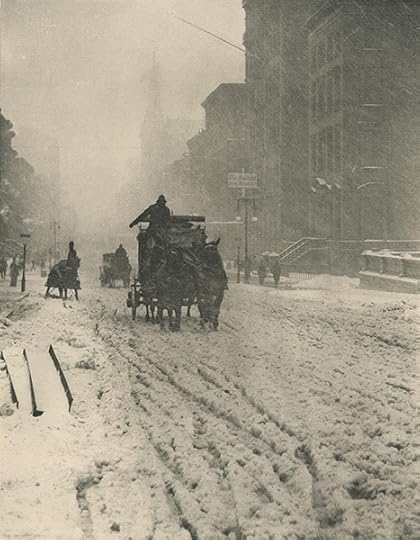
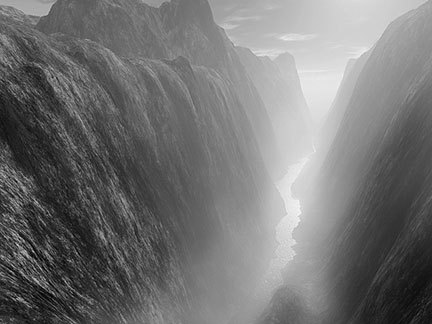
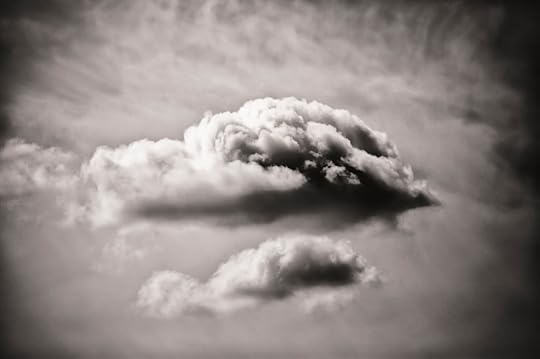
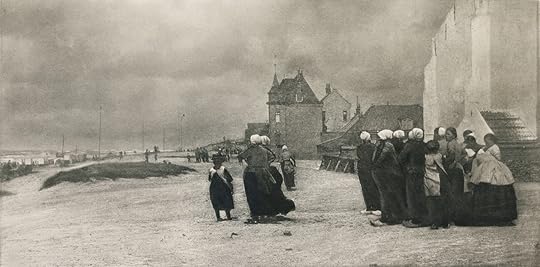
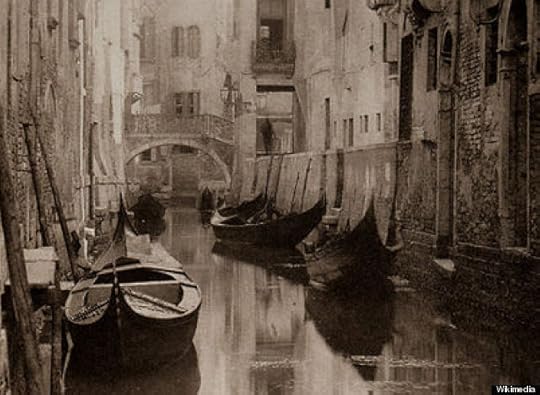
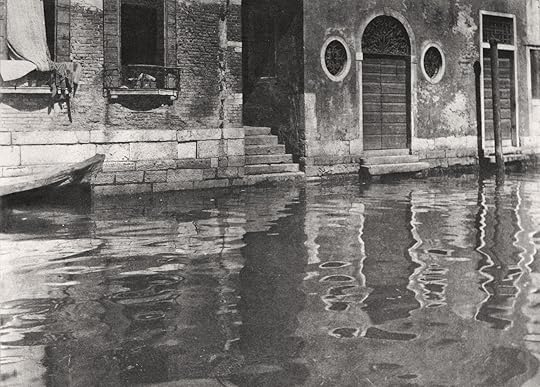
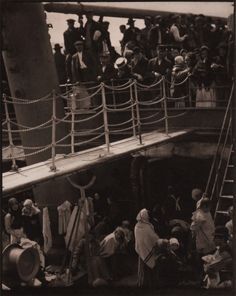
This collection of half-tone and photogravure reproductions from all 50 issues of the legendary photographic magazine produced by Stieglitz contains the work of Eduard Steichen, Frank Eugene, Clarence H. White, & others, as well as Stieglitz's own photography and original essays. Intro in English, German, French.
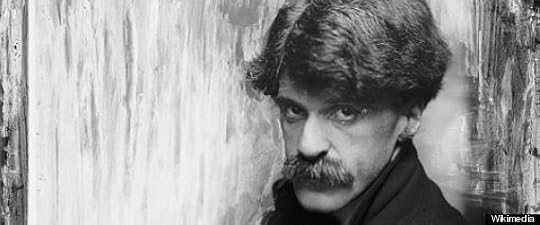
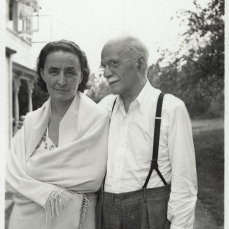
Alfred Stieglitz was an American photographer and modern art promoter who was instrumental over his fifty-year career in making photography an accepted art form. In addition to his photography, Stieglitz is known for the New York art galleries that he ran in the early part of the 20th century, where he introduced many avant-garde European artists to the U.S. He was married to painter Georgia O'Keeffe.
First a disclaimer: This book is not solely about the work of Alfred Stieglitz and, while it contains several of his photographs, it is by no means a complete collection and the vast majority of these photos are by unknown photographers from the turn of the twentieth century, mostly between 1900 and just prior to WWI.
Having said that, this is still a wonderful book. Taschen puts out the best quality art collections, in my opinion, and this book at five by eight inches wide and long and at least three inches thick, does not disappoint. It is an excellent overview of early photography as an art form, rather than used to document people and events.
Other known photographers (at least ones I recognized) are Edward Steichen and Paul Strand.
A valuable addition to any art and photography lover's library.
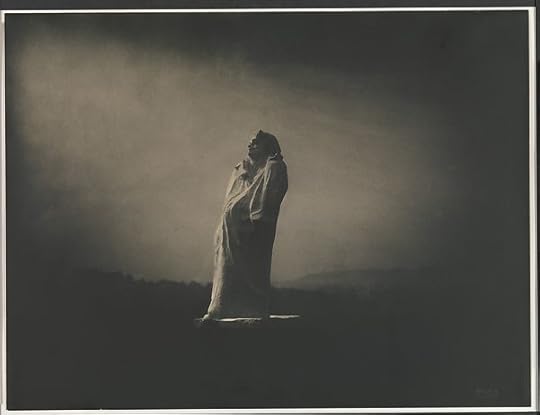
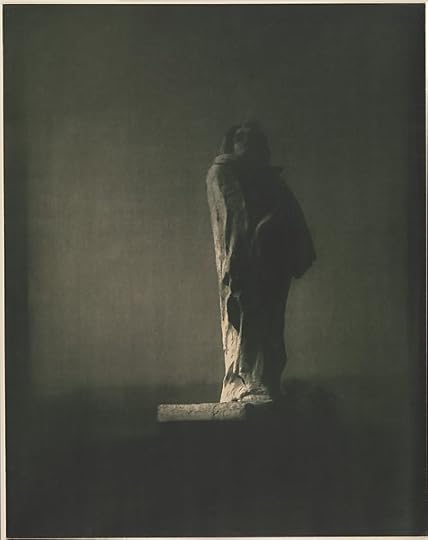
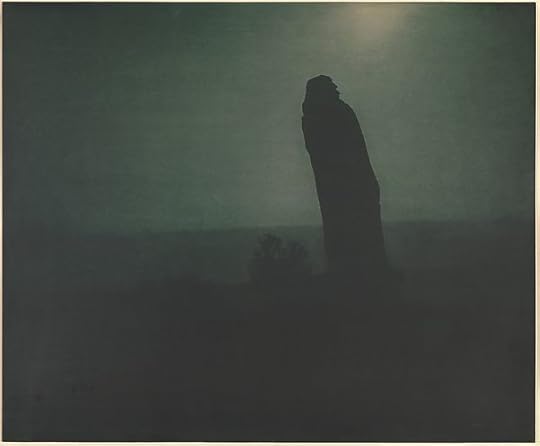
Camera Work! The life accomplishement of Alfred Stieglitz which promoted photography as a unique form of art. This marvellous book includes historical information around Stieglitz from his very early years (winning the amateur photographer first prize in 1887) until the birth and his resignation of Camera Work. The book focuses mostly in the Camera Work years, however provides adequate information for anyone interested to dig in more and of course a high level portrait of Alfred Stieglitz as "the greatest propagandist for photography" and his effort and vision for photography depicted in the Camera Work. The journal managed to reach 50 issues. In this Taschen book, the reader can find photographs from almost every issue of Camera Work. Do not expect to "see" only Stieglitz's photographs. Camera Work embraced the vision of photography at the beginning of 20th Century and this is depicted here. Exquisite! And despite the fact that photography of those years is significantly different than recent works, one should take a minute and go through the passion and devotion of the man who managed to change the route of photography with his innovative and brilliant vision. What amazed me - from that book - was the photographs of Rodin's Balzac paster by Edward Steichen. The photos themselves are impressive and Rodin had exclaimed that through these photos eventually the world will undestand his Balzac. More to discover in the book.. to be part of every photography lover bookcase.
En una edición de Taschen, cocido a mano, edición trilingüe inglés-alemán-francés, cuando lo vi en una "librería de viejo" en San Telmo, me dije: Esta oportunidad no se repetirá jamás. Alfred -en su tiempo- parece adelantado en el tiempo. Más aun, es injusto el mismo paso del tiempo con el arte del susodicho. Es difícil describir el tratamiento que le otorgaba a sus fotos. Más aun, si chequeamos los epígrafes. Leemos (leo) 1903. Y todo hace pensar que el tratamiento elegido para expresarse se congenian el minimalismo, la experimentación y un desarrollo abrumador de la técnica fotográfica. No menos sorpresivo fue la sección dedicada a los retratos: JP Morgan, Rodin, Henry Irving, Bernard Shaw (!!), Carlyle (!!!), Isadora Duncan... Para aquellos amantes de la fotografía, recomendadísimo!
Camera Work was among the first places where Americans could see cubist art. It included beautiful reproductions of works by Rodin, Matisse, and Picasso as well as photographers like Edward Steichen, Paul Strand, and Clarence H. White. Few know about this groundbreaking journal, and many more should.
The journal also marks a period during which many artists were struggling to define a uniquely American eye/voice in the arts and Camera Work, along with The Seven Arts, were at the center of a discussion that lasted some 20 years.
You can usually find this volume only in university special collections. The reproductions are excellent and it includes many of the key articles from the original journal issues.
Alfred Stieglitz is an important figure in the History of Photography, both as photographer, gallerist, curator and editor. He heavily influenced the development of American photography and helped promote European artists, such as Picasso and Matisse, in the USA, and the book's essay portrays him well. You can see Stieglitz's taste evolving as the images (and the issues of Camera Work they appeared in) are shown in chronological order.
Some reproductions look a bit dark and muddy, though I don't know enough about the images to be able to compare them to the originals. Regardless, there are a few beautiful gems among the many photographs in the book, and this will make a welcome addition to any Photography enthusiast's library.
I stumbled on this book while doing some research into photogravure, which is such a uniquely striking medium with the depth of the images produced through it. Apparently Alfred Stieglitz was a real champion of the process and of pictorial, fine art photography in general. Many of the images in Camerawork are gorgeous, with a haunting, melancholy quality to much of them that speaks to a bygone era. Kind of an interesting pairing with the Walker Evans I recently have been looking at, who was in direct opposition to this style of photography with his unsentimental, clean approach to his documentary subjects. As much as I love Evans, I'd like to think there's a place for the moody, hazy, lyric pieces in Camera Work too.
Книжка, яку варто переглядати багато разів. Повільно, читаючи кожен підпис, наскрізно, зупиняючись на окремих знімках, за номерами, за авторами через покажчик. Адже це альбом з фотографіями. Точніше, з репродукціями репродукцій, але це вже деталі. Camera Work містить всі фото, які були опубліковані в однойменному журналі, що виходив у США початку ХХ століття під проводом Альфреда Стігліца. Текстова частина є пафосним дифірамбом головному редакторові, натхненникові й фундаторові журналу.
This book wasn't exactly what I thought I was getting, being a compiling of the photography magazine Alfred Stieglitz produced in the early 20th century. Thus, it featured many different photographers, not just Stieglitz. There was also a very wordy essay (published in three different languages!) to read. It did give me the names of a few more photographers to investigate, so that was good.
L'unica pecca dell'edizione in copertina flessibile è che la successiva ristampa in copertina rigida ha una qualità di stampa leggermente superiore. Un secondo problema, che penso sia conseguenza dell'impaginazione originale di Camera Work, è che le foto con taglio orizzontale vengono adattate alla pagina mantenendo l'orientamento, quindi di fatto risultando piccolissime e lasciando inutile spazio bianco; ruotarle di 90 gradi sarebbe stato forse meno "elegante" ma avrebbe ottimizzato lo spazio e reso il miglior servizio alle foto stesse.
Segnalo infine, per i completisti, che esiste una edizione precedente a questa, che ha lo stesso formato ma include anche i saggi contenuti originaramente nella rivista, omessi invece nella ristampa.
A marvelous, historically-important, complete collection of images from the groundbreaking periodical Camera Work (1903-1917). Cheers to editor Marianne Fulton Margolis for her thorough introduction, exhaustive research, and three indexes. I relished the work of photographers about whom I previously knew nothing, especially Paul Strand, Julia Margaret Cameron, Eduard Steichen, Alvin Langdon Coburn, and Joseph T. Keiley. This is an indispensable resource and source of inspiration for photography aficionados and photographers alike. Much respect to Dover Publications and The International Museum of Photography at George Eastman House, Rochester, for this lavish yet affordable book. (And thanks to whoever sold the secondhand copy I bought at Blue Cypress Books in New Orleans!)
The quality of the photos is match by the abysmal quality of the writing. Is it impossible to ask for interesting and entertaining disposition in this genre? I can count on one hand the number of times I’ve actually found the writing in artbooks or photobooks to be impressive, or even adequate. I feel quite certain that chatgpt could have written something both more engaging and more pleasant to read than what’s contained in these pages. The entire work earns four stars from me, because there are some stunning photos featured here, but if I were to review the writing only, it would be two.
I was ticked by the size of the book. I opened it skimmed the first few pages and saw a mix of photos and text. Turns out the text is just the same 30 pages in multiple languages. While the other 100's of pages of photos are great pieces of art. I feel I learned more about said art via a few Youtube videos
A coffee book, complete history of Alfred Stieglitz. Don't expect any revelations, or controversial opinions, this is, what it is. A beautiful pictorial representation of his photographic and factual history. Great fun to flick thru and share.
I love photography, but I will admit to not knowing overmuch about Stieglitz as a person. But his photography is stunning and I was quite glad to get this book. I prefer Black and White photography to color, and what Stieglitz does with shadow and shading and perspective is brilliant.
A pleasure to get my hands on this book after reading one on Stieglitz and O’Keeffe. It’s fascinating to lay eyes on the photographs that were published in the early 1900s.
This book is a treasure if you have any interest in O’Keeffe and Stieglitz—even mildly.
This ended up not being what I was expecting when I ordered it online. It is interesting but I would have much preferred to see a collection of Stieglitz's own work.
One of the absolutely best and most price worthy books on photography I ever saw. Mindblowing. How come these early pictures by the pioneers transcend photography as an art and time as a dimension, to sit you down all amazed, gasping for air ? If some of these pictures make you wonder if they are paintings, how come you feel the presens and the connection with the subjects eyes ?
Raccolta delle immagini della rivista fotografica "Camera Work" diretta da Alfred Stieglitz tra il 1903 e il 1917. Un documento eccezionale di un'età gloriosa della fotografia, ma personalmente al di là dell'interesse storico ho trovato poche immagini che mi hanno interessato davvero.