

What do you think?

1966: The Year the Decade Exploded
The pop world accelerated and broke through the sound barrier in 1966. In America, in London, in Amsterdam, in Paris, revolutionary ideas slow-cooking since the late '50s reached boiling point. In the worlds of pop, pop art, fashion and radical politics, often fueled by perception-enhancing substances and literature, the 'Sixties', as we have come to know them, hit their Modernist peak.
A unique chemistry of ideas, substances, freedom of expression and dialogue across pop cultural continents created a landscape of immense and eventually shattering creativity. After 1966 nothing in the pop world would ever be the same. The 7 inch single outsold the long-player for the final time. It was the year in which the ever lasting and transient pop moment would burst forth in its most articulate, instinctive and radical way.
Jon Savage's 1966 is a monument to the year that shaped the pop future of the balance of the century. Exploring canonical artists like The Beatles, The Byrds, Velvet Underground, The Who and The Kinks, 1966 also goes much deeper into the social and cultural heart of the decade through unique archival primary sources.
A unique chemistry of ideas, substances, freedom of expression and dialogue across pop cultural continents created a landscape of immense and eventually shattering creativity. After 1966 nothing in the pop world would ever be the same. The 7 inch single outsold the long-player for the final time. It was the year in which the ever lasting and transient pop moment would burst forth in its most articulate, instinctive and radical way.
Jon Savage's 1966 is a monument to the year that shaped the pop future of the balance of the century. Exploring canonical artists like The Beatles, The Byrds, Velvet Underground, The Who and The Kinks, 1966 also goes much deeper into the social and cultural heart of the decade through unique archival primary sources.
640 pages, Kindle Edition
First published November 17, 2015
About the author
Jon Savage
65 books125 followersJon Savage (born Jonathan Malcolm Sage) is an English writer, broadcaster and music journalist, best known for his definitive history of the Sex Pistols and punk music, England's Dreaming (1991).
Ratings & Reviews
Friends & Following
Create a free account to discover what your friends think of this book!
Community Reviews
Displaying 1 - 30 of 83 reviews

January 16, 2016
Yes, I do think that 1966 was the greatest year in popular music (it just edges 1928 into second place) and here is a giant book all about everything that was going on in pop culture in 1966, and when you take a whole year like that you find that, well, of course, EVERYTHING was going on, all at the same time, so our encyclopaedic author sorts his 12 chapters out into themes, fairly obvious ones, like feminism, civil rights, Vietnam, the situation of gay men in the pop biz, the beginnings of rock as opposed to pop, auto-destructive avant-garde art, radical politics in the Netherlands, the persistence of crooning, the possibility of LSD in the water supply, you know, all the cultural winds howling round your ventricles.
I might say that this book is saddled with a cover that looks like a bored 12 year old put together on his laptop in twenty minutes. Do not let this put you off.
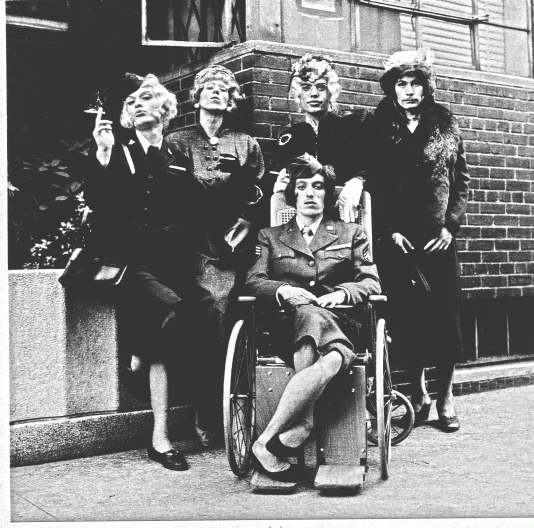
The Beatles famously had a real shit year, publicly, thanks to the Philippines (they “insulted” Marcos) and the Bible Belt where they had a couple of public Beatle record burnings, because of some remarks Lennon made in a years-old interview that was reprinted in advance of their American tour. They never toured again. Artistically they had their best year yet – from well she was just seventeen, you know what I mean to lay down all thought, surrender to the void (a Charles Manson preview right there) in a mere three years. That’s what I call artistic development. Bob Dylan issued Blonde on Blonde , did a crazed world tour and then also quit touring (for seven years, as it turned out, a Biblical span of time). The Beach Boys or should we say Brian Wilson had a year of apotheosis – Pet Sounds and most of Smile in one year? Not bad. Once again, from be true to your school just like you would to your girl or guy to Dove nested towers, the hour was strike the street, quicksilver moon. Carriage across the fog-two-step to lamplight cellar tune. in three years. The Stones rolled on, getting better – they didn’t crash & burn until 1967 although they did issue “Have you Seen Your Mother Baby Standing in the Shadows” and to promote it dressed as women from the 1940s – their own mothers :
This is an excellent book but if you’re familiar with the territory you will keep wandering into pages of déjà vu – Warhol and the Exploding Plastic Inevitable again, the civil rights march confrontations again, performance art again, Motown again. It cannot be helped. There will be large parts which aren’t familiar to even a determined 60s dumpster diver, such as the story of The Provos in Holland, or the local LA and San Francisco music scenes, and then there will be the mental jarring of the froth of pop being discussed alongside the Moors Murders and Charles Whitman’s reboot of the mindless massacre from the tower of the University of Texas at Austin (14 killed, 32 wounded).
Jon Savage has written a huge book which stuffs everything in, like Nixonland and The Victorian City, two other big ones which thrilled and exhausted me. I have a strong attraction to such books but sometimes my eyes are bigger than my stomach and by page 350 I’m wondering if the whole thing couldn’t have been a little more, er, selective. So I’m unreasonable, I knew that.
Mr Savage occasionally lapses into motormouth gibberish :
Something very strange was happening in pop culture during autumn 1966, and “Winchester Cathedral” was only one manifestation of this warp and woof. The unitary drive of modernism had accelerated beyond the point of sustainability. Under this pressure, time was beginning to fragment, from forward motion into a sequence of loops, into either the perpetual now of the historical periods sourced at will by an overloaded media.
I think he’s describing himself here – by page 400 it’s his brain that’s fragmenting into a series of loops or that’s what it felt like, I bet, and another 150 pages still to go!
Totally recommended for fans of the 1960s.
My 1966 Top Twenty.
1. Changes : Crispian St Peters
A race around the stars, a journey through the universe ablaze with changes - great 5th form poetry by Phil Ochs
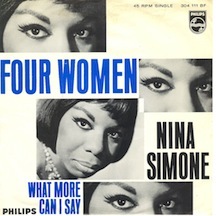
2. Four Women : Nina Simone
My hair is woolly
My back is strong
Strong enough to take the pain
inflicted again and again
What do they call me
My name is AUNT SARAH
It was a single, but not a hit, no surprise there
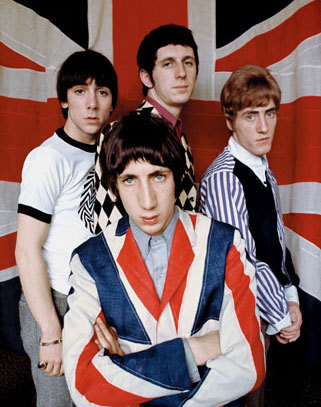
3. Substitute : The Who
Substitute you for my mum, at least I’ll get my washing done
4. Mr Dieingly Sad : The Critters
I would have said “Younger Girl” but that one has paedophiliac tendencies
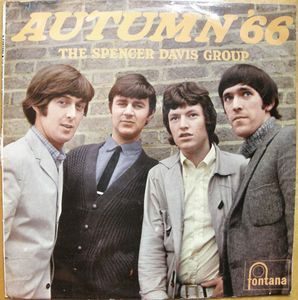
5. Gimme Some Lovin’ : Spencer Davis Group
There is a horrid version with extra dubbed vocals, avoid
6. Past Present and Future : The Shangri-Las
Was I ever in love? Well, I called it love. I mean, it felt like love.

7. October Song : Incredible String Band
the fallen leaves they jewel the ground
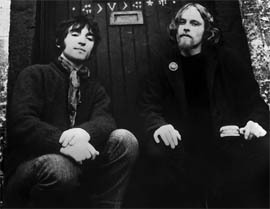
8. (Come Round Here) I’m the One you Need : The Miracles
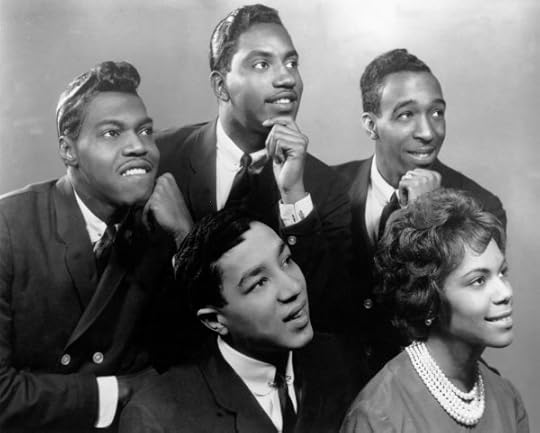
Note : I could of course have a top 20 consisting entirely of Motown - how could anyone miss out You Can't Hurry Love or Reach Out I'll be There... so I picked a lesser known masterpiece.
9. I Know there’s an Answer : Beach Boys
Originally called "Let Go of your Ego", then "Hang on to your Ego" !
10. Alfie : Cilla Black
Cilla not Dionne? Absolutely – you can’t have super-sophisticate Dionne singing these great gawky naïve lyrics. Cilla is perfect.
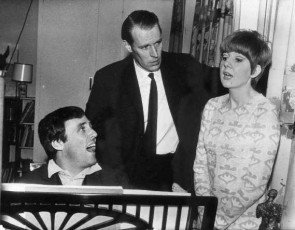
11. A Public Execution : Mouse and the Traps
Best Dylan copyists ever
12. Rollin’ and Tumblin’ : Cream
What an absolute racket this one is
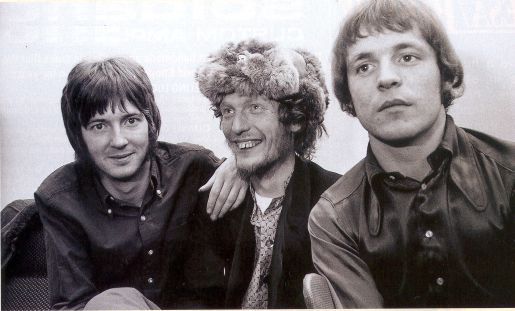
13. Happenings Ten Years Time Ago : The Yardbirds
Situations we really know, but the knowing is in the mind hmmmm

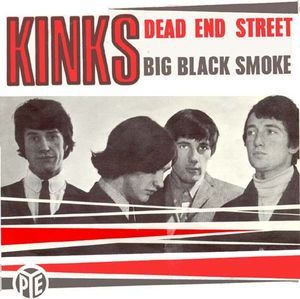
14. Big Black Smoke : The Kinks
every penny she had was spent on purple hearts and cigarettes
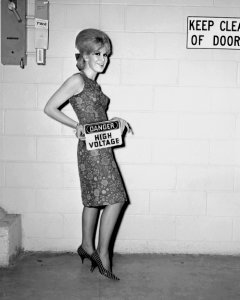
15. All I See is You : Dusty Springfield
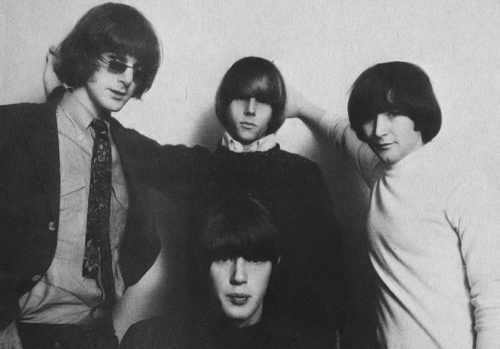
16. 5D (Fifth Dimension) : The Byrds
And I opened my heart to the whole universe and I found it was loving
And I saw the great blunder my teachers had made
Scientific delirium madness
17. Summer in the City : The Lovin’ Spoonful
Best pneumatic drill solo until Einstürzende Neubauten
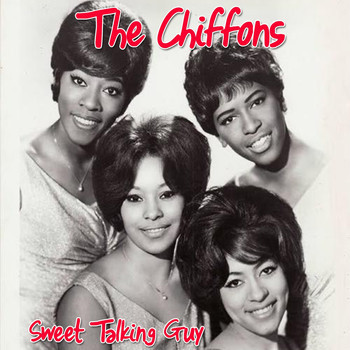
18 Sweet Talking Guy : The Chiffons
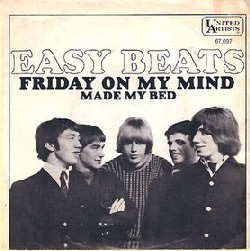
19. Friday on my Mind : The Easybeats
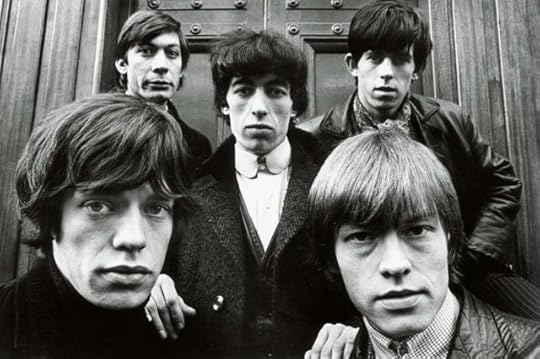
20. 19th Nervous Breakdown : Rolling Stones
On our first trip I tried so hard to rearrange your mind
But after a while I realized you were disarranging mine
I might say that this book is saddled with a cover that looks like a bored 12 year old put together on his laptop in twenty minutes. Do not let this put you off.
The Beatles famously had a real shit year, publicly, thanks to the Philippines (they “insulted” Marcos) and the Bible Belt where they had a couple of public Beatle record burnings, because of some remarks Lennon made in a years-old interview that was reprinted in advance of their American tour. They never toured again. Artistically they had their best year yet – from well she was just seventeen, you know what I mean to lay down all thought, surrender to the void (a Charles Manson preview right there) in a mere three years. That’s what I call artistic development. Bob Dylan issued Blonde on Blonde , did a crazed world tour and then also quit touring (for seven years, as it turned out, a Biblical span of time). The Beach Boys or should we say Brian Wilson had a year of apotheosis – Pet Sounds and most of Smile in one year? Not bad. Once again, from be true to your school just like you would to your girl or guy to Dove nested towers, the hour was strike the street, quicksilver moon. Carriage across the fog-two-step to lamplight cellar tune. in three years. The Stones rolled on, getting better – they didn’t crash & burn until 1967 although they did issue “Have you Seen Your Mother Baby Standing in the Shadows” and to promote it dressed as women from the 1940s – their own mothers :
This is an excellent book but if you’re familiar with the territory you will keep wandering into pages of déjà vu – Warhol and the Exploding Plastic Inevitable again, the civil rights march confrontations again, performance art again, Motown again. It cannot be helped. There will be large parts which aren’t familiar to even a determined 60s dumpster diver, such as the story of The Provos in Holland, or the local LA and San Francisco music scenes, and then there will be the mental jarring of the froth of pop being discussed alongside the Moors Murders and Charles Whitman’s reboot of the mindless massacre from the tower of the University of Texas at Austin (14 killed, 32 wounded).
Jon Savage has written a huge book which stuffs everything in, like Nixonland and The Victorian City, two other big ones which thrilled and exhausted me. I have a strong attraction to such books but sometimes my eyes are bigger than my stomach and by page 350 I’m wondering if the whole thing couldn’t have been a little more, er, selective. So I’m unreasonable, I knew that.
Mr Savage occasionally lapses into motormouth gibberish :
Something very strange was happening in pop culture during autumn 1966, and “Winchester Cathedral” was only one manifestation of this warp and woof. The unitary drive of modernism had accelerated beyond the point of sustainability. Under this pressure, time was beginning to fragment, from forward motion into a sequence of loops, into either the perpetual now of the historical periods sourced at will by an overloaded media.
I think he’s describing himself here – by page 400 it’s his brain that’s fragmenting into a series of loops or that’s what it felt like, I bet, and another 150 pages still to go!
Totally recommended for fans of the 1960s.
My 1966 Top Twenty.
1. Changes : Crispian St Peters
A race around the stars, a journey through the universe ablaze with changes - great 5th form poetry by Phil Ochs
2. Four Women : Nina Simone
My hair is woolly
My back is strong
Strong enough to take the pain
inflicted again and again
What do they call me
My name is AUNT SARAH
It was a single, but not a hit, no surprise there
3. Substitute : The Who
Substitute you for my mum, at least I’ll get my washing done
4. Mr Dieingly Sad : The Critters
I would have said “Younger Girl” but that one has paedophiliac tendencies
5. Gimme Some Lovin’ : Spencer Davis Group
There is a horrid version with extra dubbed vocals, avoid
6. Past Present and Future : The Shangri-Las
Was I ever in love? Well, I called it love. I mean, it felt like love.
7. October Song : Incredible String Band
the fallen leaves they jewel the ground
8. (Come Round Here) I’m the One you Need : The Miracles
Note : I could of course have a top 20 consisting entirely of Motown - how could anyone miss out You Can't Hurry Love or Reach Out I'll be There... so I picked a lesser known masterpiece.
9. I Know there’s an Answer : Beach Boys
Originally called "Let Go of your Ego", then "Hang on to your Ego" !
10. Alfie : Cilla Black
Cilla not Dionne? Absolutely – you can’t have super-sophisticate Dionne singing these great gawky naïve lyrics. Cilla is perfect.
11. A Public Execution : Mouse and the Traps
Best Dylan copyists ever
12. Rollin’ and Tumblin’ : Cream
What an absolute racket this one is
13. Happenings Ten Years Time Ago : The Yardbirds
Situations we really know, but the knowing is in the mind hmmmm
14. Big Black Smoke : The Kinks
every penny she had was spent on purple hearts and cigarettes
15. All I See is You : Dusty Springfield
16. 5D (Fifth Dimension) : The Byrds
And I opened my heart to the whole universe and I found it was loving
And I saw the great blunder my teachers had made
Scientific delirium madness
17. Summer in the City : The Lovin’ Spoonful
Best pneumatic drill solo until Einstürzende Neubauten
18 Sweet Talking Guy : The Chiffons
19. Friday on my Mind : The Easybeats
20. 19th Nervous Breakdown : Rolling Stones
On our first trip I tried so hard to rearrange your mind
But after a while I realized you were disarranging mine

April 27, 2019
This book is more than a history of music.
It also covers the growth of a rebellious youth culture, and a belief that the young can change the world. I have seen a revival of the energetic young, protesting climate change (or rather how government and local government deal with it) in my neck of the wood and I find it most heartening.
This book is divided into months, which initially I found a great way to organise the subject, but not all months were created equal, and when I was getting towards the finish line the read started to drag. This doesn't mean December was a bad read - this was one of the most interesting chapters. Of course this also reflects on me as a reader. This book, if you include acknowledgements, discography, etc, etc clocks in at 651 pages! All personal taste. Even for nonfiction I prefer not to tackle door stops. But 1966 was one of my favourite years in music - I always wished I had been a teenager in the late 60s!
Another criticism is, that for such a thick index, a lot was missing. My example is the Hollies. Not every mention recorded of this group . Annoying for people who want to just dip in & read about favourite artists - not tackle the whole book at once.
And, as other reviewers have mentioned - the cover is both ugly and lifeless. I do like the picture of Mick Jagger -looks like he is lecturing as well as singing! I found the interior pictures to be poorly arranged and of low quality.
In spite of these quibbles this is as thorough a look as you are every going to get into British and American music for that year and this will be an invaluable reference tool.
Be sure to read page 175 about Dusty Springfield. What a woman.
https://wordpress.com/view/carolshess...
It also covers the growth of a rebellious youth culture, and a belief that the young can change the world. I have seen a revival of the energetic young, protesting climate change (or rather how government and local government deal with it) in my neck of the wood and I find it most heartening.
This book is divided into months, which initially I found a great way to organise the subject, but not all months were created equal, and when I was getting towards the finish line the read started to drag. This doesn't mean December was a bad read - this was one of the most interesting chapters. Of course this also reflects on me as a reader. This book, if you include acknowledgements, discography, etc, etc clocks in at 651 pages! All personal taste. Even for nonfiction I prefer not to tackle door stops. But 1966 was one of my favourite years in music - I always wished I had been a teenager in the late 60s!
Another criticism is, that for such a thick index, a lot was missing. My example is the Hollies. Not every mention recorded of this group . Annoying for people who want to just dip in & read about favourite artists - not tackle the whole book at once.
And, as other reviewers have mentioned - the cover is both ugly and lifeless. I do like the picture of Mick Jagger -looks like he is lecturing as well as singing! I found the interior pictures to be poorly arranged and of low quality.
In spite of these quibbles this is as thorough a look as you are every going to get into British and American music for that year and this will be an invaluable reference tool.
Be sure to read page 175 about Dusty Springfield. What a woman.

https://wordpress.com/view/carolshess...

October 8, 2015
This book looks at an extraordinary year in popular culture. As the author states, “1966 began in pop and ended with rock,” and, although this book is concerned with all popular culture, it is music which as the centre of everything. This book contains twelve essays, one for each month of the year, which are based around a particular record and expand on themes and events in both America and Britain, in a year when music reflected the world.
The first number one single in the American charts that year was, “The Sound of Silence,” and it heralded a year in which the mass market would not be afraid of depth. The author uses this initial song to branch out into folk music, folk rock, protest songs, CND and the threat of nuclear explosion. This style of writing works well; allowing him to bring in lesser known records on similar themes and looking at society and culture from the perspective of different viewpoints.
Over the course of the twelve months of 1966, the book covers such diverse events as the war in Vietnam, feminism, the influence of drugs – in particular LSD – the counter culture, with Barry Miles and International Times, happenings, protests, violence, Civil Rights, art with Andy Warhol and much more. Obviously, this was an unsettled time of great change and possibilities. This was reflected in television shows such as “Cathy Come Home,” and “The War Game,” with pirate radio and fashion and, of course, in music.
This book has music at its heart – whether looking at Joe Meek, Motown, Stax, the Velvet Underground, the Byrds, the Kinks, the Who, Jimi Hendrix, the Bonzo Dog Doo-Dah Band or Tom Jones; music both reflected the times and changed them. From songs of protest – to those lampooning the protesters - from folk rock to soul and the emergence of rock, music pours forth from the pages and will make you reach for your own collections to play those songs, which still sound so fresh and relevant today.
By far, the two bands which dominated music then, and arguably now, are the Rolling Stones and the Beatles. There is much about the Stones and drug issues in particular and of how the Beatles were growing and changing. Of course, there are many classic songs by both in that year, but it is also obvious that the early years of relentless touring were exhausting both bands. In 1966 the Beatles released their, quickly papered over, ‘Butcher Cover’ in the States and there was the Maureen Cleeve interview with John Lennon, which also caused furore during their American tour. Brian Epstein was still there, to smooth troubled waters, but 1966 saw their last concert at Candlestick Park – while the Stones saw Mick Jagger exhausted and Brian Jones slipping into increasingly troubled behaviour and drug use.
This is a good, in depth, look at a monumental year in music, popular culture and politics. I felt that, as it darted between the US and the UK, that was often a little distracting. Possibly, I would have preferred the author to concentrate on either the States or Britain. However, he managed to combine the two well, for the most part, and link the issues together. A very enjoyable read and certainly a book I will return to. Lastly, I received a copy of this book from the publisher, via NetGalley, for review.
The first number one single in the American charts that year was, “The Sound of Silence,” and it heralded a year in which the mass market would not be afraid of depth. The author uses this initial song to branch out into folk music, folk rock, protest songs, CND and the threat of nuclear explosion. This style of writing works well; allowing him to bring in lesser known records on similar themes and looking at society and culture from the perspective of different viewpoints.
Over the course of the twelve months of 1966, the book covers such diverse events as the war in Vietnam, feminism, the influence of drugs – in particular LSD – the counter culture, with Barry Miles and International Times, happenings, protests, violence, Civil Rights, art with Andy Warhol and much more. Obviously, this was an unsettled time of great change and possibilities. This was reflected in television shows such as “Cathy Come Home,” and “The War Game,” with pirate radio and fashion and, of course, in music.
This book has music at its heart – whether looking at Joe Meek, Motown, Stax, the Velvet Underground, the Byrds, the Kinks, the Who, Jimi Hendrix, the Bonzo Dog Doo-Dah Band or Tom Jones; music both reflected the times and changed them. From songs of protest – to those lampooning the protesters - from folk rock to soul and the emergence of rock, music pours forth from the pages and will make you reach for your own collections to play those songs, which still sound so fresh and relevant today.
By far, the two bands which dominated music then, and arguably now, are the Rolling Stones and the Beatles. There is much about the Stones and drug issues in particular and of how the Beatles were growing and changing. Of course, there are many classic songs by both in that year, but it is also obvious that the early years of relentless touring were exhausting both bands. In 1966 the Beatles released their, quickly papered over, ‘Butcher Cover’ in the States and there was the Maureen Cleeve interview with John Lennon, which also caused furore during their American tour. Brian Epstein was still there, to smooth troubled waters, but 1966 saw their last concert at Candlestick Park – while the Stones saw Mick Jagger exhausted and Brian Jones slipping into increasingly troubled behaviour and drug use.
This is a good, in depth, look at a monumental year in music, popular culture and politics. I felt that, as it darted between the US and the UK, that was often a little distracting. Possibly, I would have preferred the author to concentrate on either the States or Britain. However, he managed to combine the two well, for the most part, and link the issues together. A very enjoyable read and certainly a book I will return to. Lastly, I received a copy of this book from the publisher, via NetGalley, for review.

October 8, 2015
4,5 Stars!
I'll start my review right away. For a reader who wants to know more about this particular era, this book is more than sufficient to provide that. For a person whose thesis on her master's degree -that's me- is a comparative study of counter culture and subcultures in the 60's, this is a true, gem.
I'm always seeking new sources and media to research for that matter like documentaries, movies, books and when i saw this title on Netgalley i knew i had to request it right away. I have to say i am more than impressed and absolutely ecstatic with this beautiful tribute to the sixties and particularly to 1966.
I absolutely loved it and actually devoured it in less than a few hours. Yes, the pages are 672 in total but i couldn't stop turning them on my tablet until the early hours when i hit the last one around 550, the rest is sources and index. Filled with music, charisma, tv, magazines, the liberal sexuality that defines the sixties, new ideas, political and economical changes and even war, it caught my attention for good.
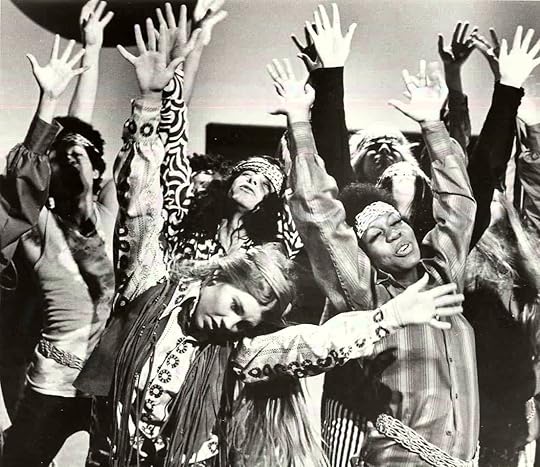
Although i have to point out that it's musically oriented and i was expecting more pictures, which were sporadic and even then, tiny collages at the beginning of every chapter. Other than that the book was fresh, intellectual but in a casual way, filled with info and unique stories.
I never read any book of Jon Savage but after my positive experience with 1966 i will rectify this promptly.
ARC provided via Netgalley in exchange of an honest review. Thank you!
I'll start my review right away. For a reader who wants to know more about this particular era, this book is more than sufficient to provide that. For a person whose thesis on her master's degree -that's me- is a comparative study of counter culture and subcultures in the 60's, this is a true, gem.
I'm always seeking new sources and media to research for that matter like documentaries, movies, books and when i saw this title on Netgalley i knew i had to request it right away. I have to say i am more than impressed and absolutely ecstatic with this beautiful tribute to the sixties and particularly to 1966.
I absolutely loved it and actually devoured it in less than a few hours. Yes, the pages are 672 in total but i couldn't stop turning them on my tablet until the early hours when i hit the last one around 550, the rest is sources and index. Filled with music, charisma, tv, magazines, the liberal sexuality that defines the sixties, new ideas, political and economical changes and even war, it caught my attention for good.
Although i have to point out that it's musically oriented and i was expecting more pictures, which were sporadic and even then, tiny collages at the beginning of every chapter. Other than that the book was fresh, intellectual but in a casual way, filled with info and unique stories.
I never read any book of Jon Savage but after my positive experience with 1966 i will rectify this promptly.
ARC provided via Netgalley in exchange of an honest review. Thank you!

March 16, 2016
I’m already a keen admirer of Jon Savage’s writing, and for me "England's Dreaming: Anarchy, Sex Pistols, Punk Rock, and Beyond" is still the best book written about punk rock in the UK.
"1966: The Year the Decade Exploded” is a behemoth, coming in at c650 pages, however Jon Savage is on top form in this kaleidoscopic trawl through the year of 1966. As a toddler in 1966, I’d never really appreciated just what a seismic year it was - both culturally and politically. Peak 1960s if you will, the moment the decade went technicolour, but also the moment it all started to fall apart: pop splintered into rock, soul, psych etc; youth questioned their elders, who expected compliance; minority groups wanted equality faster than it was being granted; and many young Americans were not particularly keen on being drafted to fight in Vietnam; and plenty more besides, which all made for a combustible 12 months with violent reactions right, left and centre.
Jon Savage has written a social history through the medium of popular music. It’s quite something. Taking a month at a time, and using many contemporaneous sources, as well as some of his own recollections as a 13 year old living through it, he creates a sense of being there. It’s all here and whilst, perhaps occasionally a tad too exhaustive, and sometimes over familiar, overall I come away dazzled. I learnt a lot and also viewed much of what I thought I knew in a different way. If you have any interest in social history and pop culture then this forensic examination of a tumultuous year is essential.
5/5
"1966: The Year the Decade Exploded” is a behemoth, coming in at c650 pages, however Jon Savage is on top form in this kaleidoscopic trawl through the year of 1966. As a toddler in 1966, I’d never really appreciated just what a seismic year it was - both culturally and politically. Peak 1960s if you will, the moment the decade went technicolour, but also the moment it all started to fall apart: pop splintered into rock, soul, psych etc; youth questioned their elders, who expected compliance; minority groups wanted equality faster than it was being granted; and many young Americans were not particularly keen on being drafted to fight in Vietnam; and plenty more besides, which all made for a combustible 12 months with violent reactions right, left and centre.
Jon Savage has written a social history through the medium of popular music. It’s quite something. Taking a month at a time, and using many contemporaneous sources, as well as some of his own recollections as a 13 year old living through it, he creates a sense of being there. It’s all here and whilst, perhaps occasionally a tad too exhaustive, and sometimes over familiar, overall I come away dazzled. I learnt a lot and also viewed much of what I thought I knew in a different way. If you have any interest in social history and pop culture then this forensic examination of a tumultuous year is essential.
5/5
January 2, 2020
Perhaps the best thing I’ve read this year. The analysis of a year through its music and much more – social and political history at its finest and journalism at its very best.
Contents:
Introduction.
Part 1 Acceleration
1. January
A Quiet Explosion: CND, Protest and the Conspiracy of Silence (NB Simon and Garfunkel’s Sound of Silence)
2. February
19th Nervous Breakdown, British Teen Culture and the Madness of Swinging London.
3. March
The Ballad of the Green Berets. The Vietnam War in America.
4. April
The Third Eye: LSD and its Discontents.
5. May
Walkin’ my Cat named Dog:
The Feminine Mystique and Female Independence.
6. June
I’ll Be Your Mirror: The Velvet Underground and Warhol’s American
7. July
Land of 1000 Dances: Tamla, Soul and the March Against Fear
8. August
Do You Come Here Often? Joe Meek, Gay Rights and a Summer of Violence
PART 2: EXPLOSION
9. September
7 and 7 Is: Provocations, Shadows and a New Language
10., October
Winchester Cathedral: Times Past, Present and Future
11. November
Good Vibrations: Motown and Soul in the UK, The Beach Boys and the Sunset Strip
12. December
My Minds Eye: Dreams of Freedom, a Prophetic Minority and the Return to Childhood
Acknowledgements
Discography
Sources
Index
Brilliant. RECOMMENDED. A very worthy winner of the Penderyn Music Prize, 2016, (whatever that might be).
Contents:
Introduction.
Part 1 Acceleration
1. January
A Quiet Explosion: CND, Protest and the Conspiracy of Silence (NB Simon and Garfunkel’s Sound of Silence)
2. February
19th Nervous Breakdown, British Teen Culture and the Madness of Swinging London.
3. March
The Ballad of the Green Berets. The Vietnam War in America.
4. April
The Third Eye: LSD and its Discontents.
5. May
Walkin’ my Cat named Dog:
The Feminine Mystique and Female Independence.
6. June
I’ll Be Your Mirror: The Velvet Underground and Warhol’s American
7. July
Land of 1000 Dances: Tamla, Soul and the March Against Fear
8. August
Do You Come Here Often? Joe Meek, Gay Rights and a Summer of Violence
PART 2: EXPLOSION
9. September
7 and 7 Is: Provocations, Shadows and a New Language
10., October
Winchester Cathedral: Times Past, Present and Future
11. November
Good Vibrations: Motown and Soul in the UK, The Beach Boys and the Sunset Strip
12. December
My Minds Eye: Dreams of Freedom, a Prophetic Minority and the Return to Childhood
Acknowledgements
Discography
Sources
Index
Brilliant. RECOMMENDED. A very worthy winner of the Penderyn Music Prize, 2016, (whatever that might be).

May 28, 2017
I'll follow Jon Savage anywhere, especially to one of my favorite year: 1966. I turned 12 that year, and I was very much into buying or receiving music at the time. I also had an intense curiosity about what's happening in England. I was of course, aware of the Fab Four and the Stones, but I knew there were bands like The Small Faces, The Move and of course, shows as "Shindig" exposed me to other bands/artists of that year. Oddly enough, there was so much great music from that era - and Savage opens the door to the reader that is 1966.
According to Savage, '66 is the year where the 60s started to happen. Acid (LSD) was hitting the teenage market, and politics, due to racial and Vietnam, were impossible to ignore. Also, 1966 was the year when things got psychedelic, but at the same time, it got darker. Things were groovy, but there were signs that things will turn to shit around the corner. In a remarkable feat of excellent writing/reporting, Savage captures these series of moments in what I think was a correct and realistic manner. There are at least four locations here in the book: Los Angeles, London, San Francisco, and New York City. The book has 12 chapters, representing each month in 1966, and the focus to start off the discussion is usually a very obscure 45 rpm single. Perhaps 1966 was the last year of the single as an artform. Not saying that were not great 45 rpm work in the future, but as a statement, for example, The Beach Boys' "Good Vibrations" which took months for them to complete.
The book covers a lot of ground. Savage doesn't forget feminism, gay liberation, students, and cinema as well as the music world/scene. He covers Joe Meek to Country Joe and The Fish. It's a large book that is over 500 pages, with an incredible discography. Savage is an obsessed music lunatic, who can write and think objectively but also very pointed in his view of that world. It's that balancing act and his intelligence that makes him such a great social historian.
According to Savage, '66 is the year where the 60s started to happen. Acid (LSD) was hitting the teenage market, and politics, due to racial and Vietnam, were impossible to ignore. Also, 1966 was the year when things got psychedelic, but at the same time, it got darker. Things were groovy, but there were signs that things will turn to shit around the corner. In a remarkable feat of excellent writing/reporting, Savage captures these series of moments in what I think was a correct and realistic manner. There are at least four locations here in the book: Los Angeles, London, San Francisco, and New York City. The book has 12 chapters, representing each month in 1966, and the focus to start off the discussion is usually a very obscure 45 rpm single. Perhaps 1966 was the last year of the single as an artform. Not saying that were not great 45 rpm work in the future, but as a statement, for example, The Beach Boys' "Good Vibrations" which took months for them to complete.
The book covers a lot of ground. Savage doesn't forget feminism, gay liberation, students, and cinema as well as the music world/scene. He covers Joe Meek to Country Joe and The Fish. It's a large book that is over 500 pages, with an incredible discography. Savage is an obsessed music lunatic, who can write and think objectively but also very pointed in his view of that world. It's that balancing act and his intelligence that makes him such a great social historian.

June 29, 2017
Jon Savage's overview of 1966 looks at the popular music of the time and how it was part of the social and cultural landscape in America and Britain (with a few brief nods to other countries). The book takes a chronological approach, each chapter is a month, outlining the big news stories and hit songs while discussing the broader meanings. It goes a little deeper than those CNN decades series (the 1960's, the 1970's, etc)but not much.
My biggest criticism is that too much time is spent in exposition in 1964 and 1965. I understand the need to contrast what was "then" with what is happening "now" in order highlight the radical departure from the norm, but it only makes the point that events in 1965 are what made 1966 special. No year exists independent of the years that came before so the entire concept of the book is a bit suspect. The "explosion" of the decade began before 1966 and certainly continued after December 31 of that year.
On the plus side, it is a fun read with some surprises for even the most ardent fans of the sixties. The provided discography is a wealth of hits and obscurities that any popular music fan should appreciate. There are many interesting insights regarding the role of music in shaping how the decade has been interpreted historically and culturally. I just wish there had been more of a global view instead of, once again, assuming that only Britain and the USA had social and cultural "explosions" at that time.
My biggest criticism is that too much time is spent in exposition in 1964 and 1965. I understand the need to contrast what was "then" with what is happening "now" in order highlight the radical departure from the norm, but it only makes the point that events in 1965 are what made 1966 special. No year exists independent of the years that came before so the entire concept of the book is a bit suspect. The "explosion" of the decade began before 1966 and certainly continued after December 31 of that year.
On the plus side, it is a fun read with some surprises for even the most ardent fans of the sixties. The provided discography is a wealth of hits and obscurities that any popular music fan should appreciate. There are many interesting insights regarding the role of music in shaping how the decade has been interpreted historically and culturally. I just wish there had been more of a global view instead of, once again, assuming that only Britain and the USA had social and cultural "explosions" at that time.

February 15, 2017
This is a month by month chronicle of 1966 covering mainly music, fashion, film/television and protest (women, gays and civil rights) on both sides of the Atlantic. The premise is that most of the unrest we associate with 1968 actually started toward the end of 1966. It begins in January with the CND movement in Britain and ends in December with the riots on Sunset Strip (with a whole lot in between).
It had me taking notes because there were a lot of obscure songs that were hits in England that I knew nothing about, along with TV shows that I now have to find a way to see. These include: Cathy Come Home (a docu-drama culled from horror stories of provincial girls drawn to the "bright lights/big city" who end up homeless -- like a real life Smashing Time); Adam Adamanti Lives (about an Edwardian spy who time-travels to "Swinging London") and Jonathan Miller's Alice in Wonderland (starring Leo McKern and Wilfred Brambell among others familiar to Beatles fans).
Since much of the commentary was taken from contemporary accounts, it was surprising to learn that the British thought 1966 to be a dull and dreary return to pre-Beatles Britain. I guess this was largely because Ready Steady Go, Radio Caroline and other pirate stations went off the air and there was a temporary vacuum created by the absence of the Beatles, who had done nothing since playing their last gig at Candlestick Park. A spate of great American records filled this gap, but there was a pervasive feeling that the British boom was over (It wasn't).
I recommend this because most people who think they know all this stuff will learn a lot. And I am going to want to put together a mix of these songs at some point. There's a list at the end that highlights the most popular songs played on the pirate stations in a given month.
It had me taking notes because there were a lot of obscure songs that were hits in England that I knew nothing about, along with TV shows that I now have to find a way to see. These include: Cathy Come Home (a docu-drama culled from horror stories of provincial girls drawn to the "bright lights/big city" who end up homeless -- like a real life Smashing Time); Adam Adamanti Lives (about an Edwardian spy who time-travels to "Swinging London") and Jonathan Miller's Alice in Wonderland (starring Leo McKern and Wilfred Brambell among others familiar to Beatles fans).
Since much of the commentary was taken from contemporary accounts, it was surprising to learn that the British thought 1966 to be a dull and dreary return to pre-Beatles Britain. I guess this was largely because Ready Steady Go, Radio Caroline and other pirate stations went off the air and there was a temporary vacuum created by the absence of the Beatles, who had done nothing since playing their last gig at Candlestick Park. A spate of great American records filled this gap, but there was a pervasive feeling that the British boom was over (It wasn't).
I recommend this because most people who think they know all this stuff will learn a lot. And I am going to want to put together a mix of these songs at some point. There's a list at the end that highlights the most popular songs played on the pirate stations in a given month.

March 28, 2020
A social/culural study of the decade's "peak, the year when the decade exploded" via the 45s that were released that year. Savage believes that the pop music at the time did reflect the world around it and uses that connection to look at that world. He sees 1966 as a crucial year of change and revolution and that there has been a conservative backlash over the following decades to negate and minimize those changes; he wrote this book during the eve of Brexit, partly, to counter the narratives of conservative backlash.
I thought this book was great. Savage is also the author of the excellent history of english punk, England's Dreaming. One of the things that is so good is that Savage mainly uses primary source material, so events aren't obscured by decades of hindsight. Savage is an adept and perceptive social and musical critic and he makes all sorts of connections that are not obvious. The book is organized as a series of essays that focus on each month; the earlier chapters focus on singular topics but by the ninth, the topics are intermingled.
Each essay highlights several 45s associated with the respective month and Savage also includes a discography that lists all the US/UK singles released in the month regardless of whether he references them in the text or not. And here's the thing: what a phenomenal year of pop.
I thought this book was great. Savage is also the author of the excellent history of english punk, England's Dreaming. One of the things that is so good is that Savage mainly uses primary source material, so events aren't obscured by decades of hindsight. Savage is an adept and perceptive social and musical critic and he makes all sorts of connections that are not obvious. The book is organized as a series of essays that focus on each month; the earlier chapters focus on singular topics but by the ninth, the topics are intermingled.
Each essay highlights several 45s associated with the respective month and Savage also includes a discography that lists all the US/UK singles released in the month regardless of whether he references them in the text or not. And here's the thing: what a phenomenal year of pop.

April 21, 2026
A big book that took me nearly a month to read, this is a comprehensive, month-by-month survey of one year in popular music in the 1960s, and how that music was intertwined with youth culture and a burgeoning sense of politics and rebellion against the Vietnam war among that postwar generation. Covering groups that I love like the Beatles, the Kinks, and the Beach Boys, as well as many of the psychedelic bands of the Haight-Ashbury scene in San Francisco, the soul music of Atlantic Records and Tamla Motown, and the folk-influenced bands of Los Angeles like the Byrds, music journalist Jon Savage does a credible job of describing the events and trends that year that shook up the world and made lasting changes. Many of these will be familiar to modern readers, but learning a bit more about things I had heard of but never studied (as an example, one among many, the Aberfan mining disaster in Wales) was really beneficial and helped me understand more about class, culture, gender, and politics in this tumultuous era. He emphasizes repeatedly how "free speech, civil rights and Vietnam" were crucial organizing issues" (527) for this generational cohort; as pop music became political in a time of "rapid social change" (527), their concerns were amplified - and the forces of the generation before them started to push back (he cites the governorship of Ronald Reagan in California as an example).
All of the detail about not just musicians and their music, but how people lived and thought and inhabited what now seems like a distant world, is fascinating and will appeal to music fans and history buffs alike.
As an appendix, the book has a wonderful, comprehensive list of all the songs, month by month - some familiar, some more obscure - that hit the charts on both sides of the Atlantic in 1966. And for those who like to hear the tunes, you can track down an accompanying CD on the internet.
All of the detail about not just musicians and their music, but how people lived and thought and inhabited what now seems like a distant world, is fascinating and will appeal to music fans and history buffs alike.
As an appendix, the book has a wonderful, comprehensive list of all the songs, month by month - some familiar, some more obscure - that hit the charts on both sides of the Atlantic in 1966. And for those who like to hear the tunes, you can track down an accompanying CD on the internet.

January 27, 2018
This is a great book for anyone interested into diving deeper into the cultural upheavals of the 1960’s. It’s a great companion piece to Mark Kurlansky’s “1968: The Year that Rocked the World” and David Hepworth’s “Never a Dull Moment: 1971 The Year That Rock Exploded.”
Each author argues that theirs is the “most significant” year of that tumultuous era and, in a way, each is right. There was so much change happening so fast that one gets whiplash even in retrospect. That said, Savage makes an excellent case to consider 1966 as the most pivotal.
“1966” is an intensely researched and documented tome offering a plethora of detail into the mainstream and obscure songs, people, and events of the year organized by month into twelve chapters. The distinctly British point of view will be of special interest to American readers who may have missed some of the hit songs and hip happenings from the UK pop scene.
Highly recommended for sixties aficionados, pop history buffs, and anyone seeking a deeper understanding of the events that helped create the world we live in today.
Each author argues that theirs is the “most significant” year of that tumultuous era and, in a way, each is right. There was so much change happening so fast that one gets whiplash even in retrospect. That said, Savage makes an excellent case to consider 1966 as the most pivotal.
“1966” is an intensely researched and documented tome offering a plethora of detail into the mainstream and obscure songs, people, and events of the year organized by month into twelve chapters. The distinctly British point of view will be of special interest to American readers who may have missed some of the hit songs and hip happenings from the UK pop scene.
Highly recommended for sixties aficionados, pop history buffs, and anyone seeking a deeper understanding of the events that helped create the world we live in today.
September 29, 2018
good in places. The whole 1966 was THE year bit doesn't really hold up - tho Savage was there and I wasn't. 66 was pre Hendrix; before Sympathy era Stones and JB invented Da Funk. when you actually listen to the music (cheers youtube - Savage says they must be listened on vinyl preferably 45, sorry Jon) it just doesn't hold up. Substitute by the Who gets really bigged and it's just some fey mid sixties tune; innocent and naive and, slight. Tomorrow Never Knows - Beatles is worth the hype; still sounds like the future (sampling, tape effects, trance, dance - it's all there) and the Velvets still sound nasty and discordant and artsy and difficult and punk
and very refreshing to read a book about 1966 with only one sentence devoted to the ruddy World Cup!
and very refreshing to read a book about 1966 with only one sentence devoted to the ruddy World Cup!

December 5, 2021
1966 is a comprehensive look at an impactful year in music and society in general. Savage takes you on a musical journey highlighting the important figures and events in music and politics that changed the face of the world as it had been known.
Artists such as The Beatles, Otis Redding, The Supremes among many others are celebrated and their stories are told, about how their actions altered things so much that we still feel the changes today.
Personally, I feel that 1966 is best served as an academic text. To read it for pleasure – which I was doing – felt a bit heavy. However, to read with purpose would make this book a lot more enjoyable. Regardless of this 1966 is a fascinating and thorough read.
1966 – The Year the Decade Exploded by Jon Savage is available now.
Artists such as The Beatles, Otis Redding, The Supremes among many others are celebrated and their stories are told, about how their actions altered things so much that we still feel the changes today.
Personally, I feel that 1966 is best served as an academic text. To read it for pleasure – which I was doing – felt a bit heavy. However, to read with purpose would make this book a lot more enjoyable. Regardless of this 1966 is a fascinating and thorough read.
1966 – The Year the Decade Exploded by Jon Savage is available now.

December 6, 2025
Jon Savage’s 1966 is a rich, immersive and deeply researched portrait of a year that genuinely felt like history turning in real time. His month-by-month structure works brilliantly, showing how politics, music and social upheaval didn’t exist in isolation but constantly fed into one another. Savage is at his strongest when charting the evolution of youth movements — how young people asserted their identities through sound, style, and attitude.
The musical detail is excellent. He moves confidently from The Beatles and The Stones to Otis Redding, The Byrds, The Who, The Kinks, and underground acts like The Mothers of Invention and the early Velvet Underground. Savage manages to tie these scenes together without overwhelming the reader, showing how innovation exploded simultaneously across continents.
If there’s a drawback, it’s simply the density: the book is packed with names, moments and cultural cross-currents, and some chapters feel like information overload. This is a strength for music historians, but casual readers might sometimes feel swept along by the sheer volume of detail.
Still, Savage’s core argument — that 1966 was the real high point of the 1960s, the year when youthful idealism and growing discontent collided — is both persuasive and fascinating. His prose is vivid, authoritative and often electrifying.
Overall, 1966 is an ambitious, intelligent and absorbing cultural history. If you’re interested in ’60s music, politics, counterculture or how a single year can reshape the world, it’s an essential read.
The musical detail is excellent. He moves confidently from The Beatles and The Stones to Otis Redding, The Byrds, The Who, The Kinks, and underground acts like The Mothers of Invention and the early Velvet Underground. Savage manages to tie these scenes together without overwhelming the reader, showing how innovation exploded simultaneously across continents.
If there’s a drawback, it’s simply the density: the book is packed with names, moments and cultural cross-currents, and some chapters feel like information overload. This is a strength for music historians, but casual readers might sometimes feel swept along by the sheer volume of detail.
Still, Savage’s core argument — that 1966 was the real high point of the 1960s, the year when youthful idealism and growing discontent collided — is both persuasive and fascinating. His prose is vivid, authoritative and often electrifying.
Overall, 1966 is an ambitious, intelligent and absorbing cultural history. If you’re interested in ’60s music, politics, counterculture or how a single year can reshape the world, it’s an essential read.

August 27, 2022
Szeroko opisane kalendarium przełomowego dla popkultury i muzyki roku 1966. Choć nie tylko. Bowiem Jon Savage, przez pryzmat zmian i pojawiających się nowych trendów, ujmuje w szerokim zakresie gros przemian i rewolucji przetaczających się przez Wielką Brytanię i Stany Zjednoczone, zrządzeniem losu czy też powodowane kumulacją napięć społecznych i różnic pokoleniowych, w tytułowym roku 1966.
Niesamowita książka przede wszystkim - choć nie tylko - dla wielbicieli muzyki - utwory kapel debiutujących, będących u szczytu popularności i z wolna odchodzących w cień, zostały tu poddane dokładnej analizie, szeregom interpretacji, które umiejscawiają utwory w kontekstach politycznych, kulturowych, społecznych i... osobistych (dla ich twórców). A ponadto "1966..." Savage'a jest dokumentem opisującym całą epokę - mimo iż skupia się na 66-tym - z wielu różnych ujęć i perspektyw. Niesamowita książka, którą docenią wszyscy fani muzyki z tej niezapomnianej dekady! Polecam gorąco!
Niesamowita książka przede wszystkim - choć nie tylko - dla wielbicieli muzyki - utwory kapel debiutujących, będących u szczytu popularności i z wolna odchodzących w cień, zostały tu poddane dokładnej analizie, szeregom interpretacji, które umiejscawiają utwory w kontekstach politycznych, kulturowych, społecznych i... osobistych (dla ich twórców). A ponadto "1966..." Savage'a jest dokumentem opisującym całą epokę - mimo iż skupia się na 66-tym - z wielu różnych ujęć i perspektyw. Niesamowita książka, którą docenią wszyscy fani muzyki z tej niezapomnianej dekady! Polecam gorąco!

November 9, 2024
translation was horrible

May 22, 2017
I naively lived through 1966 when I first became a teenager, but now, fifty years on, I have fully lived that momentous year.
'1966' by Jon Savage is a magnificent tome which takes the reader on a heady journey across the Transatlantic musical shifts, month by month, while examining the diverse pop culture trends that accompanied these shifts.
Savage leaves no cultural stone unturned - from fashion , film and art to music venues, the rise of psychedelia via marijuana and LSD, from race riots to conscription and of course, the political manipulation that occurred in both Britain and the United States. The underlying theme is the widening Generation Gap and the 'explosion' of protest and demonstration.
Of course, the emphasis is on music, which is fine by me. All the artists who shaped that year are given due attention but not in an obvious, 'heard it all before' way. The Beatles, Love, Stones,Kinks, Jefferson Airplane, Hendrix, Cream, Velvet Underground - Monkees! 1966, what a year! What an incisive book.
'1966' by Jon Savage is a magnificent tome which takes the reader on a heady journey across the Transatlantic musical shifts, month by month, while examining the diverse pop culture trends that accompanied these shifts.
Savage leaves no cultural stone unturned - from fashion , film and art to music venues, the rise of psychedelia via marijuana and LSD, from race riots to conscription and of course, the political manipulation that occurred in both Britain and the United States. The underlying theme is the widening Generation Gap and the 'explosion' of protest and demonstration.
Of course, the emphasis is on music, which is fine by me. All the artists who shaped that year are given due attention but not in an obvious, 'heard it all before' way. The Beatles, Love, Stones,Kinks, Jefferson Airplane, Hendrix, Cream, Velvet Underground - Monkees! 1966, what a year! What an incisive book.
May 6, 2024
It's never gonna go below 2 stars just because it's such an interesting topic, but the book itself was pretty scattered and the writing quite self-indulgent.
The writer struggled to maintain a coherent narrative throughout the book, often going off on tangents which seemed unrelated to the overall story he was trying to spin. For example he would often pick out obscure records from the lower reaches of the charts, which to my eyes sold nothing and influenced nobody, and proceed to write about them for 3 or 4 pages. This happened a lot.
The structure was also very loose. It is presented as a chronological, month-by-month account of the year, but it's not like that at all. He would pick out maybe one thing that happened that month and then go off on more tangents about various things that had happened months or even years earlier. I got no sense of how the year actually unfolded - it was way too scattergun and unfocused for that.
And yeah, the writing style really wasn't for me. Seemed to trip himself up in flowery language and extended metaphors to the point that it became incomprehensible. For example:
"The unitary drive of modernism had accelerated beyond the point of sustainability. Under this pressure, time was beginning to fragment, from forward motion into a series of loops, into either the perpetual now or the historical periods sourced at will by an overloaded media."
Or:
"Yet there was a new harshness in this radical rhetoric: a confrontational, sarcastic, devil-take-the-hindmost mode of address that fused youthful obnoxiousness with post-Marxist philosophical concepts and a kind of ecstatic, negative utopianism..."
Basically, he really loved the sound of his own pen. The fact that this book went on for about 200 more pages than it should have kinda proves that. It was sometimes very difficult to read because the writer loved using big words.
Oh and I know it's impossible to properly address everything that happened this year (which the writer mentioned in the intro). And I know it's music-centric. But in a book that claims to be documenting the social history of a country, barely mentioning the 1966 World Cup final seems like a massive oversight. It was watched by about 75% of the population of England, yet barely merited a single paragraph. I think it's quite typical of historians and culture writers to basically ignore the role of football in history, seeing it as just a sport when really it's far more important and far more popular than basically anything else he mentions in this book. How on earth could it have not played a role in the story of that year?
So yeah. Interesting premise let down by some overly indulgent writing, lack of editing and bizarre omissions from history.
The writer struggled to maintain a coherent narrative throughout the book, often going off on tangents which seemed unrelated to the overall story he was trying to spin. For example he would often pick out obscure records from the lower reaches of the charts, which to my eyes sold nothing and influenced nobody, and proceed to write about them for 3 or 4 pages. This happened a lot.
The structure was also very loose. It is presented as a chronological, month-by-month account of the year, but it's not like that at all. He would pick out maybe one thing that happened that month and then go off on more tangents about various things that had happened months or even years earlier. I got no sense of how the year actually unfolded - it was way too scattergun and unfocused for that.
And yeah, the writing style really wasn't for me. Seemed to trip himself up in flowery language and extended metaphors to the point that it became incomprehensible. For example:
"The unitary drive of modernism had accelerated beyond the point of sustainability. Under this pressure, time was beginning to fragment, from forward motion into a series of loops, into either the perpetual now or the historical periods sourced at will by an overloaded media."
Or:
"Yet there was a new harshness in this radical rhetoric: a confrontational, sarcastic, devil-take-the-hindmost mode of address that fused youthful obnoxiousness with post-Marxist philosophical concepts and a kind of ecstatic, negative utopianism..."
Basically, he really loved the sound of his own pen. The fact that this book went on for about 200 more pages than it should have kinda proves that. It was sometimes very difficult to read because the writer loved using big words.
Oh and I know it's impossible to properly address everything that happened this year (which the writer mentioned in the intro). And I know it's music-centric. But in a book that claims to be documenting the social history of a country, barely mentioning the 1966 World Cup final seems like a massive oversight. It was watched by about 75% of the population of England, yet barely merited a single paragraph. I think it's quite typical of historians and culture writers to basically ignore the role of football in history, seeing it as just a sport when really it's far more important and far more popular than basically anything else he mentions in this book. How on earth could it have not played a role in the story of that year?
So yeah. Interesting premise let down by some overly indulgent writing, lack of editing and bizarre omissions from history.

October 10, 2021
“1966” is a brilliant, sweeping, hugely ambitious history of a year that Jon Savage convincingly argues was pivotal to the development of rock music, radical politics, pop art, and practically every element of what we now know as popular culture. 1966 was the year when, as Savage describes it, “the decade exploded ... and when anything seemed possible”. It was when the post-war baby boom combined with then persistent fear of ‘The Bomb’ and nuclear annihilation, leading to an explosion in youth culture (and given a greater sense of urgency by the influence of LSD).
These parallel trends of atomic terror, the growth of teenagers’ consumer, and psychedelic drugs found powerful expression in the music of the time. 1966 was perhaps the apotheosis of when popular music reflected the world outside. In one example expertly sketched out by Jon Savage, the spirits of the Civil Rights Movement and Black Power began seeping into American dance and soul music, propelling them onto further incredible creative heights.
While this is a huge, exhaustive study of a momentous, tumultuous year, Jon Savage rarely allows the pace of the book to slacken. Though Savage might be known primarily as a music journalist (and he writes brilliantly about music throughout “1966”), he also has a mastery of the politics of that time. He has an encyclopaedic depth of knowledge about the civil rights, women’s liberation, gay rights, and anti-war movements – and about the emerging conservative backlash to all of them.
Savage’s use of sources (many of them quite obscure) is impeccable, and the book’s structure – with each chapter focusing on one month during 1966 – never feels forced or inapt. That readability is rarely sacrificed for comprehensiveness in a book of this length is a huge achievement on Jon Savage’s part, and his writing never fails to capture the “overwhelming urgency” of the era. “1966” is a must-read for anybody with even a passing interest in the culture and politics of that turbulent decade.
These parallel trends of atomic terror, the growth of teenagers’ consumer, and psychedelic drugs found powerful expression in the music of the time. 1966 was perhaps the apotheosis of when popular music reflected the world outside. In one example expertly sketched out by Jon Savage, the spirits of the Civil Rights Movement and Black Power began seeping into American dance and soul music, propelling them onto further incredible creative heights.
While this is a huge, exhaustive study of a momentous, tumultuous year, Jon Savage rarely allows the pace of the book to slacken. Though Savage might be known primarily as a music journalist (and he writes brilliantly about music throughout “1966”), he also has a mastery of the politics of that time. He has an encyclopaedic depth of knowledge about the civil rights, women’s liberation, gay rights, and anti-war movements – and about the emerging conservative backlash to all of them.
Savage’s use of sources (many of them quite obscure) is impeccable, and the book’s structure – with each chapter focusing on one month during 1966 – never feels forced or inapt. That readability is rarely sacrificed for comprehensiveness in a book of this length is a huge achievement on Jon Savage’s part, and his writing never fails to capture the “overwhelming urgency” of the era. “1966” is a must-read for anybody with even a passing interest in the culture and politics of that turbulent decade.

January 29, 2023
Nearly seven years ago, I reviewed David Hepworth's Never a Dull Moment: 1971, The Year That Rock Exploded. I chided Hepworth for trying to shoehorn events into existing capsules, particularly since 1971 can only be considered a gamechanging year if artificial guardrails are installed. I added how much I despised books whose titles began with a year, as though the flow of events could ever be adequately represented by a static calendar. Well. Never let it be said that there aren't occasional exceptions to the rule.
I'd been pondering how the truly revolutionary year for pop music of the 1960s was 1966, because the U.S. had absorbed the British Invasion and had moved on to garage bands, while the marketeers and tastemakers had not been able to characterize the blob of mercury that was 1966, while 1967 and 1968 were virtually pre-packaged as psychedelia and revolution years, respectively. If you are able to name and define an era, you were already late to the party. A random Amazon search turned up the fact that Jon Savage, author of books on Joy Division and the early British punk years, had written a book based on exactly the thesis I was looking for. (He's also written some yearbooks for succeeding years, which might be interesting to read soon, but which diverge from my primary interest here.)
Savage based his book on the primacy of the 45 rpm 7-inch single, perhaps one of the last years when singles ruled the game. Each chapter is a month of the year, and each focuses on one single in particular, with supporting-actor singles coming in to flesh out topics like Tamla Motown, the nascent movements for women and LGBTQ+ voices being heard, the way youth-culture marketeers demanded ever accelerating trends, etc. The method is highly effective, and Savage includes a 45rpm discography for aural deep dives.
The author offers as many inside stories as Hepworth does, but tells them with a more deft voice. We learn about Buffalo Springfield's role in the November 1966 Sunset Strip riots, Yoko Ono's early years in the U.S. prior to meeting John Lennon, Ferdinand Marcos's August 1966 intimidation of The Beatles during their Philippines visit, and plenty more forgotten stories. What Savage does far better than Hepworth, though, is to weave the stories of pop music into larger platforms of cultural and political trends in the society. And his views move way beyond the historical trend lines we might pick up from a Life magazine survey of the decade, or similar broad-based sources.
Savage is a Situationist and a student of marketing, and it's no surprise his book references people like Marshall McLuhan and Guy DeBord. The thesis here is that 1964-65 were years in which the marketed and self-aware "youth culture" could barely be contained enough to be packaged in a manner fitting for Madison Ave. In early 1966, the freedom of the Top 40 format was at its peak, though it had to be realized in the U.K. through pirate radio due to the conservatism of the BBC. It was during the first half of the year that the mainstream media realized that this freedom to experiment led to wild excursions like Andy Warhol's Exploding Plastic Inevitable, and the West Coast "trips" events sponsored by Ken Kesey and the Merry Pranksters. The U.S. press realized the central role of "Swinging London" in defining fashion and influencer prototypes. In both the U.S. and Europe, newscasters and market analysts became aware of younger teens' growing interest in politics and current events, including Vietnam but stretching much further afield. Savage cites the role played by the Provos in Amsterdam, protesting the marriage of Queen Beatrix, as creating the prototype for the later Diggers and Yippies movements.
In the first half of the year, bands like Beatles, Rolling Stones, Kinks, Diana Ross & the Supremes, Yardbirds, Four Tops, and many more, were releasing new singles every four to six weeks. The elite leaders were joined by The Monkees after the fabricated four had their TV show launch in September 1966. The pace of new music being released was bound to cause burnout, and led to the dominance of amphetamines in early stages, and hallucinogens and marijuana later in the year.
Savage points to the late-summer era of The Lovin' Spoonful's "Summer in the City" as the time when the positive and unconstrained burst of 1966 pop made a distinct change. The top-tier bands began to develop more complex and sober (in both a sadness and anger sense) songs, while newcomers like 13th Floor Elevators blew the lid off the expectations for Top 40 singles. Since the late 1970s, music fans have been looking wistfully back to this garage-band era in the Nuggets and Pebbles series of music compilations, but Savage reminds us that there was as much an unmoored sense of confusion as there was excitement about the expansion of popular music styles.
In response to the "Republican reaction" movement that brought Ronald Reagan to the California governorship, more and more teens, Latinxs, Blacks were moving into a "we're not gonna take it" atmosphere of defiance. The cartoon "POW" and "BAM" of the Batman series became less an expression of pop art, and more a description of youth rebellion. The culmination of all this was the year of global revolution, 1968, but Savage reminds us that there were dozens of riots nationwide that followed the 1965 Watts uprising. (He mentioned two riots in 1966 in the area I grew up in, in Lansing and East Lansing in Michigan, events which I had no knowledge of whatsoever despite being a news junkie.)
As the year wound down, Savage saw soporific pop making a return to the Top 10, if only because artists like the Beatles and Stones needed a break before coming up with their 1967 psychedelic statements. Savage gives a fair nod to early (pre-1967) Grateful Dead and Jefferson Airplane, but he also shows that Haight-Ashbury culture was already being criticized pre-1967 by groups like the Diggers, who threw out heavy critiques of Bill Graham and Sam Yorty, among others. The summer of love was denounced as fake before it even began. Wear some flowers in your hair, indeed.
It will be interesting to catch up with Savage's later books, because he does not say that 1967 was a false era of psychedelia, nor that 1968 was a year of co-opted revolution worldwide. Rather, he said that the true year of social change and pop-culture upheaval was 1966, because a revolution had begun before anyone fully understood what it was. If there is any mild criticism to make of this book, it's that Savage occasionally inserts more drama and hidden meaning into events than may have been warranted. But more often than not, the gravitas was fully justified. Buffalo Springfield's release of "For What It's Worth" during the Sunset Strip riots was a perfect definition of a year that is given secondary status by many analysts. I'm glad Savage gets it.
I'd been pondering how the truly revolutionary year for pop music of the 1960s was 1966, because the U.S. had absorbed the British Invasion and had moved on to garage bands, while the marketeers and tastemakers had not been able to characterize the blob of mercury that was 1966, while 1967 and 1968 were virtually pre-packaged as psychedelia and revolution years, respectively. If you are able to name and define an era, you were already late to the party. A random Amazon search turned up the fact that Jon Savage, author of books on Joy Division and the early British punk years, had written a book based on exactly the thesis I was looking for. (He's also written some yearbooks for succeeding years, which might be interesting to read soon, but which diverge from my primary interest here.)
Savage based his book on the primacy of the 45 rpm 7-inch single, perhaps one of the last years when singles ruled the game. Each chapter is a month of the year, and each focuses on one single in particular, with supporting-actor singles coming in to flesh out topics like Tamla Motown, the nascent movements for women and LGBTQ+ voices being heard, the way youth-culture marketeers demanded ever accelerating trends, etc. The method is highly effective, and Savage includes a 45rpm discography for aural deep dives.
The author offers as many inside stories as Hepworth does, but tells them with a more deft voice. We learn about Buffalo Springfield's role in the November 1966 Sunset Strip riots, Yoko Ono's early years in the U.S. prior to meeting John Lennon, Ferdinand Marcos's August 1966 intimidation of The Beatles during their Philippines visit, and plenty more forgotten stories. What Savage does far better than Hepworth, though, is to weave the stories of pop music into larger platforms of cultural and political trends in the society. And his views move way beyond the historical trend lines we might pick up from a Life magazine survey of the decade, or similar broad-based sources.
Savage is a Situationist and a student of marketing, and it's no surprise his book references people like Marshall McLuhan and Guy DeBord. The thesis here is that 1964-65 were years in which the marketed and self-aware "youth culture" could barely be contained enough to be packaged in a manner fitting for Madison Ave. In early 1966, the freedom of the Top 40 format was at its peak, though it had to be realized in the U.K. through pirate radio due to the conservatism of the BBC. It was during the first half of the year that the mainstream media realized that this freedom to experiment led to wild excursions like Andy Warhol's Exploding Plastic Inevitable, and the West Coast "trips" events sponsored by Ken Kesey and the Merry Pranksters. The U.S. press realized the central role of "Swinging London" in defining fashion and influencer prototypes. In both the U.S. and Europe, newscasters and market analysts became aware of younger teens' growing interest in politics and current events, including Vietnam but stretching much further afield. Savage cites the role played by the Provos in Amsterdam, protesting the marriage of Queen Beatrix, as creating the prototype for the later Diggers and Yippies movements.
In the first half of the year, bands like Beatles, Rolling Stones, Kinks, Diana Ross & the Supremes, Yardbirds, Four Tops, and many more, were releasing new singles every four to six weeks. The elite leaders were joined by The Monkees after the fabricated four had their TV show launch in September 1966. The pace of new music being released was bound to cause burnout, and led to the dominance of amphetamines in early stages, and hallucinogens and marijuana later in the year.
Savage points to the late-summer era of The Lovin' Spoonful's "Summer in the City" as the time when the positive and unconstrained burst of 1966 pop made a distinct change. The top-tier bands began to develop more complex and sober (in both a sadness and anger sense) songs, while newcomers like 13th Floor Elevators blew the lid off the expectations for Top 40 singles. Since the late 1970s, music fans have been looking wistfully back to this garage-band era in the Nuggets and Pebbles series of music compilations, but Savage reminds us that there was as much an unmoored sense of confusion as there was excitement about the expansion of popular music styles.
In response to the "Republican reaction" movement that brought Ronald Reagan to the California governorship, more and more teens, Latinxs, Blacks were moving into a "we're not gonna take it" atmosphere of defiance. The cartoon "POW" and "BAM" of the Batman series became less an expression of pop art, and more a description of youth rebellion. The culmination of all this was the year of global revolution, 1968, but Savage reminds us that there were dozens of riots nationwide that followed the 1965 Watts uprising. (He mentioned two riots in 1966 in the area I grew up in, in Lansing and East Lansing in Michigan, events which I had no knowledge of whatsoever despite being a news junkie.)
As the year wound down, Savage saw soporific pop making a return to the Top 10, if only because artists like the Beatles and Stones needed a break before coming up with their 1967 psychedelic statements. Savage gives a fair nod to early (pre-1967) Grateful Dead and Jefferson Airplane, but he also shows that Haight-Ashbury culture was already being criticized pre-1967 by groups like the Diggers, who threw out heavy critiques of Bill Graham and Sam Yorty, among others. The summer of love was denounced as fake before it even began. Wear some flowers in your hair, indeed.
It will be interesting to catch up with Savage's later books, because he does not say that 1967 was a false era of psychedelia, nor that 1968 was a year of co-opted revolution worldwide. Rather, he said that the true year of social change and pop-culture upheaval was 1966, because a revolution had begun before anyone fully understood what it was. If there is any mild criticism to make of this book, it's that Savage occasionally inserts more drama and hidden meaning into events than may have been warranted. But more often than not, the gravitas was fully justified. Buffalo Springfield's release of "For What It's Worth" during the Sunset Strip riots was a perfect definition of a year that is given secondary status by many analysts. I'm glad Savage gets it.

March 11, 2018
Last August I read Andrew Grant Jackson’s “1965”, which analyzed that year’s happenings through the lens of music, so I kind of had a blueprint for what I’d find with the subsequent year. And sure enough, “1966” pretty much does the same thing. But while Jackson hails from the LA area (that is, if he’s not lying on his Linkedin page), Savage is English, and hence devotes about 45% of the tome detailing views from the other side of the pond.
Which is fine by me – one of the many things this book does well is highlight what it was like to be in the British Isles a mere 20 years post-World War II – for somebody like me who had little idea of the privation the English experienced during that conflict, and took a long time recovering from. And I was reminded as to how chart-conscious music fans are in the UK – certainly that’s not the case in the USA, particularly in today’s post-Casey Kasem world.
Some of the usual suspect 1960’s topics are covered – the Vietnam War, Civil Rights, LBJ’s Great Society, etc., but I guess that pretty much is to be expected. Musicwise, the book goes beyond the Sixties For Dummies template to talk up a number of acts that have fallen under the radar as time has progressed – in particular, the band Love, while reminding the reader that old-school acts such as Jim Reeves (who’d died in 1964) still experienced periods of dominance on the British Charts (and occasionally the US would’ve have songs like “Strangers In The Night” and “Cherish” at #1 in this era of garage rock/folk rock/psychadelia).
On occasion Savage’s UK roots show in his lack of knowledge about certain parts of America – i.e., Hunter’s Point is not Southeast of SF, but rather the southeast portion of the city. But by and large, this was a very enjoyable and informative tome. Wish there were more like it.
Which is fine by me – one of the many things this book does well is highlight what it was like to be in the British Isles a mere 20 years post-World War II – for somebody like me who had little idea of the privation the English experienced during that conflict, and took a long time recovering from. And I was reminded as to how chart-conscious music fans are in the UK – certainly that’s not the case in the USA, particularly in today’s post-Casey Kasem world.
Some of the usual suspect 1960’s topics are covered – the Vietnam War, Civil Rights, LBJ’s Great Society, etc., but I guess that pretty much is to be expected. Musicwise, the book goes beyond the Sixties For Dummies template to talk up a number of acts that have fallen under the radar as time has progressed – in particular, the band Love, while reminding the reader that old-school acts such as Jim Reeves (who’d died in 1964) still experienced periods of dominance on the British Charts (and occasionally the US would’ve have songs like “Strangers In The Night” and “Cherish” at #1 in this era of garage rock/folk rock/psychadelia).
On occasion Savage’s UK roots show in his lack of knowledge about certain parts of America – i.e., Hunter’s Point is not Southeast of SF, but rather the southeast portion of the city. But by and large, this was a very enjoyable and informative tome. Wish there were more like it.

December 17, 2018
what a brilliant book. i read Savage's other book England's Dreaming many years ago, and that was also excellent, but i think he may have outdone himself with this one. the book is about music, all the music that was around, or was starting to become popular, in 1966. but it's also about all the key issues of the 60's: Vietnam, LSD, civil rights, gay rights, feminism, and more. he also talks about how these issues were "echoed" in the worlds of art, music, fashion, etc.
each chapter is a month of the year of 1966; music that was released, things that happened that month, etc. and if that's not enough, there's an amazing discography at the back of the book of some of the key records released for each month of the year.
i can't recommend this book highly enough.
each chapter is a month of the year of 1966; music that was released, things that happened that month, etc. and if that's not enough, there's an amazing discography at the back of the book of some of the key records released for each month of the year.
i can't recommend this book highly enough.

March 11, 2020
La puntuación máxima no hace justicia al enorme placer que brinda una lectura rica en información, ideas y contextos. Algo ya común en todos los trabajos de Savage (o, por lo menos, los que he leído) También, puesto que la década del 60 ha sido examinada hasta el hartazgo, es de agradecer lo novedoso del tratamiento: narrar el devenir político, social y artístico de la década tomando como punto de partida los singles lanzados durante el año que la definiría (y cuyas consecuencias todavía podemos apreciar) Estamos ante un ladrillo fascinante de casi 700 páginas que no conviene acomodar del todo en la estantería una vez finalizado. Como el gran material de consulta y referencia que es, es casi seguro que volvamos a él con frecuencia. Yo, desde luego, lo haré.

June 4, 2021
Excellent music-centered book providing a Brit-centric take on the key transitional year of 1966. There are a bunch of books focusing on some year or another from the Sixties, all of which claim thgat it was the key year; Savage's case is as good as any, better than most. I'm hip-deep in music of the period and he managed to come up with a fair number of songs I either didn't know or had forgotten--part of that's the UK vs. US centered. Less good on soul and race in America, clearly viewed from the outside, but not in ways that undercut the argument. The language gets a bit breathless off and on--the need to find a new superlative and keep the sense that there are big changes happening. But those are minor quibbles. If you're into Sixties music, this is about as good as it gets.

January 9, 2016
This is a massive tome that takes some time to process - not just because of its extensive handling of a defining year in the history of music, contextualized in the politics, fashion, pop culture, mores and generational clashes of the day, but also because of the immersive playlists of important contemporary 1966 music that Jon Savage has provided in the book's back pages, which is going to dominate my playlists for months to come. As both a big music fan - a 60's music fetishist at that - and a American studies/British culture-major, "1966: The Year the Decade Exploded" ticks all the right boxes on a personal level. Highly recommended.

October 21, 2016
Whenever I've played the game of "when and where in history would have you like to have lived "I always answer, London 1966. This book has made that wish come true. So well balanced, integrating the culture and how it works symbiotically with the music. Brilliant read.

December 2, 2023
Didn’t finish, actually. Too long and overstuffed - Savage is in love with his month-by-month idea, aligned with themes (anti-nuclear, feminism, etc). Could have been cut in half.
February 23, 2018
All That I Can See With My Mind’s Eye
For me, 1966 begins with a puppet clown staring forwards at terrified child viewers before jerking round a handle attached to a blackboard. It ends with Jonathan Miller herding a troupe of former Beyond The Fringe cast members and future Pythons around an eerie psychotherapy-tinged dreary Victoriana-hued Lewis Carroll retelling with sitars plunking all over the soundtrack. In between some jazzmen in lab coats scared audiences with co-ordinated scraping noises, a small army of small-screen comedy stars hared around London trying to make sense of a Robert Louis Stevenson-derived script, and over in the BBC’s Riverside Studios, Polly put Doctor Who’s hat on and nobody is quite sure why.
Several of you will already have noticed that the last on this list didn’t actually take place until the first few days of 1967. Some of you may also be voicing suspicion that filming for The Wrong Box might have started late in 1965. And that’s precisely my point here – this is an entirely subjective and impressionistic view of a year, and one that I have no first hand knowledge of at that, which cannot possibly fit entirely within a rigidly defined timeframe. And whether documentary makers and historians like it or not, the same will invariably be true of any overview of a ‘year’. You cannot tell the ‘story’ of a year simply because each is made up of a potentially infinite number of ‘stories’, usually spilling into more than one other year in either or both directions, and often with absolutely no impact or bearing on each other whatsoever. The 1966 that exists in my own frame of reference is all about a colourful yet also predominantly black and white expansion in the least regarded areas of the arts; for others, and particularly the overwhelming percentage of those who were there at the time, the reality will have been very different indeed.
Despite bearing the subtitle ‘The Year The Decade Exploded’, Jon Savage’s 1966 in fact deftly and deliberately avoids trying to present itself as a definitive document of that tricky twelve-month stretch. Instead, it concerns itself solely with how pop music mirrored aspects of rapid social upheaval and vice versa, maintaining an awareness throughout – and sometimes explicitly forming part of the narrative – that there were huge swathes of international society whose lives were not touched by any of this in any way at all. Key to this is Savage’s tactic of diving the book up into twelve months and twelve pop singles that reflected the key sociocultural themes and obsessions of each; these range from the expected likes of Good Vibrations and 19th Nervous Breakdown to records that, like The Quiet Explosion by The Uglys, you could be forgiven for having assumed that only you knew about. Norma Tanega’s Walkin’ My Cat Named Dog introduces the first stirrings of radical gender politics, Joe Meek’s shockingly camp Do You Come Here Often? points to how the still legally persecuted gay community went in entirely the opposite direction, Wilson Pickett’s Land Of 1000 Dances is contrasted with the growing resentment and unrest of Black America, and Love’s 7 And 7 Is is on hand to remind us all that not everyone thought that peace and love was the ‘answer’. There’s even Winchester Cathedral by The New Vaudeville Band, which as you’re imagining takes some explaining.
There are literally hundreds of other records fitted in and around all of this, from the likes of 13th Floor Elevators and The Velvet Underground And Nico, through The Yardbirds and The Monkees, right up to popular crooners and stray retired military men that some idiot decided could sing and the often decidedly non-‘Easy’ reasons behind their surges in popularity. Needless to say The Beatles sit at the centre of it all, though as a fractious, dissolute and often downright nasty presence, producing their finest work at the same time as apparently not wanting to be there at all. If there’s one thing that you cannot accuse this book of, it’s following a cliched narrative.
Clocking in at such a hefty size that Sir Arthur Streeb-Greebling would market it as a pocketbook – and yes, Peter Cook and Dudley Moore are in there too – 1966 is a fine and meticulously researched work that if nothing else will expose you to a whole new library of pop music that you had never heard of previously (nobody reading it will have heard everything in it). My one criticism would be that there are moments when it conflates events in the UK and USA too heavily as influences, when they more than likely had little direct correlation, especially in the earliest days of mass communication. Chances are that whatever battles with The Great Society were raging in America, those loudly-shirted scamps clogging up Tottenham Court Road and BBC2 arts shows had drawn much greater inspiration from Adam Adamant Lives! and post-Pop Art advertising and supermarket packaging. Maybe there's another book out that looks at that, though...
For me, 1966 begins with a puppet clown staring forwards at terrified child viewers before jerking round a handle attached to a blackboard. It ends with Jonathan Miller herding a troupe of former Beyond The Fringe cast members and future Pythons around an eerie psychotherapy-tinged dreary Victoriana-hued Lewis Carroll retelling with sitars plunking all over the soundtrack. In between some jazzmen in lab coats scared audiences with co-ordinated scraping noises, a small army of small-screen comedy stars hared around London trying to make sense of a Robert Louis Stevenson-derived script, and over in the BBC’s Riverside Studios, Polly put Doctor Who’s hat on and nobody is quite sure why.
Several of you will already have noticed that the last on this list didn’t actually take place until the first few days of 1967. Some of you may also be voicing suspicion that filming for The Wrong Box might have started late in 1965. And that’s precisely my point here – this is an entirely subjective and impressionistic view of a year, and one that I have no first hand knowledge of at that, which cannot possibly fit entirely within a rigidly defined timeframe. And whether documentary makers and historians like it or not, the same will invariably be true of any overview of a ‘year’. You cannot tell the ‘story’ of a year simply because each is made up of a potentially infinite number of ‘stories’, usually spilling into more than one other year in either or both directions, and often with absolutely no impact or bearing on each other whatsoever. The 1966 that exists in my own frame of reference is all about a colourful yet also predominantly black and white expansion in the least regarded areas of the arts; for others, and particularly the overwhelming percentage of those who were there at the time, the reality will have been very different indeed.
Despite bearing the subtitle ‘The Year The Decade Exploded’, Jon Savage’s 1966 in fact deftly and deliberately avoids trying to present itself as a definitive document of that tricky twelve-month stretch. Instead, it concerns itself solely with how pop music mirrored aspects of rapid social upheaval and vice versa, maintaining an awareness throughout – and sometimes explicitly forming part of the narrative – that there were huge swathes of international society whose lives were not touched by any of this in any way at all. Key to this is Savage’s tactic of diving the book up into twelve months and twelve pop singles that reflected the key sociocultural themes and obsessions of each; these range from the expected likes of Good Vibrations and 19th Nervous Breakdown to records that, like The Quiet Explosion by The Uglys, you could be forgiven for having assumed that only you knew about. Norma Tanega’s Walkin’ My Cat Named Dog introduces the first stirrings of radical gender politics, Joe Meek’s shockingly camp Do You Come Here Often? points to how the still legally persecuted gay community went in entirely the opposite direction, Wilson Pickett’s Land Of 1000 Dances is contrasted with the growing resentment and unrest of Black America, and Love’s 7 And 7 Is is on hand to remind us all that not everyone thought that peace and love was the ‘answer’. There’s even Winchester Cathedral by The New Vaudeville Band, which as you’re imagining takes some explaining.
There are literally hundreds of other records fitted in and around all of this, from the likes of 13th Floor Elevators and The Velvet Underground And Nico, through The Yardbirds and The Monkees, right up to popular crooners and stray retired military men that some idiot decided could sing and the often decidedly non-‘Easy’ reasons behind their surges in popularity. Needless to say The Beatles sit at the centre of it all, though as a fractious, dissolute and often downright nasty presence, producing their finest work at the same time as apparently not wanting to be there at all. If there’s one thing that you cannot accuse this book of, it’s following a cliched narrative.
Clocking in at such a hefty size that Sir Arthur Streeb-Greebling would market it as a pocketbook – and yes, Peter Cook and Dudley Moore are in there too – 1966 is a fine and meticulously researched work that if nothing else will expose you to a whole new library of pop music that you had never heard of previously (nobody reading it will have heard everything in it). My one criticism would be that there are moments when it conflates events in the UK and USA too heavily as influences, when they more than likely had little direct correlation, especially in the earliest days of mass communication. Chances are that whatever battles with The Great Society were raging in America, those loudly-shirted scamps clogging up Tottenham Court Road and BBC2 arts shows had drawn much greater inspiration from Adam Adamant Lives! and post-Pop Art advertising and supermarket packaging. Maybe there's another book out that looks at that, though...

March 3, 2018
Jon Savage remains one of the best music writers, and, as he proved long ago in England's Dreaming, the definitive history of mid-70s punk, he is an able historian. I was 7 for most of 1966, he was 13. Neither one of us were aware of most of the background he digs up to all the cultural events of that year. Naturally, the focus is on pop music, which underwent tremendous changes as the calendar unfolded. But he also puts it all into the context of societal changes in the UK and the US that year. Protest, fashion, Vietnam, LSD, women's rights, Andy Warhol, civil rights, and gay rights each get their own chapter as they took center stage in given months; the last four months of the year are consolidations, showing how everything was interconnected. By the end of the year, Cream and the Jimi Hendrix Experience had released singles pointing to new directions; Pink Floyd was aiming in another; the San Francisco sound was in full flower; and Los Angeles was the epicenter of youth/police clashes that typified the Generation Gap. Savage looks at all the issues from various viewpoints, and he analyzes the music with elan. Also, as one who didn't experience this music in real time, the addendum showing what singles came out when that year knocks me for a loop, thinking of hearing all those amazing records one after the other.
Displaying 1 - 30 of 83 reviews