Jump to ratings and reviews
Rate this book

The Collected Poems of Rupert Brooke

Rate this book
Excerpt from The Collected Poems of Rupert Brooke

The poet loves his new-found element. He clings to mortality; to life, not thought; or, as he puts it, to the concrete, - let the abstract go pack! There's little comfort in the Wise, he ends. But in the unfolding of his precocious spirit, the literary control comes upper most; his boat, finding its keel, swings to the helm of mind. How should it be otherwise for a youth well-born, well-bred, in college air? Intellectual primacy showed itself to him in many wandering loves, fine lover that he Ewas; but in the end he was an intellectual lover, and the magnet seems to have been especially powerful in the ghosts of the men of wit, Donne, Marvell erudite lords of language, poets in another world than ours, a less ample ether, a less divine air, our fathers thought, but poets of eternity A quintessential drop of intel lect is apt to be in poetic blood. How Platonism fasci nates the poets, like a shining bait! Rupert Brooke will have none of it; but at a turn of the verse he is back at it.

About the Publisher

Forgotten Books publishes hundreds of thousands of rare and classic books. Find more at www.forgottenbooks.com

This book is a reproduction of an important historical work. Forgotten Books uses state-of-the-art technology to digitally reconstruct the work, preserving the original format whilst repairing imperfections present in the aged copy. In rare cases, an imperfection in the original, such as a blemish or missing page, may be replicated in our edition. We do, however, repair the vast majority of imperfections successfully; any imperfections that remain are intentionally left to preserve the state of such historical works.

182 pages, Paperback

First published January 1, 1916

25 people are currently reading
580 people want to read

About the author

Rupert Brooke

219 books114 followers
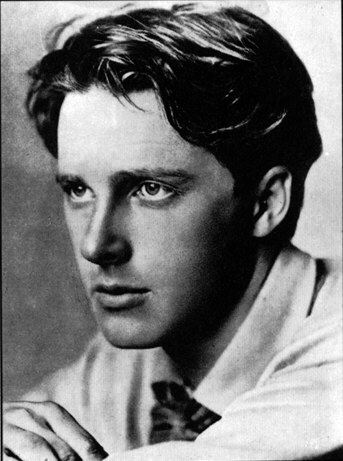
Rupert Chawner Brooke (middle name sometimes given as Chaucer) was an English poet known for his idealistic war sonnets written during the First World War, especially The Soldier. He was also known for his boyish good looks, which it is alleged prompted the Irish poet W.B. Yeats to describe him as "the handsomest young man in England."

Brooke was born at 5 Hillmorton Road in Rugby, Warwickshire, the second of the three sons of William Parker Brooke, a Rugby schoolmaster, and Ruth Mary Brooke, née Cotterill. He was educated at two independent schools in the market town of Rugby, Warwickshire; Hillbrow School and Rugby School.
While travelling in Europe he prepared a thesis entitled John Webster and the Elizabethan Drama, which won him a scholarship to King's College, Cambridge, where he became a member of the Cambridge Apostles, helped found the Marlowe Society drama club and acted in plays including the Cambridge Greek Play.

Brooke made friends among the Bloomsbury group of writers, some of whom admired his talent while others were more impressed by his good looks. Virginia Woolf boasted to Vita Sackville-West of once going skinny-dipping with Brooke in a moonlit pool when they were at Cambridge together.

Brooke belonged to another literary group known as the Georgian Poets and was one of the most important of the Dymock poets, associated with the Gloucestershire village of Dymock where he spent some time before the war. He also lived in the Old Vicarage, Grantchester.

Brooke suffered a severe emotional crisis in 1912, caused by sexual confusion and jealousy, resulting in the breakdown of his long relationship with Ka Cox (Katherine Laird Cox). Brooke's paranoia that Lytton Strachey had schemed to destroy his relationship with Cox by encouraging her to see Henry Lamb precipitated his break with his Bloomsbury Group friends and played a part in his nervous collapse and subsequent rehabilitation trips to Germany.

As part of his recuperation, Brooke toured the United States and Canada to write travel diaries for the Westminster Gazette. He took the long way home, sailing across the Pacific and staying some months in the South Seas. Much later it was revealed that he may have fathered a daughter with a Tahitian woman named Taatamata with whom he seems to have enjoyed his most complete emotional relationship. Brooke fell heavily in love several times with both men and women, although his bisexuality was edited out of his life by his first literary executor. Many more people were in love with him. Brooke was romantically involved with the actress Cathleen Nesbitt and was once engaged to Noel Olivier, whom he met, when she was aged 15, at the progressive Bedales School.

Brooke was an inspiration to poet John Gillespie Magee, Jr., author of the poem "High Flight". Magee idolised Brooke and wrote a poem about him ("Sonnet to Rupert Brooke"). Magee also won the same poetry prize at Rugby School which Brooke had won 34 years earlier.

As a war poet Brooke came to public attention in 1915 when The Times Literary Supplement quoted two of his five sonnets (IV: The Dead and V: The Soldier) in full on 11 March and his sonnet V: The Soldier was read from the pulpit of St Paul's Cathedral on Easter Sunday (4 April). Brooke's most famous collection of poetry, containing all five sonnets, 1914 & Other Poems, was first published in May 1915 and, in testament to his popularity, ran to 11 further impressions that year and by June 1918 had reached its 24th impression; a process undoubtedly fueled through posthumous interest.

Ratings & Reviews

What do you think?
Rate this book

Friends & Following

Create a free account to discover what your friends think of this book!

Community Reviews

5 stars
133 (33%)
4 stars
144 (36%)
3 stars
90 (22%)
2 stars
24 (6%)
1 star
6 (1%)
Displaying 1 - 30 of 43 reviews
Profile Image for Manny.
Author 48 books16.1k followers
April 5, 2012
I live in Cambridge, England, and Rupert Brooke is our local poet. To be absolutely correct, he's Grantchester's local poet; Grantchester is a picturesque little village about a mile and a half up the river from Cambridge proper. We often walk there on Sunday, and have a cup of tea and a scone in the Orchard, which used to be one of Rupert's favorite haunts. They remember him well, and have even a room that serves as the Rupert Brooke Museum. Admission is free.

If you've never heard of him, don't feel uneducated. I'm trying to find a short phrase that describes his poetry. "Totally fucking awful" is, I'm afraid, the first one that comes to mind. Though "sentimental", "cloying", "sickly", "technically unimpressive" and "derivative" all have their merits too. None the less, I think I still prefer my first choice. He's utterly dire. So, you're wondering, why do people still remember this terrible poet? Well, there are in fact several good reasons. First, he was remarkably good-looking. Check out this picture, for example. A certain resemblance to Hugh Grant, wouldn't you agree?

description

Second, Rupert mixed with an amazingly select group of friends. The Orchard is delighted to let you know about the high-powered gang who used to meet up there. Here's how I imagine Rupe might have launched one of his best-known efforts:

RUPERT BROOKE: [just finishing up] ...And laughs the immortal river still
Under the mill, under the mill?
Say, is there Beauty yet to find?
And Certainty? and Quiet kind?
Deep meadows yet, for to forget
The lies, and truths, and pain?... oh! yet
Stands the Church clock at ten to three?
And is there honey still for tea?

Thanks. Well, what do you think?

VIRGINIA WOOLF: [who obviously has something of a crush on him] It's so, ah, so, [she notices BERTRAND RUSSELL's expression and decides to play it safe] so YOU, Rupert!

BERTRAND RUSSELL: [completely dead-pan] Yes, I must agree with Virginia. I couldn't have put it better. What do you say, Ludwig?

LUDWIG WITTGENSTEIN: [ditto] Of that we cannot speak, thereof we must be silent.

AUGUSTUS JOHN: [looking up from sketch-pad] Oh, good heavens, have you finished already? I wish I could actually listen to those wonderful poems, but as soon as I saw the line of your profile I had to draw you again, as usual...

JOHN MAYNARD KEYNES: [glancing at watch] I'm terribly sorry, I must go immediately. I promised to telegraph the Chancellor of the Exchequer not later than than four. Rupert, thank you so much old chap...

You get the picture. And then he was tragically killed in the Great War. Well, of course people remember him!

So, if you aren't sure your writing's good enough to guarantee you immortal fame, I hope I've given you some useful tips. Look like a movie star; make friends with a few of the greatest geniuses of your age; and die a hero's death while you're still young and tasty. I promise you, it works every time.

Profile Image for Steven Godin.
2,782 reviews3,373 followers
March 5, 2021

If I should die, think only this of me:
That there's some corner of a foreign field
That is for ever England. There shall be
In that rich earth a richer dust concealed;
A dust whom England bore, shaped, made aware,
Gave, once, her flowers to love, her ways to roam,
A body of England's, breathing English air,
Washed by the rivers, blest by suns of home.

And think, this heart, all evil shed away,
A pulse in the eternal mind, no less
Gives somewhere back the thoughts by England given;
Her sights and sounds; dreams happy as her day;
And laughter, learnt of friends; and gentleness,
In hearts at peace, under an English heaven.
Profile Image for Dan.
1,249 reviews52 followers
August 20, 2019
The Collected Poems of Rupert Brooke

Rupert Brooke was known as an idealist poet and at the age of his death, 27, in 1915 he was quite popular. It is true that he was blessed with good looks, but his writing and poetry were known in Europe and the U.S as he worked in several literary circles in addition to his many publicly romantic entanglements. He enlisted early on in the War but died a short time later of an infection before he seeing heavy action while on a troop ship near the Greek isle of Skyros, reportedly from an infected mosquito bite.

His poem “The Soldier” along with Owen’s “Dulce et Decorum est” are arguably the two most famous poems from the war period. Brooke’s romantic poetry contrasts heavily with fellow poets, like Owen, who fought in the trenches and experienced the worst horrors of war first hand. From a literary perspective, we can only speculate about the direction of Brooke’s poetry if he had lived to fight in the Battle of Gallipoli.

4 stars. Most of the poems are quite short and he was not much of an experimentalist evidenced by his standard rhyme schemes but the beauty shines through in many of the poems and is largely why he was revered. All poems from this collection are in the public domain. There are two poems that I especially loved, Failure and The Soldier

Failure

Because God put His adamantine fate
Between my sullen heart and its desire,
I swore that I would burst the Iron Gate,
Rise up, and curse Him on His throne of fire.
Earth shuddered at my crown of blasphemy,
But Love was as a flame about my feet;
Proud up the Golden Stair I strode; and beat
Thrice on the Gate, and entered with a cry —

All the great courts were quiet in the sun,
And full of vacant echoes: moss had grown
Over the glassy pavement, and begun
To creep within the dusty council-halls.
An idle wind blew round an empty throne
And stirred the heavy curtains on the walls.


The Soldier

If I should die, think only this of me:
That there's some corner of a foreign field
That is for ever England. There shall be
In that rich earth a richer dust concealed;
A dust whom England bore, shaped, made aware,
Gave, once, her flowers to love, her ways to roam,
A body of England's, breathing English air,
Washed by the rivers, blest by suns of home.

And think, this heart, all evil shed away,
A pulse in the eternal mind, no less
Gives somewhere back the thoughts by England given;
Her sights and sounds; dreams happy as her day;
And laughter, learnt of friends; and gentleness,
In hearts at peace, under an English heaven.
Profile Image for Jess.
61 reviews7 followers
January 19, 2023
This reminds of me so much of my literature professor!

Some of my favorites:
(Funeral / love / Dust / The great lover / Retrospect)
Profile Image for Gijs Limonard.
1,331 reviews35 followers
October 8, 2024
Majestic, lofty, sad, almost Keats-ian; a joy to read his collected poems; some excerpts;

"How can we find? how can we rest? how can We, being gods, win joy, or peace, being man? We, the gaunt zanies of a witless Fate, Who love the unloving and lover hate, Forget the moment ere the moment slips, Kiss with blind lips that seek beyond the lips, Who want, and know not what we want, and cry With crooked mouths for Heaven, and throw it by."

"It's Not Going to Happen Again I have known the most dear that is granted us here, More supreme than the gods know above, Like a star I was hurled through the sweet of the world, And the height and the light of it, Love. I have risen to the uttermost Heaven of Joy, I have sunk to the sheer Hell of Pain— But—it's not going to happen again, my boy, It's not going to happen again."


Profile Image for James Carrigy.
211 reviews2 followers
September 19, 2024
5/10

Favourite Poems: Dining-Room Tea, The Goddess in the Wood, Day and Night, Mutability, One Day,
The Treasure, The Dead (IV), The Soldier

Look, the bad stuff here is pretty dire, very clumsy and immature sentimentalist poetry of that strange sunlight period that was the Edwardian era. Still, it seems unfair to single out Brooke for being a foppish romantic writer of bad poetry, that's a time-honoured tradition that many men in their early 20s still keep alive today (Myself included!). Were it not for his circle of friends, dashing good looks, and poignant wartime Mediterrenean death a la Byron, it's likely that Brooke would have become something of a footnote to the lives of the far more interesting people who he found himself surrounded with.

Right?

As I said, most of the poetry here is for the birds, but I will say, I do think Brookes genuinely improved as a writer as the years progressed, with his best and most consistent collection of poems actually being his wartime works, often lambasted by many for being out of tune with the more appropriate despair of Owen and Sassoon. Brooke may very well have changed tack had he not died on enroute to Gallipolli, a campaign that was just as hellish as those faced by his contemporaries on the Western Front. Yet I don't find his war poems to be jingoistic or overtly nationalist. Naive sure, blisfully unaware of the actual horrors of conflict, absolutely. But also delicately matching the sincerity of his posthumous cult who find him a symbol of both lost innocence and the death of the Victorian/Edwardian era's notions of romantic idealism.

Brooke may very well have turned out to be a legitimately great writer, and yet we shall never know for certain because he and so many other writers of that generation were cut down in the midst of their youth. The handful of good-to-great stuff that's littered here among the largely terrible is not enough for me to consider a full reassessment of Brooke as a poet. But it is enough for me to understand his enduring appeal, mourning not the loss of what was there, but of what could have been. Plus he wrote a pretty funny poem about a Latin-speaking dog, so he clearly wasn't all bad.
Profile Image for Jasmine .
74 reviews
November 20, 2024
"Tis hard, I tell ye, to choose 'twixt love and nausea..."- Rupert Brooke, 'A Channel Passage'

...and this is exactly how I felt about this book! I have always had a fascination with Rupert Brooke. He visited my ancestral village of Sa'anapu in (then) Western Samoa. It was here that he wrote his strangely titled poem 'Fafaia'. He was, of course, following in the footsteps of the older but equally passionate poet, Robert Louis Stevenson. I came to this book in hopes of understanding the poet and gaining- perhaps introspection, perhaps enjoyment- from his poetry. I managed neither. Not completely, at least. Like Brooke himself, the poems range in quality from breathtakingly brilliant, to hilariously juvenile, to quietly sentimental. We watch Brooke grow, as a person and a poet, as we follow the tome.

Ultimately, I hope to someday see a collection of just his best works. That, of course, will be difficult to compile, as there is forever so much debate around what is 'best', 'good', and more importantly, 'not good.'

I found quite heartening that some of his early poetry was simple (maybe too simple, by some standards) and accessible. He writes about youthful jealousy and envy with great and necessary clarity; it is relatable and very refreshing. There is no round, flowery language, for example, when he describes the uglyness and old age that he wishes upon, and predicts, for a former lover and her new beau. Brooke's poetry is lauded by his biographers as being starkly ironic and fatally accurate in its predictions of his own fate. Indeed, even his young and jealous musings about the bad sex his ex is bound to have in her old age, are as an irony which laughs in the spiteful vengeance of youth. Brooke dies young and handsome. He does not suffer the indignity of ageing.

All in all, this book was interesting, to say the least. The poems weren't all good, but I learned more about him than I had known before, and I have reconciled many of the criticisms I initially had of his reasons for coming to the South Seas.
Profile Image for Adam Fenner.
Author 21 books15 followers
January 5, 2025
Written with emphasis on the later poetry within this collection.

Rupert Brooke’s *The Collected Poems* presents the voice of a young soldier full of idealism, caught up in the fervor of the early years of World War I. Writing at a time when the war’s brutal realities had not yet fully unfolded, his poems reflect a vision of sacrifice, patriotism, and love that is both powerful and detached from the actual experiences of combat. Brooke never saw the horrors of trench warfare himself, but his poetry speaks to a generation that, at that point, had not yet been disillusioned by the reality of the war.

The central theme in his work is a romanticized view of war and death, where soldiers’ sacrifices are framed as noble acts, offering them a kind of eternal peace or national immortality. In poems like *The Soldier*, where the speaker imagines that in death his body will become “for ever England,” there’s a sense of honor and transcendence that stands in stark contrast to the traumatic reality of the war that would soon unfold. This idealism is further expressed in *The Dead*, where those who have fallen in battle are elevated to a holy, almost saintly status. Death becomes not an end but a noble surrender to a greater cause. It is this vision of sacrifice and immortality that was so resonant for the early war generation, particularly in the context of patriotic fervor, but it also laid the groundwork for the very idealism that would later be scrutinized and critiqued by poets who actually fought in the trenches.

Brooke’s style is classical and formal, using rhyme and meter to give his poems a sense of order and timelessness. These traditional structures, with their tight form and precise language, stand in contrast to the turbulent emotions his poetry conveys. In poems like *Safety* and *The Soldier*, the tone is triumphant and serene, with death framed as both a personal salvation and a national duty. Even when he speaks of love and loss, as in *A Memory* or *He Wonders Whether to Praise or to Blame Her*, the emotional landscape is one of idealized passion, full of longing but not the raw pain or complexity of real, lived relationships. His treatment of love is often detached, as though it exists in a dreamlike world separate from the turmoil around him.

The beauty of Brooke’s work lies in its ability to evoke powerful emotions through simple, almost naive imagery—flowers, stars, and earth. These motifs are often used to convey a world of serenity, untouched by the suffering of war. For instance, in *The South Seas*, the speaker imagines a paradise untouched by human conflict, where the concerns of the world fade into a perfect, eternal unity. It’s a vision of escape, of returning to a simpler state of being, free from the violence and hardship of human existence. Yet, this beauty is always tinged with melancholy, as if the speaker understands that this ideal world cannot last.

But this idealism also represents the problem in Brooke’s poetry—the disconnect between his vision and the brutal realities that were about to become all too real. The war would soon expose the gulf between the noble vision of sacrifice and the grisly horrors of trench warfare. While Brooke’s work captures the emotional and spiritual fervor of a generation before the full weight of the war’s brutality was felt, it lacks the engagement with the physical and psychological toll of war that poets like Wilfred Owen and Siegfried Sassoon would later explore. These poets, who actually experienced the trenches, would critique the idealism that Brooke and others embodied in their works.

Brooke’s poetry never fully confronts the violence of war. In his poems, soldiers die heroically, offering their lives for something greater than themselves. There is no dirt, no mud, no lice—only a serene, almost religious contemplation of sacrifice. The tension between the idealized soldier and the reality of warfare would be underscored by the poets who came after him, who saw firsthand the suffering, the physical disfigurement, and the psychological trauma of battle. Sassoon, in particular, would use his own experience in the trenches to critique the very idealism that Brooke’s poetry upheld. For Sassoon and others, war was no longer a place of transcendence or honor but a meaningless slaughter, a brutal waste of young lives.

Yet, despite the limitations of his idealism, Brooke’s poetry resonates with the emotional experiences of his time. His work reflects a deep belief in the nobility of sacrifice, the purity of love, and the promise of eternal life, all themes that were central to the cultural mood of early World War I. It was a time when many still believed in the righteousness of their cause, and Brooke’s poems captured that belief. His later poems, like *Hauntings* and *Mutability*, show a shift in tone, as the speaker contemplates the impermanence of life and the inevitability of death. These works are tinged with melancholy, and they signal a growing awareness of life’s fragility—though they still retain a sense of reverence for death and loss.

Ultimately, Rupert Brooke’s poetry reflects the complex emotional terrain of a generation caught between youthful idealism and the grim reality of war. His work stands as a testament to the early, optimistic vision of World War I, before the horrors of the trenches would change everything. While his poems are often accused of detachment from the real experience of war, they also speak to the deep emotional currents of a generation that was soon to be shattered by the war’s devastation. In this way, Brooke’s poetry offers a poignant, if incomplete, record of the clash between the ideal and the real, between youthful fervor and the inevitable disillusionment that would follow.

The beauty of his verse, the clarity of his emotional vision, and the classical structure he employs all contribute to a body of work that has a timeless quality. Yet, as the war progressed, poets like Owen and Sassoon would challenge this idealized vision, confronting the reality of war in ways Brooke could not. His poetry, therefore, stands both as a powerful expression of hope and a reminder of the gap between the ideal and the real—an idealism that, while resonant in its time, would eventually be attacked and undone by the poets who experienced the war in its rawest form.
Profile Image for Jesse Field.
843 reviews52 followers
May 31, 2019
Rupert Brooke was "the Great Lover," elevating his objectified "you" into a sacred meditation on the love and the world itself, and death. Reading through his collected poems like listening to a very pleasant, slightly old-fashioned album of music, his distinctive image system flowing from light to dark, through the forest and up into the sky and stars and flaming night of the moon, and always back again to "you," the lithe woman with the mouth, and eyes, and feet.

One of my favorite features of This Side of Paradise is how often it records what Amory Blaine is reading, through his teenage years, and then at Princeton and afterward. Sometimes we also get glimpses of what the American public more generally was interested in:
One week, through general curiosity, he inspected the private libraries of his classmates and found Sloane’s as typical as any: sets of Kipling, O. Henry, John Fox, Jr., and Richard Harding Davis; “What Every Middle-Aged Woman Ought to Know,” “The Spell of the Yukon”; a “gift” copy of James Whitcomb Riley, an assortment of battered, annotated schoolbooks, and, finally, to his surprise, one of his own late discoveries, the collected poems of Rupert Brooke.

Brooke's poetry represents the common ground the artsy and somewhat elevated, even arrogant Amory shares with the hoi polloi. And the use of Brooke's line from Tahiti to title the book also gives away the common thematic purpose of Fitzgerald's protagonist and Brooke's poetic voice: to live as the lover, the intended worshipper of the eternal "you." Love broadly understood can infuse the image systems of light and dark, of lithe bodies dancing in the dark forests, veiled by the winds and covered by the stars and the living white flame of the moon light. The most charming image of Brooke's readership must be the brief early days of the relationship between Amory and Eleanor, when she said he looked like Rupert Brooke, and he tried to play the part, as they sat arm in arm and read to each other from "Grandchester" and "Tahiti."

I was fortunate to find and download the Librivox recordings of the Collected Poems, read by Graham Redman in properly standard London English, giving the short works just the right stateliness. Fitzgerald's Eleanor seems to have thought Brooke was a materialist, but I find his voice most attractive when he pursues, much like Ezra Pound, the music and meaning of ritual. There is a "do-it-yourself" approach to building up the sacred sense, evident in all of these poems, even less successful works like "On the Death of Smet-Smet, the Hippopotamus-Goddess:"
She was wrinkled and huge and hideous? She was our Mother.
She was lustful and lewd? — but a God; we had none other.


No such maudlin, inadvertently funny strikes me in the more lyrical prayer, "Ante Aram:"
Before thy shrine I kneel, an unknown worshipper,
Chanting strange hymns to thee and sorrowful litanies,
Incense of dirges, prayers that are as holy myrrh.

Ah, goddess, on thy throne of tears and faint low sighs,
Weary at last to theeward come the feet that err,
And empty hearts grown tired of the world's vanities.

How fair this cool deep silence to a wanderer
Deaf with the roar of winds along the open skies!
Sweet, after sting and bitter kiss of sea-water,

The pale Lethean wine within thy chalices!
I come before thee, I, too tired wanderer,
To heed the horror of the shrine, the distant cries,

And evil whispers in the gloom, or the swift whirr
Of terrible wings — I, least of all thy votaries,
With a faint hope to see the scented darkness stir,

And, parting, frame within its quiet mysteries
One face, with lips than autumn-lilies tenderer,
And voice more sweet than the far plaint of viols is,

Or the soft moan of any grey-eyed lute-player.


The last two lines of this poem cause any lover of music to remember the metaphysical, even holy quality of musical experience. Such metaphysics is remains as perfectly important to life in long, grinding twenty-first century as it was in the past century, and the one before that, and the one before that. A more modern, creepy and grotesque vision sometimes appears in Brooke, as well, anticipating Lovecraft and the 'goth' aesthetic, perhaps, by figuring death and afterlife as real, yet without God:
He wakes, who never thought to wake again,
Who held the end was Death. He opens eyes
Slowly, to one long livid oozing plain
Closed down by the strange eyeless heavens. He lies;
And waits; and once in timeless sick surmise
Through the dead air heaves up an unknown hand,
Like a dry branch. No life is in that land,
Himself not lives, but is a thing that cries;
An unmeaning point upon the mud; a speck
Of moveless horror; an Immortal One
Cleansed of the world, sentient and dead; a fly
Fast-stuck in grey sweat on a corpse's neck.


This poem really made me shudder with its deeply imagined other world, bereft of meaning in this moment, but just a few lines later we are back into Brooke’s sentimental mode of loving — the woman, life, whatever it is that drove him. He is no existentialist, to be sure. And yet, the moments of searching modernity do bubble up here and their, nestled in the luscious Brookean line — take “The Fish,” for example ("In a cool curving world he lies/And ripples with dark ecstasies”), or the bizarre “The Little Dog’s Day” — a clumsy piece of work, yet which oddly digs into the memory and won’t go away. These are certainly poems to return to, and certainly enrich our reading of Fitzgerald.
Profile Image for John.
240 reviews57 followers
February 27, 2015
The stars are more for the memoir than the poetry which is all wild-eyed and rhapshodic. The Soldier is remarkable but stands alone.

The memoir, by Marsh, is fascinating. Again, the impression one gets of Brooke is of someone who couldn't move without having a life changing, mind altering experience. But what lingers is the death, not only of Brooke, but of so many of his circle. You have a real impression of the scale of loss produced by World War One.
Profile Image for Jim.
3,107 reviews74 followers
June 20, 2012
Although I often like Brookes, this collection did not improve my estimation of him; the poetry is fine, especially when read individually, but together they seemed to lessen his skill, as similar rhyming schemes popped up frequently, and he seemed to have a limited range of interest. Perhaps something in me wasn't ready for it. Still, I will always love his "Heaven," one of my all-time favorite poems, most likely to forever remain in my top ten favorites.
Profile Image for Marti Martinson.
341 reviews8 followers
December 7, 2014
Rupert looked much hotter than his poetry, but the ones I did like I really liked. The rest: meh. He did, however, have a rather biting wit about the "fluid" nature of love and relationships. "Grief, not grievances", as Robert Frost suggested. His attitude to WW1 was not as critical as Wilfred Owen, and I think that is why I prefer Owen's poetry. Still, the PDF was a free, public download so I can't complain about the price. I do suggest that the WW1 poets be read.
Profile Image for Brian.
696 reviews14 followers
April 26, 2022
"Well, if Armageddon's ON," he said, "I suppose one should be there." - Rupert Brooke

This reaction by Brooke upon hearing of the outbreak of war was typical of him. He then obtained a commission in the Hood Battalion of the Royal Naval Division and was involved in the disastrous siege of Antwerp at the end of September 1914. However he was never to experience the full horrors of The First World War, he died of septicaemia on 23 April 1915 from an infected mosquito bite. He’s legacy of idealistic war poetry would go on to be overshadowed by the likes of Wilfred Owen who did experience its full horrors and related them so vividly. Consequently his optimistic war poems divides opinion between excessive praise and contemptuous condemnation. His premature death at the age of 27 also contributed to his fame and idealised image. It also puts him in the 27 club, along with Brian Jones, Jim Morrison, Janis Joplin, Jimi Hendrix and Amy Winehouse to name but a few.

I must admit I don’t read a lot of poetry. I have read the odd poem but the only other book of poetry I have read from cover to cover is Ted Hughes’ Birthday Letters (which I loved). I came across Rupert Brooke because quotes began to crop up everywhere. The Fleetwood Mac song ‘Dust’ from their album ‘Bare Trees’, begins with the first lines of Brooke’s poem ‘Dust’.

‘When the white flame in us is gone,
And we that lost the world's delight
Stiffen in darkness, left alone
To crumble in our separate night’

The last book I read, John Wyndham’s The Outward Urge quotes ‘hear the thin gnat-voices cry, star to faint star across the sky’, from The Jolly Company. Dad’s Army, one of my favourite programs, has an episode entitled ‘Is There Still Honey For Tea?, a line from ‘The Old Vicarage, Grantchester.’ So my curiosity was piqued, I had to read some of his poetry.

I lot of what I read wasn’t really to my liking, especially the earlier stuff. They were too sentimental and flowery. There are odd ones I liked, especially the humorous poems such as ‘Channel Passage’, a poem about seasickness,

‘The damned ship lurched and slithered. Quiet and quick
My cold gorge rose; the long sea rolled; I knew I must think hard of something, or be sick;
And could think hard of only one thing — YOU!’

and he goes on to say, ’Now there's a choice — heartache or tortured liver!’, - brilliant!

I even liked ‘The Great Lover’, But it’s the war poems that attract the most interest, especially ‘The Dead’ and of course ‘The Soldier’ the only poem in this collection I had come across before and by far the best thing here and includes one of the most famous lines in poetry,

‘If I should die, think only this of me:
That there's some corner of a foreign field
That is for ever England’

Other poems I particularly liked were ‘Fafaia’ and the humorous ‘Heaven’. But it is a mixed bag and you have to wade through these to find poems you might like or strike a chord. It is an uneven collection ranging from the sublime to the rediculous. There is a definitely an Englishness about some of these poems which ‘The Old Vicarage, Grantchester.’ emphasises. It is a romantic view of an English village by an Englishman abroad, in this case a cafe in Germany. The closing lines – ‘Stands the church clock at ten to three? / And is there honey still for tea?’ vividly brings to mind an England long forgotten.
Profile Image for Greg.
808 reviews62 followers
October 20, 2024
Several accomplished poets lost their lives in the Great War of 100 years ago, and among the best of these was Rupert Brooke.

However, unlike some of the others -- Robert Graves, for example -- the overwhelming majority of the poems in this slender volume are NOT about the war but reflect, rather, the late 19th and early 20th century of poets who might be grouped as "romantic fatalists."

His writing is lovely and lyrical although, as is fitting for the genre, often dark and almost always filled with pining for a love that was either "lost" or just "could not be."

Many of his poems also feature what can easily strike us moderns as a "morbid" fascination -- almost preoccupation -- with death.

This collection reminds us of all the immeasurable that was truly lost in that war and, indeed, in all the damned wars throughout history -- the loss of unique individuals, overwhelmingly young men who had just begun to live their lives before they were snuffed out forever. What talents were cut short? What geniuses of literature, music, and science never came to flourish?

And war? All it does is destroy, waste, despoil, and foul.

If only we were wise enough to ensure that there would never be another one! But no! As throughout history in almost predictable cycles nations around the world are once again rearming with the most fearsome weapons, building newer and larger navies, and investing in technology that can kill more easily and more broadly than ever before.

How many Brookes have already been lost in Israel, Gaza, Ukraine, Russia, and throughout all of suffering central Africa?

If we really cared we'd act to stop this nonsense.

It is easier to pretend that we "care"!
Profile Image for RavenT.
702 reviews9 followers
March 14, 2025
Not my taste but there are some renowned poems in this collection from the English poet Rupert Brooke (born 1887 - died 1914) - most known are the poems in Sonnet Sequence '1914' so he is known as a war poet, although he died early on during the conflict.

Most famous is this sonnet “The Soldier” and one month after it achieved acclaim for the optimistic and patriotic sentiments, Brooke died at age 27 of an infected mosquito bite.

If I should die, think only this of me:
That there’s some corner of a foreign field
That is for ever England. There shall be
In that rich earth a richer dust concealed;
A dust whom England bore, shaped, made aware,
Gave, once, her flowers to love, her ways to roam,
A body of England’s, breathing English air,
Washed by the rivers, blest by suns of home.

And think, this heart, all evil shed away,
A pulse in the eternal mind, no less
Gives somewhere back the thoughts of England given;
Her sights and sounds; dreams happy as her day;
And laughter, learnt of friends; and gentleness,
In hearts at peace, under an English heaven.

https://soundcloud.com/user-115260978...

Profile Image for MGF MGF.
103 reviews1 follower
October 16, 2021
A lost genius

Rupert Brooke, was a genius with words, the English language and passion. His work included many poems which brought a wry smile to my face, and some brought the raspy dry throat. I only wish Rupert’s work was taught more in schools. However, nonetheless I feel that his work has taken me back a 100+ years, where our language was treasured.
Profile Image for Eric.
896 reviews7 followers
October 25, 2023
Quite a few but not all of his poems. In this edition most but not all poems are separated out using headers and can be accessed by the Kindle table of contents, the others no. Ends with a biography (which recognizes the patriotism of the 1914 cycle at the expense of the other emotions of some of his other contemporary poetry, I think) and some memorial poetry by contemporaries.
Profile Image for Colvet.
Author 4 books3 followers
August 6, 2019
Rupert is one of my favourite poets of all time. I just wish he had more works! I find many of his themes of love and loneliness to be quite relatable and romantic. I also enjoy the imagery he has a familiar scenes throughout the book like pine tress/silhouetted trees, cloves, and etc. I think some of his poems like the sonnets are some of the best I have ever read in fact I even have lines from one on my inner arm ("Love is flung Lucifer-like....But-- there are wanderers..".

But I have to admit some of his poems were a bit difficult to follow along with. Maybe it is because they were written in the early 1900s and I am a 27 year old in 2019, but still some were difficult to picture in my head without researching. I do not like to always have to research when reading though, especially poetry. Nonetheless, still probably one of the best poetry collections to ever be printed. Rupert is so dashing in his wordsmithing, ultra sense of love, and his beautiful physical appearance. I love you Mr. Brooke, we lost you too young.
Profile Image for Alex.
1,054 reviews18 followers
January 7, 2025
I wasn’t familiar with Rupert Brooke and his poetry but I recently read in Memoriam by Alice Winn which I loved and Brooke was one of the poets mentioned in the book so I wanted to read his work. It seems like I’m interested in World War One poetry now.
Profile Image for julie.
58 reviews
July 16, 2024
now there's a choice - heartache or tortured liver!
a sea-sick body, or a you-sick soul!
1,360 reviews
May 24, 2019
All I knew of Rupert Brooke before I read the complete collection of his poetry was that he was a WWI poet. That is such a laughably limited understanding that I'm almost embarrassed to admit of it. The organization of the poems in this collection seems designed for the sole purpose of breaking our hearts. Brooke had an immense, if immature, talent, and every one of his poems is informed both by that muscular, arrogant youthfulness and by the surety of his fate, which was tragically mundane, given the other options of his nationality and age. What a loss to the literary world.
Profile Image for Patrick Gibson.
818 reviews79 followers
April 5, 2011
All suddenly the wind comes soft,
And Spring is here again;
And the hawthorn quickens with buds of green,
And my heart with buds of pain.

My heart all Winter lay so numb,
The earth so dead and frore,
That I never thought the Spring would come,
Or my heart wake any more.

But Winter’s broken and earth has woken,
And the small birds cry again;
And the hawthorn hedge puts forth its buds,
And my heart puts forth its pain.
1,198 reviews8 followers
August 20, 2013
Brooke was a great talent with his works being in definite phases like the book. Forever remembered for the Old Vicarage at Grantchester and The Soldier his work lacks the visceral power of Owen, Rosenberg, Blunden or the wit and irony of Sasson but he provided a template for the other war poets to follow.
Displaying 1 - 30 of 43 reviews

Can't find what you're looking for?

Get help and learn more about the design.