

What do you think?
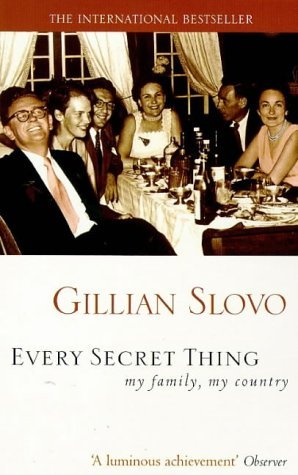
Every Secret Thing: My Family, My Country
A passionate witness to the colossal upheaval that has transformed her native South Africa, Gillian Slovo has written a memoir that is far more than a story of her own life. For she is the daughter of Joe Slovo and Ruth First, South Africa's pioneering anti-apartheid white activists, a daughter who always had to come second to political commitment. Whilst recalling the extraordinary events which surrounded her family's persecution and exile, and reconstructing the truth of her parents' relationship and her own turbulent childhood, Gillian Slovo has also created an astonishing portrait of a courageous mother and a father of integrity and stoicism.
282 pages, Paperback
First published January 1, 1997
About the author
Gillian Slovo
39 books51 followersNovelist Gillian Slovo was born in 1952 in South Africa, the daughter of Joe Slovo, leader of the South African Communist party, and Ruth First, a journalist who was murdered in 1982.
Gillian Slovo has lived in England since 1964, working as a writer, journalist and film producer. Her first novel, Morbid Symptoms (1984), began a series of crime fiction featuring female detective Kate Baeier. Other novels in the series include Death by Analysis (1986), Death Comes Staccato (1987), Catnap (1994) and Close Call (1995). Her other novels include Ties of Blood (1989), The Betrayal (1991) and Red Dust (2000), a courtroom drama set in contemporary South Africa, which explores the effects of the Truth and Reconciliation Commission.
Gillian Slovo has lived in England since 1964, working as a writer, journalist and film producer. Her first novel, Morbid Symptoms (1984), began a series of crime fiction featuring female detective Kate Baeier. Other novels in the series include Death by Analysis (1986), Death Comes Staccato (1987), Catnap (1994) and Close Call (1995). Her other novels include Ties of Blood (1989), The Betrayal (1991) and Red Dust (2000), a courtroom drama set in contemporary South Africa, which explores the effects of the Truth and Reconciliation Commission.
Ratings & Reviews
Friends & Following
Create a free account to discover what your friends think of this book!
Community Reviews
Displaying 1 - 30 of 40 reviews

June 9, 2009
Gillian Slovo is the daughter of two white anti-apartheid activists, and Gillian and her sisters took a backseat to their parents’ political activism while they were growing up. Gillian traces the story of their parents’ political activities with extensive research and weaves in her own personal experiences.
Every Secret Thing: My Family, My Country gets top marks from me on being a fascinating book, as well as being a well-crafted story. Slovo’s writing is wonderful – light, clear, vivid. She weaves a political history – and an amazing amount of research – with her own life story very effectively. I admire many of the writing techniques she uses, from her deft use of research to her easy movement through time.
Slovo sticks to a general chronology, but she travels forward and backward through time with ease as is relevant to the theme she’s discussing. There are three sections: 1) 1982 when her mother was politically assassinated; 2) the back story of their lives up until that point; 3) the story after her mother’s assassination (including the fall of apartheid and Slovo’s search for her mother’s killer). If Slovo talks about an incident that will not come up again in the book, she will answer all questions then and there; if she mentions one of her parents’ (to use her word) comrades in, say, 1961, she’ll include a footnote to explain what happened to them later in life (usually a violent death at the hands of the South African state).
I also like how she presented research in her story. She quotes from letters or refers to conversations she’s had about the situations, rather than just telling us the straightforward story that she has pieced together. She is being transparent about where she’s getting her information and is allowing the reader to judge how reliable the information is (which is especially important in situations where she’s gotten contradictory testimony from different sources). That adds a vividness and another dimension of truth and authenticity.
For the most part, Slovo does an excellent job of revealing how difficult it is for a child to understand why her parents aren’t there for her, awesome political struggle or not. A child doesn’t understand everything that’s going on and why, she just knows that her parents are gone (in jail, in exile, or even if home, constantly organizing and distant emotionally). I do think that adult Slovo could be a little more sympathetic to her parents’ plight as an adult looking back, now understanding what was at stake, but perhaps the childhood resentments ran too deep.
I love what Nelson Mandela said to the author at one point when she was an adult: “He told us how one day when he had gone to hug his grown-up daughter she had flinched away from him, and burst out, ‘You are the father to all our people, but you have never had the time to be a father to me.’ … This, he said, was his greatest, perhaps his only regret: the fact that his children, and the children of his comrades, had been the ones to pay the price of their parents’ commitment. …[A]s the state poured out its wrath, they had watched their children suffer. And yet, and yet — what else could they have done?” I think this captures perfectly the dilemma these activists and their children were in.
I recommend this book for anyone interested in memoir and political history.
Every Secret Thing: My Family, My Country gets top marks from me on being a fascinating book, as well as being a well-crafted story. Slovo’s writing is wonderful – light, clear, vivid. She weaves a political history – and an amazing amount of research – with her own life story very effectively. I admire many of the writing techniques she uses, from her deft use of research to her easy movement through time.
Slovo sticks to a general chronology, but she travels forward and backward through time with ease as is relevant to the theme she’s discussing. There are three sections: 1) 1982 when her mother was politically assassinated; 2) the back story of their lives up until that point; 3) the story after her mother’s assassination (including the fall of apartheid and Slovo’s search for her mother’s killer). If Slovo talks about an incident that will not come up again in the book, she will answer all questions then and there; if she mentions one of her parents’ (to use her word) comrades in, say, 1961, she’ll include a footnote to explain what happened to them later in life (usually a violent death at the hands of the South African state).
I also like how she presented research in her story. She quotes from letters or refers to conversations she’s had about the situations, rather than just telling us the straightforward story that she has pieced together. She is being transparent about where she’s getting her information and is allowing the reader to judge how reliable the information is (which is especially important in situations where she’s gotten contradictory testimony from different sources). That adds a vividness and another dimension of truth and authenticity.
For the most part, Slovo does an excellent job of revealing how difficult it is for a child to understand why her parents aren’t there for her, awesome political struggle or not. A child doesn’t understand everything that’s going on and why, she just knows that her parents are gone (in jail, in exile, or even if home, constantly organizing and distant emotionally). I do think that adult Slovo could be a little more sympathetic to her parents’ plight as an adult looking back, now understanding what was at stake, but perhaps the childhood resentments ran too deep.
I love what Nelson Mandela said to the author at one point when she was an adult: “He told us how one day when he had gone to hug his grown-up daughter she had flinched away from him, and burst out, ‘You are the father to all our people, but you have never had the time to be a father to me.’ … This, he said, was his greatest, perhaps his only regret: the fact that his children, and the children of his comrades, had been the ones to pay the price of their parents’ commitment. …[A]s the state poured out its wrath, they had watched their children suffer. And yet, and yet — what else could they have done?” I think this captures perfectly the dilemma these activists and their children were in.
I recommend this book for anyone interested in memoir and political history.
This entire review has been hidden because of spoilers.

February 18, 2013
As many of you know I'm really interested in the history of South Africa, particularly about the figures who played an essential role to bringing about the downfall of the apartheid regime. So when I did another one of my numerous library searches I came across this book and knowing very little except the basics about Ruth First and Joe Slovo I decided to give it a shot.
I wasn't sure what I was expecting this book to be really since I knew nothing about Gillian Slovo (apart from her parentage) and I've never read any of her other books before but what I got was not what I was hoping for.
I never go into a non-fiction read especially a biography or a memoir thinking that it will be a fast paced read like a novel and while this is sometimes the case in this instance the book crawled like a turtle. It took forever for me to get into the writing style and even as I finished the book I still hadn't warmed up to it.
While I understand that the lives of those in the spotlight are neer what they appear to be and that what goes on behind closed doors is often nothing like we would imagine I was surprised that the author chose to refer to her parents by her first name. Perhaps this is because she was trying to distance herself from them in order to focus on them as people rather than mom and dad but it bothered me. The book was written with such a coldness it was as if she'd rather not be connect to them at all.
However given her tumultuous upbringing I can understand if there are old wounds that never healed but I suppose if you're going to discuss your family that it would be prudent to add some snippets of your family life like some warmer moments just to offset the cold clinical attitude that the author adopted. Another thing I disliked was that she skipped back and forth from from different points in time. Often I would find her referring to events in the 1950's and she would skip ahead to the 1980's and back again. There was no fluidity to the writing at all.
The one saving grace of the Every Secret Thing was that I learned an amazing amount about the real Ruth First and the real Joe Slovo. While the way their life stories were told didn't sit well with me I did get an intimate look into the history of this political powerhouse of a couple.
Overall, I wasn't too impressed with Every Secret Thing but I do respect Gillian Slovo for penning this book. It is no easy thing to delve into your parent's pasts and uncover long hidden secrets (like a long lost brother) and she should be commended for her efforts. I just wish that it was put forward in a better way. I would recommend this to people who enjoy biographies and those with an interest in reading about two people who helped change the world.
I wasn't sure what I was expecting this book to be really since I knew nothing about Gillian Slovo (apart from her parentage) and I've never read any of her other books before but what I got was not what I was hoping for.
I never go into a non-fiction read especially a biography or a memoir thinking that it will be a fast paced read like a novel and while this is sometimes the case in this instance the book crawled like a turtle. It took forever for me to get into the writing style and even as I finished the book I still hadn't warmed up to it.
While I understand that the lives of those in the spotlight are neer what they appear to be and that what goes on behind closed doors is often nothing like we would imagine I was surprised that the author chose to refer to her parents by her first name. Perhaps this is because she was trying to distance herself from them in order to focus on them as people rather than mom and dad but it bothered me. The book was written with such a coldness it was as if she'd rather not be connect to them at all.
However given her tumultuous upbringing I can understand if there are old wounds that never healed but I suppose if you're going to discuss your family that it would be prudent to add some snippets of your family life like some warmer moments just to offset the cold clinical attitude that the author adopted. Another thing I disliked was that she skipped back and forth from from different points in time. Often I would find her referring to events in the 1950's and she would skip ahead to the 1980's and back again. There was no fluidity to the writing at all.
The one saving grace of the Every Secret Thing was that I learned an amazing amount about the real Ruth First and the real Joe Slovo. While the way their life stories were told didn't sit well with me I did get an intimate look into the history of this political powerhouse of a couple.
Overall, I wasn't too impressed with Every Secret Thing but I do respect Gillian Slovo for penning this book. It is no easy thing to delve into your parent's pasts and uncover long hidden secrets (like a long lost brother) and she should be commended for her efforts. I just wish that it was put forward in a better way. I would recommend this to people who enjoy biographies and those with an interest in reading about two people who helped change the world.

July 12, 2013
A fascinating look at the struggle against apartheid through the eyes of a damaged daughter of South African Jewish radicals. Gillian Slovo’s parents were leaders in the South African Communist Party. Joe Slovo led the armed struggle against the apartheid regime from nearby countries, yet decades later he becomes a key player in peacefully negotiating the end of white-only rule. Ruth First, Joe’s glamorous journalist wife, wrote about her torturous solitary confinement in a memoir (now with intro. by Angela Davis) called 117 Days. Gillian Slovo’s memoir is an unromantic account of this terrible time, her parents’ life, stormy marriage and tragic demise. In the early 80s, living exiled in Mozambique, Ruth First was killed by a letter bomb sent by SA security forces. Children of radical activists always get robbed of a normal childhood and, of course, living in a racialized police-state will strain family dynamics: “All my life I wanted him to value me as much as he valued South Africa."

October 9, 2014
This book... it just wasn't very good. It wasn't very well written and the author never felt genuine. I just never trusted her really. And this is pretty important in a book like this. I was also really annoyed by her need to begin every paragraph with hints about some big family secret that she was about to reveal; honestly, all of the secrets she did reveal felt kind of unfair and often weren't really that big of a deal. So a big lead up to very little substance. It grew old quickly.
I learned a bit of history though! I definitely loved learning about Ruth First - who I had never heard of before. And I learned a lot more about Joe Slovo, which was very interesting. Not worth slogging through this book though.
I learned a bit of history though! I definitely loved learning about Ruth First - who I had never heard of before. And I learned a lot more about Joe Slovo, which was very interesting. Not worth slogging through this book though.
January 14, 2014
In Every Secret Thing Gillian Slovo takes an introspective and personal look at her family's involvement in South Africa and the fight against Apartheid. This is as much a story of searching for the past as it is about what happened. The book is divided into four parts. The first deals with Ruth's childhood in the 50s & 60s while her parents were active in resistance against the regime. In the second part Ruth explores fraught relationship with her articulate, adventurous, chic mother, Ruth First, up until she was murdered by South African special police in Mozambique in 1982. In the third part she then focuses on her father, Joe Slovo, at the centre of the ANC armed struggle against SA Nationalists and eventually minister in the ANC government, up until his death in 1995. The final part narrates her search and facing her mother's killer.
Gillian explores the effects her parents'dedication for the cause had on their children, the tension she (and perhaps they) felt between the children's needs and the always greater needs of the many. Most of all she laments the pall of secrecy and non-communication that envelops the family. She believes in the cause her parent fought for, is proud of their courage and actions but is haunted by a feeling of exclusion and perhaps even abandonment. She also struggles with acknowledging the necessity of forgiveness and the need to move on as a nation, with the clear lack of regret or remorse on the part of her mother's killers.
Slovo writes clearly and brings her skills as a novelist into her narration of events. At times the jump between times is a bit disorienting. However, I found this a intense and compelling read which gives a strongly personal look at South Africa from the 1950s to the mid-1990s. Well worth the read.
Gillian explores the effects her parents'dedication for the cause had on their children, the tension she (and perhaps they) felt between the children's needs and the always greater needs of the many. Most of all she laments the pall of secrecy and non-communication that envelops the family. She believes in the cause her parent fought for, is proud of their courage and actions but is haunted by a feeling of exclusion and perhaps even abandonment. She also struggles with acknowledging the necessity of forgiveness and the need to move on as a nation, with the clear lack of regret or remorse on the part of her mother's killers.
Slovo writes clearly and brings her skills as a novelist into her narration of events. At times the jump between times is a bit disorienting. However, I found this a intense and compelling read which gives a strongly personal look at South Africa from the 1950s to the mid-1990s. Well worth the read.
January 13, 2015
4/3.5 starts
First I got to say that I went into this book feeling really prejudiced and unexited. Mainly because I read this for school and it was picked for me, but also I've never really been interested in South Africa. I've also never read autobiographies etc..
In the end I really enjoyed this book! It's such a neat, beautiful combination of reality, emotions, heartbreak, betrayl, but all the good stuff too - like falling in love, finding peace, enjoying the time you have with your family and fighting for what you believe in. I never thought I would get so entranced with this story. But I did, and I'm so happy I did.
I feel sort of priviledgeg after reading this book. Like I was somehow apart of it all. And it mattered. The biggest thing I learned from Gillian, apart from the general history of South Africa and apartheid is that sometimes you just have to do what's best for you and that really, in the end, there are only few things that matter and you better hold on to them.
After all that hype, why did I then give it 3.5/4 stars? Well, one reason is that I rarely give books 4 or 5 stars, they have to be really freaking amazing to get that from me :D Onether thing is that while I enjoyed it, I also found it quite.. slow at times, especially if you don't know the places yourself you kind of have to check everything all the time. Which then messes with your reading, the reading flow - or at least mine.
All in all, I would recommend picking this up if you're interested in South Africa but also if you're not. Because it's so much more than that. ^^
First I got to say that I went into this book feeling really prejudiced and unexited. Mainly because I read this for school and it was picked for me, but also I've never really been interested in South Africa. I've also never read autobiographies etc..
In the end I really enjoyed this book! It's such a neat, beautiful combination of reality, emotions, heartbreak, betrayl, but all the good stuff too - like falling in love, finding peace, enjoying the time you have with your family and fighting for what you believe in. I never thought I would get so entranced with this story. But I did, and I'm so happy I did.
I feel sort of priviledgeg after reading this book. Like I was somehow apart of it all. And it mattered. The biggest thing I learned from Gillian, apart from the general history of South Africa and apartheid is that sometimes you just have to do what's best for you and that really, in the end, there are only few things that matter and you better hold on to them.
After all that hype, why did I then give it 3.5/4 stars? Well, one reason is that I rarely give books 4 or 5 stars, they have to be really freaking amazing to get that from me :D Onether thing is that while I enjoyed it, I also found it quite.. slow at times, especially if you don't know the places yourself you kind of have to check everything all the time. Which then messes with your reading, the reading flow - or at least mine.
All in all, I would recommend picking this up if you're interested in South Africa but also if you're not. Because it's so much more than that. ^^

January 10, 2015
How do you come to terms with your parent's lives when both have been actively involved in a socially conscious way and devoted their entire lives to fighting against a regime which used every tool at it's disposal including a letter bomb which ended your mother's life. Essential reading would be Ruth First's account of her detention by South African authorities "117 Days" 117 Days: An Account of Confinement and Interrogation Under the SouthAfrican 90-Day Detention Law. Gillian Slovo's journey is an edge of your seat account of her exploration of her parent's history in the ANC and what it means to have parents who have lives completely separate from regular folks. I thought she did an outstanding and honest portrayal of her own personal journey.
July 23, 2011
I generally knew how involved Joe Slovo was in the regime that worked towards the end of apartheid but what educated me further in this book was the passionate involvement of his eventually-assassinated wife, Ruth First. This is a perspective from one of their daughters who, from childhood, could not know the covert nature of her parents’ “illegal” activities, following the Sharpeville Massacre and Soweto uprisings, from the bombing attempts on the SASOL refinery and the organising of military camps outside South Africa. Joe Slovo was the white saint at the right hand of Nelson Mandela.
December 16, 2014
Loved first half and enjoyed reading about Ruth First and Joe Slovo. Gillian Slovo got a little maudlin about her FEELINGS of abandonment and I never really felt like I knew her or her sisters- I only FELT them which was strangely manipulative. I realize having revolutionaries as parents is difficult and South Africa today was deeply shaped by Joe Slovo and Ruth First but I still felt like I wanted to know more. Enjoyed hearing about Nelson Mandela showing up to the house when Joe was dying. Could have been hundred pages shorter?
This entire review has been hidden because of spoilers.
March 8, 2014
A beautifully written, yet strangely dispassionate biography of her parents lives. It's hard to comprehend the sacrifices that Gillian Slovos family made for their beliefs and their part in the creation of the new South Africa.
It's easy to admire the self-sacrificing hero or champion but this is a painful reminder of the heart-ache and confusion felt by the love ones who were always being left behind.
It's easy to admire the self-sacrificing hero or champion but this is a painful reminder of the heart-ache and confusion felt by the love ones who were always being left behind.
March 29, 2013
Just re-read this book after having read it many years ago. I still like it and now especially after having visited S.Africa. I appreciate not only the historical telling of the 1960s-1980's of S. Africa, but also the inner dialogue that the writer has with herself. I am stunned by the single mindedness with which Joe and Ruth lived out their values.

January 2, 2008
A memoir by the daughter of South African anti-apartheid activists Joe Slovo and Ruth First. At times, the author seems to be writing about strangers, rather than her parents, but maybe that's the point.

July 22, 2010
The structure of this book indicates the difficulty in writing it: emotionally and chronologically. So much of Gillian Slovo's childhood resonated with me, down to details about haircuts, food, and pop songs of the day. Well worth reading, despite the structural issues.

August 3, 2009
Story of anti apartheid activists Ruth First and Joe Slovo written by their daughter. Personal as well as state secrets.
September 8, 2012
I really liked the start of this book but got a little bored towards the end.

March 15, 2014
A good book though it made me wonder how much of the book is fiction and how many events presented in the book have actually happened.
July 23, 2014
Good. Very informative.
August 13, 2022
As the child of two committed, White anti-Apartheid activists, Slovo and her sisters shared their parents with a broader political project, as suggested by the title. Their family and their country were indivisible, even though they spent many years living elsewhere. They had grown up with secrets, with whispered conversations between heads almost touching, with a succession of fleeting and shadowy contacts and the knowledge that, as far as their parents were concerned, they always took second place to the larger struggle. Their father Joe Slovo and mother Ruth First were the glamour couple of the anti-Apartheid movement, born themselves to Communist parents, and active members of the South African Communist Party. They resisted apartheid right from the late 1940s, with Joe an advocate at the Johannesburg Bar, acting as a defence lawyer in political trials. Both were under surveillance, and both spent years in exile in UK, Mozambique, Swaziland and Zambia. Ruth was detained under consecutive 90-day detention periods while the government played cat-and-mouse with activists, while Joe spent decades out of South Africa. She was assassinated in 1982 in Zambia through a letter-bomb. Her father lived until 1995, by which time the ANC had been elected through democratic elections and he had become the Minister for Housing in Nelson Mandela's government- an almost unimaginable change of events from the perspective of the 1950s and 1960s.
Throughout all this, their daughters were observers: told little, kept safe but also kept at arms-length emotionally. In the weeks before his death from cancer, Gillian asked her father about his life, but he furiously exploded "You can write what you want to, but I won't tell you." After he died, Gillian returned to South Africa, to try to uncover the secrets that her parents had held from her and the last third of the book revolves around this search.
What I really admire in this memoir is Slovo's honesty in her motives and her expressions of disappointment in both parents and her frankness in stating that her parents' commitment came at her expense. But how to measure the contribution of people passionate about huge events and conditions that affect millions, against the demands of three daughters? I don't know, and at the end, I don't think that Slovo does either. She will never find out 'every secret thing' - an impossible goal
For my complete review, please visit:
https://residentjudge.com/2022/08/13/...
Throughout all this, their daughters were observers: told little, kept safe but also kept at arms-length emotionally. In the weeks before his death from cancer, Gillian asked her father about his life, but he furiously exploded "You can write what you want to, but I won't tell you." After he died, Gillian returned to South Africa, to try to uncover the secrets that her parents had held from her and the last third of the book revolves around this search.
What I really admire in this memoir is Slovo's honesty in her motives and her expressions of disappointment in both parents and her frankness in stating that her parents' commitment came at her expense. But how to measure the contribution of people passionate about huge events and conditions that affect millions, against the demands of three daughters? I don't know, and at the end, I don't think that Slovo does either. She will never find out 'every secret thing' - an impossible goal
For my complete review, please visit:
https://residentjudge.com/2022/08/13/...
September 26, 2024
This book was assigned to us as a set work book in matric (2017) as a key historical figure we were learning about was Ruth First. However, it was never compulsory to read the book. I attempted to read it, but I think my 17 year old self was not super intellectually and didn’t really care for reading. Anyway I decided to give it a try 7 years later. As someone who enjoys learning more about South African history and prides himself on his Jewish and South African roots, I weirdly felt a sense of pride reading about the lives of Ruth First and Joe Slovo.
We’ve all heard of the two legendary figures, yet personally I never fully knew what role they played in the anti-Apartheid activist movement, other than knowing that Joe was at one point the general secretary of the SACP. This book gave a very unique, personal, and layered insight of Slovo and First’s involvement in the activist movement. Giving me an even admiration and respect for both legends.
Not only was this book historical, it was also interesting on a psychological level. The book is written by one of Slovo and First’s daughters, Gillian, and gives a different perspective the activists lives, as they often times had to sacrifice their parental roles for the greater cause. Which leaves Gillian often feeling resentment (how I would describe it) towards her parents for the sacrifices of her childhood, but at the same time feeling extremely guilty because they were doing such important work. I imagine this would have been the case for all activists families, and I feel weird saying this, but it makes their actions even more admirable. Because it’s not like they didn’t want to be there for the kids, when they were around they were loving good parents, but they didn’t have a choice because they had a moral duty to stand up for what was right, for themselves, for others, and for the future of their children.
We’ve all heard of the two legendary figures, yet personally I never fully knew what role they played in the anti-Apartheid activist movement, other than knowing that Joe was at one point the general secretary of the SACP. This book gave a very unique, personal, and layered insight of Slovo and First’s involvement in the activist movement. Giving me an even admiration and respect for both legends.
Not only was this book historical, it was also interesting on a psychological level. The book is written by one of Slovo and First’s daughters, Gillian, and gives a different perspective the activists lives, as they often times had to sacrifice their parental roles for the greater cause. Which leaves Gillian often feeling resentment (how I would describe it) towards her parents for the sacrifices of her childhood, but at the same time feeling extremely guilty because they were doing such important work. I imagine this would have been the case for all activists families, and I feel weird saying this, but it makes their actions even more admirable. Because it’s not like they didn’t want to be there for the kids, when they were around they were loving good parents, but they didn’t have a choice because they had a moral duty to stand up for what was right, for themselves, for others, and for the future of their children.
May 9, 2024
Brilliant, tragic book that I came to because of a chance reference in a newspaper story. It's very hard to read---perhaps impossible to read unless you know a fair amount about the history of South Africa and the history of the Communist Party in South Africa. The Communists were the only serious and determined opposition to the unimaginable evil of apartheid which has, despite a brief moment of hope in the 1990s, left South Africa rotted out, in ruins, perhaps permanently and irremediably.
If you come into the book with at least a broad acquaintance with the history of that moment and that movement, then it is both illuminating and intensely moving. Slovo tries to understand her own bereavement and the broken culture of her native land as she tries to understand her mother: who is, in the end (perhaps like South Africa itself) both real and an illusion--Slovo is not always sure which is which.
If you come into the book with at least a broad acquaintance with the history of that moment and that movement, then it is both illuminating and intensely moving. Slovo tries to understand her own bereavement and the broken culture of her native land as she tries to understand her mother: who is, in the end (perhaps like South Africa itself) both real and an illusion--Slovo is not always sure which is which.
August 4, 2025
Gillian Slovo is the daughter of two South African white activists, Joe Slovo and Ruth First, during the Apartheid era. Ruth First was killed by a letter bomb in 1982, while Joe Slovo died of cancer in 1996. While parts of her childhood were like other white South African children, her parents role in fighting against the white supremacy policies of the country made her life very different from her peers and many things that her parents were involved in were also secrets to her. After her mother's death, Gillian Slovo began trying to figure out who had killed her and the more secret parts of her mother's life. Later, she worked at trying to understand her father's secret lives, as well. This is a fascinating story of a young girl raised by two activists that often put the movement against Apartheid above raising their three daughters. In the end, she was able to find some answers but not all of them, but enough to give her peace and understanding of her parents' lives.
August 3, 2025
Like some other reviewers I thought the first half of this book was really interesting. The courage and commitment of Ruth First and Joe Slovo is amazing. I had never heard of Ruth First and knew virtually nothing about Joe Slovo so that was interesting.
I also thought the author explained her conflicted feelings of not feeling able to demand being a priority in her parents' lives when they were fighting against the injustice of apartheid.
The second part wasn't as good, though. She doesn't really explain how she felt as an adult about her parents even when she finds out secrets her father kept from her after his death. Also, when she's investigating her mother's assassination, it feels strangely cold. Maybe she wasn't able to express those feelings but, if so, maybe it wasn't the right time to write this book. An interesting read, though
I also thought the author explained her conflicted feelings of not feeling able to demand being a priority in her parents' lives when they were fighting against the injustice of apartheid.
The second part wasn't as good, though. She doesn't really explain how she felt as an adult about her parents even when she finds out secrets her father kept from her after his death. Also, when she's investigating her mother's assassination, it feels strangely cold. Maybe she wasn't able to express those feelings but, if so, maybe it wasn't the right time to write this book. An interesting read, though

May 22, 2022
this is a book based in south africa.
it is a memoir.
it is about gillian slovo.
her mother is murdered in 1982.
it was 17 august 1982.
it is about nelson mandela.
they are actually three sisters.
it is about gillian solovos parents who are joe solovo and ruth solovo.
they are white people living in south africa and they are known to be anti-apartheid white activists.
their daughter is ruth solovo.
there are details about south africa and about how she lives over there.
joe solovo dies due to cancer and she then discovers that her father has a son who is michael of whom she did not know about,then in the end she wants to find out more details about her mothers murder and in the end she leaves south africa.
this was a brilliant memoir!.
it is a memoir.
it is about gillian slovo.
her mother is murdered in 1982.
it was 17 august 1982.
it is about nelson mandela.
they are actually three sisters.
it is about gillian solovos parents who are joe solovo and ruth solovo.
they are white people living in south africa and they are known to be anti-apartheid white activists.
their daughter is ruth solovo.
there are details about south africa and about how she lives over there.
joe solovo dies due to cancer and she then discovers that her father has a son who is michael of whom she did not know about,then in the end she wants to find out more details about her mothers murder and in the end she leaves south africa.
this was a brilliant memoir!.

June 10, 2024
I was finished before the book was. I was mostly interested in Ruth First and Joe Slovo, the parents, and the South African fight, so when Joe died, so did my interest. However, the book wasn't only about them; it was about the daughter's relation to her revolutionary parents and her coming to terms with having had to 'share' them with South African independence. It asks the question: who has the right to tell the story as she discusses it with her father. It is her story too, she insists. And so I continued reading and understood.
July 6, 2020
This was not an exciting page turner but very interesting. It was good to read about Joe Slovo and Ruth as they were very important to the history of the country. It was also interesting to hear what it was like to be the children of revolutionaries. I enjoyed finding photos of the mentioned people, places and events.

May 6, 2017
Really interesting insight into the realities of an activists family life - the uncomfortable truths of pride, love, respect, abandonment, secrecy and more. Gave a taste of various powerful movements and moments in the end of apartheid in South Africa. I really loved
February 25, 2021
Fascinating look behind the scenes of one of South Africa's most famous couples. Such complicated relationships, all ringing so true. The last part with Craig Williamson, so disturbing in unexpected ways.

May 19, 2017
I had to read this for a university course some years ago... Interesting, touching book.

September 17, 2019
Might be the most confusing, worst written book I’ve ever read.

April 23, 2020
Beautiful, breathtaking story of a family struggling and fighting against apartheid and keeping their family together. Not without a heavy cost as you shall find out while reading.
Displaying 1 - 30 of 40 reviews