

What do you think?

Trekonomics: The Economics of Star Trek
Star Trek is set in an amazing utopian universe of faster-than-light travel, of “beam me up, Scotty,” and Vulcan salutes. It’s also a universe where war and poverty have been eradicated, money doesn’t exist, and work is indistinguishable from leisure. In this ground-breaking book, timed to coincide with the fiftieth anniversary of Star Trek’s first episode, Manu Saadia takes a deep dive into the show’s most radical and provocative aspect: its detailed and consistent economic vision.
Could we create such a utopia here on Earth? And why has Star Trek’s future had such staying power in our cultural imagination? Trekonomics looks at the morals, values, and hard economics that underpin the series’ ideal society, and its sources of inspiration both inside and outside the science-fiction canon. After reading this book, you’ll be able to answer the question: If you could live in Star Trek’s economic utopia, would you want to?
Could we create such a utopia here on Earth? And why has Star Trek’s future had such staying power in our cultural imagination? Trekonomics looks at the morals, values, and hard economics that underpin the series’ ideal society, and its sources of inspiration both inside and outside the science-fiction canon. After reading this book, you’ll be able to answer the question: If you could live in Star Trek’s economic utopia, would you want to?
265 pages, Hardcover
First published June 24, 2016
Ratings & Reviews
Friends & Following
Create a free account to discover what your friends think of this book!
Community Reviews
Displaying 1 - 30 of 173 reviews

May 31, 2018
Tea, Earl Grey, hot.
So spoke Sir Patrick Stewart as Captain Jean-Luc Picard on many episodes of Star Trek: The Next Generation. But economist and consummate Trekkie Manu Saadia explains how getting the Captain his tea was both simpler and more complicated than would be expected.
Exploring how the Star Trek universe existed in a post-scarcity society, where people no longer had to work to survive, Saadia shares his exceptional knowledge of both economic theory and all versions of the Star Trek story, from the Shatner-Nemoy origins, The Next Generation, the films, Voyager and Deep Space Nine.
Most compelling was Star Trek’s introduction of the replicator, a machine that could produce and recycle virtually anything, from meals to simple objects. By transferring matter form one form to another this effectively did away with Malthusian philosophy and crafted a utopian society.
So why work at all? Saadia gets into that and a lot more in this fun but sometimes tedious discourse. He sometimes got off track and strayed into the economy 101 classroom, but always returned to his theme of examining economics through the lens of the cool SF show.
Makes me want to go back and watch all the episodes.
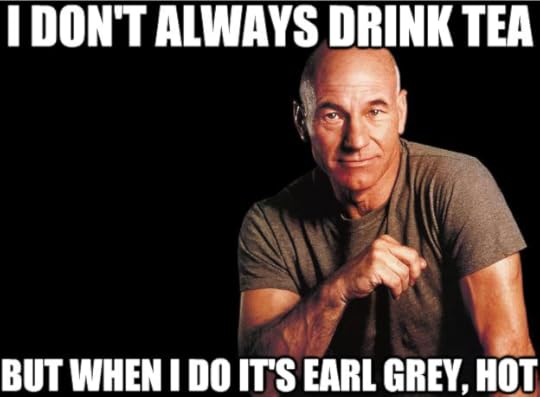
So spoke Sir Patrick Stewart as Captain Jean-Luc Picard on many episodes of Star Trek: The Next Generation. But economist and consummate Trekkie Manu Saadia explains how getting the Captain his tea was both simpler and more complicated than would be expected.
Exploring how the Star Trek universe existed in a post-scarcity society, where people no longer had to work to survive, Saadia shares his exceptional knowledge of both economic theory and all versions of the Star Trek story, from the Shatner-Nemoy origins, The Next Generation, the films, Voyager and Deep Space Nine.
Most compelling was Star Trek’s introduction of the replicator, a machine that could produce and recycle virtually anything, from meals to simple objects. By transferring matter form one form to another this effectively did away with Malthusian philosophy and crafted a utopian society.
So why work at all? Saadia gets into that and a lot more in this fun but sometimes tedious discourse. He sometimes got off track and strayed into the economy 101 classroom, but always returned to his theme of examining economics through the lens of the cool SF show.
Makes me want to go back and watch all the episodes.

May 16, 2016
This is an excellent book but for a niche audience. You need to have watched Star Trek. I mean all of it. And you need to be interested in economics. Satisfy that and you'll have a fun time with this.

May 31, 2016
Money is one of humanity’s most clever and enduring technologies. It is a brilliant way of transferring value across vast distances and decentralizing our economy. Barter makes sense on a hyperlocal, neighbourly scale, but you can’t run a vast industrial economy on it. As Niall Ferguson chronicles in his excellent
The Ascent of Money
, increases in numismatic sophistication were vital in increasing the range of trade and our abilities to innovate and provide services to citizens. So it seems a foregone conclusion that we are stuck with money, that we’ll never be rid of it. Yet Star Trek, particularly in its 24th century form, proposes to do just that, at least within the Federation. Trekonomics is Manu Saadia’s attempt to understand how (or even whether) this could work. This is not a deep examination of the workings of the Federation’s economy itself, so much as a meditation on how we might apply the ideas of trekonomics to our own policy-making. In so doing, Saadia follows in the footsteps of Trek itself, which is not about presenting viable predictions of the future of our species but telling stories about our species in the present.
Saadia’s timing could not be better. Obviously, the book is coming out during the fiftieth anniversary year of Star Trek. On a wider note, this book is quite pertinent to conversations happening around the world with regards to the economy and work. As automation, in the form of algorithms and robots, replaces many jobs once done by humans, and as an aging workforce retires slowly, younger people are left to wonder exactly what they’re meant to be doing when it comes to work. Holding down a career for life is not a realistic option for many of us. The world of work is changing, thanks both to changes in technology and policy. It behoves us, therefore, to examine our assumptions about capitalism and consider what alternatives might be available to us.
Trekonomics works because the Federation is a post-scarcity society. That is, everything that one might need to survive is available in abundance, at practically zero cost. The replicator is the poster child of post-scarcity and, of course, is a sufficient condition for a post-scarcity society. Saadia is quick to point to contemporary 3D printing as an example of proto-replicator technology (and no, he’s not saying we’ll inevitably have actual replicators, but 3D printing itself is pretty darn amazing). However, he makes a salient observation towards the end of the book that leaves us with a lot to think about: in Star Trek, the replicator comes last. It is the culmination of Federation progress. It’s not present in the 23rd century, where humanity is already well on its way to post-scarcity and the enlightenment that supposedly accompanies it. In other words, the replicator is sufficient but not necessary, and Saadia argues it is the result of other developments rather than the cause of those changes.
This is central to Saadia’s thesis: technology alone is not enough to tip us over into a money-less, post-scarcity utopia. Saadia does not put much store in the Singularity or the idea that technology is somehow inherently liberating or democratizing. He notes the massive potential of technologies like the Internet, but he points out that it is only a force for good if we make it so. He cites GPS and the Internet both as examples of positive externalities, public goods provided by the US government at not extra cost. GPS is an excellent example, because it’s something that has so quickly become embedded in our everyday actions. Yet the US government could easily just turn the system off.
Technology alone is not enough. Its advancement must be accompanied by progressive policies. In particular, Saadia points to eliminating poverty as a crucial step towards a trekonomics future. Poverty actually changes people’s behaviour. Saadia observes that there is a clear difference between the behaviour of the 23rd century Starfleet officers and the 24th century ones, with the latter all acting more like Spock—more rational, more civilized, more fair-minded. I happen to be watching an episode of TNG as I write this: “Force of Nature”, S07E09, which Saadia uses as the example of this. Picard and the crew are eminently rational, able to consider possibilities that undermine their beliefs in the harmlessness of the Enterprise’s mission of exploration, simply because it is their job to keep an open mind.
Saadia contends that as our technologies and policies improve our access to necessities like food, healthcare, and decrease our need to work, this will actually change our behaviour and outlook as a species. This might seem strange at first, because there is a very romantic notion that humans are humans are humans across all of time and space and that we somehow possess an intangible, indomitable spirit that will never be altered or crushed by our circumstance. But it has happened before. Our transition from hunter-gatherer to agrarian societies, culminating in urbanization, has changed the way we think and act and operate. As Saadia puts it, “culture is our killer app.” It is itself a technology that we can innovate and iterate through policy and philosophy.
If I haven’t commented much on Saadia’s exposition of the economics of the Federation or other species, it’s simply because there isn’t much in here that is new to me. When you’ve watched Star Trek as much as I have, you’re pretty familiar with it from all angles. Saadia speaks of the shows in the cadence of a rugged fan like myself, off-handedly but accurately summarizing entire species’ contributions to the show or whole themes of episodes. If you choose to read this book for no reason more than that you like Trek, you still can’t go wrong. Saadia keeps the economic terms light; indeed, I suspect that anyone with the more-than-passing knowledge of economics that I possess would be able to offer a deeper critique of those aspects.
Still, Trekonomics is not meant to be expositional so much as aspirational. Nowhere is this more obvious than in the otherwise somewhat indulgent chapter on the science-fictional influences on Star Trek. Saadia uses Star Trek to point to how we can explicitly envision and shape our own future. This is an empowering idea, but it is not a foregone conclusion that we can make such a change. To be sure, even with advances in technology, it will be a long time before we can get rid of money. I think it’s very easy to be sceptical that we will ever reach that point, to be worried about free riders, etc., in such a system. But we need to recognize that this scepticism is an internalized artifact of growing up within capitalism. That doesn’t guarantee that we can successfully replace capitalism with something else—but given capitalism’s flaws, I don’t see that we have any other moral option than to try. Treknomics is a passionate, Trek-filled reminder that we are capable of doing better. If we want to.

Saadia’s timing could not be better. Obviously, the book is coming out during the fiftieth anniversary year of Star Trek. On a wider note, this book is quite pertinent to conversations happening around the world with regards to the economy and work. As automation, in the form of algorithms and robots, replaces many jobs once done by humans, and as an aging workforce retires slowly, younger people are left to wonder exactly what they’re meant to be doing when it comes to work. Holding down a career for life is not a realistic option for many of us. The world of work is changing, thanks both to changes in technology and policy. It behoves us, therefore, to examine our assumptions about capitalism and consider what alternatives might be available to us.
Trekonomics works because the Federation is a post-scarcity society. That is, everything that one might need to survive is available in abundance, at practically zero cost. The replicator is the poster child of post-scarcity and, of course, is a sufficient condition for a post-scarcity society. Saadia is quick to point to contemporary 3D printing as an example of proto-replicator technology (and no, he’s not saying we’ll inevitably have actual replicators, but 3D printing itself is pretty darn amazing). However, he makes a salient observation towards the end of the book that leaves us with a lot to think about: in Star Trek, the replicator comes last. It is the culmination of Federation progress. It’s not present in the 23rd century, where humanity is already well on its way to post-scarcity and the enlightenment that supposedly accompanies it. In other words, the replicator is sufficient but not necessary, and Saadia argues it is the result of other developments rather than the cause of those changes.
This is central to Saadia’s thesis: technology alone is not enough to tip us over into a money-less, post-scarcity utopia. Saadia does not put much store in the Singularity or the idea that technology is somehow inherently liberating or democratizing. He notes the massive potential of technologies like the Internet, but he points out that it is only a force for good if we make it so. He cites GPS and the Internet both as examples of positive externalities, public goods provided by the US government at not extra cost. GPS is an excellent example, because it’s something that has so quickly become embedded in our everyday actions. Yet the US government could easily just turn the system off.
Technology alone is not enough. Its advancement must be accompanied by progressive policies. In particular, Saadia points to eliminating poverty as a crucial step towards a trekonomics future. Poverty actually changes people’s behaviour. Saadia observes that there is a clear difference between the behaviour of the 23rd century Starfleet officers and the 24th century ones, with the latter all acting more like Spock—more rational, more civilized, more fair-minded. I happen to be watching an episode of TNG as I write this: “Force of Nature”, S07E09, which Saadia uses as the example of this. Picard and the crew are eminently rational, able to consider possibilities that undermine their beliefs in the harmlessness of the Enterprise’s mission of exploration, simply because it is their job to keep an open mind.
Saadia contends that as our technologies and policies improve our access to necessities like food, healthcare, and decrease our need to work, this will actually change our behaviour and outlook as a species. This might seem strange at first, because there is a very romantic notion that humans are humans are humans across all of time and space and that we somehow possess an intangible, indomitable spirit that will never be altered or crushed by our circumstance. But it has happened before. Our transition from hunter-gatherer to agrarian societies, culminating in urbanization, has changed the way we think and act and operate. As Saadia puts it, “culture is our killer app.” It is itself a technology that we can innovate and iterate through policy and philosophy.
If I haven’t commented much on Saadia’s exposition of the economics of the Federation or other species, it’s simply because there isn’t much in here that is new to me. When you’ve watched Star Trek as much as I have, you’re pretty familiar with it from all angles. Saadia speaks of the shows in the cadence of a rugged fan like myself, off-handedly but accurately summarizing entire species’ contributions to the show or whole themes of episodes. If you choose to read this book for no reason more than that you like Trek, you still can’t go wrong. Saadia keeps the economic terms light; indeed, I suspect that anyone with the more-than-passing knowledge of economics that I possess would be able to offer a deeper critique of those aspects.
Still, Trekonomics is not meant to be expositional so much as aspirational. Nowhere is this more obvious than in the otherwise somewhat indulgent chapter on the science-fictional influences on Star Trek. Saadia uses Star Trek to point to how we can explicitly envision and shape our own future. This is an empowering idea, but it is not a foregone conclusion that we can make such a change. To be sure, even with advances in technology, it will be a long time before we can get rid of money. I think it’s very easy to be sceptical that we will ever reach that point, to be worried about free riders, etc., in such a system. But we need to recognize that this scepticism is an internalized artifact of growing up within capitalism. That doesn’t guarantee that we can successfully replace capitalism with something else—but given capitalism’s flaws, I don’t see that we have any other moral option than to try. Treknomics is a passionate, Trek-filled reminder that we are capable of doing better. If we want to.

July 18, 2016
As a long-time Star Trek fan who has a bit of interest in economics, I thought this was an interesting read. I wish that the author had spent a bit more time developing how a society would actually get to the point of not using money for anything. The part about the replicator making the cost of most goods drop to zero makes sense, but what about everything else? There are only so many seats at fancy restaurants or music concerts, only so many penthouse apartments, etc. These are things that we currently use money to allocate, and I didn't think the book did a good enough job fleshing out what the alternative would be. Do people just voluntarily limit their demand for these things, or is there some sort of rationing system involved? Money seems like a useful tool to use for trade in luxury goods even in a post-scarcity economy, and the book didn't seem to put forward an alternative that seems more convenient.
That issue aside, I really enjoyed the book. Taking a look at various aspects of Star Trek from the angle of economics was quite neat.
That issue aside, I really enjoyed the book. Taking a look at various aspects of Star Trek from the angle of economics was quite neat.

June 9, 2016
The author uses Star Trek Next Generation as an example of society without money - people can work or not work as they wish because the replicator creates any and all things that people would want. Through a lively discussion the author brings us to today (well worth the journey). The replicator is fiction however technology and robotics are essential doing the same thing, there will not be enough jobs in the future for our world population. Do we have more and more people who are unable to work due to less and less jobs or recognize it is the age of the "Replicator"? A wonderful read!

August 9, 2017
Long-time fans of Asimov, Star Trek and related s-f will appreciate this rumination on Roddenberry's utopia. How improbable is the Trek scenario? Well, we have communicators and talking computers now don't we? So why not a society that has eliminated war, poverty and other problems and where work is optional because replicators make anything and everything for free? How do I vote for this agenda? Shall we call it the Landing Party?

April 15, 2018
As I enjoy virtually any intellectual discussion of Star Trek, I was very surprised to find Trekonomics generally uninteresting. Perhaps this is because a significant portion of the book is not actually about Star Trek. The author frequently discusses a general economic principal at length and then draws only a tangential connection between that idea and Star Trek, e.g., by connecting it to a single episode. He also includes details of how he developed an interest in sci-fi and devotes a lengthy chapter to discussing various golden age works.
When Saadia does discuss Star Trek, he constantly repeats himself. I cannot count the number of times he stated some variant of the following idea: the Federation is a society of overabundance where no one needs to work. Further, some of the notions in Trekonomics are inconsistent and even contradictory. For instance, in a chapter discussing how no one in the Federation needs to work, Saadia postulates that any job undertaken by a Federation citizen must be a labor of love. However, in a later comparison of the Federation and the Borg, he seems to suggest that career choice in the Federation is illusory. Trekonomics may be more accurately described as a collection of the author's thoughts on sci-fi rather than a discussion of economics in Star Trek.
When Saadia does discuss Star Trek, he constantly repeats himself. I cannot count the number of times he stated some variant of the following idea: the Federation is a society of overabundance where no one needs to work. Further, some of the notions in Trekonomics are inconsistent and even contradictory. For instance, in a chapter discussing how no one in the Federation needs to work, Saadia postulates that any job undertaken by a Federation citizen must be a labor of love. However, in a later comparison of the Federation and the Borg, he seems to suggest that career choice in the Federation is illusory. Trekonomics may be more accurately described as a collection of the author's thoughts on sci-fi rather than a discussion of economics in Star Trek.

May 6, 2016
This is a rather hard book to review because I wanted so so much to love it. The second I saw an internet article about the idea, I was on Inkshares to support (throw money at) the endeavor and asking my friends to do the same. My partner and I ended up pre-ordering two copies because we were worried that it wouldn't make its goal and be published.
Well, this book was not successful. Perhaps the reason is that this book not only needed a good editor (and perhaps something akin to a phd mentor/advisor), but also perhaps the author was not the right person to write it.
Take, for example, this quote from the last chapter of the book, when discussing the "Great voyages of discovery" in the world's history:
Regardless of his thoughts on the kinds of Christopher Columbus, I think this is really indicative of just how he feels about Star Trek and the world it inhabits. He dismisses space travel and other space ventures because they cost too must. He disparages the characters on TNG for "no learning, no growing" (166) (despite evidence to the contrary on its seven seasons that the author ignores), and constantly discusses DS9 for its depiction of "flawed individuals" and life beyond the Federation (the very thing he's supposedly writing a book about!). If he dislikes utopia and a world with much of the strife of our current century noticeably absent, what is it exactly that he likes about Star Trek? He devotes an entire chapter to the Ferengi, and after a well-recognized parallel in 20th/21st century capitalists, he all but praises how great they are and how admirable their culture. Of course some discussion is obviously necessary, but his tone changes rather dramatically here.
Ultimately, this book doesn't cover much economics at all. I was really disappointed, as the title implies that this is exactly what the book is about -the economics of Star Trek. Unfortunately he goes on and on about scarcity and the distribution of resources. Which, while it can't be the only possible issue in a Star Trek economic utopia, it certainly is one in our contemporary times. It is the very issue that defines political arguments - do we become a social democracy or slash all social programs into a Keynesian market free for all? (The author is an advocate for the former) But where the author could have used some imagination to think beyond logics of capitalism, all he can say is how expensive things are and how we have to think about how to distribute and allocate resources. His short introduction of GPS as a global common good is interesting, but it just cracks the surface before he moves on to something else. In fact, that is a common tactic in his book - he brings up a lot of things briefly, then moves on, before he has fully considered them.
One thing he recognizes that I absolutely agree with - that technology will bring us to a new world. In fact, as he recognizes somewhat, it already has. Agricultural jobs and now industrial (manufacturing especially) jobs are quickly waning as technology takes care of the drudgery for us. But instead of prosperity for all, the owners of the technology pocket the profit and live a life free from work and need while the workers must find their drudgery in wages elsewhere in other areas. Instead, why not bring up the proposals of the guaranteed basic income, for example? While it's still embedded in capitalist thinking, it is an interesting way that a few governments have come up with to deconstruct the idea that we must work "for a living." What else is going on in the world right now that suggests a move toward a Star Trek economics? He doesn't say.
I also enjoyed his short discussion of early science fiction authors and their influence on the original Star Trek show. I really do want to know more about Asimov after reading this book, and I'll try to delve more into other authors of the time period as well.
Perhaps for this book to have been a success, someone with an extensive economic theory background would have been able to look at failures of utopian models in history, look at current trends surrounding capitalism, and movement to and away from it to answer the authors final question - how can we get to a world like Star Trek? Unfortunately, either the author's knowledge of economics (and history, psychology, social sciences, etc) was inadequate, or he neglected to write about it. This book reads like a meandering, cobbled together undergraduate thesis, rather than a coherent, well-edited book. I wonder if the author could have improved it if he had sought traditional publishing where his ideas could have been critiqued, edited, and re-written. As it stands, I doubt it would be published conventionally without heavy editing.
But, despite this review, I did not hate the book. I was just very, very, very disappointed. I love Star Trek, and I don't love it, as the author disparages, because it's an adventure in space with aliens and faster-than-light travel (otherwise I'd just be a Star Wars fan). Sure, those things are cool. In fact, it's in the encounters with other worlds that the characters in Star Trek are able to reconsider their highly held precepts and examine their history and their current ways of doings things and how they should act in the world. Instead, I love Star Trek because of its optimistic view on what the future of humanity could look like. That we could rise above our difference and actually "seek out new life and new civilizations" so that we might delight in differences and new ways of doing things, that we might delight in having our assumptions critiqued. That we might work together to create a world where national borders have no meaning, and no matter where you are born, you have access to the same resources so that poverty and hate and suffering are only something you read about in books. Where we might live beyond money, where we explore what it truly means to be human, where we don't live our lives in the drudgery of trying to pay bills to meet our basic needs or be shackled to accumulating goods to feel like we are doing well in life. Where education is freely shared and desperately striven for, where improving our lives together is the highest occupation.
That's what I love about Star Trek. That's what I want to explore in looking at the economics of Star Trek. Will someone please write THAT book?
Well, this book was not successful. Perhaps the reason is that this book not only needed a good editor (and perhaps something akin to a phd mentor/advisor), but also perhaps the author was not the right person to write it.
Take, for example, this quote from the last chapter of the book, when discussing the "Great voyages of discovery" in the world's history:
"Personally I find it very reassuring, even heartwarming, that great explorers and inventors should be so typically human. They were strivers, small-minded low-rent busy bees. I like that. That means they were just like you and me, just a tiny bit crazier or luckier." (216)
Regardless of his thoughts on the kinds of Christopher Columbus, I think this is really indicative of just how he feels about Star Trek and the world it inhabits. He dismisses space travel and other space ventures because they cost too must. He disparages the characters on TNG for "no learning, no growing" (166) (despite evidence to the contrary on its seven seasons that the author ignores), and constantly discusses DS9 for its depiction of "flawed individuals" and life beyond the Federation (the very thing he's supposedly writing a book about!). If he dislikes utopia and a world with much of the strife of our current century noticeably absent, what is it exactly that he likes about Star Trek? He devotes an entire chapter to the Ferengi, and after a well-recognized parallel in 20th/21st century capitalists, he all but praises how great they are and how admirable their culture. Of course some discussion is obviously necessary, but his tone changes rather dramatically here.
Ultimately, this book doesn't cover much economics at all. I was really disappointed, as the title implies that this is exactly what the book is about -the economics of Star Trek. Unfortunately he goes on and on about scarcity and the distribution of resources. Which, while it can't be the only possible issue in a Star Trek economic utopia, it certainly is one in our contemporary times. It is the very issue that defines political arguments - do we become a social democracy or slash all social programs into a Keynesian market free for all? (The author is an advocate for the former) But where the author could have used some imagination to think beyond logics of capitalism, all he can say is how expensive things are and how we have to think about how to distribute and allocate resources. His short introduction of GPS as a global common good is interesting, but it just cracks the surface before he moves on to something else. In fact, that is a common tactic in his book - he brings up a lot of things briefly, then moves on, before he has fully considered them.
One thing he recognizes that I absolutely agree with - that technology will bring us to a new world. In fact, as he recognizes somewhat, it already has. Agricultural jobs and now industrial (manufacturing especially) jobs are quickly waning as technology takes care of the drudgery for us. But instead of prosperity for all, the owners of the technology pocket the profit and live a life free from work and need while the workers must find their drudgery in wages elsewhere in other areas. Instead, why not bring up the proposals of the guaranteed basic income, for example? While it's still embedded in capitalist thinking, it is an interesting way that a few governments have come up with to deconstruct the idea that we must work "for a living." What else is going on in the world right now that suggests a move toward a Star Trek economics? He doesn't say.
I also enjoyed his short discussion of early science fiction authors and their influence on the original Star Trek show. I really do want to know more about Asimov after reading this book, and I'll try to delve more into other authors of the time period as well.
Perhaps for this book to have been a success, someone with an extensive economic theory background would have been able to look at failures of utopian models in history, look at current trends surrounding capitalism, and movement to and away from it to answer the authors final question - how can we get to a world like Star Trek? Unfortunately, either the author's knowledge of economics (and history, psychology, social sciences, etc) was inadequate, or he neglected to write about it. This book reads like a meandering, cobbled together undergraduate thesis, rather than a coherent, well-edited book. I wonder if the author could have improved it if he had sought traditional publishing where his ideas could have been critiqued, edited, and re-written. As it stands, I doubt it would be published conventionally without heavy editing.
But, despite this review, I did not hate the book. I was just very, very, very disappointed. I love Star Trek, and I don't love it, as the author disparages, because it's an adventure in space with aliens and faster-than-light travel (otherwise I'd just be a Star Wars fan). Sure, those things are cool. In fact, it's in the encounters with other worlds that the characters in Star Trek are able to reconsider their highly held precepts and examine their history and their current ways of doings things and how they should act in the world. Instead, I love Star Trek because of its optimistic view on what the future of humanity could look like. That we could rise above our difference and actually "seek out new life and new civilizations" so that we might delight in differences and new ways of doing things, that we might delight in having our assumptions critiqued. That we might work together to create a world where national borders have no meaning, and no matter where you are born, you have access to the same resources so that poverty and hate and suffering are only something you read about in books. Where we might live beyond money, where we explore what it truly means to be human, where we don't live our lives in the drudgery of trying to pay bills to meet our basic needs or be shackled to accumulating goods to feel like we are doing well in life. Where education is freely shared and desperately striven for, where improving our lives together is the highest occupation.
That's what I love about Star Trek. That's what I want to explore in looking at the economics of Star Trek. Will someone please write THAT book?

February 17, 2016
As a lifelong Star Trek fan who has been reading economists Brad DeLong (who provided the Introduction) and Paul Krugman (who provided technical commentary) for years and years, this was so well-targeted at me it might as well have been a photon torpedo (sorry). I couldn't have been more interested in an explanation of the economic logic of the post-scarcity paradise depicted in the best televised science fiction franchise of all time. While the commendably enthusiastic fandom is not matched by comparably rigorous economics, frequently coming off like a mixture of enthusiastic episode recaps and rants about contemporary political issues among some brief discussion of how the TNG warp speed limit reflects intro-level economic concepts like negative externalities, this book is a lot of fun. Overall Saadia provides, as Krugman once wrote in his paper "The Theory of Interstellar Trade" about the proper method of calculating interest rates at near-light speeds, "a serious analysis of a ridiculous subject, which is of course the opposite of what is usual in economics".
If modern philosophy is a "series of footnotes to Plato", then modern science fiction is a "series of footnotes to Asimov". Star Trek has never been shy about acknowledging its debt to the master, but it was famously less rigorous about exploring how future society actually worked: sometimes characters act like they've never heard of money, sometimes they treat it as a necessary evil, sometimes they're as impeccably capitalist as you could ask for. How does society work with an absence of currency? Do other forms of status/hierarchy become more important without money? What's the status of human labor? How does copyright work when everyone's working for free? Is the replicator all that's necessary to enable post-scarcity? Are there natural limits to economic growth? How would one resolve collective action problems with truly alien species? These are explored narratively in the episodes, but I'm not only curious if the Federation is truly in a stable equilibrium, but about how humanity got to that point in the first place. After all, human beings in 2016 are vastly richer than our ancestors of 300 years ago (Saadia discusses John Maynard Keynes' excellent 1931 essay "Economic Possibilities for our Grandchildren", which addresses many of these same issues), yet we've hardly eliminated many of the traits that are inconsistent with the Star Trek life. How did that phase transition occur?
That's a tall order, and honestly I didn't expect the equivalent of the economic development history of the United Federation of Planets. There are many questions about how the Federation functions internally, what about externally? Saadia is at his best when he's comparing the Federation to its neighbors; most interesting are the comparisons between the economies of the Federation and the Borg (similar post-scarcity economics, vastly different social structures), and the Federation and the Ferengi (polar opposite economies, gradually more similar social structures). It raises the question of why, if the Federation's model is so great, then all the other spacefaring species at roughly similar levels of development aren't following it? Despite being peaceful, the Federation is forced to go to war with other belligerent powers quite often, and in the kind of winner-take-all total wars that define a civilization, even small inefficiencies can doom an otherwise perfectly capable society. We see the Federation win all kinds of battles against the Borg thanks to the power of the main characters, but honestly it seems that if they really wanted to, the Borg could just crush the Federation. Is Trekonomics really a dominant strategy against antlike communism, or do our heroes just have plot armor? Similarly, given the information-aggregation superiority of the price system over the unpriced barter system of socialism, what really prevents the Ferengi from bribing or buying people and resources out from under the Federation?
One could go on in this vein. Taking the economics of a TV show seriously is silly, but if you're a fan of the show, and even more importantly, the kind of future the show represents, you can have a lot of great conversations about its treatment of utilitarianism, artisanship, distribution, personal fulfillment, and everything else that becomes possible when instead of chasing full employment, you pursue "full unemployment". There's no shame in thinking about the kind of society you'd like to live in, and Star Trek presents the kind of hopeful vision of the future that will still prove powerfully attractive many years into the future. Saadia doesn't answer every question, but he presents a lot of fun debate material.
If modern philosophy is a "series of footnotes to Plato", then modern science fiction is a "series of footnotes to Asimov". Star Trek has never been shy about acknowledging its debt to the master, but it was famously less rigorous about exploring how future society actually worked: sometimes characters act like they've never heard of money, sometimes they treat it as a necessary evil, sometimes they're as impeccably capitalist as you could ask for. How does society work with an absence of currency? Do other forms of status/hierarchy become more important without money? What's the status of human labor? How does copyright work when everyone's working for free? Is the replicator all that's necessary to enable post-scarcity? Are there natural limits to economic growth? How would one resolve collective action problems with truly alien species? These are explored narratively in the episodes, but I'm not only curious if the Federation is truly in a stable equilibrium, but about how humanity got to that point in the first place. After all, human beings in 2016 are vastly richer than our ancestors of 300 years ago (Saadia discusses John Maynard Keynes' excellent 1931 essay "Economic Possibilities for our Grandchildren", which addresses many of these same issues), yet we've hardly eliminated many of the traits that are inconsistent with the Star Trek life. How did that phase transition occur?
That's a tall order, and honestly I didn't expect the equivalent of the economic development history of the United Federation of Planets. There are many questions about how the Federation functions internally, what about externally? Saadia is at his best when he's comparing the Federation to its neighbors; most interesting are the comparisons between the economies of the Federation and the Borg (similar post-scarcity economics, vastly different social structures), and the Federation and the Ferengi (polar opposite economies, gradually more similar social structures). It raises the question of why, if the Federation's model is so great, then all the other spacefaring species at roughly similar levels of development aren't following it? Despite being peaceful, the Federation is forced to go to war with other belligerent powers quite often, and in the kind of winner-take-all total wars that define a civilization, even small inefficiencies can doom an otherwise perfectly capable society. We see the Federation win all kinds of battles against the Borg thanks to the power of the main characters, but honestly it seems that if they really wanted to, the Borg could just crush the Federation. Is Trekonomics really a dominant strategy against antlike communism, or do our heroes just have plot armor? Similarly, given the information-aggregation superiority of the price system over the unpriced barter system of socialism, what really prevents the Ferengi from bribing or buying people and resources out from under the Federation?
One could go on in this vein. Taking the economics of a TV show seriously is silly, but if you're a fan of the show, and even more importantly, the kind of future the show represents, you can have a lot of great conversations about its treatment of utilitarianism, artisanship, distribution, personal fulfillment, and everything else that becomes possible when instead of chasing full employment, you pursue "full unemployment". There's no shame in thinking about the kind of society you'd like to live in, and Star Trek presents the kind of hopeful vision of the future that will still prove powerfully attractive many years into the future. Saadia doesn't answer every question, but he presents a lot of fun debate material.

April 30, 2016
In an age where novels about future change are often ominous and apocalyptic "Trekonomics: The Economics of Star Trek" which I won through Goodreads Giveaways takes a hit television series and questions the possibility of creating a utopian society where logic and reasoning prevail, and there's an abundance, no currency, racial tolerance and mutual respect. With episodic summaries, personal opinions and cursory analysis Manu Saadia evaluates the economic ideas inherent in the Star Trek universe and considers whether it can be applied to the future of this world. Although there seems to be a lack of continuity in the flow at times because some of the analysis seems to be more of a personal perspective, the content is innovative and optimistic; a fascinating read whether you're a Trekkie fan or not.

June 5, 2016
I heard about this book via Scalzi's Big Idea feature, and it sounded awesome so I picked it up right away. The author set out to write the book he wanted to read about the future economics of the world set up in Star Trek, and I think he succeeded well with an interesting and informative book that not only covers several aspects of economics and sociopolitical norms in Star Trek but also relates them back to our own real world. He closes the book with some speculation as to how the seeds of Trekonomics already exist in our own world, and while I disagree with his final conclusion, it's still well put and interesting.
Various chapters of the book deal with different aspects of Trekonomics, from how replicators symbolize the post-scarcity economy of the Federation to how Ferengis exemplify not only a wealth/consumer based society that yet could still change. The topic of "what is valuable when things no longer have real value" is explored from many angles, and generally boils down to "your reputation and your abilities" as the answer. In a post-scarcity world, where you no longer need to toil to make rent and buy groceries, people can instead choose to work on what interests them and where their talents lie, not just at what they can do to survive. In general, this will lead to people being able to explore their abilities to the furthest extent possible, even if the product of those talents isn't immediately commercially viable, leading to even more improvements and discoveries that can further push the post-scarcity economy into even more wealth for all. Given the current political climate, the economic changes leading to loss of jobs and more unequal distribution of wealth, this idea of a basic income for all is starting to be talked about in public more and more, and this book not only touches on that idea but extrapolates it out to the most positive outcome.
The author writes clearly and well, with entertaining and applicable quotes and illustrations from the full panoply of the Star Trek universe. He doesn't shy away from the negative possibilities of some of the economic ideas discussed, but does point out that there's a lot more to humans than we often give ourselves credit for. While I don't necessarily agree with his conclusion that star travel will never happen, I see and agree with his point that we are on Earth for quite some time to come, and space exploration will not happen until the entire planet is wealthy enough to support it as a whole.
Overall, this is an excellent book, and I learned a lot about economic theory and how it applies to our world now and how it could apply to us in the future. I highly recommend this book and have already sent the link to it to several people that I know.
Various chapters of the book deal with different aspects of Trekonomics, from how replicators symbolize the post-scarcity economy of the Federation to how Ferengis exemplify not only a wealth/consumer based society that yet could still change. The topic of "what is valuable when things no longer have real value" is explored from many angles, and generally boils down to "your reputation and your abilities" as the answer. In a post-scarcity world, where you no longer need to toil to make rent and buy groceries, people can instead choose to work on what interests them and where their talents lie, not just at what they can do to survive. In general, this will lead to people being able to explore their abilities to the furthest extent possible, even if the product of those talents isn't immediately commercially viable, leading to even more improvements and discoveries that can further push the post-scarcity economy into even more wealth for all. Given the current political climate, the economic changes leading to loss of jobs and more unequal distribution of wealth, this idea of a basic income for all is starting to be talked about in public more and more, and this book not only touches on that idea but extrapolates it out to the most positive outcome.
The author writes clearly and well, with entertaining and applicable quotes and illustrations from the full panoply of the Star Trek universe. He doesn't shy away from the negative possibilities of some of the economic ideas discussed, but does point out that there's a lot more to humans than we often give ourselves credit for. While I don't necessarily agree with his conclusion that star travel will never happen, I see and agree with his point that we are on Earth for quite some time to come, and space exploration will not happen until the entire planet is wealthy enough to support it as a whole.
Overall, this is an excellent book, and I learned a lot about economic theory and how it applies to our world now and how it could apply to us in the future. I highly recommend this book and have already sent the link to it to several people that I know.

June 7, 2017
Nice choice Mom! Thank you for the recommendation!
"Live long and prosper" thus alludes to another kind of prosperity, the kind that arises from the cultivation of the mind rather than from greed, that antiquated and vulgar practice. It is an active sentence. Instead of "long life and prosperity," it is a grammatical imperative directed at the recipient. Long life and prosperity do not befall you out of the heavens, they are not random outcomes from the lotteries of birth or of life. You must live long, and that is the condition. It does not mean that you will prosper: the "and" is not a logical conjunction. You may or may not succeed. Furthermore, the phrase points to the unfinished nature of the imperative. Spock's father, Ambassador Sarek, who has arguably lived very long and prospered beyond many of his Vulcan peers, is still served the greeting. The work and the challenge to go on living and to prosper are never concluded." (p. 241.)
"...free riding on public goods is much more of a threat to our continued welfare than the physical scarcity of raw materials. Public goods are always at risk of exhaustion because of their nonexcludable, nonrival nature. It would seem that in the absence of some form of regulation or contract, or any other agreed-upon system of pricing or rewards and penalties, free riding on public goods will inevitably occur. Designing and implementing regulation on such a scale is itself a very involved process whose ultimate success is far from guaranteed. In many ways, depressing as it may sound, in our world free riding is a feature, not a bug." (p.129.)
"I do not understand the motives of those who advocate space exploration as a way to unite the world, as a sort of cultural crusade for peace through engineering. They are noble. So, what if we first used our resources to lift a billion people out of poverty? How many Einsteins or von Neumanns could we get out of that? Heck, we don't even need Einsteins -- we just need thirty or forty million more engineers and programmers and medical scientists out of this one billion. That is 4 percent, tops. There is no telling what could be achieved with such an increase in raw human capital. The returns of knowledge grow and accumulate incommensurably fast." (p.218 - 219)
"Live long and prosper" thus alludes to another kind of prosperity, the kind that arises from the cultivation of the mind rather than from greed, that antiquated and vulgar practice. It is an active sentence. Instead of "long life and prosperity," it is a grammatical imperative directed at the recipient. Long life and prosperity do not befall you out of the heavens, they are not random outcomes from the lotteries of birth or of life. You must live long, and that is the condition. It does not mean that you will prosper: the "and" is not a logical conjunction. You may or may not succeed. Furthermore, the phrase points to the unfinished nature of the imperative. Spock's father, Ambassador Sarek, who has arguably lived very long and prospered beyond many of his Vulcan peers, is still served the greeting. The work and the challenge to go on living and to prosper are never concluded." (p. 241.)
"...free riding on public goods is much more of a threat to our continued welfare than the physical scarcity of raw materials. Public goods are always at risk of exhaustion because of their nonexcludable, nonrival nature. It would seem that in the absence of some form of regulation or contract, or any other agreed-upon system of pricing or rewards and penalties, free riding on public goods will inevitably occur. Designing and implementing regulation on such a scale is itself a very involved process whose ultimate success is far from guaranteed. In many ways, depressing as it may sound, in our world free riding is a feature, not a bug." (p.129.)
"I do not understand the motives of those who advocate space exploration as a way to unite the world, as a sort of cultural crusade for peace through engineering. They are noble. So, what if we first used our resources to lift a billion people out of poverty? How many Einsteins or von Neumanns could we get out of that? Heck, we don't even need Einsteins -- we just need thirty or forty million more engineers and programmers and medical scientists out of this one billion. That is 4 percent, tops. There is no telling what could be achieved with such an increase in raw human capital. The returns of knowledge grow and accumulate incommensurably fast." (p.218 - 219)

January 23, 2017
I wrote a lengthy review of this book in my blog. The short version is that the book is not so good if you're expecting to learn a lot about the economics of Star Trek.
If what you wanted to learn about was the author's favorite characters, episodes, and quotes from Star Trek - then maybe you'll like it. Or if you're curious about how the author got started reading Isaac Asimov books or what he thinks of Elon Musk, or - well, you get the idea. It's a very short book and most of it has little to do with the economics of Star Trek. There are better resources for learning about post scarcity and for answering questions about the economics of Star Trek. Unfortunately, this book falls short of living up to the title.
If what you wanted to learn about was the author's favorite characters, episodes, and quotes from Star Trek - then maybe you'll like it. Or if you're curious about how the author got started reading Isaac Asimov books or what he thinks of Elon Musk, or - well, you get the idea. It's a very short book and most of it has little to do with the economics of Star Trek. There are better resources for learning about post scarcity and for answering questions about the economics of Star Trek. Unfortunately, this book falls short of living up to the title.

August 22, 2016
Well-done, with several good lessons. Love how this book tackles everything from what a post-scarcity world looks like, to automation and its potential impact on work, to what work means when it's no longer just about trying to make a living, but instead about honor and worth.
Trekonomics is best summarized by its end translation of "to live long and prosper": "It is how you live that matters, not how long."
Trekonomics is best summarized by its end translation of "to live long and prosper": "It is how you live that matters, not how long."

June 6, 2016
Three and a half stars
A trek nerd will detect several flaws, though the author's interpretive arguments and extensive delving through the canon deserve applause because they may will certainly shape how future writer's approach the concept of utopian trekonomics.
A trek nerd will detect several flaws, though the author's interpretive arguments and extensive delving through the canon deserve applause because they may will certainly shape how future writer's approach the concept of utopian trekonomics.

January 25, 2019
There were parts of this book that were engaging, but in the end, Trekonomics did not deliver what I was hoping for: an examination upon just how a post-scarcity economy would actually function.

September 9, 2016
A fun book, if a little glib, that wedded my love of sci-fi and my dilettantism in economics.

May 5, 2016
Backed this book on ink shares based on the subject matter, really wanted to like it and thought of it as a companion to The ethics of Star Trek. Unfotunatley, the book doesn't go in depth into economics analysis, instead, it constantly flits between episode summaries, the writer's opinion, and summaries of economic ideas. This books tries to be a lot of things and the ideas with potential are given short shrift because the book lacks focus and structure.
The author's passion and knowledge of both economics and the show is evident. However, he doesn't spend a lot of time applying economic analysis to the star trek universe. There are a lot of conclusory economic statements grafted onto particular episodes, but the book doesn't unpack and walk the reader through economics analysis.
The author mentions that in addition to the "Prime Directive" there is an inwardly focused rule that doesn't allow for genetic enhancements. Exploring the consequences of the counterfactual universe would have made for compelling reading. Unfortunately, the author states "the Federation would break down" without explaining how. It is the "explaining how" which offer the reader the opportunity to improve their analytical skills by watching someone else show their work.
The following are additional examples of lost opportunities. I praise the author for noticing these opportunities for economic analysis. I would have enjoyed reading him carry out the analysis.
The author mentions Elinor Ostrom and states that her research applies to the trekonomics. This would have made for an interesting chapter by itself. It was hidden between episode summaries and cursory analysis.
The author discusses the reputation based economy of the federation, but scatters the discussion all around the book. This idea worth exploring is not given the thoughtful analysis I expected from the book.
The author has a potential chapter for comparative analysis between the Federation and Ferengi. Sadly, the discussion is chopped up between a chapter at the start and the end of the book and surrounded with extraneous information.
Sadly, the book is unorganized and in need of a seasoned editor to guide the passionate author and focus the subject matter. The books doesn't do a good job of priming the reader's expectations because it is constantly jumping around between ideas. Instead of reading the economics of star trek I often read the author's subjective opinions, thoughts of the writers of the show, and comparisons of the star trek universe to other science fiction.
The author's passion and knowledge of both economics and the show is evident. However, he doesn't spend a lot of time applying economic analysis to the star trek universe. There are a lot of conclusory economic statements grafted onto particular episodes, but the book doesn't unpack and walk the reader through economics analysis.
The author mentions that in addition to the "Prime Directive" there is an inwardly focused rule that doesn't allow for genetic enhancements. Exploring the consequences of the counterfactual universe would have made for compelling reading. Unfortunately, the author states "the Federation would break down" without explaining how. It is the "explaining how" which offer the reader the opportunity to improve their analytical skills by watching someone else show their work.
The following are additional examples of lost opportunities. I praise the author for noticing these opportunities for economic analysis. I would have enjoyed reading him carry out the analysis.
The author mentions Elinor Ostrom and states that her research applies to the trekonomics. This would have made for an interesting chapter by itself. It was hidden between episode summaries and cursory analysis.
The author discusses the reputation based economy of the federation, but scatters the discussion all around the book. This idea worth exploring is not given the thoughtful analysis I expected from the book.
The author has a potential chapter for comparative analysis between the Federation and Ferengi. Sadly, the discussion is chopped up between a chapter at the start and the end of the book and surrounded with extraneous information.
Sadly, the book is unorganized and in need of a seasoned editor to guide the passionate author and focus the subject matter. The books doesn't do a good job of priming the reader's expectations because it is constantly jumping around between ideas. Instead of reading the economics of star trek I often read the author's subjective opinions, thoughts of the writers of the show, and comparisons of the star trek universe to other science fiction.

September 13, 2021
Star Trek has spawned a large number of books about how the series impacts the world around it starting with All I Need to Know I Learned from Watching Star Trek. There are books on the philosophy of Star Trek, the science of Star Trek, and even parenting tips from Star Trek, but none of those were quite as interesting as this book that looks into the economics of the Star Trek universe. As a certain Vulcan first officer might say, it is “fascinating”.
Most people who have watched the series have probably speculated on what it means to have replicators that can create just about everything. Saadia gets into the nuts and bolts of what a lack of scarcity means to society and the people who live in it. What a world would be like without the incentive to seek profit? What are the implications of robots/androids that can do all the work? Why is there even a Star Fleet in such a universe? It’s a quite enjoyable exploration that has the bonus of illustrating its points with wonderfully nostalgic returns to the plots and scenes of many episodes throughout all the series and movies.
If you liked this review, you can find more at www.gilbertstack.com/reviews.
Most people who have watched the series have probably speculated on what it means to have replicators that can create just about everything. Saadia gets into the nuts and bolts of what a lack of scarcity means to society and the people who live in it. What a world would be like without the incentive to seek profit? What are the implications of robots/androids that can do all the work? Why is there even a Star Fleet in such a universe? It’s a quite enjoyable exploration that has the bonus of illustrating its points with wonderfully nostalgic returns to the plots and scenes of many episodes throughout all the series and movies.
If you liked this review, you can find more at www.gilbertstack.com/reviews.

April 5, 2018
While not actually a great primer on the intricacies of economics in Star Trek, I found it a great source for inspiration in imagining a post-scarcity future. Trekonomics brings up a lot of solid observations on culture in a moneyless economy, the implications of technologies like the replicator, and what human drives and impulses would look like sans capitalist pursuit. It doesn't delve far enough into these topics in an economic research sense to earn its thesis, which is that a Trek-like economy isn't that unbelievable, but it's worth reading for science fiction authors because it discusses underdeveloped and underappreciated aspects of sci-fi utopian societies. It forms connections among many authors of the genre (Asimov, Heinlein, Stephenson, Banks, Le Guin, etc), and altogether gets the reader engaged in imagining what future economic possibilities could look like.

February 21, 2019
The Economics of Star trek is an issue that's poped up on many an internet chatroom and occasionally seeps into Public discourse.
"Wait, they don't have any money? How does that even work?" Is the usual opening statement and it's honnestly a fascinating topic.
Trekenomics takes this topic to task and, for the most part, does it justice. The book is a celebration of Sci-Fi (not just Star trek) and it's influence on real society in general. Sci-fi like Star trek can help guide the direction of real science, and as the book suggests, Economics as well.
In that respect, I consider it excellent reading for those who are fans of Sci-Fi, Star Trek, and for people who are fascinated by Economics.
If you fall into that category, this book is for you. You will highly enjoy it.
4/5
"Wait, they don't have any money? How does that even work?" Is the usual opening statement and it's honnestly a fascinating topic.
Trekenomics takes this topic to task and, for the most part, does it justice. The book is a celebration of Sci-Fi (not just Star trek) and it's influence on real society in general. Sci-fi like Star trek can help guide the direction of real science, and as the book suggests, Economics as well.
In that respect, I consider it excellent reading for those who are fans of Sci-Fi, Star Trek, and for people who are fascinated by Economics.
If you fall into that category, this book is for you. You will highly enjoy it.
4/5

November 30, 2019
I like the concept of this book. It’s a fun intellectual exercise: What are the economics of the Star Trek universe? How are these principles demonstrated and what can we extrapolate about the economic organization of the Federation? The author puts forth some interesting ideas, but the execution is lacking. The writing is uneven. I would have liked more attention to the question of what we can do today to move towards a post-scarcity economy.
Still, it’s a fun/geeky read.
Still, it’s a fun/geeky read.

March 27, 2018
Trekonomics
By Manu Saadia
This book is a decent but not magnificent exploration of the economics of the Star Trek universe. The premise is intriguing and there certainly is a need for such a book-- the author states that he had read so many other books on Star Trek, but none about the economics, and thus wrote the book he always wanted to read. Star Trek is different from many other science fiction settings in that it is utopian, or at least is moving towards utopia, and The Federation exists in a post-scarcity economy where money is no longer needed for exchange. Everyone’s needs are met, and so humanity can focus on exploration, cultural exchange, and so on. The turning point in the franchise was a throwaway line in ST IV when Kirk mentions (in modern day San Francisco) that in the future, no one needs money. That was the first time the subject had been broached, and by TNG, the subject was being used deliberately as the theme for whole episodes.
The pinnacle of this development is the replicator, a device which can create anything the user asks for. With the replicator, entire economies would have changed or shut down, as there would be no more need for production and distribution. Replicators are publicly accessible, and thus no one would need money to acquire goods. This book explores this concept, approaching it from an economist’s point of view, but unabashedly an economist who loves Trek.
While this is a useful and valuable addition to the wealth of Star Trek writing out there, it feels rather like an essay that was stretched into a full length book. It suffers from some repetition and “thinness,” where a single idea is dragged out without much development. Some chapters, such as the one on the influence of Asimov, reveal important Star Trek history but are only loosely related to issues of economics.
Furthermore, the tone of the book is somewhat uneven. At times, it is thoroughly academic and approaches the topic as a scholar would. Some basic knowledge of economics and economic terms is helpful. At other points, the book is a personal paean to the franchise the author loves so well. The love is good, and it brings levity to the drier sections, but sometimes the writing veers off into OpinionLand, and the reader has to wait for it to return to the subject. And while I am no prude at all when it comes to cursing, the occasional use of profanity just didn’t fit in a book that is intended as a scholarly venture. It feels as if the editor told the author, “Either write an academic book or a personal meditation” and the author replied “Watch me do both at the same time!” The melding only sort of worked.
Despite these objections, I do think Trekonomics is engaging and worthwhile for Trek fans to read. Students of economics may also find enough here to speculate about post-scarcity economies. On a side note, I read this shortly after reading Stephen Pinker’s “The Better Angels of Our Nature,” about the decline of violence in our modern world. The two books speak to one another and in fact often refer to some of the same philosophical principles. If you want to feel hopeful about our species and the galaxy, both books point optimistically to the future.
By Manu Saadia
This book is a decent but not magnificent exploration of the economics of the Star Trek universe. The premise is intriguing and there certainly is a need for such a book-- the author states that he had read so many other books on Star Trek, but none about the economics, and thus wrote the book he always wanted to read. Star Trek is different from many other science fiction settings in that it is utopian, or at least is moving towards utopia, and The Federation exists in a post-scarcity economy where money is no longer needed for exchange. Everyone’s needs are met, and so humanity can focus on exploration, cultural exchange, and so on. The turning point in the franchise was a throwaway line in ST IV when Kirk mentions (in modern day San Francisco) that in the future, no one needs money. That was the first time the subject had been broached, and by TNG, the subject was being used deliberately as the theme for whole episodes.
The pinnacle of this development is the replicator, a device which can create anything the user asks for. With the replicator, entire economies would have changed or shut down, as there would be no more need for production and distribution. Replicators are publicly accessible, and thus no one would need money to acquire goods. This book explores this concept, approaching it from an economist’s point of view, but unabashedly an economist who loves Trek.
While this is a useful and valuable addition to the wealth of Star Trek writing out there, it feels rather like an essay that was stretched into a full length book. It suffers from some repetition and “thinness,” where a single idea is dragged out without much development. Some chapters, such as the one on the influence of Asimov, reveal important Star Trek history but are only loosely related to issues of economics.
Furthermore, the tone of the book is somewhat uneven. At times, it is thoroughly academic and approaches the topic as a scholar would. Some basic knowledge of economics and economic terms is helpful. At other points, the book is a personal paean to the franchise the author loves so well. The love is good, and it brings levity to the drier sections, but sometimes the writing veers off into OpinionLand, and the reader has to wait for it to return to the subject. And while I am no prude at all when it comes to cursing, the occasional use of profanity just didn’t fit in a book that is intended as a scholarly venture. It feels as if the editor told the author, “Either write an academic book or a personal meditation” and the author replied “Watch me do both at the same time!” The melding only sort of worked.
Despite these objections, I do think Trekonomics is engaging and worthwhile for Trek fans to read. Students of economics may also find enough here to speculate about post-scarcity economies. On a side note, I read this shortly after reading Stephen Pinker’s “The Better Angels of Our Nature,” about the decline of violence in our modern world. The two books speak to one another and in fact often refer to some of the same philosophical principles. If you want to feel hopeful about our species and the galaxy, both books point optimistically to the future.

August 27, 2021
Great book. I'd been meaning to read it for a while.
At first I thought the book would be dumb since Star Trek is supposed to be about communism but this book was going to talk about actual economics that go against that, because the show is inconsistent. Then I thought ... communism is terrible so I'm worried this book will just say communism is cool. It wasn't really either.
Communism is terrible, yet Star Trek is great. I've been having a bit of trouble with this idea. Why doesn't anyone work without any incentive? How does it make sense? The book lays it out decently.
Back in the day there was so little wealth, so many people working themselves to exhaustion to barely squeeze by. Sure there's always been a rich class but it's not like that wealth could be redistributed because there wasn't enough of it. The King and Queens of old could have lived like peasants and it wouldn't have made much of a difference to the average peasant because there still wasn't enough to make them thrive. Today there's enough wealth but if you try to spread it equally you end up with that wealth mostly disappearing hence communism isn't even the equal distribution of poverty it's just bringing everyone down to the lowest level, except for the corrupt. BUT as there is more and more wealth then it's more and more feasible to redistribute some of that wealth and raise people out of poverty, which we've seen.
How does this apply the Trek? The author seems to demonstrate pretty well that extrapolating current progress would likely lead to a utopian world, with or without some replicator type super science. It isn't guaranteed but if you look at the trends things always get better. Science fiction is so often dystopian and while this was understandable in the 80s when things appeared to be getting worse, we should know better now, even if millennials are convinced things are getting worse all the time. They aren't. They improve, objectively, across time. Minor dips, but this should work itself out in a few hundred years.
And yeah the replicator makes everything better. There is no scarcity so a lot of things become irrelevant. Well substitute replicators with AI and that seems to be the track we're on.
He doesn't say all this of course.
I've seen a lot of Trek. Not all of every series but all of most and most of the rest. I was expecting this book to tell me more about things I hadn't seen but I think I'd pretty much seen all of the important stuff. Some of the more significant statements about there being no money were from scenes in films and TNG I've seen many times, many of them recently. Still the analysis of why things are like this isn't really in the show. The author assumes a lot. He extrapolates things. It's all fine, even if we can't really expect that the authors intended this at all. I think it works.
He shits on space travel a bit at the end. Yes yes, let's bring the world out of poverty. That's happening. It's fine. Don't stop but can we do cool shit too?
At first I thought the book would be dumb since Star Trek is supposed to be about communism but this book was going to talk about actual economics that go against that, because the show is inconsistent. Then I thought ... communism is terrible so I'm worried this book will just say communism is cool. It wasn't really either.
Communism is terrible, yet Star Trek is great. I've been having a bit of trouble with this idea. Why doesn't anyone work without any incentive? How does it make sense? The book lays it out decently.
Back in the day there was so little wealth, so many people working themselves to exhaustion to barely squeeze by. Sure there's always been a rich class but it's not like that wealth could be redistributed because there wasn't enough of it. The King and Queens of old could have lived like peasants and it wouldn't have made much of a difference to the average peasant because there still wasn't enough to make them thrive. Today there's enough wealth but if you try to spread it equally you end up with that wealth mostly disappearing hence communism isn't even the equal distribution of poverty it's just bringing everyone down to the lowest level, except for the corrupt. BUT as there is more and more wealth then it's more and more feasible to redistribute some of that wealth and raise people out of poverty, which we've seen.
How does this apply the Trek? The author seems to demonstrate pretty well that extrapolating current progress would likely lead to a utopian world, with or without some replicator type super science. It isn't guaranteed but if you look at the trends things always get better. Science fiction is so often dystopian and while this was understandable in the 80s when things appeared to be getting worse, we should know better now, even if millennials are convinced things are getting worse all the time. They aren't. They improve, objectively, across time. Minor dips, but this should work itself out in a few hundred years.
And yeah the replicator makes everything better. There is no scarcity so a lot of things become irrelevant. Well substitute replicators with AI and that seems to be the track we're on.
He doesn't say all this of course.
I've seen a lot of Trek. Not all of every series but all of most and most of the rest. I was expecting this book to tell me more about things I hadn't seen but I think I'd pretty much seen all of the important stuff. Some of the more significant statements about there being no money were from scenes in films and TNG I've seen many times, many of them recently. Still the analysis of why things are like this isn't really in the show. The author assumes a lot. He extrapolates things. It's all fine, even if we can't really expect that the authors intended this at all. I think it works.
He shits on space travel a bit at the end. Yes yes, let's bring the world out of poverty. That's happening. It's fine. Don't stop but can we do cool shit too?

January 25, 2022
What if we no longer had to worry about money?
It might seem crazy, but it's something that could theoretically happen. After all, money is a human invention, a story that we all tell ourselves, and as soon as that story is replaced by something more compelling, we'll stop believing in it.
We are already seeing hints of this world with new mini-economies and tokens being generated in the crypto space that challenge the traditional view of money that only has value if the government backs.
What the author explores in this book is what would happen in a post-scarcity Star Trek society where we no longer have to worry about trade and basics goods (since we would have "replicators" and teleporters). While I like the ideas this book explores, I wish it dove a little deeper into how society would value services, public goods and other assets (like real estate for example). Even though this book is not as extensive as I would have liked, if you're a Star Trek fan, and curious about what a potential post-capitalist society could hold, this book has some fun thought experiments that will definitely get you thinking.
It might seem crazy, but it's something that could theoretically happen. After all, money is a human invention, a story that we all tell ourselves, and as soon as that story is replaced by something more compelling, we'll stop believing in it.
We are already seeing hints of this world with new mini-economies and tokens being generated in the crypto space that challenge the traditional view of money that only has value if the government backs.
What the author explores in this book is what would happen in a post-scarcity Star Trek society where we no longer have to worry about trade and basics goods (since we would have "replicators" and teleporters). While I like the ideas this book explores, I wish it dove a little deeper into how society would value services, public goods and other assets (like real estate for example). Even though this book is not as extensive as I would have liked, if you're a Star Trek fan, and curious about what a potential post-capitalist society could hold, this book has some fun thought experiments that will definitely get you thinking.

January 23, 2018
No soy ni remotamente cercano a considerarme conocedor o fan de star trek, pero realmente disfruté este libro tan salido de la tangente.
4/5
4/5

January 28, 2021
Nice overview, but very descriptive.

May 4, 2021
Perhaps an interesting read for a Star Trek fan, but as a book on economics, not really convincing.

November 30, 2021
ReedIII Quick Review: Maybe a better title would be Global Economies and Political Science related to Star Trek Economies and other Science Fiction. For me too much Earth Economics and not enough Star Trek Economics. I prefer The Physics of Star Trek and The Metaphysics of Star Trek.

July 11, 2022
I really enjoyed the book very much, it's a brilliant analysis of these Sci-Fi franchises from an economics point of view. The author made a very detailed analysis of how the post-scarcity, technological society could be developed. How a society without money, but based on personal development could thrive and prosper. Work is still essential to trekonomics, but for purposes of a higher order: increasing knowledge, perfecting the technology, and promoting individual and collective self-improvement. Also, in the final chapters, a thorough analysis of how our current society could move to the "ideal society". He rises concerts, as many thinkers are doing now, about advancements in automation, AI, and Synthetic biology would affect the worker in general and developing, as well as developed nations, he mentioned that a new "social contract" should be made for not affecting the progress and the surviving of humankind, and that not the gains from technological advancement remains on the hand of few. Maybe, Bill Gates and Warren Buffet are already watching some of this and are committed to not handing their wealth to their inherits. Also, Manu Saadia made a good point, about the non-sense of someone, like Elon Musk or Jeff Benzos, for promoting space exploration, with all the exponential resources that it implies before addressing the issues of the future of work, poor and not-so-poor developing/developed nations with increasing populations. What surprises me, is that the author only skims on the problem of climate change and its tremendous impact on economical development and consequences. I highly recommend reading this book to Sci-Fi fans as well as the ones that aren't.
Some personal notes, on his writing.
𝙍𝙚𝙥𝙪𝙩𝙖𝙩𝙞𝙤𝙣 𝙖𝙣𝙙 𝙝𝙤𝙣𝙤𝙧𝙨, 𝙩𝙝𝙚 𝙚𝙨𝙩𝙚𝙚𝙢 𝙖𝙣𝙙 𝙧𝙚𝙘𝙤𝙜𝙣𝙞𝙩𝙞𝙤𝙣 𝙤𝙛 𝙤𝙣𝙚’𝙨 𝙥𝙚𝙚𝙧𝙨, 𝙧𝙚𝙥𝙡𝙖𝙘𝙚 𝙚𝙘𝙤𝙣𝙤𝙢𝙞𝙘 𝙬𝙚𝙖𝙡𝙩𝙝 𝙖𝙨 𝙥𝙪𝙗𝙡𝙞𝙘 𝙢𝙖𝙧𝙠𝙚𝙧𝙨 𝙤𝙛 𝙨𝙩𝙖𝙩𝙪𝙨.---> It is His fault, no one is superior to no one, even Him not just because He, allegedly, created the universe is superior. Is not that the creature wants to be superior to the Creator, since doesn't make any sense to create something (someone) and tell them that you are superior. for What purpose, just "share your love". Well in my opinion I didn't want to exist or be created. What is the sense of living an eternity with Videla or Nobusuke Kishi? Two genocides that later in their life regretted and convert to catholicism. Oh, yes the great magnanimous "God" forgive everything as all are sinners, even Him. So what's the purpose of life if he wrongdoing all your life and after you regret it or maybe not. In the first place, he could have created a world without those problems (good and bad) and nothing of this could happen. Yes, there He needs to be tested..and thousands of pages have been written about this, and free will. For what, you'll in heaven with the same free will, or you won't have it? What a "new heart" will prevent you from wrongdoing? What about doing for Him create in the first place. After all, you'll know good and evil, something that He regrets for humankind to have and punished with paradise expulsion. What now that you "experience" the evils of knowledge will prevent you to behave the same way? Even He doesn't follow the moral rules by which you'll be judged. He said in Exodus 20:13 "Thou you do not Kill" and then He kills himself, Apocalipsis or Matthew 25:31-46, or commands you to do it Deut. 20:16-18 or 1 Sam 15:3, or doesn't want have families to be united Matthew 10:35. Yes thousands of pages have been written about those contradictions and told that if it is not understood is not "God". The idea of a "benevolent Tiran" that rewards and punishes according to His will are not appealing, a better "God" that "fights" against "evil" should be considered obsolete, after all, He created the "good and evil tree", so both natures should be inside Him, and He doesn't want that humankind knows "evil and good" Genesis 3:22 as He does He shouldn't have created the tree above all. However, these thoughts go nowhere, He made a mistake, and he doesn't want to recognize it, even though He is insecure about His creation otherwise there wouldn't be any necessity to test it.
𝗜𝗻 𝗳𝗮𝗰𝘁, 𝗺𝗼𝗻𝗲𝘆 𝗶𝘀 𝘀𝗼 𝘂𝘀𝗲𝗳𝘂𝗹 𝘁𝗵𝗮𝘁 𝗶𝘁 𝗶𝘀 𝗻𝗼𝘁 𝗮 𝘀𝘁𝗿𝗲𝘁𝗰𝗵 𝘁𝗼 𝗵𝗮𝗶𝗹 𝗶𝘁 𝗮𝘀 𝗼𝗻𝗲 𝗼𝗳 𝗵𝘂𝗺𝗮𝗻𝗶𝘁𝘆’𝘀 𝗺𝗼𝘀𝘁 𝗳𝘂𝗻𝗱𝗮𝗺𝗲𝗻𝘁𝗮𝗹 𝘁𝗲𝗰𝗵𝗻𝗼𝗹𝗼𝗴𝗶𝗰𝗮𝗹 𝗯𝗿𝗲𝗮𝗸𝘁𝗵𝗿𝗼𝘂𝗴𝗵𝘀.𝗧𝗼 𝘄𝗶𝘁: 𝘁𝗵𝗲 𝗼𝗹𝗱𝗲𝘀𝘁 𝗰𝘂𝗻𝗲𝗶𝗳𝗼𝗿𝗺 𝗰𝗹𝗮𝘆 𝘁𝗮𝗯𝗹𝗲𝘁𝘀 𝗮𝗿𝗲 𝗺𝗼𝘀𝘁𝗹𝘆 𝗮𝗰𝗰𝗼𝘂𝗻𝘁𝗶𝗻𝗴 𝗿𝗲𝗰𝗼𝗿𝗱𝘀.--> Not a writing about "God" or religion it's about money. If He really wanted to share "His Love" as it's commonly said at least He should present Himself, and it's not like John 3 that "the world rejects him" It is a poor communication strategy that he developed, otherwise people are not stupid and "loves darkness" above "light" it's because He doesn't communicate properly neither in the allegedly "paradise" nor afterward, not even when He sent "His" Son. Lies have short lives., just one example is the "apparition" of the Virgin Mary in "Fatima", consecrated as She wanted, still wars with Rusia, let's not talk about the surroundings these topics are hilarious, to say the least.
𝗘𝗮𝗿𝘁𝗵 𝗶𝘀 𝘀𝘂𝗽𝗽𝗼𝘀𝗲𝗱 𝘁𝗼 𝗵𝗮𝘃𝗲 𝗮 𝗳𝗶𝗻𝗶𝘁𝗲 𝗰𝗮𝗿𝗿𝘆𝗶𝗻𝗴 𝗰𝗮𝗽𝗮𝗰𝗶𝘁𝘆, 𝘁𝗵𝗲𝗿𝗲 𝗮𝗿𝗲 𝗻𝗮𝘁𝘂𝗿𝗮𝗹 𝗹𝗶𝗺𝗶𝘁𝘀 𝘁𝗼 𝗲𝗰𝗼𝗻𝗼𝗺𝗶𝗰 𝗴𝗿𝗼𝘄𝘁𝗵, 𝗮𝗻𝗱 𝗲𝗰𝗼𝗻𝗼𝗺𝗶𝗰 𝗲𝘅𝗽𝗮𝗻𝘀𝗶𝗼𝗻 𝘁𝗵𝗿𝗼𝘂𝗴𝗵 𝗰𝗮𝗽𝗶𝘁𝗮𝗹 𝗮𝗰𝗰𝘂𝗺𝘂𝗹𝗮𝘁𝗶𝗼𝗻 𝗮𝗻𝗱 𝗽𝗿𝗼𝗱𝘂𝗰𝘁𝗶𝘃𝗶𝘁𝘆 𝗴𝗮𝗶𝗻𝘀 𝘄𝗶𝗹𝗹 𝘀𝗼𝗺𝗲𝗱𝗮𝘆 𝗰𝗼𝗺𝗲 𝘁𝗼 𝗮𝗻 𝗮𝗯𝗿𝘂𝗽𝘁 𝗵𝗮𝗹𝘁. . ---> Could humankind be blamed for these? Not at all. The one that should be blamed for all is this is Him since he demanded Genesis 9:7 "As for you, be fruitful and increase in number; multiply on the earth and increase upon it.” If just for one minute we believe in the story, as opposed to evolution, that Adan and Eve were expelled from Paradise for a minor and induced sin. Why in the world does He ask to be fruitful and increase in number? The consequences of asking for this are that humankind should be fed and cared for and from scarce resources, that He didn't provide easily nor were easily accessible. Even He gave the command Genesis 3:19 "By the sweat of your brow you will eat your food until you return to the ground since from it you were taken; for dust you are and to dust you will return.” is that what humankind does with some unethical consequences of course. What we live in the consequences of His error and wrongdoing. We have to take into account that His error and biggest mistake was, again if we believe that Bible is true as apposite to evolution, to allow the snake to be present in Paradise as well as having to test the man thru the Tree of the knowledge of good and evil. If He would think that He made a perfect creation as He is perfect there wouldn't be any need to test anything. There was no need for a Tree. After all, if He created the Tree of Evil and Good, evil would be part of His creation and part of Him. The book The Interior World by Robert Silverberg made an excellent point on this subject. Also Genesis 1:28 "God blessed them and said to them, “Be fruitful and increase in number; fill the earth and subdue it. Rule over the fish in the sea and the birds in the sky and over every living creature that moves on the ground."
𝗙𝗿𝗲𝗲 𝗿𝗶𝗱𝗶𝗻𝗴 𝗼𝗻 𝗽𝘂𝗯𝗹𝗶𝗰 𝗴𝗼𝗼𝗱𝘀 𝗶𝘀 𝗺𝘂𝗰𝗵 𝗺𝗼𝗿𝗲 𝗼𝗳 𝗮 𝘁𝗵𝗿𝗲𝗮𝘁 𝘁𝗼 𝗼𝘂𝗿 𝗰𝗼𝗻𝘁𝗶𝗻𝘂𝗲𝗱 𝘄𝗲𝗹𝗳𝗮𝗿𝗲 𝘁𝗵𝗮𝗻 𝘁𝗵𝗲 𝗽𝗵𝘆𝘀𝗶𝗰𝗮𝗹 𝘀𝗰𝗮𝗿𝗰𝗶𝘁𝘆 𝗼𝗳 𝗿𝗮𝘄 𝗺𝗮𝘁𝗲𝗿𝗶𝗮𝗹𝘀.---> Synthesis of ammonia substitutions of guano solved a problem, but on the other hand added 6 Billon people, including myself and my generation, that only increases pollution, and destroys the environment. So nothing was gained, all loses.
This is the ideal society, where people are truly free and exercise their actual free will. People will be raised free of any conditioning based on race, origin, etc. (many of the things that the American constitution claims, but unfortunately aren't really or could be enforced). This is also, against God's "eternity or paradise" where He exercises a benevolent tyrannical government, and free will could be exercised since one has to subdue one's thoughts and actions for not "upset" Him and be deprived of that life. Adding, to this His "eternity or Paradise" is a long way from being a democracy since it seems, because there's no indication how it is really, a medieval government with "Saints" as its court, peasants, etc. No the king of government that I personally like.
𝗣𝗼𝘃𝗲𝗿𝘁𝘆 𝗱𝗼𝗲𝘀 𝗻𝗼𝘁 𝗼𝗻𝗹𝘆 𝗰𝗼𝗻𝘀𝗶𝘀𝘁 𝗼𝗳 𝗲𝗰𝗼𝗻𝗼𝗺𝗶𝗰 𝗵𝗮𝗿𝗱𝘀𝗵𝗶𝗽.--->This is exactly what God wants deprived humanity that could not think by themself, that can easily be controlled, not able to ask why he mistaken created the universe. That's why Catholics and generally all churches are sources of power for manipulating the masses by the usual ones. Not only does He wants this for the current universe, but also for "eternity and paradise". Allegedly, "paradise" has everything, except one thing "Free Will", truly "Free Will", not the one threatens with "dead" if you don't fulfill "My Demands on eating from the Knowledge Tree", that's poverty also, I don't, really we don't why the "Devil" reveal from God, could be because he wanted to overthrow God, or could be because he simply wants a freedom creation based on knowledge and free will. It's not true that's liberty on God Heavens, since simple you obey Him or are thrown off to hell, and that's not fair. If we truly were created with Free Will we could choose where and how to live, without any punishment or suffering, otherwise is a tyrannic form of living.
𝗪𝗵𝗮𝘁 𝗶𝘀 𝗴𝗼𝗶𝗻𝗴 𝘁𝗼 𝗵𝗮𝗽𝗽𝗲𝗻 𝘁𝗼 𝘁𝗵𝗲𝘀𝗲 𝗽𝗲𝗼𝗽𝗹𝗲 𝗶𝗳 𝘁𝗵𝗲𝗿𝗲 𝗮𝗿𝗲 𝗻𝗼 𝗼𝗽𝗽𝗼𝗿𝘁𝘂𝗻𝗶𝘁𝗶𝗲𝘀 𝗳𝗼𝗿 𝘄𝗼𝗿𝗸 𝗮𝗻𝗱 𝘄𝗮𝗴𝗲𝘀 𝗯𝗲𝗰𝗮𝘂𝘀𝗲 𝘁𝗵𝗲 𝗺𝗮𝗻𝘂𝗳𝗮𝗰𝘁𝘂𝗿𝗶𝗻𝗴 𝗼𝗳 𝗴𝗼𝗼𝗱𝘀 𝗵𝗮𝘀 𝗯𝗲𝗰𝗼𝗺𝗲 𝗮 𝘁𝗿𝗶𝘃𝗶𝗮𝗹, 𝗮𝘂𝘁𝗼𝗺𝗮𝘁𝗲𝗱 𝗹𝗼𝘄-𝗿𝗲𝘁𝘂𝗿𝗻𝘀 𝗯𝘂𝘀𝗶𝗻𝗲𝘀𝘀? 𝗡𝗼𝘁 𝗮𝗹𝗹 𝗼𝗳 𝘁𝗵𝗲𝗺 𝘄𝗶𝗹𝗹 𝗳𝗶𝗻𝗱 𝗷𝗼𝗯𝘀 𝗮𝘁 𝗦𝘁𝗮𝗿𝗯𝘂𝗰𝗸𝘀, 𝗿𝗲𝗴𝗮𝗿𝗱𝗹𝗲𝘀𝘀 𝗼𝗳 𝗵𝗼𝘄 𝗯𝗶𝗴 𝘁𝗵𝗲𝗶𝗿 𝗰𝗶𝘁𝗶𝗲𝘀 𝗮𝗿𝗲. 𝗧𝗵𝗶𝘀 𝗶𝘀 𝘄𝗵𝗮𝘁 𝗸𝗲𝗲𝗽𝘀 𝗺𝗮𝗻𝘆 𝗲𝗰𝗼𝗻𝗼𝗺𝗶𝘀𝘁𝘀 𝘂𝗽 𝗮𝘁 𝗻𝗶𝗴𝗵𝘁 . --->Not only them but mid-industrialized or agro-agricultural countries like Brazil, Argentina, or India and let's not talk about the rest of Latin America or Africa have no opportunity to survive in this new robotic-automated-Ai world. In my opinion, synthetic biology should take place to adapt humankind to this new reality. It can't be a rich victorian-medieval-roman-Chinese-Indian style that survives, because of His own limitations and insecurities, His inability to cope with "Devil and its Angels", in case they really exist on haven. He, if really exists and is omnipresent, omnipotent, omniscient as He claims to be, should be a better-designed universe for these not to occur, even and including "Free Will". After all, if we are made to "image and likeness" and we fall it's because He is capable of falling too. Nothing new can be created could be created outside Him, is He truly is omnipotent. Otherwise, if something new could be created, like "evil or a will opposite to Him" He couldn't be so powerful no? And more important, if He created the "Tree of Good and Evil", Evil(or better-called wrongdoing or doing something not opposite for something that He doesn't want or like)should be part of Him otherwise the same as above He isn't so powerful. Nevertheless, He never debates with anyone about this, as Matthew 11:25 "At that time Jesus declared, “I praise You, Father, Lord of heaven and earth, because You have hidden these things from the wise and learned, and revealed them to little children.". And a lot has been writing about who these wise are.... for example, they're the ones "in malice, not in understanding"....but as always with His words could be interpreted in many ways, never clear and unambiguously, always misleading and opened to interpretations. If He is omnipotent, and omniscient a better way to talk to Humankind, even in Paradise, He could have found across epochs and space. To be fair, the same could be said about the Devil, is he really exists, as he was created as the brightest start in the universe, understanding as the universe the creation outside the material universe off course. Personally, if both exist, I don't want to take either side as both are wrong, and not only wrong they mislead, hide, lie and do anything to "won" this stupid non-sense war if really exists. If a sci-fi novel plot could be written to have a peaceful end, these two could sit down and find a common point and settle their difference without "Heaven or Hell" to exists. No war about power deserves this kind of stupidity, painful, reality. If all is about power and "who" creates what or who is with us or against us, doesn't deserve to take any side, neither deserves any "creation", nor any creature. A truly omnipresent, omnipotent, omniscient so powerful that created Universe, Heavens, Angels, and Humankind should be above these. Neither is needed to gain "anyone" heart, thru any sacrifice to "reconcile with Him". Doesn't make any sense or any point.
Some personal notes, on his writing.
𝙍𝙚𝙥𝙪𝙩𝙖𝙩𝙞𝙤𝙣 𝙖𝙣𝙙 𝙝𝙤𝙣𝙤𝙧𝙨, 𝙩𝙝𝙚 𝙚𝙨𝙩𝙚𝙚𝙢 𝙖𝙣𝙙 𝙧𝙚𝙘𝙤𝙜𝙣𝙞𝙩𝙞𝙤𝙣 𝙤𝙛 𝙤𝙣𝙚’𝙨 𝙥𝙚𝙚𝙧𝙨, 𝙧𝙚𝙥𝙡𝙖𝙘𝙚 𝙚𝙘𝙤𝙣𝙤𝙢𝙞𝙘 𝙬𝙚𝙖𝙡𝙩𝙝 𝙖𝙨 𝙥𝙪𝙗𝙡𝙞𝙘 𝙢𝙖𝙧𝙠𝙚𝙧𝙨 𝙤𝙛 𝙨𝙩𝙖𝙩𝙪𝙨.---> It is His fault, no one is superior to no one, even Him not just because He, allegedly, created the universe is superior. Is not that the creature wants to be superior to the Creator, since doesn't make any sense to create something (someone) and tell them that you are superior. for What purpose, just "share your love". Well in my opinion I didn't want to exist or be created. What is the sense of living an eternity with Videla or Nobusuke Kishi? Two genocides that later in their life regretted and convert to catholicism. Oh, yes the great magnanimous "God" forgive everything as all are sinners, even Him. So what's the purpose of life if he wrongdoing all your life and after you regret it or maybe not. In the first place, he could have created a world without those problems (good and bad) and nothing of this could happen. Yes, there He needs to be tested..and thousands of pages have been written about this, and free will. For what, you'll in heaven with the same free will, or you won't have it? What a "new heart" will prevent you from wrongdoing? What about doing for Him create in the first place. After all, you'll know good and evil, something that He regrets for humankind to have and punished with paradise expulsion. What now that you "experience" the evils of knowledge will prevent you to behave the same way? Even He doesn't follow the moral rules by which you'll be judged. He said in Exodus 20:13 "Thou you do not Kill" and then He kills himself, Apocalipsis or Matthew 25:31-46, or commands you to do it Deut. 20:16-18 or 1 Sam 15:3, or doesn't want have families to be united Matthew 10:35. Yes thousands of pages have been written about those contradictions and told that if it is not understood is not "God". The idea of a "benevolent Tiran" that rewards and punishes according to His will are not appealing, a better "God" that "fights" against "evil" should be considered obsolete, after all, He created the "good and evil tree", so both natures should be inside Him, and He doesn't want that humankind knows "evil and good" Genesis 3:22 as He does He shouldn't have created the tree above all. However, these thoughts go nowhere, He made a mistake, and he doesn't want to recognize it, even though He is insecure about His creation otherwise there wouldn't be any necessity to test it.
𝗜𝗻 𝗳𝗮𝗰𝘁, 𝗺𝗼𝗻𝗲𝘆 𝗶𝘀 𝘀𝗼 𝘂𝘀𝗲𝗳𝘂𝗹 𝘁𝗵𝗮𝘁 𝗶𝘁 𝗶𝘀 𝗻𝗼𝘁 𝗮 𝘀𝘁𝗿𝗲𝘁𝗰𝗵 𝘁𝗼 𝗵𝗮𝗶𝗹 𝗶𝘁 𝗮𝘀 𝗼𝗻𝗲 𝗼𝗳 𝗵𝘂𝗺𝗮𝗻𝗶𝘁𝘆’𝘀 𝗺𝗼𝘀𝘁 𝗳𝘂𝗻𝗱𝗮𝗺𝗲𝗻𝘁𝗮𝗹 𝘁𝗲𝗰𝗵𝗻𝗼𝗹𝗼𝗴𝗶𝗰𝗮𝗹 𝗯𝗿𝗲𝗮𝗸𝘁𝗵𝗿𝗼𝘂𝗴𝗵𝘀.𝗧𝗼 𝘄𝗶𝘁: 𝘁𝗵𝗲 𝗼𝗹𝗱𝗲𝘀𝘁 𝗰𝘂𝗻𝗲𝗶𝗳𝗼𝗿𝗺 𝗰𝗹𝗮𝘆 𝘁𝗮𝗯𝗹𝗲𝘁𝘀 𝗮𝗿𝗲 𝗺𝗼𝘀𝘁𝗹𝘆 𝗮𝗰𝗰𝗼𝘂𝗻𝘁𝗶𝗻𝗴 𝗿𝗲𝗰𝗼𝗿𝗱𝘀.--> Not a writing about "God" or religion it's about money. If He really wanted to share "His Love" as it's commonly said at least He should present Himself, and it's not like John 3 that "the world rejects him" It is a poor communication strategy that he developed, otherwise people are not stupid and "loves darkness" above "light" it's because He doesn't communicate properly neither in the allegedly "paradise" nor afterward, not even when He sent "His" Son. Lies have short lives., just one example is the "apparition" of the Virgin Mary in "Fatima", consecrated as She wanted, still wars with Rusia, let's not talk about the surroundings these topics are hilarious, to say the least.
𝗘𝗮𝗿𝘁𝗵 𝗶𝘀 𝘀𝘂𝗽𝗽𝗼𝘀𝗲𝗱 𝘁𝗼 𝗵𝗮𝘃𝗲 𝗮 𝗳𝗶𝗻𝗶𝘁𝗲 𝗰𝗮𝗿𝗿𝘆𝗶𝗻𝗴 𝗰𝗮𝗽𝗮𝗰𝗶𝘁𝘆, 𝘁𝗵𝗲𝗿𝗲 𝗮𝗿𝗲 𝗻𝗮𝘁𝘂𝗿𝗮𝗹 𝗹𝗶𝗺𝗶𝘁𝘀 𝘁𝗼 𝗲𝗰𝗼𝗻𝗼𝗺𝗶𝗰 𝗴𝗿𝗼𝘄𝘁𝗵, 𝗮𝗻𝗱 𝗲𝗰𝗼𝗻𝗼𝗺𝗶𝗰 𝗲𝘅𝗽𝗮𝗻𝘀𝗶𝗼𝗻 𝘁𝗵𝗿𝗼𝘂𝗴𝗵 𝗰𝗮𝗽𝗶𝘁𝗮𝗹 𝗮𝗰𝗰𝘂𝗺𝘂𝗹𝗮𝘁𝗶𝗼𝗻 𝗮𝗻𝗱 𝗽𝗿𝗼𝗱𝘂𝗰𝘁𝗶𝘃𝗶𝘁𝘆 𝗴𝗮𝗶𝗻𝘀 𝘄𝗶𝗹𝗹 𝘀𝗼𝗺𝗲𝗱𝗮𝘆 𝗰𝗼𝗺𝗲 𝘁𝗼 𝗮𝗻 𝗮𝗯𝗿𝘂𝗽𝘁 𝗵𝗮𝗹𝘁. . ---> Could humankind be blamed for these? Not at all. The one that should be blamed for all is this is Him since he demanded Genesis 9:7 "As for you, be fruitful and increase in number; multiply on the earth and increase upon it.” If just for one minute we believe in the story, as opposed to evolution, that Adan and Eve were expelled from Paradise for a minor and induced sin. Why in the world does He ask to be fruitful and increase in number? The consequences of asking for this are that humankind should be fed and cared for and from scarce resources, that He didn't provide easily nor were easily accessible. Even He gave the command Genesis 3:19 "By the sweat of your brow you will eat your food until you return to the ground since from it you were taken; for dust you are and to dust you will return.” is that what humankind does with some unethical consequences of course. What we live in the consequences of His error and wrongdoing. We have to take into account that His error and biggest mistake was, again if we believe that Bible is true as apposite to evolution, to allow the snake to be present in Paradise as well as having to test the man thru the Tree of the knowledge of good and evil. If He would think that He made a perfect creation as He is perfect there wouldn't be any need to test anything. There was no need for a Tree. After all, if He created the Tree of Evil and Good, evil would be part of His creation and part of Him. The book The Interior World by Robert Silverberg made an excellent point on this subject. Also Genesis 1:28 "God blessed them and said to them, “Be fruitful and increase in number; fill the earth and subdue it. Rule over the fish in the sea and the birds in the sky and over every living creature that moves on the ground."
𝗙𝗿𝗲𝗲 𝗿𝗶𝗱𝗶𝗻𝗴 𝗼𝗻 𝗽𝘂𝗯𝗹𝗶𝗰 𝗴𝗼𝗼𝗱𝘀 𝗶𝘀 𝗺𝘂𝗰𝗵 𝗺𝗼𝗿𝗲 𝗼𝗳 𝗮 𝘁𝗵𝗿𝗲𝗮𝘁 𝘁𝗼 𝗼𝘂𝗿 𝗰𝗼𝗻𝘁𝗶𝗻𝘂𝗲𝗱 𝘄𝗲𝗹𝗳𝗮𝗿𝗲 𝘁𝗵𝗮𝗻 𝘁𝗵𝗲 𝗽𝗵𝘆𝘀𝗶𝗰𝗮𝗹 𝘀𝗰𝗮𝗿𝗰𝗶𝘁𝘆 𝗼𝗳 𝗿𝗮𝘄 𝗺𝗮𝘁𝗲𝗿𝗶𝗮𝗹𝘀.---> Synthesis of ammonia substitutions of guano solved a problem, but on the other hand added 6 Billon people, including myself and my generation, that only increases pollution, and destroys the environment. So nothing was gained, all loses.
This is the ideal society, where people are truly free and exercise their actual free will. People will be raised free of any conditioning based on race, origin, etc. (many of the things that the American constitution claims, but unfortunately aren't really or could be enforced). This is also, against God's "eternity or paradise" where He exercises a benevolent tyrannical government, and free will could be exercised since one has to subdue one's thoughts and actions for not "upset" Him and be deprived of that life. Adding, to this His "eternity or Paradise" is a long way from being a democracy since it seems, because there's no indication how it is really, a medieval government with "Saints" as its court, peasants, etc. No the king of government that I personally like.
𝗣𝗼𝘃𝗲𝗿𝘁𝘆 𝗱𝗼𝗲𝘀 𝗻𝗼𝘁 𝗼𝗻𝗹𝘆 𝗰𝗼𝗻𝘀𝗶𝘀𝘁 𝗼𝗳 𝗲𝗰𝗼𝗻𝗼𝗺𝗶𝗰 𝗵𝗮𝗿𝗱𝘀𝗵𝗶𝗽.--->This is exactly what God wants deprived humanity that could not think by themself, that can easily be controlled, not able to ask why he mistaken created the universe. That's why Catholics and generally all churches are sources of power for manipulating the masses by the usual ones. Not only does He wants this for the current universe, but also for "eternity and paradise". Allegedly, "paradise" has everything, except one thing "Free Will", truly "Free Will", not the one threatens with "dead" if you don't fulfill "My Demands on eating from the Knowledge Tree", that's poverty also, I don't, really we don't why the "Devil" reveal from God, could be because he wanted to overthrow God, or could be because he simply wants a freedom creation based on knowledge and free will. It's not true that's liberty on God Heavens, since simple you obey Him or are thrown off to hell, and that's not fair. If we truly were created with Free Will we could choose where and how to live, without any punishment or suffering, otherwise is a tyrannic form of living.
𝗪𝗵𝗮𝘁 𝗶𝘀 𝗴𝗼𝗶𝗻𝗴 𝘁𝗼 𝗵𝗮𝗽𝗽𝗲𝗻 𝘁𝗼 𝘁𝗵𝗲𝘀𝗲 𝗽𝗲𝗼𝗽𝗹𝗲 𝗶𝗳 𝘁𝗵𝗲𝗿𝗲 𝗮𝗿𝗲 𝗻𝗼 𝗼𝗽𝗽𝗼𝗿𝘁𝘂𝗻𝗶𝘁𝗶𝗲𝘀 𝗳𝗼𝗿 𝘄𝗼𝗿𝗸 𝗮𝗻𝗱 𝘄𝗮𝗴𝗲𝘀 𝗯𝗲𝗰𝗮𝘂𝘀𝗲 𝘁𝗵𝗲 𝗺𝗮𝗻𝘂𝗳𝗮𝗰𝘁𝘂𝗿𝗶𝗻𝗴 𝗼𝗳 𝗴𝗼𝗼𝗱𝘀 𝗵𝗮𝘀 𝗯𝗲𝗰𝗼𝗺𝗲 𝗮 𝘁𝗿𝗶𝘃𝗶𝗮𝗹, 𝗮𝘂𝘁𝗼𝗺𝗮𝘁𝗲𝗱 𝗹𝗼𝘄-𝗿𝗲𝘁𝘂𝗿𝗻𝘀 𝗯𝘂𝘀𝗶𝗻𝗲𝘀𝘀? 𝗡𝗼𝘁 𝗮𝗹𝗹 𝗼𝗳 𝘁𝗵𝗲𝗺 𝘄𝗶𝗹𝗹 𝗳𝗶𝗻𝗱 𝗷𝗼𝗯𝘀 𝗮𝘁 𝗦𝘁𝗮𝗿𝗯𝘂𝗰𝗸𝘀, 𝗿𝗲𝗴𝗮𝗿𝗱𝗹𝗲𝘀𝘀 𝗼𝗳 𝗵𝗼𝘄 𝗯𝗶𝗴 𝘁𝗵𝗲𝗶𝗿 𝗰𝗶𝘁𝗶𝗲𝘀 𝗮𝗿𝗲. 𝗧𝗵𝗶𝘀 𝗶𝘀 𝘄𝗵𝗮𝘁 𝗸𝗲𝗲𝗽𝘀 𝗺𝗮𝗻𝘆 𝗲𝗰𝗼𝗻𝗼𝗺𝗶𝘀𝘁𝘀 𝘂𝗽 𝗮𝘁 𝗻𝗶𝗴𝗵𝘁 . --->Not only them but mid-industrialized or agro-agricultural countries like Brazil, Argentina, or India and let's not talk about the rest of Latin America or Africa have no opportunity to survive in this new robotic-automated-Ai world. In my opinion, synthetic biology should take place to adapt humankind to this new reality. It can't be a rich victorian-medieval-roman-Chinese-Indian style that survives, because of His own limitations and insecurities, His inability to cope with "Devil and its Angels", in case they really exist on haven. He, if really exists and is omnipresent, omnipotent, omniscient as He claims to be, should be a better-designed universe for these not to occur, even and including "Free Will". After all, if we are made to "image and likeness" and we fall it's because He is capable of falling too. Nothing new can be created could be created outside Him, is He truly is omnipotent. Otherwise, if something new could be created, like "evil or a will opposite to Him" He couldn't be so powerful no? And more important, if He created the "Tree of Good and Evil", Evil(or better-called wrongdoing or doing something not opposite for something that He doesn't want or like)should be part of Him otherwise the same as above He isn't so powerful. Nevertheless, He never debates with anyone about this, as Matthew 11:25 "At that time Jesus declared, “I praise You, Father, Lord of heaven and earth, because You have hidden these things from the wise and learned, and revealed them to little children.". And a lot has been writing about who these wise are.... for example, they're the ones "in malice, not in understanding"....but as always with His words could be interpreted in many ways, never clear and unambiguously, always misleading and opened to interpretations. If He is omnipotent, and omniscient a better way to talk to Humankind, even in Paradise, He could have found across epochs and space. To be fair, the same could be said about the Devil, is he really exists, as he was created as the brightest start in the universe, understanding as the universe the creation outside the material universe off course. Personally, if both exist, I don't want to take either side as both are wrong, and not only wrong they mislead, hide, lie and do anything to "won" this stupid non-sense war if really exists. If a sci-fi novel plot could be written to have a peaceful end, these two could sit down and find a common point and settle their difference without "Heaven or Hell" to exists. No war about power deserves this kind of stupidity, painful, reality. If all is about power and "who" creates what or who is with us or against us, doesn't deserve to take any side, neither deserves any "creation", nor any creature. A truly omnipresent, omnipotent, omniscient so powerful that created Universe, Heavens, Angels, and Humankind should be above these. Neither is needed to gain "anyone" heart, thru any sacrifice to "reconcile with Him". Doesn't make any sense or any point.
Displaying 1 - 30 of 173 reviews