Richard Swinburne presents a substantially rewritten and updated edition of his most celebrated book. No other work has made a more powerful case for the probability of the existence of God. Swinburne argues compellingly that the existence of the universe, its law-governed nature and fine-tuning, human consciousness and moral awareness, and evidence of miracles and religious experience, all taken together (and despite the occurrence of pain and suffering), make it likely that there is a God.
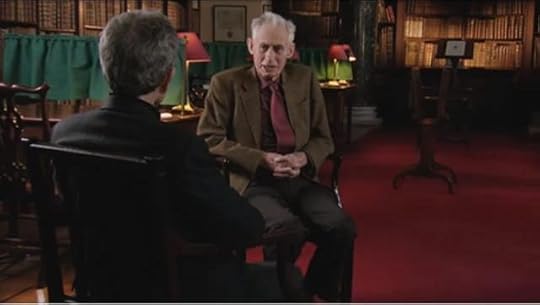
Richard G. Swinburne is an Emeritus Professor of Philosophy at the University of Oxford. Over the last 50 years Swinburne has been a very influential proponent of natural theology, that is, philosophical arguments for the existence of God. His philosophical contributions are primarily in philosophy of religion and philosophy of science. He aroused much discussion with his early work in the philosophy of religion, a trilogy of books consisting of The Coherence of Theism, The Existence of God, and Faith and Reason.
This is, easily, the best book out there to make the case for God. This was my introduction for Bayesian apologetics and I’m very glad to have begun studying it. This book has given me a blueprint for future apologetics. Swinburne has taught me that, to make the case for God, you must make a cumulative case.
"The fool hath said in his heart, There is no God." Psalm 14:1, in the Bible, King James Version.
And yet, Swinburne has found out a way to prove God's existence: induction.
For years Swinburne belonged to the Church of England, but he grew unsatisfied regarding that Church's stance on some moral issues. He had to choose between Catholicism and Orthodoxy. He chose the former.
Surely, Swinburne is not a 100% Catholic on what concerns some Marian issues and the infabillibiliy of the Pope.
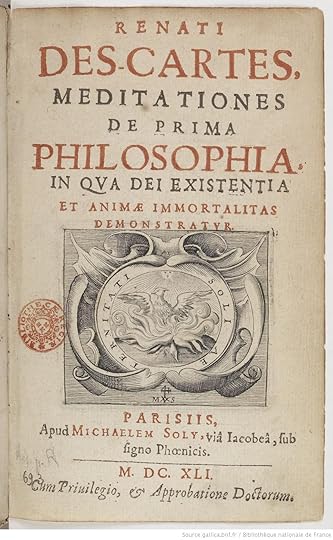
Swinburne could have spared a lot of pages if he had followed Descartes' idea that, like the cogito, God is a self-evident idea.
This is, nonetheless, a remarkable book, as the development of a series of arguments for God existence.
I just don't agree that much on Swinburne's ideas on Buddhism. But, that's another story.
Theism - the thesis that there is such a person as God, and this person is the creator of the universe
What kind of person is god? disembodied, infinitely good, all-powerful*, all-knowing**
*all-powerful but subject to the rules of logic ; god cannot do logically absurd things; for instance, cannot make 1 + 1 equal anything other than 2. On Swinburne's account, the whole platonic paraphernalia of abstract objects then stands mysteriously apart from god; god can explain the origins of consciousness, life, and the physical universe, but not (it seems) such things as math and logic
**all-knowing but, Swinburne adds, god cannot know the outcome of our own free choices before we make them; god gives us our free will and the power to use and by doing so thus makes him(/her?)self ignorant at least in this one area
I wonder if Swinburne is squaring the circle a bit here. Moreover, surely it's relevant that all persons of which we have direct experience are embodied, finite beings. It seems quite possible that our whole concept of personhood is inextricably bound up with this condition. In the Bible god seems to be represented as something much more akin to a human person (would it make any sense to speak of a disembodied being as a 'he' - I don't see how Swinburne's god could possibly have a sex or a gender); well, Swinburne might say those are just the expediencies of artistic representation. It's also possible to speak of god in a more rigorous, philosophical, literal sense. However, at the same time, Swinburne remains an orthodox Christian. Thus he is committed to the idea that god created us in 'his' image, but if his philosophical descriptions of god are correct, god may then be a being who's radically unlike us.
In any case this book tries to show, on the basis of all available evidence, that theism is more likely true than not.
Of course this is not precisely what any believer means when they profess their faith. Theism can be defended as an explanatory thesis, but it seems like this will always be a derivative, secondary operation. Moreover, there still remains an enormous chasm between theism as a thesis and the specifics of Christianity (or any other religion). Based on this book, it's not clear if Swinburne thinks that reason can bridge this chasm, or if from there it's a matter of faith alone.
I doubt this book will make many converts, but still I think non-believers (like myself) should read it (or try to - Swinburne's extensive use of symbolic logic does not always make for smooth sailing). Are there good arguments for the existence of god? I'm still on the fence about this. I do think there are a number of really compelling and provocative cases to be made against naturalism, but that is not entirely the same thing. In any case, non-believers are sometimes a bit overweening in their conviction that all the good arguments are on their side. Too often, I'm afraid, this overconfidence is based on philosophical illiteracy.
* Swinburne respects science. He doesn't go in for young earth creationism or any such nonsense. An infinitely powerful god could have created humans any way *he* wanted. Still, evolution does seem like a rather roundabout way to get to us (especially given how much stress Swinburne puts on the power of simplicity). Swinburne acknowledges this but says still god must have had a reason for doing things this way. The reason he (Swinburne) comes up with is that non-human life has value in itself. God created animals for their inherent beauty, so says Swinburne... I have to say I find this extremely implausible. Are animals really all that beautiful? I'll grant that some wild beasts do have a majestic quality, but what about the sexual lives of insects? Has Richard Swinburne ever heard of traumatic insemination? (https://en.wikipedia.org/wiki/Traumat... )
I don't consider insect-rape a trivial issue. For this and other reasons, I must conclude that the case for god is just filled with too many gaping holes. However, in this it's not so different from any other sweeping metaphysical position - naturalism, for example. I affirm an anxious agnosticism.
It has taken a while to read this one. It is by far the most technically proficient philosophical case for the existence of God that I have read. The depth that Swinburne gets into is a goldmine for those serious about the subject. This is its fault in some regard (that it is incredibly challenging to digest at times) but it is also its biggest strength. It is very rewarding for those willing to read it.
Swinburne (like Rasmussen, of whom I recently read) argues very convincingly that theism is (at least) more probable than the negation/proposition of atheism/naturalism. I would say that these two theists have profoundly catalysed a personal reconsideration of my epistemological status on the topic. Am I "fully" convinced by everything Swinburne has argued ... no! The book is too complex to make that leap. However, for the most part I could not deny his case was argued very well. If I were to be specific, I think the weakest chapter was chapter 11 - The Problem of Evil. But this is not because I think Swinburne did a "poor" job necessarily, instead that it is perhaps the most difficult aspect of theism to justify. I think his arguments here were the most convincing I have read on theodicy, but that fact did not make them entirely sound for me, however.
Swinburne has certainly changed my estimation of theism's probability (because, remember, this topic deals with probability not certainty - so too does science!). He is incredibly underrated as a philosopher. He has debated Dawkins at least once on a panel sort of discussion video on YouTube and they totally talked past one another. Swinburne is on another level to Dawkins.
الكتاب صعب، لكن كلما تقدمت في القراءة كلما سهل هضم ما به.. هذا الكتاب بالطبع ليس للكل، يحتاج من القارئ أن يكون على دراية بمناهج المنطق وقوانين الطبيعة المختلفة... الفصول الأولى صعبة بشكل كبير، هو بيحط فيها طريقته في الوصول للنتيجة، بيشرح المنهج الاستنتاجي والاستقراءي وامتة نستخدم دا وامتة نستخدم دا للوصول للنتايج، وضح نوعيات النتايج (جزئية أو كلية)، كذلك الحقائق، استطاع منطقيا توضيح ضرورة وجود الله من خلال الطبيعة (الكون المادي بمكوناته وتفاعلات تلك المكونات مع بعض)، ناقش تكوين الانسان (كروح ونفس وجسد)، وضرورة وجود الروح (spirit) في حاجة مادية(لجسد) شرح تفصيلا اهمية دا..
عجبني الفصل 10 و 11 ، ناقش فيهم ضرورة وجود العناية الالهية مع حرية الانسان في الاختيار والتمييز بين الخير والشر، ناقش مسألة الشر والألم وضرورة حدوثهم مناقشة ممتازة جدا..
Swinburne's classic attempt to apply Bayes' Theorem to the hypothesis 'God exists' is a masterful example of inductive argument. If the hypothesis succeeds in offering a simpler, more powerful, comprehensive explanation that has the best fit with our background knowledge, then this book provides a powerful argument for the existence of God.
Swinburne argues that if his theory of explanation is workable, then there a good cumulative case can be made for theism by invoking variously reworked theistic arguments that seek to explain various observational truths--the existence of finite objects, the orderliness of the universe, apparent human consciousness, moral realism, intentional actions, miracles, and religious experiences. Swinburne also offered a defeating argument to counter the problem of evil.
The question of whether or not Swinburne is successful or not rests on whether or not one accepts his method of inductive argument. The value of the book is primarily as an example of the application of the combination of inference to the best explanation with Bayes' theory.
this is a very technical philosophical defense of the existence of God. for the most part, i agree with swinburne, and i encourage those who have the acumen to digest difficult arguments to read this book. the payoff is huge! in addition to educating the reader on philosophy of religion, this book is a primer on confirmation theory, epistemology, and metaphysics.
The book dissects the subject very well, didn’t find what I have searched for though! Multiple ambigues conclusions without good algorithm. The idea of simplicity promoting theism seems very odd. For imagine a person capable of doing all this stuff, how complex should he be? The explanation is more complex than the explained!
This entire review has been hidden because of spoilers.
The existence of God is a contentious question. It is certainly not a dinner party conversation. Unless you are an Evangelical trying to save people for Jesus, people usually avoid such a topic of conversation. However, this debate is certainly one that can be on a layman's discussion or one of academic philosophy. The Existence of God by Richard Swinburne is a complex tome that attempts to show the evidence of the existence of God. Starting with a priori arguments based on reason, Swinburne lays out why the probability for God's existence is greater than his none existence.
The book uses a mixture of a priori reasoning and a posteriori evidence based on empiricism. The first few chapters outline the philosophical basis for God's existence. An a priori argument or one based on reason rather than evidence is used. Bayes Theorem is outlined and developed to demonstrate the existence of God using the Fregean Logic formula. I won't lie but I dropped logic and reason early in my philosophy degree so I can't outline as to whether the logic is sound. I am sure that an atheist philosopher who has studied logic proofs would be able to assess this. Nevertheless, the use of Fregean Logic puts this book into the place of academic apologetics rather than merely popular apologetics.
There are multiple different arguments used for the existence of God in this book. They include the Cosmological Argument, the Teleological Argument, Argument from Consciousness, Arguments from History and Miracles and finally Argument from Personal Experiences as evidence. The first part of the book tries to outline how the evidence of God is plausible using a mixture of a priori arguments and then develops into using scientific processes. The book's conclusion is that the probability of God is more likely than not. Due to Richard Swinburne being a Christian, the hypothesis is that a Christian version of God is the more likely God. Polytheism is looked at but rejected for multiple different reasons; one being the universe doesn't have different natural laws.
The details in his arguments are positive to reinforce the potential for theism. I think the strongest arguments for the existence of God are Fine Tuning and consciousness. It was good to see that both of these arguments are in the book. I also thought it was good to see the use of a priori arguments used to justify the existence of God. Much of modern apologetics relies on the a posteriori arguments but a priori arguments are good to be used as they rely less on evidence.
Given the positives of this book, I suspect that any Christian who has done at least a university degree to enjoy this book. However, there are multiple different problems I have with this book which has been noteworthy throughout. I would usually markdown the lack of citations and references but this one is going to be less of problem because of the book being a philosophy book.
My first criticism of the book is that there is a considerable problem with the selective use of science by Richard Swinburne. Neither me nor Richard Swinburne are scientists by expertise. The use of scientific processes to justify the existence of God is fine with the sufficient level of references and citations. This book doesn't have these. Instead we have selective use of scientific theories to justify the existence of God. Within the earlier chapters, the science discussed included the theories of general relativity and Newton's law, with mentions of chemistry in the Teleological Arguments for God. Within the debate of physics which is outlined by Stephan Hawking that I read last year, there is a tension between general relativity and quantum mechanics. Yet, for Swinburne quantum mechanics was conveniently ignored in arguments about God's existence when it was about Cosmology or Fine Tuning, only to be mentioned when Miracles came to be argued.This selective cherry-picking of scientific processes by someone who isn't a scientist made me feel that Richard Swinburne was being disingenuous about the data.
I think that this book uses science in a problematic way given that atheists and agnostics are disproportionately overrepresented in science (within the US at least). If God is more probable given scientific data, it is questionable as why so many scientists are not Christians. Sure, scientists of the past were Christian but this ignores the current developments within science. Now, it would be an appeal to authority fallacy simply naming certain scientists as atheist to disprove God. But given how certain Swinburne is of probabilities being improved by scientific discoveries, the disproportionate number of atheists and agnostics in science pours cold water on the idea that science merely proves the existence of God.
The second criticism of this book is that it uses presuppositions and circular reasoning in different parts of the book. The book presupposes that God would be omniscient and omnipotent without the evidence and reasoning to say why. The book mentions the need for humans to have free will but fails to justify why humans have free will. Afterall, free will within the study of philosophy is largely been seen sceptically as not existing. Within Chapter 5, the Intrinsic Possibility of Theism, there appears to be question begging in that God is omniscient because that is a property of God, which would be begging the question or assuming the conclusion of the argument. The book relies considerably on presuppositions that the reader is likely to need to agree with in order for them agree with Swinburne's argument.
The third criticism of this book is that the argument from morality is a confusing mix of ideas. Usually, theists argue that morality specifically objective morality requires the existence of a God. Likewise Swinburne argues that exact position. The criticism of this is the inconsistency of position regarding ethics. Objective morality points towards a God and this objective morality points towards deontological ethics or the right actions and intentions are what matter. However, the debate around the problem of evil contradicts this position. Swinburne in Chapter 11 Problem of Evil makes the claim that God uses suffering for his good and God has a right to use suffering as he sees fit to have some kind of positive outcome. The problem with these positions is inconsistency and contradictions. Objective morality via deontology points towards the existence of God and yet that exact same God acts in a Consequentialist matter when it comes to suffering. So which one is it? Is God a divine Consequentialist meaning that would should discount the existence of Objective Morality or do we accept the existence of Objective Morality and say that God is a psychopath? This inconsistency is ignored by Swinburne and is a gaping hole in his reasoning.
The fourth criticism is the subjective nature of understanding God. Swinburne seems to argue that history, miracles and religious experiences point towards the existence of God. Yet these positions are faulty given the subjectivity that people have towards them. Religion and belief in a God can be predicted based on geographic, cultural and psychological factors that differ depending on the geography and society of the religious believers. For example, locales with violent storms are more likely to believe in storm dieties, locales with flooding and natural disasters believe in gods who are violent and capacious whilst desert cultures have a higher prepensity towards monotheism. The issue is that Swinburne presupposes the truth claims of Christianity in regard to history, miracles and religious experiences and yet ignores the direct subjectivity that people have.
This book is better than many apologetics books. I think Richard Swinburne does well at using philosophy to justify the existence of God. However, much of his biases are showing in his reasoning. There is evidence of presuppositional thinking in different parts. As a deconstructed Christian, I was hoping to find there to be significantly well outlined positions that would make me think more about Christianity. Unfortunately, I think that this book would only be convincing for those who already agree with Swinburne's positions. However, due to the sophisticated philosophical analysis, I give it three stars. This is because I generally think it shows a remarkable degree of intelligence which most YouTube or Tiktok Christian apologetics are lacking.
Interesting book. I read this one back to back with The Miracle of Theism by John Leslie Mackie. So I read Swinburne's book (Pro-theism) and Mackie's book (anti-theism).
I am no advanced philosopher yet, at least but I preferred Swinburne's points mainly because I am biased just kidding. I thought that he talked a lot more simpler for a person like me who doesn't understand all philosophical terms and etc. I also think it helps that he has revised his book well in the 2000s so it is a bit more modern and I could easier understand his points and etc.
Best book I've read from Swinburn, and one of the best in its genre. Swinburn, makes the case that inductive arguments are better than commonly used deductive arguments for God's existence. His thesis becomes powerful once he fully develops it. The only issue I have, is that he does not go into great depth into the arguments form natural theology and spend more time on methodology. However, if he adequately went into the depths needed for natural theology, it would've had to be a much bigger tome, then what it is.
The Existence of God by Richard Swinburne is an incredibly complicated and sophisticated exposition of the probabilistic case for theism.
Swinburne spends the first half or so of the book explaining Bayesian probability theory and the structure of explanation, and the second half going over various arguments for and against God. His conclusion (very roughly) is this: evidence like the existence of a complex, ordered, life-permitting, conscious-agent-inhabited, providential, religious -experience-ridden universe is more probable on theism than on its negation; given Bayes’ theorem, if theism is simpler or just as simple as its alternatives (which Swinburne spends considerable time arguing for), even allowing for the existence of evil, it is more likely than not that God exists, >50% likelihood that theism is true.
If this sounds far-fetched to you, that’s understandable. But in my opinion, Swinburne makes all this work beautifully. His explanation of, well, explanation, coupled with his defense of the coherence and simplicity of theism, sets up the foundation for his being able to analyze arguments for God. In many of them, he compellingly shows that we have, at the very least, more reason to expect that God would bring about the phenomena under consideration than that it would occur if He did not exist. Not that His existence necessitates, for example, the physical universe or moral awareness, but that His existence makes such things more probable than naturalism makes them. And, based on Bayes’ theorem, this is all Swinburne needs (assuming also that theism is simpler or at least as simple as its alternatives).
In my opinion, Swinburne’s treatment of the arguments for God in this way is brilliant. Normally, something like the cosmological argument doesn’t have all that much force: after all, it’s perfectly coherent (if perhaps a bit odd) that the universe would have come from nothing or exist as a brute fact; there is nothing logically contradictory in this. Given that fact, a deductive argument from the universe to the existence of God is bound to fail, since saying “the universe was not created by God” is not incoherent. But by formulating these arguments in a probabilistic and cumulative way, just asking, given all of them (cosmological, teleological, moral, experiential, etc.), if they are even marginally more likely to occur if God exists than if He does not, then they make up what Swinburne calls a “good P-inductive argument,” i.e., they make God’s existence more likely than not. This is brilliant, as it captures the power of what philosophers have thought is evidence for God for centuries while avoiding the unsavory assumptions present in their more typical formulations (like that causality is universal, or that everything that exists has to have an explanation, etc.). By doing it this way, I think Swinburne shows that it is indeed more likely than not that God exists, given a few plausible metaphysical assumptions about what God is likely to do, how simple theism is as an explanation, and how likely these phenomena are to occur under naturalism.
However, this book is not without flaws. Among them, for example, is the fact that Swinburne endorses open theism, the view that God doesn’t know the future actions of free creatures. This is the vast minority view among Christian theologians and is plausibly even a heresy, even apart from the fact that there is not even a shred of reason to endorse it. Also, the chapters on the arguments from providence and evil are noticeably quite weak. The argument from providence seems arbitrary and ad hoc, as does the theodicy presented in the chapter on the problem of evil (though I think the theodicy in the subsection of the latter chapter on the problem of divine hiddenness is quite good). Additionally, Swinburne rejects God’s logically necessary existence on grounds that a necessary cause couldn’t explain any contingent fact. I think this is a flimsy argument, as God’s will could be contingent without his existence being so, thus leading to contingent phenomena like the ones described in the book. And also, the doctrine of God’s necessity is, I think, extremely important, and constitutes a premise in my favorite argument for the existence of God.
Overall, then, this book is a groundbreaking, enormously sophisticated, and persuasive probabilistic case for theism, but it isn’t without its flaws.
The first half is worth reading, but the relatively restrictive epistemology and the lack of engagement with theological and ethical frameworks as it relates to the later chapters (e.g. the problem of evil) means that I’m ambivalent about this text overall. It may be a great and helpful book for people who need a rigorous and rational examination of arguments for the existence of God, but that feels increasingly out of touch with a postmodern age.
A complex book looking at the issue of proofs of God's existence very thoroughly. The author rightly rejects a priori deductive proofs of God's existence and non existence as necessarily flawed, and thus the ontological proofs, the 5 ways etc. are all out as pure deductive proofs. But the opening chapters look at the issue of inductive argument, probabilities and the evident truth that the simplest explanation is usually the best in scientific explanation as well as in personal explanation (a concept which itself gets a lot of discussion).
Having laid some solid groundwork, the arguments for God's existence are examined in depth. Swinburne makes some excellent points and answers many criticisms very well. However his argument hinges on the ability to prove that the hypothesis of God is the most probably hypothess, and he does this by settling a value on the probability of God being about 1/2 before bringing in miracles and his principle of credulity. Sceptics will perhaps point out that a desire to achieve a value of 1/2 at this point may colour the values given for probabilities from other arguments. Perhaps the problem of evil, that Swinburne notes "reduces the probability" actually reduces it much more than the author supposes. Thus to set such a probability is somewhat open to challenge.
Having established that probablility, the principle of credulity is brought in to suggest we believe claims to miracles and such like unless there is reason to doubt. A sceptic will reply that extraordinary claims require extraordinary evidence and thus the strong extra jolt given to the probabilities by the influence of miracles on the hypothesis can certainly be quibbled with. Moreover, the argument about the strongest claims to miracles that the author introduces seems to miss the point that weaker and conflicting claims to miraculous support for conflicting notions is itself an argument against the principle of credulity
Ultimately this book is not going to convince an atheist of God's existence I suspect. However, it does have some wonderful insights in it. The arguments about the hidden-ness of God are wonderfully thought through. The realisation that there must be a possibility of agnosticism if we are ever to make choices free of the knowledge of our being watched, as it were, over our shoulders was a new one on me. Many other arguments favoured by atheists are also dealt with thoughtfully and thoroughly.
This review picks a couple of points and simplifies some very thorough arguments, and I would strongly recommend reading the book to understand the arguments more deeply. It would be quite wrong to dismiss this book based on my comments. I don't think it will convince people who are predisposed to reject the thesis, but whatever your opinion of God's existence or non existence, this is a deep and thoughtful analysis that deserves to be carefully considered.
A first class book on the philosophy of religion - but like Keith Ward's book, "Why there almost certainly is a God", I think this ultimately makes the case that belief in God is a thoroughly rational belief, without making an overwhelmingly convincing case that would sway anyone if (we say with a deep say) they just had the wherewithal to understand it!
This book is a challenge for a non-philosopher, but still worth reading. He does a remarkably thorough job of presenting the chief arguments for the existence of God. The beginning chapters lay out his approach, and are probably the most difficult ones in the book. Once he gets into the various arguments the reading gets a bit less daunting, but not easy by any means. It helps going in to be familiar with Bayes Theorem and its use in philosophy, as he uses it extensively in most chapters. He does not hold that there is a deductive argument for God's existence, but that, given the totality of his arguments, there is a very strong inductive argument (i. e. the probability of the existence of God is very strong). When dealing with the scientific arguments, he argues from the theistic evolutionist framework. Though I don't recall that he says so explicitly, he appears to accept the Darwinian account of evolution as it is currently understood (but, obviously, without the naturalism usually attached to it). There were a few points at which I felt his arguments were flawed or weak, such as when dealing with the issue of evolution. Nevertheless, overall this is a tremendous work, and I'm confident I'll be referring back to it in the future.
I feel compelled to review this book after months of alternating feelings of clarity and confusion. The book is a must read, not least because it delivers a summary of a large gamut of philosophical-theological and non theological writings. The book is a reference and it therefore gives you an idea about how far arguments for the existence of god have reached. I do not garantee that you will like or enjoy the reading, but i can garantee that you will come out of this book with a sense of clarity about the position of god in a twenty first century spectrum of probability .
The most comprehensive account I've come across so far. Very good read, convincing account with strong argument, and goes into a lot of detail. Quite a tough read to start with, but it's OK once you get going, and you appreciate the tedious start in the end, to see how the arguments do relate to the probability of God's existence. Should probably take a look at his "Resurrection of God Incarnate" for further evidence, as he doesn't elaborate on Jesus' resurrection in this book. I liked it.
I removed one star due dense, laborious paragraphs, also Professor Swinburne has problems getting to the point of an issue. But, the existence of god is a rich and rewarding book for those interested in philosophy of religion.
Neat book. This guy is an analytical philosophy (I think) and has an interesting equation on inductive logic and probability. Looking forward to studying this more.