

What do you think?
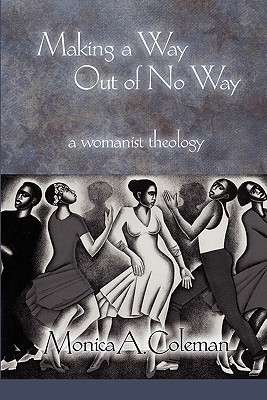
Making a Way Out of No Way: A Womanist Theology
In her new book, Monica A. Coleman articulates the African American expression of "making a way out of no way" for today's context of globalization, religious pluralism, and sexual diversity. Drawing on womanist religious scholarship and process thought, Coleman describes the symbiotic relationship among God, the ancestors, and humanity that helps to change the world into the just society it ought to be. Making a Way Out of No Way shows us a way of living for justice with God and proposes a communal theology that presents a dynamic way forward for black churches, African traditional religions and grassroots organizations.
232 pages, Paperback
First published September 1, 2008
About the author
Monica A. Coleman
6 books71 followersDr. Monica A. Coleman is Professor of Africana Studies at the University of Delaware. She spent over ten years in graduate theological education at Claremont School of Theology, the Center for Process Studies and Lutheran School of Theology at Chicago. Coleman has earned degrees from Harvard University, Vanderbilt University and Claremont Graduate University. She has received funding from leading foundations in the United States, including the Ford Foundation, the Andrew W. Mellon Foundation, and the Institute for Citizens and Scholars (formerly the Woodrow Wilson Fellowship Foundation), among others.
Answering her call to ministry at 19 years of age, Coleman is an ordained minister in the African Methodist Episcopal Church and an initiate in traditional Yoruba religion.
Dr. Coleman brings her experiences in evangelical Christianity, black church traditions, global ecumenical work, and indigenous spirituality to her discussions of theology and religion.
Dr. Coleman is the author or editor of six books, and several articles and book chapters that focus on the role of faith in addressing critical social and philosophical issues. Her memoir "Bipolar Faith" shares her life-long dance with trauma and depression, and how she discovers a new and liberating vision of God.
Her book "Making a Way Out of No Way" is required reading at leading theological schools around the country, and listed on the popular #BlackWomenSyllabus and #LemonadeSyllabus recommended reading projects.
Dr. Coleman is the co-host (along with writer Tananarive Due) of the popular webinar series "Octavia Tried to Tell Us: Parable for Today’s Pandemic," addressing today’s most pressing issues with insights from Afrofuturist literature, process theology and community values
Dr. Coleman’s strength comes from the depth of her knowledge base and from her experiences as a community organizer, survivor of sexual violence and as an individual who lives with a mental health challenges.
Coleman speaks widely on mental wellness, navigating change, religious diversity, and religious responses to intimate partner violence. Coleman is based in Wilmington, Delaware, and lives in an intergenerational household where she is an avid vegan cook and cyclist.
Answering her call to ministry at 19 years of age, Coleman is an ordained minister in the African Methodist Episcopal Church and an initiate in traditional Yoruba religion.
Dr. Coleman brings her experiences in evangelical Christianity, black church traditions, global ecumenical work, and indigenous spirituality to her discussions of theology and religion.
Dr. Coleman is the author or editor of six books, and several articles and book chapters that focus on the role of faith in addressing critical social and philosophical issues. Her memoir "Bipolar Faith" shares her life-long dance with trauma and depression, and how she discovers a new and liberating vision of God.
Her book "Making a Way Out of No Way" is required reading at leading theological schools around the country, and listed on the popular #BlackWomenSyllabus and #LemonadeSyllabus recommended reading projects.
Dr. Coleman is the co-host (along with writer Tananarive Due) of the popular webinar series "Octavia Tried to Tell Us: Parable for Today’s Pandemic," addressing today’s most pressing issues with insights from Afrofuturist literature, process theology and community values
Dr. Coleman’s strength comes from the depth of her knowledge base and from her experiences as a community organizer, survivor of sexual violence and as an individual who lives with a mental health challenges.
Coleman speaks widely on mental wellness, navigating change, religious diversity, and religious responses to intimate partner violence. Coleman is based in Wilmington, Delaware, and lives in an intergenerational household where she is an avid vegan cook and cyclist.
Ratings & Reviews
Friends & Following
Create a free account to discover what your friends think of this book!
Community Reviews
Displaying 1 - 10 of 10 reviews

June 24, 2022
This is stellar work from Coleman that weaves together womanist and process theologies into a coherent and cohesive braid that presents a feasible postmodern theology for our contemporary context. The book begins with a succinct overview of five womanist scholars' contributions to a theological imagination of salvation that emerges out of the experience of Black women and a primer on Whiteheadian process philosophy and theology (both of which are accessible, exemplary introductions to their particular streams of thought). In some ways, then, we can consider womanist and process theology to be the two foundational bases that Coleman draws from moving forward, with the former providing an ethical center to concentrate around while the latter offers a metaphysics for understanding the world and God's working within it. I read this right after Process-Relational Philosophy: An Introduction to Alfred North Whitehead, which definitely served as a super helpful philosophical base for her engagement with process thought, but this may be nearly as good an introduction on its own, especially since Coleman tackles Whitehead's evolving sense of evil, the kingdom of heaven, and the ideals of God's vision for the world (truth, beauty, art, adventure, and peace –– as well as her argued additional tenet of justice). Her articulation of loss, which is constant and inherent and especially real in a process metaphysics, as an experience of suffering was especially poignant for me, and I was equally struck by her emphasis on God's "universal incarnation" and the reciprocal way that we are always impacting and shaping God through our own experiences. I also appreciated her attending to some of the seeming fracture points between these two streams, and while I agree with the resolutions she arrives at, I think a bit more engagement with liberation theologians' critiques against process thought would have been helpful.
From there, Coleman offers three chapters demonstrating different constructive applications of her "postmodern womanist theology."I loved her expression of creative transformation (via teaching and healing) as a means of attending to, participating in, and yielding to God's "making a way out of no way" as God presents new possibilities for future unfoldings that were otherwise unimaginable or imperceptible. For Coleman, it is crucial to de-center Jesus and Christianity, largely in responsive to religious pluralism and in favor of Africana religiosity in particular. Though I appreciate the logic of her argument, our Christologies definitely differ here which has rippling implications, but I nonetheless valued her encouragement to look for saviors (regarded as people who mediate a this-worldly, here-and-now salvation by teaching and healing) amongst unlikely people, especially "the least of these." The next chapter endorses learning from the past via "rememory" and ancestor possession. While this chapter felt the most speculative to me, it did offer some really intriguing (and potentially paradigm-shifting) perspectives on immortality, eschatology, and life after death as being an ongoing experience one has within God. The final chapter essentially offered two case studies of Coleman's postmodern womanist theology at play (though, interestingly, in contexts that existed before this book formally articulated her concepts). I loved her inclusion of Acorn here, the community led by Lauren Oya Olamina in Octavia Butler's Parable of the Sower, and honestly wish there had been even more elaboration on the striking parallels between Earthseed and process theology.
My main critique is that I do wish the writing had indulged in a bit more flourish. It reads at times a bit like a reformulated thesis that has unnecessary repetitiveness and an occasional clunkiness to the writing. Nonetheless, this is a terrific resource and a wonderful articulation of the ways that womanist and process theologies can be woven together to yield a coherent worldview/model of God that is capable of responding to the most pressing theodical concerns facing Black woman today, and ultimately all people across time. I loved Coleman's choice to bookend the book with examples lifted from Black women she knew personally as a way of illustrating the need for this kind of theology as well as the ways it can meet those needs. It depicts a world, a God, and a sense of self that is fundamentally relational and ripe with a vision for a better becoming that is more just and benefits the common good, if only we can take the "way out of no way" that God makes and presents to us.
From there, Coleman offers three chapters demonstrating different constructive applications of her "postmodern womanist theology."I loved her expression of creative transformation (via teaching and healing) as a means of attending to, participating in, and yielding to God's "making a way out of no way" as God presents new possibilities for future unfoldings that were otherwise unimaginable or imperceptible. For Coleman, it is crucial to de-center Jesus and Christianity, largely in responsive to religious pluralism and in favor of Africana religiosity in particular. Though I appreciate the logic of her argument, our Christologies definitely differ here which has rippling implications, but I nonetheless valued her encouragement to look for saviors (regarded as people who mediate a this-worldly, here-and-now salvation by teaching and healing) amongst unlikely people, especially "the least of these." The next chapter endorses learning from the past via "rememory" and ancestor possession. While this chapter felt the most speculative to me, it did offer some really intriguing (and potentially paradigm-shifting) perspectives on immortality, eschatology, and life after death as being an ongoing experience one has within God. The final chapter essentially offered two case studies of Coleman's postmodern womanist theology at play (though, interestingly, in contexts that existed before this book formally articulated her concepts). I loved her inclusion of Acorn here, the community led by Lauren Oya Olamina in Octavia Butler's Parable of the Sower, and honestly wish there had been even more elaboration on the striking parallels between Earthseed and process theology.
My main critique is that I do wish the writing had indulged in a bit more flourish. It reads at times a bit like a reformulated thesis that has unnecessary repetitiveness and an occasional clunkiness to the writing. Nonetheless, this is a terrific resource and a wonderful articulation of the ways that womanist and process theologies can be woven together to yield a coherent worldview/model of God that is capable of responding to the most pressing theodical concerns facing Black woman today, and ultimately all people across time. I loved Coleman's choice to bookend the book with examples lifted from Black women she knew personally as a way of illustrating the need for this kind of theology as well as the ways it can meet those needs. It depicts a world, a God, and a sense of self that is fundamentally relational and ripe with a vision for a better becoming that is more just and benefits the common good, if only we can take the "way out of no way" that God makes and presents to us.

February 2, 2012
I was fortunate to hear Monica Coleman speak last week, and she is a very engaging speaker, powerfully braiding together process, womanist, and narrative approaches to theology. This book just feels too rationalist, too systematic, too structured for me. I was not as engaged or fascinated with it and by it as I was by her oral presentation or as I had hoped to be by the book. It needed more narrative, for one thing. And the surveys of other thinkers tended to be tedious at times.
But her theological instincts and ideas are interesting to powerful. I was particularly engaged by her treatment of ancestors -- she has made a unique contribution to eschatology by drawing upon the role of ancestors in African religions and explaining that within a process worldview. It helped to explain the power of the novel Beloved, for one thing.
And I was also drawn to the role of memory in salvation, which I blogged about earlier in the week.
So, there are fascinating ideas here that I think could have been made even more captivating with a different style of presentation.
But her theological instincts and ideas are interesting to powerful. I was particularly engaged by her treatment of ancestors -- she has made a unique contribution to eschatology by drawing upon the role of ancestors in African religions and explaining that within a process worldview. It helped to explain the power of the novel Beloved, for one thing.
And I was also drawn to the role of memory in salvation, which I blogged about earlier in the week.
So, there are fascinating ideas here that I think could have been made even more captivating with a different style of presentation.

May 20, 2025
Fascinating and wide-ranging.

October 19, 2021
Illustrative. Illuminating. Inspiring.
Coleman has created a powerful primer for postmodern theology in the 21st century. By fusing womanist theology with process theology, the book delivers thoughtful philosophies and practical actions for people wrestling with their faith and beliefs.
The central metaphor of the book is the title itself: "Making a way out of no way." Readers are encouraged to reckon with a new idea of salvation, one that is both ongoing and rooted in the past, present, and future. God is there at all times - guiding, feeling, loving, and shaping - but God also provides full agency to people to make their own decisions and choices. Hence, "making a way out of no way" involves remembering the lessons of the past, applying them to the current situation while paying attention to what God is doing in the present, and figuring out how to make the best possible choice for the future.
Coleman digs deep into a wealth of source material from across the theological and philosophical spectrum, including time spent with the folklore and traditions of pre-slavery African cultures. She firmly believes that a true postmodern womanist theology has to reach beyond its familiar roots in western Christianity to provide answers and direction for black women specifically and all people in general - no matter their theological background. She spends time with leading African-American womanist scholars, process theologians, titans of the African-American literary tradition, and more.
The result is a fantastic book that opened up my eyes and heart to more profound ways of thinking about how God moves in the world, especially in terms of addressing the evil that exists in the world. I've already added a few books in her bibliography to my TBR for 2022 and beyond.
Coleman has created a powerful primer for postmodern theology in the 21st century. By fusing womanist theology with process theology, the book delivers thoughtful philosophies and practical actions for people wrestling with their faith and beliefs.
The central metaphor of the book is the title itself: "Making a way out of no way." Readers are encouraged to reckon with a new idea of salvation, one that is both ongoing and rooted in the past, present, and future. God is there at all times - guiding, feeling, loving, and shaping - but God also provides full agency to people to make their own decisions and choices. Hence, "making a way out of no way" involves remembering the lessons of the past, applying them to the current situation while paying attention to what God is doing in the present, and figuring out how to make the best possible choice for the future.
Coleman digs deep into a wealth of source material from across the theological and philosophical spectrum, including time spent with the folklore and traditions of pre-slavery African cultures. She firmly believes that a true postmodern womanist theology has to reach beyond its familiar roots in western Christianity to provide answers and direction for black women specifically and all people in general - no matter their theological background. She spends time with leading African-American womanist scholars, process theologians, titans of the African-American literary tradition, and more.
The result is a fantastic book that opened up my eyes and heart to more profound ways of thinking about how God moves in the world, especially in terms of addressing the evil that exists in the world. I've already added a few books in her bibliography to my TBR for 2022 and beyond.
July 26, 2021
Monica Coleman braids together postmodern philosophy (i.e. process thought) and Black women’s life and religious experience, Christian and otherwise, to develop a womanist theology of survival, empowerment, wholeness, change, and hope. These are all elements of what Coleman calls salvation: not an escapist rescue out of this life, but finding the best way forward within this life.
“While religious concepts of salvation often focus on peace and eternal life in a realm beyond this world, black and womanist theologies maintain a focus on achieving life and liberation here in the land of the living. In this way, they are faithful to the root meaning of the word salvation , which literally means health and wholeness.” (11)
“While religious concepts of salvation often focus on peace and eternal life in a realm beyond this world, black and womanist theologies maintain a focus on achieving life and liberation here in the land of the living. In this way, they are faithful to the root meaning of the word salvation , which literally means health and wholeness.” (11)
June 26, 2024
A WOMANIST THEOLOGY WITH A “POSTMODERN” AND “PROCESS” FOCUS
Monica A. Coleman (born 1974) teaches Theology and African American Religions at Claremont School of Theology and Claremont Graduate University. She has written/edited a number of other books, such as Creating Women’s Theology: A Movement Engaging Process Thought,Ain't I a Womanist, Too?: Third Wave Womanist Religious Thought,The Dinah Project: A Handbook for Congregational Response to Sexual Violence,Not Alone: Reflections on Faith and Depression, and Bipolar Faith: A Black Woman's Journey with Depression and Faith.
She wrote in the Preface to this 2008 book, “this book reflects my own faith and social commitments… This book is a womanist theology inasmuch as and because it is grounded in and tested by the religious experiences of black women… This book is also a constructive postmodern theology, a process theology, because I stand with religious scholars who are inspired by the philosophies of Alfred North Whitehead and Charles Hartshorne… This work also reflects my North American context… This book also reflects my personal taste in literature, music, and scholarship… Thus, this book represents my attempt to answer some of my own questions and reflect on my own faith while also trying to hold together the experiences of many people and communities I’ve come to know and love.”
She recalls an experience at a weekly women’s support group for domestic violence victims, with a woman she calls Lisa: “I needed something to say to Lisa. I needed a religious perspective that would not attribute her experience of violence to God… I wanted to connect the specificity of her story with a worldview that acknowledges the reality of evil and loss and finds opportunities for life in each new moment without either waiting on God to make it happen or making Lisa do it all herself. I needed a postmodernist womanist theology.” (Pg. 3)
She explains, “Womanist theology is a response to sexism in black theology and racism in feminist theology…Womanist theology examines the social construction of black womanhood in relation to the African American community and religious concepts… Womanist religious scholars want to unearth the hidden voices in history, scripture, and the experiences of contemporary marginalized African American women to discover fragments that can create a narrative for the present and future… Ultimately, black women’s experiences are the foundation for womanist theology.” (Pg. 6-7)
She notes, “‘Making a way out of no way’ is a central theme in black women’s struggles and God’s assistance in helping them to overcome oppression. [It] can serve as a summarizing concept for the ways that various womanist theologians describe God’s liberation of black women. But today’s context challenges a womanist theology to address the religious pluralism within the black community… a womanist theology needs to address this challenge within an explicitly postmodern framework… In order to serve black women, a postmodern framework needs to account for the pursuit of justice and the components of black religious experience.” (Pg. 9) Later, she adds, “[This concept] articulates black women’s relationships with God as they navigate the reality of their lives in the pursuit of wholeness and peace.” (Pg. 12) Still later, she adds, “It is an expression that acknowledges God’s role in providing possibilities that are not apparent in the experiences of the past alone…. possibilities offered by God into decisions that lead to survival, quality of life, and liberation for black women.” (Pg. 36)
She states, “Womanist theologians who discuss salvation address the suffering and desperate situations of black women… For womanist theologians, salvation flows from their understandings of Jesus Christ. Black women identify with the experiences of Jesus… womanist theologies understand that salvation is not always liberation or freedom from all pain and suffering…. Most important, womanist discussions of salvation bring strong metaphorical language to a constructive womanist theology… Womanist theologians use familiar and indigenous expressions of black women and black religion to add particularity and power to their analysis of what it is that makes us whole.” (Pg. 31-32)
She observes, “Postmodern theology describes the relationship between God and the world in ways that are consonant with life in the late twentieth and early twenty-first centuries… More specifically, process theology explains the constant sense of change in the world and how we exist in the midst of stability and instability… process theology… also analyzes the factors that prevent the world from being the beautiful, harmonious, adventurous place that God desires.” (Pg. 45)
She concludes, “Postmodern womanist theology is an activity, It is a verb, a gerund. Health and wholeness come through teachING, healING… and creatively transformING… We are not saved apart from the communities in which we participate… Postmodern womanist theology recognizes the leaders of these communities as Saviors… A Savior is known by what she does… She leads a community that makes a way out of no way… Saviors are often those whom wider society least suspects… Postmodern womanist theology argues that a black woman is often Christ… This quest for health and wholeness focuses on social justice in local communities… These communities acknowledge the presence of God and God’s novelty in all the happenings of the world and in every element of creation.” (Pg. 169-171)
This is a creative and original perspective on womanist theology, that will be of great interest to those studying Womanism, Black Theology, and related fields.
Monica A. Coleman (born 1974) teaches Theology and African American Religions at Claremont School of Theology and Claremont Graduate University. She has written/edited a number of other books, such as Creating Women’s Theology: A Movement Engaging Process Thought,Ain't I a Womanist, Too?: Third Wave Womanist Religious Thought,The Dinah Project: A Handbook for Congregational Response to Sexual Violence,Not Alone: Reflections on Faith and Depression, and Bipolar Faith: A Black Woman's Journey with Depression and Faith.
She wrote in the Preface to this 2008 book, “this book reflects my own faith and social commitments… This book is a womanist theology inasmuch as and because it is grounded in and tested by the religious experiences of black women… This book is also a constructive postmodern theology, a process theology, because I stand with religious scholars who are inspired by the philosophies of Alfred North Whitehead and Charles Hartshorne… This work also reflects my North American context… This book also reflects my personal taste in literature, music, and scholarship… Thus, this book represents my attempt to answer some of my own questions and reflect on my own faith while also trying to hold together the experiences of many people and communities I’ve come to know and love.”
She recalls an experience at a weekly women’s support group for domestic violence victims, with a woman she calls Lisa: “I needed something to say to Lisa. I needed a religious perspective that would not attribute her experience of violence to God… I wanted to connect the specificity of her story with a worldview that acknowledges the reality of evil and loss and finds opportunities for life in each new moment without either waiting on God to make it happen or making Lisa do it all herself. I needed a postmodernist womanist theology.” (Pg. 3)
She explains, “Womanist theology is a response to sexism in black theology and racism in feminist theology…Womanist theology examines the social construction of black womanhood in relation to the African American community and religious concepts… Womanist religious scholars want to unearth the hidden voices in history, scripture, and the experiences of contemporary marginalized African American women to discover fragments that can create a narrative for the present and future… Ultimately, black women’s experiences are the foundation for womanist theology.” (Pg. 6-7)
She notes, “‘Making a way out of no way’ is a central theme in black women’s struggles and God’s assistance in helping them to overcome oppression. [It] can serve as a summarizing concept for the ways that various womanist theologians describe God’s liberation of black women. But today’s context challenges a womanist theology to address the religious pluralism within the black community… a womanist theology needs to address this challenge within an explicitly postmodern framework… In order to serve black women, a postmodern framework needs to account for the pursuit of justice and the components of black religious experience.” (Pg. 9) Later, she adds, “[This concept] articulates black women’s relationships with God as they navigate the reality of their lives in the pursuit of wholeness and peace.” (Pg. 12) Still later, she adds, “It is an expression that acknowledges God’s role in providing possibilities that are not apparent in the experiences of the past alone…. possibilities offered by God into decisions that lead to survival, quality of life, and liberation for black women.” (Pg. 36)
She states, “Womanist theologians who discuss salvation address the suffering and desperate situations of black women… For womanist theologians, salvation flows from their understandings of Jesus Christ. Black women identify with the experiences of Jesus… womanist theologies understand that salvation is not always liberation or freedom from all pain and suffering…. Most important, womanist discussions of salvation bring strong metaphorical language to a constructive womanist theology… Womanist theologians use familiar and indigenous expressions of black women and black religion to add particularity and power to their analysis of what it is that makes us whole.” (Pg. 31-32)
She observes, “Postmodern theology describes the relationship between God and the world in ways that are consonant with life in the late twentieth and early twenty-first centuries… More specifically, process theology explains the constant sense of change in the world and how we exist in the midst of stability and instability… process theology… also analyzes the factors that prevent the world from being the beautiful, harmonious, adventurous place that God desires.” (Pg. 45)
She concludes, “Postmodern womanist theology is an activity, It is a verb, a gerund. Health and wholeness come through teachING, healING… and creatively transformING… We are not saved apart from the communities in which we participate… Postmodern womanist theology recognizes the leaders of these communities as Saviors… A Savior is known by what she does… She leads a community that makes a way out of no way… Saviors are often those whom wider society least suspects… Postmodern womanist theology argues that a black woman is often Christ… This quest for health and wholeness focuses on social justice in local communities… These communities acknowledge the presence of God and God’s novelty in all the happenings of the world and in every element of creation.” (Pg. 169-171)
This is a creative and original perspective on womanist theology, that will be of great interest to those studying Womanism, Black Theology, and related fields.

July 14, 2022
Describing how she came to want the theological view she outlines in the book, Coleman describes working with a group of others to re-braid the hair of a woman who'd been harmed by her boyfriend: "I needed something to say to Lisa. I needed a religious perspective that would not attribute her experience of violence to God, to a small man in red with a tail and pitchfork, or to a greater lesson that she would learn if she kept 'holding on.'" I wanted to find a way to tell Lisa that the violence was not her fault, but that she bore some responsibility for her current situation. I had to honor the fact that things were not 'okay' for her and weren't going to be 'okay' for a while. I needed a religious view that maintained hope for Lisa no matter how many times she left and went back and left and went back to her boyfriend. But I wanted to emphasize that Lisa's current reality was not her long-term fate; with support from my organization, the other women, our partners throughout the city and government, and a good dose of prayer, things could be different. I wanted to affirm that braiding patchwork hair was more than an act of compassion, that it might indeed be an act of salvation. I wanted to connect the specificity of her story with a worldview that acknowledges the reality of evil and loss and finds opportunities for life in each new moment without either waiting on God to make it happen or making Lisa do it all herself.
"I needed a postmodern womanist theology." (3)
Describing Kelly Brown Douglas's interpretation of the Black Christ: "Douglas connects her perspectives on Christ with salvation by asserting that salvation comes from imitating Christ: 'For Blacks, it is precisely by imitating Christ that we bring salvation to our community.' Blacks must not only identify with Jesus, but they must imitate Jesus' prophetic role of challenging even an oppressed community to rid itself of its own forms of oppression. Thus, Douglas's focus on the life and ministry of Jesus indicates that the way of salvation comes from doing as Jesus did. To be saved, one must imitate the Savior; one must be willing to challenge oppression wherever it is found. Salvation is about achieving wholeness, and it is found in the continual actions of those who are working for that wholeness." (19).
"This postmodern theological framework [process theology] emphasizes the ongoing processes of life, individual ability to exercise power, the inevitability of relationships on all levels of reality, the eternal vision of God, and opportunities for immortality in the midst of pervasive loss. While Whitehead does not refer to these characteristics of his system as a theory of salvation, they compose the efforts to salvage hope, life, and justice in the midst of forces that often prevent such goals. This postmodern theology becomes a way of understanding how we all function in the world and God's role in helping us to create a world of harmony, complexity, beauty, and adventure" (46).
"In process theology, everything that happens is a product of the past, what's possible, and what we do wit those things. Whether you are a quark, an amoeba, or a person, you undergo this continual process of sorting through these three inputs: what you inherit from the world, what's possible in your context, and what you do about it. This is the cause of our freedom. We are not bound by the past. It is not a deterministic system. We can do something new. God is the one who offers the possibilities to the world, urging us to choose the paths that lead to a vision of the common good. While the principles of God's vision do not change, the way it gets played out on earth depends on what is happening in the world. God takes in, or incorporates, the events of heh world into who God is. God then relates those events with God's vision for the common good, searching for the best of what has happened in order to offer those aspects back to us in our next instance of becoming. In sum, our experiences in the world influence who we are and what we do. We then go on to influence those around us. What we do also affects God and how God relates to the world." (52).
"In _Adventures of Ideas_, Whitehead describes the progress of civilization as a continual advance toward newer heights and greater complexity within society. Here the process of becoming is also the progress of civilization. For Whitehead, civilization, or the world, is guided by God's idea vision. God's vision is that the world would be characterized by the ideals of truth, beauty, art, adventure, and peace. Within the world, the ideals work in the following way: Truth occurs when what we experience corresponds to what is real. Beauty appears when there is harmony among the things that influence us as we become. Adventure is the search for new experiences. Art is produced when the occurrences of the world reflect new experiences. Peace is faith in the ideals to which God is calling us. As Whitehead describes the ideals of God's vision, he notes that the real occurrences in the world are less than ideal. In fact, suffering is often the result of conflict in the world. Whitehead identifies various responses to suffering and privileges the responses that heed the calling of God to new opportunities." (53)
"The concept of 'making a way out of no way' best describes the ways that womanist theologians articulate salvation. Delores Williams best describes this concept as a theme to which many womanists feel connected. In Sisters in the Wilderness_, Williams states that black people in general, and black women in particular, express their relationship with God as the one who 'makes a way out of no way.' She writes: 'Many times, as a little girl, I sat in the church pew with my mother or grandmother and heard the black believers, mostly women, testify about 'how far they had come by faith.' They expressed their belief that God was involved in their history, that God helped them make a way out of no way.' It is a central theme in black women's experiences of struggle and of God's assistance in helping them to overcome struggle.
"'Making a way out of no way' is more than Williams's naming of the relationship between black women and God. Karen Baker-Fletcher acknowledges this:
[Survival as a creative quality] has been metaphorically referred to as the power of 'making a way out of nothing' in the work of [womanist ethicist] Katie Cannon and 'making a way out of now way' in the work of Delores Williams. In [my first book], _A Singing Something_, I refer to this particular quality of God and Black women in my grandmother's words as 'making do.' All three metaphors refer to what Williams calls an ethic of survival and quality of life among Black women. The activity of the God who enables them with vision for such survival traditionally has been described as God's _sustaining activity._" (33 - see photocopied pages)
"Postmodern womanist theology is an activity. It is a verb, a gerund. Health and wholeness come through teachi_ing_, heal_ing_, remember_ing_, honor_ing_, possess_ing_, adopt_ing_, conform_ing_, and creatively transform_ing_. Sav_ing_. It is making a way. We are being saved over and over again, feeling God's continual calling toward survival, justice, and quality of life, using each opportunity to become in higher and more intense forms than we did in the last occasion. We are not saved apart from the communities in which we participate. And yet we do not exist for the salvation of our own particular communities. We accept and reciprocate God's love so that we might love ourselves and our neighbors . . . Postmodern womanist theology recognizes the leaders of these communities as Saviors" (169).
"A Savior is known by what she does. A Savior creatively transforms and draws upon the guidance of the ancestors. She leads a community that makes a way out of now way. Since every such community ahs a leader, there are multiple Saviors . . . Saviors are often those whom wider society least suspects. Womanist theories of salvation state that Jesus Christ can be seen as a black woman. Postmodern womanist theology argues that a black woman is often Christ. " (170)
"I needed a postmodern womanist theology." (3)
Describing Kelly Brown Douglas's interpretation of the Black Christ: "Douglas connects her perspectives on Christ with salvation by asserting that salvation comes from imitating Christ: 'For Blacks, it is precisely by imitating Christ that we bring salvation to our community.' Blacks must not only identify with Jesus, but they must imitate Jesus' prophetic role of challenging even an oppressed community to rid itself of its own forms of oppression. Thus, Douglas's focus on the life and ministry of Jesus indicates that the way of salvation comes from doing as Jesus did. To be saved, one must imitate the Savior; one must be willing to challenge oppression wherever it is found. Salvation is about achieving wholeness, and it is found in the continual actions of those who are working for that wholeness." (19).
"This postmodern theological framework [process theology] emphasizes the ongoing processes of life, individual ability to exercise power, the inevitability of relationships on all levels of reality, the eternal vision of God, and opportunities for immortality in the midst of pervasive loss. While Whitehead does not refer to these characteristics of his system as a theory of salvation, they compose the efforts to salvage hope, life, and justice in the midst of forces that often prevent such goals. This postmodern theology becomes a way of understanding how we all function in the world and God's role in helping us to create a world of harmony, complexity, beauty, and adventure" (46).
"In process theology, everything that happens is a product of the past, what's possible, and what we do wit those things. Whether you are a quark, an amoeba, or a person, you undergo this continual process of sorting through these three inputs: what you inherit from the world, what's possible in your context, and what you do about it. This is the cause of our freedom. We are not bound by the past. It is not a deterministic system. We can do something new. God is the one who offers the possibilities to the world, urging us to choose the paths that lead to a vision of the common good. While the principles of God's vision do not change, the way it gets played out on earth depends on what is happening in the world. God takes in, or incorporates, the events of heh world into who God is. God then relates those events with God's vision for the common good, searching for the best of what has happened in order to offer those aspects back to us in our next instance of becoming. In sum, our experiences in the world influence who we are and what we do. We then go on to influence those around us. What we do also affects God and how God relates to the world." (52).
"In _Adventures of Ideas_, Whitehead describes the progress of civilization as a continual advance toward newer heights and greater complexity within society. Here the process of becoming is also the progress of civilization. For Whitehead, civilization, or the world, is guided by God's idea vision. God's vision is that the world would be characterized by the ideals of truth, beauty, art, adventure, and peace. Within the world, the ideals work in the following way: Truth occurs when what we experience corresponds to what is real. Beauty appears when there is harmony among the things that influence us as we become. Adventure is the search for new experiences. Art is produced when the occurrences of the world reflect new experiences. Peace is faith in the ideals to which God is calling us. As Whitehead describes the ideals of God's vision, he notes that the real occurrences in the world are less than ideal. In fact, suffering is often the result of conflict in the world. Whitehead identifies various responses to suffering and privileges the responses that heed the calling of God to new opportunities." (53)
"The concept of 'making a way out of no way' best describes the ways that womanist theologians articulate salvation. Delores Williams best describes this concept as a theme to which many womanists feel connected. In Sisters in the Wilderness_, Williams states that black people in general, and black women in particular, express their relationship with God as the one who 'makes a way out of no way.' She writes: 'Many times, as a little girl, I sat in the church pew with my mother or grandmother and heard the black believers, mostly women, testify about 'how far they had come by faith.' They expressed their belief that God was involved in their history, that God helped them make a way out of no way.' It is a central theme in black women's experiences of struggle and of God's assistance in helping them to overcome struggle.
"'Making a way out of no way' is more than Williams's naming of the relationship between black women and God. Karen Baker-Fletcher acknowledges this:
[Survival as a creative quality] has been metaphorically referred to as the power of 'making a way out of nothing' in the work of [womanist ethicist] Katie Cannon and 'making a way out of now way' in the work of Delores Williams. In [my first book], _A Singing Something_, I refer to this particular quality of God and Black women in my grandmother's words as 'making do.' All three metaphors refer to what Williams calls an ethic of survival and quality of life among Black women. The activity of the God who enables them with vision for such survival traditionally has been described as God's _sustaining activity._" (33 - see photocopied pages)
"Postmodern womanist theology is an activity. It is a verb, a gerund. Health and wholeness come through teachi_ing_, heal_ing_, remember_ing_, honor_ing_, possess_ing_, adopt_ing_, conform_ing_, and creatively transform_ing_. Sav_ing_. It is making a way. We are being saved over and over again, feeling God's continual calling toward survival, justice, and quality of life, using each opportunity to become in higher and more intense forms than we did in the last occasion. We are not saved apart from the communities in which we participate. And yet we do not exist for the salvation of our own particular communities. We accept and reciprocate God's love so that we might love ourselves and our neighbors . . . Postmodern womanist theology recognizes the leaders of these communities as Saviors" (169).
"A Savior is known by what she does. A Savior creatively transforms and draws upon the guidance of the ancestors. She leads a community that makes a way out of now way. Since every such community ahs a leader, there are multiple Saviors . . . Saviors are often those whom wider society least suspects. Womanist theories of salvation state that Jesus Christ can be seen as a black woman. Postmodern womanist theology argues that a black woman is often Christ. " (170)

October 29, 2024
Gonna be honest, I wish Coleman had gone harder here. For a womanist theological text, there are far, far too many excerpts of white men. I get it; if you're going to engage with formal process philosophy, you have to engage with Whitehead, but as Coleman and others have observed, Whitehead did not have a corner on the market for process-related ideas. It is conceivable you could write a text heavily inspired on Whitehead's thinking without being bound to it. I could have done with much less Whitehead, David Griffin, and John Cobb, and much more Monica Coleman.
There's a passage near the beginning, revisited later, of a group of black women dressing in white and gathering to share a Yoruba dance class together. As they dance, one woman leans over to the author and says, "I don't know how this works, but it makes me feel whole." I think that's the right spirit, and it's hard to reconcile with a notoriously complicated systematic theology.
There's a passage near the beginning, revisited later, of a group of black women dressing in white and gathering to share a Yoruba dance class together. As they dance, one woman leans over to the author and says, "I don't know how this works, but it makes me feel whole." I think that's the right spirit, and it's hard to reconcile with a notoriously complicated systematic theology.
May 15, 2026
This is some of the best womanist theology books I have read to date.

April 17, 2019
I love Monica Coleman’s works and approach to theology and am deeply grateful for this work. The womanist inflected process theology she systematically unpacks is powerful.
What I longed for that the book didn’t offer is a socio-historical context and critique of early process theologians (all the white males), who were presented differently from the womanist theologians. Moreover, because this book is more a primer, the work of more modern process theologians were absent/limited, and the reviews of both womanist and process theologies felt sweeping.
What I longed for that the book didn’t offer is a socio-historical context and critique of early process theologians (all the white males), who were presented differently from the womanist theologians. Moreover, because this book is more a primer, the work of more modern process theologians were absent/limited, and the reviews of both womanist and process theologies felt sweeping.
Displaying 1 - 10 of 10 reviews