"[Douglas Kearney] is at the other end of the century, using a multicultural voice inflected with the concerns of what it means to be a young black man at this time and at this place."—The Los Angeles Times
Dynamic poet, performer, librettist, and professor Douglas Kearney's works speak to those who are listening to what our living, material language has to say about race and history. At the hub of Buck Studies is a long mash-up of the stories of Herakles, the Greek bad-man, and that of Stagger Lee, the black bad-man. "Stagger Put Work In" examines the Twelve Labors Herakles performed to atone for murdering his family through Stagger Lee's murder of black man Billy Lyons. What is enacted by this appropriation is an exhaustion of forms—gangsta rap and its antecedent, the murder ballad.
only good one dead one we scold our mirror. should've been dead before Stagger wrassled it bull-headed red-blind muscle-a-muscle. bully and bull stagger the city levee round round round.
Douglas Kearney resides in Altadena, California, and teaches at California College for the Arts. His degrees are from Howard University and California Institute of the Arts. He is the author of three previous poetry collections; his work appears in many anthologies including Role Call: A Generational Anthology of Social and Political Black Art & Literature. His honors include a Cave Canem fellowship, a Whiting Writers Award, and commissions from Minneapolis's Weisman Art Museum and New York's Studio Museum.
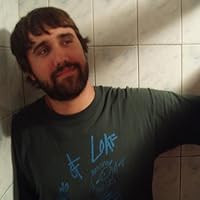
Douglas Kearney is an American poet and librettist. Kearney grew up in Altadena, California.
Kearney attended Howard University as an undergraduate. He also graduated from California Institute of the Arts, with an MFA. His work has appeared in Callaloo, Nocturnes, Jubilat, Gulf Coast.
A lot of this book's poetry is satisfying, well-aligned to the "buck studies" Kearney introduces and explores with copious notes. There are a handful that could do to be explained/explored more thoroughly, particularly the penultimate section--to be aligned with the preceding sections. This is a great introduction to a truly marvelous and established mind in poetics today.
I am a huge fan of The Black Automaton, and of much of Patter, but found the graphic poems in this volume don't work as well. Part of the problem is that the level of visual clutter -- no doubt intended -- is much more intense. I may revisit these poems at some point to give them another chance, but I couldn't find the necessary patience this time around (and I have a lot of patience for poems).
"Buck Studies" contains--dare I say--a staggering collection of references.
Ever the masterful deconstructionist, he wrings every ounce of meaning he can from each word through repetition and iteration, repeating words and phrases until they lose all meaning or gain new meanings altogether.
It's a dense book, as much for its often inapproachable language as for its particularly busy visual collage poems, all of which Kearney typically pulls off.
All the while, he produces yet another book filled with good ideas, fun titles, and interesting turns of phrase.
Here, however, Kearney's same obsession with meaning--and meaning upon meaning--that made his debut collection my favorite collection and Kearney, my favorite poet, just feels unnecessarily dense.
Missing are the more approachable moments and stories from Kearney's life that he peppered throughout his first 3 books that helped to balance out and humanize the denser, less approachable poems.
And those stories and moments, like Kearney's live performances of his own poetry, are what make his work so magical, so alive.
It's not a bad book, just a bad book for Douglas Kearney, which isn't a bad book but could certainly be better.
By the way, if you haven't seen Kearney perform live, do yourself a favor and look up clips online.
confirms my speculation that kearney pushed the poem to the limits of a comic book in his brash, maximalist vision of visual and sonic play, interpolating songs + signs + bureaucratic into the mish-mashed playground of this collection that feels guided by satirical pleasure even in its wielding of academic jargon that would make everett blush.
A super interesting collection. The collage poems were largely inscrutable but probably worth revisiting. What really works here is Kearney's mixture of the sacred and profane in the cycles where folk characters like Stagger Lee and Brer Rabbit are conflated with Herakles and Jesus Christ.
Powerful, performative, and political, Douglas Kearney is a masterful lyrical magician. His work is one of rupture—it spews glass and nails and melodies, charting rhythms that remind me of my Louisiana childhood: people speaking in tongues at an Assembly of God gathering— their utterances vibrating with divinity and dynamite.
So too, Kearney’s soundscapes are both rhapsodic and formidable; Buck Studies shakes, shimmies, and shatters—not only the air but the oppressive white space of page. Whether he’s conjuring Herakles or Stagger Lee, he’s a technician of the sonic; the hyphen stitching audio to visual.
Similar to Harryette Mullen’s Recyclopedia, with its linguistic intricacy and connotative play, Kearney’s Buck Studies is equally exquisite and vertiginous; and, like Mullen, his poems tipsy a reader’s head with their multivalent intelligence and sonic intensity.