Jump to ratings and reviews
Rate this book

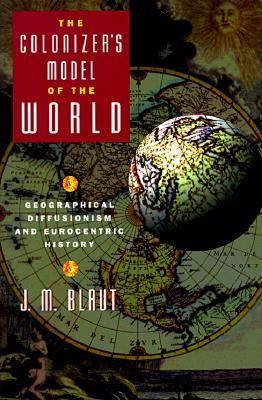
The Colonizer's Model of the World: Geographical Diffusionism and Eurocentric History

Rate this book
This influential book challenges one of the most pervasive and powerful beliefs of our time--that Europe rose to modernity and world dominance due to unique qualities of race, environment, culture, mind, or spirit, and that progress for the rest of the world resulted from the diffusion of European civilization. J. M. Blaut persuasively argues that this doctrine is not grounded in the facts of history and geography, but in the ideology of colonialism. Blaut traces the colonizer's model of the world from its 16th-century origins to its present form in theories of economic development, modernization, and new world order.

246 pages, Paperback

First published October 29, 1993

26 people are currently reading
615 people want to read

About the author

J.M. Blaut

5 books2 followers

Ratings & Reviews

What do you think?
Rate this book

Friends & Following

Create a free account to discover what your friends think of this book!

Community Reviews

5 stars
39 (22%)
4 stars
58 (33%)
3 stars
57 (33%)
2 stars
10 (5%)
1 star
7 (4%)
Displaying 1 - 17 of 17 reviews
Profile Image for Kyle.
78 reviews73 followers
January 3, 2019
One of the most important assertions in this book is Blaut's observation that much of academic thought is a 'tiny amount of explicit theory in a vast body of implicit assumptions.' That idea, more than any of the other in this book chock-full of novel, fiercely argued ideas, is what The Colonizer's Model of the World is about.

Blaut spends most of the book's pages attacking an entire library's worth Eurocentric beliefs, including the myth of Oriental despotism, the unique free-ness of one or another class of pre-capitalist Europe, the magically augmented inventiveness of Europeans, the poverty of African soils, and many others. The rest of the book explores Blaut's own explanation for the rise of Europe and the stagnation of non-Europe, starting with his own interpretation of the pre-1942 worldwide economy as an inter-linked, more or less technologically equivalent, proto-capitalist system built around commerce, production in large cities, and increasing accumulations of capital which would, all other things held equal, have led to capitalism emerging at more or less the same time in many different places.

In Blaut's estimation, the key advantage which allowed Europe to leap ahead of the rest of the world was the discovery and exploitation of the Americas. Blaut follows gold from Spanish mines employing slave labor back to Europe and from there into the coffers of bankers and merchants whose capital would give rise to capitalism at a much faster rate than in other parts of the world.

Blaut is at his best poking holes in the theories of others, and certainly his own theory makes much more sense than any of the others he discusses in the book. But it isn't exactly well-supported. Blaut gives the excuse that, since historical and economic scholarship has been permeated so thoroughly with Eurocentrist attitudes, much of the data it produces (or chooses not to produce) is tainted, and we will have to do new research operating on new assumptions in order to provide Blaut with the evidence he needs to make his argument. It's a bit too convenient. At any rate Blaut could have spent much more time on his own theory- the book becomes less detailed, less assertive, and less effective the further we go into his argument.

Even with these problems Blaut's book should be a classic and anyone with even a passing interest in imperialism, the development of capitalism, or academic bias should track down a copy.
371 reviews2 followers
May 3, 2022
In a nutshell: prior to 1492 there was nothing to separate Africa, Asia, and Europe in terms of development. Any one of them could have become a center for economic development, i.e. capitalism. There was no "European Miracle"...there was nothing fundamental to the European that elevated them above the others. Europe simply benefitted from having easy access to North/South America, and was able to exploit the ever-loving hell out of it. With the increased wealth and resources, Europeans were able to out-compete and destroy other nascent civilizations and impose their will upon them.

Europeans are not smarter, more rational, or have any other traits which make them "better," Europeans simply became colonizers, and exploited their colonies to dominate the competition, who lacked colonies of their own.
Profile Image for Toki.
5 reviews
June 24, 2021
Well organized and had some good ideas. I have some issues with touting capitalism as the most progressive "end goal" of countries, but I understand that people who defend a Eurocentric argument are most likely to view that as the ultimate sign of progression and argue in that regard. He introduced and reviewed ideas I already knew and accepted, and did what he promised to do: refute diffusionist ideas. In the conclusion, he states that this book is more of an introduction to the subject and idea, and I'm inclined to agree. The book is a good start to rebutting Eurocentric ideas and brushing on non-Eurocentric views, but I would call it just that: a start.
Profile Image for Dyan.
26 reviews2 followers
July 10, 2012
I found the book interesting. The argument was not new to me, so it merely reviewed information that I felt comfortable with already.
13 reviews3 followers
April 18, 2025
Recently I've realised that I just don't have time to read every book I want to read and I have to prioritise. With this also came the realisation that there are so many great books that I wouldn't be able to read. This made me sad. So I decided that I would write reviews on books that interest me using secondary sources to guide the review and perhaps later read the original text when time permits. I will combine information from short articles, essays, videos, video essays, lectures etc. and write a little review here to consolidate that information in my own brain and also, hopefully, help others who similarly have little time get a decent overview of the work without needing to invest 20 hours to read it.

To get us started, I have chosen J.M. Blaut's The Colonizer's Model of the World, drawing largely on the series from The Cynical Historian "Why the West is Strong". I want to focus on modernisation theory and the question "why the West is strong?", putting different theories under scrutiny and perhaps ultimately coming to the same conclusion as Lyotard that "Simplifying to the extreme, I define postmodern as incredulity toward metanarratives. ... I", that is, grand unifying theories have problems (put simply).

Watch the videos here:
https://youtube.com/playlist?list=PLj...

1) What is Modernisation Theory?
I will try to keep my critiques of it in the later parts, but sometimes I can't help myself.

If we ask chatGPT for a summary we get (I understand chatGPT is a controversial topic but ultimately I think when used to write a succinct summary of a topic it's a pretty useful tool)

- Societies develop along a universal, linear path from "traditional" (rural, religious, hierarchical) to "modern" (urban, secular, industrial, democratic).
- Western Europe and North America are seen as the most "advanced" or "developed" societies — the model that others should follow.
- "Traditional" societies are poor or stagnant because of their own internal cultural, political, or religious failings, not because of external factors like colonialism. [see any conservative politican blaming African nations for their out of control birthrates or dictatorships (which they put in power) or for their out of control borrowing (they literally created the IMF to debt trap knowing that the dictators were happy to take the loans)]
- The idea is that cultural superiority (values like rationality, individualism, secularism, etc.) explains why the West developed better technologies, stronger economies, and modern political systems.
In short:
👉 The West is modern because it had better ideas and values — and if other countries adopt Western models, they too will "modernize."

I think this is a pretty acceptable definition, but as with most things, to really understand an idea we should look at its protractors. The Cynical Historian points us to the work of Niall Ferguson. Here's some fun quotes I found:
If being rightwing is thinking that Karl Marx's doctrine was a catastrophe for humanity, then I'm rightwing."

"Ask me not, 'Are you rightwing,' but ask me 'Are you a committed believer in individual freedom, the values of the enlightenment?' Then, yeah, if being rightwing means believing Adam Smith was right, both in the 'Wealth of Nations' and the 'Theory of Moral Sentiments,' then I'm rightwing."


I mean Adam and Karl agreed on a lot of things, so to put them in such polar opposition is kind of weird. But wtf do I know? I'm a 22 year old university student who decided to switch from humanities into medicine at the age of 22 (anyways we won't get into that now).

Sorrrrrry. Let's get back on topic. So yeah Niall Ferguson... Mr Ferguson wrote the book Civilization: The West and the Rest. Try to guess in what year: . Yeah so the guy wrote a book on civlisational divides in fucking .
He claims there are 6 killer apps that can be downloaded by any nation to modernise and become just as powerful as the West (as seen above, quoting from The Cynical History "the essence of modernisation theory is that there are particular ideas that make Europe powerful.These ideas are what made modernity and the rest of the world need only adopt these ideas to join modernity and become powerful themselves." Well that sounds nice doesn't it!

These 6 killer apps according to Ferguson are:
Competition
Property rights
Science
Modern Medicine
Consumerism
A good Work Ethic
(@my boy Weber, awesome guy, pure soul)

Europe is special and the rest of the world need to emulate it to catch up. (When you read Fanon and I mean a variety of historians, sociologists etc. you will see that this isn't the most well thought out theory)
See: The Wretched of the Earth, The Divide: A Brief Guide to Global Inequality and its Solutions
But despite extensive academic literature detailing the innumerable problems with this theory, Mr Ferguson's book was a big hit and made it to the NYT bestseller list. Insert audible sigh here

2) Oriental Despotism- what is it?
So here comes the critical part (as if above wasn't already critical, but like yeah you know)

Let's define oriental despotism! Woohoo theories that justify the inferiority of others, this is what I signed up for (please not the sarcasm here if this is the first review of mine that you've read).
Oriental despotism tells us that certain cultures are:
prone to autocratic rule by the natural progression of civilisation. Their region of customs have a particular trend towards despotic rule. This may seem arbitrary or just plain racist, but numerous historians in the past believed it fervantly... the theory of Oriental Despotism reaches back all the way to Aristotle who said the tropics were way too freakin hot for anyone to work so they would never be able to achieve great civilisation status because they were just too hot. So the idea is that they would have harsh rulers who would impose particularly stringent regulation to make people work. This is obviously incorrect but the idea has persisted in a number of ways. Ultimately, the idea was distilled into its current form by Karl Marx. He claimed that there was an asiatic form of production. The idea is that the means of the production in the Orient require a dictaor of some sort to maintain a parituclar suprlus to safeguard society... (goes on to talk about Egyptian seeding and the precise timing required and Chinese waterways- hydrolic societies)... that's actually just a polite way of saying Oriental Despotism- to make sure that wayer was going where it needed to go, places like China, India and the Middle East had to have dictators who made sure that the water was managed in a particular way. This inevitably led to despotism and civilisation was never able to progress into modernity, at least in the orient.


Source: https://youtu.be/M4KzIsNNXmE?si=Dm3XG...

I don't think I can really add much to this. Thank you The Cynical Historian for saving me some hard work.

3) Oriental Despotism- the problem with Modernisation Theory
Why do so many history classes focus only on Europe? Well they will tell you the rest don't matter that much because they didn't "modernise". This answer really pissed James Blaut off and he devoted his life to expose this whole problem. He would go on to expose modernisation theory as a racist, eurocentric, colonial ideology.

Let's summarise The Cynical Historian's summary of the book:
Summary of Blaut’s Argument:

Target of Critique:
Blaut attacks Eurocentric diffusionism (a.k.a. modernization theory), which claims that all modern inventions and institutions originated in Europe and spread outward — never the other way around.

Problem with Eurocentrism:

Scholars depict non-European societies as inherently incapable of creating modern institutions.

They rely on the idea of a "European Miracle" — a myth that Europe was naturally destined for global dominance.

Types of "European Miracle" Arguments Blaut Critiques:

Biological arguments: Europeans were supposedly genetically predisposed to success (which Blaut condemns as racist).

Environmental arguments: Europe’s climate was uniquely favorable, while the tropics or arid regions supposedly limited development.

Rationalism arguments: Claims that rational thinking (e.g., Weber’s Protestant ethic) was uniquely European.

Technological superiority: Europe was supposedly more inventive — a claim Blaut finds historically inaccurate.

Societal structure arguments: Europe’s government, church, and family systems allegedly encouraged change, unlike "despotic" non-Western societies.

Blaut’s Counterarguments:

Factually incorrect: Many of these claims ignore evidence from Asia, Africa, and the Americas.

Not unique to Europe: Structures like feudalism and mercantilism existed outside Europe (e.g., in Japan, Central Asia, the African Gold Coast).

No special European advantage before 1492: Europe was not more advanced than other parts of the world before the "discovery" of the Americas.

Blaut’s Alternative Theory:

The real turning point was Columbus's discovery of the New World.

Geographical luck (favorable trade winds) helped Europeans cross the Atlantic first.

Colonial exploitation — especially via mining, plantations, and the devastation of indigenous populations through disease — enriched Europe and fueled the rise of capitalism and global hegemony.

For more on this see (as mentioned above):
The Divide: A Brief Guide to Global Inequality and its Solutions
Hickel shows how the gold and silver from Latam was used by Europe to buy labour intensive goods from China and India and then convert their industries to higher-order goods and then create the perfect conditions for unequal exchange.

Impact on Modernisation Theory:

Modernisation theorists must seriously strengthen their arguments if they want to defend the idea of Europe’s "special" historical role.

Blaut challenges the foundational assumptions behind the praise of Europe’s development path.

Phewww! That's a lot to digest.
So yeah modernisation theory seems to be little more than a racist justification of colonialism. I may have more to say on this when I finish Colonialism and Modern Social Theory.
The next book I plan on doing a secondary source review is everyone's favourite environmental determinst. Drum roll please. Jared Diamond's Guns Germs and Steel!
Profile Image for Laura.
47 reviews17 followers
July 24, 2007
Well, where to begin. I wasn't overly-fond of this book, mainly because it was as much a scathing review of Eric Jones' work "The European Miracle" as it was a stand-alone work of its own. While I agree with the main thrust of Blaut's argument - yes, there is far too much Eurocentrism in world history - I also found that he spent too much time looking at world history circa 1944-1962 and not 'current' thought (1993). He only mentions Wallerstein and other world systems historians occasionally when they could do much to further his argument (though in places they would strongly disagree - and with good reason), and certainly he should have spent considerable time discussing Abu-Lughod's theories since they seem to have similar theses. While the book is extensively footnoted, this is ultimately an opinion piece and resorts to highly-speculative musings in long sections. Not my favorite book, by a long shot... but definitely eye-opening.
Profile Image for Misha.
35 reviews7 followers
April 1, 2013
I am reading Blout. The introduction totally sucked. I had to skip
through a large portion of it and was about to tell you all how badly
Blout blows. He was squarely in the middle of the narrative beating
himself in the chest, doing the war-dance and calling his imaginary
opponents names. He also appeared trying to inflate the subject out
of proportion making sweeping generalizations about the "western"
scholarship while actually making rather modest claims about what he
was about to prove.

The chapter was riddled with forward references and had little in the
way of substance. Since the subject of the book is rather broad I was
bracing myself for another pointless liberal rant devoid of original
research or ideas.

Things did not look much better in the beginning of the second chapter
which Blout started with extensive introduction of its own. Complete
with forward references and chest beating.

But then, when he got to the point, it picked up. So Blout is an aging
academic who, like so many of them (us?), enjoys hearing himself speak
(or is it reading himself write), but he himself did some substantial
original research in the 60-ies and 70-ies and is familiar with
concrete scholarship in the area.

So I was happy when he started to engage the subject. He quickly
dispensed with implicit and explicit racism in scientific studies out
of hand. That was not much fun -- we heard it all before and done
better.

Then went his debunking of what he calls "African nastiness" as a way
of explaining why Africa did not develop. I like the term and most of
the prejudices he discusses I either harbor myself or heard all too
often. His idea that the historians and historiographers continue to
cling (possibly without even knowing it) to disproved or
unsubstantiated notions of african/asian inferiority rings true.

To back it up he cites mainstream historians which are rather
recent -- 70-ies and 80-ies, sometimes late 80-ies. Blout quotes
and deconstructs their statements. And they sound like bigots.

Blout got my trust when I started reading his extensive footnotes.
BTW, whoever got the bright idea of putting footnotes at the end of
the chapter should be shot. I am reading Blout with one finger stuck
in the text an the other --- in the notes and flipping back and forth
-- extremely irritating.

So the African Nastiness theory has the following flavors

- the african soils are not fertile enough (that's an odd one, never
thought of that). It turns out that they are different and may
indeed be poorer than some from more temperate climates. However,
Blout cites research (a few of his own works included) showing that
they are just different, have to be farmed differently quite often
far more fertile

- african nature is too bountiful so people did not have to work to
support themselves (the bearded founder of historical materialism is
guilty of that as it turns out)

- african nature requires people to work too hard to support themselves
so they don't have time for inventions, etc.

Blout quotes one fellow who manages to combine the two theories
above. That was amusing.

- shifting agriculture destroys the land. Blout cites studies (again
some of his own and others) that shifting agriculture was practiced
carefully in Africa and was not detrimental. One subtext is that
since the agriculture is shifting -- the people have to move and
never had time to "truly" settle. He showed it not to be the case.
People farmed such that they did not move

- africa is an unhealthy place where everyone is sick. That one I new
was bogus, but Blout cites a few studies and talks convincingly
about it.

- africans did not domesticate crops before europeans arrived -- yeah
hogwash

- the sub-saharan continent was empty and the Boers just took the
vacant land. Yeah, right, and the indians in North America, saw the
Europeans, understood the Europeans' moral superiority, and their
right to own the continent and en masse decided to quietly disappear
into the thin air.

So Blout turned out to be fun after all. He just moved to Asia.

-----------------------------

Okay, I remember why I was particularly annoyed with Blout's intro.
He presents the Euro-centrism as a cardinal sin of the europeans (for
which his book is an atonement we are expected to assume) perpetuated
from time immemorial. Putting ones region/country in the center of the
historical narrative is a trivial folly every region is guilty of. Get
over it, Jim, didn't you know that Russians invented pretty much
everything from radio, printing press and bicycles to rocket science
while americans cut eurasia in half on the worldmap so that Kansas is
in its center?

Overall Blout is uneven. I remember he dispensed with Malthusian
explanations of the periphery's backwardness with one bold citation.
What's the point of discussing somebodys' position for a number of
pages if the only counter argument would be: "bah, nonsense, see this
citation for details"? Same goes for his treatment of various strands
of racism.

Currently Blout treats the theory of Asia's need for irrigation (and
hence the need for communal work) as the source for despotic regimes.
See the despots breed in the sludge of irrigation canals. Kind of
like maggots.

----------------------------

I am on page 130 or so of Blout. The main takeway so far is his
catalog of euro-centric explanations that historians/geographers and
whoever else tries to write about "European Miracle" put forward. In
his citations and quick analysis they look like horses arses. The
history books are modern -- 70-ies and 80-ies. I, myself, recall
reading similar passages in history books. Blout certainly inoculates
from any of that crap.

He commands respect as a scholar but gets only a passing grade as a
writer. Incessant gratuitous backward and forward references annoy.
His shallow critique makes one wish for the anal but meticulous
refutations of mainstream theories by Gould, Ben Anderson or
Finkelstein. Blout's signature counterargument is (nonsense) in
parentheses. He feels sloppy and smacks of Wallerstein.

Anyhow, he is refuting the speciousness of european families as a
reason for the "eropean miracle". I am able to follow him just because
we have just read a good book on family history.

------------------------------

I ordered reorient. BTW, we maybe we should get a break from this
string of "globalization" books and read some good fiction or
something?

I am almost done with Blout. I am too busy to write a decent rant. So
here is the synopsis. Blout's case is overblown. It seems in attempt
to "straighten the euro-centric bias" he feels he needs to bend the
stick all the way in the other direction and paint himself as a
anti-euro-centric-super-hero.

He is good at debunking pre-1492 theories of european
superiority and that's the strongest point of the book. His
ideas that europe was no better than the other parts of the
hemisphere and possibly even marginal sound credible.

His idea of criss-cross (decentralized) diffusion of ideas also
sounds reasonable. "Telescoping history" is a useful term.

The euro-centric historians/geographers that he cites do
ring very familiar and do sound like idiots. However, my
recent thought on the subject was this. Most of these
historians were just _not_ focused on the issues that bug
Blout so to tie up their stuff they just repeated the
common assumptions or their own misconceptions and Blout
just waylayed them.

After 1492 Blout becomes sloppy and less entertaining. No wonder his
opponents are having a field day poking holes in his arguments.

So, the idea that the europeans reached america first and started
its colonization because of geographic proximity sounds reasonable.
We know that a large portion of American population was wiped out due
to European diseases. Blout does not discuss as to why the diseases
where so euro-centric.

The idea that european merchants were able to use "excess" precious
metals imported from america to undermine the asian/african merchants
and take over the trade is interesting.

However, Blout does not say much as to why the riches that
colonization of America brought to the europeans were used to
jumpstart the industrial revolution rather than just being wasted on
the enrichment of the privileged classes. Like so many other
territorial conquests in history.

Blout talks of proto-capitalism. Which is just merchant-capitalism
that existed, alongside usury, since antiquity. It has little to do
with industrial capitalism and capitalist mode of production. Which
distinguished Duch/English capitalists and analyzed by the bearded
founders of historical materialism.

Besides, Blout's idea of forward progress and "development" across the
eurasian continent (until the europeans got the leg up with American
conquest) smacks of "stagism" in history.

So anyhow, I think overall it is a decent if occasionally annoying book

-------------------

I am done with Blaut. for the drawn-out annoying introduction, blaut
is surprisingly succinct in the end -- wrapping up the last chapter
and giving a 3-page conclusion.

Endearingly Blaut refers to C.L.R James and Eric Williams as the guys
to read. Them rebels actually read each other.

Re: Louis' comments on critique of Blaut's work that I forwarded
earlier. So I was not the first to observe that according to Blaut
the Iberian states appear "got all the money" from American conquest
yet cap-ism developed in England/Holland. And Blaut and Lou had to
defend it on the internet before. Now I remember Lou posting a long
study a year or so ago on cap-ist development of Spain.

Goody, the internet debates become interesting as one gets a clue. All
I have to do is to make sure I keep my dayjob.
Profile Image for David Hollingsworth.
Author 2 books9 followers
June 24, 2019
This book focuses on challenging the narrative that Europe developed industrial capitalism because of some internal "European miracle" reason, and instead argues it was colonization that gave Europe the wealth/resources to eventually build toward industrialization. Before European colonization of the Americas, there were no traits that would make anyone think Europe had anything special over the rest of the Eastern Hemisphere.

This argument is something much more historians consider to be correct in the present day. Especially world historians. Any world historian who isn't just a European historian that calls themselves a world historian will tell this to you these days. However, in my opinion, this book doesn't do the best job it could presenting its case.

Basically, there is an odd combination of a lack of detail and over-repetitiveness. About half of this book is dedicated to disproving popular historians from about fifty years ago (about thirty years before the time of the book) who argue for some sort of European miracle. The problem with this section is that it gets extremely, extremely repetitive. There is no shortage of overlap between these historians Blaut chooses to address. He could've done a much better job curating the historians he responded to.

Then, toward the end of the book, he presents his own version of how Europe actually industrialized, which was due in large part to colonization. This part is pretty scant. Blaut could've written a book just a short as this one by having a historiography section half as long and really beefing up this section of the book.

Overall, this is still a solid book. It's a nice introduction to challenging the European miracle model of history, and if you're interested in challenging the previous arguments of older historians, it totally delivers. But, if you're looking for a historical narrative with strong historical proof that presents an alternative history to the European miracle, there are better books to read.
118 reviews2 followers
September 13, 2021
The last sentence of this book claims that "this book has no real conclusion. The book itself is an introduction: an introduction to the study, to the diagnosis and treatment, of a serious malady of the mind." and that would be my general assessment of the book. It might have been nice if that was the first sentence of the book.

Chapter by chapter the author unpacks various narratives that explain European world domination, each one implicitly rooted in a theory of European exceptionalism of one sort or another. The narratives chosen are standard, the reader will recognize encountering almost all of them at some point in their education, or through casual experience.

I think the unpacking is helpful and necessarily, however a replacement narrative is sorely lacking. While some evidence is presented to invalidate various aspects of various paradigms and historical claims, there is still a lot of missing information about how to replace those paradigms and the counterclaims are somewhat fragmented, however accurate they may be.

I would like to read this book again. I think on rereading I would probably pick up much that I may have missed that would help in the construction of a more accurate narrative of world history. I think it's a great starting point. I hope I can have the opportunity to read a more fully developed version of these ideas.
Profile Image for Hernán Hernández.
4 reviews2 followers
July 24, 2020
This book offers a very robust analysis of our history in the so called "West". It reveals all the ways that our history is immersed in a Eurocentric version of history. It takes to task all the myths surrounding the rise of Europe over there rest of the world. It's a good read if you're interested in understanding colonialism. I also think it's useful in understanding history and how narratives in history are developed and pushed. It really lays bare a fact that objectivity is not a quality that can always be had. Our scholarship in the area of history is rive with subjective takes that care a lot of bias.
Profile Image for Kay Hawkins.
Author 19 books31 followers
February 3, 2022
Read this for Class and for the context of the class and used as an introduction to the basics of colonialism I found it to be a good book. It doesn't not just focus on North America but the world before and after the 1400's showing things in a progress.
8 reviews
January 20, 2021
Eurocentrism as a "malady of the mind." It's disturbing how relevant this book still is. Blaut's arguments have implications that extend far beyond the academic milieu he addresses.
Profile Image for Lisa.
25 reviews
October 29, 2023
I wish I had read this book back when it was published, 1993, Blaut is saying all the things I was thinking back when I was working on my bachelor's. It was supposed to be a trilogy, but I believe Blaut died before he completed or began the third book.
I have a long way to go before I am done and it is taking me longer than usual because I am doing a lot of thinking about whether I would have been a much better student of history if I had read this when I was still an undergrad. It is a good read, but not so scholarly that a high school student couldn't get through it easily.
Profile Image for Wathiq Nuzzal.
1 review1 follower
June 8, 2022
من العناوين البارزة ، كتاب يبحث في تاريخ المركزية الأوربية ونظرية الانتشار . يقدم نظرة شاملة حول أهم النظريات المتعلقة بتفسير التاريخ الأوربي ، يتناولها بالنقد والتحليل ، ثم يسوّق المؤلف رؤية يفترضها متكاملة عن أسباب تفوق الأوربيين وتقدمهم .

المركزية الأوربية هي كل الأفكار والمعتقدات التي تسلّم بتفوق الأوربيين على غيرهم . أما نظرية الانتشار فتقضي بأن تطور العالم يرتكز على انتشار الأفكار والابتكارات من أوربا .

الكتاب هو مشروع ثلاثي الأجزاء ، للجغرافي الأمريكي جيمس بلوت James M. Blaut . يتفحّص في الجزء الأول النظريات التي تدعي تفوق أوربا في العرق والبيئة والثقافة ، يتناولها بالنقد والتحليل ، موظفا الكثير من الدراسات والبحوث في مجال الجغرافيا التاريخية ، ثم يقدم نظريته لما يعتقد أنه نموذج لتاريخ العالم . يدرس في الجزء الثاني نظريات ثمانية من مؤرخي المركزية الأوربية البارزين . الجزء الثالث كان مقررا أن يأتي بعنوان "تحرير الماضي" ، ليعرض مجموعة من المقالات عن جوانب من نظرية الانتشار في الفكر الاجتماعي ، ثم يقدم نموذجا مطوّرا لتاريخ العالم ، يركز فيه على الدور الذي لعبه الاستعمار في الثورة الصناعية .

عمل بلوت أستاذا للأنثروبولوجيا والجغرافيا في جامعة إلينوي-شيكاغو . صدر الجزء الأول من عمله هذا سنة ١٩٩٣ ، أما الجزء الثاني فقد صدر في سنة ٢٠٠٠ ، وقد حالت وفاته في ذات السنة دون صدور الجزء الثالث .

يعني تقدم أوربا في الكتاب عموماً انتقالها الى مرحلة الرأسمالية ، ويجري البحث في مجال ما يسمى بالجغرافيا التاريخية . يفتح الكتاب للقارئ أبواب المجادلات الأكاديمية الدائرة حول تفسير التفوق الأوربي ، حيث يغوص البحث بعيداً في أعماق العصور الوسطى ، جريا وراء الأسباب التي أدت إلى صعود الرأسمالية . كما ويجري الحديث عن الثورات الفكرية والعلمية وحركات الإصلاح الديني باعتبارها صورا لتقدم أوربا وأنها جزء من عملية صعود الرأسمالية . تجمع نظريات المركزية الأوربية الكلاسيكية -كما يسميها المؤلف- كلها تقريبا على أن الرأسمالية انبثقت عن الطبيعة الفريدة للمجتمع الزراعي الأوربي .

يقوم المؤلف بسرد أفكار الباحثين ويعرضها بطريقة مميزة ، يعمد إلى تحليلها ونقدها ، ثم يرد عليها بإسلوب رائع ومبسط . يستشهد في سياق العمل بطيف واسع من الأكاديميين والمنظّرين ، المؤيدين منهم والمعارضين . تتنوع توجهاتهم بين علم الاجتماع ، إلى الاجتماع التاريخي ، والتاريخ ، فالتاريخ الاقتصادي ولا تنتهي بالإيكولوجيا الحياتية . وتمتد استشهاداته الكثيرة لتصل حتى باتريشيا كرونه ومكسيم رودنسون وإريك هوبزبوم .

يصرّح "كانت القفزة نحو المحيط الأطلنطي في سنة ١٤٩٢ إحدى أعظم المغامرات في تاريخ الإنسانية" . يستخدم ثورة إنكلترا المجيدة سنة ١٦٨٨ كرمز للانتصار السياسي للرأسمالية . ويقول "يُعدّ ابن خلدون بحق أحد المنظّرين الاجتماعيين العظماء في كل زمان" .

يحلو له أحياناً ، استخدام العديد من المصطلحات ذات الدلالة العميقة ، من قبيل التاريخ النفقي ، اختزال التاريخ ، الثورة المكانية ، التراكم البدائي ، التجارة المثلثية ، الحتمية البيئية ، العدالة الثقافية ، الزحف الجغرافي للتاريخ ، الحتمية التكنولوجية و الرأسمالية ما قبل الصناعية .

من جانب آخر فأنه لا يمكن احيانا تحقيق الفهم الكامل لبعض النظريات محل النقد ، دون الرجوع إليها مباشرة ربما ، إذ أن المؤلف يجمل كثيرا ويقتبس منها تارةً . كما أنه يسهب طورا في بعض مجادلاته ما يجعلها تبدو معقدة نوعا ما ، وهو يردّ حينا بطريقة عنيفة أو قد يكتفي متهكماً . وعند تفنيده لإراء ماكس فيبر حول الأدب الأوربي ، ومقارنته بالأدب الصيني أو الهندي ، فقد فاته ذكر النتاج الأدبي العظيم للحضارة العربية الاسلامية . القليل من العبارات في النص العربي تبقى مبهمة ، وبعضها الآخر يمكن صياغته بطريقة أفضل ، لكن إجمالاً ، قد أبدعت المترجمة في عملها أيّما إبداع .

للوهلة الأولى قد يبدو الكتاب وكأنه يبحث في طبيعة الأوروبيين وأسباب تفوقهم ، ولكنه في الحقيقة عمل نقدي للنظريات المتعلقة بذلك . يقدّم بلوت رؤية فريدة وجريئة -ربما- لتقدم الأوروبيين وتخلّف غيرهم ، يخالف فيها جملة من كبار المفكرين ، ولكنه أيضاً يتفق في ذلك مع مجموعة من الأكاديميين الغربيين وغير الغربيين .

نظريته بسيطة وموجزة ، وتستند بالأساس إلى الجغرافيا التاريخية كما يدعوها هو . مطالعة الكتاب ستكشف مجالاً أوسع .
Profile Image for Nicholas.
20 reviews5 followers
September 24, 2007
This book is amazing. I'm so saddened that Professor Blaut died before the completion of the third volume of the trilogy.
Profile Image for Laura.
12 reviews5 followers
December 24, 2010
It's for a research project. Informative, clear prose.
Displaying 1 - 17 of 17 reviews

Can't find what you're looking for?

Get help and learn more about the design.