This unsettling novel is set thirty years in the future, in the wake of a third world war. Runaway effects of climate change have triggered the collapse of nation/states and wiped out over a third of the global population. One of the survivors, a former soldier nicknamed Mercy, suffers from PTSD and is haunted by guilt and lingering memories of his family. His pain is eased when he meets a dancer named Ruby, a performer who breathes new life into his carefully constructed existence. But when his long-lost brother Leo arrives with news that Mercy's children have been spotted, the two brothers travel into the wilderness to look for them, only to find that the line between truth and lies is trespassed, challenging Mercy's own moral code about the things that matter amid the wreckage of war and tragedy.
Set against a sparse yet fantastical landscape, The Mercy Journals explores the parameters of personal morality and forgiveness at this watershed moment in humanity's history and evolution.
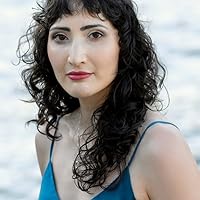
Claudia Casper's previous novels include The Reconstruction (St. Martin's Press).
The Mercy Journals are the autobiography of Mercy, a former soldier living in the nebulous time "post die off" where a combination of war, climate change, plague and catastrophe have left the world fragile and desperately clinging together to survive. Combustion engines are outlawed, as are multiple children and anything considered "selfish." The sun is both life and death, too little and the crops don't grow, too much and they burn.
Broken into two parts, the sections are quite different. The first is a story of a broken man slowly waking up to life again, and the second is trying to rebuild family and meaning, as counter-intuitive as his actions become.
It could have been bleak, and it was at times, but there was also hope. Hope that he could find happiness, find family. Hope that the world could change, adapt, survive. It got a bit heavy handed at times, but it was still a worthy nominee for the Philip K Dick Awards (2017).
My one real complaint is one that I see here and there, an element of style that I find jarring, hard to read and annoying ... no quotation marks around dialogue. Honestly I don't know why authors do this. When I struggle with a read, I want it to be because of content, ideas, situations that make me think deep ... not a lack of simple punctuation.
Consumed this book today, enthralled and horrified by the world it represents and the similarities with the news. Won't post much of the story to avoid spoilers but this is a definite must-read. Well- told and gripping, the book is filled with just enough small details that you inhabit the dystopian world and feel the unease permeating the book. I feel unsettled as I finish it, wanting to ask questions, curious, and yet it all hangs together, perfect and whole. Read it.
Allen Quincy does the heroes journey in a near yet post-apocalyptic world. I felt close to him throughout both parts of the book; his journey felt personal and compelling and relatable. Claudia Casper's writing felt effortless and at times soared into moments of seamless beauty and revelation. " ... and I found it strange that I could not see past the light into the ocean of blackness beyond, found it strange that I was stuck in a night's opposite when I was so close to returning to those dark and soundless skirts." I left Allen in a world that felt far too familiar and possible to allow for comfort. I wish him well as I do us. The book reminds us that the journey of healing PTSD is always personal, always unique and ultimately beyond one specific formula. It also reminds us that we are precariously close to great changes, that the future is whispering in our direction.
An strange elegy for the not yet dead, delivered through a bifurcated narrative — one half mopey love story and the other half mopey dystopia — that employs the tropes and conventions of genre sf about as poorly as most books of this mainstream ilk, and to little compensatory emotional effect at that.
An amazingly insightful, eerily prescient, compelling story of a faulted,tender-hearted protagonist in a post-apocalyptic world., March 21 2016 By Susan Piercey Edit Review Delete Review This review is from: The Mercy Journals (Paperback) I'm not a writer (sadly), but I am a voracious reader who feels most happy when in the claws of a good story. Most books I enjoy to some degree for a variety of reasons, but there are very few I feel the need to talk about and pass on. This is one of those rare books that linger long after the last perfect page. I ADORED Mercy, the damaged champion, and I loved the connection I felt to his voice throughout the story. The dialogue was fantastic - a perfect way to expose the characters without spelling it out for the reader. I loved how Casper slowly revealed the intricacies of the plot and complicated characters - doling out just enough to keep me wanting more while allowing me to draw my own conclusions. I loved her prescience (eerie!) and the way she propelled me to further question our society's consumption of our planet and our treatment of each other. I loved being guided toward an ending I couldn't predict - I had to force myself not to skim over the wonderful words to to find out what happened next. I loved how Mercy sought atonement thorough his rescue of others on his long, hard road to redemption. I loved the red shoes, the goldfish, the cougar, Ruby, Leo, Griffin, Mercy's ravaged heart and his relationship to all of the above. I'd love to comment on the ending, but some things should be experienced first hand.
Wow. In these days, this book really hit home. I am a better global citizen and environmentally more thoughtful for having read it. Aside from entertaining from start to finish , this examination of love, family, and a sense of identity set against impossible circumstances, this novel really made me question my sense of reality, which I love.
I simply gobbled this novel up. Casper’s prose is witty, precise and most importantly mental-image inspiring. I feel this could easily be transcribed for the “silver-screen” to great effect. The incredibly realistic and researched picture it paints of a distopian future is phenomenal. I especially appreciate the social commentary on our current capitalist system and rampant nationalism, while these themes do not bog down the absorbing plot of the novel. This novel comes at a crucial point in human history, and should serve us as a wake up call - let’s “turn this ship around” I suppose for now, enjoy the quick.
After so many dsytopian, post apocalyptic shoot out stories, this was refreshingly different. Set in a future of scarcity and a mandatory socialist-like state of saving resources. Woken from daily stupor by sex, leaving the city with a brother and cousin, the story unfolds in quite an unexcited yet gripping tale. What maks us human, and how far do we go to achieve happiness. Touching, made me think.
The Mercy Journals is the third novel by Claudia Casper and her first work of science fiction. Set in 2047, it tells the story of Allen Quincy through his journals. Quincy–nicknamed Mercy–is a former soldier struggling with memories of his long-lost family and the traumas he suffered during the third World War.
The story touches on complex issues such as genocide, climate change, and post-traumatic stress disorder. But it’s largely a book about one man’s struggle for survival and his attempt to find meaning in a world turned upside down.
The Mercy Journals won the coveted Philip K. Dick Award, which means it’s destined to be a classic, read for years to come.
The Mercy Journals pulled me in from the very beginning and held a tight grip right to the end. Read it in two days and it only took that long because I had to go out the first evening. Disturbing in its depiction of life post the Third World War as it seems so possible, given the state of the planet and political climates today. Really enjoyed the author's writing style.
My favorite quote from our book club was "The Meh-pocalypse". We all decided that the post apocalyptic future of that book actually wasn't that bad. "A very Canadian view of the apocalypse. " My major gripe with the book was the happy ending. It was like a focus group got it's input in and added the epilogue. But it was enjoyable and had lots of good stuff. We picked it due to the Philip k dick award.
This entire review has been hidden because of spoilers.
3.5 Stars A great post-climate soft apocalypse story that is actually a hidden treatise on PTSD that is marred by a bizarre decision to not include quotation marks for the dialogue. It's really, really distracting and I found it just so much harder to read than it needed to be.
The second half of the book nearly redeemed this for me, but fell just a little short. I'll probably end up discussing a few spoilers, so read at your own risk.
This book was selected for a local sci-fi book club's November book. It's less sci-fi and more soft-dystopian? If that makes sense. Through little bits and pieces you get a little background about the world: climate change didn't get handled in time, shit went bad, millions of people died. Then a sort of socialist world government rose from the ashes and brought things back from the brink, though not very far.
The weather is still bad, cities are mostly destroyed, people are only allowed to have one child, strict energy and food rations. All that stuff is pretty well and good, but it's just the backdrop. The setting for two stories, each one representing one side of the same coin.
The first half is a borderline disaster, or at the very least was extremely not for me. Main character Allen "Mercy" Quincy is living a shit life; blackout drunk every night, trying to forget his past as a soldier. He's alone, a tragic figure. He writes the titular "Mercy Journals" in the hopes to exorcise his demons. He soon realizes it won't work, but keeps on writing, thus creating the very text the reader reads.
And then Allen sees Ruby. Ruby becomes the focus of "Journal One," a sort of manic pixie dream girl, Allen's shot at redemption. A mystery woman, a dancer with an appetite, and an amazing, transcendental lover.
I hated it. I hated practically every page of it. Ruby tries to live her own life on the pages. We see her dance, becoming alien to Allen. We see them fight, we see her leave, then we don't see her again. There's really no excuse for writing women like this, as bare characters, viewed through a male's eyes, with the main purpose being to redeem or fulfill or change said male.
All of that takes place in the "past" related to the "present" in which Allen is writing the journals. That "present," where Allen is suffering from PTSD and delirium tremens is perhaps the only part that kept me trudging through the cliched romance between him and Ruby. That and the little tidbits about the disaster of ignoring climate change and the world it wrought.
The second half of the book is a different beast entirely. Ruby is just a ghost in the back of Allen's mind as he moves with his brother and step-son back to a childhood vacation home, currently occupied by pregnant (and paper-thin, character-wise) Parker. The tension in this section and its lack of separation into smaller chapters makes it a sort of breathless read. A tale of survival, hope, familial struggle, and death.
It was mostly good. Main fault would be the terrible characterization of the only other female character to be talked about for more than three or four pages. Parker is essentially a non-entity. A fragile and pregnant woman for the three men to worry and fight over. The increasingly muddled first person narration of Allen keeps things interesting.
The crew is stalked by a cougar. They fight over what to do about the cougar. Allen, because of his past, is a pacifist, doesn't want to kill the cougar. Leo, Allen's brother, wants to kill the cougar. He has a gun. The stepson, Griffin, just wants what's best for Parker. There's a highly unnecessary attempted rape, to further victimize and reduce Parker.
It's hard to read the second half without casting Ruby in the role of the cougar. This is perhaps the most interesting contribution of "Journal One." Immediately upon ending with Ruby and Allen having fought, "Journal Two" opens with Allen's mauling at the claws of the cougar, first referred to just as "she." The last "she" we encountered was Ruby, so there's some interesting crossplay here.
Ultimately though, it didn't save the novel for me. The bits that were most interesting to me were thrust aside in favor of a conventional tale lacking any solid female characters. Maybe others will read Ruby differently, as her own person, separate from Allen's desires. I wasn't able to do that. And the tense back half never quite made up for lost time.
The book opens with a brief explanatory prologue: In 2072, these journals have been found next to the human remains of an adult male, a pistol and a cougar. The journals begin in the year 2047, after a third of humanity has died off due to war, ecological collapse and a flu pandemic. There’s a new world order where the state has much more control of its citizens, doling out rations for food, power and data. The younger generation find that they like this socialist lifestyle and are angered by those who still insist on being wasteful and greedy, while a murky resistance group criticizes the state.
Our hero and writer of the journals is Allen Quincy, a war veteran who is almost permanently holed up in his apartment fighting PTSD. He comes back to life when he meets the singer and dancer, Ruby. They quickly become lovers. She, herself, is dealing with the damage from the past; her performances are an exorcism of that time because she is “afraid we’ll stop the process of destroying and tearing down too soon. We need to keep going if we’re going to break through to something truly different” (99).
Quincy began to write these journals in his own attempt at obliteration. He reads a quote from Socrates that “[w]riting destroys memory” (17) and so he describes his world in an attempt to rid himself of his taunting PTSD visions. These visions stem from a calamitous army tour defending the border after Mexico ran out of water. From his time there, he earned the nickname, Mercy.
The book is made up of two parts: Journal One is a meditation on writing and memory. When recording the first time he met Ruby, Quincy realizes that his writing may be “accurate but [he still] left so much out. The part is made to stand for the whole, and then the part becomes the whole” (151).
In Journal Two, the book becomes a thriller. I found that answers to questions about characters are left implied, so that you can let your imagination get away with itself. The re-entry of Quincy’s brother Leo into the story creates a tension; Leo’s actions are underscored by incredible malice. Language becomes a slippery thing. Where once Quincy wrote to forget, around Leo he is hesitant to ask questions because “asking was a submissive act; it left you waiting for an answer, vulnerable to a lie” (222).
Like in Margaret Atwood’s The Handmaid’s Tale, Canada is seen to be some sort of haven: the place Americans escape to. Quincy, Leo and Leo’s stepson, Griffith head up to Vancouver Island where their family had a cottage named Nirvana. The band is mentioned a couple of time, as well as Buddhist philosophy. There’s also the paradigm of Cain and Abel and talk of beginning a “new covenant” (228). Ostensibly, they are there to find Quincy’s lost sons, as Leo has reported that they have been spotted. They go deeper into the forest, and away from what they knew as civilization.
Initially, I found myself comparing The Mercy Journals to Cormac McCarthy’s The Road - sparse writing style, limited punctuation and almost as bleak. There’s also a little bit of Conrad’s Heart of Darkness when journeying up the river and having to deal with Kurtz.
Claudia Casper’s writing and observations are exquisite. The split nature of the novel (part meditation, part thriller) may bother some readers, but the book made me think and kept me wanting to read past my bedtime.
There’s something about dystopian novels that I really like: Station Eleven, Hunger Games. My husband hates them: He says they’re too dark. Maybe I am a pessimist of the highest order. But I find these kinds of books are ultimately about faith in humanity - how low we can go and still survive.
Gripping and timely book beautifully written, and eerily predicting current controversies. Definitely a page-turner!
The character development of the brothers is very strong & immense. The book touches on various causes which may have influenced the contrasting brothers personalities-but also leaves some things up in the air for ones own interpretation, thus continuing on the path of realism. The inherent goodness of Quincy, and horribleness of his brother is portrayed effortlessly. The dancing, partying worms show real imagination, and ooze a sense of the mental displacement experienced by the main character’s PTSD. One really feels Quincy’s depression, and loneliness. Casper seems to have hit the pulse of today –predicting the far future as well as current events. Quincy Allen’s world could almost be the aftermath of Trump-Gate.
Interesting that the TV series ‘The Handmaid’s Tale’ based on Margaret Atwood’s book, which has just been aired also shares various themes portrayed in Casper’s novel, such as the control of birth rates as well as their decline, and Canada seen as a place to escape from the madness of the US.
An incredibly compelling book, well worth the read!
Not as much of a dreary slog as I'd anticipated (not due to the author at all, but to the setting), but still a post-apocalyptic "everything sucks and we're trying desperately to survive" slog. While I can recognize that it's well written, I was tired of post-apocalyptic slogs even before it looked like they were going to be even more prescient than I'd ever thought (this one even has a US/Mexico border wall), which I know colors my impression of the book. At least this one does have moments of peace, beauty, and hope here and there; even filtered through the lens of a wounded, PTSD-suffering ex-soldier, those moments were appreciated.
The Mercy Journals captured me immediately and didn't let me go until the last page. In Allen Quincy, Claudia Casper has created a protagonist whose struggle to bury past trauma is disconcertingly real. She has created a believable post-climate apocalypse future, courageously painting our fears of what the world will be like, forty years along its current trajectory. A confident story teller, Casper's slow reveal of the mysteries buried inside this story makes The Mercy Journals a compelling, riveting read.
Gritty, tender and compelling, Claudia Casper's short, powerful novel delivers a message of hope in a battered world of the future. Casper shows that our collective and individual faults can also be our strengths: the gravitational pull toward each other, the desire for beauty and for stories, our bonds to nature, and our desire to create and sustain family. This is a book we need to read and talk to each other about.
This book had me drawn in almost immediately! The character of Mercy is compelling and complex, and had me wanting to know him and his history as much as possible. Even the supporting characters were fascinating and unique in their own way. I had to read the second half of the story in one sitting because i could not put it down, and by the end i was blown away with the imagery and pure emotion that Casper had invoked in me. I would recommend this book to anyone from 16 up!
I have not read something this compelling in a long time. Claudia Casper owns this story seemingly without effort in the raw voice of Allen Quincy, a flawed, traumatized, fascinating protagonist. That strong voice is what drew me deep into the post-apocalyptic narrative, but it is the deep quality of the writing which held me under a spell until the last page. Part confessional, part thriller, The Mercy Journals is the best novel I've read this year.
Life does truly imitate art. Casper creates a post climate change disaster world in which humanity is struggling to find moral stability. Changing our ethics as a society is the route to recovery. The characters and events move in tandem towards this balance point of morality and healing the earth. Easy to read, this novel sweeps you along to a unexpected ending.
A very moving book. I found it difficult to read because issues like PTSD and a global die-off of most of the human population are not easy topics to deal with. However, the second half of the book will repay your effort. Thank you to Goodreads for this giveaway.
I found this book in the science fiction section of my local library. What intrigued me about it is that it’s written as journal entries of the main character. Because I enjoy fiction with an unusual format, I decided to give The Mercy Journals a try. I’m so glad that I did. Set in the year 2047, after the 3rd World War, a former soldier, nicknamed “Mercy”, suffers from PTSD. The only way he’s able to hang on to his sanity is to live an ultra-simplified, OCD-style existence. Mercy’s control is tentative at best, but at least he’s able to cope with the losses in his life, including the death of his wife from the last global pandemic and the estrangement of his two sons. But Mercy’s flimsy control is put to the test when two people enter his life unexpectedly. First is Ruby, a professional singer/dancer and free spirit who refuses to be pinned down by Mercy’s love for her. And second, and more disastrously, Mercy’s long-lost brother, Leo. Leo claims he knows the location of Mercy’s two sons. He insists that Mercy accompany him to a remote cabin that once belonged to their parents, where all questions will be answered, and family unity will prevail. Spiralling out of control after his breakup with Ruby, Mercy agrees, only to discover that the remnants of his family can be more treacherous to him than all the wars, disease and cataclysmic natural disasters he somehow has already survived. I really liked this book. It reminded me a bit of the biblical story of Cain and Abel. But just a bit. Just enough to have me flipping to the next page to continue reading, even when I was determined to put the book down. This book sucked me into the story and held me within the confines of Mercy’s world until the very end. Despite the story taking place in a broken world desperate to renew itself, the ending offers hope for Mercy’s future and the future of the world. The Mercy Journals will linger in my mind for a long time…in a good way.
The Mercy Journals by Claudia Casper (The Reconstruction) opens with a statement that the pages of this book are taken from two journals discovered in 2072 and reproduced here with only minor copyediting. The author of these journals, Allen Levy Quincy, writes to forget his past. He seeks oblivion in whatever form it comes, eager to escape the memories that keep his mind in near hysteria. At first, Allen writes little that is personal. He explains that nearly four billion people have died due to catastrophic climate change; following this mass die-out and global government collapse, an emergency government called OneWorld was formed. Both benevolent and autocratic, OneWorld enforces severe measures for humanity's survival, but can't dispel the tension between the old world's promise of prosperity and the new world's uncertainty.
After an encounter with a woman named Ruby, Allen's emotional defenses begin to fail. His journal pages become more intimate as he shares his own story. When his estranged brother, Leo, appears after many years and proposes the two of them go to Allen's cabin in the woods, he wants to turn Leo away. But the promise of connection draws Allen out of his carefully structured life and into a journey he hesitates to take. His struggle to heal after his traumatic time in the military, to find a purpose in life beyond survival, makes him a compelling character. Through the distressed voice of Allen, Casper creates a dystopian future that appears uncomfortably familiar as it echoes our own fears for the future.
Disclaimer: I won this book from a Goodreads giveaway.
I liked the first half of the book quite a lot. There were several great storylines I would have liked to have seen played out a bit more. The second half, once he gets to the woods...? I felt like I was reading something for an English class, expecting to write a paper on the symbolism and imagery used. I'm sure there were parts in there that made others gasp in awe, but I guess I'm just too dense to see it. I find I'm more of a "general idea" kinda person rather than a "pick up on the details" kind and that probably did not help me with this book. I did enjoy it and I definitely could see how this future is not entirely out of the realm of possibility.
Part One captured my attention. Part Two lost me at first.
The primary structure of the plot was about two wounded ( literally, emotionally & figuratively ) people making their way through survivalist living after an apocalypse.
They connect sexually for intimacy and companioship, but neither can fully invest their hearts.
They have an anti-romamce, if you will. I appreciated the setting of the book in the Pacific NW.
I give the first PART 5 stars and the second part 3.5 star. So, 4 stars overall.
During the end of a dark night of the soul for humanity as a species, Allen Quincy, using his nickname Mercy goes through many dark nights of his own. He begins to journal his life now after meeting a woman he loves and reuniting with his brother. His journal is a desperate effort to move past many memories of trauma that he both experienced and inflicted. Set after a semi apocalypse, Casper’s protagonist mirrors the state of humanity in this near future setting.
This novel had many premonitions that are entirely relevant to todays climate (no pun intended), but lets hope they don’t all become a reality. Casper’s ability to capture the trauma and struggles of a man who cannot cope with his reality, and his relationship with the destructive but ultimately freeing force of Ruby lingers in ones mind. The ending of this book was grand yet personal, and hits all the right notes. Definite read.