

What do you think?

Curious Myths of the Middle Ages
1867. Contents: Wandering Jew; Prester John; Divining Rod; Seven Sleepers of Ephesus; William Tell; The Dog Gellert; Tailed Men; Antichrist and Pope Joan; Man in the Moon; Mountain of Venus; Fatality of Numbers; Terrestrial Paradise.
159 pages, Hardcover
First published January 1, 1868
About the author
Sabine Baring-Gould
949 books94 followersSabine Baring-Gould was born in the parish of St Sidwell, Exeter. The eldest son of Edward Baring-Gould and his first wife, Sophia Charlotte (née Bond), he was named after a great-uncle, the Arctic explorer Sir Edward Sabine. Because the family spent much of his childhood travelling round Europe, most of his education was by private tutors. He only spent about two years in formal schooling, first at King's College School in London (then located in Somerset House) and then, for a few months, at Warwick Grammar School (now Warwick School). Here his time was ended by a bronchial disease of the kind that was to plague him throughout his long life. His father considered his ill-health as a good reason for another European tour.
In 1852 he was admitted to Cambridge University, earning the degrees of Bachelor of Arts in 1857, then Master of Arts in 1860 from Clare College, Cambridge. During 1864, he became the curate at Horbury Bridge, West Riding of Yorkshire. It was while acting as a curate that he met Grace Taylor, the daughter of a mill hand, then aged fourteen. In the next few years they fell in love. His vicar, John Sharp, arranged for Grace to live for two years with relatives in York to learn middle class manners. Baring-Gould, meanwhile, relocated to become perpetual curate at Dalton, near Thirsk. He and Grace were married in 1868 at Wakefield. Their marriage lasted until her death 48 years later, and the couple had 15 children, all but one of whom lived to adulthood. When he buried his wife in 1916 he had carved on her tombstone the Latin motto Dimidium Animae Meae ("Half my Soul").
Baring-Gould became the rector of East Mersea in Essex in 1871 and spent ten years there. In 1872 his father died and he inherited the 3,000 acre (12 km²) family estates of Lew Trenchard in Devon, which included the gift of the living of Lew Trenchard parish. When the living became vacant in 1881, he was able to appoint himself to it, becoming parson as well as squire. He did a great deal of work restoring St Peter's Church, Lew Trenchard, and (from 1883 – 1914) thoroughly remodelled his home, Lew Trenchard Manor.
In 1852 he was admitted to Cambridge University, earning the degrees of Bachelor of Arts in 1857, then Master of Arts in 1860 from Clare College, Cambridge. During 1864, he became the curate at Horbury Bridge, West Riding of Yorkshire. It was while acting as a curate that he met Grace Taylor, the daughter of a mill hand, then aged fourteen. In the next few years they fell in love. His vicar, John Sharp, arranged for Grace to live for two years with relatives in York to learn middle class manners. Baring-Gould, meanwhile, relocated to become perpetual curate at Dalton, near Thirsk. He and Grace were married in 1868 at Wakefield. Their marriage lasted until her death 48 years later, and the couple had 15 children, all but one of whom lived to adulthood. When he buried his wife in 1916 he had carved on her tombstone the Latin motto Dimidium Animae Meae ("Half my Soul").
Baring-Gould became the rector of East Mersea in Essex in 1871 and spent ten years there. In 1872 his father died and he inherited the 3,000 acre (12 km²) family estates of Lew Trenchard in Devon, which included the gift of the living of Lew Trenchard parish. When the living became vacant in 1881, he was able to appoint himself to it, becoming parson as well as squire. He did a great deal of work restoring St Peter's Church, Lew Trenchard, and (from 1883 – 1914) thoroughly remodelled his home, Lew Trenchard Manor.
Ratings & Reviews
Friends & Following
Create a free account to discover what your friends think of this book!
Community Reviews
Displaying 1 - 30 of 51 reviews

December 31, 2014
It's my fault for not paying attention- my dumb ass thought these were literally a selection of Medieval myths. But no. This is a religious (Christian) analysis of said myths.
I tried to read it anyway; but no dice for me.
I tried to read it anyway; but no dice for me.
August 20, 2022
A thorough investigation of various myths popular during the middle ages. Most of them are still with us today.
Very scholarly, but still fun.
Very scholarly, but still fun.

March 10, 2020
Review originally published on my blog,
Nine Pages
.
In his introduction to this edition, Hardy writes that he “ruthlessly abandoned the farther shores of [Baring-Gould’s] research,” and I am inclined to believe that he was utterly ruthless (14-15). I have sought out copies of Baring-Gould’s unedited text and have found 600 page volumes where this one is 159. I found Hardy’s edit of Baring-Gould’s original to be wonderfully readable and accessible, mostly because in this edit each story and its dissection is only a few pages long, most entries less than 10 pages, making it an easy book to read in pieces. I found most of what I would want from this book—the myths themselves and some information about their possible antecedents—to be present in the abridged edition. I have not yet and probably won’t read the ponderous 600 page volume; there is too much more modern scholarship to read, and this was a library book acquisition literally picked up when the book that I came for could not be found.
Please note that from now on whenever I cite “Baring-Gould” I really mean “Baring-Gould filtered by Hardy” because I suspect that Hardy’s edit has greatly influenced my impression of this book.
This is both a collection of myths and a study of myths.
Although Baring-Gould often points out similarities between the myth that he is telling and myths of other continents, this book is whoppingly Eurocentric, focusing most of its time on myths of Germany, France, and Great Britain—somewhat understandable as Baring-Gould seems to have spent most of his time in these countries—but his evaluation of and the language that he uses to speak about peoples outside of Europe is often uncomfortable to a modern reader.
Most of the myths that Baring-Gould, an Anglican priest and hymnist, explores here elevate and presuppose a Christian worldview—again, understandable given the focus on European myths of the medieval period when and where the Church had more power and more greatly effected everyday life and given Baring-Gould’s own religious occupation, though again the disregard for other religions and even other branches of Protestantism than Anglican is again uncomfortable. Baring-Gould’s view of Christianity seems more militant than some too; his perhaps best known hymn is “Onward, Christian Soldier,” so his militancy doesn’t surprise me either, though even that hymn has always made me uncomfortable.
Some myths discussed here are stories of holy objects or people who interacted with Jesus on earth. Some are about devils or portals to Hell or Purgatory. Some are stories of saints or fallen Church officials. A few are more secular, like the tale of Gellert or of Melusina. Many are myths that have made their way if not in their entirety then in pieces or into the framework of the imagination of modern, Western consciousness. The story of Gellert, for example, I knew almost exactly as Baring-Gould reports it. The story of the Man in the Moon I had never heard, but of course I know the phrase. The barest bones of the story of Pope Joan I knew but not the particulars.
Baring-Gould at times comes off as stunningly condescending towards any who disagree with his assessments of the origins and meanings of these myths. “It need hardly be stated that the whole story of Pope Joan is fictitious and fabulous, and has not the slightest historical foundation” (72).
Though often he traces his assumptions through a list of sources and presuppositions, at times in this edition—too often—there is little to no explanation of particular statements, making me wonder if such statements were considered fact by the everyday nineteenth century literate who might have found this volume in its original printing—or perhaps were facts to Hardy’s readers in the 1970s. For example, Baring-Gould connects the English Jack and Jill to the Scandinavian Hjuki and Bil largely based on a supposed similarity between the names which seems like it could to me be coincidental and not an etymologically sound conclusion then decides that the trek of Jack and Jill up the hill and tumbling back down represents the waxing and waning of the moon because of his connection to the two Scandinavian children who are kept on the moon. Past his word, there’s little evidence presented here. Again, “Ursula is in fact none other than the Swabian goddess Ursel or Hörsel (Hürsel) to whom human sacrifices were occasionally made and who became the Venus of Venusberg, or Hürselberg, who entranced and debauched Tannhäuser” (105). I have learned being even a casual reader of Tumblr posts about etymology to be skeptical of such seemingly direct lines of etymological connection. I might believe a shared etymological source for the name of the saint and the name of the goddess before I would believe a direct descent from stories of the goddess to stories of the saint—especially without any proof of such, which I do not get from Baring-Gould.
I enjoyed the introduction to a few new European myths and further explanations of ones with which I was already passingly familiar, but much of what Baring-Gould states seems like it ought to be taken with a healthy dose of salt as his biases are very much on parade here and his evidence is at times thin and his observations sometimes not backed up at all.
I'm waffling on a 2 or 3 on this one... because his biases get in the way of what should be an enjoyable and easy review of European, largely Christian myths.
In his introduction to this edition, Hardy writes that he “ruthlessly abandoned the farther shores of [Baring-Gould’s] research,” and I am inclined to believe that he was utterly ruthless (14-15). I have sought out copies of Baring-Gould’s unedited text and have found 600 page volumes where this one is 159. I found Hardy’s edit of Baring-Gould’s original to be wonderfully readable and accessible, mostly because in this edit each story and its dissection is only a few pages long, most entries less than 10 pages, making it an easy book to read in pieces. I found most of what I would want from this book—the myths themselves and some information about their possible antecedents—to be present in the abridged edition. I have not yet and probably won’t read the ponderous 600 page volume; there is too much more modern scholarship to read, and this was a library book acquisition literally picked up when the book that I came for could not be found.
Please note that from now on whenever I cite “Baring-Gould” I really mean “Baring-Gould filtered by Hardy” because I suspect that Hardy’s edit has greatly influenced my impression of this book.
This is both a collection of myths and a study of myths.
Although Baring-Gould often points out similarities between the myth that he is telling and myths of other continents, this book is whoppingly Eurocentric, focusing most of its time on myths of Germany, France, and Great Britain—somewhat understandable as Baring-Gould seems to have spent most of his time in these countries—but his evaluation of and the language that he uses to speak about peoples outside of Europe is often uncomfortable to a modern reader.
Most of the myths that Baring-Gould, an Anglican priest and hymnist, explores here elevate and presuppose a Christian worldview—again, understandable given the focus on European myths of the medieval period when and where the Church had more power and more greatly effected everyday life and given Baring-Gould’s own religious occupation, though again the disregard for other religions and even other branches of Protestantism than Anglican is again uncomfortable. Baring-Gould’s view of Christianity seems more militant than some too; his perhaps best known hymn is “Onward, Christian Soldier,” so his militancy doesn’t surprise me either, though even that hymn has always made me uncomfortable.
Some myths discussed here are stories of holy objects or people who interacted with Jesus on earth. Some are about devils or portals to Hell or Purgatory. Some are stories of saints or fallen Church officials. A few are more secular, like the tale of Gellert or of Melusina. Many are myths that have made their way if not in their entirety then in pieces or into the framework of the imagination of modern, Western consciousness. The story of Gellert, for example, I knew almost exactly as Baring-Gould reports it. The story of the Man in the Moon I had never heard, but of course I know the phrase. The barest bones of the story of Pope Joan I knew but not the particulars.
Baring-Gould at times comes off as stunningly condescending towards any who disagree with his assessments of the origins and meanings of these myths. “It need hardly be stated that the whole story of Pope Joan is fictitious and fabulous, and has not the slightest historical foundation” (72).
Though often he traces his assumptions through a list of sources and presuppositions, at times in this edition—too often—there is little to no explanation of particular statements, making me wonder if such statements were considered fact by the everyday nineteenth century literate who might have found this volume in its original printing—or perhaps were facts to Hardy’s readers in the 1970s. For example, Baring-Gould connects the English Jack and Jill to the Scandinavian Hjuki and Bil largely based on a supposed similarity between the names which seems like it could to me be coincidental and not an etymologically sound conclusion then decides that the trek of Jack and Jill up the hill and tumbling back down represents the waxing and waning of the moon because of his connection to the two Scandinavian children who are kept on the moon. Past his word, there’s little evidence presented here. Again, “Ursula is in fact none other than the Swabian goddess Ursel or Hörsel (Hürsel) to whom human sacrifices were occasionally made and who became the Venus of Venusberg, or Hürselberg, who entranced and debauched Tannhäuser” (105). I have learned being even a casual reader of Tumblr posts about etymology to be skeptical of such seemingly direct lines of etymological connection. I might believe a shared etymological source for the name of the saint and the name of the goddess before I would believe a direct descent from stories of the goddess to stories of the saint—especially without any proof of such, which I do not get from Baring-Gould.
I enjoyed the introduction to a few new European myths and further explanations of ones with which I was already passingly familiar, but much of what Baring-Gould states seems like it ought to be taken with a healthy dose of salt as his biases are very much on parade here and his evidence is at times thin and his observations sometimes not backed up at all.
I'm waffling on a 2 or 3 on this one... because his biases get in the way of what should be an enjoyable and easy review of European, largely Christian myths.
September 4, 2023
A very interesting book, and well documented.
May 23, 2021
An anthology unlike any other. An investigative approach to European fables of the middle ages, and tracing their origins across time and space, even to places as far away as Persia and India. A must read for anyone interested in a retelling of old myths and legends from an anthropological perspective, it nevertheless makes for a very interesting read even if you're only looking for something to while away some time.
March 18, 2023
I heard about this book from the Apocrypals podcast, and the name of the author seemed familiar. This was because his grandson William Stuart compiled The Annotated Mother Goose with his wife Ceil. He was also known as a Sherlock Holmes scholar. And apparently this edition, which I found for free online, was edited down quite a bit. Sabine was an Anglican priest who had similar proclivities and wrote a lot of books. This one gives an overview of several popular myths from medieval Christian Europe, many of which I've seen mentioned in other sources, like the Wandering Jew, Prester John, Pope Joan and her connection with the Antichrist, the Sleepers of Ephesus, William Tell, and the location of the Garden of Eden. There's information on how these stories originated (or at least their earliest known versions) and changed over time. The location of Prester John's kingdom moved as Europeans explored Asia and Africa more thoroughly. Baring-Gould traces the myth of the sleepers to Norse mythology, although it also ties into the same idea of people from Jesus' time living extraordinarily long lives as the Wandering Jew, which the author doesn't dismiss out of hand. There's a brief mention of the Islamic version of the myth of the sleepers, and how it specifies that only nine specific animals would be admitted to Paradise. In the chapter on Tell, Baring-Gould references a few earlier Norwegian stories of a similar archery contest that predate Tell's supposed lifetime. Another chapter discusses the Welsh Prince Llewellyn's faithful hound Gellert, whose grave could be found in Snowdonia, and how there are many tales of faithful animals that fit the same general pattern. While he points out that many of these stories have allegorical origins, he also points out that this can be taken too far, citing a satirical work by Archbishop Whateley claiming that Napoleon was really just a mythical solar deity. It's a pretty eclectic mix of myths, including a few that don't fit the general theme quite as well. A chapter on humans with tails starts with a rumor the writer heard as a child that people from Cornwall have tails, and another one is just about coincidences with numbers. I'd say it's definitely worth a read if you're interested in any of this kind of stuff, keeping in mind that Baring-Gould had his own biases.

August 25, 2026
2.75/5
I have a werewolf book by this author and was intrigued at what other work he had published. This one was interesting.
My favorite story in this book was the on with the rat-catcher who I found out is the Pied Piper, found that to be really cool to read. the copy I have is from my college's library and it is from '75 which I thought to be neat. The stories itself, since it is an anthology had good and bad ones. I am more so excited for my werewolf book because I will be using it to help write.
Overall, an interesting anthology of myth from the Middle Ages and was surprised by the stories.
I have a werewolf book by this author and was intrigued at what other work he had published. This one was interesting.
My favorite story in this book was the on with the rat-catcher who I found out is the Pied Piper, found that to be really cool to read. the copy I have is from my college's library and it is from '75 which I thought to be neat. The stories itself, since it is an anthology had good and bad ones. I am more so excited for my werewolf book because I will be using it to help write.
Overall, an interesting anthology of myth from the Middle Ages and was surprised by the stories.

August 7, 2018
2.5 stars
This was not what I had expected. I had wanted to read a book of myths but this was more like an explanation of the myths. It was an interesting albeit biased bit of information on a few of the more popular folktales.
This was not what I had expected. I had wanted to read a book of myths but this was more like an explanation of the myths. It was an interesting albeit biased bit of information on a few of the more popular folktales.

June 30, 2013
Baring-Gould collects in one place many of the myths of Medieval England, which are likely uncommon to many contemporary readers, although some remain familiar (i.e. William Tell). Baring-Gould does an excellent job of relating these stories to the extant mythology from many ancient cultures and as such draws into question the historical veracity. I found however that his eagerness to dispel the legitimacy of the myths was high strung and almost fervent. He is so convinced himself that he leaves the reader without a sense of fairness or justice in his treatment of the material - even when we are inclined to agree with him. He also presumes that historical precedence precludes re-occurence which can be a dangerous assumption in matters of human experience.

April 10, 2014
Really very interesting. There are parts that are very obviously written from the Victorian point of view, which made me wonder how much of that interpretation was still worthwhile. However, I did get to read about a bunch of myths I'd never heard of before, and the parallels drawn between "Jack and Jill went up the hill" and Nordic myths about children in the moon and the phases of the moon were fascinating.

December 9, 2017
Fantastic read by a pioneering British folklorist (who was also an incredibly interesting guy -- look him up). The book came out in 1866, so its interpretation of medieval folklore isn't the final word, but nobody beats this guy for style. Reads like a velvet fist to the face. Charming stuff from a born storyteller.

October 29, 2015
Seemed to be have a lot of research behind it. However, it was more a history of the myths than simply their telling. Interesting how the medieval myths were such a strange conglomeration of Christian beliefs and pagan superstition.
July 9, 2017
The title is the coolest part about this book. Mostly a snooze fest.

December 26, 2022
I don't know what I was expecting from a book about myths of the Middle Ages, but I really should not have been surprised by how many of them revolved around Christianity. This was, overall, a fairly interesting collection, relayed more in an academic style than anything involving storytelling, and did, unfortunately, fell, not a few times, into the racism and antisemitism if the time.
It often sometimes went into more modern superstitious (for it's time). There's a ten point summary about why some people might see Napoleon as a mythological hero akin to Apollo, and a chapter on the superstition of numbers detailed to a large extent the reign of kings from the 18th and 19th centuries while hardly touching at all on the Middle Ages.
I also laughed at one section where Baring-Gould complains of many scholars just assuming every myth is about the rising and the setting of the sun (which is actually what set them off on the Napoleon mythology). I laughed aloud because I had just finished reading American Hero-Myths by Daniel Brinton where Brinton spent literally the entire book talking about how ever single Indigenous myth was really just a sun myth.
But overall this was a short, quick read of some interest.
It often sometimes went into more modern superstitious (for it's time). There's a ten point summary about why some people might see Napoleon as a mythological hero akin to Apollo, and a chapter on the superstition of numbers detailed to a large extent the reign of kings from the 18th and 19th centuries while hardly touching at all on the Middle Ages.
I also laughed at one section where Baring-Gould complains of many scholars just assuming every myth is about the rising and the setting of the sun (which is actually what set them off on the Napoleon mythology). I laughed aloud because I had just finished reading American Hero-Myths by Daniel Brinton where Brinton spent literally the entire book talking about how ever single Indigenous myth was really just a sun myth.
But overall this was a short, quick read of some interest.
August 15, 2017
No, I didn't actually finish this.
It's an interesting book, nonetheless. It's basically an examination of the various myths and legends found in Europe during the Middle Ages. Baring-Gould traces the origin of a myth and compares the various versions of the same basic myth.
I enjoyed the ones that I did read. Unfortunately I had to return it to the library and did not feel compelled to borrow it again in order to finish.
It's an interesting book, nonetheless. It's basically an examination of the various myths and legends found in Europe during the Middle Ages. Baring-Gould traces the origin of a myth and compares the various versions of the same basic myth.
I enjoyed the ones that I did read. Unfortunately I had to return it to the library and did not feel compelled to borrow it again in order to finish.
June 5, 2023
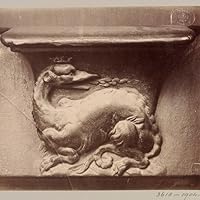
I had a copy of this same hardcover edition when I was a teenager and so couldn’t resist buying it again when I found it at a used bookshop. Baring-Gould’s stuffy Victorian style annoyed me when I was younger. I enjoy it more now. Each chapter is paired with a woodblock print by Durer that really has no connection to the text but I remember straining in my mind to try and make them fit.

March 19, 2025
Religion at the base
This compilation is an extensive research of the most common, yet religious, myths of the medieval ages. Some of which are still part of our everyday conversation. Getting to know their probable origins and the shared and adapted value of them gives a sense of coherence and unified human explanation of the world and its phenomena.
A great research source.
This compilation is an extensive research of the most common, yet religious, myths of the medieval ages. Some of which are still part of our everyday conversation. Getting to know their probable origins and the shared and adapted value of them gives a sense of coherence and unified human explanation of the world and its phenomena.
A great research source.

January 18, 2024
A pleasant hearkening back to my Dolch myth days. Some are more interesting than others, as is always the case in a compendium, but Baring-Gould is an insightful commentator whose dry humor elevates the analysis. Plus this edition is beautiful.

July 3, 2026
I appreciated that the author didn't just constrain herself to England but traced the basics of the myth through other European countries, and even the USA. Very well researched. She was able in most cases to point to the history that gave rise to myth.
June 9, 2017
A bit simple.
Probably just right for those who like it short and simple but I like things a little meatier.
Maps and illustrations would have made a big difference.
Probably just right for those who like it short and simple but I like things a little meatier.
Maps and illustrations would have made a big difference.

November 16, 2021
I liked the stories. Much more detailed than I expected or needed. I picked the chapters I was interested in and read the first parts for the story line that is the most popular and well-known.

February 23, 2022
Not really what I was expecting, but a decent read. There's a lot of weird and suspect exegesis more than the myth in the book, but it was still an interesting read.

August 29, 2023
Nice collection of essays that shed a scholarly light on some common myths.
August 15, 2013
On the day I received my exam results I visited Bath with the aim of buying myself a piece of jewellery, something I do on every significant day. This didn't work out so well with the woman in the jewellery shop being rather rude and me walking out empty handed. However, this did mean I had some extra time, and money, which was put to good use in the local Oxfam second hand bookshop.
I will admit that I bought this book because of the pictures. Call me fickle if you like but since I received an illustrated Odyssey and Iliad for Christmas when I was about eight I have been a sucker for illustrated mythologies. The illustrations, which I believe are by Peter Komarnyckyj who certainly drew the cover image, are really lovely and remain my favourite part of this book. In fact, they are what lift the rating.
'Myths of the Middle Ages' seems to jump from being a story book, telling the reader about the myths, to an interpretation of the myths and an academic account, to a biography of Sabine Baring-Gould, his life, and works. All of these aspects were very interesting but I didn't feel that they went together all that well. It made for rather a jerking, jittering read. If I'm completely honest, I enjoyed the introduction section to each myth the most out of all of the writing. I found myself reminded of Herodotus, in style, when reading Gould's writing on the myths and that is not a compliment!
The stories themselves, are usually told in brief. Gould then ties in pieces of 'evidence' to give a fuller picture of stories around the myths in question. Although this means that you get 'all' the story, although I've no doubt that the tales included were chosen as relevant by Gould, leading to omissions, it means that it's not really a story at all but rather a list of happenings. The tales wouldn't be interesting to someone who hadn't already got an interest in Medieval myths.
Then you get onto interpretation and ideas about where the stories and myths might have come from. The biggest complaint I have read about this book regards the somewhat tunnel visioned interpretation that Gould offers of the myths detailed, he being both Victorian, and a Christian Reverend. I would agree that there is a Christian emphasis to the myths, both in the choosing, and in the telling. That said, writing often tells us more about the people who wrote it and the times in which they lived than the times about which they are writing and I think that, if we can keep that in mind, it's not a bad thing at all. It's impossible to be objective. However, I do think Gould was trying to be objective, stating, "Like many another ancient myth, it was laid hold of by Christian hands and baptised". All the same, it's probably not the most objective academic study of mythology available.
And that's the problem really. 'Myths of the Middle Ages' doesn't tell you the stories well. It doesn't give a seemingly full interpretation. It sets out to do too much and in trying to do that doesn't really do any of it. Overall, the book was a disappointment, I'm sorry to say.
I will admit that I bought this book because of the pictures. Call me fickle if you like but since I received an illustrated Odyssey and Iliad for Christmas when I was about eight I have been a sucker for illustrated mythologies. The illustrations, which I believe are by Peter Komarnyckyj who certainly drew the cover image, are really lovely and remain my favourite part of this book. In fact, they are what lift the rating.
'Myths of the Middle Ages' seems to jump from being a story book, telling the reader about the myths, to an interpretation of the myths and an academic account, to a biography of Sabine Baring-Gould, his life, and works. All of these aspects were very interesting but I didn't feel that they went together all that well. It made for rather a jerking, jittering read. If I'm completely honest, I enjoyed the introduction section to each myth the most out of all of the writing. I found myself reminded of Herodotus, in style, when reading Gould's writing on the myths and that is not a compliment!
The stories themselves, are usually told in brief. Gould then ties in pieces of 'evidence' to give a fuller picture of stories around the myths in question. Although this means that you get 'all' the story, although I've no doubt that the tales included were chosen as relevant by Gould, leading to omissions, it means that it's not really a story at all but rather a list of happenings. The tales wouldn't be interesting to someone who hadn't already got an interest in Medieval myths.
Then you get onto interpretation and ideas about where the stories and myths might have come from. The biggest complaint I have read about this book regards the somewhat tunnel visioned interpretation that Gould offers of the myths detailed, he being both Victorian, and a Christian Reverend. I would agree that there is a Christian emphasis to the myths, both in the choosing, and in the telling. That said, writing often tells us more about the people who wrote it and the times in which they lived than the times about which they are writing and I think that, if we can keep that in mind, it's not a bad thing at all. It's impossible to be objective. However, I do think Gould was trying to be objective, stating, "Like many another ancient myth, it was laid hold of by Christian hands and baptised". All the same, it's probably not the most objective academic study of mythology available.
And that's the problem really. 'Myths of the Middle Ages' doesn't tell you the stories well. It doesn't give a seemingly full interpretation. It sets out to do too much and in trying to do that doesn't really do any of it. Overall, the book was a disappointment, I'm sorry to say.

November 17, 2022
A Christian-centric and even euro-centric collection of folklore, legends and superstitions from centuries past. A few of my observations:
* Islam is referred to as 'the odious crescent', so not auguring well for the rest of the book.
* This metaphor is included in a chapter on the crusades, but why the crusades were started in the first place is conveniently omitted.
* The land between Eisenach and Gotha is described as rich and populous, but it is neither.
* The chapter The Mountain of Venus recounts the Tannhäuser legend (spelled as Tanhäuser), but it is actually mostly historical and currently known as the Sängerkrieg story from 1207. It has clearly Ovidian lineage, but this is not mentioned. The numerous variations this story has spawned are all from well after the Middle Ages.
* The chapter Fatality of Numbers references facts not myths, but have so many examples missing, that it looks like an add-on from somewhere else.
* The number 7 is bestowed literally two sentences, but that number alone has a biblical meaning so vast, it could fill an entire chapter.
* The story of Farid-Uddin Âttar, the Persian perfume dealer, is not placed in its correct context: the emphasis should be on the frailty of humans to achieve virtue, rather than a legend of shooting an apple from someone's head with an arrow. By the way, Âttar was born around 1145, not 1119.
* The same chapter concludes with a ten-piece connection of Napoleon with the demi-god Apollo, neither of which are medieval, and appears to be a replica of someone else's musings.
There is no overarching philosophy or analysis on the origin of human folklore and its place in a historical context. Why some myths prevail and others do not is not discussed. The same goes for why some myths reappear in some variation or another across cultures. The disconnect between the book's title and its contents suggests the author wanted to write a different book.
Available on Project Gutenberg.
* Islam is referred to as 'the odious crescent', so not auguring well for the rest of the book.
* This metaphor is included in a chapter on the crusades, but why the crusades were started in the first place is conveniently omitted.
* The land between Eisenach and Gotha is described as rich and populous, but it is neither.
* The chapter The Mountain of Venus recounts the Tannhäuser legend (spelled as Tanhäuser), but it is actually mostly historical and currently known as the Sängerkrieg story from 1207. It has clearly Ovidian lineage, but this is not mentioned. The numerous variations this story has spawned are all from well after the Middle Ages.
* The chapter Fatality of Numbers references facts not myths, but have so many examples missing, that it looks like an add-on from somewhere else.
* The number 7 is bestowed literally two sentences, but that number alone has a biblical meaning so vast, it could fill an entire chapter.
* The story of Farid-Uddin Âttar, the Persian perfume dealer, is not placed in its correct context: the emphasis should be on the frailty of humans to achieve virtue, rather than a legend of shooting an apple from someone's head with an arrow. By the way, Âttar was born around 1145, not 1119.
* The same chapter concludes with a ten-piece connection of Napoleon with the demi-god Apollo, neither of which are medieval, and appears to be a replica of someone else's musings.
There is no overarching philosophy or analysis on the origin of human folklore and its place in a historical context. Why some myths prevail and others do not is not discussed. The same goes for why some myths reappear in some variation or another across cultures. The disconnect between the book's title and its contents suggests the author wanted to write a different book.
Available on Project Gutenberg.

September 26, 2013
Fascinating, if dated, look at some myths and legends, some very well known and some very obscure. B-G tries to find traces of the legends in earlier myths and fragments, showing off his vast erudition. A few of his conclusions are rather bizarre (he infamously claims that Methodism is a revival of Druidism) and he makes a lot of speculation to help fill in the connections between possibly connected legends.
One example that really stood out was in his analysis of the story of the Bishop Hatto, who is eaten by rats. He finds many echoes of the theme in stories taking place earlier and later, and ultimately connects it to human sacrifice among the ancient Scandinavians: the Norse "might" have sacrificed people by breaking their backs and marooning them on rat-infested islands. Well certainly there were some odd methods of sacrificing people in the north but that's a very specific and strange scenario to assume, lacking any accounts of such a practice!
But for the most part he is convincing. The themes and motifs he finds connecting medieval myths with earlier beliefs mostly seem solid, and he makes a good case for many of his claims about pagan survivals into Christian-era folklore.
Readers unfamiliar with 19th century scholarship will be taken aback by some of the turns of phrase (for example he uses the now loaded term "Aryan" for what we'd now call Indo-European, and "race" in place of "ethnicity" or "nationality"), but he has no more bias than you'd expect for a 19th century Englishman. That is, he has the usual anti-Semitic and anti-Catholic prejudices, but does not dwell on them. He also gives extended quotes of texts in Latin and other languages without translation, which was a common 19th century practice, but for the most part he provides English paraphrases instead.
One example that really stood out was in his analysis of the story of the Bishop Hatto, who is eaten by rats. He finds many echoes of the theme in stories taking place earlier and later, and ultimately connects it to human sacrifice among the ancient Scandinavians: the Norse "might" have sacrificed people by breaking their backs and marooning them on rat-infested islands. Well certainly there were some odd methods of sacrificing people in the north but that's a very specific and strange scenario to assume, lacking any accounts of such a practice!
But for the most part he is convincing. The themes and motifs he finds connecting medieval myths with earlier beliefs mostly seem solid, and he makes a good case for many of his claims about pagan survivals into Christian-era folklore.
Readers unfamiliar with 19th century scholarship will be taken aback by some of the turns of phrase (for example he uses the now loaded term "Aryan" for what we'd now call Indo-European, and "race" in place of "ethnicity" or "nationality"), but he has no more bias than you'd expect for a 19th century Englishman. That is, he has the usual anti-Semitic and anti-Catholic prejudices, but does not dwell on them. He also gives extended quotes of texts in Latin and other languages without translation, which was a common 19th century practice, but for the most part he provides English paraphrases instead.
January 4, 2016
If you can manage the sometimes ponderous writing style, this is a very interesting look at some widespread European legends. Some are well-known (William Tell, The Sangreal), others less so (Bishop Hatto). Whatever the case, the back-stories and legend parallel are often really intriguing, although I'm not sure we can be quite so conclusive these days about the symbolism etc.
A common theme is the "pagan" roots of many a supposedly pure "Christian" fable or person. Although Baring-Gould sometimes uses this as ammunition against other denominations than his own Anglican faith, the point is never taken too far in my opinion. The author is simply too delightedly caught up in his folkloristic investigations. And these days, theories that English Dissenter denominations carried a fair dose of pre-Christian inspiration could almost be seen as a recommendation! Also, at one stage he regrets that the Church never adopted a particularly poetic ancient tale.
A common theme is the "pagan" roots of many a supposedly pure "Christian" fable or person. Although Baring-Gould sometimes uses this as ammunition against other denominations than his own Anglican faith, the point is never taken too far in my opinion. The author is simply too delightedly caught up in his folkloristic investigations. And these days, theories that English Dissenter denominations carried a fair dose of pre-Christian inspiration could almost be seen as a recommendation! Also, at one stage he regrets that the Church never adopted a particularly poetic ancient tale.

May 11, 2013
If you first take into account that this book was written in 1867 and that some views about people of certain regions and religions are going to not be 100%, then you'll probably be fine with everything else in this book.
Each chapter follows a similar formula: a telling of the traditional or most common version of that story followed by a general analysis of the story and ending with similar stories in either events or themes from other cultures or geographical regions.
That's what I liked about this book. There were some myths that I was familiar with and others that I had never heard of before. And, I really liked hearing other perspectives (granted they were perspectives written about from a 1867 perspective) about a person/event that at one time was thought to be unique.
It's a good read that is both informative (to a certain extent) and entertaining.
Each chapter follows a similar formula: a telling of the traditional or most common version of that story followed by a general analysis of the story and ending with similar stories in either events or themes from other cultures or geographical regions.
That's what I liked about this book. There were some myths that I was familiar with and others that I had never heard of before. And, I really liked hearing other perspectives (granted they were perspectives written about from a 1867 perspective) about a person/event that at one time was thought to be unique.
It's a good read that is both informative (to a certain extent) and entertaining.

July 31, 2011
A useful compendium of mediaeval folklore, from the Victorian perspective. As was the academic fashion of the day, several mythological figures are passed off as devolved sun gods, and there are some quaint attempts to convict Methodists of practicing Druidism. The author was an early proponent of what might be called "the pick-and-choose school" of myth interpretation, still, alas, with us, in which handy bits of tradition from widely divergent cultures are pulled together to 'prove' that a particular motif is 'universal', while material which might expose the author's sleight-of-hand is ignored.

December 27, 2011
I think I read a different edition to this, because I read it on my Kindle and the hard copy I got in the mail seems more like an abridged copy for kids. The one I read had plenty of notes and sometimes long lists of references. The hard copy, which is the same amount of pages as this copy while my Kindle edition has around one hundred more, seems greatly lacking in those things. It feels stripped down to the basic stories of the myths and nothing more, while the copy I read explains the myths and gives possible roots and causes to them.
Displaying 1 - 30 of 51 reviews