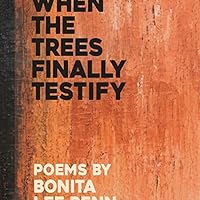
"Don't let this book pass you by!"― Library Journal Combining the personal with the political in his fifth collection, Martín Espada celebrates the bread of the imagination, the bread of the table, and the bread of justice. The heart of the collection is a series of autobiographical poems recalling family, school, neighborhood, and work experiences-from bouncer to tenant lawyer. There are moments of revelation and political transcendence here, which culminate in an elegy for the Puerto Rican poet Clemente Soto Velez, imprisoned for his advocacy of independence for Puerto Rico.
Sandra Cisneros says: “Martín Espada is the Pablo Neruda of North American authors.” Espada was born in Brooklyn, New York in 1957. He has published thirteen books in all as a poet, essayist, editor and translator. His eighth collection of poems, The Republic of Poetry, was published by Norton in October, 2006. Of this new collection, Samuel Hazo writes: "Espada unites in these poems the fierce allegiances of Latin American poetry to freedom and glory with the democratic tradition of Whitman, and the result is a poetry of fire and passionate intelligence." His last book, Alabanza: New and Selected Poems, 1982-2002 (Norton, 2003), received the Paterson Award for Sustained Literary Achievement and was named an American Library Association Notable Book of the Year. An earlier collection, Imagine the Angels of Bread (Norton, 1996), won an American Book Award and was a finalist for the National Book Critics Circle Award. Other books of poetry include A Mayan Astronomer in Hell’s Kitchen (Norton, 2000), City of Coughing and Dead Radiators (Norton, 1993), and Rebellion is the Circle of a Lover’s Hands (Curbstone, 1990). He has received numerous awards and fellowships, including the Robert Creeley Award, the Antonia Pantoja Award, an Independent Publisher Book Award, a Gustavus Myers Outstanding Book Award, the Charity Randall Citation, the Paterson Poetry Prize, the PEN/Revson Fellowship and two NEA Fellowships. He recently received a 2006 John Simon Guggenheim Memorial Foundation Fellowship. His poems have appeared in The New Yorker, The New York Times Book Review, Harper’s, The Nation, and The Best American Poetry. He has also published a collection of essays, Zapata’s Disciple (South End, 1998); edited two anthologies, Poetry Like Bread: Poets of the Political Imagination from Curbstone Press (Curbstone, 1994) and El Coro: A Chorus of Latino and Latina Poetry (University of Massachusetts, 1997); and released an audiobook of poetry on CD, called Now the Dead will Dance the Mambo (Leapfrog, 2004). Much of his poetry arises from his Puerto Rican heritage and his work experiences, ranging from bouncer to tenant lawyer. Espada is a professor in the Department of English at the University of Massachusetts-Amherst, where he teaches creative writing and the work of Pablo Neruda.
Espada's poetry continues to amaze and inspire. IMAGINE THE ANGELS OF BREAD was published in 1996, and includes several biographical and documentary style poems, some in Spanish with side-by-side translations, with the majority in English. A little taste:
From 'Thomas Jefferson and the Declaration of Food Stamps' (pg 51-2)
...I got food stamps from the Department of Agriculture with the Liberty Bell on the cover of the booklet. I opened my booklet of food stamps to see Thomas Jefferson and the Founding Fathers signing the Declaration of Independence on every one dollar coupon. At the back of the booklet, I found instructions on how to shop, and a warning that I could not buy cigarettes or beer or restaurant meals with food stamps.
I never smoked or drank or ate in restaurants. I only wanted what Thomas Jefferson said he wanted, but the back of the booklet told me I couldn't buy that with food stamps either.
Megan B. read the title poem from this collection at her Epiphany (2017) party. I'm fairly certain I read this collection back in college (Fall 2001, he was a guest at the Poetry Center along with Richard Blanco), though in reading it this time around most of the poems didn't feel familiar except for the title poem and (of course) and "When the Leather is a Whip" (of course), so maybe not? But snippets of "The Owl and the Lightning" and "The Meaning of the Shovel" also felt familiar, so I dunno. Maybe I just read a few assigned poems for class.
This was my introduction to Espada's work - he came to my high school to talk to us and lead a poetry writing workshop, and signed my copy of the book, and I have gone back to it and followed his work over the years. I teach poems from this collection to my students, and I revisit them often, and I truly hope that Espada gains more recognition as the years go by. At the risk of sounding harsh, I seem to encounter a lot of poetry being published today that... just isn't that good. This is different - this is poetry worthy of the name.
A subversive collection of poems, both jarring and intimate, which explores themes of oppression and humanism in the US and Latin America. Espada has the charged voice of a ground-level witness with a bird's-eye view. I found this book eye-opening and moving, a worthwhile read.
First time reading Martin. As a reader I instantly connected with his experiences and his father's experiences. We are not that much unalike. Reading as a student of poetry, I enjoyed his imagery, the way he expands the surroundings of the poem.
I didn't particularly care for this book myself. I bought it a number of years ago as a required book for a poetry class I was taking. I don't recall needing it much but thought that since I had had to buy it I'd eventually read the whole thing.
I picked this up at The Big Idea and couldn't put it down, so I figured I should take it home. I'm glad I did. I read most of these poems aloud to myself two or three times. Clever, literary, powerful, and just the right balance of political & personal for my tastes.
Sandra Cisneros said that, if it was up to her, Espada would be the poet laureate of the United States. Here's to hoping that someday it's up to her . . .
Espada, for me, is the poet laureate of the immigrant experience, the working class, and social protest. Being bicultural and first generation American-born myself—I see both my and my parents experience in this tremendously righteous and deeply felt work—and rendered so excellently. Fantástico. Working my way through his entire shelf. (1997/2024)
“Here in the new white neighborhood, the neighbors kept it pressed inside dictionaries and Bibles like a leaf, chewed it for digestion . . . . . . I saw it spraypainted on my locker and told no one . . . . . . watched it spiral into the ear of a disappointed girl who never sat beside me again. . .”
— Martín Espada / “Beloved Spic” / Imagine the Angels of Bread
Espada’s poetry is of and for the entire working class, and still is able to communicate cultural specificity and formal brilliance - highly recommended!
“Hands without irons become dragonflies, Red flowers rain on our hats, Subversive angels flutter like pigeons from a rooftop, This stripped and starving earth is not a grave.”
Martín Espada combines history, irony, brutal memory, and family in his writing. He writes to record and maintain historical events and people, while also writing just as easily about things closer to him in time and subject. Favorites were "The Bouncer's Confession," "My Twenty-Fifth Year Amazed The Astrologers," "Offerings to an Ulcerated God," and "Huelga."
Espada has such strong imagery in these thought-provoking poems with a strong liberal bend. His poems are colloquial in some spaces, making these poems accessible to the working class, but intricate enough to be worthy of study. I'm looking forward to continuing to read more of his work.
The bread of literary imagination... The bread of the table with resultant cultural confrontation... The bread of justice with resultant political pontification...
All are consumed and celebrated in this volume, presented as the author's fifth poetry collection.