France's defeat in the Franco-Prussian War of 1870-71 was the beginning of decades of crisis for the French Army and the French nation. Despite the incompetence of the French commanders, there was a brief moment when the French could have turned defeat to victory, near the small town of Mars-la-Tour on August 16, 1870. This classic work is one of the few books currently available in English.
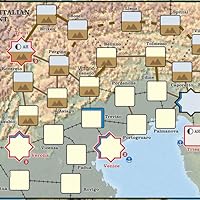
I have the rare privilege to write the first review for a book on Goodreads! I am pleased to say that this excellent account, written around 1987 would probably rate 5-stars if not for the poor maps that handicap one's ability to understand the proceedings. Luckily I had available a boardgame map from GMTs superb game 'At Any Cost: Metz, 1870'. The book covers more than the one-day of battle of the title and includes a substantial recounting of the run-up to the Franco-Prussian War, and the intense maneuvering and frontier battles that preceded Mars-La-Tour, including Spicheren and Worth/Froeschwiller. Extensive reference is given to Michael Howard's excellent book from the 1960s on the subject. The focus of Ascoli's work is narrower, the decisive action near Mars-La-Tour on August 16, 1870 which more rightfully might have been called the battle of Vionville or Flavigny. This was a classic 'meeting-engagement', where two armies blunder into one another with very incomplete knowledge of enemy strength and dispositions. Gettysburg is a classic example. Such lack of intelligence seems unimaginable today. At Mars-La-Tour the leading elements of the German Second Army (5th Cav Div. and III Corps) believed they were encountering the tail-end of the French Army of the Rhine retreating westward from Metz toward Verdun. Instead it was nearly the entire French Army in their front and about to move in their direction. They were in fact under orders from Emperor Napoleon III just that morning to do just that, fall back to the safety of Verdun and unite with the other French Army of Chalons. At Mars-La-Tour imagine Gettysburg where the Army of Northern Virginia faces only II Corps of the Army of the Potomac on Day 1. That is essentially Mars-La-Tour, where mainly III Corps under Alvensleben somehow stops the entire movement of the French Army in its tracks and is somehow not itself overwhelmed and destroyed, before late afternoon reinforcements save the day for the Germans. The book tells the story in great detail with some repetition and there are numerous B&W photos of the landscape (dating from the 1980s when the book was published). It is wonderfully written with great admiration for the bravery of the common soldiers of both sides and disdain for much of the leadership, most notably the French command which according to the author had every opportunity to win a great victory but refused. The French Corps leadership bears much of that responsibility, although the blame was to fall solely on Marshall Bazaine. Ascoli's thesis is that the French lost the war at Mars-La-Tour. However, the account does not end on August 16, but describes the carnage of Gravelotte-St. Privat two days later where once again Steinmetz of German First Army nearly lost the war through his arrogance and disobedience of orders. Then on to the denoument (to exercise my French) at Sedan a few weeks later and the end of the Second Empire and a brief recounting of the agony of France, surrender and Civil War. The Epilogue contains a fascinating summary of the 1873 trial of Bazaine. All the pettiness, vanity and savagery of France was on display in this show trial, in which he alone is blamed for the result of an entire war brought on by a sick society. Emile Zola called it 'The Debacle' in his novel on the war and it could not be a more apt summary. Yet it was also occupies a critical crossroads in both military and political history. The last great Cavalry charges occurred at Mars-La-Tour, Bredow's famous Cavalry charge on August 16th somehow achieved it's goal though of course at great cost. The introduction of the Mitrailleuse (early version of the machine-gun) and Chassepot rifles were rapidly changing the face of combat, faster even than the American Civil War just a few years earlier. And the reverberations from what Ascoli rightfully calls the German-French War led on almost on a straight line into WW1 and hence all the followed.
The Franco-Prussian war was a key turning point in the 19th Century, it marked the emergence of Germany as the pre-eminent great power in Europe, and set the stage for the First World War. The ‘day of battle’ that is the focus of the book is the battle of Mars-la-Tour - one of the earliest engagements of the war. A Day of Battle therefore is a military history that is focused on this one day of battle but to explain his perspective on why the battle is the key battle of the war Ascoli provides an overview of the whole campaign - with a particular emphasis on the battles that led to Metz being besieged.
This is not a book that is simply a narrative. Ascoli is clear that in this book he is setting out a case; that the battle of Mars-la-Tour was the pivotal battle in the war, he argues this is the case as it completes the split between France’s two main armies and therefore seals their defeat. This is potentially a controversial view - I notice that wikipedia has the result as ‘inconclusive’. So how can an ‘inconclusive’ battle be so pivotal? The answer is in two parts: 1, The battle is an encounter battle, in which the German armies were significantly outnumbered, so simply holding on was a considerable achievement. Ascoli describes one action as “There can be few more singular examples in war of a nut being used so improbably to crack a sledgehammer, or of the primacy of nerve over numbers” (p.147) which while used for one part of it could equally sum up the whole battle. 2, The battle is pivotal due to the strategic consequences. It does not matter that neither side swept the other off the battlefield. What matters is that the Germans as a consequence of not being forced off remained atop the road to verdun, cutting the french line of retreat to the rest of France and their only way to join up with the other half of their army. They were therefore forced to retreat on Metz and ultimately, following a siege, captivity.
Perhaps a corollary of the book setting out an argument - though not one that has to be there - is that Ascoli seems to like telling the reader what to think. He often makes moral judgements, accusing people of moral cowardice or even being evil. I would rather that be something that for the most part we as readers are left to make our own mind up about.
For the most part I found Ascoli’s telling of the battle itself clear and easy to follow, that was also the case with his narrative of the start of the war and initial battles. Though I found it got more confusing for later in the war, or the consequences of the battle as the Sedan campaign is arguably not very relevant to the book it is understandably only sketchily covered. The same is the case with maps; I found the maps of the battle of Mars-la-Tour itself OK, but the battles that are a consequence are much poorer covered.
This is very much an old style history that focuses on recounting events with little spice in the way of accounts from people who were there. Any voices from the battle are those of the generals rather than those in the thick of the action. This removes some immediacy from the book.
It is interesting to see a book that is on a relatively unknown battle, in a not so well known war. Ascoli ultimately makes a compelling case for the importance of the battle. But this is unlikely to be a book that is of too much interest unless you have a particular interest in battles or how one minor event can cause a chain reaction that creates waves through the rest of a conflict.
The Seven Years' War is often described as the moment when Germany came into its own, what with Prussia beating out Austria and unifying the German states into a single political and military force. But the Franco-Prussian war is where that force showed what it was truly capable of.
In the one corner, we have France: lazy, indolent, resting on its past laurels but absolutely confident of its victory. Meanwhile, over there on the other side is Germany, doing one-armed push-ups, taking twenty-mile jogs at 4am in the freezing rain, juggling sides of beef. France's allies looked at the matchup and said, you know what France, we think you can handle this one on your own, we're going to just sit here and learn from the German training methods.
It was a war that had no business being as one-sided as it was, with Prussia just out-everythinging the French: more guys, better artillery, efficient organization, a real battle plan, competent leaders. By all accounts, the French soldiers out-fought the Prussian soldiers at every opportunity, but they were simply overwhelmed. And, of course, let down by their hesitant and over-cautious, if not actually incompetent, leaders.
Of all the debacles in this war, the battle of Mars-la-Tour stands out as a pivotal turning point: the loss that demonstrated not only that France was doomed, but why; and the victory that was to give Germany a superiority complex from which it would never recover.
See, France should have won this battle. In the midst of retreating to Verdun, the commander of the Army of the Rhine decides to sleep in one day, having a leisurely croissant to accompany his scrambled eggs and coffee. This simple mid-morning delay meant that the army was a half-day's march behind where everyone expected them to be. An advance wing of the Prussian army, sent forward at breakneck pace to engage the Army of the Rhine and try to slow down their retreat, stumbles upon what it thinks are the stragglers of the French army, and attacks as per orders. Only instead of a few thousand stragglers, it was the entire 140,000-strong French army. The Prussians should have been made mincemeat of by those mitrailleuse batteries.
But that didn't happen. The Prussians realized their only hope of survival was to fight as if they were a larger army: big stupid charges, spreading their artillery to thinly surround the battle field, casually throwing away cavalry units like a post-Cold War eastern European (not naming any names) stubbing his cigarette out in his half-eaten restaurant meal. And it worked: the French fell back, and fell back again, and hemmed and hawed until the entire Prussian army could arrive and send them packing off to the illusory safety of the fortress Metz.
What a difference aerial reconnaissance made to warfare, eh? It's almost like cheating.
Ascoli's book is the treatment that this unexpectedly decisive battle deserves. Sandwiched between the background of the battle and its aftermath, its pages of troop movements can be a little dense, a little dry, but generally are livened up by the author's digs at the shortcomings of the various battle participants.