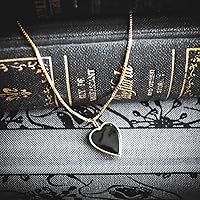
Large Format for easy reading. From the prolific female late victorian novelist whose work brought social issues such as poverty, prisons, and madness to middle-class Victorians.
Mary Elizabeth Braddon was a British Victorian era popular novelist. She was an extremely prolific writer, producing some 75 novels with very inventive plots. The most famous one is her first novel, Lady Audley's Secret (1862), which won her recognition and fortune as well. The novel has been in print ever since, and has been dramatised and filmed several times.
Braddon also founded Belgravia Magazine (1866), which presented readers with serialized sensation novels, poems, travel narratives, and biographies, as well as essays on fashion, history, science. She also edited Temple Bar Magazine. Braddon's legacy is tied to the Sensation Fiction of the 1860s.
I enjoyed this book a lot and found it very thought-provoking (as I find a lot of M.E. Braddon's books). The plot is based on a "marry in haste, repent at leisure" theme, but it was very well done. It's not a book for unexpected plot twists (you can always guess what's going to happen), but I enjoyed the journey of getting to the resolution and watching the development of the characters, especially the heroine Ida Palliser.
Bottom line, if you are a fan of books by M. E. Braddon and her ilk, give this a read.
Are you a fan of Victorian literature but you don't seem to find new book recommendations to read lately? Do you feel that you are running out of Victorian novelists because you have already read all the famous ones? Are you trying to expand your horizons and explore other Victorian authors out there? If so, this book is for you.
Let us talk about Mary Elizabeth Braddon's The Golden Calf, a Victorian writer who has been sadly forgotten. This author, who wrote around 50 novels in the Victorian era, knew the society in which she was living, and not only did she care about showing its reality, whether it was good or bad (based on my experience reading her books so far), but she also was good at depicting it, and this novel is one good example of that.
I'd like to be truly sincere here: you are not before a Victorian masterpiece. This is not a Dickens or George Eliot novel, nor do I believe the author intended to create something that could be as complex and thought-provoking as some famous Victorian novels that we all know today. Braddon was more focused on showing the Victorian people, either in a school, in the countryside, or while having a walk, and she nailed it. For instance, in The Golden Calf, she takes many elements from novels we all have read before; she puts those elements together and tells a story as simple, yet quite entertaining as it can be. In a nutshell, it is as though Jane Eyre meets Trollope's typical topics and Hardy's modest descriptions. Perhaps among its flaws is that the story is trying to 'absorb' a lot of characteristics from other Victorian books, making the author get lost at some point; she comes back, alive and safe, to give us an ending that is, albeit melodramatic, up to the rest of the novel.
Probably the question that everyone—or was it just me?—has is, why did the author choose such a title? Is she implying that the novel is a religious book? Not at all. Even when the novel keeps a lot of Victorian values in it, it has nothing to do with the story of Moses and the golden calf. Not directly anyway. Our protagonist, Ida Palliser, a young girl who lives in a school for girls and is mistreated by some of the personnel and alumnae, will soon find herself making a decision that might change her life from that moment on. The title is somehow associated with Ida's decision and destiny, as well as a few characters who get substantially involved in her life.
In short, my dear friends, here you have a compelling Victorian story that will make you have a good time while reading it. I must confess I started to read it at the end of the year while decorating my Christmas tree—the first chapters—and it couldn't have been a more enjoyable experience.
My rating on a scale of 1 to 5: Quality of writing [4/5] Pace [4/5] Plot development [4/5] Characters [4/5] Enjoyability [4.5/5] Insightfulness [3.5/5] Easy of reading [5/5] Photos/Illustrations [N/A]
This may be my last Braddon. Equally predictable as Lady Audley's Secret, if not more so, and certainly less engaging. I am not sure I would have finished it if not for the ease of audio format.
Still, Braddon has an art for quiet humor, and I found myself far more impressed by the witty banter and development of minor characters, such as Aunt Bessy and Horace, than in the story itself.
A fairly typical Gothic novel. Not one of the cream of the crop.
This is a book about a young woman in the 19th century in England who is the daughter of a captain in the British India service who has now been let out of the army at half pay. As a result, she's very poor, because he's taken another wife and has a kid with her. So he farms her out to this young woman's boarding school where she is a pupil-teacher and she will get a reference at the end of her time in order to get a good job as a governess. she's best friends with this girl whose family is rich, so this girl invites our protagonist, whose name is Ida, to come for the summer holiday at her family's home. There she meets the whole family, who falls in love with her, and she also meets one of the two brians in the family, cousins of her best friend. Nearby lives Urania ryland, who is Ida's sworn enemy, mainly on account of Ida's great beauty. She loves to rub salt in the wound of Ida's poverty. She has heard ita mentioned to her best friend bess that she would marry for money. So she has the idea to play a practical joke on Ida and pretend that the Brian that shows up on Bessie's birthday is the rich Brian and not the poor brian. when Ida goes back to school, the poor Brian comes along the river path and flirts with her and let's her think that he's the rich brian. Well there's all kinds of enemies that Ida has at the school because she's so pretty, so one of them lays a trap for her, and tells the head mistress that she has been meeting this young man on her River walks. Although nothing untoward has happened, the headmistress also hates Ida so any little thing she will take to get rid of her and be able to keep a large part of the 50 lb that Mr pallister paid for his daughter suits her just fine. So when this young man finds out that she gets fired he offers to marry her. Well Ida had to think that's a good idea because he's Rich right? so they get married in this little church and lo and behold she finds out he's the poor brian. She hates his guts so she leaves him and she starts home for her father's miserable little Hovel in dieppe, France. Well her rich friend Bessie finds out she got fired and she gets her aunt to hire her as a companion. So Ida spendw a wonderful year living with Aunt Betsy and getting paid 10 lb a quarter for being her companion. another year comes around and on Bessie's birthday the poor Brian shows up and claims his wife. The whole family is indignant that Ida has left him and they tell her that it's her duty to be the wife of the poor brian. So off she goes to lead her miserable life with this pendejo. He turns out to be a raving alcoholic. So her life is doubly miserable. But as in all of these old English romances, there is a light at the end of the tunnel.
Ida Palliser is an impoverished young woman whose feckless father has dumped her in a boarding school and left her to fend for herself. The story involves a secret marriage, Ida's efforts to find a position in life, and the tribulations she endures before finding true love.
It's a typical Braddon romance, where the themes of marriage, and women's dependence and subjection to men are central.
This is a wonderfully engaging story and Ida Pallister is a fun heroine. She’s bright, intellectual, and musically talented. But she suffers from being duty bound and hiding her shame.