

What do you think?

Wasting time on the internet
Using clear, readable prose, conceptual artist and poet Kenneth Goldsmith’s manifesto shows how our time on the Internet is not really wasted but is quite productive and creative as he puts the experience in its proper theoretical and philosophical context.
Kenneth Goldsmith wants you to rethink the Internet. Many people feel guilty after spending hours watching cat videos or clicking link after link after link. But Goldsmith sees that “wasted” time differently. Unlike old media, the Internet demands active engagement—and it’s actually making us more social, more creative, even more productive.
When Goldsmith, a renowned conceptual artist and poet, introduced a class at the University of Pennsylvania called “Wasting Time on the Internet”, he nearly broke the Internet. The New Yorker, the Atlantic, the Washington Post, Slate, Vice, Time, CNN, the Telegraph, and many more, ran articles expressing their shock, dismay, and, ultimately, their curiosity. Goldsmith’s ideas struck a nerve, because they are brilliantly subversive—and endlessly shareable.
In Wasting Time on the Internet, Goldsmith expands upon his provocative insights, contending that our digital lives are remaking human experience. When we’re “wasting time,” we’re actually creating a culture of collaboration. We’re reading and writing more—and quite differently. And we’re turning concepts of authority and authenticity upside-down. The Internet puts us in a state between deep focus and subconscious flow, a state that Goldsmith argues is ideal for creativity. Where that creativity takes us will be one of the stories of the twenty-first century.
Wide-ranging, counterintuitive, engrossing, unpredictable—like the Internet itself—Wasting Time on the Internet is the manifesto you didn’t know you needed.
Kenneth Goldsmith wants you to rethink the Internet. Many people feel guilty after spending hours watching cat videos or clicking link after link after link. But Goldsmith sees that “wasted” time differently. Unlike old media, the Internet demands active engagement—and it’s actually making us more social, more creative, even more productive.
When Goldsmith, a renowned conceptual artist and poet, introduced a class at the University of Pennsylvania called “Wasting Time on the Internet”, he nearly broke the Internet. The New Yorker, the Atlantic, the Washington Post, Slate, Vice, Time, CNN, the Telegraph, and many more, ran articles expressing their shock, dismay, and, ultimately, their curiosity. Goldsmith’s ideas struck a nerve, because they are brilliantly subversive—and endlessly shareable.
In Wasting Time on the Internet, Goldsmith expands upon his provocative insights, contending that our digital lives are remaking human experience. When we’re “wasting time,” we’re actually creating a culture of collaboration. We’re reading and writing more—and quite differently. And we’re turning concepts of authority and authenticity upside-down. The Internet puts us in a state between deep focus and subconscious flow, a state that Goldsmith argues is ideal for creativity. Where that creativity takes us will be one of the stories of the twenty-first century.
Wide-ranging, counterintuitive, engrossing, unpredictable—like the Internet itself—Wasting Time on the Internet is the manifesto you didn’t know you needed.
256 pages, Paperback
First published August 23, 2016
Ratings & Reviews
Friends & Following
Create a free account to discover what your friends think of this book!
Community Reviews
Displaying 1 - 30 of 87 reviews

September 14, 2016
Full review to come.
Unbiased rating based upon a copy won through the Goodreads First Reads program.
Unbiased rating based upon a copy won through the Goodreads First Reads program.

Read
February 25, 2021Goldsmith has a very funny notion of “wasting time on the Internet.” His wasting time on the Internet seems to consist of variations on Yoko Ono's performance art games, not idly scrolling through Instagram in a depressive haze or frantically looking for a certain amateur lesbian video you vaguely remember. Thereby, it's hard to get much of value here, given that he works from fundamentally wrongheaded premises, and then uses faux-phenomenology to dig his way out. I was hoping for a bracing, contrarian case for the meaningless wander through cyberspace – even if I'm pretty suspect of such defenses – but what I got wasn't even an argument.

August 20, 2017
Videorecensione: https://youtu.be/Osos9T5Fn2I

January 29, 2017
This started out super interesting. It is authored by a professor at the University of Pennsylvania who actually taught a class called "Wasting Time on the Internet" -- a social science look at how we spend our time when we are doodling around out there. Some of the class exercises included:
* Data duels - two people exchange laptops, stand back to back, walk 10 paces, then turn around and delete one document from the other's computer (and empty the trash so there's no getting it back), and close all windows so there's no way to know what was deleted.
* Work as a group to invent a rumor. Spread the rumor on as many social media sites as possible.
* See who can tally the largest dollar amount in their Amazon shopping cart in 15 minutes time. The winner spent $23,475,104.18 by adding vintage stamps, sports memorabilia, and jewelry.
There were many other things this class tried as a group. At one point, class members were asked to stand up and share the formulas they use to create passwords. Turns out, passwords are highly personal and often contain some clues as to what means the most to us. Can you imagine sharing yours? Would you be embarrassed to admit what those numbers and letters represent for you?
So while it's true that we are in a sense wasting time when we are online, another perspective is that we are actually highly engaged and connected to others. We are seeking connection. The book bogged down a bit for me in the second half as it became more academic in nature. Finished it but I skimmed so it didn't stay with me. Decent enough for the food for thought the first few chapters provided.
* Data duels - two people exchange laptops, stand back to back, walk 10 paces, then turn around and delete one document from the other's computer (and empty the trash so there's no getting it back), and close all windows so there's no way to know what was deleted.
* Work as a group to invent a rumor. Spread the rumor on as many social media sites as possible.
* See who can tally the largest dollar amount in their Amazon shopping cart in 15 minutes time. The winner spent $23,475,104.18 by adding vintage stamps, sports memorabilia, and jewelry.
There were many other things this class tried as a group. At one point, class members were asked to stand up and share the formulas they use to create passwords. Turns out, passwords are highly personal and often contain some clues as to what means the most to us. Can you imagine sharing yours? Would you be embarrassed to admit what those numbers and letters represent for you?
So while it's true that we are in a sense wasting time when we are online, another perspective is that we are actually highly engaged and connected to others. We are seeking connection. The book bogged down a bit for me in the second half as it became more academic in nature. Finished it but I skimmed so it didn't stay with me. Decent enough for the food for thought the first few chapters provided.

April 4, 2022
as an extremely online person i found it a bit too naive, my idea of wasting time on the internet is scrolling in my bed through the instagram of a reality show star or oversharing on twitter so i can avoid processing a single thought
the author has a very optimistic view on dividing attention and not being present that i cannot understand, i think the experiments in his class are interesting but i doubt he knows what being extremely online is really about
on a positive note, it gave me glimpses of the early internet days. gosh i miss being a digital flaneur, clicking around as a merely spectator, wandering around the net
the author has a very optimistic view on dividing attention and not being present that i cannot understand, i think the experiments in his class are interesting but i doubt he knows what being extremely online is really about
on a positive note, it gave me glimpses of the early internet days. gosh i miss being a digital flaneur, clicking around as a merely spectator, wandering around the net

October 29, 2016
A friend made an astute comparison: Goldsmith is a bit like Dawkins. They both have an essentially reasonable argument to make, but are so one-dimensional and strident in their advocacy that even as an atheist and someone who thinks the internet is mainly a good thing for human intelligence, interaction and creativity, I can't help but kinda despise them.
Anyway the good bits are where Goldsmith shows how we are actually engaging more with each other and with our own creativity via social media, especially on those pesky mobile phone apps today's Jeremiahs love to lament. He describes snippets from his eponymous course to show how much the way we work and play on the internet is a part of our lives now, for good or ill, and interesting ways to subvert and examine that experience.
Then he delves into tired post modern questions of authorship (I do think our traditional conceptions of authorship and creativity are wrong and limited, but I also think this is actually nothing new, and that some form of copyright law is important to protect artists' livelihoods as long we labour under a currency based capitalist system) and a somewhat gratuitous overview of conceptual art created around the internet and the ambiguity of authorship. These sections are either trite, questionable because of the author's hobby horse taking over the ride, or just irrelevant to what the internet means to many of us.
So, this is overall a mixed bag. A good piece of advocacy for the benefits of our increasingly digital orientations, but also a bit too focused on what all this means, or seems to mean, to self-proclaimed avant-gardists.
Anyway the good bits are where Goldsmith shows how we are actually engaging more with each other and with our own creativity via social media, especially on those pesky mobile phone apps today's Jeremiahs love to lament. He describes snippets from his eponymous course to show how much the way we work and play on the internet is a part of our lives now, for good or ill, and interesting ways to subvert and examine that experience.
Then he delves into tired post modern questions of authorship (I do think our traditional conceptions of authorship and creativity are wrong and limited, but I also think this is actually nothing new, and that some form of copyright law is important to protect artists' livelihoods as long we labour under a currency based capitalist system) and a somewhat gratuitous overview of conceptual art created around the internet and the ambiguity of authorship. These sections are either trite, questionable because of the author's hobby horse taking over the ride, or just irrelevant to what the internet means to many of us.
So, this is overall a mixed bag. A good piece of advocacy for the benefits of our increasingly digital orientations, but also a bit too focused on what all this means, or seems to mean, to self-proclaimed avant-gardists.

February 4, 2017
1. Interesting ideas and tidbits but no coherent theme that could help me tell you what this book was about exactly.
2. Excessive use of the term "meatspace" to describe IRL interactions (>0).
3. I think it is ironic that I wasted time NOT on the internet reading Wasting Time on the Internet.
2. Excessive use of the term "meatspace" to describe IRL interactions (>0).
3. I think it is ironic that I wasted time NOT on the internet reading Wasting Time on the Internet.

April 10, 2024
this book led me to spend even more time on the internet

December 5, 2018
Fascinating.

October 11, 2016
After 100 pages oozing with pretension I had to quit. It read like a graduate philosophy student was trying to persuade his professor that it was okay to stay glued to his phone during class. Also, the ways to waste time on the internet in the back were a joke. Seriously, what on earth is the point of these exercises?
Maybe things are different in New York City and people constantly being glued to their devices when in the presence of others is considered to be acceptable and not rude. Maybe Goldsmith wants to live his life absorbed in cyberspace with people he will most likely never meet, collection information he will hardly remember tomorrow. I certainly do not.
Maybe things are different in New York City and people constantly being glued to their devices when in the presence of others is considered to be acceptable and not rude. Maybe Goldsmith wants to live his life absorbed in cyberspace with people he will most likely never meet, collection information he will hardly remember tomorrow. I certainly do not.

January 11, 2026
At first, I thought this book was going to be a gelatinous essay on why the internet is a good thing. Instead, Goldsmith reminds us that the world inside our devices is far from new. He invites us not just to think about the way we connect with the digital universe, but more how it interacts with us. Written in 2016, so many chunks of this book still apply to our technological paradise today. But, with the rise of generative AI and greater commercialization of the web, I would love to see an updated version or maybe even a part 2. Anyone that uses the internet or smart devices in any way should read this book.

March 31, 2024
Picked this up at random based on the cover and was pleasantly surprised. Very interesting thoughts about the internet, its perks and dark sides, and about art. The art parts were absolutely my favourite.
I would have hated the authors ”Wasting Time on the Internet” live course, but I’m glad I read this book.
I would have hated the authors ”Wasting Time on the Internet” live course, but I’m glad I read this book.

December 21, 2017
Oväntat arty och idérik, med flanörfaktor. Lite postmodern och subversiv därtill. Kapitelrubriker som "Our browser history is the new memoir" och "Every new media requires new ways of thinking."

April 24, 2021
This is a mind blowing reading. Deep, enlightening, provoking and yet friendly and generous. Everything here is the occasion for rethinking our social and creative practices. Our miserable feelings of guilt, waste and loss in the digital era come out relieved though a large historical journey through modernism.
Goldsmith, as usual, takes stage for rocking the house.
Goldsmith, as usual, takes stage for rocking the house.

September 10, 2016
I don't know that this is a 5-star book, really, but it was fascinating, and it made me think about ways that life can be its own sort of art object, and how minutae can be sometimes sublime. The book introduced me to a lot of new artists and writers, and expanded my notion of what art can be (creating giant Instagram photos from other people's accounts and exhibiting them, for instance). Goldsmith also pushes back against the common complaint that our devices make us less connected to each other and less focused, and I found (some of) his arguments convincing, especially when he described how his kids and their friends hang out together while they're on their phones and how they bond that way. I was inspired by the creativity here, for sure.
January 12, 2017
Introduction is GREAT. Chapter 1, on his eponymous class at Penn was so-so (at best), and from there I started skimming, with, really, nothing else I found worth reading. So, no.
Here's most of the Introduction: https://books.google.com/books?id=Gfc... If you see this at the library, you may want to check it out, read the Intro, and STOP. That's my advice. YMMV.
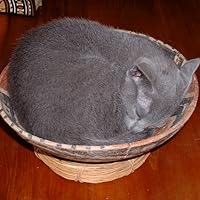
Title is wonderful, as is the soulful cover-kitty. Yet another book I started with high hopes! Soon dashed, sigh.
Here's the NYT review that led me to read it (scroll down):
http://www.nytimes.com/2016/10/09/boo...
Here's most of the Introduction: https://books.google.com/books?id=Gfc... If you see this at the library, you may want to check it out, read the Intro, and STOP. That's my advice. YMMV.
Title is wonderful, as is the soulful cover-kitty. Yet another book I started with high hopes! Soon dashed, sigh.
Here's the NYT review that led me to read it (scroll down):
http://www.nytimes.com/2016/10/09/boo...

July 23, 2020
I wasted time reading this when I could have been on the internet instead.
There's a lot of pretentious art theory nonsense in here which the author probably thinks sounds clever, provocative and challenging but in fact bears little relationship to the real world or how people actually use the internet. Some good ideas shine through, and Goldsmith makes some useful links back to literary and art history, but the rest is tiresome and self-indulgent.
There's a lot of pretentious art theory nonsense in here which the author probably thinks sounds clever, provocative and challenging but in fact bears little relationship to the real world or how people actually use the internet. Some good ideas shine through, and Goldsmith makes some useful links back to literary and art history, but the rest is tiresome and self-indulgent.

February 10, 2024
as someone not versed much in philosophy or art but very versed in internet it was an fun read imo. I thought the chapter on his class at Penn and later in the book the comparisons between art movements and current internet trends really interesting.
I don’t think he necessarily made an argument for Why you should be wasting time on the internet but rather alternative ways to frame many of those online activities.
tldr I thought it was an easy cool read
I don’t think he necessarily made an argument for Why you should be wasting time on the internet but rather alternative ways to frame many of those online activities.
tldr I thought it was an easy cool read
January 6, 2017
An exercise in shallow arguments and false equivalencies. Dude thinks he's clever. Dude ain't clever.
January 1, 2020
The introduction offered so much promise but it turned out to be mainly descriptions of the activities Goldsmith had his students do in his university class 'Wasting Time on the Internet'.

February 17, 2018
A conceptual artist takes an amiably contrarian look at issues over which there is much hand wringing these days, challenging our ideas about what it means to be social, present, creative, etc. If he had shaved off 50 or even 100 pages, I could have given it a fifth star.

April 21, 2020
glad i've finished this book bc now i get to spend time on goodreads again!

December 15, 2019
Helarious. Might have to buy this book and give some of these a shot on a slow day 😂

June 9, 2019
la primera mitad bastante chula la segunda no tanto

October 3, 2016
I saw a cover shot and a short blurb review for this in a magazine and thought it seemed like it should be an amusing bit of fluff, so I picked it up the next time I went to the library. I should have remembered the old adage about books and their covers.
The introduction and first chapter are fun, especially when the author writes about the actual college course he presented called "Wasting Time on the Internet." It's a pretty interesting study in group dynamics and modern tech habits. There's probably a pretty cool documentary to be made there.
But then Goldsmith stops being anecdotal and gets academic. The rest of the chapters basically outline how decades or even centuries ago various writers, painters, photographers and other artists were doing the same things being done now on the internet or roughly predicted how we would behave when something like the internet came to be. His comparison of art history and the internet seems to point to the conclusions that everything old is new again (or "All this has happened before, and all this will happen again") and that the democratization effect of the internet makes us all artists in our own right if we so choose to declare our time wasting as such. All this is not as fun as the first chunks, but tolerably interesting.
I had to grit my teeth while reading the back-of-the-book list of 101 suggestions of how to waste time on the internet as so many of them depend on pranking, annoying, inconveniencing or disrespecting other people. "How to be an asshole on the internet" may have been a better title, says the uptight control freak in me.
The introduction and first chapter are fun, especially when the author writes about the actual college course he presented called "Wasting Time on the Internet." It's a pretty interesting study in group dynamics and modern tech habits. There's probably a pretty cool documentary to be made there.
But then Goldsmith stops being anecdotal and gets academic. The rest of the chapters basically outline how decades or even centuries ago various writers, painters, photographers and other artists were doing the same things being done now on the internet or roughly predicted how we would behave when something like the internet came to be. His comparison of art history and the internet seems to point to the conclusions that everything old is new again (or "All this has happened before, and all this will happen again") and that the democratization effect of the internet makes us all artists in our own right if we so choose to declare our time wasting as such. All this is not as fun as the first chunks, but tolerably interesting.
I had to grit my teeth while reading the back-of-the-book list of 101 suggestions of how to waste time on the internet as so many of them depend on pranking, annoying, inconveniencing or disrespecting other people. "How to be an asshole on the internet" may have been a better title, says the uptight control freak in me.

September 4, 2016
This book presents a scholarly defense of the validity and art of human interaction online, an extended academic rephrasing of the argument made time and again on Tumblr and other vibrant online communities: conversation, dialogue, and communication through the internet are genuine, innovative, and do not indicate the downfall of humanity.
The aspects of Goldsmith's argument that made it more effective were his comparison to the surrealist movement, his classroom experiments in the application of these ideas, and most significantly, his comparison with various modern art exhibits. Goldsmith venerates internet culture as art, inevitable from his background as a poet, a professor, and poet laureate for the Museum of Modern Art. This leads to a pervasive sense of wonder throughout, which is largely charming but occasionally nauseating. Goldsmith also adopts a rather narrow perspective, that of someone with the means for constant connection to the internet and the art education to look at it without much thought to access problems, or the limits of practicality.
Goldsmith asserts that we should look at the internet as a massive arena for creativity, innovative in its technology but not its basic motivations for interaction. The reasoning that brings him to this conclusion, although from the lofty perspective of a self-proclaimed intellectual, are nonetheless interesting and worthwhile.
The aspects of Goldsmith's argument that made it more effective were his comparison to the surrealist movement, his classroom experiments in the application of these ideas, and most significantly, his comparison with various modern art exhibits. Goldsmith venerates internet culture as art, inevitable from his background as a poet, a professor, and poet laureate for the Museum of Modern Art. This leads to a pervasive sense of wonder throughout, which is largely charming but occasionally nauseating. Goldsmith also adopts a rather narrow perspective, that of someone with the means for constant connection to the internet and the art education to look at it without much thought to access problems, or the limits of practicality.
Goldsmith asserts that we should look at the internet as a massive arena for creativity, innovative in its technology but not its basic motivations for interaction. The reasoning that brings him to this conclusion, although from the lofty perspective of a self-proclaimed intellectual, are nonetheless interesting and worthwhile.

September 27, 2018
I did not enjoy reading this book. Often, the author starts a very compelling discussion and ends it with a positive checkmark on the internet's column. His observations are accurate but his conclusions are weak and problematic.
He finds -let's call them- analogue people nostalgist but I think he is not taking an objective, or critical, or even a sceptical stance, which makes him in my view a favouritist.
I would recommend -to the readers and the author too- e-flux journal's E-Flux Journal - The Internet Does Not Exist and Bruce Sterling's The Epic Struggle of the Internet of Things as alternatives.
He finds -let's call them- analogue people nostalgist but I think he is not taking an objective, or critical, or even a sceptical stance, which makes him in my view a favouritist.
I would recommend -to the readers and the author too- e-flux journal's E-Flux Journal - The Internet Does Not Exist and Bruce Sterling's The Epic Struggle of the Internet of Things as alternatives.

March 19, 2017
The first half of this book was so interesting. The best way I can describe it is...turning that old person telling a millennial to get off their phone into a study of why being glued to your phone is the future of human connection, how and why. Insightful to a degree for sure. However, when this author strays from his own class experiment and reports on chapters of other people's work, I'll admit I started skimming. They were thinly tied back to the theme of exploring concepts the internet has created, but it took on a clinical research paper feel when the personal perspective took a backseat.
Addendum: The list of 100 ways to waste time on the internet in the back of the book is a stunning addition for procrastinators everywhere.
Addendum: The list of 100 ways to waste time on the internet in the back of the book is a stunning addition for procrastinators everywhere.
April 1, 2020
"Abundance is a lovely problem to have, but it produces a condition whereby the management of my cultural artifacts -their acquisition, filing, redundancy, archiving and redistribution- is overwhelming their actual content. I tend to shift my artifacts around more than I tend to use them."
"In his never-ending search to join these two dispartate status, Breton started attending séances, which became required attendance for all aspiring surrealists. During the séances, Breton noticed several of his acolytes nodding off. One in particular, the poet Revé Crevel, revealed himself as a sleep talker, babbling nonsense in the twilight of consciousness. In Crevel's dozing, Breton discovered a sort of portable séance, on that could be whisked out of the tomb like silence of the parlor and dropeed into noisy public spaces, inserting the dreamer into the midst of the crowds. From then on, he convinced Crevel to start falling asleep in cafés where, once he was presumed to be fast asleep (there was alwats some doubt that this was just theater) he was pepered with questions by a circle of awake poets, who transcribed these conversations as the basis for future poems. Breton was delighted with the results: Crevel's answers were perfectly surreal; his responses never quite matched up with the qeustions, which he took as direct manifestations culled from the subconscious, a balancing act between wakefulness and sleep. Rivalries grew among the surrealist poets as to who could be the best public sleeper. Commenting on this, Breton wrote "Every day they want to spend more time sleeping . Their words, recorded, intoxicate them. Everywhere, anywhere, they fall asleep. In the cafés, and amid the beer-glases, the saucers." One aspiring poet posted a note on his door each night before going to bed that read "THE POET IS WORKING".
Proposing sleepwalking as an optimal widespread societal condition, Breton once asked, "When will we have sleeping logicians, sleeping philoshopers?". It seems the surrealist vision of a dream culture has been fully rrealized in today's technologies. We are awash in a new electronic collective unconscious; strapped to several devices, we're half-awake, half-asleep. We speak on the phone while surfing the web, partially hearing what's being said to us while simultaneously answering e-emails and checking status updates. I cant' help but notice we've become very good at being distracted. Breton would be delighted."
"Marcel Duchamp's concept of the "Infrathin". A state between states. When asked to define the infrathin, Duchamp claimed it couldn't be defined, only described: "the warmth of a seat which has just been left" or "velvet trousers/their whistling sound in waling by brushing of the 2 legs is an infrathin separation signaled by sound". The infrathin is the lingering warmth of a piece of paper just after in emerges from the laser printer or the chiming startup sound the computer makes, signifying its transition from death to life. When composer Brian Eno was commisioned to compose the Windows 95 statup sound, he had to fulfill the requirements that it be "optimistic, futuristic, sentimental, emotional"."
"Look at those images objectively. Scarcely on of the real things in there would have made any sense to anyone in 1982, or even in 1992. People of those times would not have known what they were seeing with those New Asthethic images" -Bruce Sterling on memes and Internet asthethic.
On Pinterest:
"As opposed to Flickr or Instagra, every photo on Pinterest is a ready-made or a collage of preexisting images. Tho achieve this, the site uses a data compression algorithm called deduplitcation, which is a wayt of reducing the size of images buy outsourcing redudntan chunks of data to a single file that cab be inserted into an image on demand. So, let's say that I've pinned an image of a dog with brown eyes. Housed in the Pinterest database is an untold number of photos of dogs with brown eyes. The algorithm scans all of those eyes and determines that in many cases portions of the pixel configurations are identical. So when I load my dog, the algorithm shoots a reference with that exact pixel set and inserts it where my dog's eye is- My dog, then, is not a photograph of a dog in the traditional sense but instead is patched together from a database of preexisting elements on the fly. Each image is at once both unique and cloned, reverberating with modernism's constructivist methods of collaghe and assemblage, as well as postmodernism's mimetic strategies of appropiation and sampling."
"Adults and children sometimes have boards in their bedrooms or living-rooms on which they pin pieces o paper, letters, snapshots, reproductions of paintings, newspaper cuttings, original drawings, postcards. On each board all the images belong to the same language and are all more or less equal within it, because they have been chosen in a highly personal way to match and express the experience of the rooms' inhabitant. Logically, these boards should replace museums." John Berber in 1972 book Ways of seeing.
"Do not forget that a poem, although it is composed in the language of informaton, it is not userd in the language-game of giving information. - Ludwig Wittgenstein.
"Michael Wood calls distraction another kind of concentration "The distracted person is not just absent or daydreaming, he/she is attracted, however fitfully, by a rival interest".
"In a unanticipated twist to John Perry Barlows's 1994 prediction that in the digital age we'd be able to enjoy wine without the bottles, we've now come to prefer the bottles to the wine."
"Paul Virilio has a concept he calls the integral accident which says that every time a technology is invented, an accidents is invented with it. so, when the ship is invented, you get a shipwreck; the train, a train weeck, the airplane, the plane crash."
"In his never-ending search to join these two dispartate status, Breton started attending séances, which became required attendance for all aspiring surrealists. During the séances, Breton noticed several of his acolytes nodding off. One in particular, the poet Revé Crevel, revealed himself as a sleep talker, babbling nonsense in the twilight of consciousness. In Crevel's dozing, Breton discovered a sort of portable séance, on that could be whisked out of the tomb like silence of the parlor and dropeed into noisy public spaces, inserting the dreamer into the midst of the crowds. From then on, he convinced Crevel to start falling asleep in cafés where, once he was presumed to be fast asleep (there was alwats some doubt that this was just theater) he was pepered with questions by a circle of awake poets, who transcribed these conversations as the basis for future poems. Breton was delighted with the results: Crevel's answers were perfectly surreal; his responses never quite matched up with the qeustions, which he took as direct manifestations culled from the subconscious, a balancing act between wakefulness and sleep. Rivalries grew among the surrealist poets as to who could be the best public sleeper. Commenting on this, Breton wrote "Every day they want to spend more time sleeping . Their words, recorded, intoxicate them. Everywhere, anywhere, they fall asleep. In the cafés, and amid the beer-glases, the saucers." One aspiring poet posted a note on his door each night before going to bed that read "THE POET IS WORKING".
Proposing sleepwalking as an optimal widespread societal condition, Breton once asked, "When will we have sleeping logicians, sleeping philoshopers?". It seems the surrealist vision of a dream culture has been fully rrealized in today's technologies. We are awash in a new electronic collective unconscious; strapped to several devices, we're half-awake, half-asleep. We speak on the phone while surfing the web, partially hearing what's being said to us while simultaneously answering e-emails and checking status updates. I cant' help but notice we've become very good at being distracted. Breton would be delighted."
"Marcel Duchamp's concept of the "Infrathin". A state between states. When asked to define the infrathin, Duchamp claimed it couldn't be defined, only described: "the warmth of a seat which has just been left" or "velvet trousers/their whistling sound in waling by brushing of the 2 legs is an infrathin separation signaled by sound". The infrathin is the lingering warmth of a piece of paper just after in emerges from the laser printer or the chiming startup sound the computer makes, signifying its transition from death to life. When composer Brian Eno was commisioned to compose the Windows 95 statup sound, he had to fulfill the requirements that it be "optimistic, futuristic, sentimental, emotional"."
"Look at those images objectively. Scarcely on of the real things in there would have made any sense to anyone in 1982, or even in 1992. People of those times would not have known what they were seeing with those New Asthethic images" -Bruce Sterling on memes and Internet asthethic.
On Pinterest:
"As opposed to Flickr or Instagra, every photo on Pinterest is a ready-made or a collage of preexisting images. Tho achieve this, the site uses a data compression algorithm called deduplitcation, which is a wayt of reducing the size of images buy outsourcing redudntan chunks of data to a single file that cab be inserted into an image on demand. So, let's say that I've pinned an image of a dog with brown eyes. Housed in the Pinterest database is an untold number of photos of dogs with brown eyes. The algorithm scans all of those eyes and determines that in many cases portions of the pixel configurations are identical. So when I load my dog, the algorithm shoots a reference with that exact pixel set and inserts it where my dog's eye is- My dog, then, is not a photograph of a dog in the traditional sense but instead is patched together from a database of preexisting elements on the fly. Each image is at once both unique and cloned, reverberating with modernism's constructivist methods of collaghe and assemblage, as well as postmodernism's mimetic strategies of appropiation and sampling."
"Adults and children sometimes have boards in their bedrooms or living-rooms on which they pin pieces o paper, letters, snapshots, reproductions of paintings, newspaper cuttings, original drawings, postcards. On each board all the images belong to the same language and are all more or less equal within it, because they have been chosen in a highly personal way to match and express the experience of the rooms' inhabitant. Logically, these boards should replace museums." John Berber in 1972 book Ways of seeing.
"Do not forget that a poem, although it is composed in the language of informaton, it is not userd in the language-game of giving information. - Ludwig Wittgenstein.
"Michael Wood calls distraction another kind of concentration "The distracted person is not just absent or daydreaming, he/she is attracted, however fitfully, by a rival interest".
"In a unanticipated twist to John Perry Barlows's 1994 prediction that in the digital age we'd be able to enjoy wine without the bottles, we've now come to prefer the bottles to the wine."
"Paul Virilio has a concept he calls the integral accident which says that every time a technology is invented, an accidents is invented with it. so, when the ship is invented, you get a shipwreck; the train, a train weeck, the airplane, the plane crash."
This entire review has been hidden because of spoilers.

May 16, 2016
I recommend that just about everyone read this book: If you are concerned about others around you, or those in society who "waste" too much time on the Internet, or if you, like myself, are an Internet time waster. It's a quick, easy, and very informative read. And if you're an amateur, skip to the back for some excellent suggestions on how to waste time on the Internet!
I received a copy of this book for free through Goodreads Giveaways.
I received a copy of this book for free through Goodreads Giveaways.
Displaying 1 - 30 of 87 reviews