

What do you think?

Balraj Sahni: An Autobiography
An autobiography of the veteran Hindi film actor (and short story writer/theatre personality/prominent member of the Indian People's Theatre Association), Balraj Sahni. Written during his acting career, sometime in the late 60s.
218 pages, Paperback
First published January 1, 1979
Ratings & Reviews
Friends & Following
Create a free account to discover what your friends think of this book!
Community Reviews
Displaying 1 - 6 of 6 reviews

October 16, 2015
Published, according to various sources, by Hind Pocket Books, this autobiography was originally written in Hindi. This version (it can be read online, here) is in English, so has obviously been translated by someone—I have no idea who. Chronologically speaking, it’s an interestingly placed book, because while it’s obviously been written sometime in the late 60s (Sahni refers to
Haqeeqat
, which was released in 1964, as already having been made, but mentions Parikshit Sahni, whose first major film was
Anokhi Raat
, in 1968, as still doing the rounds of the producers, trying to get a role as an adult actor).
What Balraj Sahni actually focuses on in the course of autobiography is not his life as a film star, but his life as child (and later a man) fascinated by films (and by various other, often vastly different) things. He begins with his childhood, as the son of a wealthy businessman in Rawalpindi—where, in the hinterland, Balraj Sahni had his first brush with cinema: Hollywood films (pre Hayes Code!) screened in villages, the films replete with adventure and romance and more, some of which would definitely be X-rated now.
From there, Sahni’s narrative moves on to his days as a schoolboy in Rawalpindi, and the arrival of the first cinema theatre in the city—to which he and fellow schoolboys would go, giving their parents the excuse that these Hollywood films were all based on classic literature, so were a way of expanding their knowledge of Western literature. Which our parents took with a pinch of salt, Sahni admits.
This tinged-with-humour, often self-effacing (even self-deprecating) tone is followed right through the book. Considering he went on to become such a major actor—not just popular, but well-respected and with a dignity that has seen him being lauded by both critics and the aam janta—Balraj Sahni comes across as a man with few illusions about himself. The instances where he talks disparagingly about himself (or, in one memorable place, where he quotes Clare Mendonca—then editor of Filmfare, after whom the Clare Awards were known—as having compared his acting in Badnaam to that of a corpse) are a refreshing change from the more usual self-glorification of the famous.
The autobiography is pretty much about Sahni’s professional life, and that not just in films—to which he came relatively late, with his first major film, Dharti ke Laal, being released in 1946, when Sahni was 33 years old. Before that, he had taught at Shantiniketan, along with his wife Damayanti ‘Dammo’; he and Dammo had also worked at Mahatma Gandhi’s Sevagram; and, for four years during World War II, the couple had worked at the BBC in London.
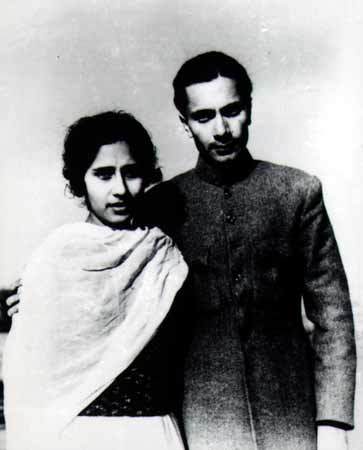
And then there’s Sahni’s association with communism, and with the Indian People’s Theatre Association (IPTA), which he joined while in Bombay, and which was to go on to be such an important part of his life in the years just after his return to India from the UK. IPTA first made Balraj Sahni a recognizable face onscreen (Dharti ke Laal was an IPTA production).

IPTA also brought him into contact with other like-minded individuals, who were to go on to become familiar names (and in some cases, familiar faces) to cinemagoers. Sahir Ludhianvi and Chetan Anand, among them—and Durga Khote, whose stage debut was in an IPTA play.
Sahni’s belief in communism shines through every now and then as he recounts his work at IPTA and with the Communist Party. He talks about what communism meant in the pre-and post-Partition period, how it should have worked, what it achieved and what it could have achieved. It’s an interesting political thread running through what might have been expected to be a predominantly cinema-centric memoir.
But there’s a lot about cinema in it. Sahni steers clear of gossip about personal lives; in fact, people looking for Sahni’s own personal life might be disappointed. While he does mention how heartbroken he was when Dammo died, the details of how he met and married her—or even his second wife, Tosh—are missing. And, except for a couple of brief anecdotes about his children Parikshit and Shabnam, there’s precious little about them either. There are, however, bits of trivia that have gone down in film lore: how Balraj Sahni met an amusing and very entertaining bus conductor named Badruddin, for example, and got him to act drunk in order to get a role in Navketan’s Baazi—and the immortal screen name of Johnny Walker. Or how, directing a very young Dev Anand in an IPTA play named Zubeida, saying, “Take it from me, you can never become an actor!” (Though Sahni himself clarifies that he has no recollection of having said that).
What fascinated me the most were the little things I didn’t know: how Sahni and Dammo had initially been offered the lead roles in Chetan Anand’s Neecha Nagar . Or that Balraj Sahni—like David Abraham—was a fan of PG Wodehouse. Or that Balraj Sahni shot his scenes for the film Hulchul (in which he played a jailor) while, ironically enough, being in jail for communist activities—he used to put on his jailor’s uniform every day and be escorted by cops to the set for the shoot.

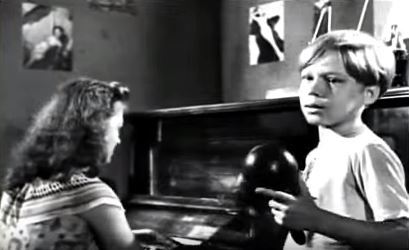
Or that Noel Corke—the little boy who acted in Taxi Driver (and whom I knew so far only as having been the son of the Anands’ landlord), was also the assistant cameraman in Haqeeqat.
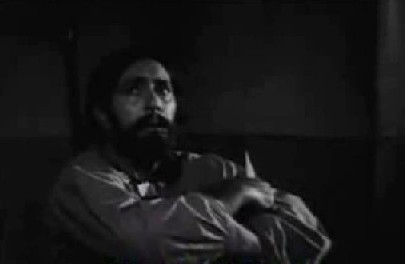
The book comes to an end just after Balraj Sahni’s description of Do Bigha Zameen : there are several interesting behind the scenes anecdotes here. For instance, how a chance encounter with a poor man—who didn’t realize Balraj Sahni in costume as Shambhu was an actor—helped Sahni realize just how he needed to act, what emotions he was supposed to feel. Or how, when a group of poor people realized that this ‘poor man’ was actually an actor pretending to be poor, their sympathy and fellow-feeling for him evaporated instantly.
All in all, an engrossing book. I like Balraj Sahni a lot, and have always thought that he had a certain dignity, a quiet calm about him that endured even through some of the less likeable films of his that I’ve seen. Balraj Sahni: An Autobiography seems to suggest that the man was as dignified, as humble and self-effacing as he appears in some of his best films. Think the family-loving, friendly merchant of Waqt ; the impoverished and desperate farmer-turned rickshaw-puller of Do Bigha Zameen. The far-from-home, sad Pathan who befriends a little girl in Kabuliwala … all, it seems, reflect the real Balraj Sahni in some way or the other.
Worth a read if you, like me, are fond of Mr Sahni.
What Balraj Sahni actually focuses on in the course of autobiography is not his life as a film star, but his life as child (and later a man) fascinated by films (and by various other, often vastly different) things. He begins with his childhood, as the son of a wealthy businessman in Rawalpindi—where, in the hinterland, Balraj Sahni had his first brush with cinema: Hollywood films (pre Hayes Code!) screened in villages, the films replete with adventure and romance and more, some of which would definitely be X-rated now.
From there, Sahni’s narrative moves on to his days as a schoolboy in Rawalpindi, and the arrival of the first cinema theatre in the city—to which he and fellow schoolboys would go, giving their parents the excuse that these Hollywood films were all based on classic literature, so were a way of expanding their knowledge of Western literature. Which our parents took with a pinch of salt, Sahni admits.
This tinged-with-humour, often self-effacing (even self-deprecating) tone is followed right through the book. Considering he went on to become such a major actor—not just popular, but well-respected and with a dignity that has seen him being lauded by both critics and the aam janta—Balraj Sahni comes across as a man with few illusions about himself. The instances where he talks disparagingly about himself (or, in one memorable place, where he quotes Clare Mendonca—then editor of Filmfare, after whom the Clare Awards were known—as having compared his acting in Badnaam to that of a corpse) are a refreshing change from the more usual self-glorification of the famous.
The autobiography is pretty much about Sahni’s professional life, and that not just in films—to which he came relatively late, with his first major film, Dharti ke Laal, being released in 1946, when Sahni was 33 years old. Before that, he had taught at Shantiniketan, along with his wife Damayanti ‘Dammo’; he and Dammo had also worked at Mahatma Gandhi’s Sevagram; and, for four years during World War II, the couple had worked at the BBC in London.

And then there’s Sahni’s association with communism, and with the Indian People’s Theatre Association (IPTA), which he joined while in Bombay, and which was to go on to be such an important part of his life in the years just after his return to India from the UK. IPTA first made Balraj Sahni a recognizable face onscreen (Dharti ke Laal was an IPTA production).

IPTA also brought him into contact with other like-minded individuals, who were to go on to become familiar names (and in some cases, familiar faces) to cinemagoers. Sahir Ludhianvi and Chetan Anand, among them—and Durga Khote, whose stage debut was in an IPTA play.
Sahni’s belief in communism shines through every now and then as he recounts his work at IPTA and with the Communist Party. He talks about what communism meant in the pre-and post-Partition period, how it should have worked, what it achieved and what it could have achieved. It’s an interesting political thread running through what might have been expected to be a predominantly cinema-centric memoir.
But there’s a lot about cinema in it. Sahni steers clear of gossip about personal lives; in fact, people looking for Sahni’s own personal life might be disappointed. While he does mention how heartbroken he was when Dammo died, the details of how he met and married her—or even his second wife, Tosh—are missing. And, except for a couple of brief anecdotes about his children Parikshit and Shabnam, there’s precious little about them either. There are, however, bits of trivia that have gone down in film lore: how Balraj Sahni met an amusing and very entertaining bus conductor named Badruddin, for example, and got him to act drunk in order to get a role in Navketan’s Baazi—and the immortal screen name of Johnny Walker. Or how, directing a very young Dev Anand in an IPTA play named Zubeida, saying, “Take it from me, you can never become an actor!” (Though Sahni himself clarifies that he has no recollection of having said that).
What fascinated me the most were the little things I didn’t know: how Sahni and Dammo had initially been offered the lead roles in Chetan Anand’s Neecha Nagar . Or that Balraj Sahni—like David Abraham—was a fan of PG Wodehouse. Or that Balraj Sahni shot his scenes for the film Hulchul (in which he played a jailor) while, ironically enough, being in jail for communist activities—he used to put on his jailor’s uniform every day and be escorted by cops to the set for the shoot.

Or that Noel Corke—the little boy who acted in Taxi Driver (and whom I knew so far only as having been the son of the Anands’ landlord), was also the assistant cameraman in Haqeeqat.

The book comes to an end just after Balraj Sahni’s description of Do Bigha Zameen : there are several interesting behind the scenes anecdotes here. For instance, how a chance encounter with a poor man—who didn’t realize Balraj Sahni in costume as Shambhu was an actor—helped Sahni realize just how he needed to act, what emotions he was supposed to feel. Or how, when a group of poor people realized that this ‘poor man’ was actually an actor pretending to be poor, their sympathy and fellow-feeling for him evaporated instantly.
All in all, an engrossing book. I like Balraj Sahni a lot, and have always thought that he had a certain dignity, a quiet calm about him that endured even through some of the less likeable films of his that I’ve seen. Balraj Sahni: An Autobiography seems to suggest that the man was as dignified, as humble and self-effacing as he appears in some of his best films. Think the family-loving, friendly merchant of Waqt ; the impoverished and desperate farmer-turned rickshaw-puller of Do Bigha Zameen. The far-from-home, sad Pathan who befriends a little girl in Kabuliwala … all, it seems, reflect the real Balraj Sahni in some way or the other.
Worth a read if you, like me, are fond of Mr Sahni.
January 5, 2020
A few years back, I had written a review on Amazon. Half of the wish expressed in my last line has come true with the recent publication of "The Nonconformist" by Parikshit Sahni.
________
Here it is:
"I am a great admirer of the late Balraj Sahni. He was one of the few natural actors on the Indian screen. Like Motilal, he too simply lived the character.
For a long time I have been looking for this book. I have not been able to locate a hard copy, but was fortunate to have read a digital version of the same at [ ] Although published 6 years after his death, the 142-page autobiography must have been written in his Pre-"Kabuliwalla" days as it stops with soon after making of "Do Bigha Zamin," which was released in 1953. There is no mention of Kabuliwalla (released in 1961) and several other movies he acted in that period. Sadly, he did not live long enough to see the wide acclaim his last film "Garm Hawa" had received; it was released in 1972. That is, he must have finished the autobiography somewhere around 1950's -- nearly 2 decades before his death in 1973.
Mr. Sahni was known as a prolific writer in Hindi, English and his mother tongue, Punjabi. He regularly wrote a column in the Ranjeet Weekly. He was an Arya Samaji yet he frequently went incognito to the Gurudwaras. But, there is very little mention of any of his literary activities or his personal spiritual beliefs. P. C. Joshi's book an intimate portrait of Sahni (another out of print book) is said contain a compilation of his writings. Here his style is easy to read. It has many anecdotes and also recollection of personal instances some funny and some sad. He is brutally honest about being jealous of his wife, Damayanti's success and how he got even by demanding that she do household chores after her having returned home tired after shooting all day. He felt even more ashamed when she, without complaining, fully complied with all his demands. He refers to their life in London, work together in the theatre and films, yet he says very little about his children, and even less about her illness that snuffed life out of her at a very young age; she died in 1947. Part I of his book abruptly ends with her death. Very few people know about her carrier in the theatre and films. His second marriage to a cousin, Santosh Chandhok, also gets a casual mention, with nothing about their life together and her career as a writer. Part II rather speeds up in comparison and leaving many areas untouched.
Craving more, the reader then remembers that at the very onset Mr. Sahni says: "...I start unfolding before you the flash-back of my screen life..." The reader now knows for certain that Mr. Sahni's intent was to only focus on experiences of Sahni, the actor rather than Sahni, the person and even Sahni, the writer. The reader is nonetheless left wanting to know more about the real Mr. Sahni, yet is grateful for having allowed to come on a brief journey with him.
And, the intrigue continues. Perhaps his son, Parikshit, will take on the daunting task of writing about his exceptionally talented both parents."
________
Here it is:
"I am a great admirer of the late Balraj Sahni. He was one of the few natural actors on the Indian screen. Like Motilal, he too simply lived the character.
For a long time I have been looking for this book. I have not been able to locate a hard copy, but was fortunate to have read a digital version of the same at [ ] Although published 6 years after his death, the 142-page autobiography must have been written in his Pre-"Kabuliwalla" days as it stops with soon after making of "Do Bigha Zamin," which was released in 1953. There is no mention of Kabuliwalla (released in 1961) and several other movies he acted in that period. Sadly, he did not live long enough to see the wide acclaim his last film "Garm Hawa" had received; it was released in 1972. That is, he must have finished the autobiography somewhere around 1950's -- nearly 2 decades before his death in 1973.
Mr. Sahni was known as a prolific writer in Hindi, English and his mother tongue, Punjabi. He regularly wrote a column in the Ranjeet Weekly. He was an Arya Samaji yet he frequently went incognito to the Gurudwaras. But, there is very little mention of any of his literary activities or his personal spiritual beliefs. P. C. Joshi's book an intimate portrait of Sahni (another out of print book) is said contain a compilation of his writings. Here his style is easy to read. It has many anecdotes and also recollection of personal instances some funny and some sad. He is brutally honest about being jealous of his wife, Damayanti's success and how he got even by demanding that she do household chores after her having returned home tired after shooting all day. He felt even more ashamed when she, without complaining, fully complied with all his demands. He refers to their life in London, work together in the theatre and films, yet he says very little about his children, and even less about her illness that snuffed life out of her at a very young age; she died in 1947. Part I of his book abruptly ends with her death. Very few people know about her carrier in the theatre and films. His second marriage to a cousin, Santosh Chandhok, also gets a casual mention, with nothing about their life together and her career as a writer. Part II rather speeds up in comparison and leaving many areas untouched.
Craving more, the reader then remembers that at the very onset Mr. Sahni says: "...I start unfolding before you the flash-back of my screen life..." The reader now knows for certain that Mr. Sahni's intent was to only focus on experiences of Sahni, the actor rather than Sahni, the person and even Sahni, the writer. The reader is nonetheless left wanting to know more about the real Mr. Sahni, yet is grateful for having allowed to come on a brief journey with him.
And, the intrigue continues. Perhaps his son, Parikshit, will take on the daunting task of writing about his exceptionally talented both parents."
April 19, 2019
I read it in Punjabi, which it was originally written in.
October 22, 2022
I am a great admirer of one of my most admirers of writers and Bollywood Stars from the olden time of year 1958. Balraj Sahni has a special place in my heart. He was closely associated with my maternal uncle, Mr. Rajendra Bhatia, who was a famous Producer and Director in Bollywood since 1962 when he brought his first movie "ANPADH" which was of great success at the Box Office. Balraj Sahni was the hero in the film. My uncle and Balraj Sahni, both were no less than real brothers. One time, my uncle migrated from Sargodha (now in Pakistan) to New Delhi and then finally settled in 1954 in Bombay and was Assistant Director of the famous movie "Nai Dilli" (New Delhi) produced and directed by Mohan Sehgal. In our intellectual discussions with my uncle, the name of the famous writer and Film Director Mr. Khwaza Abbas, was always there. It was a different era, with a different culture in India, what I see now, specifically when I am living in Melbourne (Australia) for the last 34 years. I have been a continuous reader of Gorki (A famous Russian writer) of his time.
Now I have been able to get known to writers like Madhulika Liddle, which I must read and go through a different experience in the modern time. Thanks to all involved who are my special writers close to my heart and soul. May Almighty God Bless All creations of this vast 'Universe'.
Now I have been able to get known to writers like Madhulika Liddle, which I must read and go through a different experience in the modern time. Thanks to all involved who are my special writers close to my heart and soul. May Almighty God Bless All creations of this vast 'Universe'.

January 24, 2020
A wry self effacing humorous passionate fascinating glimpse of one of India’s great thespians.

October 8, 2017
Autobiography- Balraj Sahni has been written from the time of his birth till the success of the film Do Bigha Zamin with Bimal Roy. The beginning is charming- it shows what is to go in the past and come back with the story as it is now. As an avid reader of autobiographies I find that in the Autobiography of Gaura Pant Shivani - Smriti Kalash she mentions about Balraj Sahni teaching. His wife gave birth to Parikshit Sahni . The students could take the new born and move in the Vishwabharti campus. Balraj has written the autobiography so well that it binds the reader as the reader is able to address his concerns as a common man. Description of London Days of husband and wife are so true the Government was not able to read between the lines about the impending second world war and the beginning of war caught the citizens unawares. All known persons - Ali Sardar Jafri, P C Joshi, Amritlal Nagar, Prithviraj Kapoor, Raj kapoor, Nalini Jaywant, Nutun, Nargis and her mother, K Asif, Anwar Hussain, Zia Sarhadi, Durga Khote, etc have a mention. The discipline of J&K during the reign of Raja Hari Singh has been well mentioned. Development of IPTA by stages has found space. Thinking of Communist Party and how to read public mood during Naval strike and take decisions has been mentioned. He has written on how to bring up children- He did not allow the studies of his son to be affected by allowing him to join films as a child artist even on the recommendation of father of noted actor Madhubala. It is a worth reading book.
Displaying 1 - 6 of 6 reviews