

What do you think?

Bonnie
The #1 New York Times bestselling author of Drowning Ruth vividly evokes the perennially fascinating true crime love affair of Bonnie and Clyde in this suspenseful, gorgeously detailed fictional portrait of Bonnie Parker, one of America’s most enigmatic women.
Born in a small town in the desolate reaches of western Texas and shaped by her girlhood in an industrial wasteland on the outskirts of Dallas, Bonnie Parker was a natural performer and a star student. She dreamed of being a movie star or a singer or a poet. But her dramatic nature, contorted by her limited opportunities and her overwhelming love for Clyde Barrow, pushed her into a course from which there was no escape but death.
Infusing the psychological acuity of literary fiction with the relentless pacing of a thriller, Along for the Ride follows Bonnie from her bright, promising youth to her final month of shoot-outs, kidnappings, and desperate car chases through America’s hinterland in the grip of the Great Depression, as the noose of the law tightened around her. Enriched by Christina Schwarz’s extensive research in the footsteps of Bonnie and Clyde and written with her powerful sense of place and time, Along for the Ride is a plaintive and page-turning account of a woman destroyed by a lethal combination of longing and love.
Born in a small town in the desolate reaches of western Texas and shaped by her girlhood in an industrial wasteland on the outskirts of Dallas, Bonnie Parker was a natural performer and a star student. She dreamed of being a movie star or a singer or a poet. But her dramatic nature, contorted by her limited opportunities and her overwhelming love for Clyde Barrow, pushed her into a course from which there was no escape but death.
Infusing the psychological acuity of literary fiction with the relentless pacing of a thriller, Along for the Ride follows Bonnie from her bright, promising youth to her final month of shoot-outs, kidnappings, and desperate car chases through America’s hinterland in the grip of the Great Depression, as the noose of the law tightened around her. Enriched by Christina Schwarz’s extensive research in the footsteps of Bonnie and Clyde and written with her powerful sense of place and time, Along for the Ride is a plaintive and page-turning account of a woman destroyed by a lethal combination of longing and love.
349 pages, Kindle Edition
First published July 1, 2020
Ratings & Reviews
Friends & Following
Create a free account to discover what your friends think of this book!
Community Reviews
Displaying 1 - 30 of 121 reviews

October 25, 2020
I was enchanted by the movie Bonnie and Clyde when it came out in 1967; that romanticized idea of the two criminals. But the actual Bonnie and Clyde were far from that glamorous duo. This book tells a truer story, starting with Bonnie’s childhood and moving forward from there. We get to see how this promising young girl falls into a life of crime as she becomes smitten by Clyde Barrows. Forget the idea of bank robbers. The gang more often robbed filling stations and mom and pop stores. This is a gritty, violent story. Clyde is not the most stable of men and they fight on a regular basis. But even at the end, when her body is a mere shell, she still believes in their love story and exalts in their fame.
Schwarz does a great job detailing life during the Depression. Little known facts, like Dallas not allowing homeless people to live within the city limits, paint a complete picture of the time and place.
The book is told in the third person, but purely from Bonnie’s POV. Schwarz does a phenomenal job of letting us see Bonnie’s sweetness, not only to those she loved, but to strangers, while not sparing the reader from the violence of their lives. The gang killed 14 “laws” during their time on the run.
The pace of the book mirrors the life of a criminal - a veritable roller coaster with the pace picking up as the book goes along. It is amazing the number of escapes they manage. Although, each escape extracts its own cost. Warning to other readers - I found the beginning outlining her childhood extremely slow and almost jettisoned the book at that point. But stick with it because the rest of the book is worth it.
Candace Thaxton does a fabulous job as the narrator, with just the right amount of moxie. She is proof of the difference a narrator can make to a story.
Schwarz does a great job detailing life during the Depression. Little known facts, like Dallas not allowing homeless people to live within the city limits, paint a complete picture of the time and place.
The book is told in the third person, but purely from Bonnie’s POV. Schwarz does a phenomenal job of letting us see Bonnie’s sweetness, not only to those she loved, but to strangers, while not sparing the reader from the violence of their lives. The gang killed 14 “laws” during their time on the run.
The pace of the book mirrors the life of a criminal - a veritable roller coaster with the pace picking up as the book goes along. It is amazing the number of escapes they manage. Although, each escape extracts its own cost. Warning to other readers - I found the beginning outlining her childhood extremely slow and almost jettisoned the book at that point. But stick with it because the rest of the book is worth it.
Candace Thaxton does a fabulous job as the narrator, with just the right amount of moxie. She is proof of the difference a narrator can make to a story.

July 6, 2020
So maybe I'm a tad bit obsessed with the history lesson of Bonnie and Clyde. I can remember sneaking and watching that old movie at my grandmother's house.

He had a confidence about him that made him appear relaxed, even though Emma could see that he was exquisitely alert. His hair combed and his shirt was pressed; he even wore a tie-and his eyes were ardent when he looked at her daughter.
Thus starting my stalking of the story.
This take was easily readable and even though I knew it was a fictionalized version of their story (because who knows the real story) it read so real to me.
This is mostly the story of Bonnie. Her thoughts and emotions in the time that she was a little girl til her meeting and time with Clyde Barrow. (Her marriage to Roy is mentioned but it's not the centerpoint for this story)
Bonnie and Clyde's attraction to each other is almost immediate and no matter how many people try to get her to see him as he truely is..she just can't pull herself from him. She knows he is not the good guy. She knows being with him is going to be her end.
You want us all to go down together.
Clyde fancied himself a wolf, able to lead a pack, but Bonnie saw that he was more like a coyote, snatching at scraps. Or like a rabbit, poised to run even as it nibbled it's blade of grass.
I've been in a relationship a hundred years ago where I thought I couldn't live without that person. Even though he was an asshole. So I kinda related to this storyline.
She loved that he loved her too much to do right by her.
Another thing I LOVE about this book is the author totally sent me down a rabbithole of snooping around and seeing if things I didn't know about this couple were true. I LOVE when a book does that.
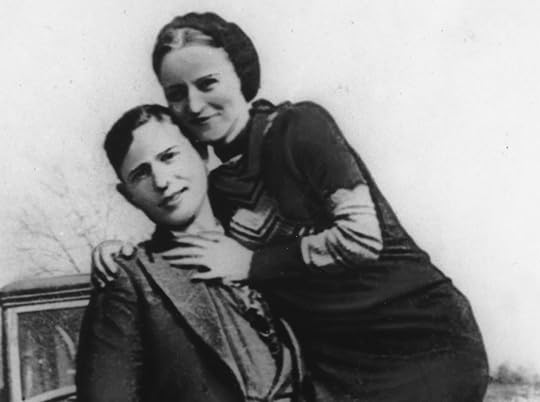
PS Bonnie was not always so in lurrrrve with Clyde. They were playing around in this photo but she did buck against him at times.
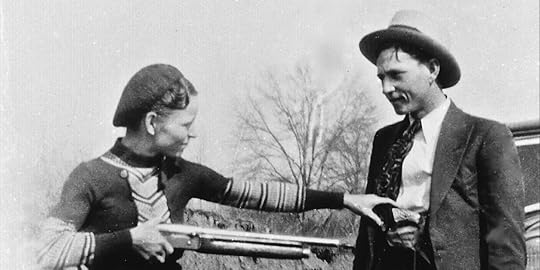
And she hated this photo. She was again just playing around and thought that a woman smoking a cigar was trashy.
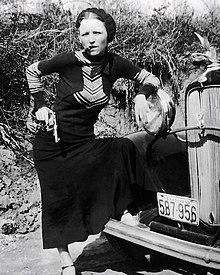
I'm gonna shut up now. Because I could talk about this book all day. (the reason for the four star instead of five was the female characters calling Clyde and his brother by the name "Daddy"...that creeped me out a bit.)
Booksource: Netgalley in exchange for review.
He had a confidence about him that made him appear relaxed, even though Emma could see that he was exquisitely alert. His hair combed and his shirt was pressed; he even wore a tie-and his eyes were ardent when he looked at her daughter.
Thus starting my stalking of the story.
This take was easily readable and even though I knew it was a fictionalized version of their story (because who knows the real story) it read so real to me.
This is mostly the story of Bonnie. Her thoughts and emotions in the time that she was a little girl til her meeting and time with Clyde Barrow. (Her marriage to Roy is mentioned but it's not the centerpoint for this story)
Bonnie and Clyde's attraction to each other is almost immediate and no matter how many people try to get her to see him as he truely is..she just can't pull herself from him. She knows he is not the good guy. She knows being with him is going to be her end.
You want us all to go down together.
Clyde fancied himself a wolf, able to lead a pack, but Bonnie saw that he was more like a coyote, snatching at scraps. Or like a rabbit, poised to run even as it nibbled it's blade of grass.
I've been in a relationship a hundred years ago where I thought I couldn't live without that person. Even though he was an asshole. So I kinda related to this storyline.
She loved that he loved her too much to do right by her.
Another thing I LOVE about this book is the author totally sent me down a rabbithole of snooping around and seeing if things I didn't know about this couple were true. I LOVE when a book does that.
PS Bonnie was not always so in lurrrrve with Clyde. They were playing around in this photo but she did buck against him at times.
And she hated this photo. She was again just playing around and thought that a woman smoking a cigar was trashy.
I'm gonna shut up now. Because I could talk about this book all day. (the reason for the four star instead of five was the female characters calling Clyde and his brother by the name "Daddy"...that creeped me out a bit.)
Booksource: Netgalley in exchange for review.

December 15, 2021
This last year I've consumed one non fiction, one movie and now this about Bonnie and Clyde. Have a gauge memory I've read another fiction as well. But anywho I found their story to be extremely fascinating. I wasn't very intrigued by them before but this year I changed my mind. They are very human, flawed but also had rather good qualities to them even though they choose another path in their life. This book was just as an intriguing read and while it's a fiction that probably added some stuff to make it readable I think Christina Schwartz did a good job giving the overall feeling of them

June 22, 2020
You have read the story of Jesse James
Of how he lived and died
If you still are in need of something to read
Here is the story of Bonnie and Clyde
- Bonnie Parker
Bonnie’s story - as in Bonnie Parker, the Bonnie of Bonnie and Clyde, a couple who were notorious for their crime sprees during the Depression era – begins shortly before she meets Clyde – not counting the Prologue, which begins at the end. But, most, if not all, of us know the story, or at least recognize who these two people are, even if the details we’ve retained of their fame is somewhat vague, we know this - they were infamous.
Growing up in western Texas, in Rowena, a small town outside of Dallas, living with her mother, this story begins in Bonnie’s youth by sharing her love of music, how she would go squishy inside, like melted ice cream hearing others cry, and her simplistic, childish view of things. As she began approaching her teen years, she had the somewhat romantic notions of what her life would be like when she grew up, but she was also very smart, and was praised for the poetry she wrote. In church, when it was time for singing, she sang so that her voice would reach God’s ears.
As she grows older, she learns write her letters, learns to read, and she begins to love words, their sound, their cadence, the way you could put them together to create something beautiful. A rhyme, a poem, verse. Like most of us, looking back on our early years, memories are vague, shapeless snippets of moments, memories more felt than remembered in a visual sense. And there’s a sense of sorrow fought off by searching for the wrong things in life, especially as Bonnie grows older, her mother worries about her finding the right boy, someone who will give her a better life. Bonnie is a dreamer, a girl whose dreams include being a movie star, a poet, and a singer. Of being known and loved by, the world. Dreams that were ’grandiose and gaudy, if predictable and insubstantial.’
In 1926, at the age of sixteen, she marries Roy, he disappears, and she takes a job as a waitress working in Dallas, staying with a friend. And this is how she meets Clyde Barrow, who proceeds to try to win her heart through a rather conventional, but charming, courtship that, as most of us already know, will prove to have a very unconventional ending. But there is, of course, more to this story.
I was impressed, after I finished reading this story, reading the author’s A Note on Sources and recommend other readers do the same.
Pub Date: 07 Jul 2020
Many thanks for the ARC provided by Atria Books via NetGalley
Of how he lived and died
If you still are in need of something to read
Here is the story of Bonnie and Clyde
- Bonnie Parker
Bonnie’s story - as in Bonnie Parker, the Bonnie of Bonnie and Clyde, a couple who were notorious for their crime sprees during the Depression era – begins shortly before she meets Clyde – not counting the Prologue, which begins at the end. But, most, if not all, of us know the story, or at least recognize who these two people are, even if the details we’ve retained of their fame is somewhat vague, we know this - they were infamous.
Growing up in western Texas, in Rowena, a small town outside of Dallas, living with her mother, this story begins in Bonnie’s youth by sharing her love of music, how she would go squishy inside, like melted ice cream hearing others cry, and her simplistic, childish view of things. As she began approaching her teen years, she had the somewhat romantic notions of what her life would be like when she grew up, but she was also very smart, and was praised for the poetry she wrote. In church, when it was time for singing, she sang so that her voice would reach God’s ears.
As she grows older, she learns write her letters, learns to read, and she begins to love words, their sound, their cadence, the way you could put them together to create something beautiful. A rhyme, a poem, verse. Like most of us, looking back on our early years, memories are vague, shapeless snippets of moments, memories more felt than remembered in a visual sense. And there’s a sense of sorrow fought off by searching for the wrong things in life, especially as Bonnie grows older, her mother worries about her finding the right boy, someone who will give her a better life. Bonnie is a dreamer, a girl whose dreams include being a movie star, a poet, and a singer. Of being known and loved by, the world. Dreams that were ’grandiose and gaudy, if predictable and insubstantial.’
In 1926, at the age of sixteen, she marries Roy, he disappears, and she takes a job as a waitress working in Dallas, staying with a friend. And this is how she meets Clyde Barrow, who proceeds to try to win her heart through a rather conventional, but charming, courtship that, as most of us already know, will prove to have a very unconventional ending. But there is, of course, more to this story.
I was impressed, after I finished reading this story, reading the author’s A Note on Sources and recommend other readers do the same.
Pub Date: 07 Jul 2020
Many thanks for the ARC provided by Atria Books via NetGalley

July 15, 2020
Bonnie was a bright student who wrote poetry, hated guns, loved babies and dreamed of being a movie star. She could have been so much more if it wasn’t for her chance meeting with Clyde Barrow. He was a smooth operator and she was smitten from the start. Her story of loving Clyde, overlooking his failings and heading down the path of lawlessness by his side is a thrilling ride. There has been a lot written about Bonnie and Clyde but this story is refreshing and does not rehash old news.
I read this book in conjunction with the movie The Highwaymen, the movie providing a feel for Bonnie’s hometown of Cement City, a view from the law enforcement side and the poverty in which Bonnie grew up.
I read this book in conjunction with the movie The Highwaymen, the movie providing a feel for Bonnie’s hometown of Cement City, a view from the law enforcement side and the poverty in which Bonnie grew up.

October 26, 2021
“What happened in Joplin must have been horrible!”
Probably not a real 5 stars but how could I resist!? My hometown. The old hideout in Joplin was recently a bed and breakfast until the owner passed away
I grew up hearing about Bonnie and Clyde. Fun to read a book about their antics.
Probably not a real 5 stars but how could I resist!? My hometown. The old hideout in Joplin was recently a bed and breakfast until the owner passed away
I grew up hearing about Bonnie and Clyde. Fun to read a book about their antics.

September 2, 2020
Genre: Historical Fiction
Publisher: Atria Books
Pub. Date: July 7, 2020
Romancing outlaw celebrities makes for good storytelling in novels and hit movies. Henry Fonda portrayed the likable Jessie James. Paul Newman and Robert Redford played Butch Cassidy and Harry Longabaugh, better known as the Sundance Kid. And in their glory years, Warren Beatty and Faye Dunaway played the lawless, love-struck Bonnie Parker and Clyde Barrow. The real-life Bonnie would have loved a movie revoling around her since she always wanted to be an actress. In this historical fiction, the author examines how Bonnie Parker went from being a bright, poetry-writing girl who hated guns to one of the most famous hoodlums of her time. At the age of 17, Bonnie married her high school sweetheart, who ran off early in their marriage. Bonnie never divorced. Later, as a bored waitress, she met Clyde. She was 19 and he was 21. She was living at home with her mother and had never been in trouble. He was already stealing for a living with a brother in jail for theft. She willingly traded her honest life for the excitement of Clyde. They came from Christian families who were mortified that Bonnie was still married while sleeping with Clyde. I did get such a chuckle out of that fact. Nevermind their violent crimes. Still, in this novel, one gets the feeling that they were just two kids from a Dallas slum who fell in love and longed for some fun.
The author reminds the reader that their bank-robbing days took place during the early years of the Depression, when most couldn’t find work, making it easier to forgive the wayward couple. Schwarz shows the reader how Bonnie and Clyde were influenced by the public’s fondness for Jessie James and his gang. In a way, they were victims of their time. They too wanted to be loved from afar, bringing a little entertainment to the poverty-stricken nation. They acted as if their lives were being played out on the big screen. We learn that Bonnie never smoked a cigar or used a machine gun; those infamous pictures were taken for laughs. Bonnie was a pretty girl nonetheless, always happy to have her picture in the papers. Plus, it was clear from the pictures that she and Clyde had powerful chemistry, which helped her maintain her romantic view of their crimes. She liked to imagine herself as a blonde Clara Bow. And in reality, even as a little girl, she did have that “It Girl” personality, loveable and attention-grabbing. It was fun for them, and the public, to watch them elude the law. The author makes it clear how easy it was for people to cheer on these unlikely heroes from the safety of their own homes.
We get a sympathetic picture of their private lives. When Clyde’s brother and his sister-in-law join them to become part of the Barrow Gang, they rent an apartment to live in between heists. The women sound like newlyweds when fixing up the place. So excited to have enough money to buy a radio. It is tenderly written how they played house while pretending to be normal people. However, when the crimes became murderous (though sometimes they were charged with murders that they did not commit), they lost the publics’ favor. As their fame exploded, life on the run became untenable. Schwarz skillfully shows how, near the end of their run, the characters’ exhaustion and desperation overwhelmed them. They came to await their inevitable deaths, hoping only to see their mothers one last time.
“Bonnie” is a well-researched novel, yet it never feels dry with facts. Still, as a woman, I felt that I never really understood why Bonnie stayed with Clyde when life got too tough. This was not as expertly explained as other areas of her life. This is disappointing since I thought that was the reason for the writing of yet another book on the couple. Did Bonnie stay because it was about standing by your man? She did believe that theirs was a love story and not a gangster tale. Did she really prefer death in the spotlight to being a bored waitress? Or, as I think the author intended us to imagine, she simply got too caught up in it all to leave while she, herself, was still not a wanted woman? Maybe I am forgetting just how young she was. She was killed at the age of 23-years-old. Whatever her reasons were, she would have been thrilled to know that the hit movie about her fame even had a hit song entitled “The Ballad of Bonnie & Clyde.” For Bonnie that would have been the best of eulogies.
Find all my book reviews at:
https://www.goodreads.com/review/list...
https://books6259.wordpress.com/
https://www.barnesandnoble.com/review...
https://www.facebook.com/martie.neesr...
https://www.instagram.com/martie6947/
https://www.pinterest.com/martienreco...\
https://www.amazon.com/
https://twitter.com/NeesRecord
Publisher: Atria Books
Pub. Date: July 7, 2020
Romancing outlaw celebrities makes for good storytelling in novels and hit movies. Henry Fonda portrayed the likable Jessie James. Paul Newman and Robert Redford played Butch Cassidy and Harry Longabaugh, better known as the Sundance Kid. And in their glory years, Warren Beatty and Faye Dunaway played the lawless, love-struck Bonnie Parker and Clyde Barrow. The real-life Bonnie would have loved a movie revoling around her since she always wanted to be an actress. In this historical fiction, the author examines how Bonnie Parker went from being a bright, poetry-writing girl who hated guns to one of the most famous hoodlums of her time. At the age of 17, Bonnie married her high school sweetheart, who ran off early in their marriage. Bonnie never divorced. Later, as a bored waitress, she met Clyde. She was 19 and he was 21. She was living at home with her mother and had never been in trouble. He was already stealing for a living with a brother in jail for theft. She willingly traded her honest life for the excitement of Clyde. They came from Christian families who were mortified that Bonnie was still married while sleeping with Clyde. I did get such a chuckle out of that fact. Nevermind their violent crimes. Still, in this novel, one gets the feeling that they were just two kids from a Dallas slum who fell in love and longed for some fun.
The author reminds the reader that their bank-robbing days took place during the early years of the Depression, when most couldn’t find work, making it easier to forgive the wayward couple. Schwarz shows the reader how Bonnie and Clyde were influenced by the public’s fondness for Jessie James and his gang. In a way, they were victims of their time. They too wanted to be loved from afar, bringing a little entertainment to the poverty-stricken nation. They acted as if their lives were being played out on the big screen. We learn that Bonnie never smoked a cigar or used a machine gun; those infamous pictures were taken for laughs. Bonnie was a pretty girl nonetheless, always happy to have her picture in the papers. Plus, it was clear from the pictures that she and Clyde had powerful chemistry, which helped her maintain her romantic view of their crimes. She liked to imagine herself as a blonde Clara Bow. And in reality, even as a little girl, she did have that “It Girl” personality, loveable and attention-grabbing. It was fun for them, and the public, to watch them elude the law. The author makes it clear how easy it was for people to cheer on these unlikely heroes from the safety of their own homes.
We get a sympathetic picture of their private lives. When Clyde’s brother and his sister-in-law join them to become part of the Barrow Gang, they rent an apartment to live in between heists. The women sound like newlyweds when fixing up the place. So excited to have enough money to buy a radio. It is tenderly written how they played house while pretending to be normal people. However, when the crimes became murderous (though sometimes they were charged with murders that they did not commit), they lost the publics’ favor. As their fame exploded, life on the run became untenable. Schwarz skillfully shows how, near the end of their run, the characters’ exhaustion and desperation overwhelmed them. They came to await their inevitable deaths, hoping only to see their mothers one last time.
“Bonnie” is a well-researched novel, yet it never feels dry with facts. Still, as a woman, I felt that I never really understood why Bonnie stayed with Clyde when life got too tough. This was not as expertly explained as other areas of her life. This is disappointing since I thought that was the reason for the writing of yet another book on the couple. Did Bonnie stay because it was about standing by your man? She did believe that theirs was a love story and not a gangster tale. Did she really prefer death in the spotlight to being a bored waitress? Or, as I think the author intended us to imagine, she simply got too caught up in it all to leave while she, herself, was still not a wanted woman? Maybe I am forgetting just how young she was. She was killed at the age of 23-years-old. Whatever her reasons were, she would have been thrilled to know that the hit movie about her fame even had a hit song entitled “The Ballad of Bonnie & Clyde.” For Bonnie that would have been the best of eulogies.
Find all my book reviews at:
https://www.goodreads.com/review/list...
https://books6259.wordpress.com/
https://www.barnesandnoble.com/review...
https://www.facebook.com/martie.neesr...
https://www.instagram.com/martie6947/
https://www.pinterest.com/martienreco...\
https://www.amazon.com/
https://twitter.com/NeesRecord

May 2, 2020
A historical novel based on the life of the infamous Bonnie Parker, one half of the Depression Era crime duo known as Bonnie and Clyde. This novel was so well written that it brought Bonnie to life, along with a colorful supporting cast of characters, including Clyde Barrow and assorted family and friends.
Fun story, entertaining and easy to read, yet for mature audiences due to the subject matter it covers. A sympathetic, romantic yet honest look at two of the most colorful criminals in history.
A real life "Bad Romance"...
"I want your horror, I want your design
'Cause you're a criminal as long as you're mine
I want your love
Love, love, love, I want your love, uh
I want your psycho, your vertigo shtick (hey)
Want you in my rear window, baby, you're sick
I want your love
Love, love, love, I want your love
(Love, love, love, I want your love)
You know that I want you
And you know that I need you
I want it bad
Your bad romance
I want your love, and I want your revenge
You and me could write a bad romance
(Oh-oh-oh-oh-oh)
I want your love, and all your lover's revenge
You and me could write a bad romance
Oh-oh-oh-oh-oh-oh-oh-oh-oh-oh-oh-oh
Caught in a bad romance
Oh-oh-oh-oh-oh-oh-oh-oh-oh-oh-oh-oh
Caught in a bad romance..."
Fun story, entertaining and easy to read, yet for mature audiences due to the subject matter it covers. A sympathetic, romantic yet honest look at two of the most colorful criminals in history.
A real life "Bad Romance"...
"I want your horror, I want your design
'Cause you're a criminal as long as you're mine
I want your love
Love, love, love, I want your love, uh
I want your psycho, your vertigo shtick (hey)
Want you in my rear window, baby, you're sick
I want your love
Love, love, love, I want your love
(Love, love, love, I want your love)
You know that I want you
And you know that I need you
I want it bad
Your bad romance
I want your love, and I want your revenge
You and me could write a bad romance
(Oh-oh-oh-oh-oh)
I want your love, and all your lover's revenge
You and me could write a bad romance
Oh-oh-oh-oh-oh-oh-oh-oh-oh-oh-oh-oh
Caught in a bad romance
Oh-oh-oh-oh-oh-oh-oh-oh-oh-oh-oh-oh
Caught in a bad romance..."

July 1, 2020
2 stars
Bonnie and Clyde are two of the most infamous criminals of the 20th century, but just who were these people? Author Christina Schwarz focuses on Bonnie's story in her novel in an attempt to reveal some of the mystery behind the gun-slinging pair.
I am a huge history buff and have always loved a female-centric historical novel. I had such high hopes for this that unfortunately fell completely flat. The first quarter of the novel definitely has some merit in its portrayal of Bonnie's childhood and the various incidents that shape her desire to get out of her small town. This is the only part of the book where I really got a sense of who she was as a person.
Once she meets Clyde and starts running around with him, everything just goes downhill. So much of the novel becomes a play-by-play of their crime spree, which ends up getting insanely repetitive and frankly uninteresting. Rather than delving into the characters at this crucial point, Schwarz gives them one-dimensional explanations for their actions and moves onto the next heist. I do think that it is important to pay homage to the history when writing historical fiction, but this focused so much on the minutiae that I found it hard to connect to anything or anyone in the story.
Bonnie had so much potential to bring to life a fascinating and complex woman, but did not quite hit the mark. I think that people who are unfamiliar with Bonnie and Clyde would find this interesting, but it was definitely not for me.
Bonnie and Clyde are two of the most infamous criminals of the 20th century, but just who were these people? Author Christina Schwarz focuses on Bonnie's story in her novel in an attempt to reveal some of the mystery behind the gun-slinging pair.
I am a huge history buff and have always loved a female-centric historical novel. I had such high hopes for this that unfortunately fell completely flat. The first quarter of the novel definitely has some merit in its portrayal of Bonnie's childhood and the various incidents that shape her desire to get out of her small town. This is the only part of the book where I really got a sense of who she was as a person.
Once she meets Clyde and starts running around with him, everything just goes downhill. So much of the novel becomes a play-by-play of their crime spree, which ends up getting insanely repetitive and frankly uninteresting. Rather than delving into the characters at this crucial point, Schwarz gives them one-dimensional explanations for their actions and moves onto the next heist. I do think that it is important to pay homage to the history when writing historical fiction, but this focused so much on the minutiae that I found it hard to connect to anything or anyone in the story.
Bonnie had so much potential to bring to life a fascinating and complex woman, but did not quite hit the mark. I think that people who are unfamiliar with Bonnie and Clyde would find this interesting, but it was definitely not for me.

June 9, 2020
"She could still tell herself it was a love story."
I knew who Bonnie & Clyde were, of course, and I've seen their final photo many times, but I didn't know anything about the people and adventures behind the scenes, and it was fascinating to go there. Bonnie was smart, artistic, and strong willed. She was also very, very poor. Clyde was clever, brash, and unafraid - and even more poor. Riding shotgun through their wild romance and even wilder 'career' was compelling. I enjoyed the way the author reminded us of just how young and confused they were - Bonnie would go from dreaming of her little house with a white picket fence to spraying off a round of bullets when the need arose. Clyde, driven and bull-headed, careless about who he shot or robbed, could be conscientious enough to return borrowed dishes even in the midst of mayhem. I wanted to read about the pair, about the time period, and about this girl gangster, and I got everything I wanted.
I knew who Bonnie & Clyde were, of course, and I've seen their final photo many times, but I didn't know anything about the people and adventures behind the scenes, and it was fascinating to go there. Bonnie was smart, artistic, and strong willed. She was also very, very poor. Clyde was clever, brash, and unafraid - and even more poor. Riding shotgun through their wild romance and even wilder 'career' was compelling. I enjoyed the way the author reminded us of just how young and confused they were - Bonnie would go from dreaming of her little house with a white picket fence to spraying off a round of bullets when the need arose. Clyde, driven and bull-headed, careless about who he shot or robbed, could be conscientious enough to return borrowed dishes even in the midst of mayhem. I wanted to read about the pair, about the time period, and about this girl gangster, and I got everything I wanted.

Read
July 14, 2020You've read the story of Jesse James
of how he lived and died.
If you're still in need;
of something to read,
here's the story of Bonnie and Clyde.
Now Bonnie and Clyde are the Barrow gang
I'm sure you all have read.
how they rob and steal;
and those who squeal,
are usually found dying or dead.
There's lots of untruths to these write-ups;
they're not as ruthless as that.
their nature is raw;
they hate all the law,
the stool pigeons, spotters and rats.
They call them cold-blooded killers
they say they are heartless and mean.
But I say this with pride
that I once knew Clyde,
when he was honest and upright and clean.
But the law fooled around;
kept taking him down,
and locking him up in a cell.
Till he said to me;
"I'll never be free,
so I'll meet a few of them in hell"
The road was so dimly lighted
there were no highway signs to guide.
But they made up their minds;
if all roads were blind,
they wouldn't give up till they died.
The road gets dimmer and dimmer
sometimes you can hardly see.
But it's fight man to man
and do all you can,
for they know they can never be free.
From heart-break some people have suffered
from weariness some people have died.
But take it all in all;
our troubles are small,
till we get like Bonnie and Clyde.
If a policeman is killed in Dallas
and they have no clue or guide.
If they can't find a fiend,
they just wipe their slate clean
and hang it on Bonnie and Clyde.
There's two crimes committed in America
not accredited to the Barrow mob.
They had no hand;
in the kidnap demand,
nor the Kansas City Depot job.
A newsboy once said to his buddy;
"I wish old Clyde would get jumped.
In these awfull hard times;
we'd make a few dimes,
if five or six cops would get bumped"
The police haven't got the report yet
but Clyde called me up today.
He said,"Don't start any fights;
we aren't working nights,
we're joining the NRA."
From Irving to West Dallas viaduct
is known as the Great Divide.
Where the women are kin;
and the men are men,
and they won't "stool" on Bonnie and Clyde.
If they try to act like citizens
and rent them a nice little flat.
About the third night;
they're invited to fight,
by a sub-gun's rat-tat-tat.
They don't think they're too smart or desperate
they know that the law always wins.
They've been shot at before;
but they do not ignore,
that death is the wages of sin.
Some day they'll go down together
they'll bury them side by side.
To few it'll be grief,
to the law a relief
but it's death for Bonnie and Clyde.
written by Bonnie Parker
of how he lived and died.
If you're still in need;
of something to read,
here's the story of Bonnie and Clyde.
Now Bonnie and Clyde are the Barrow gang
I'm sure you all have read.
how they rob and steal;
and those who squeal,
are usually found dying or dead.
There's lots of untruths to these write-ups;
they're not as ruthless as that.
their nature is raw;
they hate all the law,
the stool pigeons, spotters and rats.
They call them cold-blooded killers
they say they are heartless and mean.
But I say this with pride
that I once knew Clyde,
when he was honest and upright and clean.
But the law fooled around;
kept taking him down,
and locking him up in a cell.
Till he said to me;
"I'll never be free,
so I'll meet a few of them in hell"
The road was so dimly lighted
there were no highway signs to guide.
But they made up their minds;
if all roads were blind,
they wouldn't give up till they died.
The road gets dimmer and dimmer
sometimes you can hardly see.
But it's fight man to man
and do all you can,
for they know they can never be free.
From heart-break some people have suffered
from weariness some people have died.
But take it all in all;
our troubles are small,
till we get like Bonnie and Clyde.
If a policeman is killed in Dallas
and they have no clue or guide.
If they can't find a fiend,
they just wipe their slate clean
and hang it on Bonnie and Clyde.
There's two crimes committed in America
not accredited to the Barrow mob.
They had no hand;
in the kidnap demand,
nor the Kansas City Depot job.
A newsboy once said to his buddy;
"I wish old Clyde would get jumped.
In these awfull hard times;
we'd make a few dimes,
if five or six cops would get bumped"
The police haven't got the report yet
but Clyde called me up today.
He said,"Don't start any fights;
we aren't working nights,
we're joining the NRA."
From Irving to West Dallas viaduct
is known as the Great Divide.
Where the women are kin;
and the men are men,
and they won't "stool" on Bonnie and Clyde.
If they try to act like citizens
and rent them a nice little flat.
About the third night;
they're invited to fight,
by a sub-gun's rat-tat-tat.
They don't think they're too smart or desperate
they know that the law always wins.
They've been shot at before;
but they do not ignore,
that death is the wages of sin.
Some day they'll go down together
they'll bury them side by side.
To few it'll be grief,
to the law a relief
but it's death for Bonnie and Clyde.
written by Bonnie Parker

September 26, 2020
4.5 must confess I don’t care about Bonnie and Clyde, but I listened to the audio and was wild about the writing and reader, it took you right back in time. I would count the adjectives on my fingers, languishing in her prose, every sentenced uttered was a fluffy magical world in itself, despite the violence, death, blood and squalor, she brought you to a totally different state of mind!

August 11, 2020
Forget that romantic couple of the 1960s film, sleek and handsome in slim '30s fashions, driving vintage cars along Southern backroads, Tommy guns blazing as banjo music plays and the cops are always a half mile behind.
Instead, imagine two worn-out folks exhausted from sleeping in the car or on the ground, bony from having to grab food where they can--they are too well known to go to a restaurant or store. Plus, they're jittery from anxiety and booze, some drugs, and it scares people. Their bodies hurt from gunshot wounds and car accidents. They are worried all the time.
Clyde Barrow was a psychopath from a poor family filled with them. What was Bonnie Parker's excuse? She was smart, educated by the standards of the time and place, wrote poetry, and did not smoke cigars. Sure, her prospects were limited to waitressing or marrying and having a bunch of kids, living poor, but from that to murder and kidnapping?
Christina Schwarz tells the story from Bonnie's point of view, revealing how this impatient, loving, hopeful girl ended up riddled with bullets on a Louisiana backroad. Money was never the object--with all that killing and stealing they were always on the run and rarely had time to spend any--but the excitement was contagious. Schwarz does not delve into the powerful sexual aspect of their relationship: her Bonnie and Clyde are too exhausted and anxious. I think this is a miss. There had to be something so intoxicating about their bond that it would keep Bonnie tied to him until the end, even though both their families begged her to get out.
Schwarz gives us the dusty, poor, ramshackle South of the Depression where people dress in flour sacks and just hope to get on to the next day. The story of Bonnie and Clyde gave them excitement but also scared them to the core. This crazy couple popped up all over the midwest leaving ordinary citizens dead in their wake. You could be next. It's a fascinating look at a mindset that exists today, well told, and hard to look away from.
Thanks to the publisher and Netgalley for access to this title.
~~Candace Siegle, Greedy Reader
Instead, imagine two worn-out folks exhausted from sleeping in the car or on the ground, bony from having to grab food where they can--they are too well known to go to a restaurant or store. Plus, they're jittery from anxiety and booze, some drugs, and it scares people. Their bodies hurt from gunshot wounds and car accidents. They are worried all the time.
Clyde Barrow was a psychopath from a poor family filled with them. What was Bonnie Parker's excuse? She was smart, educated by the standards of the time and place, wrote poetry, and did not smoke cigars. Sure, her prospects were limited to waitressing or marrying and having a bunch of kids, living poor, but from that to murder and kidnapping?
Christina Schwarz tells the story from Bonnie's point of view, revealing how this impatient, loving, hopeful girl ended up riddled with bullets on a Louisiana backroad. Money was never the object--with all that killing and stealing they were always on the run and rarely had time to spend any--but the excitement was contagious. Schwarz does not delve into the powerful sexual aspect of their relationship: her Bonnie and Clyde are too exhausted and anxious. I think this is a miss. There had to be something so intoxicating about their bond that it would keep Bonnie tied to him until the end, even though both their families begged her to get out.
Schwarz gives us the dusty, poor, ramshackle South of the Depression where people dress in flour sacks and just hope to get on to the next day. The story of Bonnie and Clyde gave them excitement but also scared them to the core. This crazy couple popped up all over the midwest leaving ordinary citizens dead in their wake. You could be next. It's a fascinating look at a mindset that exists today, well told, and hard to look away from.
Thanks to the publisher and Netgalley for access to this title.
~~Candace Siegle, Greedy Reader

June 23, 2020
Bonnie and Clyde, one of the most infamous duos of all time! Folks, let's get a closer look at how it allll started, from crib to cigar-smoking, car-stealing, gun-wielding maniac.
Bonnie Parker was just a poor girl in western Texas, a rebellious yet sweet child who loved poems and romance and drama and all the other silly excitements of youth. So where and when did she become half of a pair of heinous criminals immortalized in the annals of American culture? This fictional backstory sounded like such an interesting and exciting premise—I mean, who wouldn't want to immerse themselves in the psyche of a crazed killer?? (Don't analyze me too much) Bonnie's blurb promised the "psychological acuity of literary fiction with the relentless pacing of a thriller," but I could not, for the life of me, truly grasp the titular character's motives, and the pacing was much much slower than a thriller.
Maybe Bonnie did it for love, but I didn't feel or believe in her love. As such, she never managed to become a truly sympathetic character, rather consistently naive and selfish. Despite Christina Schwarz's solid writing style, the third-person narrative became saddled with a forgettable and underdeveloped cast of side characters; I instead felt a strong emotional detachment as Bonnie and Clyde traveled across the remote stretches of the American country. Honestly, when someone was murdered, I just...didn't care? I do appreciate that Schwarz didn't make me love 'em just to kill 'em, but murders were neither shocking nor impactful. That doesn't bode well, especially as Bonnie and Clyde's criminal exploits racked up in both frequency and severity.
Ultimately, you do get an intimate portrayal of Bonnie, a backstory that feels plausible if not incomplete. Some scenes felt unnecessary while others left me wanting. Though Schwarz initially aims to convince that Bonnie was a misguided heroine, Bonnie ends up appearing delusional at best. Even after reading the book, I ended up reading the FBI's website description just to reignite my interest, and I still found the Bonnie Parker-Clyde Barrow case riveting in its own right. I am unhappy to say that I could not say the same for this account, though I applaud the author's research and use of sources, which lent an authenticity to the setting of America in the 20s and 30s. There's a potential for deeper insight and flexibility in a fictional portrait, but even after Bonnie, Miss Parker partially remains an enigma to me...
Many thanks to Netgally and Atria books for an ARC in exchange for an honest review.
Bonnie Parker was just a poor girl in western Texas, a rebellious yet sweet child who loved poems and romance and drama and all the other silly excitements of youth. So where and when did she become half of a pair of heinous criminals immortalized in the annals of American culture? This fictional backstory sounded like such an interesting and exciting premise—I mean, who wouldn't want to immerse themselves in the psyche of a crazed killer?? (Don't analyze me too much) Bonnie's blurb promised the "psychological acuity of literary fiction with the relentless pacing of a thriller," but I could not, for the life of me, truly grasp the titular character's motives, and the pacing was much much slower than a thriller.
Maybe Bonnie did it for love, but I didn't feel or believe in her love. As such, she never managed to become a truly sympathetic character, rather consistently naive and selfish. Despite Christina Schwarz's solid writing style, the third-person narrative became saddled with a forgettable and underdeveloped cast of side characters; I instead felt a strong emotional detachment as Bonnie and Clyde traveled across the remote stretches of the American country. Honestly, when someone was murdered, I just...didn't care? I do appreciate that Schwarz didn't make me love 'em just to kill 'em, but murders were neither shocking nor impactful. That doesn't bode well, especially as Bonnie and Clyde's criminal exploits racked up in both frequency and severity.
Ultimately, you do get an intimate portrayal of Bonnie, a backstory that feels plausible if not incomplete. Some scenes felt unnecessary while others left me wanting. Though Schwarz initially aims to convince that Bonnie was a misguided heroine, Bonnie ends up appearing delusional at best. Even after reading the book, I ended up reading the FBI's website description just to reignite my interest, and I still found the Bonnie Parker-Clyde Barrow case riveting in its own right. I am unhappy to say that I could not say the same for this account, though I applaud the author's research and use of sources, which lent an authenticity to the setting of America in the 20s and 30s. There's a potential for deeper insight and flexibility in a fictional portrait, but even after Bonnie, Miss Parker partially remains an enigma to me...
Many thanks to Netgally and Atria books for an ARC in exchange for an honest review.

August 6, 2020
Worse than not liking the characters, I just didn't care. I felt they lacked depth, and the title character in particular was a shallow, flighty sort who consistently displayed poor judgment. While I probably could have slogged through the rest of the book, I just can't see the point. I'm terribly disappointed.

September 16, 2020
A less than glamorous look at Bonnie Parker before and after Clyde Barrow. Depicts the reality of being on the run for robbery and murder by bringing the reader to the gunfight s. The characters are well drawn and the time period shows the author's research. Suspenseful and high energy even if you know how the story ends.
Copy provided by the publisher and NetGalley
Copy provided by the publisher and NetGalley

March 2, 2020
Thank you to Goodreads and Atria for this ARC.
I didn't know what to expect from this book. I don't real "history" and didn't know much about Bonnie of Bonnie & Clyde fame or of their lives on the run.
Bonnie was a dreamer who wrote poems and wanted to be an actress who just happened to meet Clyde via a friend. The book was all about them going to different places to avoid the law and traveling all over the U.S. to avoid them and the people they knew who went with them. A lot of shooting and robbing, stealing cars, shooting other people, injured people (both Bonnie & Clyde and their crew), dying people and living in fields and crappy run-down motels.
I didn't know what to expect from this book. I don't real "history" and didn't know much about Bonnie of Bonnie & Clyde fame or of their lives on the run.
Bonnie was a dreamer who wrote poems and wanted to be an actress who just happened to meet Clyde via a friend. The book was all about them going to different places to avoid the law and traveling all over the U.S. to avoid them and the people they knew who went with them. A lot of shooting and robbing, stealing cars, shooting other people, injured people (both Bonnie & Clyde and their crew), dying people and living in fields and crappy run-down motels.

June 5, 2020
(thank you to the publisher and NetGalley for my copy of this book!)
3 1/2 stars.
Everyone has heard of Bonnie and Clyde and most people know their basic story. But most of us don't know many of the details. And we certainly don't understand who Bonnie is and how she got caught up in a life of crime. This book was an interesting peek at Bonnie's life and did a great job at digging into why Bonnie got sucked into Clyde's crimes and why she didn't just break away when she could.
First of all, I just have to say that man, crimes were so much easier to commit in the 20s than they are today! Somehow Bonnie and Clyde robbed banks, stole from citizens, broke criminals out of jail, and straight up murdered multiple people and got away with it for so long. And instead of going into hiding, they continuously returned home to see their families. These days, video would have captured their every move, an alert would go out to the whole country, and a man hunt would commence and the pair likely would have been caught right away.
I enjoyed learning about Bonnie and especially liked seeing how her mind worked. How she went back and forth between trying to be "good" and then reveling in the "fame" of being a criminal. It was also interesting to see how these criminals justified their actions against the "laws" and how once they got sucked into a life of crime, there was really no way out unless they did time in jail or got "the chair."
My main issue with this book is that I didn't love the writing style. It felt very choppy and odd to me and I especially had a hard time with it at the beginning of the book. I still don't totally understand why the book stared the way it did and feel like so many other scenes could have been more effective. Perhaps I would have enjoyed the book more if it were told from Bonnie's POV, though I'm sure the author must have reasons for deciding not to go that route. I did get sucked into the book the more I read on and I am happy I read it, it just missed the mark a bit for me.
3 1/2 stars.
Everyone has heard of Bonnie and Clyde and most people know their basic story. But most of us don't know many of the details. And we certainly don't understand who Bonnie is and how she got caught up in a life of crime. This book was an interesting peek at Bonnie's life and did a great job at digging into why Bonnie got sucked into Clyde's crimes and why she didn't just break away when she could.
First of all, I just have to say that man, crimes were so much easier to commit in the 20s than they are today! Somehow Bonnie and Clyde robbed banks, stole from citizens, broke criminals out of jail, and straight up murdered multiple people and got away with it for so long. And instead of going into hiding, they continuously returned home to see their families. These days, video would have captured their every move, an alert would go out to the whole country, and a man hunt would commence and the pair likely would have been caught right away.
I enjoyed learning about Bonnie and especially liked seeing how her mind worked. How she went back and forth between trying to be "good" and then reveling in the "fame" of being a criminal. It was also interesting to see how these criminals justified their actions against the "laws" and how once they got sucked into a life of crime, there was really no way out unless they did time in jail or got "the chair."
My main issue with this book is that I didn't love the writing style. It felt very choppy and odd to me and I especially had a hard time with it at the beginning of the book. I still don't totally understand why the book stared the way it did and feel like so many other scenes could have been more effective. Perhaps I would have enjoyed the book more if it were told from Bonnie's POV, though I'm sure the author must have reasons for deciding not to go that route. I did get sucked into the book the more I read on and I am happy I read it, it just missed the mark a bit for me.

April 30, 2020
I received a free copy of this book through Goodreads Giveaways. Thank you!
Bonnie is the novelization of the life of Bonnie Parker of Bonnie and Clyde fame. Schwarz draws us into their world of chaos as they rob, steal, and kill their way around the United States until they come to the end of the road. I found the overall plot confusing as the characters move all over the place sporadically, but I'm sure the author is working from as much real information as possible. I also found the third-person perspective distancing. I think I would have preferred Bonnie's first-person perspective and some more insights into what she might be thinking of feeling more engaging. Instead the book feels like a wild ride that I'm experiencing as an outsider to all the action. The increasing isolation and desire to ignore reality is nicely depicted. It is a page-turning read where you will want to keep reading to see what happens next, especially if you don't know much about the historical facts.
Bonnie is the novelization of the life of Bonnie Parker of Bonnie and Clyde fame. Schwarz draws us into their world of chaos as they rob, steal, and kill their way around the United States until they come to the end of the road. I found the overall plot confusing as the characters move all over the place sporadically, but I'm sure the author is working from as much real information as possible. I also found the third-person perspective distancing. I think I would have preferred Bonnie's first-person perspective and some more insights into what she might be thinking of feeling more engaging. Instead the book feels like a wild ride that I'm experiencing as an outsider to all the action. The increasing isolation and desire to ignore reality is nicely depicted. It is a page-turning read where you will want to keep reading to see what happens next, especially if you don't know much about the historical facts.

September 9, 2020
I'll say this much - she really did her research. Unlike most fictional retellings of the story of Bonnie Parker & Clyde Barrow, author Christina Schwarz doesn't stray far from facts. She builds her whole novel around what is known to be true about the young desperados. This book can ride shotgun alongside non-fiction accounts like Jeff Guinn's brilliant "Go Down Together" and the published prison journal of the late Blanche Barrow, Clyde's sister-in-law and the only member of the gang who lived to tell.
But Schwarz's adherence to the true story also seems to hold her back, as if she's afraid to get involved in many of her scenes for fear of getting something wrong. She brushes lightly on so many events, like what happened to Clyde in prison that "changed him from a schoolboy to a rattlesnake." Even giving readers more exposition and description of the Great Depression and the times they lived in would have helped. You get a sense of it all. But just. Like you're watching from a dirty window. The chapters can feel choppy. And worst of all, the writing goes back and forth between past tense and present tense at random times, making the rhythm of the book surprisingly and jarringly uneven.
Despite these annoyances, I think Schwarz makes an effort to capture who these people likely were. No one will ever know now. But instead of glamorizing them or giving them a Hollywood spin, she reminds us they were poor, unsophisticated, and so so young. Each bad decision is going to be the last one Bonnie makes, until she's made too many, until it's too late. One poignant scene comes to mind. Bonnie sees two little girls in worn gingham dresses at play in a lot. She offers the girls two small dolls she found in Clyde's latest stolen car. But the girls seem aghast, and their mother hustles them inside, refusing this token of kindness during hard times and leaving Bonnie alone on the outside.
The second half of the book races to the inevitable ending. Hold on tight! I couldn't put it down. 3.5 stars.
But Schwarz's adherence to the true story also seems to hold her back, as if she's afraid to get involved in many of her scenes for fear of getting something wrong. She brushes lightly on so many events, like what happened to Clyde in prison that "changed him from a schoolboy to a rattlesnake." Even giving readers more exposition and description of the Great Depression and the times they lived in would have helped. You get a sense of it all. But just. Like you're watching from a dirty window. The chapters can feel choppy. And worst of all, the writing goes back and forth between past tense and present tense at random times, making the rhythm of the book surprisingly and jarringly uneven.
Despite these annoyances, I think Schwarz makes an effort to capture who these people likely were. No one will ever know now. But instead of glamorizing them or giving them a Hollywood spin, she reminds us they were poor, unsophisticated, and so so young. Each bad decision is going to be the last one Bonnie makes, until she's made too many, until it's too late. One poignant scene comes to mind. Bonnie sees two little girls in worn gingham dresses at play in a lot. She offers the girls two small dolls she found in Clyde's latest stolen car. But the girls seem aghast, and their mother hustles them inside, refusing this token of kindness during hard times and leaving Bonnie alone on the outside.
The second half of the book races to the inevitable ending. Hold on tight! I couldn't put it down. 3.5 stars.

July 1, 2020
BONNIE
BY CHRISTINA SCHWARZ
I requested this because after reading "Drowning Ruth," and liking it I read and loved at the time twenty years ago, approximately her second book called "All is Vanity." I happened to be on the same sidewalk in front of our local bookstore when I recognized Christina Schwarz with a baby stroller. I was so excited and asked her if I could have her sign my two books. It was in the Summer and she mentioned that she was going to move some place warmer which I totally could relate too. I have to say that she impressed me with how kind and gracious she was. I have read her third book and liked it but not the one in between that one and, "Bonnie."
I am glad that I read "Bonnie" because I barely knew anything about Bonnie Parker and Clyde Barrow except that they were the infamous Bonnie and Clyde that robbed banks and died violently in a shoot out with the lawmen of their time. I learned so much more about them by reading Christina's book. I feel as though I have gotten details about them that I never knew. As always with historical fiction I find myself pondering the details wondering about my impressions of the two. Perhaps because of the vernacular of the dialogue between the Barrow's and their various *crew* I had a more difficult time enjoying the book. That is in no way Christina's fault as I imagine she was trying to stay true to the era.
Publication Date: July 7, 2020
Thank you to Net Galley, Christina Schwarz and Atria Publishing for providing me with my ARC in exchange for a fair and honest review. All opinions are my own.
#Bonnie #ChristinaSwarz #Atria #NetGalley
BY CHRISTINA SCHWARZ
I requested this because after reading "Drowning Ruth," and liking it I read and loved at the time twenty years ago, approximately her second book called "All is Vanity." I happened to be on the same sidewalk in front of our local bookstore when I recognized Christina Schwarz with a baby stroller. I was so excited and asked her if I could have her sign my two books. It was in the Summer and she mentioned that she was going to move some place warmer which I totally could relate too. I have to say that she impressed me with how kind and gracious she was. I have read her third book and liked it but not the one in between that one and, "Bonnie."
I am glad that I read "Bonnie" because I barely knew anything about Bonnie Parker and Clyde Barrow except that they were the infamous Bonnie and Clyde that robbed banks and died violently in a shoot out with the lawmen of their time. I learned so much more about them by reading Christina's book. I feel as though I have gotten details about them that I never knew. As always with historical fiction I find myself pondering the details wondering about my impressions of the two. Perhaps because of the vernacular of the dialogue between the Barrow's and their various *crew* I had a more difficult time enjoying the book. That is in no way Christina's fault as I imagine she was trying to stay true to the era.
Publication Date: July 7, 2020
Thank you to Net Galley, Christina Schwarz and Atria Publishing for providing me with my ARC in exchange for a fair and honest review. All opinions are my own.
#Bonnie #ChristinaSwarz #Atria #NetGalley

March 13, 2020
Fascinating historical fiction based on the life of Bonnie Parker, along with Clyde and the Barrow gang.
It starts with the portrait of a precocious and intelligent young lady swept up into a love that will end. to tragedy.
It doesn't over-romanticize these people, but shows their flaws and desperation during the Depression-era. It really gets into why Bonnie is who she is and why she falls for a guy like Clyde Barrow.
Beautifully written with a wonderful sense of time and place, this is paced like a thriller.
It is a thoroughly researched and highly compelling. I enjoyed and recommend it
This was an ARC giveaway in exchange for an honest review.
It starts with the portrait of a precocious and intelligent young lady swept up into a love that will end. to tragedy.
It doesn't over-romanticize these people, but shows their flaws and desperation during the Depression-era. It really gets into why Bonnie is who she is and why she falls for a guy like Clyde Barrow.
Beautifully written with a wonderful sense of time and place, this is paced like a thriller.
It is a thoroughly researched and highly compelling. I enjoyed and recommend it
This was an ARC giveaway in exchange for an honest review.

August 12, 2020
2.5 stars
I received an e-copy of this book from the publisher on Netgalley in exchange for an honest review.
This book started out strong and had really interesting characterization of Bonnie. I found that the book stalled for me once she met Clyde. I wanted to see more of Bonnie's thoughts and explanations of her motivations.
I think this is a good book for historical fiction lovers and people who love historical fiction that centres on women. I wish we got more of a suspenseful tone once she meets Clyde, I think this would have kept me more interested throughout the book.
I received an e-copy of this book from the publisher on Netgalley in exchange for an honest review.
This book started out strong and had really interesting characterization of Bonnie. I found that the book stalled for me once she met Clyde. I wanted to see more of Bonnie's thoughts and explanations of her motivations.
I think this is a good book for historical fiction lovers and people who love historical fiction that centres on women. I wish we got more of a suspenseful tone once she meets Clyde, I think this would have kept me more interested throughout the book.

January 26, 2025
I enjoyed this book but it didn’t have that “can’t put it down” feeling. I wish I could have better understood the line between what was real and fiction but I did find it interesting how it de-romanticized the criminal duo of Bonnie and Clyde
December 18, 2020
round up to 3.5. I really enjoyed the writing here.

September 17, 2023
Actual rating: 2.5 stars
I was never really a Bonnie and Clyde history type of girlie and this book was not the one to convert me.
I was never really a Bonnie and Clyde history type of girlie and this book was not the one to convert me.

December 16, 2020
The stories told in this book make one wonder about their lives on the never ending road to their demise.

July 26, 2020
In BONNIE, New York Times bestselling author Christina Schwarz immerses readers in the life of 20-year-old Bonnie Parker --- or, as you may know her, Clyde’s literal partner in crime. Evoking the same heightened emotion she so masterfully cultivated in DROWNING RUTH and drawing upon the real Bonnie’s “ripped from the headlines” lifestyle, Schwarz introduces readers to the lady behind the legend, a romantic young girl with the passion of a woman and the naivete of a child.
Born in a small town in western Texas with limited opportunities, Bonnie Parker knows she wants more than the industrial wasteland outside of Dallas where her family settled after the loss of their father. A gifted speller and natural performer, Bonnie is the sort of girl who can actually make it out of Dallas --- bright, enchanting and inherently joy-filled. She is a dreamer through and through, but is haunted by the sense that she is missing something, the feeling of being known. It is this void that pushes her toward romance, most notably with her partner, Clyde, but first with a young petty thief named Roy. Married at only 16, Bonnie, still practically a child, demonstrates the same qualities that would lead her to slinging guns with Clyde and his posse: a blind eye where love is concerned, an infatuation with attention and a nearly unbelievable gullibility when it comes to men.
In short, compulsively readable chapters, Schwarz walks readers through noteworthy moments in Bonnie’s life --- from her dates with men to her friendship with her mother and her first meeting with Clyde, a smooth operator who charms his way into her heart almost immediately. The Clyde we meet is not yet the criminal he would become, but more of an ambling petty thief whose “heists” are less Ocean’s Eleven and more “so crazy it just might work.” He rarely escapes the eyes of the police, but when he does, it is more dumb luck than preparedness and calm-headedness.
Still, Bonnie is in awe of his bravery and the taste of the outlaw life he adds to her otherwise boring existence. Their courtship is rather conventional at first, but with Bonnie’s mother playing more friend than parent, their relationship proceeds a bit too quickly. Before long, Clyde is arrested, pulled by police right off Bonnie’s family’s living room couch. Bolstered by the romance of it all and viewing their parting as a sort of Romeo and Juliet-like tragedy, Bonnie is more in love with Clyde than ever, and the course of their relationship is set.
As Clyde bounces back and forth from prison to half-assed crime spree to Bonnie’s arms, Schwarz sets the scene of America’s Depression-era Wild West beautifully. The sense of place and time is not only immersive but educational, and though we may not be reading the facts of what Bonnie and Clyde’s beginnings were like, Schwarz certainly provides a plausible, reasonable explanation for their passion and debauchery. While it is true that Bonnie and Clyde lived in a time and remote area where there were few options beyond crime, readers may be surprised to learn that Bonnie was, more or less, a good girl who hated guns. But with her attraction to Clyde growing and his grasp of criminality finally gaining momentum and success, she finds herself riding along on his trips, then keeping watch for the law, and soon brandishing guns and calling shots herself. Bonnie is no angel, and she can definitely hold her own in an argument with Clyde. But she is so wildly naive that readers will want to jump into the book and shake her, or at least hold her hand (and pull her away from Clyde, fast).
Though Schwarz easily highlights the thrill of the outlaw life and the draw of the notoriety, especially for Bonnie, she is careful to provide both sides of the story, stripping away the glamour and explaining that Bonnie and Clyde often felt trapped when they were on the run, a contradiction that made Bonnie feel hopeless. Schwarz explains how the reports of Clyde’s early crimes were exaggerated, but also how careless he was with details.
In one surprisingly humorous scene, Clyde and a friend kidnap a police officer with Bonnie in the car, only to turn on the radio and hear that the police officer’s body has been found decapitated. The report is clearly fabricated, as the lawman is sitting right behind them, but Clyde knows the pressure to catch him will be heightened and the sentence significantly worse if he is caught. Then, only a few chapters later, Clyde attempts to steal a car he doesn’t even want. When the homeowner catches him in the act, he complains that he can’t understand why the man would even care to protect such a piece of junk.
With Clyde leaping back and forth between victim and perpetrator, one would think that Bonnie would roll her eyes and walk away, but intoxicated (literally and figuratively) by his nearness, she dreams only of the day they can stop running. Of course, we all know how that dream ends.
My one complaint about BONNIE is that it can get bogged down in detail, particularly near the end when the book reads more like a rap sheet than a work of fiction. Schwarz is careful to relay every detail of Bonnie and Clyde’s crimes. Although prolific, the duo was not very creative, so every repeated crime tends to drag the narrative down rather than propel it forward. Similarly, as Schwarz becomes more immersed in the actual history, she occasionally loses the threads of the characters’ interiors --- their motivations, fears and shared passions. Through about two thirds, BONNIE is a dreamy, believable exploration of the interior life of Bonnie Parker the woman. But the final act rests on the mythos of Bonnie the criminal, making the book feel almost incomplete, if only because Schwarz so masterfully rendered her Bonnie in the beginning.
Schwarz is, hands down, one of the most beautiful writers I’ve had the pleasure of reading. She writes with the romantic overtones of V.C. Andrews and Anne Rice, but her prose is never overly flowery or heavy-handed. Instead, she is able to summarize major points, complex emotions and nuanced subjects with pointed, sharp turns of phrase that read almost like song lyrics. As a huge fan of DROWNING RUTH, I was a bit worried that she would not be able to control her prose as effortlessly with the pressure of a real-life character pushing her on. But I am thrilled to report that the book is written with tremendous care and a mastery of language that feels singular in its talent.
Despite any criticisms about the heft of the details, BONNIE is well worth reading and recommending, particularly for fans of Marie Benedict and Megan Collins.
Reviewed by Rebecca Munro
Born in a small town in western Texas with limited opportunities, Bonnie Parker knows she wants more than the industrial wasteland outside of Dallas where her family settled after the loss of their father. A gifted speller and natural performer, Bonnie is the sort of girl who can actually make it out of Dallas --- bright, enchanting and inherently joy-filled. She is a dreamer through and through, but is haunted by the sense that she is missing something, the feeling of being known. It is this void that pushes her toward romance, most notably with her partner, Clyde, but first with a young petty thief named Roy. Married at only 16, Bonnie, still practically a child, demonstrates the same qualities that would lead her to slinging guns with Clyde and his posse: a blind eye where love is concerned, an infatuation with attention and a nearly unbelievable gullibility when it comes to men.
In short, compulsively readable chapters, Schwarz walks readers through noteworthy moments in Bonnie’s life --- from her dates with men to her friendship with her mother and her first meeting with Clyde, a smooth operator who charms his way into her heart almost immediately. The Clyde we meet is not yet the criminal he would become, but more of an ambling petty thief whose “heists” are less Ocean’s Eleven and more “so crazy it just might work.” He rarely escapes the eyes of the police, but when he does, it is more dumb luck than preparedness and calm-headedness.
Still, Bonnie is in awe of his bravery and the taste of the outlaw life he adds to her otherwise boring existence. Their courtship is rather conventional at first, but with Bonnie’s mother playing more friend than parent, their relationship proceeds a bit too quickly. Before long, Clyde is arrested, pulled by police right off Bonnie’s family’s living room couch. Bolstered by the romance of it all and viewing their parting as a sort of Romeo and Juliet-like tragedy, Bonnie is more in love with Clyde than ever, and the course of their relationship is set.
As Clyde bounces back and forth from prison to half-assed crime spree to Bonnie’s arms, Schwarz sets the scene of America’s Depression-era Wild West beautifully. The sense of place and time is not only immersive but educational, and though we may not be reading the facts of what Bonnie and Clyde’s beginnings were like, Schwarz certainly provides a plausible, reasonable explanation for their passion and debauchery. While it is true that Bonnie and Clyde lived in a time and remote area where there were few options beyond crime, readers may be surprised to learn that Bonnie was, more or less, a good girl who hated guns. But with her attraction to Clyde growing and his grasp of criminality finally gaining momentum and success, she finds herself riding along on his trips, then keeping watch for the law, and soon brandishing guns and calling shots herself. Bonnie is no angel, and she can definitely hold her own in an argument with Clyde. But she is so wildly naive that readers will want to jump into the book and shake her, or at least hold her hand (and pull her away from Clyde, fast).
Though Schwarz easily highlights the thrill of the outlaw life and the draw of the notoriety, especially for Bonnie, she is careful to provide both sides of the story, stripping away the glamour and explaining that Bonnie and Clyde often felt trapped when they were on the run, a contradiction that made Bonnie feel hopeless. Schwarz explains how the reports of Clyde’s early crimes were exaggerated, but also how careless he was with details.
In one surprisingly humorous scene, Clyde and a friend kidnap a police officer with Bonnie in the car, only to turn on the radio and hear that the police officer’s body has been found decapitated. The report is clearly fabricated, as the lawman is sitting right behind them, but Clyde knows the pressure to catch him will be heightened and the sentence significantly worse if he is caught. Then, only a few chapters later, Clyde attempts to steal a car he doesn’t even want. When the homeowner catches him in the act, he complains that he can’t understand why the man would even care to protect such a piece of junk.
With Clyde leaping back and forth between victim and perpetrator, one would think that Bonnie would roll her eyes and walk away, but intoxicated (literally and figuratively) by his nearness, she dreams only of the day they can stop running. Of course, we all know how that dream ends.
My one complaint about BONNIE is that it can get bogged down in detail, particularly near the end when the book reads more like a rap sheet than a work of fiction. Schwarz is careful to relay every detail of Bonnie and Clyde’s crimes. Although prolific, the duo was not very creative, so every repeated crime tends to drag the narrative down rather than propel it forward. Similarly, as Schwarz becomes more immersed in the actual history, she occasionally loses the threads of the characters’ interiors --- their motivations, fears and shared passions. Through about two thirds, BONNIE is a dreamy, believable exploration of the interior life of Bonnie Parker the woman. But the final act rests on the mythos of Bonnie the criminal, making the book feel almost incomplete, if only because Schwarz so masterfully rendered her Bonnie in the beginning.
Schwarz is, hands down, one of the most beautiful writers I’ve had the pleasure of reading. She writes with the romantic overtones of V.C. Andrews and Anne Rice, but her prose is never overly flowery or heavy-handed. Instead, she is able to summarize major points, complex emotions and nuanced subjects with pointed, sharp turns of phrase that read almost like song lyrics. As a huge fan of DROWNING RUTH, I was a bit worried that she would not be able to control her prose as effortlessly with the pressure of a real-life character pushing her on. But I am thrilled to report that the book is written with tremendous care and a mastery of language that feels singular in its talent.
Despite any criticisms about the heft of the details, BONNIE is well worth reading and recommending, particularly for fans of Marie Benedict and Megan Collins.
Reviewed by Rebecca Munro

July 17, 2020
The story of Bonnie and Clyde has always fascinated me. This is a rip-roaring tale of danger, crime, desperation and the charismatic love between two people. It certainly made me forget for a little while that I'm in the middle of a hot summer pandemic. Excellent historical fiction!

January 22, 2020
Solid historical novel about the life of Bonnie Parker.
Recommended for readers who like historical fiction about real-life women with a good balance of historical fact and fiction.
Recommended for readers who like historical fiction about real-life women with a good balance of historical fact and fiction.
Displaying 1 - 30 of 121 reviews