Jump to ratings and reviews
Rate this book

Written in Tears

Rate this book
A half-burnt bus passes through a city charring everything alive and beautiful in its wake. The newly wed Arunima watches helplessly as the aftermath of her insurgent brother-in-law's absence engulfs her husband's large, loving family. Ayengla secretly supplies food to the insurgents until, one day, a horrible act of violence changes her life irrevocably.

A bold and acutely aware witness to her times, Arupa Patangia Kalita is one of the most powerful voices in contemporary Assamese literature. Written in Tears brings together some of her best novellas and stories set against a surreally beautiful landscape torn and scarred by conflict. This is a mighty chronicle of the disturbing and searing history of aggression and hate that has plagued Assam for decades.

222 pages, Paperback

Published January 1, 2015

11 people are currently reading
315 people want to read

About the author

Arupa Patangia Kalita

15 books14 followers
Arupa Kalita Patangia (aka Arupa Patangia Kalita, Assamese: অৰূপা কলিতা পতংগীয়া) is an Assamese novelists and short story writer and known for her fiction writing in Assamese. Her literary awards include: the Bharatiya Bhasha Parishad award, the Katha Prize and the Prabina Saikia Award. In 2014, she received the prestigious Sahitya Akademi Award for her short stories book named Mariam Austin Othoba Hira Barua.

Arupa completed her Ph.D. from Gauhati University on Pearl S. Buck’s women characters. Arupa Patangia Kalita teaches English at Tangla College, Darrang, Assam.

(from Wikipedia)

Ratings & Reviews

What do you think?
Rate this book

Friends & Following

Create a free account to discover what your friends think of this book!

Community Reviews

5 stars
21 (23%)
4 stars
49 (54%)
3 stars
16 (17%)
2 stars
4 (4%)
1 star
0 (0%)
Displaying 1 - 27 of 27 reviews
Profile Image for Warwick.
Author 1 book15.4k followers
November 5, 2015

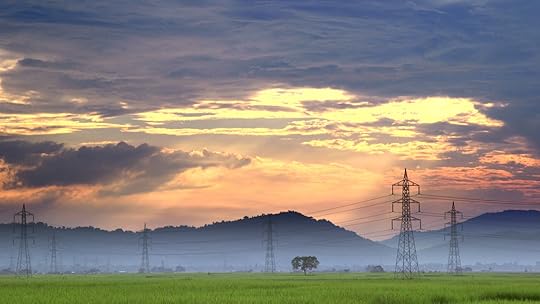
(A still from the film I was shooting in Assam)

A translated collection of Kalita's short stories that deal with conflict in Assam, from the Agitation of the 70s through to the Bodo separatists and anti-immigration unrest of today. The violence is not so acute as in her novel Felanee, but the tone is still fairly grim and I was aware of reading it more in factual interest than in aesthetic enjoyment. Though there are moments of pure sensual detail – as with the beguiling opening to ‘Arunima's Motherland’:

Outside, a gentle breeze blew. The perfume they had sprayed all over her last night still clung to her now-crumpled bridal mekhela chador; the lengths of jasmine and tuberose coiled around her hair seemed to perk up again in the morning breeze. Their fragrances mingled with hints of other smells—the turmeric-and-black-gram scrub of her ritual bath, the sandalwood paste, the spanking new jewellery, the streak of oil in the parting of her hair over which her mother-in-law had applied vermilion during the joran ceremony, and the smoky hom, the wedding fire fuelled by ghee and mango-wood. In a heartbeat, she could breathe it all even now.


As can I! Of course you can be sure that this character will soon end up facing men with guns emerging from the forest, since that's what happens in basically all of her stories.

One of the most interesting pieces is ‘Face in the Mirror’, a nonfictionish piece of apparent life-writing which retraces Kalita's childhood at a Christian boarding-school and the beginnings of the affinity she feels with society's victims. It includes a long extract (like several pages) from Toni Morrison's The Bluest Eye – Kalita has translated the novel into Assamese – of a difficult scene where a gang of white guys force a black man to rape his girlfriend in front of them. Kalita uses this as a kind of prism through which to refract the racial/tribal/sexual dominance that is acted out in her own homeland. It's a very unexpected and interesting juxtaposition.

In other pieces, her technique is dreamier and more magic-realist:

Wherever the shadow of the bus fell on the river, the water became blood-red in colour and the fish died. As the bus tore through the midnight silence with its screeching ghetleng, ghetleng sound, the fireflies in flight above burnt into ashes and vanished into the jungle.


The women in these stories are often victims, in a literal sense, but they are not defeated, submissive, or beaten-down. They are all angry and determined to defy the system. Sometimes this has horrific results which she does not shy away from; but sometimes, Kalita suggests, this defiance, combined with a strong sense of community, can bring the potential for meaningful change. Overall, a solid if somewhat worthy collection, with a lot to reveal not just about the political situation in Assam, but about the details of daily life in a very particular place and culture that gets little outside attention.
Profile Image for Mridula Gupta.
724 reviews194 followers
July 9, 2019
Kalita's 'Written in Tears' are stories about the meaninglessness of violence, oppression of women and a patriarchy that in most cases, doesn't make sense.
With strong female characters who stand against the presumed social diktat, these stories are powerful enough to churn your emotions and leave you helpless.
Kalita's personal experience fuels the emotions in this story and we are transported to an Assam amidst violent uprisings, and social as well as physical injustice. We move across streets where people with different ideologies are shot, common people trying to live a decent life are looted and women are violated (physically and emotional) repeatedly and all in the name of freedom.
.
In most cases, the thin line between revolution and punishment vanishes leading to a hostility that is ferocious and unspeakable.
.
What stands out is how well developed these characters are. Be it Mainao who is forced to cut her hair because she defied some orders, or Ayengla who turns into a stone (just like her Namesake) after being brutally raped, they feel like people we know and every pain inflicted on them is capable of bringing out a strong rage. Assam has been described in all its natural as well as traditional glory. The incorporation of regional songs as well as mythical stories intensifies the atmosphere.
The Half burnt Midnight Bus that leaves trails of death and destruction, the demons that require bizzare sacrifices and the songs of love and longing, every little thing brings together the story into a poignant, resonating and agonizing tale.
Profile Image for Anupama C K(b0rn_2_read) .
827 reviews77 followers
August 23, 2020
A set of short stories which will tug at your heartstrings.
The translation is so seamless, I never felt that I was reading a translation.
Profile Image for Chandana Kuruganty.
212 reviews88 followers
April 7, 2021
" Caught between the deshlaga dushman ( enemy of the country) and basti laga, their own people, the villagers became the proverbial blade of grass between two warring buffaloes."

Simple yet strong characters, (specifically women characters) and how their life turns upside down owing to the Assamese agitations coupled with specific details of community, traditions, Assamese beliefs and rich scenic descriptions make this an amazing read!

The translator, Ranjita Biswas must be credited for ensuring this brilliant book could be presented in English in best possible manner. I am taking with me certain Assamese words and phrases she retained in order to convey the emotions behind the writing!
Profile Image for Amishi Agrawal.
39 reviews10 followers
October 19, 2021
The kind of work that deserves to be canonized. To be read over and over again at different stages in life. This collection of short stories gave me a lot of firsts- this was the first time I fell in love with English that has been translated from another language. Also the first time that I read a book three times before being able to pick up another book. I guess this is what happens when you find stories that actually show how deeply interwoven conflict and ecology are with the lives of women. Not to forget that this is the first time I’ve been introduced to human history before political history. I’m still struggling to find proper resources to introduce me to the ULFA and Assam’s separatist movement, but I couldn’t ask for a better introduction to the complexities of the situation and the entangled human webs that such conflicts shake the dust off of.

If I haven’t already made myself clear–read this book! With your eyes closed and your heart and mind open. Probably one of my all time favorites from 2021.
Profile Image for Surbhi Gupta.
14 reviews1 follower
April 19, 2019
3.5!
This is a collection of Kalita's acclaimed stories and novellas. I have never read anything from the North East before, so the setting was super refreshing to me. All the stories are set against the rustic and beautiful landscape, and focus on the ethnic conflict and violence that shook Assam during the early eighties and how this impacted people, particularly women. I was unaware of the Assam Agitation and the Bodo movement, but reading this led me to search more on the topic.
The author uses magic realism and weaves stories which have a dream-like quality to them. Needless to say, I loved the experience. The writing feels so authentic and the characters so real. The women, though had to suffer, are strong in each of the stories. I recommend you to read this if lyrical prose is your thing and open ends do not bother you.
87 reviews13 followers
January 9, 2020
Written in Tears by Arupa Patangia Kalita translated from Assamese by Ranjita Biswas  is a collection of short stories with themes mostly resonating one's homeland, the conflicts and yearning for it. Picked this on the recommendation of Padmaja who is my go-to for Indian literature. This is very riveting read and had me engaged at all times.

The first 2 stories 'Arunima's Motherland' and 'The Cursed Fields of Golden Rice' have similar themes with the protogonists in face of the unstable situation at their respective places move else where- Arunima to her parents home and Mainao to Delhi. There are vivid descriptions - sights and smells of their home and a sense of loss and displacement. The latter talks a lot about the local culture, traditions and folktales as well.

'Face in the Mirror' reflects on childhood friendships , the dire situations faced in the North East and its impact on children who see the conflict first hand. The Half-burnt Bust at Midnight sent chills down my spine for the destruction that a burnt bus imparted on a flourishing village while passing by. As the author tells in the interview towards the end of the books - "For me the bus in the story is a symbol of the ugliness of violence, of man killing man in a world so beautiful. It’s a devastated world where flowers do not bloom, butterflies do not fly, birds die as the odour of death pervades the air. I believe in peace. Human beings in general want peace. But where is it today?".

In 'Kunu's Mother', Kunu and her mother have to be separated when the extreme forces want to take in the beautiful Kunu. 'The Girl with Long Hair' is a devastating revelation of what happens when one goes against the laws of the community. In 'Surabhi Barua and the Rhythm of Hooves'  , a professor recollects her experience leading to her expulsion. 'Ayengla of the Blue Hills' blends folktale with Ayengla's traumatic experience.

Each of these stories have been translated so beautifully and give the readers a slice into the conflicts faced. There is a visual charm to the writing . Highly recommend this book and would end my review quoting from the postscript- "The stories in this compilation have been chosen to focus on the conflict in her homeland and its impact on the common people, particularly women. The universal reality of war affecting women, children and the old unfortunately remains, even as we have already crossed the first decade of the 21st century. The promise of ‘never again’ gets lost as history repeats itself."

Rating : 5/5
Profile Image for Ciea.
94 reviews15 followers
April 27, 2021
“Written in Tears” was a collection of stories like no other. I, writing this review days after reading the book, am still baffled by the impact that all the tales had on me. Very straightforward, clear and disturbing, these stories are real, to say the least.

Assam, a very significant state of the north eastern India, though appreciated for its connectivity to nature, greenery, scenic beauty and vibrance once had insurgency in a full bloom. In a state that was known to be seated in the lap of nature, once terror, blood shed and riots thrived. Rights and wrongs. Known and unknown.

This is the theme that Arupa Patangia Kalita portrays in a book that I am sure was written when millions of tears were shed. For the people lost to death and militancy. For a golden land where innocents suffered. For the young and old who either gave up their life, or it was taken. These tales are the examples of patriarchy, abuse and violence, and how some people take a wrong turn and destroy lives instead of making them on the road of revolution. A collection of lives that doesn’t just show you the folklores, festivals and songs, but the harsh reality like a slap on your face. Bursting the bubble and forcing you in a land of horror.

Ranjita Biswas’s translation from Assamese to English was seamless. Smooth. At one point you wonder whether the book was written in English itself because it captures the essence with pure elegance. You could feel Assam through those words. I was at a loss for thoughts when I finished the book because it is one of the best translations ever.

As you read about a new bride watching her world go up in flames, a half burnt bus killing everything alive coming its way, different opinions all silenced, innocence crushed under the weight of torture, you feel nothing but agony for everything that turned into ashes in a snap. For once you see the reality laid in front of your own eyes, and though it makes you uncomfortable to see a land you love in shreds, it is the truth nonetheless.

With brutal honesty, different aspects and various perspectives, Arupa Patangia Kalita holds nothing back as she makes the readers dive into this world with utmost strength.
Profile Image for Annapoorni.
138 reviews16 followers
August 20, 2020
Book- Written in Tears
Author- Arupa Patangia Kalita
Translated from Assamese by @ranjitabis
Publisher- @harpercollinsin
Genre- #Anthology
My Rating- 4.75⭐

This book won the #SahityaAcademy award for translation; Ranjita Biswas has done a brilliant job of retaining the vernacular ethos of the stories, the language, the characters. The metaphors and similes are steeped in local flavour. One can visualise verdant Assam and it's rustic rural villages and village folk- weaving, farming, rearing animals, collecting water from the river, gathering wood from the forest. I especially loved the weaving references, a given, considering my love for #handloom.
It sounds so idyllic.
This serene and verdant landscape houses a violent conflict between insurgents and the army. This is part and parcel of everyday life in Assam. Common people's dreams and aspirations are hemmed in by extortion, violence. Everyday life is lived on the rim of death.

This book is a collection of some long stories, short stories and novellas - all thematically aligned. The protagonist in each story is a woman, who dreams of marriage, family, love- everything that will help her bud a home. Each one's dream is rudely interrupted by external forces- a 'khetra' who cannot be appeased through rituals and sacrifices.
Profile Image for Pooja Nandi.
60 reviews
September 10, 2022
Set in Assam, the stories of different individuals in this novel are rightfully said to be Written in Tears. Because every chapter in the end leaves you with a heavy heart.
.
.
While I chose this for the Women In Translation month, I was least expecting it to this thorough with its content. For I must say, the minutest of the details of Assam have been brought to light. The knowns and unknowns of the times forgotten.
.
.
Though there are parts that are difficult to understand because of the unfamiliar dialect, the message gets to you fairly.
.
.
Particularly, the female characters through out have been beyond reproach. Some were bold, some naive, some quizzical, and others thoughtful. Every side was touched upon with utmost precision irrespective of their narrative.
.
.
Written by @arupapatangia and translated from the Assamese by #RanjitaBiswas, it's a splendid piece of work. I highly recommend you to read it once. Yes, you will be overwhelmed with emotions, but it will be worth it.
Profile Image for Aparna Prabhu.
526 reviews44 followers
June 3, 2022

The land of misty hills covered with cotton wool clouds and hanging bridges is torn apart by the mobs killing the natives at gun point at the light of the day. The residents lived in fear of someone dragging their loved ones and killing them amidst the lush green forests. They were even weary of nature’s fury.

“The people remain fearful—like cattle after escaping from a burnt-down shed and are now so scared they fear even the hint of a red cloud”

The book offers a first hand account of the history of north eastern states - their formation and the tussle between the Indian army and the rebels over the ownership of the land. The anthology comprises of stories where revolution seeped into the daily lives of the residents. You get to inhale the scent of fresh breeze, marigold, sunflowers and on other hand, the pungent smell of blood hits your nostrils.

In the year 1947, when the rebels demanded independence for the land, this plea was rejected by the Indian Government. To counter this move, the rebels boycotted the elections, and didn't even bother to stage a candidate when elections were held in 1952.

Each story starts with describing the beauty of the setting only to end in a tragedy. A heart-wrenching tale is woven around a folklore. A half-burnt bus obstructs the calmness and silence of the night and destroys the paddy fields. That day, the river baths in red and the infants are deprived of milk.

The brutality inflicted on woman cast a pall of gloom and my heart went out to the women who were toyed by the insirgents. Arupa Patangia Kalita also documents her experience of being torn between the army and rebels. We see a strong woman admonished by her peers and in-laws alike for her ideologies and judgements. The uprising committed atrocities against women in broad daylight and left them in public display. Mainao’s hair was chopped for going against the diktat and she was forced to marry a man against her will. Patriarchy spread its ugly tentacles and was rooted deep into the hills. Kunnu’s mother received letters to extort money from her.

I was fascinated by the culture of the north eastern states, but alas I didn't see the tears in the eyes of the natives.
Profile Image for Vibhuti Bhandarkar.
Author 5 books14 followers
March 30, 2021
Written in Tears' is a collection of 8 short stories that made me collectively realise that reading more stories from different corners of our world is a MUST. I am no book worm unless I've devoured 'real' stories like these too. Written from the POV of the women of Assam, how they lived, their beliefs, and struggles, particularly 'Face in the Mirror' gave me a jolt.

'It was a Sunday. The month, April; Year-1997. How can I forget those days?' She writes. Even I have vivid memories of  my happy college days in Bombay, but at that very same time, the girls in Assam were living through days of extreme turmoil!

' It was a time when money was counted only in lakhs and the number of deaths escalated every day. The group that wanted a separate state was becoming like the bharando bird; with its two mouths, it was devouring its own body...The odour of blood pervaded the air more and more as the days passed.' This passage is so disturbing!

Every story in the book begins with beautiful descriptions of an Assam that I'd imagined, as we've always seen in pictures.
'Ayengla is a happy woman who has a loving husband, two children, paddy fields and a chang ghar with pigs and chickens. She loves the blue hills that rise high behind her home. On most days, they are covered with cotton-wool clouds and veils of mist; on sunny days, they shine like bright jewels under the sun,'
However, as the story progresses, the masked men crawl out of the dark forests like ants out of the wood work, to bring before our eyes the painful, gut wrenching dark reality. Mental pictures of beautiful houses and gardens burgeoning with flowers turn to images of destructive fires burning everything down along with its people. 

If these stories hadn't been translated to English, I would still be ignorant about the history of violence caused by the agitation in Assam and the atrocities inflicted upon the women. 

And yet how strong must these women be if the author includes quotes Shelley- "‘If winter comes. Can spring be far behind?’ poignantly portraying the spirit of Assam.
Profile Image for Chitra Ahanthem.
395 reviews208 followers
October 31, 2021
Written in Tears by Arupa Patangia Kalita and translated from the Assamese by Ranjita Biswas is a collection of 8 stories, most of which are longer short stories. Set in the backdrop of the political turbulence in Assam, during which numerous young people taking to the gun; the subsequent fightback from Government forces, the intergroup fights within the insurgency movement and how that affected the lives of the common people in different ways, these stories pull your heartstrings with their ethos.

Arupa has set most of the stories beyond Guwahati, the capital city of Assam and in doing so, brings out the sufferings of a people cut off from the mainstream and by putting this out, I mean the plight of people left to fend for themselves because they are the 'periphery' either from the hub of Assam or the rest of the country. Her stories are about common people, their families dismantled or destroyed both physically and emotionally by the violent conflict around them and how eventually, they remain as victims left to fend for themselves, to try and make sense of the unending violence, to pick themselves up and carry on scarred with no support.
In writing about the times preceding the violence, Arupa brings to readers the rich traditions of the communities mentioned in her narratives, their simple lives filled with hope, a poignant reminder of just how much has changed. One of her stories in this collection 'Face in the Mirror' touches upon the impunity with which the Indian Army dealt the insurgency in Nagaland and the resulting intense hatred for India, a theme explored when the narrative shifts to the Assam flavour. Unfortunately, there is one factual error in the narrative that one wishes was not there. Barring this minor quibble, a book I would recommend.
101 reviews1 follower
April 25, 2020
Set in the lush green plains and valleys of Assam; Kalita’s stories and novellas write about the violence that has engulfed this region since the last quarter of the twentieth century.

Her protagonists are females; but I don’t think she intended this to promote a feminist agenda. This is to show that those who run the home suffer on multiple levels. She is unable to put food on table and raise the children. So while there is the stress of violence outside the home; there is also the distress of family going hungry. Such perpetual struggles have been beautifully personified by ladies like Mainao. Women are also used as weapons in this blatant exhibition of power and Kalita highlights this through events like chopping off of a girl’s hair and the most heinous instrument of oppression, rape. The intellectuals like Surabhi are punished for their logical and detached views; just like the writer was.

She also uses magical realism in the form of a burning bus which passed through a city and leaves everything behind it charred down to ashes. This is symbolic of the fire of revolution; while not accomplishing much of the intended goals, it has destroyed all aspects of a peaceful civilian life.

My father was posted in Assam from 1997-2000 and while the insurgency was in decline at that time; we have witnessed the fear first hand. We went to school with armed guards and were basically locked indoors after 7 in the evening. And since we were not from Assam, we were more vulnerable. When my father went second time around in 2015, the situation was much better and I hope peace comes to this beautiful land with wonderful people.
Profile Image for Manabjyoti Biswas.
19 reviews1 follower
September 20, 2025
I realise how unfortunate I am to not be able to read A. P. Kalita’s original works in Assamese. I felt that when I was reading Felanee and now again with this collection. Though the English translation by Ranjita Biswas is good, at times certain passages turn out to be a bit confusing and awkward. I know this to be a problem in translation, as I have found it in other translated works too. Leaving this particular aspect of translation aside and focusing on the stories in this anthology, I have to applaud Kalita’s narrative prowess. It is beautiful and lyrical. Kalita is able to weave minor aspects of common people’s lives into the theme of violence and conflict in such an exquisite manner that it touches your heart. It does not matter whether the plot is real or fictional; what matters is the possibility of its being. This possibility makes these stories quite powerful, allowing readers to feel the pain and suffering of common people. We see how an environment of hysteria and fear is given shape, leading to a cycle of violence, conflict, and trauma, and how people who question this are silenced, threatened, and alienated. By the end of these stories, we are left to wonder how these people suffered and to contemplate their state of helplessness.
Profile Image for Rashmi Duggal.
275 reviews3 followers
June 3, 2023
A sad tale of sufferings of people of Assam more so of the women folk, which has been affected by decades of violence.
Each tale brings out another angle of brutality along with the simple beauty of Assamese culture. Arunima comes as a young bride to a loving family, while they are busy building their lives, one son joins the rebels and the entire family faces the brunt of security forces as well as social banishment.
Face in the mirror is a portrayal of human emotions and also hatred of certain tribes who don’t consider themselves a part of India.
Overall each story brings out the simplicity of local people who amidst poverty, deprivation are trying to build a future but face repeated demands from rebels and also violence of both rebels and security forces.

A first hand depiction by an author who has felt it from heart
Profile Image for Mayolla nazareth .
75 reviews2 followers
January 19, 2020
Beautifully written and translated, she paints your empty canvases with the beautiful landscapes of the northeast, keeping in focus the grotesque human endurings cast none by our own species .
All the protagonists are women of different nature who stood against the norms of society. Every story does justice to the title.
Was lost in the second chapter as it had a lot of non-translated words.
Recommending to every Indian, to discover the virgin soils of our country that smell blood and pure blood .
Profile Image for Aayushi Singhal.
34 reviews5 followers
October 18, 2022
One has to be a little numb to read this book from cover to cover. It follows some gut wrenching stories situated during Assam Agitation. It’s a different feeling all together to read a work from one’s homeland. It’s more than relatable in that sense. The rubber flip flops, oral tales, the smells, the yearning for knowledge, the saving mentality -and so much more is conjured in the stories.

The horror of each story is undeniable. Living in violence, transitioning from dying villages to a dead city in order to earn a reputable living, loosing homes, youth, years, potential, emotion, confusion of freedom and independence, a society in agitation being vulnerable to increased crimes against women. All of these makes it hard to read it and at the same time crucial to read it till end.
Profile Image for Nallasivan V..
Author 2 books44 followers
May 6, 2019
Short stories with an intimate portrait of life under siege during the Assam agitation (Assam Andolan). The characters are mostly common people who are caught in the crossfire between the army and the rebels. Though they are victims, they try to defy the system even if it means sacrifices. Intense and gripping.
Profile Image for Piyusha Vir.
Author 9 books26 followers
October 18, 2021
Heartbreaking but powerful collection of stories set in Assam.
I wish I had more to say but I don't. The stories left me weeping inwardly at the pain and trauma suffered by the people of Assam because of the violence in that region.
Profile Image for Chinar Mehta.
102 reviews17 followers
September 6, 2019
This is a very relevant read considering recent developments in India. The stories in this collection are moving, and they paint a very vivid picture of the conflict that continued in Assam for decades due to the violence perpetrated by the Indian state, and the retaliation by rebel armies. She presents the perspectives of the many women, and the men in their lives, who found themselves in the midst of these conflicts, and how their lives were comprehended by them at such a time. The stories deal with violence, angst, family, belongingness, and love. They are lessons in understanding how forceful occupation in any region much more diverse than the majoritarian imagination of a nation, does not end in peace. It ends in bitter resentment and violent outbursts done out of desperation and an instinct to be in control of one's own life.
Profile Image for Priyadarshini.
216 reviews13 followers
September 29, 2020
A patriarchal society writes a parallel history - one which ignores women. And this makes Arupa Patangia Kalita’s work so important to understand the history of the Assam agitation and it’s impact on common people, particularly women.

These are the people who want to study, to keep house, to educate their people, to plant a beautiful garden, to make ends meet, to weave exquisite shawls, to grow rice and chickens, to fall in love, to pass on their folk tales and oral traditions, to dress up for celebrations, to welcome new life.

It is these very people whose equanimity gets invaded by waves of conflict between law-keepers and law-breakers - they are the proverbial blade of grass between two warring buffaloes.

“Only a woman understood how much effort it took to set up a home..” and these very homes are bombed, burned and razed to the ground as a result of war. Someone has to write these stories, though we never learn from then. Why else would history repeat itself?
Profile Image for Khyati.
230 reviews1 follower
March 10, 2022
It’s a collection of 8 short stories that focuses on the impact of Assam conflict specifically on women. The author lead us to the streets where people with different ideologies are shot, common people are struggling to live a decent life, women are subjected to violence of every kind and freedom comes with a huge cost.

The stories reflect the suffering and pain a simple mind and heart can endure – the planning of secret killings, sudden displacement from native place, a dose of magical realism in form of a burnt bus, falling trap to age-old traditions, intellectuals who paid heavy price in voicing out their opinion and losing your sanity amidst achieving freedom. Author fueled her personal emotions in each story forcing my heart to sink deep into sadness and despair. I wanted to cry with and hug each of the protagonists as this is the least I can do. How barbaric is the act where a girl’s hairs are cut off because she visited Durga Pujo and how inhuman is the practice of gang rape by the people who we consider as our protectors.

The women in the stories are strong, self-dependent and fends for the entire household in extremely challenging situations because men are either caught in the bloodshed or are the reason of it.

The author also introduces culture and topography of Assam in a poetic way. Every story captures the beauty in an entirety – the folktales of Asagi-Baosagi, grand festivals, the lush green valleys, vast paddy fields, illustrious gamocha and extravagant designs on dokhana providing a silver lining to the whole situation.

Providing a crystal clear picture of the region and framing each story in original casket, the translator (Ms. Ranjita Biswas) has done a wonderful job.
Profile Image for Abid Uzair.
67 reviews18 followers
July 29, 2020
You admire a certain place more so by learning about its people and the history surrounding it. Novellas chronicled in this book do just that for the state of Assam. The prose is beautifully written which makes it a great piece of the translated text. It deeply resonated with me given the current political climate in India.
Displaying 1 - 27 of 27 reviews

Can't find what you're looking for?

Get help and learn more about the design.