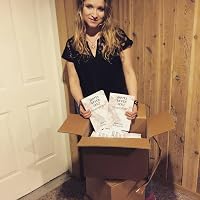
Jennifer Rose is autistic. She’s also a college student who loves reading, writes fan fiction, and wants to be on TV someday. She sees the world a little differently than most people around her. She’s had trouble coping with school, has struggled with bullies and mean girls, but she has also achieved much in the face of adversity. And through it all, with the help of her parents, Jennifer’s learned a few
#5: Use your dreams to make a difference. #8: You won’t be perfect at everything, not even the things you do best. #18: Learn to take jokes, even your dad’s. #26: Down times will be bouncing up soon . . . #27: . . . meanwhile, enjoy what you have. #47: Talk about your feelings, even when it’s hard.
It’s Not a Perfect World, but I’ll Take It is an uplifting guide to life. It explains how you can be different and still connect with others, how to deal with tough realities, and how to celebrate happy times. Told with irresistible honesty and humor, Jennifer’s fifty bite-sized stories will have teens and adults nodding in recognition and gaining new insights about themselves.
It's Not a Perfect World, But I'll Take It is a compilation of 50 lessons that the author, Jennifer Rose, has learned throughout her life. Rose emphasizes her experiences as an autistic person and intends to reach out to others on the spectrum to help them navigate life.
At first, it inspired me to read something by an author whom I have so much in common with. We’re both autistic college students who were born in 1996. DeviantART played a huge role in both of our lives. I was excited to read about our mutual appreciation for a variety of music genres, including classic rock. We also shared the same fantasy of being famous, and this particular sentiment from "Lesson 2: Not all your dreams will come true" resonated with me: "...When I was eleven, I told [my parents] I was worried I would get too old before a company discovered me...I wanted to be like the glamorous people on TV." (p. 5).
Many of Rose’s lessons made legitimate points and offered solid advice. I especially appreciated the sentiments she expressed in "Lesson 34: Don't bite off more than you can chew" and "Lesson 35: But take care of responsibilities and get things done." In "Lesson 34," Rose talks about how much she struggled with five courses during her first semester of college and how she had to drop one. She says, "I had learned that there's only so much I can handle and that I shouldn't try to bend until I break" (p. 80). She touches upon this further in "Lesson 35:" "...I can't always adjust life; sometimes, I need to adjust myself to life instead and make sure to include the things that will help me deal with stress" (p. 82). I personally struggle with overachievement and perfectionism because I've been conditioned to prove my worth as a person. It wasn't until during the past few years that I've begun learning how to set realistic goals for myself and accepting that I'm not less of a person for having limits. Hearing "don't bend until you break" from another autistic person was validating.
Despite how valuable some of Rose's life lessons were to me and how much I related to her, I cannot recommend this book. She promotes the beliefs that autism is something to recover from and that disability is inherently a burden.
In "Lesson 23: Think for yourself when it comes to autism," Rose discusses her "recovery" from autism and explicitly speaks out against the neurodiversity movement, which she says is "[unfair] to autistic kids who struggle with life and can't do things the rest of us take for granted" (p. 51). In the same paragraph, she states: "People who [say] autism is just another way of thinking aren't very helpful, because they ignore the issues autistic kids face every day."
"Lesson 25: Celebrate autistic kids without celebrating autism" concludes with: "When we celebrate a disability, we forget the burdens it imposes on people" (p. 56). Considering that Rose calls autism a disability and describes disability as something that imposes burdens on others, she is promoting the idea that a person's worth is tied to how able they are. The example she uses against "celebrating disability" is the celebration of Franklin D. Roosevelt's accomplishments despite him having polio, not his polio itself. By using polio as an analogy, she is comparing developmental and neurological differences to a life-threatening disease.
Speaking as an autistic self-advocate, autism isn't a "disease" that warrants recovery; it's a different way of processing the world. As an advocate, I want to make the world more accessible to others who are different. As a person, I want to communicate the concept of treating others fairly and decency, regardless of their capabilities. With these goals in mind, neurodiversity isn't about "[ignoring] the issues autistic kids face every day;" it's about acknowledging these issues and finding ways to accommodate autistic individuals.
The people and organizations that Rose mentions throughout her book provide context for her views towards neurodiversity and disability, as they promote ideas including autism "recovery," vaccines correlating with autism, and autism having a direct impact on a person’s worth. In the preface, she describes "meeting Jenny McCarthy at an AutismOne conference" as a “bright spot” in her life (p. ix). Jenny McCarthy, who is mentioned throughout the book, is a celebrity notorious for her anti-vaccination views. In the schedule of events on the AutismOne conference website, I've discovered they are anti-vaccine (one event is titled "Vaccines - The Evolution of Bad Science") and promote alternative medical treatments (e.g. an event named "Pediatric All-Natural Treatment Options for Brain and Digestive Health Utilizing Herbs, Ayurveda, Camel Milk, and Essential Oils" under "Biomedical Research & Treatments") to treat autism.
Rose may be speaking from her experience as an autistic person, but her stance on autism - as well its reflection in her writing - is questionable. My library put this book on display for Autism "Awareness" Month, and it makes me wonder about the impression it would leave on someone who didn’t have context for the names and ideas in the book, let alone the means to research them. I don't want other autistic people reading this book and feeling like they need to be “fixed.”
Rose's life lessons are legitimate, but because of the ideas she promotes regarding autism and disability, I cannot endorse this book.
Another one that I might review later in detail, but it needs some warnings in the meanwhile. Yes it is #ownvoices. It is also: * An explicitly anti-neurodiversity book * Promotes "recovery from autism" * Promotes Jenny McCarthy (to a great extent) * Promotes things like chelation and hyperbaric oxygen chambers (?!??!?) as autism "treatments" * Says that one needs to "overcome" autistic "obsessions"
The book is like a blog listing of things the reader believes. I would not recommend this to anyone who actually has Autism. It recommends using unscientific methods to “cure” Autism. It’s written from a religious girls point of view and makes it obvious her parents may have made her feel like Autism is some kind of cold to just get over. This book will lower your IQ and/or anger you.
Read for Under the Radar: Written by a young college-age woman who is, in her words, “recovering from autism,” this brief book is aimed at adolescents on the autism spectrum. Rose shares experiences that supported her learning of social conventions and executive control mechanisms to cope with frustrations stemming from her autism. Although written for adolescents, parents and educators will find valuable first person insights into the emotional and perceptual lives of teens on the spectrum. Fair warning, though: as engaging as Rose's writing voice is, the rhetoric of autism "recovery" permeates. However, Rose does challenge readers to make up their own minds about autism, allowing for alternative points of view.
Author Jennifer Rose does a wonderful job in sharing her life experience as a child growing up with autism. Each chapter deals with different themes to help readers navigate through school, friendships, and family social settings, plus advise on how she stays optimistic and thankful despite the stress and setbacks that she has encountered in life. Rose writes in a down-to-earth, accessible, and uplifting style that will resonate with any teen, especially those coping with autism. Recommended for teens grades 7 and up. Reviewed by: Alyson D., Youth Services, Vernon Area Public Library
I picked up It's Not a Perfect World, but I'll Take It, because you hear a lot about autism from the perspective of parents or experts, but people on the spectrum can totally tell their own story, and I wanted to hear it.
Summary: This book is about a girl who faces different challenges some are challenges that many encounter and some are challenges that she encounters due to being autistic. She’s give 50 life lessons that I think everyone can relate to. The lessons are about school, never giving up , bullying, making your own choices, dreams and so much more . While reading his book I really enjoyed it that I was able to finish it in two hours. I even caught myself laughing. I felt glad knowing that many go through the same things that I went through either with friends, school, or family.
Illustrations: Though there were no illustrations, the words were all I needed to understand the character. I liked that they had real photos of her with her family, friends, and her boyfriend , it just made it more real. I like that the author instead of saying disabilities said abilities. She’s not looking at what can’t be done but what can be done, which are abilities.
Grade level : I think this book is for middle schoolers. An activity I would do with them is to look up different abilities that are found mostly in teens. I think this will help them learn of them and how to approach them . I would want them to make an essay, poster, or PowerPoint. I would also make them make 10 life lessons and give to a partner. This will help them see that maybe what a classmate is going through they might be going through the same thing. It would also help me as the age understand what their going through.
Strengths: No weaknesses were found, I think the strengths were everything. From the photos to the words that expressed how the character felt. Where so many people can relate to. The book was so simple yet so informative. I was able to learn about this ability. So many strengths were found, really enjoyed this book.
I don’t often rate books, but I wanted to make sure that anyone who sees my list of books does not think I liked this one. I confess that as hard as I tried I could not get more than halfway through it. The mother of the author said she had “the right kind of autism.” Does that mean there is a wrong kind? Perhaps, since the author’s sister was “too seriously affected” by her autism to be mainstreamed.
One thing the author gets right is that the neurodiversity movement doesn’t agree with her. Recovering from autism? Beating autism? The author also did chelation therapy and and likes Jenny McCarthy. I’m disgusted by ableist and outdated ideas.
A couple of things I did like about the book:
1. I read it before giving it to my son to read. Glad I saved him from this trash.
2. I checked it out from the library and didn’t spend any money on this garbage.
Ugh. Surface level advice (every advice felt like a throwaway, and I was more interested in the actual stories she brought up however she didn’t elaborate enough for my taste) wrapped up in an insane ableist package. (Functioning labels, Asperger’s used as a separate diagnosis from autism, believing and wanting a cure for autism, believing people can recover from autism (basically just encouraging people to mask & ABA), supporting causes led by non-autistics hoping for a cure (Jenny McCarthy for one), and just generally super ableist passages that imply that disability is inherently a burden and tying one’s worth to their ability to work).
Cool that she was Jewish though, and to see that impact through her life.
Oh goodness... this is a dumpster fire of ableism. She idolizes Jenny McCarthy, supports organizations linked to anti-vax views, was subjected to biomed therapies by her parents, is "proud to be recovered" from autism, wants to cure autism, etc.
at one point her mother tells her she has the "right kind of autism"
as someone who has a background in psychology and education as well as loving a few people on the spectrum... do not harm your child/teen by telling them to read this.
I entered a giveaway for It's Not a Perfect World, but I'll Take It: 50 Life Lessons for Teens Like Me Who Are Kind of (You Know) Autistic because I thought it might be a good read for my twelve year-old autistic son with high-functioning autism. I read it, and I doubt that I'll be passing it onto him anytime soon. The author was much more interested in pop culture than my son is, and I don't think he'd understand a lot of the references. However, the book was very well-written. I appreciated the chapters/lessons being short enough to pick up and read when I only had a few minutes to spare.
“...even if you feel you’ve hit rock bottom, you’ve actually started to bounce back, and you never know what little thing might set you on the happier track.” - (61)