

What do you think?
New Directions in Native American Studies
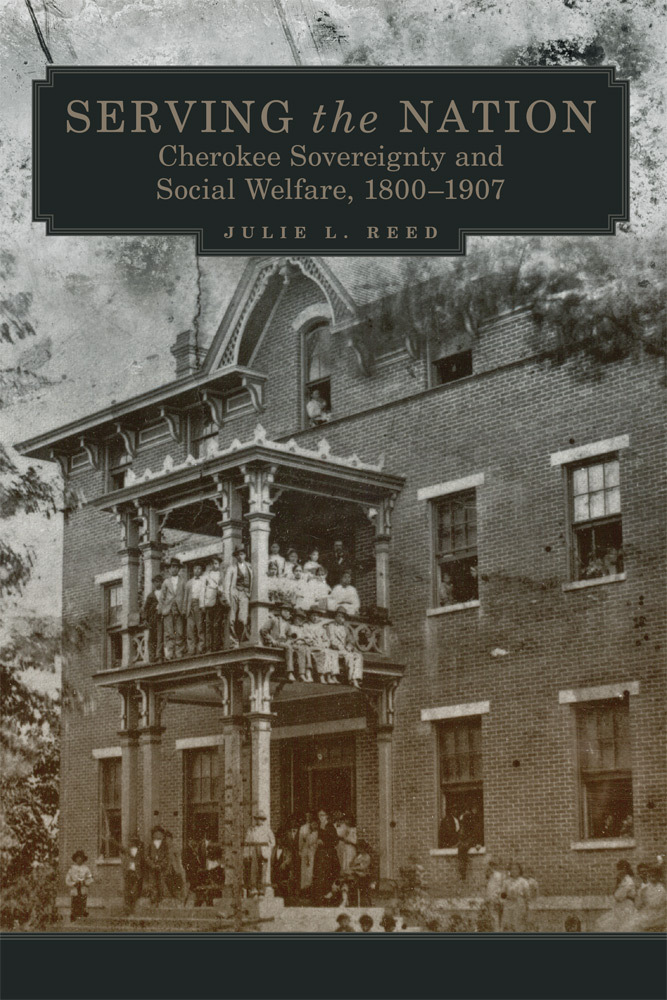
Serving the Nation: Cherokee Sovereignty and Social Welfare, 1800–1907 (Volume 14)
Well before the creation of the United States, the Cherokee people administered their own social policy—a form of what today might be called social welfare—based on matrilineal descent, egalitarian relations, kinship obligations, and communal landholding. The ethic of gadugi, or work coordinated for the social good, was at the heart of this system. Serving the Nation explores the role of such traditions in shaping the alternative social welfare system of the Cherokee Nation, as well as their influence on the U.S. government’s social policies.
Faced with removal and civil war in the early and mid-nineteenth century, the Cherokee Nation asserted its right to build institutions administered by Cherokee people, both as an affirmation of their national sovereignty and as a community imperative. The Cherokee Nation protected and defended key features of its traditional social service policy, extended social welfare protections to those deemed Cherokee according to citizenship laws, and modified its policies over time to continue fulfilling its people's expectations. Julie L. Reed examines these policies alongside public health concerns, medical practices, and legislation defining care and education for orphans, the mentally ill, the differently abled, the incarcerated, the sick, and the poor.
Changing federal and state policies and practices exacerbated divisions based on class, language, and education, and challenged the ability of Cherokees individually and collectively to meet the social welfare needs of their kin and communities. The Cherokee response led to more centralized national government solutions for upholding social welfare and justice, as well as to the continuation of older cultural norms.
Offering insights gleaned from reconsidered and overlooked historical sources, this book enhances our understanding of the history and workings of social welfare policy and services, not only in the Cherokee Nation but also in the United States.
Serving the Nation is published in cooperation with the William P. Clements Center for Southwest Studies, Southern Methodist University.
Faced with removal and civil war in the early and mid-nineteenth century, the Cherokee Nation asserted its right to build institutions administered by Cherokee people, both as an affirmation of their national sovereignty and as a community imperative. The Cherokee Nation protected and defended key features of its traditional social service policy, extended social welfare protections to those deemed Cherokee according to citizenship laws, and modified its policies over time to continue fulfilling its people's expectations. Julie L. Reed examines these policies alongside public health concerns, medical practices, and legislation defining care and education for orphans, the mentally ill, the differently abled, the incarcerated, the sick, and the poor.
Changing federal and state policies and practices exacerbated divisions based on class, language, and education, and challenged the ability of Cherokees individually and collectively to meet the social welfare needs of their kin and communities. The Cherokee response led to more centralized national government solutions for upholding social welfare and justice, as well as to the continuation of older cultural norms.
Offering insights gleaned from reconsidered and overlooked historical sources, this book enhances our understanding of the history and workings of social welfare policy and services, not only in the Cherokee Nation but also in the United States.
Serving the Nation is published in cooperation with the William P. Clements Center for Southwest Studies, Southern Methodist University.
380 pages, Hardcover
Published April 29, 2016
Ratings & Reviews
Friends & Following
Create a free account to discover what your friends think of this book!
Community Reviews
Displaying 1 - 2 of 2 reviews

February 20, 2020
I would not recommend this book for a casual reader with a loose interest in Cherokee history. It’s highly academic and can be sometimes hard to follow.
But for readers with a personal or professional connection, it does contain invaluable information focused on Cherokee conceptions of social responsibility to each other and how colonialism affected the Cherokee practice of osdv iyunvnehi.
Also, the author of this book, Julie Reed, is herself a Cherokee Nation citizen.
But for readers with a personal or professional connection, it does contain invaluable information focused on Cherokee conceptions of social responsibility to each other and how colonialism affected the Cherokee practice of osdv iyunvnehi.
Also, the author of this book, Julie Reed, is herself a Cherokee Nation citizen.

July 13, 2026
As someone who does welfare history in New England, I was really interested in this book, and I felt it lived up to the anticipation.
Reed explores how Cherokee Nation built a hybrid social welfare system between 1800-1907 that merged traditional matrilineal, kin based obligations (gadugi), with new naitonal institutions, (orphanages, asylums etc). Reed argues this was a deliberate strategy of sovereignty, not assimilation, and that Cherokee social welfare systems were more universal and less coervice than those in the US.
Reed grounds this in a blend of ethnohistory to support the argument even when the documentary is thin. Indigenous peoples rarely feature in most welfare history, and this certainly corrects this. Dense at sports, but I found that the blend of case studies with the wider context and analysis was great. The chapters on the Treaty of 1866 and the orphan asylum built on Lewis Ross's old plantation land are especially strong for showing how policy and institution building were tangled up with removal trauma, reconstruction, and the great institutionalization of the late 19th Century.
Reed explores how Cherokee Nation built a hybrid social welfare system between 1800-1907 that merged traditional matrilineal, kin based obligations (gadugi), with new naitonal institutions, (orphanages, asylums etc). Reed argues this was a deliberate strategy of sovereignty, not assimilation, and that Cherokee social welfare systems were more universal and less coervice than those in the US.
Reed grounds this in a blend of ethnohistory to support the argument even when the documentary is thin. Indigenous peoples rarely feature in most welfare history, and this certainly corrects this. Dense at sports, but I found that the blend of case studies with the wider context and analysis was great. The chapters on the Treaty of 1866 and the orphan asylum built on Lewis Ross's old plantation land are especially strong for showing how policy and institution building were tangled up with removal trauma, reconstruction, and the great institutionalization of the late 19th Century.
Displaying 1 - 2 of 2 reviews