

What do you think?
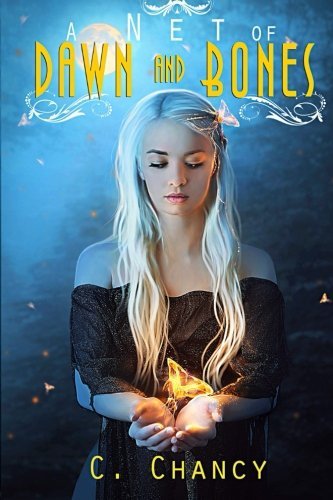
A Net of Dawn and Bones
Blood rituals, black magic, and broken masquerades. Names to run away from really fast. And maybe the end of the world....
Welcome to Intrepid, North Carolina. Where autumn brings leaf season, tourists, and bloody sacrifice.
Twenty years have passed since the Dark Day brought creatures of horror onto the evening news. Now vampires run nightclubs, alchemists deal potions on the street corners, and werewolf gangs lay claim to shady alleys. The honest cops of Intrepid enforce human laws on supernatural evil, and pray. Because the turn of the leaves brings Halloween, tourists... and the return of a serial killer who’s plagued Intrepid for over two decades.
Yet the night holds darker secrets than even the best detectives have unearthed. Somewhere in Intrepid, a demonic sorcerer plans to bring Hell on earth. And the Demongate is almost complete.
In the midst of a stakeout gone wrong, two mysterious wanderers drop into Detective Church’s life. Aidan, who moves like flames and holds secrets in his shadows... and Myrrh, a holy warrior born of ancient Alexandria. Enchantress. Heretic. Hell-raider.
Welcome to Intrepid.
Evil’s in for a hell of a night....
---------
This book was written because I couldn’t find anything like it on the shelves.
...No, seriously. After the umpteenth time picking up yet another urban fantasy that looked promising but on closer skimming had the Designated Protagonist choosing the Sexier Evil, I kind of snapped.
Part of the fun of any story is putting yourself in the character’s shoes. But these shoes I not only didn’t want to slip into, I wanted to set them on fire. Where were the good guys? The honest cops? The ordinary people choosing to do the Right Thing, no matter how hard it was? Where was the belief that there is a Right Thing; that there is Good, and Evil, and you pick the side you’re going to fight for, even if the heavens fall?
In short - where were the heroes?
I assure you, if I were in on ground zero of a vampire versus werewolf blood war, my thoughts would not be centered on, omigod the two main supernatural guys are so darkly yummy in their hellspawn black leather. They would be, stake, silver - where are they and how fast can I reload?
So here they are: an honest cop, a half-demon, and an ancient heretic who just might be a saint. Out to kick butt, save lives, and hopefully save souls.
Welcome to Intrepid, North Carolina.
I’m hoping to stay awhile.
Welcome to Intrepid, North Carolina. Where autumn brings leaf season, tourists, and bloody sacrifice.
Twenty years have passed since the Dark Day brought creatures of horror onto the evening news. Now vampires run nightclubs, alchemists deal potions on the street corners, and werewolf gangs lay claim to shady alleys. The honest cops of Intrepid enforce human laws on supernatural evil, and pray. Because the turn of the leaves brings Halloween, tourists... and the return of a serial killer who’s plagued Intrepid for over two decades.
Yet the night holds darker secrets than even the best detectives have unearthed. Somewhere in Intrepid, a demonic sorcerer plans to bring Hell on earth. And the Demongate is almost complete.
In the midst of a stakeout gone wrong, two mysterious wanderers drop into Detective Church’s life. Aidan, who moves like flames and holds secrets in his shadows... and Myrrh, a holy warrior born of ancient Alexandria. Enchantress. Heretic. Hell-raider.
Welcome to Intrepid.
Evil’s in for a hell of a night....
---------
This book was written because I couldn’t find anything like it on the shelves.
...No, seriously. After the umpteenth time picking up yet another urban fantasy that looked promising but on closer skimming had the Designated Protagonist choosing the Sexier Evil, I kind of snapped.
Part of the fun of any story is putting yourself in the character’s shoes. But these shoes I not only didn’t want to slip into, I wanted to set them on fire. Where were the good guys? The honest cops? The ordinary people choosing to do the Right Thing, no matter how hard it was? Where was the belief that there is a Right Thing; that there is Good, and Evil, and you pick the side you’re going to fight for, even if the heavens fall?
In short - where were the heroes?
I assure you, if I were in on ground zero of a vampire versus werewolf blood war, my thoughts would not be centered on, omigod the two main supernatural guys are so darkly yummy in their hellspawn black leather. They would be, stake, silver - where are they and how fast can I reload?
So here they are: an honest cop, a half-demon, and an ancient heretic who just might be a saint. Out to kick butt, save lives, and hopefully save souls.
Welcome to Intrepid, North Carolina.
I’m hoping to stay awhile.
216 pages, Paperback
First published July 23, 2015
Ratings & Reviews
Friends & Following
Create a free account to discover what your friends think of this book!
Community Reviews
Displaying 1 - 27 of 27 reviews
October 17, 2015
I’m familiar with this author’s fanfiction, some of which I really love, and so wanted to try out their original work. Unfortunately this book didn’t live up to my expectations. There were some great themes in there, but it didn’t really come together into something great. I think it has a lot of potential as a series, but not for me.

September 23, 2017
A contemporary fantasy that opens in Hell. . . .
Myrrh is praying, and the fire spirit Aidan baits her and talks of a strange thing. When they go to see it, they face a demon hunt. Also, they find a Demonsgate, which would unleash horrors in the mortal world.
Meanwhile, back in the city of Intrepid, Detective Church is staking out a graveyard with her partner Tom. It's been twenty-one years since the Dark Day when werewolves and vampires and other horrors erupted into the world. She's disgruntled after inability to bring charges against various magical crooks. In particular, an annual serial killer. . . .
And when the magic turns out larger than expected, capturing both of them and offering them as a sacrifice, it's disrupted by a woman with white hair and a red-haired man who can throw fire. Then the woman cures her partner's injury.
It involves a case that was officially considered closed, a vampire dying by misadventure, a priest who gets teary-eyed at the sight of Aidan but has to be told his name by Myrrh, patron saints, Detective Church trying to piece together stuff about Aidan, a couple of buildings burning down, a lawyer being scared off, and more.
Myrrh is praying, and the fire spirit Aidan baits her and talks of a strange thing. When they go to see it, they face a demon hunt. Also, they find a Demonsgate, which would unleash horrors in the mortal world.
Meanwhile, back in the city of Intrepid, Detective Church is staking out a graveyard with her partner Tom. It's been twenty-one years since the Dark Day when werewolves and vampires and other horrors erupted into the world. She's disgruntled after inability to bring charges against various magical crooks. In particular, an annual serial killer. . . .
And when the magic turns out larger than expected, capturing both of them and offering them as a sacrifice, it's disrupted by a woman with white hair and a red-haired man who can throw fire. Then the woman cures her partner's injury.
It involves a case that was officially considered closed, a vampire dying by misadventure, a priest who gets teary-eyed at the sight of Aidan but has to be told his name by Myrrh, patron saints, Detective Church trying to piece together stuff about Aidan, a couple of buildings burning down, a lawyer being scared off, and more.

May 27, 2016
I was delighted to learn of a professional work by one of my fave amateur writers, and I was not disappointed. Ms. Chancy has given readers a fun adventure with strong characters, excellent world building, and as always she plays merry-hell with a particular idea. In this book's case, it's Christianity.
To be fair, conservative readers will be uncomfortable with the interpretation and spell-like quoting of scripture, but I found it an intriguing new angle on a classic subject.
The author's signature writing style is in full-force, particularly how she uses colors or sensations to indirectly refer to people and things. For example, "amber and silver narrowed", means the two characters with amber or silver eyes narrowed said eyes. Or "and cold swallowed him", means the character fell into a pond mentioned previously earlier in the scene. The style is confusing at first, but as always with this author, I quickly re-adapt and read happily on.
I'd be pleased to read a sequel! I liked the characters--particularly the cop and the fire spirit--and would love to see them have more adventures. Also I've said for years I'd pay money to read something original by Ms. Chancy, and it was very fulfilling to be able to make that happen. Heeee! :3
To be fair, conservative readers will be uncomfortable with the interpretation and spell-like quoting of scripture, but I found it an intriguing new angle on a classic subject.
The author's signature writing style is in full-force, particularly how she uses colors or sensations to indirectly refer to people and things. For example, "amber and silver narrowed", means the two characters with amber or silver eyes narrowed said eyes. Or "and cold swallowed him", means the character fell into a pond mentioned previously earlier in the scene. The style is confusing at first, but as always with this author, I quickly re-adapt and read happily on.
I'd be pleased to read a sequel! I liked the characters--particularly the cop and the fire spirit--and would love to see them have more adventures. Also I've said for years I'd pay money to read something original by Ms. Chancy, and it was very fulfilling to be able to make that happen. Heeee! :3
Read
May 17, 2016A book written by a fanfiction author - not a fanfiction, thankfully. We don't need another E.L. James. The title reminds me of the Daughter of Smoke and Bone trilogy, Laini Taylor. I actually read the first chapter online (here) before I ordered the book.
A good look at post-change integration between the modern world and the supernatural. That's often skimmed over. We also don't usually get the reaction of the justice system to an infinite number of new ways to commit crimes without technically being illegal suddenly appearing. The vampire discrimination suits were a nice touch.
Chancy isn't writing about people with magic; she's writing about people who are magic. Elementals aren't people who can control an element, they are an element. They use it, and it's not so much a power as a part of themselves, it has expense and gain. Like energy depletion and acquisition in introverts. Demons aren't vague humanoids with an evil laugh and a penchant for murder and mayhem; demons are essence of the infernal, wont to punish sinners.
It does throw you right into the deep end of the supernatural. Tied in with the prose style, you might have a sort of delayed cognizance in regards to anything happening in the text. It might take you a few pages after a sudden event, or a couple of occurrences of an explained magic to properly understand it. My suggestion: pay attention. It's worth it.
The prose is detailed and tight, more so than usual in YA. The premise is good, and the implementation is original. I really liked the depiction of hell. The scripture was a brilliant idea, and I appreciate that it must have taken a lot of research.
Church is...abrasive - I'm a bit too Chaotic Neutral for straight cops to be quite my speed. And abuses of authority, however minor, chafe me. I like the heretics and the ones who make their persecutors burn. Myrrh is my favourite. Her voice is very personable, and she is straight-backed and awesome. I quite liked Sword Aariel, as well, little we saw.
Chancy did a good job of altering the voices of the different POVs; the POV is evident from just the structure and particular vocabulary of the prose. It's a shifting close third. She has a thing for sentence fragments, which make the tone more conversational. I like sentence fragments - I have no problem with that.
Myrrh is obviously old; she speaks very much like an old woman (a very old woman), all archaisms and eloquence. Her voice is refined, but down-to-earth. When she speaks, she expects people not to listen but to move. Also, she's weird.
Church is a straight cop in her mid-twenties with a stubborn streak and an appreciation for the old school. Bad puns, a bit noir. Fighting against industry sexism. She's matter-of-fact, and she obeys the rules and her superiors, follows her gut. She reminds me a bit of Detective Decker from Lucifer (TV).
Aidan has a young voice (apart from the slang and colloquialisms), bewilderment and trauma hidden under teeth and bravado, like someone grinning in fear. He has very obvious ongoing trauma. Something like PTSD: agoraphobia, derealisation, hypervigilance, sensory flashbacks and over-stimulation, hair-trigger startle reflex, paranoia, panic attacks.
Aidan and Myrrh are a good double-act. They have a mutual experience with the supernatural, and they become horrified once they realise what too little understanding and too much liberalism has done to the post-Dark Day world. With only romanticised Hollywood themes and forgotten legends to go on, the modern world has accepted into their midst things more dangerous than they know. They accept beings which are fundamentally other as though they were human, and this is a world gone mad.
The supernatural world operates on fundamentally different rules of nature than the human world. Modern humans, however, with so little guidance, have half-hacked it as though they were trying to integrate another sect of their society. As though the supernatural were a world grown with the human world, reacting to the same things in the same ways. As though the supernatural were just human-plus. It's not. And it's allowed supernatural beings to take advantage of the cultural dissonance.
I suppose it also speaks to the relativistic extremes we've allowed some moral and functional principles to reach. To Aidan and Myrrh, there are some rigid rules by which the world works. There is good and evil, to some extent, and that is not at all relative. There are things you must do, and things you must never do. They've been entered into a world which is not privy to their knowledge, and they are witness to its ill effect. Blood slavery is a life choice; all magic is done by sorcerers. To Aidan and Myrrh, the world is wrong. A hand to them, though, that they've accepted the cultural differences quite gracefully and haven't gone around kidnapping blood slaves and putting cops to sleep for their own good.
A tale of personal responsibility.
A good look at post-change integration between the modern world and the supernatural. That's often skimmed over. We also don't usually get the reaction of the justice system to an infinite number of new ways to commit crimes without technically being illegal suddenly appearing. The vampire discrimination suits were a nice touch.
Chancy isn't writing about people with magic; she's writing about people who are magic. Elementals aren't people who can control an element, they are an element. They use it, and it's not so much a power as a part of themselves, it has expense and gain. Like energy depletion and acquisition in introverts. Demons aren't vague humanoids with an evil laugh and a penchant for murder and mayhem; demons are essence of the infernal, wont to punish sinners.
It does throw you right into the deep end of the supernatural. Tied in with the prose style, you might have a sort of delayed cognizance in regards to anything happening in the text. It might take you a few pages after a sudden event, or a couple of occurrences of an explained magic to properly understand it. My suggestion: pay attention. It's worth it.
The prose is detailed and tight, more so than usual in YA. The premise is good, and the implementation is original. I really liked the depiction of hell. The scripture was a brilliant idea, and I appreciate that it must have taken a lot of research.
Church is...abrasive - I'm a bit too Chaotic Neutral for straight cops to be quite my speed. And abuses of authority, however minor, chafe me. I like the heretics and the ones who make their persecutors burn. Myrrh is my favourite. Her voice is very personable, and she is straight-backed and awesome. I quite liked Sword Aariel, as well, little we saw.
Chancy did a good job of altering the voices of the different POVs; the POV is evident from just the structure and particular vocabulary of the prose. It's a shifting close third. She has a thing for sentence fragments, which make the tone more conversational. I like sentence fragments - I have no problem with that.
Myrrh is obviously old; she speaks very much like an old woman (a very old woman), all archaisms and eloquence. Her voice is refined, but down-to-earth. When she speaks, she expects people not to listen but to move. Also, she's weird.
Church is a straight cop in her mid-twenties with a stubborn streak and an appreciation for the old school. Bad puns, a bit noir. Fighting against industry sexism. She's matter-of-fact, and she obeys the rules and her superiors, follows her gut. She reminds me a bit of Detective Decker from Lucifer (TV).
Aidan has a young voice (apart from the slang and colloquialisms), bewilderment and trauma hidden under teeth and bravado, like someone grinning in fear. He has very obvious ongoing trauma. Something like PTSD: agoraphobia, derealisation, hypervigilance, sensory flashbacks and over-stimulation, hair-trigger startle reflex, paranoia, panic attacks.
Aidan and Myrrh are a good double-act. They have a mutual experience with the supernatural, and they become horrified once they realise what too little understanding and too much liberalism has done to the post-Dark Day world. With only romanticised Hollywood themes and forgotten legends to go on, the modern world has accepted into their midst things more dangerous than they know. They accept beings which are fundamentally other as though they were human, and this is a world gone mad.
The supernatural world operates on fundamentally different rules of nature than the human world. Modern humans, however, with so little guidance, have half-hacked it as though they were trying to integrate another sect of their society. As though the supernatural were a world grown with the human world, reacting to the same things in the same ways. As though the supernatural were just human-plus. It's not. And it's allowed supernatural beings to take advantage of the cultural dissonance.
I suppose it also speaks to the relativistic extremes we've allowed some moral and functional principles to reach. To Aidan and Myrrh, there are some rigid rules by which the world works. There is good and evil, to some extent, and that is not at all relative. There are things you must do, and things you must never do. They've been entered into a world which is not privy to their knowledge, and they are witness to its ill effect. Blood slavery is a life choice; all magic is done by sorcerers. To Aidan and Myrrh, the world is wrong. A hand to them, though, that they've accepted the cultural differences quite gracefully and haven't gone around kidnapping blood slaves and putting cops to sleep for their own good.
A tale of personal responsibility.
This entire review has been hidden because of spoilers.

February 2, 2019
From the description, I expected a lot more. The book was super slow and barely held any interest for me. I took a week to read a book that should have only taken a couple hours. I felt the story was a bit disjointed in places as well and had to re-read a section here and there. I honestly didn't care much about the characters. Overall, the book bored me and it definitely wasn't my thing.

September 1, 2015
I have not been this excited to get a book since Harry Potter was still coming out! And urban fantasy? Not my usual cup of tea. Chancy is that good.
A Net of Dawn and Bones is a fast-paced, edgy thriller that embodies efficiency and smarts in its compact 223 pages. Indeed, if I could sum up Chancy’s writing style in one word, it would be: efficient. If this book had been written by anyone else, I imagine it would be a hundred pages longer. But Chancy doesn’t waste time with silly little things like lengthy descriptions, historical tangents, and repetitious information. Nope, all that is trimmed to the quick, leaving only the bones and the meat and the emotional impact of a steamroller. Literally, if there is a word down on the page, you darn well better read it because it is important.
I imagine that’s where the occasional two star review comes from. Speed reading? Skimming? You’ll be totally lost within a couple of paragraphs. Heck, even normal reading — the kind where you zone out for a bit or idly skip a paragraph or two because it looks a little more interesting further down the page — will leave you lost and confused. My advice? Go slow. Mull it over. Reread to make sure you understand all the subtle nuances and wry humor Chancy loves to use.
And you want to understand. I have never read a fantasy book with more research done into Catholicism — and as a Catholic, I got to say, I’m impressed by the amount of effort clearly put into it. Chancy even provided further recommended reading at the end of the book, which made my inner scholar squeal.
The story itself is a fairly simple one: Demongate, release all of Hell on Earth, find and stop evil sorcerer from destroying the world. But then you throw in the characters: a semi-trigger happy/rightfully paranoid cop who firmly believes that the only way to get through life is to grab it by its lapel and drag it through the underbrush and muck until it wheezily surrenders, a heretic/saint whose hobbies include vacations in Hell to steal innocent souls because thieving is apparently a holy crusade and demon slaying with epic Bible verses and angelic lightsabers, and finally a scary fire demon by the name of Calcifer that . . . wait, hang on, wrong fandom *fumbles with notes* . . . ahem, a scary half-fire demon by the name of Aidan who has a penchant for trench coats and is convinced that the world is out to get him . . . which given he spent the past 20+ years in Hell seems like a fairly reasonable assumption. His whole is the sidewalk about to eat me? mentality is brilliantly portrayed.
I suppose my favorite part of the book was the dynamic between Myrrh (the heretic/saint) and Aidan. Myrrh talks like a walking Jane Austen book . . . only without the romance that usually accompanies Jane Austen books. And then there’s Aidan who talks like the average college kid. Yet somehow, it works marvelously.
"Rest in peace.” Thump!
“You just KO’d a ghost.”
A Net of Dawn and Bones far succeeded my expectations, and is now nestled comfortably on my Goodreads “Favorites” shelf with many other classics. And can we stop a moment to mention that cover art? Absolutely gorgeous! I spent inordinate amounts of time just staring at it! I hope there is sequel (or prequel) to come, but even another stand alone book would be greatly anticipated. Now please excuse me while I go shove this book under the noses of unsuspecting persons, because I need to recommend this to everyone!
A Net of Dawn and Bones is a fast-paced, edgy thriller that embodies efficiency and smarts in its compact 223 pages. Indeed, if I could sum up Chancy’s writing style in one word, it would be: efficient. If this book had been written by anyone else, I imagine it would be a hundred pages longer. But Chancy doesn’t waste time with silly little things like lengthy descriptions, historical tangents, and repetitious information. Nope, all that is trimmed to the quick, leaving only the bones and the meat and the emotional impact of a steamroller. Literally, if there is a word down on the page, you darn well better read it because it is important.
I imagine that’s where the occasional two star review comes from. Speed reading? Skimming? You’ll be totally lost within a couple of paragraphs. Heck, even normal reading — the kind where you zone out for a bit or idly skip a paragraph or two because it looks a little more interesting further down the page — will leave you lost and confused. My advice? Go slow. Mull it over. Reread to make sure you understand all the subtle nuances and wry humor Chancy loves to use.
And you want to understand. I have never read a fantasy book with more research done into Catholicism — and as a Catholic, I got to say, I’m impressed by the amount of effort clearly put into it. Chancy even provided further recommended reading at the end of the book, which made my inner scholar squeal.
The story itself is a fairly simple one: Demongate, release all of Hell on Earth, find and stop evil sorcerer from destroying the world. But then you throw in the characters: a semi-trigger happy/rightfully paranoid cop who firmly believes that the only way to get through life is to grab it by its lapel and drag it through the underbrush and muck until it wheezily surrenders, a heretic/saint whose hobbies include vacations in Hell to steal innocent souls because thieving is apparently a holy crusade and demon slaying with epic Bible verses and angelic lightsabers, and finally a scary fire demon by the name of Calcifer that . . . wait, hang on, wrong fandom *fumbles with notes* . . . ahem, a scary half-fire demon by the name of Aidan who has a penchant for trench coats and is convinced that the world is out to get him . . . which given he spent the past 20+ years in Hell seems like a fairly reasonable assumption. His whole is the sidewalk about to eat me? mentality is brilliantly portrayed.
I suppose my favorite part of the book was the dynamic between Myrrh (the heretic/saint) and Aidan. Myrrh talks like a walking Jane Austen book . . . only without the romance that usually accompanies Jane Austen books. And then there’s Aidan who talks like the average college kid. Yet somehow, it works marvelously.
"Rest in peace.” Thump!
“You just KO’d a ghost.”
A Net of Dawn and Bones far succeeded my expectations, and is now nestled comfortably on my Goodreads “Favorites” shelf with many other classics. And can we stop a moment to mention that cover art? Absolutely gorgeous! I spent inordinate amounts of time just staring at it! I hope there is sequel (or prequel) to come, but even another stand alone book would be greatly anticipated. Now please excuse me while I go shove this book under the noses of unsuspecting persons, because I need to recommend this to everyone!

May 21, 2018
Aidan and Myrrh are in Hell. Like actual Hell. And they're the good guys, well Aidan wants to be and Myrrh has a long past of fighting for the righteous. A very long past. And Hell doesn't really agree with them. So one dawn, in the middle of a fight, they're able to return to the mortal world and see what has become of it. Since they both walked the earth twenty-five years ago, the supernatural has gained rights. Not because they necessarily deserve them. But because it's easy to get a willing human to suck dry as a vampire if people believe that you're a poor and misguided creature. Or that a werewolf just can't help who it attacks.
Thus comes Detective Church. She's working for the IPD in Intrepid trying to keep your average, innocent civilian alive. Even though the darkest forces of the night are beating down the doors with their lawyers. She's ready to actually serve justice to those who deserve it. And two souls from Hell might hold the answers she's looking for.
Probably the cons of this book include world-building and scene changing. It wasn't always readily available, especially since two characters saw things according to how it looked as a soul.
Characters are a definite pro for C. Chancy. Chancy is able to create honest-good characters who are defined and willing to act. I love how Chancy says that this book was written because "It's the book I want to read." And I'll say it's true. No chapters are wasted on romance, or unfulfilled yearning, etc. It's action and ready to take down the bad guys, but in an as legal as possible way so that Church still has a job at the end of the day.
Thus comes Detective Church. She's working for the IPD in Intrepid trying to keep your average, innocent civilian alive. Even though the darkest forces of the night are beating down the doors with their lawyers. She's ready to actually serve justice to those who deserve it. And two souls from Hell might hold the answers she's looking for.
Probably the cons of this book include world-building and scene changing. It wasn't always readily available, especially since two characters saw things according to how it looked as a soul.
Characters are a definite pro for C. Chancy. Chancy is able to create honest-good characters who are defined and willing to act. I love how Chancy says that this book was written because "It's the book I want to read." And I'll say it's true. No chapters are wasted on romance, or unfulfilled yearning, etc. It's action and ready to take down the bad guys, but in an as legal as possible way so that Church still has a job at the end of the day.

August 24, 2016
I've read and am a fan of this author's unpublished work, and I don't regret supporting them with my purchase. At the end, it had many of the elements I so enjoyed in Chancy's work, but certain familiar flaws were especially present. Pacing was far too rushed in the beginning, so I didn't get a chance to learn and enjoy the very interesting setting the way I wish I could. Some unnecessary monologuing to other characters that likely would not care. Still, some characters I really liked, a fascinating as always dabble of mythos and magic, and I can be such a sucker for a good old-fashioned happy ending.

November 6, 2015
An enjoyable read with an interesting setting and compelling characters. Overall I liked it, but it would really have benefitted from some more editing. The dialogue was a little tough to parse in spots and some of the plot *twists* would have had a greater impact if there was any reference to them before the moment of the reveal.
Basically it was a fun read but it needs a little polishing.
Basically it was a fun read but it needs a little polishing.

June 7, 2017
I loved it. The description says Chancy wrote this because she couldn't find novels in this genre with HEROES instead of those who choose the trope of sexy evil and she certainly delivered a great response to that lack. People taking the hard route because it's right, a look at what could happen when the supernatural hits modern day America for the worse, cops struggling to hold back a tide using law as their weapons... very satisfying.
Fair warning: if you're sensitive to biblical elements in fiction, it may not be for you. I thought it was perfectly fine and very interesting though: a well done blend of bible quotations given power in the hands a believer fight against evil.
Fair warning: if you're sensitive to biblical elements in fiction, it may not be for you. I thought it was perfectly fine and very interesting though: a well done blend of bible quotations given power in the hands a believer fight against evil.
May 24, 2020
Not bad but needs clarification
Aidan and Myrrh are interesting. The mythos is intriguing. Det. Church reminded me of Murphy (Dresden files) and I didn't like her due to the same reasons: she's abrasive and, though she's a muggle, thinks she knows what's going on.
The writing style doesn't really work for original fiction. I've read a few fanfictions from the author and at least for those I can draw from canon but here I was just "huh?". I don't like overlong descriptions but I do need to know what happens during fights or just when characters interact.
Given the book's resume by the author, I expected more.
Aidan and Myrrh are interesting. The mythos is intriguing. Det. Church reminded me of Murphy (Dresden files) and I didn't like her due to the same reasons: she's abrasive and, though she's a muggle, thinks she knows what's going on.
The writing style doesn't really work for original fiction. I've read a few fanfictions from the author and at least for those I can draw from canon but here I was just "huh?". I don't like overlong descriptions but I do need to know what happens during fights or just when characters interact.
Given the book's resume by the author, I expected more.

March 17, 2018
A heretic and half-demon escape from Hell to thwart a demonic sorcerer's plans to open a Demongate to Earth. An honest by-the-book cop joins their efforts, but, most of the time, she isn't completely sure she shouldn't shoot her new allies.
It took me awhile to become accustomed to the author's writing style--it's unique--but once it clicked with me, I was reading a story as distinctive as the writing.
September 27, 2017
Solid debut
The elements of a great mythology are here, and the beginnings of strong characters too. But the stagecraft is often confusing, the dialogue bizarre and stilted, and key plot points under explained while background devices are over exposed.
Still, I couldn't quite put it down.
The elements of a great mythology are here, and the beginnings of strong characters too. But the stagecraft is often confusing, the dialogue bizarre and stilted, and key plot points under explained while background devices are over exposed.
Still, I couldn't quite put it down.

March 4, 2020
Definitely worth rereading!
I have read this book many times and enjoyed it every time. It is a refreshingly different take on a modern world exposed to magic and things that go bump in the night. Buy it, you won't regret it!
Especially with the second book already out and j uh st as good.
I have read this book many times and enjoyed it every time. It is a refreshingly different take on a modern world exposed to magic and things that go bump in the night. Buy it, you won't regret it!
Especially with the second book already out and j uh st as good.
February 21, 2022
I enjoyed this book a lot. It makes a very nice blend of modern America and a lot of different mythologies. The only downside is that it feels like half is missing at the end, but happily there's a second part of the series :)
October 1, 2016
By rights, urban fantasy is one of those genres that I should love - but mostly don't. With a few rare exceptions, the authors are less interested in writing an adventure story and more interested in writing romance. Not that there's anything wrong with romance, but honestly, when the setting involves some kind of monstrous hell gate opening up, the last thing I want to read is some monologue about romantic feelings between two people who have literally just met.
Happily, the author had the same feelings of dissatisfaction with the state of urban fantasy and this novel was explicitly written as a corrective to the genre. It's a quick, spare read - the first half is mostly spent on introducing the characters and setting the table for the final fight, and the second half is mostly "how we stopped the apocalypse, part 1/?". But Chancy is good at conveying a lot of information in very few words, which is something more authors ought to emulate. She's sketched out a world that feels familiar and not at the same time. I think my only complaint is that she relies a little too much on the reader having a lot of familiarity with modern small cities in America - she doesn't describe Intrepid's layout very much, and to someone who isn't familiar with the type of city Intrepid is based on, it might be difficult to understand how the city is set up, even though it's intuitive to an American.
Her spare prose also fits the characters. In many ways, they are archetypes in need of details, but this is the first of what hopefully will be a series, that is forgivable. Myrrh and Aidan are the most filled out of the trio - Aidan because this is essentially a family drama for him, Myrrh because, well, she's the character who knows stuff. Church, unfortunately, lags a bit after them, which is a shame because I wanted to know more about her. And Chancy neatly sidesteps any hint of romance between the three characters: Church has just met them, and is justifiably nervous of a pair of powerful magic-users; Aiden is extremely dependent on Myrrh in his second life, and Myrrh is, frankly, far more divorced from her humanity than most epic heroes are. Anyway, I have high hopes they and the relationships between the three will be fleshed out in a sequel.
And make no mistake, there are several hooks for a sequel. Chancy ties up the story plot quite well - spoiler alert: apocalypse averted, well done team! - but many questions are left unanswered, the greatest among them being "what initiated the Dark Day twenty years ago? What brought magic back into the world?" Aidan and Myrrh don't know - they died before the events of that day. Church doesn't know: she was just a kid. To me, that feels like a series-long plot arc. I can only hope Chancy writes more of it.
And finally, a specific note on the use of Christianity in this story: I am not a Christian, so my judgment on Christianity is the same for any in-universe religion - is it interesting? Does it make sense in the context of the plot? is it divorced enough from real-life religion that I can enjoy it without feeling like the author is preaching at me? Basically, can it pass the Aslan test? And in this book, it does. Christianity is used to excellent effect in the novel. Obviously, believing Christians might have other problems with it, but I enjoyed it wholeheartedly.
Basically, this was an enjoyable light read, I will probably end up reading it again, and is one of the few books in the urban fantasy genre I can wholeheartedly recommend to anyone at all.
Happily, the author had the same feelings of dissatisfaction with the state of urban fantasy and this novel was explicitly written as a corrective to the genre. It's a quick, spare read - the first half is mostly spent on introducing the characters and setting the table for the final fight, and the second half is mostly "how we stopped the apocalypse, part 1/?". But Chancy is good at conveying a lot of information in very few words, which is something more authors ought to emulate. She's sketched out a world that feels familiar and not at the same time. I think my only complaint is that she relies a little too much on the reader having a lot of familiarity with modern small cities in America - she doesn't describe Intrepid's layout very much, and to someone who isn't familiar with the type of city Intrepid is based on, it might be difficult to understand how the city is set up, even though it's intuitive to an American.
Her spare prose also fits the characters. In many ways, they are archetypes in need of details, but this is the first of what hopefully will be a series, that is forgivable. Myrrh and Aidan are the most filled out of the trio - Aidan because this is essentially a family drama for him, Myrrh because, well, she's the character who knows stuff. Church, unfortunately, lags a bit after them, which is a shame because I wanted to know more about her. And Chancy neatly sidesteps any hint of romance between the three characters: Church has just met them, and is justifiably nervous of a pair of powerful magic-users; Aiden is extremely dependent on Myrrh in his second life, and Myrrh is, frankly, far more divorced from her humanity than most epic heroes are. Anyway, I have high hopes they and the relationships between the three will be fleshed out in a sequel.
And make no mistake, there are several hooks for a sequel. Chancy ties up the story plot quite well - spoiler alert: apocalypse averted, well done team! - but many questions are left unanswered, the greatest among them being "what initiated the Dark Day twenty years ago? What brought magic back into the world?" Aidan and Myrrh don't know - they died before the events of that day. Church doesn't know: she was just a kid. To me, that feels like a series-long plot arc. I can only hope Chancy writes more of it.
And finally, a specific note on the use of Christianity in this story: I am not a Christian, so my judgment on Christianity is the same for any in-universe religion - is it interesting? Does it make sense in the context of the plot? is it divorced enough from real-life religion that I can enjoy it without feeling like the author is preaching at me? Basically, can it pass the Aslan test? And in this book, it does. Christianity is used to excellent effect in the novel. Obviously, believing Christians might have other problems with it, but I enjoyed it wholeheartedly.
Basically, this was an enjoyable light read, I will probably end up reading it again, and is one of the few books in the urban fantasy genre I can wholeheartedly recommend to anyone at all.

September 29, 2015
I have been following this author's work for years. I have seen her writing mature and grow. I have also waited for the author to produce a novel I could buy for an equally long time.
I really liked this story. As you can see, I gave it 4 stars. This is something I tend not to do for a first book. The story takes the classic demon vs man vs angels urban fantasy in mixes in some well thought out world building and some good characters. I enjoyed two of the three main characters immensely. The cop of this trio I felt was a little too combative about some information be shared; though she lost her stiffness by the end of the book. I think my favorite side character was the Medusa, Coral. Almost her every line drips sarcasm and added some great rhythm to the dialog.
As always with this author, I love her dialog. There are some great moments of snark in here. I do hope the follow up book has more than this one though. While this may seem to be a theological book disguised as urban fantasy; I disagree. It is an urban fantasy that takes some very rich history, theology, and legends to make a very believable alternate reality. The language used to make her spells is taken from scripture, but that to me, is a logical and novel way to explain magic and creates a more believable character for me. This is a well thought out fantasy and I cannot wait for the next installment to see how these characters further develop.
The cons:
Some very minor thing over all that kept this book from 5 stars. Sometimes instead of showing how the world and magic worked we were told in speeches by Myrrh (or my favorite, "Oh Lord Not Her Again, Arrrgh!"). It needed to be done to help build up the world but it felt like it cut into the flow of the story. Another one was the name of one detective was very derivative. Cherokee for a medicine man cop. I know that the author's humor and talents are more creative than that. It would have been more interesting to have any name rather than the obvious. I would have liked to get more into Aidan & Myrrh's head more, as well. The final criticism was that the book ended on a cliff hanger. That is my own personal peeve. I know its done to generate interest and make readers think about what will happen next, but to me, it leaves a great story feeling rushed and unfinished. This author improves every time I read something new from her, so I know I will see even more growth and confidence in her next writing.
To sum up: I really enjoyed this novel and would recommend it to anyone who is a fan of Kate Daniels, Nalini Singh, and Jim Butcher. While the writing style is more like Daniels in it's humor and slow build up of a romance, the world building and pacing remind me of Singh and Butcher.
I really liked this story. As you can see, I gave it 4 stars. This is something I tend not to do for a first book. The story takes the classic demon vs man vs angels urban fantasy in mixes in some well thought out world building and some good characters. I enjoyed two of the three main characters immensely. The cop of this trio I felt was a little too combative about some information be shared; though she lost her stiffness by the end of the book. I think my favorite side character was the Medusa, Coral. Almost her every line drips sarcasm and added some great rhythm to the dialog.
As always with this author, I love her dialog. There are some great moments of snark in here. I do hope the follow up book has more than this one though. While this may seem to be a theological book disguised as urban fantasy; I disagree. It is an urban fantasy that takes some very rich history, theology, and legends to make a very believable alternate reality. The language used to make her spells is taken from scripture, but that to me, is a logical and novel way to explain magic and creates a more believable character for me. This is a well thought out fantasy and I cannot wait for the next installment to see how these characters further develop.
The cons:
Some very minor thing over all that kept this book from 5 stars. Sometimes instead of showing how the world and magic worked we were told in speeches by Myrrh (or my favorite, "Oh Lord Not Her Again, Arrrgh!"). It needed to be done to help build up the world but it felt like it cut into the flow of the story. Another one was the name of one detective was very derivative. Cherokee for a medicine man cop. I know that the author's humor and talents are more creative than that. It would have been more interesting to have any name rather than the obvious. I would have liked to get more into Aidan & Myrrh's head more, as well. The final criticism was that the book ended on a cliff hanger. That is my own personal peeve. I know its done to generate interest and make readers think about what will happen next, but to me, it leaves a great story feeling rushed and unfinished. This author improves every time I read something new from her, so I know I will see even more growth and confidence in her next writing.
To sum up: I really enjoyed this novel and would recommend it to anyone who is a fan of Kate Daniels, Nalini Singh, and Jim Butcher. While the writing style is more like Daniels in it's humor and slow build up of a romance, the world building and pacing remind me of Singh and Butcher.
December 27, 2016
A really enjoyable book. The style and humour is very much recognizable to the author's other works in the fanfiction realm, in particular the author's penchant for leading the readers into their own wild imagination for the action sequence.
With Myrrh's dry wit, Aiden's lovable broken-badboy-nextdoor-plucky-sidekicks routine, and the brazen gung-ho attitude from Detective Church, this unwarranted team of heroes has been assembled to save the city, and the world from the demonic/hell forces spearheaded by the evil technological savvy and ruthless Sorcerer. The story pretty much jump straight into the desperate struggle at the 'final hour'; as Vampires and Werewolves running around confusing the issue on one side, and the police force, churchmen and gorgon scrambling to catch up and foil the plan.
As to the author's claim in the synopsis, not much can be said. However, this book does in fact showcase the author's breadth of knowledge into mundane and obscure studies. A very much recommended reading.
With Myrrh's dry wit, Aiden's lovable broken-badboy-nextdoor-plucky-sidekicks routine, and the brazen gung-ho attitude from Detective Church, this unwarranted team of heroes has been assembled to save the city, and the world from the demonic/hell forces spearheaded by the evil technological savvy and ruthless Sorcerer. The story pretty much jump straight into the desperate struggle at the 'final hour'; as Vampires and Werewolves running around confusing the issue on one side, and the police force, churchmen and gorgon scrambling to catch up and foil the plan.
As to the author's claim in the synopsis, not much can be said. However, this book does in fact showcase the author's breadth of knowledge into mundane and obscure studies. A very much recommended reading.

December 23, 2015
3.5 stars. I couldn't bear to give it 3 but 4 didn't feel right either.
Short but sweet. Chancy weaves a fantastic tale of demons and demonfighters with a masterful plot that is not overly complicated but has lots of surprises and wonderfully linked "coincidences". However, their signature style of leaving out details and exposition and leaving the reader to piece together what just happened or the character's thought process is not optimal for original fiction. It's a good style, unique and interesting in its novelty, but sometimes I feel like I'm scrambling to catch up with what's going on. A little more explanation would do well for improvement.
Still, great job and grear writing as always! :D
Short but sweet. Chancy weaves a fantastic tale of demons and demonfighters with a masterful plot that is not overly complicated but has lots of surprises and wonderfully linked "coincidences". However, their signature style of leaving out details and exposition and leaving the reader to piece together what just happened or the character's thought process is not optimal for original fiction. It's a good style, unique and interesting in its novelty, but sometimes I feel like I'm scrambling to catch up with what's going on. A little more explanation would do well for improvement.
Still, great job and grear writing as always! :D

February 29, 2016
I haven't read this author before, so I went into this completely through a friend. Saying that, I enjoyed it! It's definitely one that makes you piece things together yourself while at the same time being predictable enough that you can do so. The beginning was rough as she just jumps into this world she has created. She pulls stuff from myths all throughout the world and history, so there's likely a thing or two you haven't seen before. She also has an excellent vocabulary and it was fun looking up the words I didn't know. The story was good but is definitely a set up for a larger story.
August 5, 2015
This is the most Catholic urban fantasy I've ever read. That will warn some away, but I found the author's perspective on creatures of the night to be rather bracing after years of vampire and werewolf romances.
This book also has really interesting characters--including a Saint who hunts vampires and rescues souls from hell. Do you like strong female characters, humor and lots of mayhem? Do you want to see brave misfits battling against tall odds? Give this a try.
This book also has really interesting characters--including a Saint who hunts vampires and rescues souls from hell. Do you like strong female characters, humor and lots of mayhem? Do you want to see brave misfits battling against tall odds? Give this a try.
August 6, 2015
Interesting read
I don't usually read religiously inclined books as they tend to bash the reader over the head with the authors opinion rather than stick with the good book. This story does not resort to such methods. A interesting read which is both fun and well thought out, this supernatural thriller blends the best of LKH with the more intriguing parts of the Christian church's history.
I don't usually read religiously inclined books as they tend to bash the reader over the head with the authors opinion rather than stick with the good book. This story does not resort to such methods. A interesting read which is both fun and well thought out, this supernatural thriller blends the best of LKH with the more intriguing parts of the Christian church's history.
December 31, 2015
I absolutely loved the story and the characters. I've read some of Chancy's fanfiction and have always enjoyed it. As much as I love this story, the reason I didn't give it 5 stars was because as fun as reading it was, sometimes the story lost it's flow in the descriptions and I would have to go back and very carefully read a couple pages to fully understand what just happened. That being said, this will probably be read again and again by me :)

December 19, 2015
I've been a long-term fan of Chancy for her short fiction and came to A Net of Dawn and Bones with high expectations. I was far from disappointed. With engaging characters and a thrilling plot of magic, law, and mystery, this book kept me on the edge of my seat from the first page to the last and I would highly recommend it to any reader who loves urban fantasy and mythology.
November 6, 2015
Evocative prose, kickass characters, and a setting I'm already completely in love with. A Net of Dawn and Bones knots together, thread by thread, a story that will keep you on the edge of your seat and anxious for more.

June 15, 2016
I enjoyed this book! I love the author's style and the concept was interesting. I wish the character development had been a little deeper, but it was a good first novel and I was kept interested while reading it.

April 22, 2016
The new take on lore and the inventive way it is incorporated into our world is nice, but the writing style was way to clunky for me. It really took me out of the story and I didn't care for it.
Displaying 1 - 27 of 27 reviews