

What do you think?

Phyllida and the Brotherhood of Philander
The meddling mothers of the Regency would do anything to wed their daughters to Andrew Carrington, the wealthy, handsome, and athletic heir to an earldom. There is one problem, however. No woman in all England would suit the determined bachelor, for Andrew far prefers the company of men—at his table and in his bedroom.
But with privilege comes responsibility. Andrew must take a bride. And while Phyllida Lewis, the penniless, spirited, and curvaceous author of romantic novels, is not quite what his family had in mind, a marriage to her would enable Andrew to live his life as he pleases. The arrival of Matthew Thornby, the honorable and dashing son of a self-made baronet, into their cozy arrangement makes Andrew's happiness complete.
Yet a shrewd enemy is waiting in the wings, threatening to expose them all—an act that will surely lead to scandal and ruin.
But with privilege comes responsibility. Andrew must take a bride. And while Phyllida Lewis, the penniless, spirited, and curvaceous author of romantic novels, is not quite what his family had in mind, a marriage to her would enable Andrew to live his life as he pleases. The arrival of Matthew Thornby, the honorable and dashing son of a self-made baronet, into their cozy arrangement makes Andrew's happiness complete.
Yet a shrewd enemy is waiting in the wings, threatening to expose them all—an act that will surely lead to scandal and ruin.
532 pages, Paperback
First published September 13, 2005
About the author
Ann Herendeen
16 books19 followersA native New Yorker and lifelong resident of Brooklyn, Ann Herendeen is a graduate of Princeton University, where she majored in English while maintaining a strong interest in English history. She enjoys reading—and writing—for escape.
Ann writes from the "third perspective," the woman who prefers a bisexual husband and enjoys a polyamorous, m/m/f menage. With Phyllida and the Brotherhood of Philander, Ann put a new twist on a traditional form, creating the ultimate love story she always wanted to read: an m/m/f Regency romance. In Pride/Prejudice, a finalist in the Bisexual Fiction category for the 2011 Lambda Literary Award, she dares to tell the hidden bisexual story within Jane Austen's classic novel.
In the summer of 2011, Ann launched her e-book series, "Eclipsis : Lady Amalie's memoirs," beginning with the novella Recognition. These novels and novellas, set in a sword-and-sorcery world, follow the telepathic Amelia Herzog as she finds love, a family, and a home, while addressing issues of feminism, ecology and sexuality.
Ann writes from the "third perspective," the woman who prefers a bisexual husband and enjoys a polyamorous, m/m/f menage. With Phyllida and the Brotherhood of Philander, Ann put a new twist on a traditional form, creating the ultimate love story she always wanted to read: an m/m/f Regency romance. In Pride/Prejudice, a finalist in the Bisexual Fiction category for the 2011 Lambda Literary Award, she dares to tell the hidden bisexual story within Jane Austen's classic novel.
In the summer of 2011, Ann launched her e-book series, "Eclipsis : Lady Amalie's memoirs," beginning with the novella Recognition. These novels and novellas, set in a sword-and-sorcery world, follow the telepathic Amelia Herzog as she finds love, a family, and a home, while addressing issues of feminism, ecology and sexuality.
Ratings & Reviews
Friends & Following
Create a free account to discover what your friends think of this book!
Community Reviews
Displaying 1 - 30 of 66 reviews

May 6, 2008
Andrew, proud member of the Brotherhood of Philander, a private London society for men who enjoy the company of other men (*wink wink, nudge nudge*) decides it’s time to do his duty and provide an heir, so he enters into a marriage of convenience with Phyllida, a poor country virgin (and anonymous writer of gothic romances). They both agree to conduct the marriage on terms of absolute honesty—so Phyllida knows that Andrew likes the manmeat, and Andrew knows that Phyllida’s joy in life has so far been the pen rather than the penis. However, attraction blooms, scandal looms, and really lame-ass spies abound.
I’ve spent quite a while trying to figure out how to explain why this book didn’t work for me. I think I’m gonna just go with a list:
1. I didn’t believe it. The Regency England Herendeen creates never felt real to me. It was like a copy of a copy of a copy—like she’d read a lot of other Regency romances and tried to recreate them, rather than the actual period. The characters’ reactions and decision-making seemed bizarre to me, too—like she was trying to make them (especially Andrew) seem incredibly clever and devious, Dangerous Liaisons-style. Instead they just seemed kind of thick. And weird.
Which brings me to:
2. I didn’t like any of the characters. They’re all kind of whiny. Or dickish. Or whiny dicks. I never really cared what happened to them; instead, I kept reading out of a vague desire to discover which way their private parts would ultimately end up aligned.
3. It’s incredibly insular. Herendeen tries to stretch the plot beyond the bedroom by including all these spy shenanigans that are also, apparently, supposed to tie in in some way with the Napoleonic wars; however, it’s more complicated and confusing than suspenseful. The same can be said of the supposed danger Andrew faces of being exposed, or disgraced among the ton; since almost all the characters we meet are in some way associated with the Brotherhood, it never feels like what Andrew and Phyllida are up to is all that unusual. In Herendeen’s Regency England, everyone, it would seem, is either a) gay, b) related to a gay person and cool with it, c) married to a gay person and cool with it. I don’t buy that much grooviness in the 19th Century; I almost doubt that you’d find it today. Andrew and Phyllida are even introduced to another long-term triumvirate: husband, wife, and husband (and wife’s!) live-in lover. What’s so special or exciting about what the protagonists are doing, then? Herendeen takes all the excitement out of her premise by making it seem ordinary.
4. It’s just not that funny. For example, there’s a long sequence in which Andrew becomes convinced that his wife is actually the author of Sense and Sensibility instead of the gothic bodice-ripper she’s actually responsible for. Along with not helping to cure me of the notion that Andrew is a MORON, this subplot wasn’t amusing so much as embarrassing and cringe-worthy.
5. It ain’t all that sexy, either. There were weeping cocks. And also a lot of Andrew calling Phyllida a slut, which I guess could be construed as hot dirty talk in certain contexts, but not when he actually seems to mean it—when he’s previously insinuated that he thinks her mother is a dirty whore. And to top it all off, the husband/wife/husband’s lover threesome I was hoping for never materialized. The final arrangement seems like a sweet deal for Andrew, but not so much for his partners. Pooh.
I think I’m learning that the things I get from fanfic—notably, quality boysex—are not things I can expect to find in published, acceptable-to-read-on-the-bus books. Why? I have no idea. However, the publication of Phyllida—regardless of how little I liked it—does seem like a good sign in terms of publishers realizing that there is a market for this sort of thing. Now, if only some of my favorite fic authors could write it!
I’ve spent quite a while trying to figure out how to explain why this book didn’t work for me. I think I’m gonna just go with a list:
1. I didn’t believe it. The Regency England Herendeen creates never felt real to me. It was like a copy of a copy of a copy—like she’d read a lot of other Regency romances and tried to recreate them, rather than the actual period. The characters’ reactions and decision-making seemed bizarre to me, too—like she was trying to make them (especially Andrew) seem incredibly clever and devious, Dangerous Liaisons-style. Instead they just seemed kind of thick. And weird.
Which brings me to:
2. I didn’t like any of the characters. They’re all kind of whiny. Or dickish. Or whiny dicks. I never really cared what happened to them; instead, I kept reading out of a vague desire to discover which way their private parts would ultimately end up aligned.
3. It’s incredibly insular. Herendeen tries to stretch the plot beyond the bedroom by including all these spy shenanigans that are also, apparently, supposed to tie in in some way with the Napoleonic wars; however, it’s more complicated and confusing than suspenseful. The same can be said of the supposed danger Andrew faces of being exposed, or disgraced among the ton; since almost all the characters we meet are in some way associated with the Brotherhood, it never feels like what Andrew and Phyllida are up to is all that unusual. In Herendeen’s Regency England, everyone, it would seem, is either a) gay, b) related to a gay person and cool with it, c) married to a gay person and cool with it. I don’t buy that much grooviness in the 19th Century; I almost doubt that you’d find it today. Andrew and Phyllida are even introduced to another long-term triumvirate: husband, wife, and husband (and wife’s!) live-in lover. What’s so special or exciting about what the protagonists are doing, then? Herendeen takes all the excitement out of her premise by making it seem ordinary.
4. It’s just not that funny. For example, there’s a long sequence in which Andrew becomes convinced that his wife is actually the author of Sense and Sensibility instead of the gothic bodice-ripper she’s actually responsible for. Along with not helping to cure me of the notion that Andrew is a MORON, this subplot wasn’t amusing so much as embarrassing and cringe-worthy.
5. It ain’t all that sexy, either. There were weeping cocks. And also a lot of Andrew calling Phyllida a slut, which I guess could be construed as hot dirty talk in certain contexts, but not when he actually seems to mean it—when he’s previously insinuated that he thinks her mother is a dirty whore. And to top it all off, the husband/wife/husband’s lover threesome I was hoping for never materialized. The final arrangement seems like a sweet deal for Andrew, but not so much for his partners. Pooh.
I think I’m learning that the things I get from fanfic—notably, quality boysex—are not things I can expect to find in published, acceptable-to-read-on-the-bus books. Why? I have no idea. However, the publication of Phyllida—regardless of how little I liked it—does seem like a good sign in terms of publishers realizing that there is a market for this sort of thing. Now, if only some of my favorite fic authors could write it!

March 13, 2012
“You think money can solve any problem, but all it s good for is buying the things it can, and leaving you free to pursue the things it can't.”
This book was one of those odd novel that was hard to put down, with a beginning half that outshone the second part.
It's not a romantic book, nor - surprisingly - an erotic one. You would think it would at least win erotic favors considering the storyline, yet the sexual scenes were abbreviated and brash, not erotic. There were some sweet connections, especially between Phyllida and Andrew, but hardly anything I'd call romantic. What won me with the book was the humor and creative verbal banter play between the two main characters. Funny lines, awkward scenarios, cute stuff.
For the second half, I'm not sure what went wrong. The author suddenly became more interested in exploring other side characters and their political manuevering, probably to give a deeper story and explain how the book page count is so high for the basic story it held. Matthew was a likeable character but I didn't see a bonding I wanted to. I just lost interest as the story began losing steam - never completely, but slowly started inflaming. The ending was supposed to be sweet but it seemed a little forced and not something I was completely happy with. The frustrating thing is I can't exactly put my finger on why it wasn't completely satisfying for me.
This book wins in that it's unique and creative with it's story, playful with the characters, but I'd like to have seem more genuineness later with developed emotion. Genuine erotic moments between all the characters would have been welcome. As it stands, it seemed a little too rushed and without enough realistic buildup.
I do wish at some point Phyllida would have left him and made him realize what he was losing. I also didn't care for some of the language Andrew used in the bedroom, such as calling as his lovers sluts.
I noted comments on how unrealistic things were - and yes, it is. This is a complete fantasy retelling where the author invented some stuff, true, but it is fiction so why this is an issue for some completely escapes me.
Overall I dug this story, don't regret reading it, and will remember it fondly when I glance at the cover on my shelves. I wish it kept the momentum the first half promised, but it stayed hard to put down.

September 16, 2008
Sexy, rich aristocrat Andrew Carrington decides to marry any woman who will bear him an heir and tolerate his homosexuality. In a single day, he meets and marries Phyllida, a pretty young country virgin. A truly stupid amount of misunderstandings ensue. The plot is unbelievable and the dialog silly and homogenized, but what really annoyed me was that I didn't like any of the characters. I'd assumed I'd like at least Andrew, who is supposed to be sarcastic and wry, but is actually thick-headed, easily enraged, and gets off on calling every one of this sexual partners "slut" repeatedly. Ugh. Herendeen clearly did not spend a lot of time or effort on this book.

October 22, 2008
Wickedly amusing romance, very much in the Regency-romance traditional style--except for certain, ahem, private matters. Andrew is, shall we say, interested in men (the Brotherhood is a club where he and like-minded gentlemen can enjoy each other's company) but decides he must marry and produce an heir for societal reasons. Phyllida is an open-minded author of romance novels who consents to be his wife.
The story has surprises both pleasant and unpleasant for the characters. It's not what one expects even for such a nontraditional "Regency Romance." The time-honored tradition of misunderstandings between the protagonists are more realistic than the usual annoying romance-plot twists. They're also delightfully endowed with human faults. Most secondary characters are stereotypical, with just a few unique touches.
I lost interest about halfway through (too many other books and activities keeping me from it) but if one's sufficiently interested in the storyline I think it's worth reading.
The story has surprises both pleasant and unpleasant for the characters. It's not what one expects even for such a nontraditional "Regency Romance." The time-honored tradition of misunderstandings between the protagonists are more realistic than the usual annoying romance-plot twists. They're also delightfully endowed with human faults. Most secondary characters are stereotypical, with just a few unique touches.
I lost interest about halfway through (too many other books and activities keeping me from it) but if one's sufficiently interested in the storyline I think it's worth reading.

July 30, 2008
The plot? Frothily preposterous. Characters? Camper than a row of tents, unbelievable, and the heroine is a Mary Sue to boot. Not really what I'd call good, but also not too terribly bad if you don't attempt to look for a serious story anywhere in it.

June 28, 2008
Phyllida and the Brotherhood of Philander is the story of Phyllida, an author of trashy gothic romances, and her bisexual husband, Andrew Carrington. Andrew married Phyllida in order to do his duty by his family and secure an heir. Phyllida married Andrew in order to be able to continue her career as an authoress. Both went into the marriage with open eyes, knowing Andrew would continue his dalliances with his male friends (in the titular Brotherhood of Philander). Neither expected to fall in love with the other.
Reading Phyllida reminded me greatly of quite a few fanfics I enjoy. There's a three-sided relationship: Andrew and Phyllida, Andrew and his lover(s), and his lover(s)'s friendship with Phyllida. Add in some spying and there you go. Oh, and did I mention it's a Regency novel?
The book is...okay. It is not stunning, nor is it horrible. Like I said, it reminds me very much of many fanfics I have read. The author weaves the lives of the characters - not only Phyllida and Andrew, but those of the entire Brotherhood - in and out of each other throughout the novel, and throws in a spy subplot to (it seems) draw the entire story out another two hundred pages. I would have been happy without the spy subplot, just reading the story of Andrew, Phyllida, Harry, Matthew, and the rest of the Brotherhood.
I stayed up all night to read the last two hundred pages, because I was engrossed with the characters' stories. However, I don't think I'll be borrowing this from the library again, nor will I be purchasing it any time soon.
Reading Phyllida reminded me greatly of quite a few fanfics I enjoy. There's a three-sided relationship: Andrew and Phyllida, Andrew and his lover(s), and his lover(s)'s friendship with Phyllida. Add in some spying and there you go. Oh, and did I mention it's a Regency novel?
The book is...okay. It is not stunning, nor is it horrible. Like I said, it reminds me very much of many fanfics I have read. The author weaves the lives of the characters - not only Phyllida and Andrew, but those of the entire Brotherhood - in and out of each other throughout the novel, and throws in a spy subplot to (it seems) draw the entire story out another two hundred pages. I would have been happy without the spy subplot, just reading the story of Andrew, Phyllida, Harry, Matthew, and the rest of the Brotherhood.
I stayed up all night to read the last two hundred pages, because I was engrossed with the characters' stories. However, I don't think I'll be borrowing this from the library again, nor will I be purchasing it any time soon.

December 6, 2012
A flimsy lightweight Regency romance with the added twist of being about gay men and a woman who loves them, this was an entertaining if occassionally eye-rolling read. It's the story of aristocrat Andrew Carrington, who must marry and beget an heir despite being homosexual. Impoverished Phyllida is the solution; she's happy to look the other way regarding his homosexuality. I'm sure that there was no shortage of poor Regency women happy to marry into aristocracy even if it meant marrying a homosexual. The Brotherhood of Philander is a club Carrington founded to provide refuge for like-minded homosexual men. Sub-plots regarding Napoleonic spies and blackmail are mostly forgettable. It did stretch credubility that Phyllida is titillated by her husband's homosexuality, which seems unlikely for a virginal Regency girl, and that Carrington suddenly turns bisexual and develops an attraction to his wife after resisting many wealthy, titled beauties of his own class. The whole thing reads like well-written fan fiction, but I happen to like fan fiction so I was mostly entertained by it. Even so, had I not pulled this from the 99-cent bin at The Strand, I probably would have felt cheated by the price.

August 3, 2011
More like 2.5. Wildly variable quality, with 2 moments and 4 moments. I'm glad that someone tried to do this, but I don't think this came off as well as it could have. It tried to be spy intrigue and erotica/porn and a thoughtful examination of non-mainstream relationships and genders and a Regency romance/comedy/historical fiction.
So, maybe too much at once. Also, Andrew is kind of a jerk, and he's not even a nice jerk, if that makes any sense. There is a lot of poor communication between characters that it made me groan to see. And there is a fair bit of purple prose. Some of it was properly steamy but some of it was just uncomfortable-making, for me anyway.
Figuring I should expound/expand on that - the use of "slut" as a familiar form of address when it isn't understood by both parties that it's meant affectionately makes me wince.
So, maybe too much at once. Also, Andrew is kind of a jerk, and he's not even a nice jerk, if that makes any sense. There is a lot of poor communication between characters that it made me groan to see. And there is a fair bit of purple prose. Some of it was properly steamy but some of it was just uncomfortable-making, for me anyway.
Figuring I should expound/expand on that - the use of "slut" as a familiar form of address when it isn't understood by both parties that it's meant affectionately makes me wince.

March 25, 2014
DNF (something I hardly ever do). I'm not sure why, but for some reason this book (or rather, how relationships are characters are portrayed in it) made me feel highly uncomfortable.
The premise is really interesting, so different from the usual Regency Romance, but I simply had to throw in the towel by the time I started feeling nauseous... It's mostly the violence and ugly language between people I'm supposed to root for, I think. I didn't even get to the spy plot that's been criticised in other reviews.
The premise is really interesting, so different from the usual Regency Romance, but I simply had to throw in the towel by the time I started feeling nauseous... It's mostly the violence and ugly language between people I'm supposed to root for, I think. I didn't even get to the spy plot that's been criticised in other reviews.

November 8, 2014
Disappointing. It doesn't feel like the author has sufficiently researched Regency language and etiquette.
I had trouble believing the plot; it would have made more sense if they had had a courtship period rather than making out and marrying the same day they meet.
I wavered between 2 stars and 3.
I had trouble believing the plot; it would have made more sense if they had had a courtship period rather than making out and marrying the same day they meet.
I wavered between 2 stars and 3.

November 18, 2008
High on the titilation scale, low on the story and/or credibility scale. Oh, to live in a world where everyone's horny for (absolutely) everyone else and beautiful men populate the planet.

February 20, 2009
Trashy and unbelievable, ridiculous at nearly every turn, and yet strangely compelling and compulsively readable.
August 12, 2019
CW: sexual assault, verbal assault, and what I felt was homophobic characterizations
DNF. Let me tell you why. I am going to get into the Content Warnings (CW), because I wish other reviews had made it clear what I was in for which includes some spoilers, so please feel free to skip this review.
DNF. Let me tell you why. I am going to get into the Content Warnings (CW), because I wish other reviews had made it clear what I was in for which includes some spoilers, so please feel free to skip this review.

January 16, 2025
หนังสือที่เปิดเรื่องด้วยฉากที่แฟนโรแมนซ์เห็นกันอย่างคุ้นตา พระเอกของเรา แอนดรูว์ตื่นขึ้นมาในเช้าวันนึง หลังจากค่ำคืนแห่งการพนัน กินเหล้าเมามาย และพบว่าตัวเองอยู่บนเตียงกับคู่ขาแปลกหน้าที่ไม่เคยเจอมาก่อน พระเอกโรแมนซ์ของพวกเราหลายคนก็พบว่าตัวเองอยู่ในสถานการณ์เช่นกัน
สิ่งที่ทำให้เล่มนี้แตกต่างออกไปก็คือ แอนดรูว์พบว่าตัวเองอยู่บนเตียงกับเด็กผู้ชาย คนที่เขาซื้อบริการมาเมื่อคืนก่อน นั่นก็เพราะว่าแอนดรูว์ไม่ใช่นักรักเสเพลในนิยายโรแมนซ์ทั่ว ๆ ไป เขาชอบผู้ชาย
แอนดรูว์เป็นหนึ่งในกลุ่มคนผู้มีรสนิยมแตกต่าง รสนิยมที่อาจนำความเสื่อมเสียมาสู่วงค์ตระกูล รักร่วมเพศเป็นความผิดร้ายแรงจนถึงตาย ดังนั้นเขา และคนที่กลุ่มของเขา (หรือที่เรียกตัวเองว่า The Brotherhood of Philander) ต้องระวังตัวอย่างเต็มที่
การที่เขาพาตัวเด็กชายแปลกหน้าไปหาความสุขที่บ้าน ทำให้เขารับรู้ถึงความเสี่ยงอันใหญ่หลวงของตัวเอง และนั่นทำให้เขาเริ่มคิดถึงอนาคต ในฐานะทายาทของบรรดาศักดิ์เอิร์ล เขามีภาระที่จะต้องหาทายาทสืบสกุล
แอนดรูว์ตัดสินใจแต่งงาน แต่เขาไม่ต้องการชีวิตแต่งงานที่เต็มไปด้วยการหลอกลวง เขาต้องการผู้หญิงที่ยอมรับเขาอย่างที่เขาเป็นได้ เธอต้องเป็นสาวบริสุทธิ์เพราะเขาต้องการความแน่ใจว่า ลูกในท้องของเธอเป็นของเขาแน่นอน เธอต้องเป็นคนสวยเพราะมันก็ยากพออยู่แล้วที่เขาต้องทำใจให้คึกคักกับผู้หญิง เธอต้องซื่อสัตย์กับเขา ในขณะเดียวกันต้องไม่ปฏิเสธว่าเขา "แตกต่าง" และมีความต้องการที่เธอไม่อาจตอบสนองได้ (ดังนั้นต้องปล่อยเขาไปหาความสุขส่วนตัวบ้าง)
หนึ่งในเพื่อนที่มีรสนิยมเดียวกันมีหญิงสาวคนนึงที่ดูจะเหมาะสมกับเขามากที่สุด และเธอชื่อว่า ฟิลิดา
และฟิลิดาก็เป็นหญิงสาวชนิดที่แอนดรูว์ไม่เคยได้พบมาก่อน อันที่จริงในความคิดของแม็กซ์ เธอเป็นตัวละครที่น่าสนใจมาก เธอเป็นนักเขียนที่มีหนังสือออกขายไปแล้วเล่มนึง อีกเล่มกำลังอยู่ระหว่างการพิมพ์ เธอไม่ต้องการเงินของแอนดรูว์ (มากนัก) และแม้แม่ของเธอจะกดดันสารพัดให้ฟิลิดาแต่งงาน เพราะแอนดรูว์ดูจะสมบูรณ์แบบเกินความเป็นจริง เธอคิดว่าเขาต้องมีข้อเสียร้ายแรง
และเมื่อเขาบอกเธอถึง "ข้อเสีย" ฟิลิดากลับคิดว่ามันน้อยเกินไป มันน่าจะมีความลับอื่นอีกที่แอนดรูว์ซ่อนไว้ แค่ความรักเพศเดียวกันไม่น่าจะมากพอที่จะผลักดันให้แอนดรูว์มาเลือกเธอ ผู้หญิงที่ไม่มีอะไรเลยได้
ฉากขอแต่งงานของแอนดรูว์และฟิลิดาเป็นฉากที่ขบขันแบบเพื้ยน ๆ ที่สุดที่แม็กซ์ได้อ่าน แม็กซ์ยิ้มร่า หัวเราะลั่นเมื่อได้อ่าน มันเป็นหนังสือไม่กี่เล่มที่ทำให้แม็กซ์ออกอาการเช่นนั้นได้ และนั่นเป็นเหตุผลที่ทำให้แม็กซ์อ่านหนังสือหนาห้าร้อยกว่าหน้า ไซด์เทรดจบภายในเวลาห้าชั่วโมง
มันเป็นเวลาห้าชั่วโมงที่มีความสุข แม็กซ์เข้าไปรู้จักโลกยุครีเจนซี่ในอีกด้าน แม็กซ์ไม่อยากเรียกว่าด้านมืดหรอกนะ เพราะมันไม่มีอะไรที่ทุกข์ทรมาน เหล่า Brotherhood of Philander มีความสุขกับสิ่งที่พวกเขาเป็น ยอมรับความแตกต่าง รสนิยม ในขณะเดียวกัน ก็ทำทุกวิถีทางในการลุ้นให้การแต่งงานระหว่างแอนดรูว์และฟิลิดาประสบความ สำเร็จ
คุณจะไม่ขำได้ยังไง เมื่อแอนดรูว์ที่พบว่าตัวเองมีปัญหาในการปรับตัวเองกับการมีเซ็กส์กับ ผู้หญิงมาขอความเห็นจากเหล่า BOP ซึ่งแต่ละคนก็ล้วนเก่งเหลือเกินในการมีความสัมพันธ์กับผู้หญิง (เสียดสีนะ) คำแนะนำแต่ละอันก็... นะ ฮามาก
อย่างที่บอก เล่มนี้ไม่ใช่โรแมนซ์ แต่มันเป็นทุกอย่างที่โรแมนซ์เป็นสำหรับแม็กซ์ เพียงแต่ไม่ใช่โรแมนซ์ในความหมายดั้งเดิมที่ทุกคนคุ้นเคย แต่แม็กซ์เชื่อว่าแอนดรูว์รักฟิลิดา และเธอรักเขา แต่เล่มนี้ก็จริงใจพอที่จะไม่เล่นกับความฝันที่ว่า ผู้หญิงสามารถเปลี่ยนเกย์ให้กลายเป็นผู้ชาย ฟิลิดาไม่คิดจะเปลี่ยนเขา และยอมรับความเป็นเขาได้ แน่ะละนั่นก็เป็นความฝันเช่นกัน แม็กซ์ไม่เชื่อว่าในชีวิตจริงจะมีผู้หญิงมากนักยินดี (และมีความสุข) ที่จะแบ่งสามีของตัวเองให้กับผู้ชายอีกคน แต่การเขียนของคนแต่งทำให้แม็กซ์เชื่อได้
คะแนนที่ 80
สิ่งที่ทำให้เล่มนี้แตกต่างออกไปก็คือ แอนดรูว์พบว่าตัวเองอยู่บนเตียงกับเด็กผู้ชาย คนที่เขาซื้อบริการมาเมื่อคืนก่อน นั่นก็เพราะว่าแอนดรูว์ไม่ใช่นักรักเสเพลในนิยายโรแมนซ์ทั่ว ๆ ไป เขาชอบผู้ชาย
แอนดรูว์เป็นหนึ่งในกลุ่มคนผู้มีรสนิยมแตกต่าง รสนิยมที่อาจนำความเสื่อมเสียมาสู่วงค์ตระกูล รักร่วมเพศเป็นความผิดร้ายแรงจนถึงตาย ดังนั้นเขา และคนที่กลุ่มของเขา (หรือที่เรียกตัวเองว่า The Brotherhood of Philander) ต้องระวังตัวอย่างเต็มที่
การที่เขาพาตัวเด็กชายแปลกหน้าไปหาความสุขที่บ้าน ทำให้เขารับรู้ถึงความเสี่ยงอันใหญ่หลวงของตัวเอง และนั่นทำให้เขาเริ่มคิดถึงอนาคต ในฐานะทายาทของบรรดาศักดิ์เอิร์ล เขามีภาระที่จะต้องหาทายาทสืบสกุล
แอนดรูว์ตัดสินใจแต่งงาน แต่เขาไม่ต้องการชีวิตแต่งงานที่เต็มไปด้วยการหลอกลวง เขาต้องการผู้หญิงที่ยอมรับเขาอย่างที่เขาเป็นได้ เธอต้องเป็นสาวบริสุทธิ์เพราะเขาต้องการความแน่ใจว่า ลูกในท้องของเธอเป็นของเขาแน่นอน เธอต้องเป็นคนสวยเพราะมันก็ยากพออยู่แล้วที่เขาต้องทำใจให้คึกคักกับผู้หญิง เธอต้องซื่อสัตย์กับเขา ในขณะเดียวกันต้องไม่ปฏิเสธว่าเขา "แตกต่าง" และมีความต้องการที่เธอไม่อาจตอบสนองได้ (ดังนั้นต้องปล่อยเขาไปหาความสุขส่วนตัวบ้าง)
หนึ่งในเพื่อนที่มีรสนิยมเดียวกันมีหญิงสาวคนนึงที่ดูจะเหมาะสมกับเขามากที่สุด และเธอชื่อว่า ฟิลิดา
และฟิลิดาก็เป็นหญิงสาวชนิดที่แอนดรูว์ไม่เคยได้พบมาก่อน อันที่จริงในความคิดของแม็กซ์ เธอเป็นตัวละครที่น่าสนใจมาก เธอเป็นนักเขียนที่มีหนังสือออกขายไปแล้วเล่มนึง อีกเล่มกำลังอยู่ระหว่างการพิมพ์ เธอไม่ต้องการเงินของแอนดรูว์ (มากนัก) และแม้แม่ของเธอจะกดดันสารพัดให้ฟิลิดาแต่งงาน เพราะแอนดรูว์ดูจะสมบูรณ์แบบเกินความเป็นจริง เธอคิดว่าเขาต้องมีข้อเสียร้ายแรง
และเมื่อเขาบอกเธอถึง "ข้อเสีย" ฟิลิดากลับคิดว่ามันน้อยเกินไป มันน่าจะมีความลับอื่นอีกที่แอนดรูว์ซ่อนไว้ แค่ความรักเพศเดียวกันไม่น่าจะมากพอที่จะผลักดันให้แอนดรูว์มาเลือกเธอ ผู้หญิงที่ไม่มีอะไรเลยได้
ฉากขอแต่งงานของแอนดรูว์และฟิลิดาเป็นฉากที่ขบขันแบบเพื้ยน ๆ ที่สุดที่แม็กซ์ได้อ่าน แม็กซ์ยิ้มร่า หัวเราะลั่นเมื่อได้อ่าน มันเป็นหนังสือไม่กี่เล่มที่ทำให้แม็กซ์ออกอาการเช่นนั้นได้ และนั่นเป็นเหตุผลที่ทำให้แม็กซ์อ่านหนังสือหนาห้าร้อยกว่าหน้า ไซด์เทรดจบภายในเวลาห้าชั่วโมง
มันเป็นเวลาห้าชั่วโมงที่มีความสุข แม็กซ์เข้าไปรู้จักโลกยุครีเจนซี่ในอีกด้าน แม็กซ์ไม่อยากเรียกว่าด้านมืดหรอกนะ เพราะมันไม่มีอะไรที่ทุกข์ทรมาน เหล่า Brotherhood of Philander มีความสุขกับสิ่งที่พวกเขาเป็น ยอมรับความแตกต่าง รสนิยม ในขณะเดียวกัน ก็ทำทุกวิถีทางในการลุ้นให้การแต่งงานระหว่างแอนดรูว์และฟิลิดาประสบความ สำเร็จ
คุณจะไม่ขำได้ยังไง เมื่อแอนดรูว์ที่พบว่าตัวเองมีปัญหาในการปรับตัวเองกับการมีเซ็กส์กับ ผู้หญิงมาขอความเห็นจากเหล่า BOP ซึ่งแต่ละคนก็ล้วนเก่งเหลือเกินในการมีความสัมพันธ์กับผู้หญิง (เสียดสีนะ) คำแนะนำแต่ละอันก็... นะ ฮามาก
อย่างที่บอก เล่มนี้ไม่ใช่โรแมนซ์ แต่มันเป็นทุกอย่างที่โรแมนซ์เป็นสำหรับแม็กซ์ เพียงแต่ไม่ใช่โรแมนซ์ในความหมายดั้งเดิมที่ทุกคนคุ้นเคย แต่แม็กซ์เชื่อว่าแอนดรูว์รักฟิลิดา และเธอรักเขา แต่เล่มนี้ก็จริงใจพอที่จะไม่เล่นกับความฝันที่ว่า ผู้หญิงสามารถเปลี่ยนเกย์ให้กลายเป็นผู้ชาย ฟิลิดาไม่คิดจะเปลี่ยนเขา และยอมรับความเป็นเขาได้ แน่ะละนั่นก็เป็นความฝันเช่นกัน แม็กซ์ไม่เชื่อว่าในชีวิตจริงจะมีผู้หญิงมากนักยินดี (และมีความสุข) ที่จะแบ่งสามีของตัวเองให้กับผู้ชายอีกคน แต่การเขียนของคนแต่งทำให้แม็กซ์เชื่อได้
คะแนนที่ 80

July 16, 2025
assim... achei bem divertido.
mas é muita coisa. você tá lá lendo o livro sobre o cara que se descobre bi, o casamento dele com uma mulher e os amores dele com os homens (sim, o livro tem o título Phyllida, mas é muito focado no marido dela), daí do nada aparece coisa de espionagem, um monte de intriga que surge não sei de onde...
e é muuuito longo! não tinha necessidade.
mas é divertido. apesar de ser mais acostumada com livro apenas com 1 interesse amoroso, foi muito legal, embora desconcertante, ver o cara se apaixonar pela esposa e depois pelo outro cara lá. mas tudo muito bacana, foi massa de acompanhar.
tem bastante hot, embora muitas cenas sejam incompletas. 4/5
e tem um grupo de homens gays bastante misóginos, aí fiquei incomodada. e o livro foi escrito por uma mulher! aff cansativo isso, gente (ainda tem isso, um monte de gente pra você acompanhar aparecendo durante o livro com milhões de conflitos, é MUITA coisa)
achei uma proposta bastante interessante. e na realidade do livro, embora a sodomia seja condenada, ela é falada abertamente entre as famílias e eu gostei muito de ver. só acho ruim que, mesmo com uma autora saindo da norma, o resto do conteúdo ainda é muito uma grande tentativa de enfiar uma peça quadrada num buraco redondo.
mas vale pra sair do comum. é bem gostosin e cheio de amor <3
mas é muita coisa. você tá lá lendo o livro sobre o cara que se descobre bi, o casamento dele com uma mulher e os amores dele com os homens (sim, o livro tem o título Phyllida, mas é muito focado no marido dela), daí do nada aparece coisa de espionagem, um monte de intriga que surge não sei de onde...
e é muuuito longo! não tinha necessidade.
mas é divertido. apesar de ser mais acostumada com livro apenas com 1 interesse amoroso, foi muito legal, embora desconcertante, ver o cara se apaixonar pela esposa e depois pelo outro cara lá. mas tudo muito bacana, foi massa de acompanhar.
tem bastante hot, embora muitas cenas sejam incompletas. 4/5
e tem um grupo de homens gays bastante misóginos, aí fiquei incomodada. e o livro foi escrito por uma mulher! aff cansativo isso, gente (ainda tem isso, um monte de gente pra você acompanhar aparecendo durante o livro com milhões de conflitos, é MUITA coisa)
achei uma proposta bastante interessante. e na realidade do livro, embora a sodomia seja condenada, ela é falada abertamente entre as famílias e eu gostei muito de ver. só acho ruim que, mesmo com uma autora saindo da norma, o resto do conteúdo ainda é muito uma grande tentativa de enfiar uma peça quadrada num buraco redondo.
mas vale pra sair do comum. é bem gostosin e cheio de amor <3

April 9, 2019
Um....wow. Somehow that was not what I was expecting after reading the blurb on the back of the book. Phyllida becomes the wife of the professed homosexual Andrew Carrington through an arranged marriage in Regency London. Andrew wants to do his duty and get an heir while Phyllida just wants independence to continue her career as an anonymous writer of Gothic romances. So far, this follows the usual Regency romance a la Georgette Heyer-a nominal plot (there was a spy ring and codes that I never really understood) with the focus on the growing relationship between the main characters. However, this was a Regency romance with a decidedly erotic, crude focus. The sex scenes were graphic and rather violent at times while the words "slut", "whore" and "bitch" seemed to be terms of affection. I wish this aspect had been toned down because I really liked the characters out of the bedroom.

February 3, 2022
DNF
What is even happening in this book? I stayed with it for a long while, despite the red flags right in very first paragraph-- what an odd authorial choice to have your hero be a man who congratulates himself on not having drunkenly taken a prepubescent boy to bed the night before!
I think this was because I liked the fast pace, and the dynamic between the lead characters initially seemed to involve good communication and mutual respect. But then things took a real weird turn. None of the sexual/romantic interactions felt hot --most were in fact deeply disturbing-- but the tone of the author made it clear that it was definitely *supposed* to be hot. And then the characters who had been set up as, you know, pretty intelligent, started making just weird, weird, weird dumb decisions just to-- manufacture conflict, I guess? Anyway, I had to give it up to save my sanity. Not for me.
What is even happening in this book? I stayed with it for a long while, despite the red flags right in very first paragraph-- what an odd authorial choice to have your hero be a man who congratulates himself on not having drunkenly taken a prepubescent boy to bed the night before!
I think this was because I liked the fast pace, and the dynamic between the lead characters initially seemed to involve good communication and mutual respect. But then things took a real weird turn. None of the sexual/romantic interactions felt hot --most were in fact deeply disturbing-- but the tone of the author made it clear that it was definitely *supposed* to be hot. And then the characters who had been set up as, you know, pretty intelligent, started making just weird, weird, weird dumb decisions just to-- manufacture conflict, I guess? Anyway, I had to give it up to save my sanity. Not for me.

May 31, 2019
I can't say I disliked this, because it was overall very enjoyable; but it seemed to be trying too hard -- plotlines stumbled over each other, characters were introduced then dropped, while important to the story characters would suddenly appear in surprisingly late chapters. Espionage and intrigue seemed casually tacked on to give an appearance of gravity that didn't really suit the lightheartedness of the tale.
I'm just not sure if I actually LIKED it.
I'm just not sure if I actually LIKED it.

July 24, 2024
2.5 stars rounded up to 3. The romance was intriguing and all the members of the Brotherhood were amusing. But what started out as a fun romp devolved into a chaotic and unnecessary espionage story. Admittedly, I have a problem with morally gray characters (not, in this case, with Kit, for instance [except for that one thing—boo!]), but Amberson just seemed like a douche and I couldn't tell if I was supposed to be rooting for him or not. Anyway, not a totally bad bit of bisexual folderol.

January 16, 2016
I went in expecting to enjoy this book. I wasn't looking for great literature, but I was hoping for a light, fluffy romance with the promised "bisexual" twist. Well, it was light, and there was romance, after a fashion, but I really didn't enjoy it at all.
The plot was as paper-thin as it was convoluted. In your standard Regency romance, the conflict is usually in miscommunication — a calm, five-minute conversation between the romantic leads would often solve everything, but it takes a couple hundred pages or so for that to happen. That, I'm prepared to accept. Here, it wouldn't even require a conversation, just a single rational thought or moment of empathy, but apparently that's too much to expect. And the spy subplot is more twist than substance; it got to the point where I quit trying to figure out which sides people were on, because none of their actions make sense and it has little to no bearing on the main action anyway.
The characters are flat and unlikeable — Phyllida is a Mary-Sue extraordinaire, and Andrew is a self-absorbed prick — and their interactions are not realistic or believable. The author seems to think that arguing and insults count as foreplay for everyone, even when she describes Phyllida as completely bewildered and upset by the "game". I could also have really done without Andrew's treatment of the words "slut" and "whore" as terms of endearment. I understand there are people nowadays who talk like that, and who knows, maybe there were in the early 19th century as well, but for me personally, it was very off-putting.
On a related note, it's worth pointing out that in order to have a comedy of manners, at least some of the characters must have some semblance of, well, manners. Everyone, but everyone, is incredibly rude. And not in the polite, society-snubbing sort of way, but even characters who are supposed to be sympathetic are constantly prying and insulting. More than once in the book, people approach total strangers at formal society events, introduce themselves, and immediately ask some version of, "So, how's your sex life?" Because that's appropriate. The other anachronisms were also irritating, such as when a maid is described as swinging a fireplace poker "like a baseball bat" - baseball hadn't even been invented then. It's a small detail, and were it the only example, or one of a few, I wouldn't care, but such wasn't the case. For an author who went to the trouble of writing a note at the end about the historical basis for gentlemen's clubs like the Brotherhood, I expected a little more attention to early 19th century speech, habits, and social rules. This is coming from someone who reads plenty of cheap paperback romance, so I'm willing to overlook a lot, but I do have limits.
My biggest disappointment, however, is this: for a novel that I've seen listed on more than one "Feminist Romance" list, this book was deeply upsetting on several levels from that perspective. First off, even the "good" characters seem to have only a tenuous grasp of the concept of consent. Worse yet, I thought it was going to go in a progressive direction when Phyllida accuses Andrew of rape, because she asked him to stop and he didn't. He argues that marital rape isn't a thing in the eyes of the law (which in that time and place was correct), and she insists that it's still rape. You go, girl. However, later, after another character , Phyllida says she's learned what "real" rape is and apologizes for accusing Andrew of rape. Ew, ew, EW!
I also found it irritating that the marriage agreement includes Andrew having all the affairs he wants, while Phyllida must remain faithful. The given reason is because Andrew wants an heir and wants to know for sure that any children are his. However, the author goes out of her way elsewhere to demonstrate that condoms are a thing known and used regularly by at least one character, so I don't entirely buy that as a reason. There is also another threesome where it's an open secret that the son is not the child of the man to whom the woman is married, but rather the other guy's, but the married man claims him and nobody has a problem with that. And the subject of female-female couples is never even hinted at, despite there being lots of dude-on-dude action. Come on.
Speaking of action, there is a fair amount of it, mostly dude-on-dude though some hetero as well. I'd say overall the novel falls on the steamier end of the romance spectrum, though certainly not erotica-levels. It was okay. Nothing amazing.
And finally, a small quibble, but it was the end of the book so it's fresh in my mind; earlier on in the story, in a discussion of gothic romance novels of the type Phyllida writes, a comment is made about how an author shouldn't "preach" through their novels. And then the novel ends with a preacher literally giving a sermon about how gayness is totes legit with the Bible. I'm not arguing either way about the sentiment, but talk about a lack of self-awareness.
The plot was as paper-thin as it was convoluted. In your standard Regency romance, the conflict is usually in miscommunication — a calm, five-minute conversation between the romantic leads would often solve everything, but it takes a couple hundred pages or so for that to happen. That, I'm prepared to accept. Here, it wouldn't even require a conversation, just a single rational thought or moment of empathy, but apparently that's too much to expect. And the spy subplot is more twist than substance; it got to the point where I quit trying to figure out which sides people were on, because none of their actions make sense and it has little to no bearing on the main action anyway.
The characters are flat and unlikeable — Phyllida is a Mary-Sue extraordinaire, and Andrew is a self-absorbed prick — and their interactions are not realistic or believable. The author seems to think that arguing and insults count as foreplay for everyone, even when she describes Phyllida as completely bewildered and upset by the "game". I could also have really done without Andrew's treatment of the words "slut" and "whore" as terms of endearment. I understand there are people nowadays who talk like that, and who knows, maybe there were in the early 19th century as well, but for me personally, it was very off-putting.
On a related note, it's worth pointing out that in order to have a comedy of manners, at least some of the characters must have some semblance of, well, manners. Everyone, but everyone, is incredibly rude. And not in the polite, society-snubbing sort of way, but even characters who are supposed to be sympathetic are constantly prying and insulting. More than once in the book, people approach total strangers at formal society events, introduce themselves, and immediately ask some version of, "So, how's your sex life?" Because that's appropriate. The other anachronisms were also irritating, such as when a maid is described as swinging a fireplace poker "like a baseball bat" - baseball hadn't even been invented then. It's a small detail, and were it the only example, or one of a few, I wouldn't care, but such wasn't the case. For an author who went to the trouble of writing a note at the end about the historical basis for gentlemen's clubs like the Brotherhood, I expected a little more attention to early 19th century speech, habits, and social rules. This is coming from someone who reads plenty of cheap paperback romance, so I'm willing to overlook a lot, but I do have limits.
My biggest disappointment, however, is this: for a novel that I've seen listed on more than one "Feminist Romance" list, this book was deeply upsetting on several levels from that perspective. First off, even the "good" characters seem to have only a tenuous grasp of the concept of consent. Worse yet, I thought it was going to go in a progressive direction when Phyllida accuses Andrew of rape, because she asked him to stop and he didn't. He argues that marital rape isn't a thing in the eyes of the law (which in that time and place was correct), and she insists that it's still rape. You go, girl. However, later, after another character , Phyllida says she's learned what "real" rape is and apologizes for accusing Andrew of rape. Ew, ew, EW!
I also found it irritating that the marriage agreement includes Andrew having all the affairs he wants, while Phyllida must remain faithful. The given reason is because Andrew wants an heir and wants to know for sure that any children are his. However, the author goes out of her way elsewhere to demonstrate that condoms are a thing known and used regularly by at least one character, so I don't entirely buy that as a reason. There is also another threesome where it's an open secret that the son is not the child of the man to whom the woman is married, but rather the other guy's, but the married man claims him and nobody has a problem with that. And the subject of female-female couples is never even hinted at, despite there being lots of dude-on-dude action. Come on.
Speaking of action, there is a fair amount of it, mostly dude-on-dude though some hetero as well. I'd say overall the novel falls on the steamier end of the romance spectrum, though certainly not erotica-levels. It was okay. Nothing amazing.
And finally, a small quibble, but it was the end of the book so it's fresh in my mind; earlier on in the story, in a discussion of gothic romance novels of the type Phyllida writes, a comment is made about how an author shouldn't "preach" through their novels. And then the novel ends with a preacher literally giving a sermon about how gayness is totes legit with the Bible. I'm not arguing either way about the sentiment, but talk about a lack of self-awareness.

March 15, 2018
I love Jane Austin so it was great to read something in that genre that was gay-centric. Very funny, lots of great twists but the ending got complicated and condensed.

February 2, 2019
An indecent, at times hilarious, romp through Regency England. I quite liked the twist.
Definitely not your run-of-the-mill.
Definitely not your run-of-the-mill.

Read
January 5, 2020I don't know how to explain this ridiculousness

November 11, 2020
Well that was crazy fun

January 13, 2010
This book is certainly not your typical historical romance. To give you an idea of just how atypical this book is, I should give you a rundown of the hierarchy of the romance industry. There are the great publishers (Avon, Harper Collins), the good publishers (Signet, Harlequin), and the ugly (self-publishers like Eldora's Cave and AuthorHouse). While there is always argument in the community about which publishers are 'great' and which 'good', the 'ugly' are generally quite easy to pick out. They're almost always self-publishing setups (you pay a fee to print the books and are therefore forced to charge a fortune for them to make up for money lost) and they often gear themselves towards subgenres otherwise absent in romance - futuristic, time travel, and gay and lesbian interest. What is so shocking about this book is that, not so very long ago, Ann Herendeen, Princeton Class of 1977, used AuthorHouse, a self-publishing group, to publish Phyllida; now, just two and a half years later, it's been picked up and published by Harper Collins, generally considered the pickiest of the romance publishers. That, and it's a bisexual Regency romance detailing a ménage à trois between two men and a woman.
Now, upon picking up this book, you will instantly note several differences between it and its fellow Regencies. Firstly, it's long - 540 pages. The publishers have also abandoned the typical mass market packaging, publishing it as a trade paperback instead. It almost seems as though they're trying to separate this book from its peers, perhaps out of a fear that an unwitting Regency reader will pick it up and be scandalized - the first scene of the book is, after all, the 'morning after' between our hero and a 17-year-old boy. Yet, as you read, the tone is the same as any other Regency - witty, humorous, and fast-paced.
The tale is that of Andrew Carrington, the 'sodomite' heir to an earl. In spite of his confirmed preference for men over women, Andrew has decided to take a wife and ensure the endurance of the Carrington line. Enter Phyllida Lewis, an acquaintance of his "friends". Rather desperate to be out of her house and happy to find a man upon whom she can count to be honest with her, if not passionate for her, the two marry. Several weeks (and some problems) later, Andrew meets Matthew Thornby, a wealthy businessman, and the two carry on a love affair while Andrew and Phyllida discover a growing love for one another and Phyllida struggles with her own demons.
I have to say, this was one of the most captivating romances I've read in quite a while. Though there was a lot of it, the writing was both quick and smart - an absolute pleasure to read. The sex scenes were inventive without crossing over into group sex or orgies - it's all strictly two by two. I really appreciated the author's approach to love and attempt to convey her opinion in a touching story. Rather than classify love as strictly passionate or strictly not, strictly man-woman or strictly gay, Herendeen shows a view of the world in which love is a feeling to be experienced rather than judged. For having written (and published) this story, Herendeen and Harper both deserve a standing ovation in my books.
So why the less-than-wonderful grade? Firstly, there were some rather glaring anachronisms (the use of 'girlfriend', for example), and I can't stand errors, be they grammatical or factual. Secondly, the story seemed to drag at points - generally those points having to do with the 'crime' plot in the novel. I would have been just as happy to have read this book (minus 50 or so pages) with the relationship issues as the central plot. There were also secondary story lines (particularly the one between Davey, George, and Agatha) that I enjoyed, but would have enjoyed more as a sequel. Related to this, there was a jarring theme of rape throughout the story. Unlike other authors who may glamorize this, Herendeen took a track of which most of her female readers will likely approve, though they may also get tired of reading about it. Finally, though I'm a big fan of swearing and dirty talk, by the end of this book I was ready to never read the words 'whore', 'slut', or 'cunt' again - particularly between two loving adults. When used as endearments, these occasionally led to confusion as to the actual feelings of the various characters.
Final opinion: Read it. Now. Even if it doesn't end up on your 're-read' list, Herendeen and Harper are making changes in romance and you should keep up.
Now, upon picking up this book, you will instantly note several differences between it and its fellow Regencies. Firstly, it's long - 540 pages. The publishers have also abandoned the typical mass market packaging, publishing it as a trade paperback instead. It almost seems as though they're trying to separate this book from its peers, perhaps out of a fear that an unwitting Regency reader will pick it up and be scandalized - the first scene of the book is, after all, the 'morning after' between our hero and a 17-year-old boy. Yet, as you read, the tone is the same as any other Regency - witty, humorous, and fast-paced.
The tale is that of Andrew Carrington, the 'sodomite' heir to an earl. In spite of his confirmed preference for men over women, Andrew has decided to take a wife and ensure the endurance of the Carrington line. Enter Phyllida Lewis, an acquaintance of his "friends". Rather desperate to be out of her house and happy to find a man upon whom she can count to be honest with her, if not passionate for her, the two marry. Several weeks (and some problems) later, Andrew meets Matthew Thornby, a wealthy businessman, and the two carry on a love affair while Andrew and Phyllida discover a growing love for one another and Phyllida struggles with her own demons.
I have to say, this was one of the most captivating romances I've read in quite a while. Though there was a lot of it, the writing was both quick and smart - an absolute pleasure to read. The sex scenes were inventive without crossing over into group sex or orgies - it's all strictly two by two. I really appreciated the author's approach to love and attempt to convey her opinion in a touching story. Rather than classify love as strictly passionate or strictly not, strictly man-woman or strictly gay, Herendeen shows a view of the world in which love is a feeling to be experienced rather than judged. For having written (and published) this story, Herendeen and Harper both deserve a standing ovation in my books.
So why the less-than-wonderful grade? Firstly, there were some rather glaring anachronisms (the use of 'girlfriend', for example), and I can't stand errors, be they grammatical or factual. Secondly, the story seemed to drag at points - generally those points having to do with the 'crime' plot in the novel. I would have been just as happy to have read this book (minus 50 or so pages) with the relationship issues as the central plot. There were also secondary story lines (particularly the one between Davey, George, and Agatha) that I enjoyed, but would have enjoyed more as a sequel. Related to this, there was a jarring theme of rape throughout the story. Unlike other authors who may glamorize this, Herendeen took a track of which most of her female readers will likely approve, though they may also get tired of reading about it. Finally, though I'm a big fan of swearing and dirty talk, by the end of this book I was ready to never read the words 'whore', 'slut', or 'cunt' again - particularly between two loving adults. When used as endearments, these occasionally led to confusion as to the actual feelings of the various characters.
Final opinion: Read it. Now. Even if it doesn't end up on your 're-read' list, Herendeen and Harper are making changes in romance and you should keep up.

January 1, 2012
Let me start out by saying that this is either going to be a book you really enjoy and find wickedly amusing, or you're really not going to like it. I'm a member of the former group.
Phyllida is an absolute romp of a story and involves, as other reviewers have explained, a lady, her husband, and his boyfriend. It runs very close to farce, but the characters are in on the joke, so it works well, IMO.
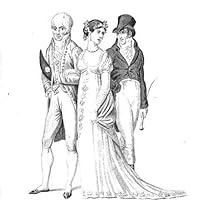
There is explicit sex and lots of bawdy talk. The content is belied by the cover, which suggests that one is reading a more traditional Regency romance. The title is a rather broad hint to the contrary. (I have to congratulate the cover designer, who has taken a classic painting of a lady and her beaus and given it completely new meaning.)
I do agree with other reviewers that the spy subplot detracts from the novel. I also think the book could have been a bit more tightly edited. However, if you've enjoyed Janet Mullany's books (e.g., The Rules of Gentility), there's a good chance you'll like Phyllida. The styles are very similar. But for heaven's sake, if you're uncomfortable with m/m sexuality, look elsewhere for something to read.
Phyllida is an absolute romp of a story and involves, as other reviewers have explained, a lady, her husband, and his boyfriend. It runs very close to farce, but the characters are in on the joke, so it works well, IMO.
There is explicit sex and lots of bawdy talk. The content is belied by the cover, which suggests that one is reading a more traditional Regency romance. The title is a rather broad hint to the contrary. (I have to congratulate the cover designer, who has taken a classic painting of a lady and her beaus and given it completely new meaning.)
I do agree with other reviewers that the spy subplot detracts from the novel. I also think the book could have been a bit more tightly edited. However, if you've enjoyed Janet Mullany's books (e.g., The Rules of Gentility), there's a good chance you'll like Phyllida. The styles are very similar. But for heaven's sake, if you're uncomfortable with m/m sexuality, look elsewhere for something to read.

July 18, 2013
This book, whose tagline is “A man in love with his wife and his boyfriend,” wouldn’t normally catch my eye because m/m isn’t my kink. I bought it for an entirely different reason. So now that I bought it and read it and thoroughly enjoyed myself (oooh, have you noticed this trend about what I review?), I must speak my piece.
Here we are in Regency England (and those of us in Romancelandia are more or less completely and totally comfortable in Regency England, Heyer or no Heyer) and a sodomite wishes to marry to fulfill his duty to his family name while still continuing his unabashed lifestyle. He finds the right chick, marries her, figures out he so really doesn’t mind doing her, thinks she’s refreshing and falls in love with her blahblahblah (yeah, you know how it goes), then meets the male love of his life and we all end up happily ever after with nary a menage a trois to be had. Of course, what would a Regency romance be without a little spying here and there?
After some reflection, I have to admit that the mixed third-person omniscient and third-person limited points of view was fun and refreshing.
Here we are in Regency England (and those of us in Romancelandia are more or less completely and totally comfortable in Regency England, Heyer or no Heyer) and a sodomite wishes to marry to fulfill his duty to his family name while still continuing his unabashed lifestyle. He finds the right chick, marries her, figures out he so really doesn’t mind doing her, thinks she’s refreshing and falls in love with her blahblahblah (yeah, you know how it goes), then meets the male love of his life and we all end up happily ever after with nary a menage a trois to be had. Of course, what would a Regency romance be without a little spying here and there?
After some reflection, I have to admit that the mixed third-person omniscient and third-person limited points of view was fun and refreshing.

May 4, 2008
Phyllida is not a serious book, and it works very well until sometime around the end when the Herendeen decided to insert some clumsy commentary on some current hot-button issues. Also, there's a subplot (kind of) with some spying that doesn't really work out either.
Mostly, however, it is a lot of fun. Phyllida is the sort of book which lets you know that there isn't a lot to worry about, even when it seems like there should be. The characters flirt and exchange quips easily with one another. The biggest stakes are on the personal level, and Herendeen probably should have stuck with that instead of the spying stuff. The beginning of the novel is where it's strongest. I think this is because the beginning of the novel has a tigher focus, and Andrew and Phyllida are very interesting characters. Some of the secondary characters are less interesting and even irritating and they detract from the enjoyable experience of reading about Phyllida and Andrew (and later Matthew).
Personally, I found the sex scenes not very erotic. Your mileage may vary.
Mostly, however, it is a lot of fun. Phyllida is the sort of book which lets you know that there isn't a lot to worry about, even when it seems like there should be. The characters flirt and exchange quips easily with one another. The biggest stakes are on the personal level, and Herendeen probably should have stuck with that instead of the spying stuff. The beginning of the novel is where it's strongest. I think this is because the beginning of the novel has a tigher focus, and Andrew and Phyllida are very interesting characters. Some of the secondary characters are less interesting and even irritating and they detract from the enjoyable experience of reading about Phyllida and Andrew (and later Matthew).
Personally, I found the sex scenes not very erotic. Your mileage may vary.

January 10, 2015
OK, wow, this book is just wow. I loved it. Phyllida is so great.
Although there were also a few things that I didn't love.
Other than that, though, I loved the story, a real page turner, even though
Although there were also a few things that I didn't love.
Other than that, though, I loved the story, a real page turner, even though

May 4, 2008
Phyllida is a Regency romance with an interesting twist: the hero finds the love of both a good woman and a good man. It's a comedy of manners and errors and is, I will admit, a little bit ridiculous. The novel reads a bit like one woman's fantasy (for example, the hero, Andrew Carrington, has never really been strongly attracted to a woman until he meets the titular heroine who is, as it happens, a romance writer), and there's a weird subplot that I'm still not sure I've entirely pieced together (something to do with ciphers and the Peninsular and double crossing and outing sodomites and something). The ending kind of pushes the book into, "Oh, come on!" territory (just a little too far towards the happy ending, I think), but there are a few really sexy scenes, the protagonists are interesting characters, and a good portion of the dialogue is sharp and witty.
Even with its flaws, I enjoyed reading the book immensely.
Even with its flaws, I enjoyed reading the book immensely.
Displaying 1 - 30 of 66 reviews