Leonard Ravenhill presents prayer as faith in action in this fast-paced presentation of this crucial subject. He called prayer the most essential ingredient in producing revival. Filled with exhortations and illustrations, it teaches the art of effective praying--which will result in revival. Moody Monthly said, "This is a plea for praying that will melt the preacher's heart, move the people, and magnify the Lord Jesus."
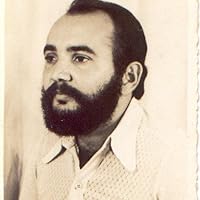
Very little biographical information is available for Leonard Ravenhill. He rarely spoke of himself which is likely a reflection of his belief in exalting Christ and not self. Most of what we know about Ravenhill is from sources that knew him and the details he provided in sermons. He was an evangelist born in Leeds, Yorkshire, England in 1907 and was used by God in revivals in Great Brittan before moving to American in 1950. Leonard Ravenhill was known for his focus on revival and his writing on the subject including the popular title, Why Revival Tarries. Ravenhill preached in churches of many denominations, but was not ordained by any. His preaching is marked by calling sinners to repentance, insisting Christians live lives marked by holiness, and encouraging deeper prayer lives. Ravenhill claims to have been saved at age 14, but says he was baptized by the Holy Spirit at age 18 indicating belief in a Pentecostal system. However, Ravenhill also said he never spoke in tongues and said that baptism of the Holy Spirit is the same thing Wesley called sanctification and also said the only evidence of being filled with the Holy Spirit is holy living. He rejected Christian Perfection, but preached a Wesleyan-Holiness higher Christian life theology. Ravenhill speaks of John Wesley frequently and wrote a biographical sketch of him. Wesley’s influence on Ravenhill is apparent. Leonard Ravenhill was a mentor to Keith Green of Last Days Ministries based in Texas. Later in his life, Leonard moved to Texas close to Last Day Ministries where he led a weekly prayer meeting and taught classes before dying in November of 1994.
The most moving, convicting, challenging, haunting books on prayer I've ever read. Some statements were so powerful that upon reading them, I threw the book down on the desk and hung my head in shame.
Leonard Ravenhill foi um homem de Deus, um verdadeiro santo. Mesmo discordando de certos pontos e aplicações, ler os seus escritos é sempre desafiador.
Contudo, há um erro que não devo deixar de destacar. Ravenhill menciona, com correção, que a vida de casados também envolve crucificar as paixões carnais. Contudo, logo após essa afirmação, ele cita com aprovação o seguinte exemplo: “O severo guerreiro cristão, C. T. Studd, não viu sua esposa por aproximadamente trezes anos, exceto por um período de duas semanas” (p. 80).
Que visão anti-bíblica sobre casamento! O marido deve amar a sua esposa como Cristo ama a igreja, e Cristo não demonstrou esse amor abandonando a sua igreja. Antes, ele entregou a sua própria vida por ela! Pesquisei um pouco sobre a vida de Studd (1860-1931) e sua esposa (Priscilla, 1887-1929) e descobri que ela era doente, e esse foi o motivo do seu breve reencontro com ela. Quando ela melhorou um pouco, Studd foi embora novamente para a “missão”. Que tragédia! E, infelizmente, essa mentalidade anti-bíblica ainda é comum em nosso meio: o ministério acima da esposa!
Sobre a edição brasileira: muitos erros, tornando algumas frases até contraditórias. Faltam palavras aqui e acolá. Além de uma nova revisão gramatical, será necessária uma revisão estilística, pois não parece Ravenhill “falando”.
I didn’t like this book, because it’s disorganized. It reads like scattered reflections, not a cohesive argument. But many of those reflections were true and positive and encouraging. The book did motivate me to pray more which I think is Ravenhill’s main purpose, so he did what he wanted to with the book.
Here’s what I liked:
There are some convicting lines like “Don’t just say your prayers. Pray.” and strong analogies about being “prayed up” before doing anything. I was personally moved by a lot of its encouragement. It really does succeed in moving you to pray, and that’s Ravenhill’s central goal.
Here’s what I didn’t like:
It’s disorganized instead of building to an overarching point it reads like scattered reflections that mix his personal doctrine with loosely interpreted Scripture.
Ravenhill makes a surprising claim that is pretty central to his books purpose, Revival, and never backs it up: he claims some pastors oppose revival but offers no evidence or examples, hard to take seriously without proof.
There is a major factual error: He wrongly says that “faith” is only mentioned twice in the Old Testament. This is dangerously false. Not only is it mentioned way more, but there have been great sound arguments made that Faith is the central idea of the Torah. (Ie. Sailhammer: Pentateuch as narrative)
Problematic theology: 1. He teaches that a “prayed up” preacher can speak with “Thus says the Lord” authority. And any sermon without this type of authority is a waste of time. A pastor who believes this might be resistant to criticism, they might think disagreement with them equals disagreeing with God. In fact he even says that a pastor who is prayed up isn’t bothered by criticism. 2. He makes it sound like if you don’t hear from God when you pray then you have backslidden. He never explains what that means.
For anyone who knows Leonard Ravenhill's work, it will come as no surprise to hear that this book is another one of his many excellent works. For those who do NOT know him or his work, you are wasting precious days of your lives in not learning from his gifted mind and heart.
I could write a book about the great lessons and insight of this book here in this review, but I won't. Instead I will strongly urge you to become a reader of his work as soon as possible! It took me only 11 days and that was very light, simple reading segments. Nothing too complex -just a basic understanding and emphasis of the importance of a healthy prayer life.
Îl ador pe Leonard Ravenhill ca om, are un stil foarte tăios și radical de a spune lucrurile pe nume, exact așa cum sunt; un mare om a lui Dumnezeu, o inimă aleasă și rară…însă cartea nu m-a prins. Am abandonat-o o perioadă tocmai din cauza asta. 3,5 ⭐️
This book is so convicting. Each page presents a challenge and an invitation around why prayer is vital for us as followers of Jesus. I am so stirred by these pages to come before God with intentionality and a desire for His heart, His will, and His power in my life and in my world. While this is not an easy book, it is an important one!
The objective of writing this book is given in one of the chapters which goes like this "It must be obvious to the reader, unless he has totally misread our motive in this writing, that we are aiming here at a state of prayer far beyond using God as a means of escape or relief. The state of praying that we seek is free from all personal request for personal benefit. We are seeking a love for the will of God among men, for the manifestation of the power of God among men, and for the recovery of the glory of God among men."
This objective is very well achieved through this book. Recommend to those who long to revive their hearts with the love for God and for the lost world.
Ravenhill has an excellent way of stirring up the heart to sincere and practical responses in faith and in prayer. I found his writing to be personal and moving, and greatly appreciated his frequent references to great men and women of prayer to consider for further study. I have already read a few others books based on his recommendation. An uplifting and challenging read.
So far this is an excellent book. Although it was written in 1961, overlooking the events current to the author that are history to us, his Biblical explanations and discussions are well-thought, logical and very applicable to today's Christians.
What I admire most about Ravenhill is that he has the boldness to communicate hard truth. He addresses the problem within American Christianity concerning prayer, and he brings a helpful, scriptural resolution. 176 Pages.
Brilliant. Ravenhill offers a biting and unarguable petition for a prayerful church. Every chapter makes you want to put the book down and fall on your face weeping in intercession.
Much of this was great, but there were too many lower-quality (didn't stir me personally) chapters to warrant 5-stars. Not as great as "why revival tarries."
Most of what Ravenhill has to say is sound, and convicting, but he has a distinct tendency to abandon being strictly correct in favor of having the maximum impact.
"The early church prayed. Every revival church has prayed. Every participant in revival prayer has known travail. Though there are some tearful intercessors behind the scenes, I grant you that to or modern Christianity, praying is foreign.”
I've never read anything regarding the history of Revival without seeing Ravenhill mentioned. It seemed past time I read about it from him directly, rather than just pulled quotes. As I'd hoped, he has much to say about the subject in a relatively condensed work.
Note: I found it interesting how often Ravenhill, a renowned British evangelist, references A. W. Tozer--an American Christian pastor (and one of his contemporaries of the day.) It's led me to read more of Tozer's work... though I still prefer Ravenhill's prose for its cadence.
“We need prayer to obtain victory, and then prayer to maintain victory. We need to pray about our praying. We must pray unction upon others as they are praying. We must pray alone. We must pray together. We must pray in the night, and not cease in the day. Lord, teach us to pray!”
This is both a continual call to prayer (without which, Ravenhill is clear, revival will not occur) and a repeated (deserved) admonishment to the church. The evangelist is not unkind, but he is a bit like a disappointed-yet-hopeful paternal figure in tone.
Favorite Quote:
“I have said before that one of these days, someone will read the Bible for the first time, believe it, and act on it with a daring, simple faith. Then we long-time believers will bow in shame crying, 'Lord, help our unbelief.”
Someone gave me a copy of the book. Since I’m preparing a Sunday evening sermon series on prayer, I thought I’d read it. Most of it was what I expected. Raven hill uses guilt to motivate readers to pray. I was struck by how the first 3 or 4 chapters was drenched with alarmism - and alarmism that arose out of 1962 when it was written. But an alarmism that sounds like many voices in 2022. That was insightful - we Christians in America are prone to alarmism, and have been for many decades.
There were tidbits here and there that were valuable. Such as “Prayer links man’s impotence to God’s omnipotence” (65). A little reflection will show how true that statement is. Or, “Prayer is another way of telling God that we have all confidence in Him, and no confidence in our own native power” (129). That thought is really onto something deep. And there are other little snippets of rich value scattered throughout the work.
All in all, I didn’t find the book very useful. In one sense the book is worth reading as long as you remember it was written in 1962, in the heat of the Cold War and before the 60’s sexual revolution. For other reasons, it’s hard to recommend the work.
Read this book off and on over about a year. I was going to give it a 4 star rating, based on what I thought was "name dropping" at one point in the text. However, after the full read, I do not think that self-glory was the goal, but rather that leaders of the Church Universal all agree on the centrality and necessity of prayer, invoking an all powerful and loving God for assistance which we cannot provide ourselves. Leonard Ravenhill is one among many who call for prayer to heal the ills of the current Church. His voice is correct, and the call runs back to the injunctions of Christ himself. We should take heed and obey.
Ravenhill has shown himself to be quite the strong author with writing in such a way that you want to immediately follow his advice. I have found my prayer life to be quite poor recently and this book gave me a good push towards rectifying this.
I rather like his style of personal anecdotes and referencing great figures of the faith. It shows him as a learned and experienced individual rather than a textbook preacher.
This pairs nicely with his most famous book, Why Revival Tarries, and compliments one another with this book mentioning and elaborating the role of prayer from the individual to the preacher.
This most excellent work of Brother Ravenhill would be 5 stars, if not for the very many typographical errors in the digital translation. I had to read it with the hard copy close by. ie santa for satan pg71 is just a minor one of many It made it extremely difficult to understand the context of a multitude of sentences. I highly recommend the digital editor to proof read this edition and correct the many errors. EZ
Many today don’t want to hear the truth and so a book like this will sit unopened. But if a person truly desires change and growth in their walk with the Lord, the truth of our lack of devotion to intercession is one thing we will wrestle with. Ravenhill pulls no punches yet I can tell his great concern for the glory of God in the church. Excellent read and I encourage others to read as well.
Very clear, convicting, and clear presentation, as only Leonard Ravenhill can do. But drops to 4 stars because of his occasional eye-rolling trite couplets: "our churches need prayer-conditioning, not air-conditioning.". But certainly makes up for that with countless profound statements like, "Dear reader, do you and I realize that we are just one heartbeat away from a fixed state of reward, be it of joy or shame?"