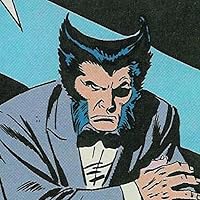
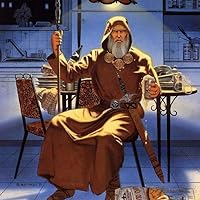
Ninja Ryu journeys into the Amazon jungle to battle a demon that is awakening from its 700-year nap, hoping to save the world from destruction, in a story based on the Nintendo game
F.X. Nine is a pseudonym used by Seth Godin for the Worlds of Power series. He was the creator of the series and wrote outlines for each book. Authors were hired to write the novelizations based on Godin's vision and outline.
Hey you kids, put down your DS and listen: back in my day, video games were hard. The graphics were bad and the controls didn't have none of that fancy analogue you have today. You'd die a million times and unless you had a Game Genie, there wasn't anything you could do about it. And there was no google, so you couldn't just download a walk through. The internet didn't even exist! What? Stop looking at me like that. No, I don't need to sit down. My heart is fine.
Games were so hard, in fact, that we had to turn to rather indifferently written novelizations of them just to find out what happens, plot-wise, after that one part where you spend like 45 minutes climbing this big tower or mountain or something, screen after screen of flying ninjas popping out of nowhere and guys with bazookas who reappear every time you move forward a few steps and these FUCKING BIRDS that just KEEP SWOOPING, appearing ENDLESSLY and making it IMPOSSIBLE TO JUMP like WHAT is there an INFINITE SUPPLY of red HAWKS inhabiting this MAGICAL FREAKING TOWER or MOUNTAIN or WHATEVER this thing is and someone is up there just WHIPPING THEM at me, and they are forced to FLY AT MY FACE in SELF DEFENSE? And then you FINALLY got to the boss, who says "HAHAHA I AM MALTH!" and kills you instantly and you have to go ALL THE WAY BACK TO THE START? Because in my day we didn't have save points! Save points are for PUSSIES. THREE LIVES, NO CONTINUES.
So then I read this book and found out the ending: his dad lives! Except once the internet was invented, I read this interview with the writer (who wasn't even named F.X. Nine, gosh), and it turns out he changed the ending of the book because he thought it was too depressing. Well, shit.
After you finish this 140-page book with large print and two-page-long chapters, there is a list of recommended reading. If you liked Worlds of Power: Ninja Gaiden, you might also like The Count of Monte Cristo, which in the Penguin edition I am currently reading, includes more words on the average two-page spread than are in the entirety of Ninja Gaiden, even if you take out all the instances of someone making an expression "impossible to describe." But by all means, I'm sure if you liked Worlds of Power: Bases Loaded II - Second Season you'll enjoy Lady Chatterley's Lover.
The best part was how every chapter ended with a game hint, but first you had to crack the incredibly complicated code of turning the book upside down, which you would do, trembling and nearly dropping the thing in your fumbling excitement, finally you would learn the secret of avoiding those STUPID BIRDS and... what? "Use the shuriken and move away when he gets close"? That's IT? WHAT THE FUCK? My dog gives better Nintendo tips than you, BOOK. And then you would later get grounded and have your allowance taken away because you called those smug Game Counselor bastards at Nintendo Power and EVEN THEN you couldn't beat stupid Malth. So you read the book again.
This book is a perfect example of a work that feels like it truly accomplishes all of its goals.
It definitely deserves more respect than I’d planned on giving it going in, which really wasn’t much at all to be honest. There’s still plenty of goofy and ridiculous stuff going on here, but it never once loses sight of what makes Ninja Gaiden work: relentless action. Even the moments of downtime borrow so heavily from tropes of cinema that they feel more kinetic than they would otherwise.
On top of that, the reason I ignored it as a kid was actually mostly unjustified. The author really did make a serious effort to adapt the events and characters from the game. That’s more than I can say for the VAST majority of video game adaptations to date, let alone back in 1990.
I had a great time with this one. It’s the best B-movie I’ve ever read, and it’s one of the most faithful video game adaptations I’ve ever experienced in any medium.
This one started really strong with some great Indiana Jones vibes to it as we watch a pair of archeologists discove "the dark temple" while Ryu completes his training to become a Ninja and is ready to set out to find the truth behind his father's disappearance. Cool stuff.
Once we leave Act 1, however, the plot devolves into Ryu solving all of his problems by punching them. I guess that's what you should expect from a book called Ninja Gaiden. It may be true to the source material but it made the back half of the book a pretty dull read.
I'm fairly disappointed by how this one missed the series standard of using video game stories as a gateway into reading. I'm genuinely curious as to how it started out so strong and then became the phrase 'and then Ryu used Fire Wheel' for 4 chapters (boss fights) in a row. Did the author lose interest? Run out of time? Was the author swapped out?
Whatever the reason, this entry in Worlds of Power should keep itself in full Ninja Mode: best left unseen.
This is my fifth book in this series of adaptations of first generation third party Nintendo games. And I am getting a little weary of it. The slavishness to the game mechanics was interesting in the first few books, but now, it is an obstacle to plotting and character. This one has a kid ninja try to find who killed his father and it has something to do with idols that can destroy the world or something. These are fun. But they are repetitive. I feel for the writers who had to take a novel and make it game directions.
LOL! Entertaining when your a kid who rented the game once. It's those cheesy moments when Ryu wonders where this wheel of fire suddenly starts swirling around him killing his endless swarms of enemies that just remind you to return it to the library.
That Dawn of the Jedi book is a lot like this crap.
Of the Worlds of Power NES novelizations I’ve read thus far, Ninja Gaiden is the best. It’s a pretty straightforward adventure novel aimed at grade school readers. Ninja Ryu Hayabusa travels to the Peruvian Jungles, fights demons and finds his long lost father. The book’s plot runs closely beside its NES game, making it so there is some degree of fun and nostalgia to be had here.
I must have read this book a million times as a kid, it was definitely my favorite of the series. I'm surprised there weren't way more of these books, I'm assuming I wasn't the only kid who loved the intersection of books and video games.
Having the protagonist get on a plane and go to a university and then a diner and never change out of his ninja outfit OR put his sword away was a weird choice, but otherwise, good stuff!
The dialogue. I mean, I don't think the writer ever considered that a top-ranking Ninja would never say "YAHOO!" upon receiving his "black belt" (which I'm pretty sure Ninjas never used as rank). And why am I capitalizing ninja? Because the author does.
And the way too specific comparisons that a man raised in Tokyo, even with an American-born father, would never know; like comparing a group of large men wishing to brawl to the Dallas Cowboys. Something tells me Ryu didn't read up on American football while spending his life attaining perfection in the arts of Ninjutsu (which never appears in this book as the actual term for what Ryu practices, probably because the author never bothered to look it up).
I understand that these books are written for a young audience, but don't we feel it necessary to use any form of accuracy in a story that involves real things like ninjas? Even those based on a video game.